

Best Robo-Advisors in Canada for 2026
The best robo advisor Canada offers in 2026, on our published score, is Wealthsimple Managed Investing at 4.2 / 5: no minimum is stated, the fee is 0.5% a year (0.4% from $100,000), and it offers four portfolio families. Questwealth Portfolios is a close second at 4.1 / 5 and is the cheapest at every balance we compared: $185 a year on $50,000 once its 0.25% fee and its highest core fund cost of 0.12% are added. CI Direct Investing (3.7 / 5) and RBC InvestEase (3.4 / 5) complete the ranking. We rank only robo-advisors that publish both their fee schedule and their fund costs, so five other services are listed separately with the reason.
 Written by Sharad Gondaliya, CPA CPAChartered Professional Accountant, CPA Ontario No. 61040184
 Financial reviewer: Neha Gupta, CFA CFA charterholderReview of this page scheduled
At a glance
Top pick. Wealthsimple Managed Investing scores 4.2 / 5. It charges 0.5% a year on the Core tier and 0.4% once you hold $100,000 at Wealthsimple, plus fund costs of up to 0.15% on its Classic portfolios. That is $325 a year on $50,000. It is the only ranked robo-advisor with tax-loss harvesting stated, from the Premium tier up.
Lowest cost. Questwealth Portfolios scores 4.1 / 5. Its management fee is 0.25% on balances from $250 and 0.20% at $100,000 or more, and its standard portfolios cost up to 0.12% in fund fees. That totals $185 a year on $50,000 and $800 on $250,000, the lowest of the four at every balance. Client-facing advice is not described.
Most advice. CI Direct Investing scores 3.7 / 5. It offers planners and what it calls unlimited advice to every client, with a $100 minimum. It is also the most expensive of the four at every balance in our tables: $415 a year on $50,000 at a 0.60% fee plus up to 0.23% in fund costs.
Bank option. RBC InvestEase scores 3.4 / 5. Its fee is a flat 0.50% plus tax, with Core portfolio fund costs of up to 0.20%, or $350 a year on $50,000. Portfolio Advisors answer by phone or email, but it offers only four account types: TFSA, FHSA, RRSP and non-registered.
How we ranked. Each robo-advisor gets a score out of 5 from five weighted factors: fees 45%, accounts 15%, portfolios 15%, minimum 10% and advice 15%. A robo is ranked only when its management fee schedule and its fund costs are both published in text we can verify. No provider paid for a position.
Not ranked. BMO SmartFolio, Justwealth, TD Automated Investing, Nest Wealth and Qtrade Guided Portfolios are listed in a separate section with the exact reason each one is left out. All figures were checked on October 22, 2026.
Best Robo Advisor Canada 2026: Ranking at a Glance
This table lists the four ranked robo-advisors in score order. Scores are out of 5 and shown to one decimal. The yearly cost is the management fee from each published schedule plus the highest published fund cost (MER) for that robo’s core portfolios, on a $50,000 balance, before sales tax.
| Rank | Robo-advisor | Score | Best for | Yearly cost on $50,000 | Minimum |
|---|---|---|---|---|---|
| 1 | Wealthsimple Managed Investing | 4.2 / 5 | No stated minimum and the widest choice of portfolios | $325 (0.65%) | None stated; Core tier starts at $1 |
| 2 | Questwealth Portfolios | 4.1 / 5 | The lowest total cost at every balance | $185 (0.37%) | Lowest fee tier starts at $250 |
| 3 | CI Direct Investing | 3.7 / 5 | Access to planners and unlimited advice | $415 (0.83%) | $100 |
| 4 | RBC InvestEase | 3.4 / 5 | RBC clients who want advisors by phone or email | $350 (0.70%) | Invested once the balance reaches $100 |
To see the yearly fee on your own balance, use the calculator below. Enter the amount you plan to invest, and it adds the management fee and fund costs at each ranked robo-advisor and sorts them from cheapest to most expensive.
Master Comparison Table: Four Robo-Advisors in Canada
This is the full side-by-side view. You can search and sort it. Every figure comes from each provider’s published pricing and account pages on October 22, 2026. “Not published” means we could not confirm the item on the provider’s own pages, so we leave it blank rather than guess.
| Rank | Robo-advisor | Score | Management fee | Highest core fund cost | Yearly cost on $50,000 | Minimum | Account types | Portfolio families | Responsible option | Tax-loss harvesting | Human advice | Transfer-in fee coverage | Transfer-out fee |
|---|---|---|---|---|---|---|---|---|---|---|---|---|---|
| 1 | Wealthsimple Managed Investing | 4.2 | 0.5% Core; 0.4% Premium ($100,000+); 0.4% at Generation ($500,000+), falling to 0.2% at $10,000,000+ | 0.15% (Classic) | $325 | None stated | TFSA, RRSP, spousal RRSP, FHSA, RESP, RRIF, LIRA, non-registered, corporate | Classic, Summit, Income, Private Market Fund | Socially Responsible portfolio, MER up to 0.23% | Premium and Generation | Advice option; dedicated advisor team at $1,000,000+ | Fees covered on $25,000+, up to $150 per account | Not published for managed accounts |
| 2 | Questwealth Portfolios | 4.1 | 0.25% under $100,000; 0.20% at $100,000+ | 0.12% (standard) | $185 | Lowest fee tier starts at $250 | TFSA, RRSP, spousal RRSP, RESP, family RESP, RRIF, LIRA, LIF, cash, margin, joint, corporate | Standard and SRI | SRI portfolios, MER up to 0.24% | Not published | Not described | Not published for Questwealth | Not published |
| 3 | CI Direct Investing | 3.7 | 0.60% on the first $150,000; 0.40% on the next $350,000; 0.35% above $500,000 | 0.23% (ETF portfolios) | $415 | $100 | TFSA, RRSP, spousal RRSP, RESP, RRIF, LIRA, LIF, non-registered, joint, IPP | ETF, ESG and Impact, Private | ESG and Impact portfolios | Not published | Planners and unlimited advice | Up to $150 on $25,000+ | Not included in the fee; amount not published |
| 4 | RBC InvestEase | 3.4 | 0.50% flat, plus tax | 0.20% (Core) | $350 | Invested at $100 | TFSA, FHSA, RRSP, non-registered | Core and Responsible Investing, six risk levels each | Responsible Investing, MER up to 0.25% | Not published | Portfolio Advisors by phone or email | Up to $200 on $15,000+ | $150 plus tax to a non-RBC account |
Fund costs are management expense ratios (MERs) charged inside the ETFs, on top of the robo’s management fee. Each figure is the highest MER the robo publishes for its core portfolios; responsible, income and private portfolios can cost more and are covered in section 4.
The Four Robo-Advisors Ranked
Each card shows the score, a bar out of 5, why the robo-advisor sits where it does, what it costs, and the accounts and portfolios it offers. Sub-scores are out of 5 for fees, accounts, portfolios, minimum and advice.
1. Wealthsimple Managed Investing: best for no stated minimum and the widest choice of portfolios
4.2/ 5Why it ranks here. Wealthsimple earns full marks on portfolios (5.0, for four portfolio families) and on minimum (5.0), and 4.5 on both accounts and advice. Its fee score is 3.5 because the total cost on $50,000 is 0.65%, against 0.37% at Questwealth. The extra choice and advice are enough to put it first on the weighted score: 4.175, shown as 4.2.
Costs. The management fee is 0.5% on the Core tier, 0.4% on Premium (from $100,000 in assets at Wealthsimple) and 0.4% on Generation at $500,000, falling to 0.2% at $10,000,000 or more. Classic portfolios hold 8 to 10 ETFs with fund costs of 0.12% to 0.15%. On $50,000 that is $250 in fees plus up to $75 in fund costs, or $325 a year. Tier status uses the higher of your net deposits or total portfolio value, and household members at the same address can combine assets to reach Premium; our Wealthsimple Core vs Premium vs Generation page explains each tier.
Accounts. TFSA, RRSP, spousal RRSP, FHSA, RESP, RRIF, LIRA, non-registered and corporate accounts can all be managed. Corporate accounts pay 0.5%, dropping to 0.4% at $100,000.
Portfolios. The lineup is Classic, Summit (which adds a private-markets slice of 20%, 25% or 30%), Income and the Private Market Fund. A separate Automated Investing product costs 0.25% a year, capped at $250 per account once the balance reaches $100,000. Portfolios rebalance automatically, and about 0.3% to 0.5% of each account is kept in cash.
Pros
- No minimum stated; Core starts at $1 in assets
- Tax-loss harvesting on Premium and Generation
- Fee drops to 0.4% at $100,000, with household assets counted
Cons
- 0.65% total cost under $100,000, nearly double Questwealth
- No tax-loss harvesting on Core
- Halal portfolio status unclear: Wealthsimple’s pages disagree
2. Questwealth Portfolios: best for the lowest total cost at every balance
4.1/ 5Why it ranks here. Questwealth has the best fee score of the four (4.9) and scores 4.5 on accounts and minimum. It loses ground on portfolios (3.0, for two families) and on advice (2.0), because its pages describe a team of experts managing the portfolios but no advice for clients. Its weighted score is 4.08, shown as 4.1.
Costs. The management fee is 0.25% on balances from $250 to $99,999 and 0.20% at $100,000 or more. Standard portfolios hold ETFs with fund costs of 0.09% to 0.12%; SRI portfolios cost 0.20% to 0.24%. On $50,000 that is $125 in fees plus up to $60 in fund costs, or $185 a year. Questwealth charges no opening fees, trading commissions or EFT fees.
Accounts. RRSP, spousal RRSP, LIRA, locked-in RRSP, RRIF, LIF, RESP, family RESP, TFSA, individual cash, individual and joint margin, corporate cash and margin, partnership, sole proprietorship, trust and estate accounts. FHSA appears in Questrade’s site menus but not on the Questwealth account-types list, so we do not count it.
Portfolios. Two families: standard Questwealth Portfolios and Questwealth SRI Portfolios. Tax-loss harvesting is not mentioned on the Questwealth pages we checked.
Pros
- Lowest total cost: $185 on $50,000 and $800 on $250,000
- Wide account list, including LIF and corporate accounts
- No commissions, opening fees or EFT fees
Cons
- No client-facing advice described
- SRI portfolios cost twice the fund fees of standard ones
- FHSA not on the Questwealth account list
3. CI Direct Investing: best for access to planners and unlimited advice
3.7/ 5Why it ranks here. CI Direct Investing is the only ranked robo with a full 5.0 on advice, since it offers planners and unlimited advice to every client. It also scores 5.0 on minimum, 4.5 on accounts and 4.0 on portfolios (three families). Its fee score of 2.6 is the lowest in the group because its total cost on $50,000 is 0.83%. The weighted score is 3.695, shown as 3.7.
Costs. The fee is tiered on the amount, and blended across all your accounts: 0.60% on the first $150,000, 0.40% on the next $350,000 and 0.35% above $500,000. ETF portfolio fund costs are 0.17% to 0.23%. On $50,000 that is $300 in fees plus up to $115 in fund costs, or $415 a year. Private Investment portfolios cost 0.49% to 2.92% in fund fees, figures CI dates to April 30, 2024. CI covers the other institution’s transfer fee, up to $150, on transfers of $25,000 or more.
Accounts. TFSA, RRSP, spousal RRSP, RESP, RRIF, spousal RIF, LIRA, locked-in RRSP, LIF, non-registered individual, joint and entity accounts, individual and personal pension plans (IPP and PPP) and a high-interest savings option. FHSA is not mentioned.
Portfolios. ETF Portfolios, ESG and Impact Portfolios, and Private Portfolios that add private and alternative assets. The firm is CI Investment Services Inc., which is on CIPF’s member list.
Pros
- Planners and unlimited advice for every client
- $100 minimum
- Fee blended across all accounts, falling to 0.35% above $500,000
Cons
- Highest total cost at every balance in our tables
- FHSA not mentioned
- Private portfolio fund costs are far higher and dated April 2024
4. RBC InvestEase: best for RBC clients who want advisors by phone or email
3.4/ 5Why it ranks here. RBC InvestEase scores 5.0 on minimum and 4.5 on advice, since Portfolio Advisors are available by phone or email. It scores 3.25 on fees (0.70% total on $50,000), 3.0 on portfolios and 2.0 on accounts, because it offers four account types. The weighted score is 3.388, shown as 3.4.
Costs. A flat 0.50% plus tax, with no tiers, billed monthly. Core portfolios carry weighted-average fund costs of 0.12% to 0.20%; Responsible Investing portfolios 0.17% to 0.25%. On $50,000 that is $250 in fees plus up to $100 in fund costs, or $350 a year. Moving out to a non-RBC account costs $150 plus tax, and RBC InvestEase reimburses up to $200 of transfer fees when you move in $15,000 or more.
Accounts. TFSA, FHSA, RRSP and non-registered. RESP, RRIF, LIRA and spousal RRSP accounts are not on its list.
Portfolios. Six ETF portfolios, from Short-Term Bond to Aggressive Growth, each in a Core and a Responsible Investing version. Money is invested once the balance reaches $100, and balances under $1,500 may go to a Starter Portfolio.
Pros
- Portfolio Advisors by phone or email
- Low $100 starting point
- Covers up to $200 of transfer fees on $15,000+
Cons
- No fee breakpoints: 0.50% at any size
- Only four account types
- $150 plus tax to leave for another institution
Want to run the numbers on your own balance first? Use the robo fee calculator, or compare robo pricing with a self-directed account at a low-cost broker.
Also Available: Five Robo-Advisors We Do Not Rank
Our rule is simple: a robo-advisor is ranked only when both its management fee schedule and its fund costs are published in text we can verify. The five services below did not meet that rule, or we could not confirm they accept new clients, when we checked on October 22, 2026. Each paragraph gives the exact reason first, then what we could confirm. If a provider publishes the missing figures, we will score it at the next update.
BMO SmartFolio. Why it is not ranked: advisory fee of 0.4% to 0.7% with breakpoints not published, and fund costs not published. BMO describes a fee that falls as assets grow, charged quarterly, but without the breakpoints or fund costs a yearly cost cannot be calculated. It offers TFSA, RRSP, RESP, RRIF, individual and joint accounts, and dedicated advisors manage the portfolios. Transfers in must arrive as cash, so securities you hold elsewhere would be sold before the move.
Justwealth. Why it is not ranked: fee tiers are published only as an image; minimum fee $4.99 a month ($2.50 for RESP, FHSA and RDSP); $5,000 minimum except RESP and FHSA. Justwealth has the broadest lineup of the unranked group: more than 80 portfolios, including Target Date portfolios for RESPs and an ESG suite. Every client gets a Personal Portfolio Advisor by phone or email, tax-loss harvesting is available on non-registered accounts, and accounts include RDSP, LIF and USD accounts. Its custodian is CI Investment Services Inc. It reimburses up to $150 of transfer fees on accounts of $25,000 or more and charges $50 for a partial transfer out or $150 for a full one.
TD Automated Investing. Why it is not ranked: not listed among TD’s current investing services; could not confirm it accepts new clients. TD’s investing hub lists Direct Investing, TD Easy Trade, TD Wealth and investing with a personal banker. Until TD confirms the service is open to new clients, we do not describe it as available. If you already hold one of these accounts, confirm its current fee on your latest statement.
Nest Wealth. Why it is not ranked: its site shows it is temporarily unavailable; could not confirm it accepts retail clients. Nest Wealth is a portfolio manager and is not itself on CIPF’s member list, and its custodian was not confirmed.
Qtrade Guided Portfolios. Why it is not ranked: no longer shown on Qtrade’s site; could not confirm it is offered. Qtrade’s investor pages now show a Portfolio Creator tool for building ETF portfolios yourself rather than a managed service. For Qtrade’s self-directed account, see our Qtrade Direct Investing review.
1. How We Ranked These Robo-Advisors
Five factors, fixed weights. Every robo-advisor gets a sub-score from 0 to 5 on five factors. We multiply each sub-score by its weight and add them up. Fees carry almost half the weight because a fee is a certain cost every year, while most other features are a matter of taste. The weights are the same for every provider, and no provider can pay to change them. The full rules for all our ratings are on how we rate brokers and robo-advisors, and the way WealthScale earns money is set out in our advertiser disclosure.
| Factor | Weight | How it is scored |
|---|---|---|
| Fees | 45% | Management fee plus the highest published fund cost for the core portfolios, on $50,000: score = 5 minus (total % minus 0.35) x 5 |
| Accounts | 15% | Half a point for each of 10 account types |
| Portfolios | 15% | Number of portfolio families: 1 family scores 2, 2 score 3, 3 score 4, 4 or more score 5 |
| Minimum | 10% | 5 at $100 or less, 4.5 up to $500, 4 above $500 |
| Advice | 15% | 5 = planners or advisors for every client; 4.5 = advisors by phone or email; 2 = no client advice described |
How the fee score works. Questwealth’s total cost on $50,000 is 0.37% (0.25% fee plus 0.12% fund cost), so its fee score is 5 minus (0.37 minus 0.35) x 5 = 4.9. Wealthsimple’s total is 0.65%, which gives 5 minus 0.30 x 5 = 3.5. RBC InvestEase at 0.70% scores 3.25, and CI Direct Investing at 0.83% scores 2.6.
A worked total. Wealthsimple: fees 3.5 x 0.45 = 1.575; accounts 4.5 x 0.15 = 0.675; portfolios 5.0 x 0.15 = 0.75; minimum 5.0 x 0.10 = 0.50; advice 4.5 x 0.15 = 0.675. The total is 4.175, shown as 4.2. Questwealth: 2.205 + 0.675 + 0.45 + 0.45 + 0.30 = 4.08, shown as 4.1. The gap is narrow, and it comes from portfolios and advice, not cost.
Why we use the highest fund cost. Most robo-advisors publish a range of fund costs across their risk levels. Using the top of that range for the core portfolios keeps the comparison fair and conservative: your cost may be a little lower, but it should not be higher for a core portfolio. Responsible, income and private portfolios are priced separately in section 4.
What the score leaves out. Performance is not scored, because past returns depend on each portfolio’s mix and say little about the next ten years. App design, speed of account opening and promotions are not scored either. Our rules for sourcing and dating every figure are in our editorial standards.
2. Robo Advisor Canada Fees at $10,000, $50,000, $100,000 and $250,000
What you pay. A robo-advisor charges two layers of cost. The management fee goes to the robo-advisor and is usually deducted from your account monthly or quarterly. The fund cost (MER) is charged inside each ETF and comes out of the fund’s returns, so it never appears as a line on your statement. To compare robo advisor Canada fees honestly, you have to add both.
| Robo-advisor | $10,000 | $50,000 | $100,000 | $250,000 |
|---|---|---|---|---|
| Questwealth Portfolios | $37 (0.37%) | $185 (0.37%) | $320 (0.32%) | $800 (0.32%) |
| Wealthsimple Managed Investing | $65 (0.65%) | $325 (0.65%) | $550 (0.55%) | $1,375 (0.55%) |
| RBC InvestEase | $70 (0.70%) | $350 (0.70%) | $700 (0.70%) | $1,750 (0.70%) |
| CI Direct Investing | $83 (0.83%) | $415 (0.83%) | $830 (0.83%) | $1,875 (0.75%) |
How each figure is built. At $100,000, Questwealth charges 0.20% ($200) plus 0.12% in fund costs ($120), for $320. Wealthsimple moves to the Premium fee of 0.4% ($400) plus up to 0.15% in fund costs ($150), for $550. RBC InvestEase stays at 0.50% ($500) plus up to 0.20% ($200), for $700. CI Direct Investing charges 0.60% on the whole $100,000 ($600) plus up to 0.23% ($230), for $830.
| Robo-advisor | Management fee | Fund cost | Total |
|---|---|---|---|
| Questwealth Portfolios | $500 (0.20%) | $300 (0.12%) | $800 |
| Wealthsimple Managed Investing | $1,000 (0.4%) | $375 (0.15%) | $1,375 |
| RBC InvestEase | $1,250 (0.50%) | $500 (0.20%) | $1,750 |
| CI Direct Investing | $1,300 (blended 0.52%) | $575 (0.23%) | $1,875 |
CI’s tiered fee in detail. CI charges each tier only on the dollars inside it. On $250,000 that is $150,000 x 0.60% = $900, plus $100,000 x 0.40% = $400, for $1,300, which is a blended 0.52%. The blend keeps falling as you add money: on $500,000 the fee is $900 + ($350,000 x 0.40% = $1,400) = $2,300, or 0.46%.
Sales tax comes on top. Robo management fees are subject to sales tax, and RBC InvestEase states its 0.50% “plus tax”. The tax rate depends on your province, so the tables above show costs before tax. Add your province’s rate to the management fee part when you budget.
Other costs to watch. RBC InvestEase charges $150 plus tax to move your account to another institution. CI says product fund costs and transfer-out or closure fees are not included in its management fee. Read each fee schedule for these extras before you open an account, not when you leave.
3. The Cheapest Robo-Advisor in Canada at Each Balance
The short answer. Questwealth Portfolios is the cheapest ranked robo-advisor at every balance in our tables, from $10,000 to $250,000. The order behind it never changes either: Wealthsimple second, RBC InvestEase third and CI Direct Investing most expensive. On $50,000, the gap between first and last is $230 a year ($415 minus $185).
Breakpoints can reward one extra dollar. Wealthsimple and Questwealth both price the whole balance at the lower rate once you reach $100,000. At Wealthsimple, $99,999 costs about $649.99 a year (0.65%), but $100,000 costs $550.00 (0.55%), so crossing the line saves about $100 a year. At Questwealth, the management fee on $99,999 is about $250.00, against $200.00 on $100,000. If you are near a breakpoint, adding a small amount can lower your total bill.
Household and account totals. Wealthsimple sets its tier on the total of almost all your Wealthsimple accounts, and two or more clients at the same address can form a household so their combined assets count toward Premium. CI blends its tiered fee across all of a client’s accounts. Spreading money across several robo-advisors can push each balance below a breakpoint, which raises your blended fee.
Responsible portfolios cost more. Choosing a socially responsible version changes the ranking of costs on $50,000. Questwealth SRI at up to 0.24% in fund costs totals $245 ($125 + $120). Wealthsimple’s Socially Responsible portfolio, at up to 0.23%, totals $365 ($250 + $115). RBC InvestEase Responsible Investing, at up to 0.25%, totals $375 ($250 + $125). Questwealth stays cheapest, but its own cost rises by $60 a year over its standard portfolios.
Very small balances. Percentage fees are tiny on small accounts: on $1,000, Questwealth costs about $3.70 a year and Wealthsimple about $6.50. A flat minimum fee changes that. Justwealth, which we do not rank, has a minimum fee of $4.99 a month, or $59.88 a year, which is 5.99% of a $1,000 account ($59.88 / $1,000). A minimum fee matters more than the percentage until your balance is large.
Cheapest is not always best. Questwealth does not describe client advice. If you want someone to talk to about your plan, the extra $140 to $230 a year on $50,000 at Wealthsimple, RBC InvestEase or CI buys access to advisors or planners. Decide what you need first, then pay as little as possible for it.
4. Portfolio Types: Core, Responsible, Income and Private Markets
Core ETF portfolios. Every ranked robo-advisor builds its main portfolios from low-cost ETFs, set to a risk level you choose after a questionnaire. Wealthsimple’s Classic portfolios hold 8 to 10 ETFs and rebalance automatically when you deposit, withdraw or change your goal, with dividends reinvested into underweight ETFs. RBC InvestEase offers six risk levels, from Short-Term Bond to Aggressive Growth. Questwealth and CI publish fund-cost ranges for their ETF portfolios rather than a count of risk levels.
| Robo-advisor | Core portfolios | Responsible | Income | Private or alternative |
|---|---|---|---|---|
| Wealthsimple Managed Investing | Classic, fund costs up to 0.15% | Socially Responsible, up to 0.23% | Income portfolios, including a Money Market portfolio with no management fee | Summit and the Private Market Fund |
| Questwealth Portfolios | Standard, up to 0.12% | SRI, up to 0.24% | Not offered as a separate family | Not offered |
| CI Direct Investing | ETF Portfolios, up to 0.23% | ESG and Impact; fund costs not broken out | Not offered as a separate family | Private Portfolios, from 0.49% |
| RBC InvestEase | Core, up to 0.20% | Responsible Investing, up to 0.25% | Not offered as a separate family | Not offered |
Responsible investing. Questwealth SRI, CI’s ESG and Impact portfolios and RBC InvestEase Responsible Investing are named on their own product pages. Wealthsimple’s Socially Responsible portfolio is confirmed in its help centre, with fund costs of 0.21% to 0.23%, but it is not in the managed investing product menu. Expect to pay slightly more in fund costs for any responsible version.
Halal portfolios. Wealthsimple’s help centre still describes a halal portfolio, while its product pages no longer show one, so we treat it as unconfirmed. Questwealth, CI Direct Investing and RBC InvestEase do not mention a halal portfolio. If this matters to you, please confirm it with the provider in writing before you transfer money.
Private markets. Wealthsimple’s Summit portfolios add a private-markets slice of 20% (Balanced), 25% (Growth) or 30% (Aggressive), with a 1.00% management fee on the private portion. Summit needs $10,000 in investable assets, $3,500 to access the private-markets slice and a time horizon of four years or more. CI’s Private Portfolios add private and alternative assets, with fund costs of 0.49% to 2.92% as of April 30, 2024. Private assets can be harder to sell quickly and cost much more than ETFs, so they suit long horizons only.
Direct indexing. Wealthsimple’s Automated Investing product holds US stocks directly instead of through an ETF. It costs 0.25% a year, capped at $250 per account once the balance reaches $100,000, and in non-registered accounts it includes tax-loss harvesting.
5. Account Types at Each Robo-Advisor
Start with the account, then the robo. The right account type often matters more than the robo-advisor, because tax-sheltered growth can be worth more than any fee difference. The 2026 TFSA limit is $7,000, the 2026 RRSP dollar limit is $33,810, the FHSA allows $8,000 a year up to $40,000 over your lifetime, and an RESP has a $50,000 lifetime limit per beneficiary. Our guides to the TFSA, RRSP, FHSA and RESP explain the rules.
| Account | Wealthsimple | Questwealth | CI Direct Investing | RBC InvestEase |
|---|---|---|---|---|
| TFSA | Yes | Yes | Yes | Yes |
| RRSP | Yes | Yes | Yes | Yes |
| Spousal RRSP | Yes | Yes | Yes | Not listed |
| FHSA | Yes | Not on its account list | Not mentioned | Yes |
| RESP | Yes | Yes, including family RESP | Yes | Not listed |
| RRIF | Yes | Yes | Yes, including spousal RIF | Not listed |
| LIRA | Yes | Yes | Yes | Not listed |
| LIF | Automated Investing only | Yes | Yes | Not listed |
| Non-registered | Yes | Yes (cash and margin) | Yes | Yes |
| Joint | Automated Investing only | Yes (joint margin) | Yes | Not listed |
| Corporate | Yes | Yes | Yes (entity accounts) | Not listed |
Saving for a first home. Wealthsimple and RBC InvestEase both manage an FHSA. Questwealth and CI did not list one on their managed account pages. If an FHSA is your priority, see our ranking of the best FHSA accounts, which covers self-directed options too.
Retirement income. For RRIF and LIF accounts, Questwealth and CI Direct Investing list both. Wealthsimple lists RRIF for managed portfolios and LIF only for Automated Investing. When you convert an RRSP, minimum yearly withdrawals start the next year; our RRIF minimum withdrawal table shows the percentages by age.
Family education savings. Questwealth offers individual and family RESPs, and Wealthsimple and CI offer an RESP. Grants are paid by the government, not the robo, so they are the same at every provider; our best RESP providers page compares where to hold one.
Business owners. Wealthsimple, Questwealth and CI accept corporate or entity accounts, and CI also offers individual and personal pension plans. Wealthsimple charges corporate accounts 0.5%, falling to 0.4% at $100,000.
6. Minimums and How Much You Need to Start
Every ranked robo starts low. None of the four needs more than $250 to begin, so the minimum should not decide your choice unless you want a specialty portfolio.
| Robo-advisor | Minimum to start | Higher minimums |
|---|---|---|
| Wealthsimple Managed Investing | None stated; Core tier starts at $1 in assets | Summit: $10,000 in investable assets; $3,500 to access private markets |
| Questwealth Portfolios | Not stated; lowest fee tier starts at $250 | None published |
| CI Direct Investing | $100 | None published |
| RBC InvestEase | Money is invested once the balance reaches $100 | Balances under $1,500 may go to a Starter Portfolio |
| Justwealth (not ranked) | $5,000; no minimum for RESP and FHSA | Minimum fee $4.99 a month ($2.50 for RESP, FHSA and RDSP) |
Small first deposits still get invested. Wealthsimple invests new deposits within 5 business days and keeps about 0.3% to 0.5% of each account in cash. RBC InvestEase waits until you reach $100. A recurring monthly deposit is often more useful than a large first deposit, because it builds the habit and every deposit buys at that day’s prices.
Minimum fees bite on small accounts. A percentage fee scales with your balance, but a flat monthly minimum does not. At Justwealth, a $2,000 RESP pays at least $2.50 a month, or $30 a year, which is 1.5% of the balance ($30 / $2,000). None of the four ranked robo-advisors publishes a minimum dollar fee.
Starting with a TFSA. If you are opening your first account, a TFSA is often the simplest choice: withdrawals are tax-free and the room comes back the next January 1. The 2026 limit is $7,000, and someone who has been eligible since 2009 and never contributed has $109,000 of room in 2026. Our best TFSA accounts page compares robo and self-directed TFSAs.
7. Human Advice: What Each Service Includes
Advice is the biggest difference after cost. All four ranked services choose and rebalance your portfolio for you. What differs is whether a person will talk to you about your plan.
| Robo-advisor | Who you can talk to | Advice score |
|---|---|---|
| CI Direct Investing | Planners, with what CI calls unlimited advice for every client | 5.0 |
| Wealthsimple Managed Investing | An Advice option and the chance to work with an advisor; priority phone support on Premium; priority phone and email on Generation; a dedicated advisor team at $1,000,000+ | 4.5 |
| RBC InvestEase | Portfolio Advisors by phone or email | 4.5 |
| Questwealth Portfolios | A team of experts manages the portfolios; client-facing advice is not described | 2.0 |
What robo advice usually covers. Expect help choosing a risk level, picking the right account type, setting a savings target and understanding your statements. Robo advice usually centres on your portfolio at that firm rather than a tax return, an estate plan or a review of your workplace pension. If you need those, ask what is included before you sign up.
When advice is worth paying for. On $50,000, CI’s planners cost $230 a year more than Questwealth ($415 against $185), and RBC InvestEase’s advisors $165 more ($350 against $185). If a conversation stops you from selling in a market drop, or puts your savings in the right account, that can be worth far more than the fee gap. If you will never call, the cheaper option is the better deal.
Unranked services with advisors. Justwealth assigns every client a Personal Portfolio Advisor by phone or email. BMO SmartFolio says dedicated advisors manage its portfolios, with phone and chat support on weekdays. Neither is ranked because their full fees are not published in text we can verify.
Thinking about doing it yourself instead? Compare the brokers where you can buy the same kind of ETFs with no commission.
8. Tax Features: Tax-Loss Harvesting and Registered Accounts
What tax-loss harvesting does. When an ETF in a non-registered account falls below what you paid, the robo-advisor sells it to realize a capital loss and buys a similar, but not identical, ETF so you stay invested. The loss can offset capital gains this year. A net capital loss you cannot use can be carried back three years or forward indefinitely, and it only offsets taxable capital gains.
| Robo-advisor | Tax-loss harvesting | Other tax features |
|---|---|---|
| Wealthsimple Managed Investing | Premium and Generation only; not on Core | Asset location and custom portfolios on Generation; Automated Investing includes harvesting in non-registered accounts |
| Questwealth Portfolios | Not mentioned | Not published |
| CI Direct Investing | Not mentioned | Not published |
| RBC InvestEase | Not mentioned | Not published |
| Justwealth (not ranked) | Yes, for all clients with non-registered accounts | Not published |
The superficial loss rule. A loss is denied if you, or a person affiliated with you such as your spouse or common-law partner, buy identical property within 30 calendar days before or after the sale and still hold it 30 days after. The denied loss is usually added to the cost of the replacement property, so it is deferred rather than lost. This is why harvesting services switch to a similar ETF, and why you should not buy the same ETF yourself in another account during that window.
Harvesting only helps outside registered accounts. Gains and losses inside a TFSA, RRSP, FHSA or RESP are not taxed year by year, so there is nothing to harvest there. If most of your money is in registered accounts, tax-loss harvesting is worth little to you and should not drive your choice. Our TFSA vs RRSP comparison helps you decide where new money goes first.
Asset location. Wealthsimple’s Generation tier offers asset location, which places different holdings in different account types to reduce tax across your household. Below Generation, each account holds its own complete portfolio.
Working out tax on a gain. When you sell a non-registered robo portfolio, the gain is the proceeds minus your adjusted cost base. Your robo-advisor’s tax slips report the sales, and our capital gains tax calculator estimates the tax on a gain in your province.
9. Robo-Advisor vs DIY Investing vs a Human Advisor
Three ways to invest the same money. With a self-directed account, you choose and buy ETFs yourself at a broker. With a robo-advisor, software and a portfolio team choose, buy and rebalance for you. With a human advisor, a person manages your money and gives wider advice, usually at a higher fee.
| Question | DIY self-directed | Robo-advisor | Human advisor |
|---|---|---|---|
| Who picks the investments | You | The robo’s portfolio team | The advisor |
| Who rebalances | You | Automatic | The advisor |
| Yearly cost on $50,000 in our examples | Fund costs only, plus any commissions and account fees | $185 at Questwealth; $415 at CI Direct Investing | Ask for the total fee in dollars before you sign |
| Advice on your plan | None included | None at Questwealth; advisors or planners at the other three | Usually the main service |
| Time you spend | Highest | Lowest | Low |
| Main risk | Tinkering and missed rebalancing | Paying for service you do not use | A high fee that compounds for decades |
What the robo fee buys. Strip out the fund cost and the robo’s own price on $50,000 is the management fee: $125 at Questwealth, $250 at Wealthsimple and RBC InvestEase, and $300 at CI Direct Investing. A DIY investor holding ETFs with the same 0.12% fund cost as Questwealth’s core portfolios would pay $60 a year in fund costs and no management fee, if the broker charges no commission on ETF trades.
DIY has hidden costs too. Several brokers now charge $0 commissions on stocks and ETFs, but others still charge for each trade: $9.99 at TD Direct Investing and Scotia iTRADE, $9.95 at RBC Direct Investing and $6.95 at CIBC Investor’s Edge. Our commission-free brokers page shows where trades cost $0, and our guide to CIPF vs CDIC explains how money held at a broker or a robo-advisor is protected. If you are new to investing, our step-by-step guide to investing in Canada covers the basics first.
Behaviour is the real difference. A robo-advisor rebalances on schedule and makes it slightly harder to sell everything in a panic. If you know you will skip rebalancing or chase what went up last year, the robo fee is cheap insurance. If you enjoy the process and will stick to a plan, DIY usually costs less.
The calculator below shows what a fee gap costs over time. Enter a starting amount, a monthly contribution, a number of years, an assumed return and two fees, for example a robo’s total cost against a higher-fee option, and it shows the difference in ending value.
When a human advisor makes sense. Complex situations, such as a business sale, an estate, a large pension decision or cross-border tax, often need a person who sees your whole picture. If you go that route, ask for the total yearly cost in dollars, including fund costs, and compare it with the robo figures on this page using the calculator above. Our best investing apps page covers self-directed apps if you want to try investing on your own first.
10. Safety and Regulation: CIRO, CIPF and Custody
Who regulates robo-advisors. The Canadian Investment Regulatory Organization (CIRO) is the national self-regulatory body that oversees all investment dealers and mutual fund dealers in Canada. Firms that belong to the Canadian Investor Protection Fund (CIPF) are CIRO members. The ETFs in your managed portfolio are client property held at the dealer or custodian, and client property is what CIPF protects if a member firm fails.
| Account category | Accounts included | CIPF limit |
|---|---|---|
| General accounts | Cash, margin, TFSA and FHSA combined | $1,000,000 |
| Registered retirement accounts | RRSP, RRIF and LIF combined | $1,000,000 |
| RESP accounts | All RESPs where you are the subscriber | $1,000,000 |
What CIPF covers and what it does not. CIPF covers missing securities and cash if a member firm becomes insolvent. It does not cover a drop in market value, unsuitable advice, the failure of a company whose shares you own, or crypto assets. CDIC deposit insurance does not cover ETFs, stocks, bonds or mutual funds, so a robo portfolio relies on CIPF, not CDIC.
The firms behind each robo. Wealthsimple Managed Investing is offered by Wealthsimple Investments Inc., a CIRO dealer member on CIPF’s member list. CI Direct Investing’s firm, CI Investment Services Inc., is on CIPF’s list, and it is also the custodian for Justwealth. Questwealth Portfolios is offered by Questrade Wealth Management Inc., and Questrade, Inc. is on CIPF’s list. We did not confirm the legal entity behind RBC InvestEase in this update, so check your account agreement for the name of the member firm that holds your assets.
Account security. Wealthsimple says clients who use passkeys are reimbursed for all direct losses from unauthorized activity on their account. Whatever robo you choose, turn on two-step verification, use a unique password, and never share a one-time code. Our Is Wealthsimple safe? page explains its CIPF and CDIC coverage in detail.
Firms that change or close. Three robo services in our unranked list either no longer appear among their firm’s current services or could not confirm they accept clients. If a robo service closes, you may have to move your account, and fees or portfolios can change along the way. A firm with clear, current published pricing reduces that risk.
11. How to Choose the Best Robo Advisor in Canada
Work through these steps in order. Each one narrows the list, and most people end up with one or two clear options.
- Pick the account first. Decide whether the money belongs in a TFSA, RRSP, FHSA, RESP or non-registered account. If you need an RESP, RRIF or LIRA, RBC InvestEase drops out. If you need a managed FHSA, Wealthsimple and RBC InvestEase are the two ranked options.
- Decide how much advice you want. If you want a planner, CI Direct Investing scores highest. If occasional phone or email help is enough, Wealthsimple and RBC InvestEase fit. If you want none, Questwealth costs the least.
- Price your own balance. Use the robo fee calculator with the amount you will invest in year one and in five years. Check whether you are near the $100,000 breakpoint at Wealthsimple or Questwealth.
- Choose the portfolio style. Core, responsible, income or private markets. Price the exact portfolio, since responsible and private versions cost more in fund fees.
- Check the extras. Tax-loss harvesting matters only if you have a large non-registered account. Transfer-fee coverage matters if you are moving $15,000 or more from another institution.
- Confirm the firm and protection. Read the account agreement for the member firm that holds your assets and its CIPF status.
- Set up automatic deposits. A monthly pre-authorized deposit does more for your results than a small fee difference.
12. How to Switch to a Robo-Advisor
Always use a direct transfer. Open the new account first, then ask the robo-advisor to request the transfer from your current institution. For a TFSA, a direct transfer does not affect your contribution room. If you withdraw and redeposit it yourself, the redeposit counts as a new contribution and the withdrawal is only added back to your room on January 1 of the next year, which can cause an over-contribution taxed at 1% a month. Our guide to transferring an investment account walks through the forms.
| Provider | Covers your old institution’s fee | Fee to leave |
|---|---|---|
| Wealthsimple Managed Investing | On transfers of $25,000+, up to $150 per account; account must stay funded 90 days | Not published for managed accounts |
| Questwealth Portfolios | Not published for Questwealth | Not published |
| CI Direct Investing | Up to $150 on transfers of $25,000+ | Not included in the management fee; amount not published |
| RBC InvestEase | Up to $200 on transfers of $15,000+ | $150 plus tax to a non-RBC account |
| Justwealth (not ranked) | Up to $150 for accounts of $25,000+ | $50 partial; $150 full |
In kind or in cash. A robo-advisor builds its own portfolio, so it will usually sell what you transfer and buy its ETFs. Selling inside a TFSA or RRSP has no tax effect. Selling in a non-registered account can trigger a capital gain, so check your cost base first. BMO SmartFolio states that transfers in must be in cash.
Timing and cash drag. Transfers between institutions are not instant, and your money is out of the market for part of that time if it moves as cash. Avoid starting a transfer days before you need the money, and keep an eye on the transfer until it lands.
Watch the 90-day rules. Wealthsimple’s transfer-fee coverage requires the account to stay funded for 90 days. Pulling money out early can cost you the reimbursement. Read the conditions for any transfer offer before you move money.
13. Common Robo-Advisor Mistakes
Comparing the headline fee only. A 0.25% fee and a 0.50% fee look far apart, but fund costs narrow or widen the gap. Always compare the management fee plus fund costs, as in section 2.
Splitting money across too many robos. Breakpoints at $100,000 at Wealthsimple and Questwealth, and blended tiers at CI, reward keeping assets together. Three $40,000 accounts at three robos can each pay the top rate.
Choosing an aggressive portfolio for short-term money. A down payment you need in two years does not belong in a growth portfolio. Robos offer lower-risk choices too, such as RBC InvestEase’s Short-Term Bond portfolio; match the risk level to when you need the money.
Paying for advice you never use. If you never call or book a planning session, you are paying for a service you do not use. Either use the advice or move to the cheaper option.
Withdrawing to switch. Taking money out of a TFSA or RRSP to move it yourself can cost tax or contribution room. Use a direct transfer every time.
Over-contributing. A robo-advisor does not track contribution room you have used elsewhere. Please check your room on your latest notice of assessment before a large deposit, since TFSA and FHSA excess amounts are taxed at 1% a month.
What You Need and What You Get
What you need to open a robo-advisor account
- Your social insurance number, which is required for tax reporting
- Government-issued photo ID for identity checks
- A Canadian bank account to fund the account by pre-authorized debit
- Your contribution room for any TFSA, RRSP or FHSA you open
- A recent statement from your current institution if you are transferring
- Your goal, time horizon and comfort with market drops for the risk questionnaire
- Beneficiary details for registered accounts
- For a corporate account, your company’s documents and signing authority
What you get from a robo-advisor
- A diversified ETF portfolio matched to your risk level
- Automatic rebalancing and dividend reinvestment
- Registered and non-registered accounts in one place
- Account statements and yearly tax slips
- Access to advisors or planners at three of the four ranked robos
- Tax-loss harvesting at Wealthsimple Premium and Generation
- CIPF protection where the firm holding your assets is a member
- Fees that fall at $100,000 at Wealthsimple and Questwealth
10 Strategies to Pay Less at a Robo-Advisor
1. Compare total cost, not the fee
Add the highest fund cost to the management fee for every option. On $50,000, the ranked robos run from $185 to $415 a year once both layers are included, a gap that a headline fee alone hides.
2. Keep assets together
Hold your accounts at one robo to reach breakpoints sooner. Wealthsimple counts almost all your accounts toward Premium at $100,000, and household members at one address can combine. CI blends its tiered fee across all your accounts.
3. Time a top-up near a breakpoint
If you hold $95,000 at Wealthsimple, a $5,000 TFSA contribution takes you to $100,000, cutting the fee from 0.5% to 0.4% on the whole balance. That saves about $100 a year from that point.
4. Fill registered room first
The 2026 TFSA limit is $7,000 and the 2026 RRSP dollar limit is $33,810. Tax-sheltered growth usually outweighs any fee gap between robos, so use your room before you invest in a non-registered account.
5. Get your transfer fees covered
Move $25,000 or more to Wealthsimple or CI, or $15,000 or more to RBC InvestEase, and they cover your old institution’s transfer fee up to their stated caps. Leaving fees can be $150 per account.
6. Price the responsible version
Responsible portfolios cost more in fund fees: Questwealth SRI runs up to 0.24% against 0.12% for standard. On $50,000 that is $60 a year more. Decide if the screening is worth it to you.
7. Use the advice you pay for
If you choose CI, RBC InvestEase or Wealthsimple partly for advice, book the call. Ask about account order, contribution room and your risk level once a year.
8. Harvest losses, then wait 30 days
If your robo harvests losses in a non-registered account, do not buy the same ETF yourself in another account or your spouse’s account within 30 days, or the superficial loss rule can deny the loss.
9. Automate monthly deposits
A fixed monthly deposit keeps you invested through ups and downs and builds your balance toward fee breakpoints. Wealthsimple invests new deposits within five business days.
10. Review once a year
Fees, tiers and portfolio lineups change. Each year, recheck your total cost on this page and in the calculator, confirm your tier, and make sure your risk level still fits your timeline.
Illustrative Example: $30,000 at Four Robo-Advisors
This example is hypothetical. Sam has $30,000 to invest in a TFSA, makes no further deposits, and wants to see what each ranked robo-advisor would cost over 10 years. The 5% yearly return before costs is an assumption for illustration only, not a forecast. Costs are taken off the return each year, which is a simplification of how fees are charged. The balance stays under $100,000 throughout, so no fee tier changes.
- First-year cost. Questwealth: $30,000 x 0.37% = $111. Wealthsimple: $30,000 x 0.65% = $195. RBC InvestEase: $30,000 x 0.70% = $210. CI Direct Investing: $30,000 x 0.83% = $249.
- Net yearly growth. 5% minus each total cost: Questwealth 4.63%, Wealthsimple 4.35%, RBC InvestEase 4.30%, CI Direct Investing 4.17%.
- Value after 10 years. Questwealth: $30,000 x 1.0463^10 = $47,171.92. Wealthsimple: $30,000 x 1.0435^10 = $45,924.64. RBC InvestEase: $30,000 x 1.0430^10 = $45,705.07. CI Direct Investing: $30,000 x 1.0417^10 = $45,138.58.
- With no costs at all. $30,000 x 1.05^10 = $48,866.84. Even the cheapest robo leaves Sam $1,694.92 behind that figure ($48,866.84 minus $47,171.92).
- The gap between robos. Questwealth ends $2,033.34 ahead of CI Direct Investing ($47,171.92 minus $45,138.58) and $1,247.28 ahead of Wealthsimple ($47,171.92 minus $45,924.64).
- What Sam should weigh. If Sam would use CI’s planners or Wealthsimple’s advisors and tax-loss harvesting later, about $1,250 to $2,030 over 10 years may be a fair price. If not, Questwealth keeps more of the return.
To test other amounts, monthly deposits or return assumptions, use our compound interest calculator once for each total cost.
Best Robo Advisor Canada: Frequently Asked Questions
What is the best robo-advisor in Canada in 2026?
On our published score, Wealthsimple Managed Investing is the best robo-advisor in Canada for 2026 at 4.2 / 5. It has no stated minimum, four portfolio families, tax-loss harvesting from the Premium tier and a 0.5% fee that drops to 0.4% at $100,000. Questwealth Portfolios is a close second at 4.1 / 5 and costs the least. CI Direct Investing (3.7) and RBC InvestEase (3.4) follow.
Which robo-advisor is the cheapest in Canada?
Questwealth Portfolios is the cheapest ranked robo-advisor at every balance we compared. Its 0.25% fee (0.20% from $100,000) plus fund costs of up to 0.12% total $37 a year on $10,000, $185 on $50,000, $320 on $100,000 and $800 on $250,000, before sales tax. The trade-off is that client-facing advice is not described on its pages.
How much does a robo-advisor cost on $10,000?
On $10,000, the yearly cost of a ranked robo-advisor, counting the management fee and the highest core fund cost, is $37 at Questwealth, $65 at Wealthsimple, $70 at RBC InvestEase and $83 at CI Direct Investing. Sales tax on the management fee is extra and depends on your province. Use the robo fee calculator on this page for your own amount.
Do robo-advisors in Canada have a minimum investment?
The ranked robo-advisors start low. Wealthsimple states no minimum, CI Direct Investing needs $100, RBC InvestEase invests once your balance reaches $100, and Questwealth’s lowest fee tier starts at $250. Specialty portfolios can need more: Wealthsimple’s Summit portfolios need $10,000 in investable assets. Justwealth, which we do not rank, has a $5,000 minimum except for RESP and FHSA accounts.
Can I hold a TFSA, RRSP or FHSA at a robo-advisor?
Yes. All four ranked robo-advisors offer a TFSA and an RRSP. For an FHSA, Wealthsimple and RBC InvestEase list one, while Questwealth and CI Direct Investing did not list one on their managed account pages. Wealthsimple, Questwealth and CI also offer RESP, RRIF and LIRA accounts. RBC InvestEase is limited to TFSA, FHSA, RRSP and non-registered accounts.
Is my money safe with a robo-advisor?
Your investments are client property held at a regulated dealer or custodian. At a CIPF member firm, CIPF covers up to $1,000,000 for general accounts, a separate $1,000,000 for retirement accounts and another $1,000,000 for RESPs if the firm fails. CIPF does not cover market losses, so your portfolio can still fall in value.
Which robo-advisors offer tax-loss harvesting?
Among the ranked robo-advisors, only Wealthsimple states tax-loss harvesting, on its Premium tier ($100,000 or more) and Generation tier, and its Automated Investing product includes it in non-registered accounts. Justwealth, which we do not rank, offers it on non-registered accounts. Questwealth, CI Direct Investing and RBC InvestEase did not mention it. Harvesting only helps in non-registered accounts.
Why are Justwealth and BMO SmartFolio not ranked?
We rank a robo-advisor only when both its fee schedule and its fund costs are published in text we can verify. Justwealth publishes its fee tiers only as an image. BMO SmartFolio gives an advisory fee range without the breakpoints and does not publish fund costs. Both are described in our “Also available” section, and we will score them if they publish the figures.
Is a robo-advisor better than investing on my own?
A robo-advisor costs more than doing it yourself but saves time and removes the urge to tinker. On $50,000, the management fee alone is $125 a year at Questwealth and $300 at CI Direct Investing, while a self-directed investor pays fund costs plus any trading commissions. If you will not rebalance on your own, a robo-advisor is often the better fit.
Do Canadian robo-advisors offer socially responsible or halal portfolios?
Responsible portfolios are common: Questwealth SRI, CI’s ESG and Impact portfolios, RBC InvestEase Responsible Investing and Wealthsimple’s Socially Responsible portfolio, usually with slightly higher fund costs. Halal is less clear. Wealthsimple’s help centre still describes one but its product pages do not, and the other three do not mention one. Confirm it with the provider before you invest.
How do I move my investments to a robo-advisor?
Open the new account first, then ask the robo-advisor to request a direct transfer from your current institution. Never withdraw from a TFSA or RRSP and redeposit the money yourself, because that uses new contribution room or triggers tax. Ask about fee coverage: Wealthsimple (up to $150 per account) and CI cover transfer fees on $25,000 or more, and RBC InvestEase covers up to $200 on $15,000 or more.
Do robo-advisor fees include sales tax?
No. The yearly costs on this page are before sales tax. Robo management fees are subject to sales tax at your province’s rate, and RBC InvestEase states its 0.50% fee “plus tax”. Fund costs are charged inside the ETFs and come out of fund returns, so they do not appear as a separate charge on your statement.
How does WealthScale score robo-advisors?
We score each robo-advisor out of 5 on fees (45%), accounts (15%), portfolios (15%), minimum (10%) and advice (15%), using only figures the provider publishes. No provider can pay for a position or change the weights. Our methodology page prints the full rubric, and our editorial standards explain how we source and date every figure.
The best robo advisor Canada offers is the one that fits your accounts, your need for advice and your balance. Price your own amount, then read the full review before you open an account.
Figures on this page were checked against each provider’s published pricing on October 22, 2026. We update this page when a figure changes.
Meet the Experts Behind WealthScale

Sharad is a CPA Ontario member (No. 61040184) and a Certified Public Accountant licensed in Washington and Montana, with more than 15 years in accounting and tax, a Diploma in Banking and Finance and a Certificate in Small Business Finance. He checks WealthScale content against primary sources. WealthScale is independent of his firm, Gondaliya CPA Professional Corporation, and provides general information only, not personal financial, investment, tax or legal advice.
- Chartered Professional Accountant, CPA Ontario
- Certified Public Accountant, Washington (No. 57629) and Montana (No. PAC-CPAP-LIC-033176)
- Writing on tax and registered accounts since 2021
- Reader’s Choice Award 2025 Winner, Best Accountant (Toronto)
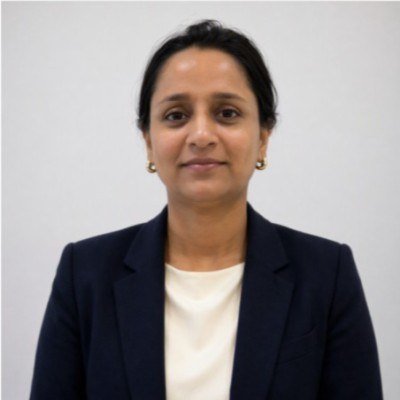
Neha Gupta is a CFA charterholder based in Winnipeg who has worked in financial markets since December 2005. She has published more than 2,600 investment articles and is Head of Operations and Finance at Whiteland Real Estate. She reviews WealthScale’s investing pages for accuracy.
- CFA charter, CFA Institute (awarded 2023)
- Post Graduate Diploma in Business Administration (Finance), 2008
- In financial markets since December 2005
- More than 2,600 published investment articles
General information only. Not financial, investment, tax or legal advice. WealthScale is independent and is published by WealthScale Media Inc., 55 Queen St E, Suite 1205, Toronto, ON M5C 1R6. CFA® and Chartered Financial Analyst® are registered trademarks owned by CFA Institute.