

Investing, Savings and Tax Calculators
These investment calculators Canada residents can use for free run on 2026 figures: the $7,000 TFSA limit, the $33,810 RRSP dollar limit, the $8,000 FHSA limit and federal tax rates from 14% to 33%. Each one answers a single question, such as how much TFSA room you have, what an RRSP contribution saves in tax or how much an RRIF must pay out this year. They run in your browser, need no sign-up and send nothing you type to our servers. Start with the 2026 income tax calculator below, or pick a tool from the list.
 Written by Sharad Gondaliya, CPA CPAChartered Professional Accountant, CPA Ontario No. 61040184
 Financial reviewer: Neha Gupta, CFA CFA charterholderReview of this page scheduled
At a glance
What is here. 23 calculator pages: the TFSA, RRSP, FHSA, RESP and RRIF, income tax, take-home pay, dividend tax and capital gains, CPP, OAS and the Canada Child Benefit, retirement income, GICs and savings interest, net worth, and four home buying tools for mortgage payments, affordability, land transfer tax and CMHC insurance. More calculators are built into our account guides and government benefit pages.
The 2026 figures they use. A $7,000 TFSA limit, an RRSP limit of 18% of prior-year earned income up to $33,810, FHSA room of $8,000 a year and $40,000 for life, a basic RESP grant of 20% on the first $2,500 a year, and federal tax brackets from 14% to 33%.
How they work. Every calculation runs in your browser. There is no sign-up, and the numbers you enter are not sent to or stored on our servers. Your browser remembers your birth year, province and income on your own device so the next calculator can fill them in.
One set of figures. All calculators read from a single data set checked on October 22, 2026. When a government figure changes, we change it once and every calculator updates.
What they are not. The results are estimates for general information. They do not replace your notice of assessment, your account statements or personal tax advice.
This calculator estimates your 2026 federal and provincial income tax, your average rate and your marginal rate on each type of income. Choose your province and enter your income.
All 23 WealthScale Investment Calculators
Every calculator page we publish, grouped by the question it answers. Each one uses the same 2026 data set as the income tax calculator above, so a figure changed once changes in every tool.
Registered accounts
Income tax and pay
Growth, savings and fees
Retirement and benefits
Home buying
1. TFSA Calculator: Room, Withdrawals and Over-Contributions
What it answers. The TFSA contribution room calculator adds up every annual limit you qualify for since 2009 and gives your room for 2026 and your new room on January 1. You enter your birth year, the year you became a resident of Canada if you were not always one, any years you were a non-resident, and your contributions and withdrawals.
The rules it applies. Room starts in the year you turn 18, even where the age of majority is 19 and you cannot open an account until then. The 2026 limit is $7,000, and someone who was 18 or older and resident every year since 2009 and never contributed has $109,000 of room. Newcomers start in the year they become resident and get that full year’s limit, with no proration. No new room builds in a year you are a non-resident.
Withdrawals. A withdrawal is added back to your room on January 1 of the next year, not right away. That timing trips up many people who withdraw and redeposit in the same year. A direct transfer between two TFSAs does not affect room, but withdrawing and redepositing yourself counts as a new contribution.
Over-contributions. A second tool on the same page works out the tax on an excess: 1% a month on the highest excess in each month. Unlike the RRSP, the TFSA has no $2,000 cushion. If you have an excess, withdraw it as soon as possible and file the TFSA Return by June 30 of the following year.
2. RRSP Calculator: Tax Refund, Room and Withdrawal Tax
What it answers. The RRSP tax refund calculator works out how much tax a contribution saves in any province or territory using 2026 brackets. Two more tools on the page estimate your deduction limit and the tax on a withdrawal.
A worked figure. This example is hypothetical. An Ontario resident with $75,000 of taxable income who deducts a $5,000 RRSP contribution saves $1,632.50 of 2026 tax. That is $1,482.50 at the 29.65% combined rate ($5,000 x 29.65%) plus $150 of Ontario Health Premium, because the deduction moves income from $75,000 to $70,000 and the premium drops from $750 to $600. The same deduction saves $1,410.00 in British Columbia, $1,525.00 in Alberta and $1,805.88 in Quebec at the same income.
Room. Your RRSP deduction limit is 18% of your previous year’s earned income up to the dollar limit ($33,810 for 2026 and $35,390 for 2027), minus any pension adjustment, plus unused room carried forward. You can go over by $2,000 without penalty if you were 18 or older in the previous year; above that, the excess is taxed at 1% a month.
Withdrawals and deadlines. A lump-sum withdrawal has tax withheld at 10% up to $5,000, 20% over $5,000 up to $15,000 and 30% over $15,000 outside Quebec. The withholding is a prepayment; your final tax depends on your marginal rate. The deadline for contributions that count for a tax year is the 60th day of the next year. For 2025 it was March 2, 2026, and for the 2026 tax year it is Monday, March 1, 2027.
Withdrawals in detail. The separate RRSP withdrawal calculator shows the tax withheld on a withdrawal of any size and the final tax once it is added to your other 2026 income, so you can see how much more, or less, you will owe at filing time. Our guide to RRSP withdrawal tax covers the withholding rates in Quebec and for non-residents.
3. FHSA and First Home Calculators
What it answers. The FHSA calculator page holds three tools: FHSA room by the year you opened your first account, a four-question eligibility check, and a first-home tool that adds FHSA savings to Home Buyers’ Plan withdrawals for one buyer or a couple.
Room. FHSA room starts only when you open your first FHSA: $8,000 in that year and $8,000 each year after, up to $40,000 for life. Up to $8,000 of unused room carries forward, so the most you can contribute in one year is $16,000. The deadline is December 31, with no 60-day period after year-end. Contributions are deductible, and you can carry an unused deduction forward, even after the account is closed.
Eligibility. To open an FHSA you must be a resident of Canada, at least 18 (19 where that is the age of majority), no older than 71 at December 31 of the year you open it, and a first-time home buyer. That last test means you and your current spouse or common-law partner did not own and live in a home in the current year before opening or in the previous four calendar years.
FHSA plus the Home Buyers’ Plan. You can use both for the same home. One buyer can put in up to $40,000 of FHSA contributions and withdraw up to $60,000 under the Home Buyers’ Plan, or $100,000 before any FHSA growth ($40,000 + $60,000). A couple who both qualify can reach $200,000 ($100,000 x 2). The FHSA must close by December 31 of the year of the earliest of its 15th anniversary, your 71st birthday or the year after your first qualifying withdrawal.
4. RESP Grant Calculator: Grants and Growth to Age 17
What it answers. The RESP grant calculator projects every government grant a child can receive and the plan balance at 17, based on your contributions, family income, province and the child’s age.
Federal grants. The basic Canada Education Savings Grant is 20% of the first $2,500 contributed each year, or $500. Unused grant room carries forward, so a child can get up to $1,000 in one year, and up to $7,200 over their lifetime. Families with adjusted family net income below $58,523 get an extra 20% on the first $500 each year ($100), and those from $58,523 up to $117,045 get an extra 10% ($50). The Canada Learning Bond pays lower-income families $500 in the first year and $100 a year after, up to $2,000, with no contribution needed.
Provincial grants. British Columbia pays a one-time $1,200 BC Training and Education Savings Grant. Quebec’s basic incentive adds 10% of contributions, up to $250 a year and $3,600 for life. No other province currently has an RESP grant.
A worked figure. This example is hypothetical. At the basic 20% rate, a family that contributes $2,500 a year for 14 years and $1,000 in a 15th year collects the full $7,200 lifetime grant: $7,000 over the first 14 years ($500 x 14) plus $200 in the 15th ($1,000 x 20%). Its contributions total $36,000 ($2,500 x 14 + $1,000). Families who also receive the additional CESG reach the $7,200 cap sooner, because it counts toward the same lifetime maximum. Grants stop after the year the child turns 17, and grants at 16 and 17 depend on earlier contributions.
5. RRIF Minimum Withdrawal Calculator
What it answers. The RRIF minimum withdrawal calculator gives the minimum you must take this year and projects future minimums by age. You enter the balance on January 1, your age (or a younger spouse’s age if you chose it when you set up the RRIF) and an assumed return.
The formula. The minimum is the fair market value on January 1 multiplied by a prescribed factor. At 70 or younger the factor is 1 divided by (90 minus your age), so 4.00% at 65. From 71 the factors come from a fixed chart: 5.28% at 71, 5.40% at 72, 5.53% at 73, 5.67% at 74 and 5.82% at 75, rising to 20% at 95 and over.
A worked figure. This example is hypothetical. A $500,000 RRIF at 71 must pay at least $26,400 that year ($500,000 x 5.28%). The same balance at 65 needs only $20,000 ($500,000 x 4.00%). No minimum is required in the year the RRIF is set up; the first one is due the following year.
Timing and tax. Your RRSP must become a RRIF, an annuity or a withdrawal by December 31 of the year you turn 71. A direct transfer to a RRIF has no tax withheld. Withdrawals above the minimum have tax withheld at the lump-sum rates of 10%, 20% or 30% outside Quebec. At 65 or older, RRIF income can qualify for the federal pension income amount of up to $2,000, and up to 50% of it can be split with a spouse or common-law partner.
The whole retirement picture. RRIF withdrawals are only one income stream. The retirement calculator adds your savings to CPP and OAS at the start ages you choose and shows the yearly income they could give together. No tax is withheld on the RRIF minimum itself; our guide to RRIF withdrawal tax explains the rates on amounts above it.
6. Tax Calculators for Canada, 2026
Income tax. The calculator at the top of this page uses 2026 federal and provincial brackets, basic personal amounts, the dividend gross-up and tax credits, the Ontario surtax and Health Premium, the Ontario and British Columbia low-income tax reductions, and the 16.5% Quebec abatement. It does not include CPP and EI contributions, the Canada employment amount or other credits, so your final tax will usually be a little lower than the estimate. The income tax calculator page adds a table at every income level, and the take-home pay calculator adds CPP, CPP2 and EI to show your pay per period.
| Province or territory | Federal tax | Provincial or territorial tax | Total tax | Average rate | Marginal rate |
|---|---|---|---|---|---|
| Alberta | $9,267.73 | $4,454.48 | $13,722.21 | 18.30% | 30.50% |
| British Columbia | $9,267.73 | $3,977.28 | $13,245.01 | 17.66% | 28.20% |
| Manitoba | $9,267.73 | $6,941.76 | $16,209.49 | 21.61% | 33.25% |
| New Brunswick | $9,267.73 | $6,808.27 | $16,075.99 | 21.43% | 34.50% |
| Newfoundland and Labrador | $9,267.73 | $7,144.50 | $16,412.22 | 21.88% | 35.00% |
| Nova Scotia | $9,267.73 | $8,478.14 | $17,745.87 | 23.66% | 37.17% |
| Northwest Territories | $9,267.73 | $3,945.24 | $13,212.96 | 17.62% | 29.10% |
| Nunavut | $9,267.73 | $2,789.61 | $12,057.34 | 16.08% | 27.50% |
| Ontario | $9,267.73 | $4,747.02 | $14,014.75 | 18.69% | 29.65% |
| Prince Edward Island | $9,267.73 | $7,617.89 | $16,885.62 | 22.51% | 37.10% |
| Quebec | $7,738.55 | $8,879.47 | $16,618.02 | 22.16% | 36.12% |
| Saskatchewan | $9,267.73 | $6,144.36 | $15,412.08 | 20.55% | 33.00% |
| Yukon | $9,267.73 | $4,175.47 | $13,443.20 | 17.92% | 29.50% |
Reading the table. This example is hypothetical and uses the calculator’s method. The average rate is total tax divided by income. The marginal rate is the tax on the next $100, which is what an RRSP deduction saves and what a raise costs. Ontario’s provincial figure includes a $750 Health Premium. Each figure is rounded to the cent on its own, as the calculator shows it, so a total can differ from the sum of its parts by one cent. Manitoba’s 2026 brackets start at $47,000 and $100,000, fixed in The Income Tax Act (Manitoba) for 2024 and later years with no indexation, so at $75,000 Manitoba tax is $6,941.76: $5,076 on the first $47,000 ($47,000 x 10.8%) plus $3,570 on the next $28,000 ($28,000 x 12.75%), less a $1,704.24 credit on the $15,780 basic personal amount ($15,780 x 10.8%). At this income the Ontario and British Columbia low-income reductions are nil, so they do not change those rows.
Capital gains and dividends. The capital gains tax calculator works out the gain as sale proceeds minus adjusted cost base minus selling costs, then the tax at your marginal rate. A net capital loss can be carried back three years or forward with no time limit, against capital gains only. The superficial loss rule denies a loss if you or an affiliated person buy the same property within 30 days before or after the sale and still hold it 30 days after. The same page holds a dividend tax calculator: eligible dividends are grossed up by 38% and earn a federal credit of 15.0198% of the grossed-up amount.
7. Growth, Fee, Dividend and Protection Calculators
Compound interest. The compound interest calculator shows how a lump sum and monthly savings grow, year by year, with yearly, semi-annual, quarterly, monthly or daily compounding. $10,000 at 5% compounded monthly grows to $16,470.09 in 10 years. Two more tools on the page compare two fee levels over time and work out the monthly saving needed to reach a target.
Savings, GICs and net worth. The savings interest calculator shows what your balance earns at every savings account we track, where the top everyday rate without a paid plan was 2.85% on October 22, 2026. The GIC calculator works out a GIC’s maturity value and the tax on its interest, using rates up to the 4.50% best 5-year rate in our register, and can build a 1 to 5-year ladder. The net worth calculator subtracts your debts from your assets and shows your debt and liquidity ratios, a useful yearly check on everything the other tools project.
Fees. The fee comparison tool shows that on $10,000 invested for 25 years at a 6% return before fees, a 2% yearly fee leaves $27,137.65 while a 0.25% fee leaves $41,957.28. The gap is $14,819.63 ($41,957.28 – $27,137.65). This example is hypothetical, and the return is an assumption. Fees for each platform are on our robo-advisor comparison and online broker comparison.
Investment fees. The investment fee calculator works out what your investing costs each year. One tool prices a trading pattern you choose at every online broker we track, using each one’s published commissions and account fees; another gives robo-advisor fees for your balance; a third shows what a higher fund fee takes from your savings over time.
Dividend reinvestment. The DRIP calculator on our best brokers for dividend investing page shows how your shares and dividends build over the years when dividends are reinvested in fractional shares, in whole shares only, or not at all. Seven of the 13 online brokers we track list a dividend reinvestment plan.
Investor protection. The CIPF coverage checker in our CIPF vs CDIC guide shows how much of your property at one investment dealer CIPF would cover if the firm failed, by account group: up to $1,000,000 for general accounts (cash, margin, TFSA and FHSA combined), a separate $1,000,000 for retirement accounts and another $1,000,000 for RESPs. A second tool there totals CDIC deposit insurance by category, up to $100,000 in each. Neither plan covers market losses.
US withholding tax. A related tool on our guide to buying US stocks from Canada shows how much US tax is withheld on dividends in each account type: 15% with a W-8BEN on file, 30% without one, and nothing in an RRSP, RRIF or LIRA holding US-listed securities directly. In a TFSA, FHSA or RESP, the 15% cannot be recovered.
Not sure which account a calculator result should go into? Compare the accounts side by side, with a quick goal-based chooser.
8. Benefit Calculators and Payment Dates
Payment dates. Our benefit payment dates hub counts down to the next payment and lists the full 2026 schedule. As of October 22, 2026, the next CPP and OAS payment is October 28, 2026, the next Canada Child Benefit payment is November 20, 2026, and the next Canada Groceries and Essentials Benefit payment is January 5, 2027.
CPP and OAS start age. The calculator on our CPP and OAS payment dates page compares starting CPP at any age from 60 to 70 and OAS from 65 to 70. The maximum CPP retirement pension at 65 is $1,507.65 a month in 2026. Starting early cuts it by 0.6% a month (36% at 60) and waiting raises it by 0.7% a month (42% at 70). OAS rises 0.6% for each month you defer, up to 36% at 70.
Dedicated benefit calculators. The CPP calculator compares your pension at every start age from 60 to 70, and the OAS calculator works out the deferral increase and how much of the pension the clawback takes back. Families can use the CCB calculator for the July 2026 to June 2027 Canada Child Benefit: up to $8,157 a year for each child under 6 and $6,883 for each child aged 6 to 17, reduced once adjusted family net income passes $38,237.
OAS clawback. The OAS recovery tax takes 15% of net income above $95,323 for the 2026 income year. OAS is fully recovered at $155,320 for ages 65 to 74 and $161,320 for 75 and over. The clawback calculator shows how much of your pension you keep.
GST/HST credit, now the Canada Groceries and Essentials Benefit. The benefit replaced the GST/HST credit from the July 2026 payment, with amounts 25% higher. For July 2026 to June 2027 the maximum is $679 for a single person, $890 for a couple and $234 per child under 19, and the amount starts to fall when adjusted family net income passes $46,432. Our GST/HST credit page estimates your payment; CRA works out the exact amount from your return.
9. Home Buying Calculators: Mortgage, Land Transfer Tax and CMHC
What they answer. Four calculators cover the numbers behind a purchase: what a mortgage costs each pay period, how large a mortgage your income can support, the land transfer tax due at closing, and the mortgage insurance premium when you put down less than 20%. Interest rates in them are example rates that you change to the rate you are offered; they are never presented as current or best rates.
Down payment and insurance. The minimum down payment is 5% of a price of $500,000 or less. From $500,000 to $1.5 million it is 5% of the first $500,000 plus 10% of the part above it, and at $1.5 million or more it is 20%. With less than 20% down the mortgage must be insured, which is possible only on homes priced below $1,500,000. CMHC’s premium is 0.60% of the loan at a loan-to-value of 65% or less, rising to 4.00% from 90.01% to 95%. The CMHC insurance calculator applies every band.
Affordability. CMHC caps the gross debt service ratio at 39% and the total debt service ratio at 44% of gross income, counting principal, interest, property tax, heating and 50% of condo fees. Lenders must qualify you at the greater of your contract rate plus 2% or 5.25%. The mortgage affordability calculator runs both ratios at that qualifying rate.
Payments. An insured mortgage can be amortized over 25 years, or 30 years for a first-time buyer or a new build. Accelerated biweekly or weekly payments add the equivalent of one extra monthly payment each year. The mortgage payment calculator compounds the rate twice a year, not in advance, as in the Financial Consumer Agency of Canada’s fixed-rate disclosure example, and prints an amortization table.
Land transfer tax. This example is hypothetical. On a $400,000 home in Ontario, the provincial land transfer tax is $4,475: $275 on the first $55,000 ($55,000 x 0.5%), $1,950 on the next $195,000 ($195,000 x 1%) and $2,250 on the last $150,000 ($150,000 x 1.5%). An eligible first-time buyer can have up to $4,000 refunded, which leaves $475 ($4,475 – $4,000). The land transfer tax calculator covers each province’s tax or fees, plus Toronto’s municipal tax.
10. Every 2026 Rate and Limit the Calculators Use
The table below lists the figures our calculators read from their shared data set, exactly as the calculators use them. They were checked on October 22, 2026. If a figure on another page ever differs from this table, this table and the calculators are the version we maintain first.
| Rate or limit | Figure used | Calculators that use it |
|---|---|---|
| Federal income tax: first $58,523 | 14% | Income tax, RRSP refund, capital gains, dividend tax |
| Federal income tax: over $58,523 up to $117,045 | 20.5% | Income tax, RRSP refund, capital gains, dividend tax |
| Federal income tax: over $117,045 up to $181,440 | 26% | Income tax, RRSP refund, capital gains, dividend tax |
| Federal income tax: over $181,440 up to $258,482 | 29% | Income tax, RRSP refund, capital gains, dividend tax |
| Federal income tax: over $258,482 | 33% | Income tax, RRSP refund, capital gains, dividend tax |
| Federal basic personal amount | $16,452, reduced gradually above $181,440 of net income to $14,829 at $258,482 | All tax calculators |
| Quebec abatement of basic federal tax | 16.5% | All tax calculators (Quebec residents) |
| Eligible dividend gross-up | 38% | Income tax, dividend tax |
| Federal dividend tax credit, eligible (of the grossed-up amount) | 15.0198% | Income tax, dividend tax |
| Other than eligible dividend gross-up | 15% | Income tax, dividend tax |
| Federal dividend tax credit, other than eligible | 9.0301% | Income tax, dividend tax |
| Ontario dividend tax credit, eligible and other than eligible | 10% and 2.9863% | Income tax, dividend tax |
| British Columbia dividend tax credit, eligible and other than eligible | 12% and 1.96% | Income tax, dividend tax |
| Quebec dividend tax credit, eligible and other than eligible | 11.7% and 3.42% | Income tax, dividend tax |
| New Brunswick dividend tax credit, eligible and other than eligible | 14% and 2.75% | Income tax, dividend tax |
| Nova Scotia dividend tax credit, eligible and other than eligible | 8.85% and 1.5% | Income tax, dividend tax |
| Prince Edward Island dividend tax credit, eligible and other than eligible | 10.5% and 1.3043% | Income tax, dividend tax |
| Newfoundland and Labrador dividend tax credit, eligible and other than eligible | 6.3% and 3.2% | Income tax, dividend tax |
| Manitoba tax brackets, 2026 | 10.8% up to $47,000; 12.75% over $47,000 up to $100,000; 17.4% over $100,000 (not indexed) | All tax calculators (Manitoba residents) |
| Ontario tax reduction, 2026 | 2 x ($300 + $554 per dependant), less basic Ontario tax and surtax, if the result is positive | Income tax, take-home pay |
| British Columbia tax reduction, 2026 | $690, less 3.56% of income over $25,570; nil above $44,952 | Income tax, take-home pay |
| CPP contribution rate and earnings, 2026 | 5.95% of earnings over $3,500 up to $74,600; maximum $4,230.45 | Take-home pay |
| CPP2 contribution rate, 2026 | 4% of earnings over $74,600 up to $85,000; maximum $416 | Take-home pay |
| EI premium, 2026 | 1.63% on insurable earnings up to $68,900 (1.30% in Quebec); maximum $1,123.07 | Take-home pay |
| QPP and QPIP, 2026 (Quebec) | QPP 6.30%; QPIP 0.430% up to $103,000 | Take-home pay |
| TFSA annual limit, 2026 | $7,000 | TFSA room |
| TFSA total room since 2009 (18 or older, resident every year, never contributed) | $109,000 | TFSA room |
| TFSA over-contribution tax | 1% a month | TFSA over-contribution |
| RRSP deduction limit rate | 18% of prior-year earned income | RRSP room |
| RRSP dollar limit, 2026 | $33,810 | RRSP room |
| RRSP dollar limit, 2027 | $35,390 | RRSP room |
| RRSP over-contribution cushion | $2,000 | RRSP room |
| RRSP withholding outside Quebec | 10% up to $5,000; 20% over $5,000 up to $15,000; 30% over $15,000 | RRSP withdrawal |
| RRSP withholding in Quebec, federal part | 5% up to $5,000; 10% over $5,000 up to $15,000; 15% over $15,000 | RRSP withdrawal |
| FHSA annual room | $8,000 | FHSA room, first home |
| FHSA lifetime limit | $40,000 | FHSA room, first home |
| FHSA carry-forward cap | $8,000 | FHSA room |
| FHSA maximum participation period | 15 years; must be 71 or younger at December 31 of the year opened | FHSA room, eligibility |
| Home Buyers’ Plan withdrawal limit | $60,000 | First home, HBP repayment |
| Home Buyers’ Plan repayment period | 15 years | HBP repayment |
| RESP lifetime contribution limit per beneficiary | $50,000 | RESP grant |
| Canada Education Savings Grant (basic) | 20% of the first $2,500 a year ($500 a year) | RESP grant |
| CESG maximum in one year with unused room | $1,000 | RESP grant |
| CESG lifetime maximum | $7,200 | RESP grant |
| Additional CESG on the first $500 | 20% with family income below $58,523; 10% from $58,523 up to $117,045 | RESP grant |
| Canada Learning Bond | $500 first year, $100 a year after, $2,000 lifetime | RESP grant |
| BC Training and Education Savings Grant | $1,200 one time | RESP grant |
| Quebec Education Savings Incentive (basic) | 10% of contributions, up to $250 a year, $3,600 lifetime | RESP grant |
| RRIF minimum withdrawal factor, age 71 | 5.28% | RRIF minimum |
| RRIF minimum withdrawal factor, age 72 | 5.40% | RRIF minimum |
| RRIF minimum withdrawal factor, age 73 | 5.53% | RRIF minimum |
| RRIF minimum withdrawal factor, age 74 | 5.67% | RRIF minimum |
| RRIF minimum withdrawal factor, age 75 | 5.82% | RRIF minimum |
| RRIF minimum factor, age 70 or younger | 1 divided by (90 minus age) | RRIF minimum |
| US dividend withholding with a W-8BEN | 15% | US withholding |
| US dividend withholding without a W-8BEN | 30% | US withholding |
| CDIC deposit insurance per category | $100,000 | Deposit insurance |
| CIPF coverage per account group at one dealer (general, retirement, RESP) | $1,000,000 each | CIPF coverage |
| OAS recovery tax threshold, 2026 income year | $95,323 at a 15% recovery rate | OAS clawback |
| OAS maximum monthly pension, October to December 2026 | $762.50 at ages 65 to 74; $838.75 at 75 and over | CPP and OAS start age |
| CPP maximum monthly retirement pension at 65, 2026 | $1,507.65 | CPP and OAS start age |
| CPP average monthly retirement pension at 65 | $858.34 | CPP and OAS start age |
| CPP change per month of early or late start | 0.6% less per month before 65; 0.7% more per month after 65 | CPP and OAS start age |
| OAS increase per month of deferral | 0.6% | CPP and OAS start age |
| Canada Groceries and Essentials Benefit, July 2026 to June 2027 | $445 per adult; $234 per child; $234 single supplement | GST/HST credit |
| Family net income where the benefit starts to fall | $46,432 | GST/HST credit |
| Canada Child Benefit maximum, July 2026 to June 2027 | $8,157 per child under 6; $6,883 per child at ages 6 to 17 | CCB |
| CCB reduction thresholds (adjusted family net income) | $38,237 and $82,847 | CCB |
| Guaranteed Income Supplement maximum, single, October to December 2026 | $1,138.90 a month, with income under $23,112 | Retirement income |
| Minimum down payment | 5% of the first $500,000; 10% of the part over $500,000; 20% at a price of $1.5 million or more | Mortgage affordability, CMHC insurance |
| Insured mortgage price cap | Below $1,500,000 | Mortgage affordability, CMHC insurance |
| CMHC premium by loan-to-value | 0.60% at 65% or less; 1.70% up to 75%; 2.40% up to 80%; 2.80% up to 85%; 3.10% up to 90%; 4.00% up to 95% | CMHC insurance, mortgage payment |
| Mortgage qualifying rate (stress test) | Greater of the contract rate plus 2% or 5.25% | Mortgage affordability |
| Debt service limits (CMHC) | GDS 39%; TDS 44% | Mortgage affordability |
| Ontario land transfer tax | 0.5% up to $55,000; 1.0% up to $250,000; 1.5% up to $400,000; 2.0% above $400,000; 2.5% above $2,000,000 for one or two single family residences | Land transfer tax |
| Ontario first-time homebuyer land transfer tax refund | Up to $4,000 | Land transfer tax |
Provincial tax figures. The income tax, RRSP refund, capital gains and dividend calculators also use the full 2026 bracket schedule for each province and territory. The table below shows each one’s lowest and top rate and its basic personal amount. Ontario adds a surtax of 20% of basic Ontario tax over $5,818 plus 36% over $7,446, and a Health Premium of up to $900.
| Province or territory | Lowest rate | Top rate | Basic personal amount |
|---|---|---|---|
| Alberta | 8% | 15% | $22,769 |
| British Columbia | 5.6% | 20.5% | $13,216 |
| Manitoba | 10.8% | 17.4% | $15,780 |
| New Brunswick | 9.4% | 19.5% | $13,664 |
| Newfoundland and Labrador | 8.7% | 21.8% | $13,094 |
| Nova Scotia | 8.79% | 21% | $11,932 |
| Northwest Territories | 5.9% | 14.05% | $18,198 |
| Nunavut | 4% | 11.5% | $19,659 |
| Ontario | 5.05% | 13.16% | $12,989 |
| Prince Edward Island | 9.5% | 20% | $15,000 |
| Quebec | 14% | 25.75% | $18,952 |
| Saskatchewan | 10.5% | 14.5% | $20,381 |
| Yukon | 6.4% | 15% | $16,452 |
A figure that is not published yet. CRA has not yet published the TFSA dollar limit for 2027. We add it the day it is confirmed and never use an estimate in its place.
Dividend credits by province. The dividend calculations include verified 2026 provincial dividend tax credits for Ontario, British Columbia, Quebec, New Brunswick, Nova Scotia, Prince Edward Island, and Newfoundland and Labrador, each applied to the grossed-up dividend. Credits for Alberta, Saskatchewan, Manitoba and the three territories are still being confirmed, so for those places the calculators apply the federal credit only and will overstate the tax on Canadian dividends until the provincial credit is added.
11. How Our Investment Calculators Work
Your numbers stay in your browser. Every calculator is code that runs on the page in your own browser. When you type a number, the result is worked out on your device. Nothing you enter is sent to or stored on our servers, and there is no account, email or sign-up.
What your browser remembers. To save you retyping, your browser keeps three entries on your device: your birth year, your province and your income. The next calculator you open fills them in. You can remove them at any time by clearing this site’s data in your browser settings. If our site analytics are switched on, they record that a calculator was used and which one, never the values you entered.
One data set, dated. Every limit, rate and factor lives in a single data set with a checked date, currently October 22, 2026. Each tax, account and benefit figure comes from Canada Revenue Agency, Service Canada or provincial government publications and is entered only once it is confirmed. When a figure changes, we update the data set and every calculator on the site changes with it. Our editorial standards describe how figures are checked.
How the maths is done. Tax calculators apply each bracket in turn, subtract the basic personal amount credit at the lowest rate, add the Ontario surtax where it applies, apply dividend credits, and add the Health Premium or the Quebec abatement where they apply. Growth calculators convert an annual rate to an effective monthly rate and add deposits at the end of each month. The RRIF calculator multiplies the January 1 balance by the prescribed factor for the age. The TFSA calculator adds each annual limit from the year you turned 18 or became resident.
What they leave out. The calculators give general estimates. They do not include CPP and EI contributions, most non-refundable credits, or your personal history with CRA. For your exact TFSA or RRSP room, please check your latest notice of assessment. For a decision that depends on your whole situation, a professional who knows your file can account for what a calculator cannot.
How to choose the right calculator
- Start with the question: room, tax saved, growth, a withdrawal or a benefit amount.
- For how much you can contribute, open the TFSA, RRSP or FHSA calculator.
- For what a contribution or withdrawal does to your tax, use the RRSP refund tool or the income tax calculator above.
- For what your savings could become, use the compound interest calculator, then the fee tool.
- For a child’s education or retirement income, use the RESP grant, RRIF minimum, CPP, OAS or retirement calculator.
- Buying a home? Start with mortgage affordability, then price the land transfer tax and any CMHC premium before you make an offer.
- Re-run your numbers each January, when new limits take effect.
Calculator FAQ
Are WealthScale’s calculators free to use?
Yes. Every calculator on WealthScale costs nothing to use, with no sign-up, no email and no account. There are no paid tiers or locked features. The calculators run in your browser, and the numbers you enter are not sent to or stored on our servers.
Do you store the numbers I enter?
No. Calculations happen in your own browser. To save retyping, your browser keeps your birth year, province and income on your device so the next calculator can fill them in. You can delete them by clearing this site’s data in your browser settings. If site analytics are on, they record only which calculator was used.
Which 2026 figures do the calculators use?
The main ones are the $7,000 TFSA limit, the RRSP limit of 18% of prior-year earned income up to $33,810, FHSA room of $8,000 a year and $40,000 for life, the 20% basic RESP grant on the first $2,500 a year, RRIF factors such as 5.28% at 71, and federal brackets from 14% to 33%. The full list is in the table on this page.
How accurate is the 2026 income tax calculator?
It applies 2026 federal and provincial brackets, basic personal amounts, dividend credits, the Ontario surtax and Health Premium and the Quebec abatement. It leaves out CPP and EI contributions, the Canada employment amount and other credits, so your actual tax will usually be a little lower. Treat the result as an estimate, not a substitute for your return.
How do I calculate my TFSA contribution room?
Use the TFSA contribution room calculator. Enter your birth year, the year you became a resident if you were not always one, any non-resident years, and your contributions and withdrawals. It adds every annual limit you qualify for, such as $7,000 for 2026, and shows your room now and on January 1, when withdrawals are added back.
How much will an RRSP contribution save me in tax?
It depends on your province and income. The RRSP tax refund calculator works it out with 2026 brackets. For example, an Ontario resident with $75,000 of taxable income who deducts $5,000 saves $1,632.50, including $150 of Ontario Health Premium. In British Columbia the same deduction saves $1,410.00. This example is hypothetical.
Which calculator shows how my savings will grow?
The compound interest calculator. Enter a starting amount, a monthly contribution, a rate, the years and the compounding frequency, and it shows the value at the end of every year. $10,000 at 5% compounded monthly grows to $16,470.09 in 10 years. The same page compares fees and works out the monthly saving needed for a goal.
Can a calculator tell me which account to open?
Our account chooser on the investment accounts page shows which registered accounts are built for a goal, such as a first home, retirement or a child’s education, based on your age, province, income and home ownership. It gives general information, not a recommendation, because the right mix depends on your whole situation.
Do the calculators work for Quebec residents?
Yes. The tax calculators apply Quebec’s 2026 brackets, its $18,952 basic personal amount and the 16.5% federal abatement. The RRSP withdrawal tool uses the federal withholding rates for Quebec of 5%, 10% and 15%, with Quebec provincial tax withheld on top. The RESP calculator includes the Quebec Education Savings Incentive of up to $250 a year.
How often are the calculators updated?
Whenever a figure they use changes. All calculators read from one data set, checked on October 22, 2026. When CRA or Service Canada publishes a new limit, rate or benefit amount, we update it once and every calculator changes. Figures not yet published, such as the 2027 TFSA limit, are added only when confirmed.
Pick the question you want answered and open the matching calculator. Most people start with their TFSA room.
Figures on this page were checked against Canada Revenue Agency and Service Canada publications on October 22, 2026. We update this page when a figure changes.
Meet the Experts Behind WealthScale

Sharad is a CPA Ontario member (No. 61040184) and a Certified Public Accountant licensed in Washington and Montana, with more than 15 years in accounting and tax, a Diploma in Banking and Finance and a Certificate in Small Business Finance. He checks WealthScale content against primary sources. WealthScale is independent of his firm, Gondaliya CPA Professional Corporation, and provides general information only, not personal financial, investment, tax or legal advice.
- Chartered Professional Accountant, CPA Ontario
- Certified Public Accountant, Washington (No. 57629) and Montana (No. PAC-CPAP-LIC-033176)
- Writing on tax and registered accounts since 2021
- Reader’s Choice Award 2025 Winner, Best Accountant (Toronto)
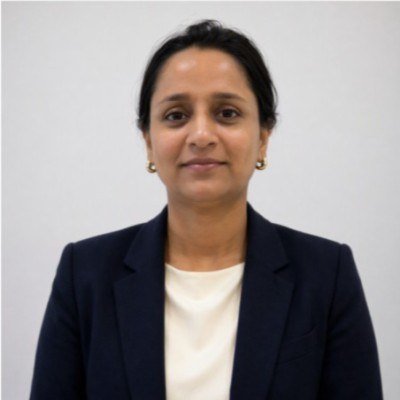
Neha Gupta is a CFA charterholder based in Winnipeg who has worked in financial markets since December 2005. She has published more than 2,600 investment articles and is Head of Operations and Finance at Whiteland Real Estate. She reviews WealthScale’s investing pages for accuracy.
- CFA charter, CFA Institute (awarded 2023)
- Post Graduate Diploma in Business Administration (Finance), 2008
- In financial markets since December 2005
- More than 2,600 published investment articles
General information only. Not financial, investment, tax or legal advice. WealthScale is independent and is published by WealthScale Media Inc., 55 Queen St E, Suite 1205, Toronto, ON M5C 1R6. CFA® and Chartered Financial Analyst® are registered trademarks owned by CFA Institute.