

CPP and OAS Payment Dates 2026
The CPP payment dates 2026 calendar has 12 deposits, and the next one is Wednesday, October 28, 2026, followed by November 26 and December 22. Canada Pension Plan, Old Age Security and Guaranteed Income Supplement payments all arrive on the same day each month. In 2026 the CPP retirement pension pays up to $1,507.65 a month for someone starting at 65, and OAS pays up to $762.50 a month at ages 65 to 74 and $838.75 at 75 or older for October to December 2026. The 2027 dates have not been published yet. Below are every date, the amounts, the clawback threshold and what to do if a deposit is late.
 Written by Sharad Gondaliya, CPA CPAChartered Professional Accountant, CPA Ontario No. 61040184
 Our financial reviewer: Neha Gupta, CFA CFA charterholderReviews WealthScale’s investing and account pages
At a glance
Next payment. The next CPP, OAS and GIS deposit is Wednesday, October 28, 2026. The last two dates of the year are Thursday, November 26 and Tuesday, December 22, 2026.
One date for three benefits. The CPP retirement pension, the OAS pension and the Guaranteed Income Supplement share one payment date each month. Every 2026 date falls in the last week of the month except December 22.
CPP amounts in 2026. The maximum CPP retirement pension for someone starting at 65 in 2026 is $1,507.65 a month. The average new pension at 65 was $858.34 a month as of July 2026.
OAS and GIS for October to December 2026. OAS pays up to $762.50 a month at ages 65 to 74 and $838.75 a month at 75 or older. The GIS adds up to $1,138.90 a month for a single pensioner with low income.
OAS clawback 2026. For the 2026 income year, OAS is reduced by 15% of net world income above $95,323, and the repayment is taken from your OAS between July 2027 and June 2028.
2027 dates. The CPP and OAS payment dates for 2027 have not been published yet. This page will list them once they are.
CPP and OAS Payment Dates 2026 and 2027
These are the OAS payment dates 2026 and the CPP payment dates 2026 in one table. The same date covers the CPP retirement, disability and survivor pensions, the OAS pension, the GIS, the Allowance and the Allowance for the Survivor.
| Month | Payment date | Day of the week | Status |
|---|---|---|---|
| January | January 28, 2026 | Wednesday | Paid |
| February | February 25, 2026 | Wednesday | Paid |
| March | March 27, 2026 | Friday | Paid |
| April | April 28, 2026 | Tuesday | Paid |
| May | May 27, 2026 | Wednesday | Paid |
| June | June 26, 2026 | Friday | Paid |
| July | July 29, 2026 | Wednesday | Paid |
| August | August 27, 2026 | Thursday | Paid |
| September | September 25, 2026 | Friday | Paid |
| October | October 28, 2026 | Wednesday | Next payment |
| November | November 26, 2026 | Thursday | Upcoming |
| December | December 22, 2026 | Tuesday | Upcoming |
CPP payment dates 2027. The 2027 calendar has not been published yet. Until it is, please do not rely on dates you see guessed elsewhere: CPP and OAS dates move by a day or two each month, so a guessed date can easily be wrong. We add the 2027 dates to this table as soon as they are released.
The tracker below counts down to your next CPP and OAS deposit and shows the full schedule for the year.
1. CPP Payment Dates 2026 Explained: Timing, Weekends and Holidays
One deposit day for three programs. Service Canada pays the CPP retirement pension, the OAS pension and the GIS on one shared date each month. If you receive more than one of them, they can show up as separate deposits on the same day, so your bank statement may list two or three entries. That is normal and does not mean anything was paid twice.
When is CPP paid in the month. These benefits are paid near the end of the month, not on the first. From January to November 2026, every payment date falls between the 25th and the 29th. If you budget around a paycheque that arrived on the 1st or the 15th, plan your rent and bill dates around the late-month deposit instead.
December comes early. The December 2026 payment arrives on Tuesday, December 22, several days earlier than the usual pattern, ahead of the holiday closures. That means a longer gap until the January 2027 deposit, whose date has not been published yet. Please set aside part of the December payment for early January bills.
Weekends and holidays. None of the 2026 dates falls on a Saturday, Sunday or statutory holiday. Because each date is set on a business day, the day of the week changes from month to month: Friday, March 27, then Tuesday, April 28, then Wednesday, May 27. Do not assume the same weekday or the same day number every month. Use the table above or the countdown tracker.
When the money appears. Direct deposits are released on the payment date. The time of day the money shows in your account depends on your bank or credit union. Cheques take longer because they travel by mail, so people paid by cheque often see the money days after people paid by direct deposit.
Quebec Pension Plan. If you worked only in Quebec, your retirement pension comes from the Quebec Pension Plan, which Retraite Québec pays on its own schedule. Your OAS and GIS still follow the federal dates on this page, because they are federal benefits wherever you live in Canada.
2. How Much CPP and OAS Pay in 2026
The table shows the maximum monthly amounts. Your own amount depends on your contribution record, years of residence and income.
| Benefit | Maximum per month | Period | Income cut-off or note |
|---|---|---|---|
| CPP retirement pension, starting at 65 | $1,507.65 | Pensions starting in 2026 | Average new pension at 65: $858.34 (July 2026) |
| OAS pension, age 65 to 74 | $762.50 | October to December 2026 | Reduced by the recovery tax at higher incomes |
| OAS pension, age 75 and older | $838.75 | October to December 2026 | 10% more than the amount at ages 65 to 74 |
| GIS, single, widowed or divorced | $1,138.90 | October to December 2026 | Income cut-off $23,112 |
| GIS, spouse or partner gets no OAS or Allowance | $1,138.90 | October to December 2026 | Combined income cut-off $55,392 |
| GIS, spouse or partner gets the full OAS | $685.56 | October to December 2026 | Combined income cut-off $30,528 |
| GIS, spouse or partner gets the Allowance | $685.56 | October to December 2026 | Combined income cut-off $42,768 |
| Allowance, age 60 to 64 | $1,448.06 | October to December 2026 | Combined income cut-off $42,768 |
| Allowance for the Survivor, age 60 to 64 | $1,726.18 | October to December 2026 | Income cut-off $31,152 |
CPP is personal. Only people who contributed at or above the maximum for most of their working years reach $1,507.65. The average new pension at 65, $858.34, is about 57% of the maximum ($858.34 ÷ $1,507.65). Your Statement of Contributions shows your own estimate.
OAS changes every quarter. OAS and GIS are adjusted for inflation each quarter. For October to December 2026 they rose 1.4%. The amounts for January to March 2027 have not been published yet. CPP pensions in pay are adjusted once a year, in January.
The age 75 increase. At 75, the OAS maximum is $838.75, which is $76.25 a month more than the $762.50 paid at 65 to 74 ($838.75 − $762.50), or 10% higher. The increase starts automatically.
Yearly totals. At the October to December 2026 rate, a full OAS pension at 65 to 74 is worth $9,150 over 12 months ($762.50 x 12). A maximum CPP pension started in 2026 is worth $18,091.80 over 12 months ($1,507.65 x 12). Real totals differ slightly because the OAS amount changes each quarter.
A single pensioner with low income. A single person aged 65 to 74 with full OAS and the full GIS receives up to $1,901.40 a month ($762.50 + $1,138.90). How we check and date every figure is set out in our editorial standards.
3. Who Qualifies for CPP, OAS and GIS
CPP retirement pension. You qualify if you made at least one valid contribution to the CPP through work in Canada outside Quebec and you are at least 60. The pension does not start by itself: you must apply and choose a start month. Contributions come from your pay as an employee, or from your tax return if you are self-employed.
OAS pension. OAS is based on age and residence, not on work. You must be 65 or older and meet the Canadian residence rules. The amount depends on how many years you lived in Canada as an adult, so people who arrived later in life may receive a partial pension rather than the full $762.50.
Automatic enrolment. Service Canada enrols many people in OAS automatically and sends a letter before their 65th birthday. If you do not receive that letter, you need to apply. Check your mail and your Service Canada online account in the year before you turn 65.
GIS. You must receive OAS, live in Canada and have income below the cut-off. For October to December 2026 the cut-off is $23,112 for a single person. For couples it is $55,392 when your spouse or partner gets no OAS or Allowance, $30,528 when they get the full OAS, and $42,768 when they get the Allowance. OAS and GIS themselves are left out of the income test.
The Allowance and the Allowance for the Survivor. A spouse or common-law partner aged 60 to 64 of a GIS recipient can get the Allowance, up to $1,448.06 a month. A low-income widow or widower aged 60 to 64 can get the Allowance for the Survivor, up to $1,726.18 a month. Both stop at 65, when OAS and GIS take over.
Living outside Canada. CPP can be paid anywhere in the world. OAS can keep being paid abroad if you meet the residence conditions for payment outside Canada. The GIS and the Allowance stop if you leave Canada for an extended period, so tell Service Canada before a long stay abroad.
4. How CPP and OAS Amounts Are Calculated
CPP starts with your earnings record. Your CPP pension depends on how much you earned and contributed over your working years and how many years you contributed. For 2026, base contributions apply to earnings between the basic exemption of $3,500 and the year’s maximum pensionable earnings (YMPE) of $74,600.
The CPP enhancement. The enhanced CPP adds to pensions for the years people contributed under it. In 2026, second additional contributions apply to earnings between $74,600 and the year’s additional maximum pensionable earnings (YAMPE) of $85,000. Younger workers who contribute for more enhancement years will see larger pensions than today’s retirees.
Dropout rules help. Some of your lowest-earning years are dropped from the calculation, and years spent at home raising young children can also be excluded. Years receiving a CPP disability pension are protected too. This is why two people with the same total earnings can get different pensions.
OAS is about residence. OAS is a flat amount, scaled down for partial residence, then raised by any deferral bonus and by the 10% increase at 75. It does not depend on earnings, but higher income reduces it through the recovery tax in section 5.
GIS is income-tested. The GIS is based on your income from the previous year, or combined income for a couple, not counting OAS. As other income rises, the GIS falls, and it stops at the cut-off. Service Canada uses your tax return to reset the GIS each July, which is why filing on time every year matters.
Get your own estimate. Your Statement of Contributions in your Service Canada online account shows your earnings record and an estimate of your pension at different ages. Check it for missing years well before you apply: a year with a missing T4 is easier to fix while records still exist.
5. OAS Clawback 2026: Recovery Tax Thresholds
The OAS recovery tax, often called the clawback, takes back part of your OAS when your net world income is above a set threshold. It does not affect CPP or the GIS.
| Income year | Clawback starts above | Recovery period | OAS fully recovered at (age 65 to 74) | OAS fully recovered at (age 75 and older) |
|---|---|---|---|---|
| 2025 | $93,454 | July 2026 to June 2027 | $152,062 | $157,923 |
| 2026 | $95,323 | July 2027 to June 2028 | $155,320 | $161,320 |
How the OAS clawback 2026 works. You repay 15% of your net world income above $95,323 for the 2026 income year. Service Canada collects it by reducing your monthly OAS during the recovery period, July 2027 to June 2028, based on your return. Any difference is settled when you file your return for that year.
A quick example. If your 2026 net income is $105,323, you are $10,000 over the threshold. The recovery tax is $1,500 for the year ($10,000 x 15%), which works out to $125 a month withheld from OAS ($1,500 ÷ 12) from July 2027 to June 2028.
When OAS disappears. Service Canada estimates OAS is fully recovered at $155,320 of 2026 income for ages 65 to 74 and $161,320 for 75 or older. These are estimates because they depend on OAS rates that change each quarter.
What counts as income. Net world income includes CPP, OAS itself, pension income, RRSP and RRIF withdrawals, interest, the grossed-up amount of dividends and the taxable part of capital gains. A one-time event, such as selling a cottage or a large non-registered portfolio, can push you over the threshold for a single year. Our capital gains tax calculator shows how much of a gain lands in income.
What does not count. TFSA withdrawals are not income, so they never trigger the clawback. That is one reason retirees keep a tax-free savings account alongside a RRIF.
Enter your expected net income below to see your recovery tax and the OAS you keep.
Planning withdrawals to stay under the OAS threshold starts with your RRIF minimum.
6. When to Start CPP and OAS: 60, 65 or 70
CPP before 65. Starting CPP early cuts the pension by 0.6% for each month before 65, which is 7.2% a year, up to 36% at age 60. The reduction is permanent.
CPP after 65. Waiting raises the pension by 0.7% for each month after 65, which is 8.4% a year, up to 42% at age 70. There is no extra increase for waiting past 70, so starting later than that only loses payments.
OAS deferral. OAS cannot start before 65. You can defer it, and each month you delay adds 0.6%, up to 36% at age 70.
| Start age | CPP adjustment | CPP if entitled to $1,507.65 at 65 | OAS adjustment | OAS if entitled to $762.50 at 65 |
|---|---|---|---|---|
| 60 | 36% less | $964.90 | Not available | Not available |
| 62 | 21.6% less | $1,182.00 | Not available | Not available |
| 64 | 7.2% less | $1,399.10 | Not available | Not available |
| 65 | No change | $1,507.65 | No change | $762.50 |
| 66 | 8.4% more | $1,634.29 | 7.2% more | $817.40 |
| 67 | 16.8% more | $1,760.94 | 14.4% more | $872.30 |
| 68 | 25.2% more | $1,887.58 | 21.6% more | $927.20 |
| 70 | 42% more | $2,140.86 | 36% more | $1,037.00 |
Read the table in 2026 dollars. The figures apply the adjustment to 2026 amounts. Real payments will be higher because CPP is indexed each January and OAS each quarter in the meantime.
GIS and deferral do not mix. The GIS is only paid while you receive OAS, and it is not increased for deferral. If your income is low enough for the GIS, deferring OAS usually means giving up GIS payments you cannot get back.
Compare start ages for your own CPP and OAS amounts with the tool below.
7. How CPP and OAS Payments Arrive: Direct Deposit and Cheques
Direct deposit is the reliable choice. Money sent by direct deposit is released on the payment date and cannot be lost in the mail. You can set up or change direct deposit in your Service Canada online account, by phone with Service Canada, or on your pension application.
Changing banks. Keep your old account open until the first deposit lands in the new one. If you close the old account before Service Canada has your new details, the payment is returned and has to be reissued, which delays it.
Paid by cheque. Cheques are still available. Tell Service Canada promptly when you move, because a cheque sent to an old address is returned and held. Mail delays around holidays can push a cheque well past the payment date.
Where to receive it. Any Canadian chequing account can receive federal deposits. If you pay monthly fees, compare no-fee chequing accounts or our wider list of the best chequing accounts in Canada. Money you do not need right away can earn interest in one of the best high-interest savings accounts.
Joint and spousal payments. Each spouse’s CPP and OAS is paid to that person. If both of you receive benefits, expect separate deposits even when they land in a joint account.
Watch for scams. Fraudsters send texts and emails claiming a pension payment is waiting. Service Canada payments arrive automatically on the dates above. Do not click a link or give banking details in reply to a message you did not expect.
8. Late or Missing CPP or OAS Payment: What to Do
Check the date first. Many “missing” payments are simply not due yet. Compare today with the table above, especially in December, when the payment comes early on December 22, and in months where the date falls on the 29th.
Check your bank details. A closed account, a typo in the account number or a recent bank switch is a common reason a deposit fails. Look at your Service Canada online account to confirm the account on file and any messages about your payments.
Allow time for cheques. If you are paid by cheque, give the mail a few business days. If it still has not arrived, contact Service Canada to report it and ask for a replacement.
Look for a change in your file. A payment can stop or drop when the GIS is reassessed after you file your return, when the recovery tax starts in July, when you report a move outside Canada, or when a spouse’s status changes. If you did not file your tax return, your GIS can stop in July.
Contact Service Canada. Have your Social Insurance Number, the payment date and your banking details ready. Write down the date and the name of the agent you speak with. Once the problem is fixed, Service Canada can reissue the missed payment.
Disagree with a decision. If Service Canada reduces or stops a benefit and you think it is wrong, you can ask for a reconsideration. Do it promptly and keep copies of everything you send.
9. Taxes on CPP, OAS and GIS
CPP is taxable. Your CPP pension is taxable income. You receive a T4A(P) slip each year showing the total paid and any tax withheld.
OAS is taxable. OAS is also taxable, and it is reported on a T4A(OAS) slip. Any recovery tax withheld appears on that slip, so you get credit for it when you file.
GIS is not taxed. The GIS, the Allowance and the Allowance for the Survivor are reported on your return and then deducted, so they are not taxed. They still count in net income for some income-tested credits, which is why they appear on the slip.
Tax is not withheld unless you ask. For Canadian residents, CPP and OAS are paid without tax taken off unless you request a voluntary deduction. If CPP, OAS and a RRIF together create a tax bill in April, ask Service Canada to withhold tax monthly, or set money aside in a savings account. In 2026 the lowest federal rate is 14% on taxable income up to $58,523, plus provincial tax.
Splitting and sharing. CPP and OAS cannot be split on your return through pension income splitting. CPP can, however, be shared with a spouse or common-law partner through Service Canada, which can lower a couple’s combined tax when one spouse has a much larger pension. RRIF income can be split on the return once you meet the age rules.
Filing still matters at low income. Even if you owe no tax, filing each year keeps the GIS, the Canada Groceries and Essentials Benefit and provincial credits flowing. Compare the best tax software in Canada if you file yourself.
10. Related Benefits and Accounts for Retirees
Canada Groceries and Essentials Benefit. The benefit that replaced the GST/HST credit in July 2026 pays up to $679 a year for a single person and $890 for a couple from July 2026 to June 2027, in quarterly payments. The next payment is January 5, 2027. See the GST payment dates and amounts.
Ontario Trillium Benefit and other benefits. Ontario residents may also get the Ontario Trillium Benefit, paid around the 10th of each month. The full calendar for every program is on our CRA benefit payment dates page.
RRSP to RRIF. December 31 of the year you turn 71 is the last day to contribute to your own RRSP, and the account must be converted to a RRIF or another option. Learn how an RRSP works, check the RRIF minimum withdrawal rules and compare the best RRIF accounts.
TFSA for flexible cash. The 2026 TFSA limit is $7,000, and you can keep contributing at any age. Withdrawals do not count as income for the OAS clawback or the GIS. See the TFSA withdrawal rules and how the TFSA vs RRSP choice changes in retirement.
Safe places for pension cash. A cash reserve for near-term spending means you never have to sell investments in a bad month. Compare GIC rates with savings accounts in our GIC vs high-interest savings guide, or see the EQ Bank review and the Wealthsimple Chequing review.
See every federal and Ontario benefit date for 2026 in one calendar.
What You Need and What You Get
What you need to start CPP and OAS
- Your Social Insurance Number
- A Service Canada online account, or the paper application forms
- The month you want each pension to start
- Your banking details for direct deposit
- Dates you lived outside Canada as an adult, for OAS
- Details of any pension from another country
- Your spouse or common-law partner’s details, for GIS or the Allowance
- Your tax returns filed and up to date
What you get from CPP and OAS
- A monthly CPP pension for life, adjusted each January
- A monthly OAS pension, adjusted each quarter
- A 10% OAS increase at age 75
- A larger pension if you defer, up to age 70
- The GIS, a non-taxable top-up if your income is low
- One predictable deposit date each month
- T4A(P) and T4A(OAS) slips for your tax return
- Possible survivor benefits for your spouse or partner
How It Works: Starting CPP and OAS
- Check your record. Review your Statement of Contributions for missing years and see your estimated CPP at 60, 65 and 70.
- Pick your start ages. Use the start-age tool and the table in section 6. CPP and OAS can start at different times.
- Watch for the OAS letter. If Service Canada enrols you automatically, confirm the details. If no letter arrives, apply for OAS yourself.
- Apply for CPP. Apply well before your chosen month, online or on paper, so the first payment is not delayed.
- Set up direct deposit and tax. Add your bank account and decide whether you want tax withheld each month.
- Mark the payment dates. Add the 2026 dates to your calendar and file your tax return every spring to keep the GIS and other benefits on time.
8 Strategies to Get More From CPP and OAS
1. Match the start age to your plan
Starting CPP at 70 pays 42% more each month than at 65, but you collect for fewer years. People in good health with other savings to live on often gain from waiting. People who need the money now, or have health concerns, may be better served starting earlier.
2. Bridge with RRSP or RRIF withdrawals
Drawing on an RRSP or RRIF in your early 60s can fund a later CPP and OAS start. It also shrinks the registered balance before RRIF minimums and OAS begin, which can lower taxable income in your late 70s and 80s.
3. Use the TFSA to stay under the threshold
TFSA withdrawals are not income. Taking a large one-time expense from a TFSA instead of a RRIF can keep your net income below $95,323 for the 2026 income year and protect your OAS.
4. Spread large capital gains
A big gain in one year can trigger the clawback. Selling an investment over two tax years, or using capital losses, can keep each year’s income lower. Check the numbers before you sell.
5. Share CPP with your spouse
When one spouse has a much larger CPP pension, sharing it through Service Canada can move income to the lower-rate spouse and cut the couple’s total tax.
6. Do not defer OAS if you expect the GIS
The GIS is paid only while you receive OAS and gets no deferral bonus. Low-income seniors usually come out ahead by starting OAS at 65.
7. File your return every year
The GIS, the Canada Groceries and Essentials Benefit and many provincial credits depend on your tax return. A late return can stop payments in July until it is processed.
8. Fix your record early
Check your CPP earnings record years before you apply. Missing years caused by an employer error are easier to correct while you still have your T4 slips and pay stubs.
Illustrative Example: CPP at 60, 65 or 70
This example is hypothetical. Lena turns 60 in 2026. Her Statement of Contributions shows she would receive the 2026 maximum, $1,507.65 a month, if she starts at 65. To keep the arithmetic clear, it ignores indexation, tax and investment returns.
- Start at 60: $964.90 a month ($1,507.65 x 0.64, a 36% reduction).
- Start at 65: $1,507.65 a month.
- Start at 70: $2,140.86 a month ($1,507.65 x 1.42, a 42% increase).
- 60 versus 65: By 65, starting at 60 would have paid $57,894.00 ($964.90 x 60 months). Starting at 65 pays $542.75 more each month ($1,507.65 − $964.90). The later start catches up after about 106.7 months ($57,894.00 ÷ $542.75), so just before age 74.
- 65 versus 70: Waiting from 65 to 70 gives up $90,459.00 ($1,507.65 x 60 months). Starting at 70 pays $633.21 more each month ($2,140.86 − $1,507.65). The later start catches up after about 142.9 months ($90,459.00 ÷ $633.21), so around age 82.
- What it means: If Lena expects to live past her early 80s and has savings to cover her 60s, waiting pays more over her lifetime. If not, an earlier start may suit her better. The same logic applies to OAS, where a 70 start pays $1,037.00 instead of $762.50 at current rates ($762.50 x 1.36).
CPP Payment Dates 2026: Frequently Asked Questions
When is the next CPP payment in 2026?
The next CPP payment is Wednesday, October 28, 2026. The remaining dates for the year are Thursday, November 26 and Tuesday, December 22, 2026. OAS and the Guaranteed Income Supplement are paid on the same days, so all three arrive together for people who receive them.
What are the CPP payment dates for 2027?
The CPP and OAS payment dates for 2027 have not been published yet. The dates move by a day or two each month to avoid weekends and holidays, so a guessed calendar can be wrong. We will add the official 2027 dates to the table on this page as soon as they are released.
Are CPP and OAS paid on the same day?
Yes. The CPP retirement pension, the OAS pension and the GIS share one payment date each month. They can show up as separate deposits on that day. The Allowance and the Allowance for the Survivor follow the same date as well.
Why is the December 2026 CPP payment early?
The December 2026 payment is on Tuesday, December 22, ahead of the holiday closures. Every other 2026 date falls in the last week of the month. Because the January 2027 date is not yet published, it makes sense to budget part of the December payment for early January bills.
What is the maximum CPP payment in 2026?
The maximum CPP retirement pension for someone starting at 65 in 2026 is $1,507.65 a month. Few people get the maximum. The average new pension at 65 was $858.34 a month as of July 2026. Your own amount depends on your earnings and contribution years.
How much is OAS for October to December 2026?
For October to December 2026, the maximum OAS pension is $762.50 a month at ages 65 to 74 and $838.75 at 75 or older. Amounts rose 1.4% for this quarter. The GIS adds up to $1,138.90 a month for a single pensioner with low income.
What is the OAS clawback threshold for 2026?
For the 2026 income year, the OAS recovery tax applies to net world income above $95,323, at 15% of the excess. It is collected from your OAS from July 2027 to June 2028. Service Canada estimates OAS is fully recovered at $155,320 for ages 65 to 74 and $161,320 for 75 or older.
What should I do if my CPP or OAS payment is late?
First confirm the payment date in the table, then check that your bank account details are correct and the account is open. Look for messages in your Service Canada online account. If the deposit or a mailed cheque still has not arrived after a few business days, contact Service Canada with your Social Insurance Number ready.
Is CPP taxable income?
Yes. CPP is taxable and reported on a T4A(P) slip. OAS is also taxable and reported on a T4A(OAS) slip. The GIS is reported on your return but then deducted, so it is not taxed. Tax is not withheld from CPP or OAS unless you ask Service Canada to do it.
Can I start CPP at 60 and OAS at 65?
Yes. CPP and OAS are separate programs with separate start dates. CPP can start as early as 60, with a 36% permanent reduction at that age. OAS cannot start before 65, but you can defer it to any month up to age 70 for a larger payment.
How much more OAS do I get if I wait until 70?
Each month you defer OAS adds 0.6%, up to 36% at age 70. At October to December 2026 rates, that turns $762.50 a month into $1,037.00 a month. Deferral does not raise the GIS, so low-income seniors usually start OAS at 65.
Do CPP and OAS amounts change during the year?
OAS and GIS amounts are adjusted for inflation every quarter, so the payment can change in January, April, July and October. CPP pensions are adjusted once a year, in January. Your OAS can also change in July if the recovery tax starts, stops or changes after your return is assessed.
Bookmark the CPP payment dates 2026 calendar above, and check every other benefit date in one place.
Figures on this page were checked against Service Canada publications on October 22, 2026. We update this page when a figure changes.
Meet the Experts Behind WealthScale

Sharad is a CPA Ontario member (No. 61040184) and a Certified Public Accountant licensed in Washington and Montana, with more than 15 years in accounting and tax, a Diploma in Banking and Finance and a Certificate in Small Business Finance. He checks WealthScale content against primary sources. WealthScale is independent of his firm, Gondaliya CPA Professional Corporation, and provides general information only, not personal financial, investment, tax or legal advice.
- Chartered Professional Accountant, CPA Ontario
- Certified Public Accountant, Washington (No. 57629) and Montana (No. PAC-CPAP-LIC-033176)
- Writing on tax and registered accounts since 2021
- Reader’s Choice Award 2025 Winner, Best Accountant (Toronto)
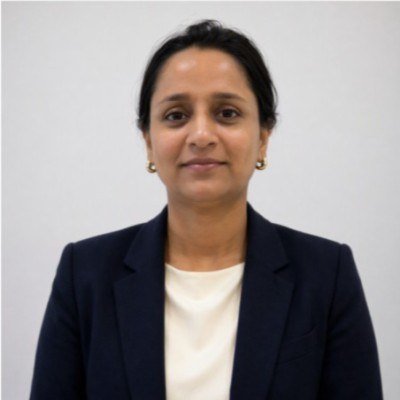
Neha Gupta is a CFA charterholder based in Winnipeg who has worked in financial markets since December 2005. She has published more than 2,600 investment articles and is Head of Operations and Finance at Whiteland Real Estate. She reviews WealthScale’s investing pages for accuracy.
- CFA charter, CFA Institute (awarded 2023)
- Post Graduate Diploma in Business Administration (Finance), 2008
- In financial markets since December 2005
- More than 2,600 published investment articles
General information only. Not financial, investment, tax or legal advice. WealthScale is independent and is published by WealthScale Media Inc., 55 Queen St E, Suite 1205, Toronto, ON M5C 1R6. CFA® and Chartered Financial Analyst® are registered trademarks owned by CFA Institute.