

Wealthsimple Chequing Review
WealthScale is independent and not affiliated with Wealthsimple.
This Wealthsimple Chequing review scores the account 4.4 / 5, second of the 20 chequing accounts we rank in Canada. It charges no monthly fee and needs no minimum balance. It pays 1.25% on the Core tier, 1.75% once you direct deposit $2,000 or more within 30 days, and up to 2.25% on the Premium and Generation tiers. ATM operator fees are reimbursed worldwide, the prepaid Visa carries no card fee, and your cash is held in trust at CDIC member institutions for up to $1,000,000 in combined coverage. EQ Bank pays more on a direct-deposited pay, at 2.75%.
 Written by Sharad Gondaliya, CPA CPAChartered Professional Accountant, CPA Ontario No. 61040184
 Financial reviewer: Neha Gupta, CFA CFA charterholderReview of this page scheduled
At a glance
Independence. WealthScale is independent and not affiliated with Wealthsimple. We score its chequing account on the same published rubric we use for every other provider.
Verdict. A strong no-fee chequing account that scores 4.4 / 5 and ranks second in Canada on our rubric. It reimburses eligible ATM operator fees anywhere in the world, and it is a good everyday account for anyone who already invests with Wealthsimple.
Interest rate. Core 1.25%, Premium 1.75% and Generation 2.25%, calculated daily and paid monthly. Core and Premium clients add 0.50% with $2,000 or more in direct deposits within a 30-day period, to a maximum of 2.25%. Premium starts at $100,000 in Wealthsimple assets and Generation at $500,000.
Fees. $0 monthly fee, $0 minimum balance, $0 to send an Interac e-Transfer, $0 Wealthsimple ATM fee and $0 card fee. Charges that remain: $15 for an outgoing domestic wire (waived for Generation) and overdraft interest from 3.95%.
Protection. Wealthsimple is not a CDIC member. Chequing cash is held in trust at partner CDIC member institutions, giving up to $1,000,000 in combined coverage at $100,000 per beneficiary per member institution. Wealthsimple does not name the partners.
Who it suits. Wealthsimple investors who want everything in one app, people who use other banks’ ATMs in Canada or abroad, and anyone who sends large e-Transfers. Look elsewhere if you want branches, or if your only goal is the highest rate on a direct-deposited pay.
The calculator adds up a year of fees and interest at Wealthsimple Chequing and every other account we rank, using your balance, transactions, ATM use and direct-deposit status.
1. Our Verdict and Score
Second of 20. Wealthsimple Chequing scores 4.4 / 5 on the rubric we use for every chequing account in Canada. Only EQ Bank, at 4.6 / 5, scores higher. The two accounts tie on fees, transactions and ATM access; EQ Bank wins on interest and on protection.
| Factor | Weight | Wealthsimple score | Weighted points | EQ Bank score |
|---|---|---|---|---|
| Fees | 35% | 5.0 | 1.750 | 5.0 |
| Interest | 20% | 3.25 | 0.650 | 3.81 |
| Transactions | 15% | 5.0 | 0.750 | 5.0 |
| ATM access | 15% | 5.0 | 0.750 | 5.0 |
| Protection and features | 15% | 3.5 | 0.525 | 4.0 |
| Total | 100% | 4.425, shown as 4.4 | 4.425 | 4.612, shown as 4.6 |
Fees: 5.0. A $0 monthly fee with no conditions earns full marks. There is no minimum balance and no published per-transaction charge.
Interest: 3.25. Our interest score uses the rate with no paid plan and counts direct-deposit bonuses at half their value, because not everyone can move their pay. Core pays 1.25% plus a 0.50% bonus, so we score it as 1.50% (1.25% + 0.50% / 2). On our scale, 1% scores 2.5 and 2% scores 4.0, so 1.50% scores 2.5 + (0.5 x 1.5) = 3.25. EQ Bank scores 3.81 because its bonus is larger.
Transactions and ATM access: 5.0 each. Wealthsimple charges no fee to send e-Transfers and states no transaction limit. It charges no ATM fee of its own and reimburses eligible operator fees worldwide.
Protection and features: 3.5. The rubric gives 5.0 to a CDIC member (in its own right or through its parent bank) whose account does not rule out cheques, and 3.5 to deposits held in trust at CDIC members (provider not a member) with a chequebook available. Wealthsimple sits at 3.5: your cash is CDIC-insured through partner banks, but Wealthsimple itself is not a member. The full rubric is on our best chequing accounts page, our general approach is in how we rate providers, our funding is explained in how WealthScale makes money, and our sourcing rules are in our editorial standards.
2. Wealthsimple Chequing Interest Rate by Tier
The rate depends on your tier. Wealthsimple sorts clients into three tiers by the assets they hold with it. Your chequing rate follows your tier, and Core and Premium clients can add 0.50% with direct deposit.
| Tier | Assets needed | Rate | With $2,000+ direct deposit in 30 days | Yearly interest on $5,000 (best rate) |
|---|---|---|---|---|
| Core | $1 | 1.25% | 1.75% | $87.50 |
| Premium | $100,000 | 1.75% | 2.25% | $112.50 |
| Generation | $500,000 | 2.25% | Not eligible for the boost; stays 2.25% | $112.50 |
The direct-deposit rule. Core and Premium clients earn an extra 0.50% when they receive $2,000 or more in eligible direct deposits within a 30-day period. The boosted rates do not stack beyond 2.25%, and Generation clients are not eligible because they already earn 2.25%. On $5,000, the boost is worth $25.00 a year at Core ($87.50 against $62.50 at 1.25%).
How your tier is measured. Wealthsimple uses the higher of your net deposits or your total portfolio value. Net deposits count deposits and transfers into managed, trading, crypto and chequing accounts. Market falls do not reduce them, but withdrawals and transfers out do. You only drop a tier if both net deposits and total assets fall and stay below the threshold. Upgrades are automatic and take at least 1 business day; new deposits take up to 72 hours to count.
Households. Two or more Wealthsimple clients who share a residential address can form a household, and combined household assets count toward Premium or Generation. Members choose what to share and cannot move each other’s money.
How interest is paid. Interest is calculated daily and paid monthly, and the rate can change. Wealthsimple cut its standard chequing rate from 1.50% to 1.25% on November 3, 2025. Interest outside a registered account is taxable income in the year you earn it. For a deeper look at each tier’s other benefits, see Wealthsimple Core vs Premium vs Generation.
3. Fees: What Costs $0 and What Does Not
The everyday account costs nothing to hold. Wealthsimple charges no monthly fee and no minimum-balance fee on chequing, and nothing to send an Interac e-Transfer. Its own ATM fee is $0, and the card has no fee. The table lists every chequing charge Wealthsimple publishes, including the ones that are not zero.
| Item | Charge | Notes |
|---|---|---|
| Monthly account fee | $0 | No conditions |
| Minimum balance | $0 | No minimum-balance fee |
| Interac e-Transfer | $0 | Up to $50,000 a day for eligible clients |
| ATM fee from Wealthsimple | $0 | Eligible operator fees reimbursed worldwide; no cap stated |
| Card fee | $0 | One card per chequing account |
| Incoming wire | $0 | International SWIFT wires available |
| Outgoing domestic wire | $15 | Waived for Generation clients |
| Overdraft | No fee | Interest from 3.95% |
| Chequebook | $0 | With payroll direct deposit |
| Bill payments | No fee stated | No limits stated |
The charges that remain. Two published charges can apply to an ordinary client: $15 for each outgoing domestic wire unless you are a Generation client, and interest on any overdraft balance, starting from 3.95%.
Fees outside chequing. Other Wealthsimple accounts carry their own fees. A USD account, for example, costs $10 a month plus tax on Core and is included on Premium and Generation. Our Wealthsimple USD accounts review covers that account, and for every product’s fees in one place, read Wealthsimple fees.
No fee does not mean no cost. If you keep a large balance in chequing at the Core rate of 1.25%, the cost is the interest you could earn elsewhere. Wealthsimple’s own savings account pays 2.5% to all clients, and EQ Bank pays 2.75% on a chequing balance once your pay is direct deposited. Our high-interest savings accounts page compares every savings rate we track.
4. The Visa Platinum Prepaid Card
What you get. Each chequing account comes with one Visa Platinum Prepaid card, in digital and physical form, with no card fee. It draws on your chequing balance, so it works like a debit card for spending, but it runs on the Visa network.
Who issues it. The card is issued under licence by Wealthsimple Payments Inc. That company is registered with FINTRAC as a money services business and with the Bank of Canada as a payment service provider under the Retail Payment Activities Act. It is not a CDIC member; the CDIC coverage on your chequing cash comes through the trust arrangement described in section 9.
Where it does not work. The card does not work in Costco Canada warehouses, which accept Mastercard only. If you shop at Costco, you will need another payment method there.
One card per account. Each chequing account comes with its own card, and you can hold up to 8 individual chequing accounts. That lets you give a separate card to a separate budget, such as groceries or a holiday fund, without paying for extra accounts.
Credit card versus prepaid card. Wealthsimple also offers credit cards (Visa Infinite+ and Visa Infinite Privilege) that pay 2% cash back, with a $20 monthly fee waived for clients with $100,000 or more in individual assets or $4,000 or more a month in direct deposits. Those cards are paid only from a Wealthsimple chequing account. See our Wealthsimple credit card review for the full terms.
5. ATM Fee Reimbursement and Cash Deposits
No network, fees reimbursed. Wealthsimple has no ATM network of its own. Instead, it charges no ATM fee itself and reimburses eligible ATM operator fees anywhere in the world, with no cap stated. Wealthsimple cites a typical operator fee of about $3.00.
What that is worth. If you take cash out twice a month at machines that charge $3.00 each, that is $72.00 a year (2 x $3.00 x 12) that Wealthsimple pays back. At an account that charges $1.50 of its own at out-of-network ATMs and does not reimburse the operator, the same habit would cost $36.00 in bank fees plus whatever the machine owner charges.
How it compares. EQ Bank reimburses ATM fees anywhere in Canada. Wealthsimple’s reimbursement covers machines abroad too, which matters if you travel. Big banks give you their own network: TD Unlimited charges no TD fee at other ATMs in Canada, while TD Minimum charges $2.
Depositing cash. You can deposit cash into Wealthsimple Chequing at more than 5,300 Canada Post locations. Wealthsimple’s current chequing page does not state a daily cash deposit limit, so please confirm the limit in the app before you rely on large cash deposits.
Getting cash out abroad. Because eligible operator fees are reimbursed worldwide, a withdrawal from a machine outside Canada does not leave you paying the machine owner’s fee. Use the app to confirm each reimbursement arrives after a trip.
Wondering how Wealthsimple’s ATM and rate setup compares with EQ Bank’s for your habits? See the two side by side.
6. e-Transfers, Bill Pay, Cheques, Wires and Bank Drafts
Interac e-Transfers. Sending an e-Transfer costs nothing, and eligible clients can send up to $50,000 a day, the highest published limit among the accounts we rank. That covers rent, a car deposit or a large bill in one go.
Bill payments. Bill pay is available. Wealthsimple states no fee and no limit for it.
Cheques. You can deposit a cheque by taking a photo in the app; funds take about 6 business days to process, and instant partial access is described as coming soon. If your pay is direct deposited, Wealthsimple sends you a chequebook at no charge, so you can write cheques to a landlord or contractor.
Direct deposit and early pay. For direct deposit and pre-authorized payments, Wealthsimple’s institution number is 703 and its transit number is 00001; your account number is in the app. With direct deposit, paycheques can arrive up to 1 day early.
Wires. Incoming wires carry no fee, and international SWIFT wires are available. An outgoing domestic wire costs $15, waived for Generation clients.
Bank drafts. You can order a bank draft in the app, which is useful for a home closing or a large purchase that needs certified funds. Wealthsimple announced same-day delivery of bank drafts in the second quarter of 2026.
What we could not confirm. International transfers through a partner service are not described on the current chequing page, so we do not list them as a feature.
7. Overdraft and Borrowing
The published terms. Wealthsimple Chequing offers overdraft with no fee, and interest from 3.95%. That is a low rate for an overdraft. For comparison, Simplii charges $4.97 in any month you use its overdraft service plus 19% interest, and PC Financial charges 19% on overdraft protection.
What it costs in practice. Going $200 into overdraft for 10 days at 3.95% costs $0.22 ($200 x 3.95% x 10 / 365). At Simplii, the same overdraft costs $6.01: $4.97 plus $1.04 in interest at 19%.
What is not published. Wealthsimple does not explain on its chequing or line-of-credit pages how the overdraft limit is set, how it links to other borrowing, or what decides whether you pay 3.95% or more. Please check your overdraft terms in the app before relying on them.
Portfolio line of credit. Separately, Wealthsimple offers a portfolio line of credit secured by your investments, at 4.95% (Core), 4.45% (Premium) or 3.95% (Generation). It lends up to 35% of eligible collateral, needs at least $1,000 in collateral, has no credit check and no minimum payment, and accepts up to 5 non-registered accounts and TFSAs as collateral (not FHSAs, RRSPs, RESPs, LIRAs or joint accounts). A limited-time offer gives a first loan of up to $3,000 at 0% for 3 months; end date not stated.
A caution. Borrowing against investments carries the risk that a market fall reduces your collateral. A line of credit is not a substitute for a cash cushion in chequing.
8. Cards, Joint, Kids and Business Accounts
Which card you hold. The card on Wealthsimple Chequing today is the Visa Platinum Prepaid, issued by Wealthsimple Payments Inc. A legacy Wealthsimple Prepaid Mastercard is issued by KOHO Financial Inc.; if you still hold one, check which card is linked to your account.
How many accounts. You can hold up to 8 individual chequing accounts and up to 8 joint chequing accounts. Separate accounts can work as envelopes for bills, travel or a home down payment, all at no monthly fee.
Joint accounts and CDIC. For CDIC purposes, funds in a joint Wealthsimple chequing account count under the primary holder. So when coverage is worked out, the joint balance is attributed to the primary holder, which matters if that person also keeps a large individual balance.
Kids and Teens accounts. Wealthsimple offers a Kids and Teens account paying up to 2.25% (rates as of September 15, 2026), with $0 fees and ATM fees reimbursed worldwide. A parent can open accounts for up to 10 children. e-Transfers, direct deposit and higher limits for these accounts are described as coming soon.
Business chequing. Wealthsimple also offers business chequing, where CDIC coverage is up to $100,000 per business rather than the $1,000,000 available on personal chequing.
9. Wealthsimple Chequing CDIC Coverage
How the coverage works. Wealthsimple is not a CDIC member and does not appear on CDIC’s member list. Instead, it places chequing cash in trust at partner institutions that are CDIC members. CDIC insures trust deposits up to $100,000 per beneficiary at each member institution, so spreading your cash across several partners gives up to $1,000,000 in combined coverage. The coverage is automatic and costs nothing.
The partners are not named. Wealthsimple says that for contractual reasons it cannot disclose which banks it uses. That means you cannot check whether money you hold directly at one of those banks overlaps with your Wealthsimple trust deposit there. If you keep large balances at several banks, bear this in mind.
How the CDIC rule applies. CDIC insures eligible deposits up to $100,000, principal and interest together, per insured category at each member institution. Deposits in trust are their own category, separate from deposits in your own name and from deposits in an RRSP, RRIF, TFSA, RESP, RDSP or FHSA. CDIC does not cover stocks, bonds, ETFs, mutual funds or crypto.
Savings is different. Wealthsimple’s non-registered savings account is not CDIC-insured; it is protected by the Canadian Investor Protection Fund up to $1,000,000. Registered savings accounts held at Wealthsimple Investments Inc. are covered by CDIC up to $100,000 per beneficiary per category and are not CIPF-protected. Wealthsimple Investments Inc. is a CIRO dealer member.
Account security. Wealthsimple says clients who use a passkey are reimbursed for all direct losses from unauthorized activity, and that it is SOC 1 and SOC 2 compliant.
The deposit insurance calculator below shows how your balances split across CDIC categories and member institutions.
For the full picture of CIPF and CDIC across every Wealthsimple account, read is Wealthsimple safe.
10. Opening an Account and Moving Your Pay
No minimum to start. Chequing has no minimum balance, and the Core tier begins at $1 in assets. You open the account in the Wealthsimple app.
Set up direct deposit early. The 0.50% boost needs $2,000 or more in eligible direct deposits within a 30-day period, and a chequebook at no charge needs your payroll direct deposited. Give your employer institution number 703, transit number 00001 and the account number shown in the app. Your first pay may still land in your old account.
Move automatic payments. Bill pay and pre-authorized payments can come from chequing. Move them one at a time and keep your old account funded until each one has come out of the new account.
Tier changes take time. If moving money in lifts you to Premium ($100,000) or Generation ($500,000), the upgrade is automatic but takes at least 1 business day, and new deposits can take up to 72 hours to count.
Moving investments too. If you transfer investment accounts to Wealthsimple, it reimburses transfer-out fees on transfers of $25,000 or more, up to $150 per account, and the account must stay funded for 90 days. Its 1% transfer match, effective May 4, 2026 with no end date stated, pays 1% on the first $2,000,000 transferred (maximum $20,000) with a $25,000 minimum within 30 days of registering. The match is paid in 24 equal monthly payments into chequing. Registered accounts should move by direct transfer; see how to transfer an investment account.
11. How It Works With Other Wealthsimple Accounts
Chequing counts toward your tier. Chequing balances count toward Core, Premium and Generation along with TFSA, RRSP, RESP, LIRA, non-registered, crypto and savings accounts. If you hold a Wealthsimple TFSA, it adds to the same total. Your tier then sets your chequing rate, your managed investing fee and other perks.
The credit card needs chequing. The Visa Infinite+ card requires an active Wealthsimple chequing account, and both Wealthsimple credit cards can only be paid from one. Cash back of 2% can be redeemed to almost any Wealthsimple account, and in chequing it earns your tier’s rate (1.25%, 1.75% or 2.25%).
Savings sits beside chequing. The non-registered savings account pays 2.5% to all clients with no fees, no minimum and no withdrawal limits. It has no account or transit number, so your pay cannot go there directly; it lands in chequing first. Savings is covered by CIPF, not CDIC.
Investing from chequing. You can move money from chequing to self-directed investing, where Canadian and US listed stocks and ETFs trade at $0 commission; a USD account costs $10 a month plus tax on Core and is included on Premium and Generation. See our Wealthsimple Trade review and the full Wealthsimple review.
One app, one point of failure. Keeping chequing, savings, investing and a credit card in one app is convenient. It also means one login controls everything, so a passkey matters: Wealthsimple reimburses passkey users for all direct losses from unauthorized activity.
12. Pros and Cons
Pros
- $0 monthly fee, $0 minimum balance and $0 e-Transfers
- Up to 2.25% interest, calculated daily and paid monthly
- Eligible ATM operator fees reimbursed worldwide, no cap stated
- No card fee on the Visa Platinum Prepaid, in digital and physical form
- Up to $50,000 a day in e-Transfers for eligible clients
- CDIC coverage up to $1,000,000 combined through trust deposits
- Chequebook at no charge with payroll direct deposit
- Overdraft with no fee and interest from 3.95%
- Up to 8 individual and 8 joint accounts
Cons
- Core rate of 1.25% without $2,000 in monthly direct deposits
- Wealthsimple is not a CDIC member, and partner banks are not named
- Card does not work in Costco Canada warehouses
- $15 outgoing domestic wire for Core and Premium clients
- Mobile cheque deposits take about 6 business days
- No branches; cash deposits only at Canada Post
- Overdraft limits and how they are set are not published
13. Wealthsimple Chequing vs EQ Bank and Big Banks
Three rivals. We compare Wealthsimple with EQ Bank, the only account that scores higher, and with the two big-bank unlimited packages most people consider: TD Unlimited Chequing and the Scotiabank Preferred Package.
| Feature | Wealthsimple Chequing | EQ Bank Personal Account | TD Unlimited Chequing | Scotiabank Preferred Package |
|---|---|---|---|---|
| WealthScale score | 4.4 / 5 | 4.6 / 5 | 3.0 / 5 | 2.9 / 5 |
| Monthly fee | $0 | $0 | $17.95; $0 with a $4,000 minimum daily balance | $16.95; $0 with $4,000 every day |
| Interest | Core 1.25%; Premium 1.75%; Generation 2.25% | 1.00% | 0.000% | No interest |
| With direct deposit | Core 1.75%; Premium 2.25% | 2.75% | Not applicable | Not applicable |
| Transactions | No limit stated | Unlimited | Unlimited | Unlimited debit |
| Interac e-Transfer | No fee; up to $50,000 a day for eligible clients | No fee, unlimited | Request Money at no fee; send fee not published | Unlimited |
| ATM | Operator fees reimbursed worldwide | Fees reimbursed anywhere in Canada | No TD fee in Canada; $3 US and Mexico; $5 elsewhere | One non-Scotiabank withdrawal a month at no fee, then $2.00 |
| Cheques | Chequebook with payroll direct deposit | Mobile deposit only | Available; fee varies | Personalized; price varies |
| Overdraft | No fee; interest from 3.95% | Not published | Not published | Not published |
| CDIC | Trust deposits at members, up to $1,000,000 combined | Member | Member | Member |
| Branches | No | No | Yes | Yes |
| Welcome offer | No chequing offer with published terms | None stated | Advertised; conditions not published; end date not stated | No current offer with published terms |
Against EQ Bank. If your pay is direct deposited and you are a Core client, EQ Bank pays 1 percentage point more (2.75% against 1.75%), which is $50.00 a year on $5,000. Wealthsimple wins on ATMs abroad, cheques with direct deposit and overdraft terms. EQ Bank is a CDIC member in its own right. Our Wealthsimple vs EQ Bank comparison and EQ Bank review go deeper.
Against the big banks. TD and Scotiabank charge $215.40 and $203.40 a year if you do not keep $4,000 in the account, and pay no interest when you do. They offer branches and a full lending relationship. If you need those, a common setup is a low-fee big-bank account for cheques and a branch, plus Wealthsimple or EQ Bank for pay and spending. See all 20 accounts in our best chequing accounts ranking or only the $0 ones in our no-fee chequing ranking.
14. Who It Suits and Who Should Look Elsewhere
Good fit: travellers who need cash abroad. Wealthsimple reimburses eligible ATM operator fees anywhere in the world, while EQ Bank’s published reimbursement covers Canada.
Good fit: Wealthsimple investors. If you already hold $100,000 or more at Wealthsimple, Premium gives you 1.75%, or 2.25% with direct deposit, and chequing sits in the same app as your TFSA, RRSP and credit card.
Good fit: people who use other banks’ ATMs. With no network of its own, Wealthsimple reimburses the machine owner’s fee instead.
Good fit: anyone who needs a fast, large e-Transfer. The $50,000 daily limit for eligible clients is the highest published among the accounts we rank.
Look elsewhere: you want the highest rate on your pay as a Core client. EQ Bank pays 2.75% with pay direct deposit against Wealthsimple Core’s 1.75%.
Look elsewhere: you want a bank that is a CDIC member itself, or branch service. EQ Bank, Manulife Bank and Tangerine are CDIC members with no monthly fee; the big banks have branches.
Look elsewhere: you shop mostly at Costco. The prepaid Visa does not work in Costco Canada warehouses.
8 Strategies to Earn More and Pay Less
1. Send at least $2,000 by direct deposit
The 0.50% boost needs $2,000 or more in eligible direct deposits within 30 days. If you split your pay, make sure this account receives at least that amount each month.
2. Combine assets as a household
Clients at the same address can combine assets toward Premium ($100,000) or Generation ($500,000). Reaching Premium with direct deposit lifts chequing from 1.75% to 2.25%.
3. Keep spending money in chequing, savings in savings
Wealthsimple’s savings account pays 2.5% to every client, more than Core chequing even with the boost. Keep a month of spending in chequing and the rest in savings.
4. Sign in with a passkey
Chequing, savings, investing and the credit card sit behind one Wealthsimple login. Wealthsimple reimburses clients who use a passkey for all direct losses from unauthorized account activity, so turning on a passkey protects every balance at once at no cost.
5. Use any ATM, but check eligibility
Operator fees are reimbursed when eligible. Use the app to confirm reimbursements arrive, especially after a trip.
6. Order bank drafts in the app
For a home closing or a car purchase, order a bank draft in the app instead of visiting a branch, and allow time for delivery before your deadline.
7. Avoid domestic wires below Generation
An outgoing domestic wire costs $15 unless you are a Generation client. For amounts within the $50,000 daily limit, an e-Transfer costs nothing.
8. Use separate accounts as envelopes
Up to 8 individual chequing accounts let you set money aside for bills, travel or taxes without paying for extra accounts.
Illustrative Example: One Balance, Three Tiers
This example is hypothetical. Alex lives in Ontario, earns $80,000 a year and keeps an average of $8,000 in Wealthsimple Chequing. Alex starts on the Core tier and takes out cash twice a month at machines that charge a $3.00 operator fee.
- Core, no direct deposit. $8,000 x 1.25% = $100.00 a year in interest.
- Core, with $2,000 or more direct deposited every 30 days. $8,000 x 1.75% = $140.00 a year, which is $40.00 more ($140.00 – $100.00).
- Premium with direct deposit (after Alex’s household reaches $100,000 in Wealthsimple assets). $8,000 x 2.25% = $180.00 a year.
- ATM fees reimbursed. 2 withdrawals x $3.00 x 12 months = $72.00 a year paid back, if the operator fees are eligible.
- Tax on the interest. At Alex’s 2026 marginal rate of 29.65% (federal 20.5% plus Ontario 9.15% at $80,000), tax on $140.00 is $41.51 ($140.00 x 29.65%), leaving $98.49.
- Comparison with EQ Bank. With pay direct deposited, EQ Bank would pay $8,000 x 2.75% = $220.00, which is $80.00 more than Core with direct deposit ($220.00 – $140.00). EQ Bank reimburses ATM fees in Canada; it does not publish reimbursement for ATMs abroad. Alex’s choice depends on how often Alex needs cash outside Canada.
Frequently Asked Questions
Is Wealthsimple Chequing a good account?
For many people who bank by app, yes. It scores 4.4 / 5 on our rubric, second of the 20 chequing accounts we rank. It has no monthly fee, pays 1.25% to 2.25% by tier, reimburses ATM operator fees worldwide and allows e-Transfers of up to $50,000 a day for eligible clients. EQ Bank scores higher at 4.6 / 5.
What is the Wealthsimple chequing interest rate?
As of October 22, 2026, Core clients earn 1.25%, Premium clients 1.75% and Generation clients 2.25%. Core and Premium add 0.50% with $2,000 or more in direct deposits within 30 days, to a maximum of 2.25%. Interest is calculated daily and paid monthly.
How does the Wealthsimple direct deposit boost work?
Core and Premium clients earn an extra 0.50% on chequing when they receive $2,000 or more in eligible direct deposits within a 30-day period. Core rises from 1.25% to 1.75% and Premium from 1.75% to 2.25%. Generation clients already earn 2.25% and are not eligible for the boost.
Is Wealthsimple Chequing covered by CDIC?
Yes, through trust deposits. Wealthsimple is not a CDIC member, but it holds chequing cash in trust at partner member institutions, giving up to $1,000,000 in combined coverage at $100,000 per beneficiary per member institution. Coverage is automatic. Wealthsimple does not name the partner banks.
Does Wealthsimple Chequing have any fees?
There is no monthly fee, minimum balance fee, e-Transfer fee or Wealthsimple ATM fee, and the card has no fee. An outgoing domestic wire costs $15 (waived for Generation clients), and overdraft carries interest from 3.95%, with no overdraft fee.
Does Wealthsimple reimburse ATM fees?
Yes. Wealthsimple charges no ATM fee of its own and reimburses eligible ATM operator fees worldwide, with no cap stated. It cites a typical operator fee of about $3.00. It has no ATM network of its own. Two $3.00 operator fees a month add up to $72.00 a year that Wealthsimple would pay back.
Can I write cheques with Wealthsimple Chequing?
Yes, once your pay is direct deposited. Wealthsimple sends a chequebook at no charge to clients with payroll direct deposit. You can also deposit cheques by photo in the app, with funds taking about 6 business days to process. Wealthsimple describes instant partial access to deposited cheques as coming soon.
What are Wealthsimple’s direct deposit numbers?
Wealthsimple’s institution number is 703 and its transit number is 00001. Your own account number is shown in the app. Give all three to your employer to set up direct deposit, which can also bring your pay up to 1 day early.
Which card comes with Wealthsimple Chequing?
Each chequing account comes with one Visa Platinum Prepaid card, digital and physical, issued by Wealthsimple Payments Inc. It has no card fee. A legacy Wealthsimple Prepaid Mastercard is issued by KOHO Financial Inc. The Visa card does not work in Costco Canada warehouses, which accept Mastercard only.
Is Wealthsimple Chequing better than EQ Bank?
It depends on how you bank. EQ Bank scores 4.6 / 5 and pays 2.75% with pay direct deposit, against 1.75% at Wealthsimple Core. Wealthsimple scores 4.4 / 5 and wins on ATMs abroad, with operator fees reimbursed worldwide, plus a chequebook with direct deposit and overdraft with no fee.
Can I deposit cash into Wealthsimple Chequing?
Yes, at more than 5,300 Canada Post locations. Wealthsimple’s current chequing page does not state a daily cash deposit limit, so check the limit in the app before depositing a large amount. Because Wealthsimple has no branches, Canada Post is the way to add physical cash.
Does Wealthsimple Chequing offer overdraft?
Yes. Wealthsimple lists overdraft with no fee and interest from 3.95%. It does not publish how the overdraft limit is set. A $200 overdraft for 10 days at 3.95% would cost $0.22 in interest. The same overdraft at Simplii would cost $6.01, including its $4.97 monthly service charge.
This Wealthsimple Chequing review puts it second of 20 accounts. See how it compares with the account ranked first before you move your pay.
Figures on this page were checked against each provider’s published pricing and Canada Deposit Insurance Corporation publications on October 22, 2026. We update this page when a figure changes.
Meet the Experts Behind WealthScale

Sharad is a CPA Ontario member (No. 61040184) and a Certified Public Accountant licensed in Washington and Montana, with more than 15 years in accounting and tax, a Diploma in Banking and Finance and a Certificate in Small Business Finance. He checks WealthScale content against primary sources. WealthScale is independent of his firm, Gondaliya CPA Professional Corporation, and provides general information only, not personal financial, investment, tax or legal advice.
- Chartered Professional Accountant, CPA Ontario
- Certified Public Accountant, Washington (No. 57629) and Montana (No. PAC-CPAP-LIC-033176)
- Writing on tax and registered accounts since 2021
- Reader’s Choice Award 2025 Winner, Best Accountant (Toronto)
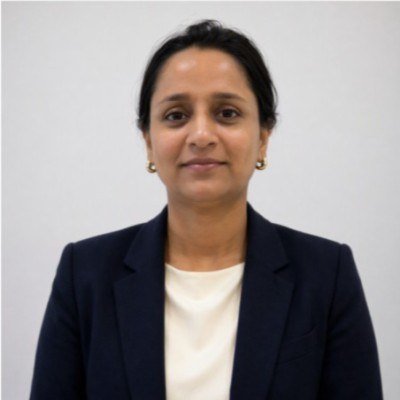
Neha Gupta is a CFA charterholder based in Winnipeg who has worked in financial markets since December 2005. She has published more than 2,600 investment articles and is Head of Operations and Finance at Whiteland Real Estate. She reviews WealthScale’s investing pages for accuracy.
- CFA charter, CFA Institute (awarded 2023)
- Post Graduate Diploma in Business Administration (Finance), 2008
- In financial markets since December 2005
- More than 2,600 published investment articles
General information only. Not financial, investment, tax or legal advice. WealthScale is independent and is published by WealthScale Media Inc., 55 Queen St E, Suite 1205, Toronto, ON M5C 1R6. CFA® and Chartered Financial Analyst® are registered trademarks owned by CFA Institute.