

FHSA Guide: First Home Savings Account Rules
An FHSA, or First Home Savings Account, lets a first-time home buyer in Canada contribute $8,000 a year, up to $40,000 in total, deduct those contributions from taxable income, and withdraw the money tax-free to buy a qualifying home. Room starts only in the year you open your first FHSA, and you can carry forward up to $8,000 of unused room, so the most you can add in one year is $16,000. The deadline is December 31, with no 60-day grace period. If you never buy, a direct transfer to an RRSP or RRIF keeps the tax deferral without using RRSP room. This guide covers every FHSA rule with 2026 figures and worked numbers.
 Written by Sharad Gondaliya, CPA CPAChartered Professional Accountant, CPA Ontario No. 61040184
 Financial reviewer: Neha Gupta, CFA CFA charterholderReview of this page scheduled
At a glance
What an FHSA is. A registered account for first-time home buyers that pairs an RRSP-style deduction on the way in with a tax-free withdrawal on the way out when you buy a qualifying home.
Who can open one. A resident of Canada who is at least 18 (19 where that is the age of majority), no older than 71 at December 31 of the year the account is opened, and a first-time home buyer: you did not live in a home owned by you or your current spouse or common-law partner in the current year before opening or in the previous four calendar years.
FHSA limit. $8,000 of participation room a year, starting only in the year you open your first FHSA, with unused room carried forward up to $8,000 and a $40,000 lifetime limit.
FHSA deadline. Contributions count for the calendar year ending December 31. There is no 60-day period, so a February contribution counts for the new year. Deductions can be carried forward to any later year, even after the account is closed.
How long it lasts. The account must be closed by December 31 of the year of the earliest of its 15th anniversary, the year you turn 71, or the year after your first qualifying withdrawal.
If you never buy. A direct transfer to an RRSP or RRIF is tax-deferred and does not use RRSP room, as long as you have no excess FHSA amount. Otherwise the money comes out as taxable income.
Enter the year you opened your first FHSA and what you have put in, and the calculator below shows your room for 2026, your room on January 1, 2027 and the year your account must close.
1. What an FHSA Is and Who Can Open One
The basic idea. The First Home Savings Account is a registered plan with one job: helping you save for your first home. Contributions are deductible, much like RRSP contributions, so they can lower your tax in the year you claim them. Money inside the account is not taxed while it stays there, and a qualifying withdrawal to buy a home is not taxed either. No other Canadian account gives you a deduction going in and a tax-free withdrawal that never has to be repaid for the same dollars.
The four opening tests. To open your first FHSA you must be a resident of Canada; at least 18, or 19 in a province or territory where that is the age of majority; no older than 71 at December 31 of the year you open it; and a first-time home buyer. All four conditions apply at the moment the account is opened. Our page on FHSA eligibility and the first-time home buyer test works through each test with 16 situations marked yes or no.
The first-time home buyer test. You qualify if, at no time in the current year before you open the account or in the previous four calendar years, you lived in a home owned by you or by your current spouse or common-law partner. The look-back counts whole calendar years. If you last lived in a home you owned at any point in 2021, the earliest you could open an FHSA is January 1, 2026, because the window is then 2022 to 2025 plus the part of 2026 before you open.
Age of majority. The age of majority is 18 in Alberta, Manitoba, Ontario, Prince Edward Island, Quebec and Saskatchewan. It is 19 in British Columbia, New Brunswick, Newfoundland and Labrador, the Northwest Territories, Nova Scotia, Nunavut and Yukon, so an 18-year-old there waits until 19 to open.
More than one account. You can hold more than one FHSA. The limits belong to you, not to each account, so your $8,000 a year and $40,000 lifetime limit cover all your FHSAs together. Spreading money across two institutions does not create extra room, and it makes over-contributions easier to miss.
Answer four short questions in the checker below to see whether you can open an FHSA today.
2. FHSA Limit: Annual and Lifetime Contribution Room
$8,000 a year. You receive $8,000 of participation room in the year you open your first FHSA, and $8,000 more in each later year, until your total contributions reach the lifetime limit. The FHSA limit is a flat dollar amount. It does not depend on your income, unlike the RRSP, where room is 18% of the previous year’s earned income up to the 2026 dollar limit of $33,810.
$40,000 for life. The lifetime cap counts every contribution you make and every amount you transfer in from an RRSP. Investment growth does not count against it. If $40,000 of contributions grows to $45,000, you can still withdraw the full $45,000 for a qualifying home.
Five years to fill it. Contributing the full $8,000 every year from the year you open fills the lifetime limit in the fifth year ($8,000 x 5 = $40,000). Someone who opens in 2026 and never misses a year reaches $40,000 in 2030, as the table shows.
| Year | Room for the year | Contribution | Lifetime total | Lifetime room left |
|---|---|---|---|---|
| 2026 | $8,000 | $8,000 | $8,000 | $32,000 |
| 2027 | $8,000 | $8,000 | $16,000 | $24,000 |
| 2028 | $8,000 | $8,000 | $24,000 | $16,000 |
| 2029 | $8,000 | $8,000 | $32,000 | $8,000 |
| 2030 | $8,000 | $8,000 | $40,000 | $0 |
| 2031 | $0 | $0 | $40,000 | $0 |
No room for past years. The TFSA gives every adult resident room for each year since 2009, $109,000 in total by 2026 for someone who has been eligible throughout. The FHSA works differently: no room exists until you open an account. A 30-year-old who opens a first FHSA in 2026 gets $8,000 for 2026, not room for earlier years. That single rule is the reason to open an account as soon as you qualify, even if you cannot fund it fully yet.
Room is personal. Your spouse’s unused room is not yours, and you cannot give your room to anyone. A couple who both qualify get two separate sets of limits, which section 11 covers.
3. How FHSA Room Carries Forward
The carry-forward cap. Room you do not use carries forward to the next year, but only up to $8,000. Your room in any year is $8,000 plus the unused room carried in, which makes $16,000 the most you can contribute in a single year ($8,000 + $8,000). Skipping two or three years does not build $24,000 or $32,000 of room.
Unused room above the cap. Room above the $8,000 carry-forward does not roll into next year’s limit. It is not lost from the $40,000 lifetime limit, though. You can still contribute $40,000 in total; it simply takes more calendar years to get there, and those years run against the 15-year and age 71 limits.
No carry-forward in the opening year. The carry-forward is $0 in the year you open your first FHSA. Nothing builds up before then. A person who became eligible years ago but opens in 2026 starts with $8,000, the same as someone who just turned 18.
A worked carry-forward. This example is hypothetical. Amir opens his FHSA in 2025, contributes $5,000 that year and nothing in 2026. His unused 2025 room of $3,000 ($8,000 minus $5,000) carries into 2026, giving him $11,000. He contributes nothing in 2026, so $11,000 is unused, but only $8,000 carries into 2027. His 2027 room is $16,000 ($8,000 + $8,000).
| Year | Room for the year | Contribution | Unused room | Carried into next year |
|---|---|---|---|---|
| 2025 | $8,000 | $5,000 | $3,000 | $3,000 |
| 2026 | $11,000 | $0 | $11,000 | $8,000 (capped) |
| 2027 | $16,000 | $16,000 | $0 | $0 |
| 2028 | $8,000 | $0 | $8,000 | $8,000 |
What the cap costs Amir. After 2027 he has contributed $21,000 ($5,000 + $16,000), leaving $19,000 of lifetime room. Had he contributed $8,000 in each of 2025, 2026 and 2027, he would be at $24,000. The $3,000 above the cap in 2026 did not vanish from his lifetime limit, but it pushed his path to $40,000 out by a year. For other opening years, our FHSA calculator page shows room for accounts opened from 2023 to 2026 side by side.
4. FHSA Deductions and the Deduction Carry-Forward
How the deduction works. FHSA contributions are deductible from your income. You can claim the deduction in the year you contribute or in any later year. Deducting lowers your taxable income, so the deduction is worth your combined federal and provincial marginal rate on the amount you claim.
Even after the account closes. Contributions you have not yet deducted can still be claimed after the FHSA is closed, for example in the years after you buy your home. There is no deadline for using a carried-forward FHSA deduction.
December 31, with no 60-day period. The FHSA contribution period runs from January 1 to December 31. Unlike an RRSP, where a contribution in the first 60 days of a year can be deducted for the year before, an FHSA contribution made on February 15, 2027 is a 2027 contribution only. If you want the room and the deduction for 2026, the money must be in the account by December 31, 2026.
RRSP transfers are not deductible. You can move RRSP savings into an FHSA, and that transfer counts toward your $40,000 lifetime limit, but it does not give you a new deduction. Only cash contributions create an FHSA deduction.
What an $8,000 deduction is worth. The table shows the estimated 2026 tax saved by deducting $8,000, for an Ontario resident at five income levels. Higher incomes save more because the deduction comes off the top of your income, where rates are highest.
| Taxable income before the deduction | Federal tax saved | Ontario tax saved | Total saved | Share of $8,000 |
|---|---|---|---|---|
| $45,000 | $1,120 | $494 | $1,614 | 20.2% |
| $60,000 | $1,216 | $654 | $1,870 | 23.4% |
| $85,000 | $1,640 | $732 | $2,372 | 29.6% |
| $120,000 | $1,803 | $1,393 | $3,195 | 39.9% |
| $200,000 | $2,344 | $1,518 | $3,861 | 48.3% |
Estimates use 2026 federal and Ontario tax brackets, basic personal amounts, the Ontario surtax and the Ontario Health Premium. Other credits are ignored. Figures are rounded to the dollar.
Timing the claim. Because you choose the year, you can contribute now and deduct later. This example is hypothetical: an Ontario resident earning $52,000 who deducts $8,000 saves $1,674, while the same deduction at $98,000 of income saves $2,429 using 2026 rates, a difference of $755 ($2,429 minus $1,674). The FHSA calculator’s province table compares the saving at four income levels across all 13 provinces and territories, and the RRSP refund calculator handles any deduction amount.
See your exact FHSA room and what a deduction is worth in your province.
5. FHSA Withdrawal Rules: Qualifying Withdrawals for a First Home
What makes a withdrawal qualifying. A withdrawal is tax-free when you meet every condition below at the time you take it out. You request a qualifying withdrawal using Form RC725.
- You are a first-time home buyer at the time of the withdrawal: you did not live in a home you owned at any time in the current year before the withdrawal, ignoring the 30 days just before it, or in the previous four calendar years.
- You have a written agreement to buy or build a qualifying home, with a completion date before October 1 of the year after the withdrawal.
- You did not acquire the home more than 30 days before the withdrawal.
- You occupy the home, or intend to occupy it, as your principal residence within one year.
- You are a resident of Canada.
No repayment. A qualifying FHSA withdrawal is never paid back. That is the main difference from the Home Buyers’ Plan, where every dollar must be repaid to your RRSP over 15 years or added to your income. You can withdraw the whole balance, growth included, in one or several qualifying withdrawals.
Timing around your closing date. Because the test ignores the 30 days before a withdrawal and the home cannot have been acquired more than 30 days earlier, you can take a qualifying withdrawal before your closing date or within 30 days after it. A buyer who closes on June 1 and withdraws on June 25 is inside the window. Waiting until July 20, 49 days after closing, is not.
The wind-down clock. Your first qualifying withdrawal sets the end of your account’s life: it must be closed by December 31 of the following year. If your first qualifying withdrawal is in May 2027, anything left must be withdrawn or transferred by December 31, 2028.
Other withdrawals are taxed. Money you take out for any other purpose is a taxable withdrawal, added to your income for that year. Taking cash out to move it to another institution counts as a withdrawal too, so always ask the receiving institution for a direct transfer instead. Our guide on how to transfer an investment account walks through the paperwork.
6. FHSA Deadline Rules: The 15-Year and Age 71 Limits
The maximum participation period. Your FHSA’s life, called the maximum participation period, starts when you open your first FHSA. It ends on December 31 of the year in which the earliest of three events happens: the 15th anniversary of opening your first FHSA, the year you turn 71, or the year after your first qualifying withdrawal.
| Year opened | Year born | First qualifying withdrawal | Must be closed by | Which limit applies |
|---|---|---|---|---|
| 2023 | 1995 | None | December 31, 2038 | 15th anniversary in 2038 |
| 2026 | 1960 | None | December 31, 2031 | Turns 71 in 2031 |
| 2026 | 1955 | None | December 31, 2026 | Turns 71 in the year the account opens |
| 2024 | 1990 | 2027 | December 31, 2028 | Year after the first qualifying withdrawal |
What happens at the end. Anything still in the account when the period ends loses its FHSA status, and its fair market value is added to your income for that year. That can be an expensive surprise. For an Ontario resident earning $70,000, an extra $40,000 of income raises estimated 2026 tax by $12,340 ($8,200 federal plus $4,140 Ontario). Plan your exit at least a few months ahead.
Your three exits. Before the period ends, you can make a qualifying withdrawal for a home, transfer the money directly to your RRSP or RRIF, or take a taxable withdrawal. Section 7 compares them.
Older first-time buyers. The age 71 rule shortens the window for older buyers. Someone born in 1958 who opens an FHSA in 2026 must close it by December 31, 2029, the year they turn 71. That gives four years of room, so $32,000 at most ($8,000 x 4), not the full $40,000.
Put the date in writing. The calculator at the top of this page shows your closing year from your birth year and the year you opened. Please note it in your calendar the day you open the account, and again a year before.
7. If You Never Buy: Transfer Your FHSA to an RRSP or RRIF
A direct transfer with no RRSP room used. If you decide not to buy, or simply run out of time, you can transfer your FHSA savings directly to your RRSP or RRIF. The transfer is tax-deferred and does not reduce your unused RRSP deduction room, provided you have no excess FHSA amount. Only a direct transfer between plans qualifies. Withdrawing the cash and depositing it into your RRSP yourself is a taxable withdrawal followed by an ordinary RRSP contribution.
Why that is valuable. Because the transfer uses no RRSP room, an FHSA you never use for a home works like extra retirement room. Someone who contributes the full $40,000, deducts it, and later moves the balance to an RRSP has sheltered $40,000 more than their RRSP room alone allowed. That is why an FHSA can make sense even for people who are not sure they will buy.
The taxable route. You can also withdraw the money as taxable income. The full amount is added to your income in the year you take it out. This rarely beats a transfer unless your income that year is very low.
Tax comes later on transfers. Money moved to an RRSP or RRIF is taxed when it eventually comes out, like any other RRSP or RRIF money. Lump-sum RRSP withdrawals have tax withheld at 10% on amounts of $5,000 or less, 20% on $5,001 to $15,000 and 30% above $15,000 outside Quebec. A RRIF must pay a minimum amount starting the year after it is set up; our RRIF minimum withdrawal table lists the factors.
| Exit | Tax when it leaves the FHSA | Effect on RRSP room | What happens next |
|---|---|---|---|
| Qualifying withdrawal for a first home | None | None | Account must close by December 31 of the following year |
| Direct transfer to an RRSP | None, tax-deferred | None, if you have no excess FHSA amount | Taxed when withdrawn from the RRSP |
| Direct transfer to a RRIF | None, tax-deferred | None, if you have no excess FHSA amount | RRIF minimum payments, taxed as received |
| Taxable withdrawal | Full amount added to income | None | No further tax on that money |
| Left in the account after the period ends | Fair market value added to income | None | Account loses FHSA status |
Keep the option open. If you are unsure about buying, it still pays to open an FHSA and use the room: the worst case is usually a transfer to your RRSP. Our comparison of FHSA vs the RRSP Home Buyers’ Plan looks at the trade-offs, and our RRSP guide explains how the money is taxed once it lands there.
8. FHSA Over-Contributions and the 1% Monthly Tax
The tax. If you put in more than your participation room, the excess FHSA amount is taxed at 1% a month. The tax applies to the highest excess amount in each month, and it keeps running every month until the excess is gone. The published FHSA rule has no $2,000 cushion like the RRSP’s, so the tax starts with the first dollar over.
How it usually happens. Many FHSA over-contributions come from three slips: assuming unused room keeps piling up past the $8,000 carry-forward cap, contributing at two institutions without adding the amounts together, and forgetting that a transfer from an RRSP counts toward the lifetime limit. A fourth is a January contribution meant for the previous year, which instead uses the new year’s room.
A worked cost. This example is hypothetical. Jo has $8,000 of room for 2026 but contributes $10,000 on March 10. The $2,000 excess sits in the account until August 20. It exists in six months, March through August, so the tax is $120 (1% x $2,000 = $20 a month, x 6 = $120). Leaving it until December would make it ten months and $200.
Three ways to fix it. You can remove the excess with a designated withdrawal or a designated transfer to your RRSP or RRIF using Form RC727. You can take a taxable withdrawal. Or you can wait for new participation room on January 1 to absorb it, while paying 1% for each month until then. Removing it quickly is usually cheapest, because each month costs 1% of the excess.
Why it matters for RRSP transfers. The rule that lets you move FHSA money to an RRSP or RRIF without using RRSP room applies only when you have no excess FHSA amount. An uncorrected over-contribution can therefore cost you twice: once in monthly tax, and again when you want a clean transfer.
Check before you deposit. Please add up every FHSA contribution and RRSP transfer you have made since opening before each deposit. The FHSA room calculator at the top of this page flags an excess and shows the amount.
Plan a down payment that uses an FHSA and the Home Buyers’ Plan together, alone or as a couple.
9. What You Can Hold in an FHSA
Qualified investments. An FHSA can hold the qualified investments that tax rules allow in registered plans. In practice, the FHSAs offered by the providers we track come in four forms: high-interest savings accounts, GICs, self-directed brokerage accounts that hold listed stocks and ETFs, and managed portfolios. What you can buy depends on the type of FHSA your institution offers, so a savings-only FHSA cannot hold ETFs.
Match the holding to your timeline. An FHSA is a home fund with a date attached. Savings and GICs keep the dollar value steady, which may suit someone buying within a year or two. A market portfolio can rise or fall, which may suit someone with a longer runway who can live with a lower balance in a bad year. Our guide on GICs vs high-interest savings accounts compares the two cash options.
Deposit insurance. Eligible deposits inside an FHSA at a CDIC member are insured as their own category, up to $100,000, separate from your TFSA, RRSP and non-registered deposits at the same institution. CDIC covers deposits in Canadian or foreign currency, GICs and term deposits. It does not cover stocks, bonds, ETFs or mutual funds. Provincially regulated credit unions are covered by provincial deposit insurance plans instead.
CIPF at investment dealers. An FHSA at a CIPF member firm falls in the general accounts category, which has $1,000,000 of coverage for all general accounts combined, including cash, margin and TFSA accounts. CIPF covers client property missing when a member firm fails. It does not cover market losses.
US stocks and withholding. US dividends paid into an FHSA have US tax withheld at the 15% treaty rate when a W-8BEN is on file, or 30% without one. The treaty exemption for retirement accounts does not cover the FHSA, and the tax cannot be recovered as a foreign tax credit inside the account. Our guide to US stocks in a TFSA explains the same cost, which applies in the same way to an FHSA.
| Holding inside the FHSA | Type of FHSA | Protection | Other cost to know |
|---|---|---|---|
| Savings deposits | Bank or credit union savings FHSA | CDIC FHSA category up to $100,000 at a member; provincial plan at a credit union | Rate can change at any time |
| GICs and term deposits | Bank, credit union or brokerage FHSA | CDIC FHSA category up to $100,000 at a member issuer; provincial plan at a credit union | Money is locked in until maturity for non-redeemable terms |
| Cash held by an investment dealer | Brokerage FHSA | CIPF general category, $1,000,000 combined with cash, margin and TFSA accounts | Not applicable |
| Canadian stocks and ETFs | Brokerage or managed FHSA | CIPF if the dealer fails; no cover for market losses; no CDIC | Commissions or management fees, by provider |
| US stocks and ETFs | Brokerage FHSA | CIPF if the dealer fails; no cover for market losses; no CDIC | US dividend withholding of 15% with a W-8BEN, 30% without, not recoverable; US commissions, by provider |
| Crypto assets | Not offered in an FHSA at Wealthsimple | CIPF excludes crypto; CDIC does not cover it | Not applicable |
Crypto. Crypto is generally not something you will find inside an FHSA: at Wealthsimple, for example, crypto is held only in a non-registered account. Our guide to buying US stocks from Canada covers which accounts can hold US dollars and what US trades cost in commissions if you plan to hold US shares in an FHSA.
10. FHSA Plus the Home Buyers’ Plan
Use both for the same home. You can make a qualifying FHSA withdrawal and a Home Buyers’ Plan withdrawal for the same qualifying home, as long as you meet the conditions of each at the time of each withdrawal. For many first-time buyers, stacking the two is the largest tax-advantaged down payment available.
The HBP in brief. The Home Buyers’ Plan lets you withdraw up to $60,000 from your RRSPs for a first home. That limit applies to withdrawals made after April 16, 2024; before then it was $35,000. You need a written agreement to buy or build, must intend to occupy the home within one year, and must be a resident of Canada when you withdraw. The home must be bought or built before October 1 of the year after your first withdrawal, and withdrawals can be made in the calendar year of the first one or in January of the next year.
Repayment is the catch. HBP withdrawals are repaid to your RRSP over 15 years. The minimum each year is your balance divided by the years left, so 1/15 to start. Normally repayment starts in the second year after the year of your first withdrawal. For first withdrawals from 2022 to 2025, repayment starts in the fifth year, and the CRA says this relief has been extended to first withdrawals made from January 1, 2026 to December 31, 2028. A missed repayment is added to your income for that year.
A repayment example. This example is hypothetical. A buyer who makes a first HBP withdrawal of $60,000 in 2026 starts repaying in 2031, the fifth year after the withdrawal, with a minimum of $4,000 a year ($60,000 / 15) through 2045. Repayments can be made in the year due or in the first 60 days of the next year.
| Feature | FHSA | Home Buyers’ Plan |
|---|---|---|
| Amount per person | $40,000 of contributions, plus any growth | Up to $60,000 from your RRSPs |
| Repayment | None | Over 15 years, at least 1/15 a year to start |
| Tax on a qualifying withdrawal | None | None, if repaid on schedule |
| First-time buyer look-back | Current year before the withdrawal, ignoring 30 days, plus 4 prior calendar years | Current year, ignoring the 30 days before the withdrawal, plus 4 prior calendar years |
| Spouse or partner’s home | Counts at opening, not in the withdrawal test | Counts in the test |
| Home deadline | Agreement with completion before October 1 of the year after the withdrawal | Buy or build before October 1 of the year after the first withdrawal |
| Recent contributions | No special rule | Contributions made in the 89 days before may not be deductible |
| Form | RC725 | T1036 for each withdrawal |
Which to draw first. Because an FHSA withdrawal never has to be repaid and an HBP withdrawal does, many buyers fill the FHSA first and use the HBP to top up. The Home Buyers’ Plan guide covers the repayment schedule in detail, and FHSA vs RRSP compares the two side by side.
The planner below adds up FHSA savings and HBP withdrawals for one buyer or a couple over the years until you buy.
11. FHSA Rules for Couples
One account each. An FHSA belongs to one person. Each partner who passes the opening tests can open their own FHSA, with their own $8,000 a year and $40,000 lifetime limit, and each claims the deduction for their own contributions.
The spouse test at opening. The first-time home buyer test at opening looks at homes owned by you or your current spouse or common-law partner. If you live with a partner in a home they own, you cannot open an FHSA, even though you have never owned anything yourself. The spouse part applies only if you have a spouse or partner when you open the account.
The combined maximum. A couple who both qualify can each use an FHSA and the Home Buyers’ Plan. That is up to $200,000 before growth: 2 x ($40,000 FHSA + $60,000 HBP). A single buyer’s maximum is $100,000 ($40,000 + $60,000).
Each withdrawal stands alone. Each partner’s qualifying withdrawal is tested on its own, using that partner’s own dates and ownership history. If one of you fails the test, the other’s withdrawal can still qualify.
| Household situation | Partner A | Partner B | Why |
|---|---|---|---|
| Both have rented together since 2020 and neither has ever owned | Yes | Yes | No owned home in 2022 or later |
| Partner A owns the condo where both live | No | No | A lives in a home A owns; B lives in a home B’s current partner owns |
| Partner A sold a home and moved out in 2021; both have rented since | Yes | Yes | 2021 is outside the look-back window for 2026 |
| Partner A sold a home and moved out in 2024; both rent now | No | No | Both lived in a home owned by A in 2024 |
Timing matters for couples. The opening test is applied once, when the account opens. A partner who opens an FHSA while renting keeps it open even if the couple later lives in a home the other partner owns. For the full spouse rule, including separation and divorce, see the FHSA spouse rule explained.
12. FHSA vs TFSA vs RRSP
The short version. The FHSA combines the RRSP’s deduction with the TFSA’s tax-free withdrawal, but only for a first home and only within strict limits. The TFSA is the flexible account with no deduction. The RRSP is the retirement account whose deduction is repaid in tax when money comes out, except through the Home Buyers’ Plan.
| Feature | FHSA | TFSA | RRSP |
|---|---|---|---|
| 2026 limit | $8,000 from the year you open | $7,000 | 18% of 2025 earned income, up to $33,810 |
| Lifetime or cumulative room | $40,000 lifetime | $109,000 for someone eligible every year since 2009 | Builds each year from earned income |
| Unused room | Carries forward, capped at $8,000 | Carries forward with no cap | Carries forward |
| Deduction | Yes | No | Yes |
| Contribution deadline for the year | December 31 | December 31 | 60th day of the following year |
| Withdrawal for a first home | Tax-free if qualifying, never repaid | Tax-free | Up to $60,000 under the HBP, repaid over 15 years |
| Other withdrawals | Taxable | Tax-free; room returns the next January 1 | Taxable, with tax withheld |
| Age rules | Open at 18 or 19, up to 71 at December 31 of the year opened | Open at 18 or 19 | Contribute to your own until December 31 of the year you turn 71 |
| Over-contribution tax | 1% a month on the highest excess | 1% a month on the highest excess | 1% a month on the excess above your limit plus $2,000 |
| CDIC deposit category | Separate, up to $100,000 | Separate, up to $100,000 | Separate, up to $100,000 |
| CIPF category | General accounts, $1,000,000 combined | General accounts, $1,000,000 combined | Retirement accounts, a separate $1,000,000 |
| US dividend withholding | 15% with a W-8BEN, not recoverable | 15% with a W-8BEN, not recoverable | Exempt under the Canada-US tax treaty |
For a home goal. If you qualify for an FHSA and are saving for a first home, the FHSA usually comes first, because it is the only one of the three that gives a deduction and a tax-free, never-repaid withdrawal for the purchase. The TFSA works well for money beyond the FHSA limit or for a buyer who does not qualify. Our comparisons of FHSA vs TFSA for a down payment and TFSA vs RRSP go further.
For retirement. An unused FHSA that moves to an RRSP adds to retirement savings without using RRSP room, so it complements the RRSP contribution limit rather than competing with it. Our TFSA guide and overview of investment accounts show where each account fits.
13. Where to Open an FHSA
Who offers FHSAs. Banks, credit unions, online brokers and robo-advisors all offer FHSAs. The choice comes down to what you want to hold, what it costs, and how easy it is to move money in and out. Our ranked list of the best FHSA accounts in Canada scores each provider on a published method.
Investing platforms. At Wealthsimple, for example, an FHSA can be self-directed, managed, or held in Automated Investing, which costs 0.25% a year and is capped once the balance reaches $100,000 ($250 per account per year). Wealthsimple covers transfer fees up to $150 per account on transfers of $25,000 or more, with conditions. Our Wealthsimple FHSA review covers the details, and our Questrade review and online broker rankings cover other platforms.
Savings and GICs. If your purchase is close, an FHSA savings account or GIC keeps the balance steady. The table lists FHSA savings rates at providers we track, sorted by rate. At each of these four, FHSA GIC rates match the provider’s non-registered GIC rates, except that Hubert’s quarterly-term product is not offered in an FHSA.
| Provider | FHSA savings product | FHSA rate | Deposit protection |
|---|---|---|---|
| Saven Financial (FirstOntario Credit Union) | High Interest Savings Account, FHSA version | 2.85% | Ontario credit union deposit insurance, not CDIC; not available in Quebec |
| Hubert Financial (Sunova Credit Union) | High Interest Savings, FHSA version | 2.50% | Deposit Guarantee Corporation of Manitoba, not CDIC |
| Outlook Financial (Assiniboine Credit Union) | High Interest Savings Account, FHSA version | 1.95% | Deposit Guarantee Corporation of Manitoba, not CDIC |
| EQ Bank | FHSA Cash Savings | 1.50% (effective May 15, 2026) | CDIC, through Equitable Bank |
What to compare. Look at account fees, the investments offered, transfer-out fees, and whether the institution covers the fee your old provider charges when you move. Rates change often, so we date every figure; see our high-interest savings account rates, GIC rates and EQ Bank review for current numbers. How we check and update figures is set out in our editorial standards.
Moving an FHSA later. If you switch providers, ask the new institution for a direct transfer. Cashing out and redepositing is a taxable withdrawal, and the redeposit uses new room.
14. Common FHSA Mistakes
Waiting to open. Room starts only when you open your first FHSA. Every year you wait is a year of $8,000 room that never existed, and it pushes back the date you can reach $40,000. If you qualify and might buy within 15 years, opening now costs little.
Counting carry-forward past $8,000. Unused room carries forward only up to $8,000, so the most you can add in one year is $16,000. Assuming $24,000 after two quiet years leads straight to the 1% monthly tax.
Contributing in January for last year. The FHSA has no 60-day period. A contribution on January 20, 2027 is a 2027 contribution and cannot be deducted on your 2026 return.
Withdrawing too late after closing. A qualifying withdrawal fails if you acquired the home more than 30 days before it. Ask for the withdrawal before closing, or set a reminder for the first week after.
Missing the end of the period. Money left after December 31 of your closing year is added to income at fair market value. Mark the year on the day you open.
Cashing out instead of transferring. Moving FHSA money to an RRSP keeps its tax deferral only as a direct transfer. A withdrawal followed by a deposit is taxed and uses RRSP room.
Forgetting the spouse part of the test. Living in a home your current partner owns blocks you from opening an FHSA. Check this before you move in together, not after.
What You Need to Open an FHSA and What You Get
What you need to open an FHSA
- Residency in Canada at the time you open the account
- An age of at least 18, or 19 where that is the age of majority, and no more than 71 at December 31 of the year you open
- Your home history for the current year and the previous four calendar years: where you lived and who owned it
- Your current spouse’s or common-law partner’s ownership details, if you have one
- The identity documents and personal details your institution asks for on any registered account
- A choice of FHSA type: savings, GIC, self-directed or managed
- A first contribution within your room, or a plan to fund it by December 31
- A target purchase year, so your investments match your timeline
What you get from an FHSA
- $8,000 of participation room each year from the year you open
- A deduction for each contribution, usable now or in any later year
- No tax on growth while the money stays in the account
- A tax-free qualifying withdrawal for your first home that is never repaid
- The option to use the Home Buyers’ Plan for the same home
- Up to 15 years to save, ending earlier at age 71
- A direct transfer to an RRSP or RRIF without using RRSP room if you do not buy
- Separate CDIC coverage of up to $100,000 for eligible FHSA deposits at a member
How an FHSA Works, Step by Step
- Check the four opening tests. Residency, age 18 or 19 to 71, and the first-time home buyer test, including the spouse part. The eligibility checker on this page takes a minute.
- Open your first FHSA. Room of $8,000 starts in the calendar year you open, so opening in December still gives you that year’s room.
- Contribute by December 31. Track your room each year, remember the $8,000 carry-forward cap, and keep a running total toward the $40,000 lifetime limit.
- Claim the deduction. Deduct contributions on that year’s return or carry them forward to a year when your income, and the deduction’s value, is higher.
- Sign an agreement and withdraw. Once you have a written agreement to buy or build, request a qualifying withdrawal on Form RC725 before closing or within 30 days after you acquire the home.
- Close the account in time. By December 31 of your closing year, withdraw for the home, transfer what is left to an RRSP or RRIF, or take a taxable withdrawal.
10 FHSA Strategies That Save You Tax
1. Open as soon as you qualify
Room exists only from the year you open your first FHSA, and the carry-forward in that year is $0. Opening now, even with a small first deposit, starts the clock on $8,000 a year. It also starts the 15-year limit, so weigh that against a very distant purchase date.
2. Use one year of carry-forward, not more
Unused room carries forward only up to $8,000. If you skip a year, you can catch up with $16,000 the next year. Skipping two years still leaves you at $16,000, so plan contributions so that no more than one year goes unused.
3. Contribute now, deduct later
You can carry FHSA deductions forward indefinitely, even after the account closes. If you are a student, on leave, or early in your career, contribute now so the money grows sheltered, and claim the deduction in a year when your marginal rate is higher.
4. Fill the FHSA before using a TFSA for a home
For a first-home goal, the FHSA gives a deduction going in and a tax-free withdrawal coming out. The TFSA gives only the second. Money beyond the FHSA limit, or saved by someone who does not qualify, may suit a TFSA.
5. Stack the FHSA with the Home Buyers’ Plan
Both can be used for the same home. One buyer can draw on $40,000 of FHSA contributions plus growth and up to $60,000 from RRSPs. Drawing on the FHSA first leaves less to repay under the HBP’s 15-year schedule.
6. Withdraw inside the 30-day window
A qualifying withdrawal fails if you acquired the home more than 30 days before it. Ask your institution how long a withdrawal takes, and request it well before your closing date, or within days after, not weeks.
7. Each partner opens an account early
Partners have separate limits, so a couple can contribute up to $80,000 in total. If one partner owns a home you plan to move into, the other should open an FHSA before living there, because the spouse part of the test applies at opening.
8. Keep the RRSP transfer as your fallback
If you do not buy, a direct transfer to your RRSP or RRIF keeps the deduction’s benefit and uses no RRSP room. That makes a full FHSA a low-regret move for anyone who qualifies and is unsure about buying.
9. Plan around your closing year
Your account ends at its 15th anniversary year, the year you turn 71, or the year after your first qualifying withdrawal, whichever comes first. Arrange your exit before December 31 of that year so the balance is never added to income at fair market value.
10. Match investments to your purchase date
The closer the purchase, the less room there is for a market drop. Savings and GICs may suit money needed within a year or two; a market portfolio may suit a longer horizon. Revisit the mix each year as the date approaches.
Illustrative Example: Maya Fills Her FHSA in Five Years
This example is hypothetical. Maya is 29, rents in Toronto, earns $85,000 a year and has never owned a home. She opens her first FHSA in January 2026 and plans to buy a condo in 2031. The return used below is an assumption for illustration, not a forecast.
- Contributions. She contributes $8,000 at the start of each year from 2026 to 2030, reaching the lifetime limit in 2030 ($8,000 x 5 = $40,000).
- Deductions. She deducts each contribution in the year she makes it. At $85,000 of income in Ontario, each $8,000 deduction saves an estimated $2,372 using 2026 rates ($1,640 federal + $732 Ontario). If her income and the 2026 rates stayed the same, five deductions would save $11,860 ($2,372 x 5).
- Growth at an assumed 4% a year. End of 2026: $8,320.00 ($8,000 x 1.04). End of 2027: $16,972.80 (($8,320.00 + $8,000) x 1.04). End of 2028: $25,971.71 (($16,972.80 + $8,000) x 1.04). End of 2029: $35,330.58 (($25,971.71 + $8,000) x 1.04). End of 2030: $45,063.80 (($35,330.58 + $8,000) x 1.04).
- The purchase. In January 2031 she signs an agreement to buy a condo with a completion date of May 15, 2031, well before October 1, 2032. She withdraws $45,063.80 that month on Form RC725. The withdrawal is tax-free, including the $5,063.80 of growth ($45,063.80 minus $40,000).
- The Home Buyers’ Plan. She also withdraws $30,000 from her RRSP under the HBP. A first withdrawal in 2031 falls outside the 2022 to 2028 relief years as published, so repayment starts in 2033, the second year after the withdrawal, at a minimum of $2,000 a year ($30,000 / 15).
- Total toward the home. $75,063.80 ($45,063.80 from the FHSA + $30,000 from the HBP).
- Closing the FHSA. Her first qualifying withdrawal is in 2031, so the account must be closed by December 31, 2032. With the balance already withdrawn, nothing is left to tax.
FHSA Questions Answered
What is the FHSA limit for 2026?
The FHSA limit is $8,000 of participation room a year, starting in the year you open your first FHSA, with a $40,000 lifetime limit. Unused room carries forward up to $8,000, so the most you can contribute in one year is $16,000. If you open your first FHSA in 2026, your room for 2026 is $8,000.
Can I carry forward unused FHSA room?
Yes, but only up to $8,000. Unused room from one year is added to the next year’s $8,000, so your room in any year is at most $16,000. Room above the carry-forward cap does not roll into next year’s limit, although it does not reduce your $40,000 lifetime limit. No room builds before you open your first FHSA.
When is the FHSA contribution deadline?
The FHSA deadline is December 31. Contributions count for the calendar year in which you make them, and there is no 60-day period like the RRSP’s. A contribution made in January or February uses the new year’s room and cannot be deducted on the previous year’s return. To use your 2026 room, the money must be in the account by December 31, 2026.
Are FHSA withdrawals taxable?
A qualifying withdrawal to buy or build your first home is tax-free and never repaid. You must be a first-time home buyer at the time, have a written agreement with a completion date before October 1 of the year after the withdrawal, not have acquired the home more than 30 days earlier, intend to live in it within one year, and be a resident of Canada. Other withdrawals are taxable income.
What happens to my FHSA if I do not buy a home?
You can transfer the money directly to your RRSP or RRIF on a tax-deferred basis without using RRSP room, provided you have no excess FHSA amount. You can also take it out as a taxable withdrawal. Anything still in the account when your maximum participation period ends loses its FHSA status, and its fair market value is added to your income for that year.
How long can I keep an FHSA open?
Until December 31 of the year in which the earliest of three events happens: the 15th anniversary of opening your first FHSA, the year you turn 71, or the year after your first qualifying withdrawal. An account opened in 2026 by someone born in 1990 must be closed by December 31, 2041, the year of its 15th anniversary.
Can I use the FHSA and the Home Buyers’ Plan together?
Yes. You can make a qualifying FHSA withdrawal and a Home Buyers’ Plan withdrawal for the same qualifying home if you meet the conditions of each at the time of each withdrawal. The HBP limit is $60,000 per person for withdrawals after April 16, 2024, so one buyer can use up to $100,000 of FHSA contributions and RRSP savings combined, before growth.
Can my spouse and I both open an FHSA?
Yes, if each of you passes the four opening tests. Each partner has their own $8,000 annual and $40,000 lifetime limits, so a couple can contribute up to $80,000 in total. One catch: you fail the first-time home buyer test if, in the current year before opening or the previous four calendar years, you lived in a home your current spouse or common-law partner owned.
What is the penalty for over-contributing to an FHSA?
Excess FHSA amounts are taxed at 1% a month on the highest excess in each month until the excess is gone. You can remove it with a designated withdrawal or designated transfer to an RRSP or RRIF using Form RC727, with a taxable withdrawal, or by waiting for new room on January 1. A $2,000 excess left for six months costs $120.
Do I have to claim the FHSA deduction in the year I contribute?
No. You can deduct an FHSA contribution in the year you make it or carry the deduction forward to any later year, even after your FHSA is closed. Carrying it forward can pay off if your income will be higher later. For an Ontario resident, an $8,000 deduction saves an estimated $1,674 at $52,000 of income and $2,429 at $98,000, using 2026 rates.
Can I hold stocks and ETFs in an FHSA?
Yes, if you open a self-directed or managed FHSA with an investment platform. Savings-only FHSAs at banks and credit unions hold deposits and GICs. US dividends paid into an FHSA have 15% US tax withheld when a W-8BEN is on file, and that tax cannot be recovered, because the treaty exemption for retirement accounts does not cover the FHSA.
Can I open an FHSA if I owned a home before?
Yes, once enough time has passed. You must not have lived in a home owned by you or your current spouse or partner at any time in the current year before opening or in the previous four calendar years. If you last lived in a home you owned in 2021, you can open an FHSA from January 1, 2026. Owning a rental you never lived in does not count against you.
Check your FHSA room, confirm you qualify, then compare where to open your account.
Figures on this page were checked against Canada Revenue Agency publications and each provider’s published rates on October 22, 2026. We update this page when a figure changes.
Meet the Experts Behind WealthScale

Sharad is a CPA Ontario member (No. 61040184) and a Certified Public Accountant licensed in Washington and Montana, with more than 15 years in accounting and tax, a Diploma in Banking and Finance and a Certificate in Small Business Finance. He checks WealthScale content against primary sources. WealthScale is independent of his firm, Gondaliya CPA Professional Corporation, and provides general information only, not personal financial, investment, tax or legal advice.
- Chartered Professional Accountant, CPA Ontario
- Certified Public Accountant, Washington (No. 57629) and Montana (No. PAC-CPAP-LIC-033176)
- Writing on tax and registered accounts since 2021
- Reader’s Choice Award 2025 Winner, Best Accountant (Toronto)
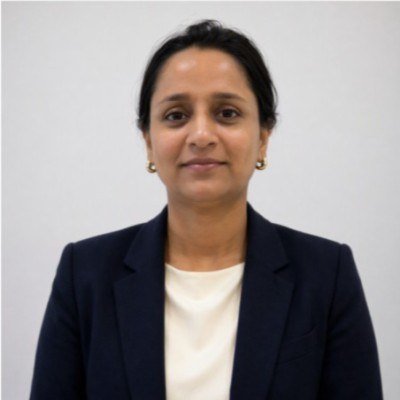
Neha Gupta is a CFA charterholder based in Winnipeg who has worked in financial markets since December 2005. She has published more than 2,600 investment articles and is Head of Operations and Finance at Whiteland Real Estate. She reviews WealthScale’s investing pages for accuracy.
- CFA charter, CFA Institute (awarded 2023)
- Post Graduate Diploma in Business Administration (Finance), 2008
- In financial markets since December 2005
- More than 2,600 published investment articles
General information only. Not financial, investment, tax or legal advice. WealthScale is independent and is published by WealthScale Media Inc., 55 Queen St E, Suite 1205, Toronto, ON M5C 1R6. CFA® and Chartered Financial Analyst® are registered trademarks owned by CFA Institute.