

Best FHSA Accounts in Canada for 2026
The best FHSA account Canada first-time buyers can open in 2026, on our published score, is Questrade at 4.3 / 5, with $0 stock and ETF commissions and no FHSA account fee. Desjardins Online Brokerage also scores 4.3 / 5 and charges no FHSA admin fee, followed by Interactive Brokers, Wealthsimple and National Bank Direct Brokerage at 4.2 / 5. For a managed FHSA, Wealthsimple Managed Investing leads at 4.2 / 5. For money you need soon, Saven Financial pays 2.85% on FHSA savings and 4.50% on a 5-year FHSA GIC. Each FHSA holder gets $8,000 of room a year, up to $40,000 for life, and every contribution is tax-deductible.
 Written by Sharad Gondaliya, CPA CPAChartered Professional Accountant, CPA Ontario No. 61040184
 Financial reviewer: Neha Gupta, CFA CFA charterholderReview of this page scheduled
At a glance
Top pick. Questrade scores 4.3 / 5 among the 11 brokers that offer an FHSA. It charges $0 on Canadian and US stocks and ETFs, has no annual or inactivity fee, offers fractional shares and a free DRIP, and also offers RRSPs, so an unused FHSA can be moved to an RRSP at the same broker.
Close behind. Desjardins Online Brokerage (Disnat) also scores 4.3 / 5 and ranks second on the unrounded score, with $0 online trades and no FHSA admin fee. Interactive Brokers Canada, Wealthsimple and National Bank Direct Brokerage follow at 4.2 / 5. Wealthsimple offers its FHSA in self-directed, managed, Automated Investing and savings versions, and charges $0 to transfer out.
FHSAs with no account fee. Desjardins charges no administration fee on an FHSA, CIBC’s FHSA has no annual fee, TD waives its $25-a-quarter fee for FHSA-only clients, Scotia waives its low-activity fee on registered accounts, and BMO lists $0 on registered accounts under $25,000. National Bank charges $100 a year unless you are 30 or younger or hold $20,000.
Managed and savings FHSAs. Wealthsimple Managed Investing (4.2 / 5) and RBC InvestEase (3.4 / 5) are the ranked robo-advisors that offer an FHSA; on $8,000 they cost $52 and $56 a year. Saven Financial pays 2.85% on FHSA savings (DICO-insured), and EQ Bank pays 1.50% (CDIC-insured).
Not available. moomoo says it does not offer an FHSA, and Webull does not list one, so neither is on this list.
The 2026 rules. FHSA room is $8,000 a year from the year you open your first FHSA, with up to $8,000 of unused room carried forward and a $40,000 lifetime limit. Contributions must be made by December 31; there is no 60-day grace period. Every figure was checked on October 22, 2026.
Best FHSA Account Canada 2026: Ranking at a Glance
This table lists the 11 self-directed brokers that offer a First Home Savings Account, in score order. Scores are out of 5 and rounded to one decimal; ties follow the unrounded score, then the name. The FHSA fee column shows whether a yearly account fee can apply to an FHSA on its own.
| Rank | Broker | Score | Best for | Canadian stock trade | Account fee on an FHSA |
|---|---|---|---|---|---|
| 1 | Questrade | 4.3 / 5 | $0 commissions with a transfer-fee rebate | $0 | None |
| 2 | Desjardins Online Brokerage (Disnat) | 4.3 / 5 | No FHSA admin fee and $0 online trades | $0 online | None on an FHSA |
| 3 | Interactive Brokers Canada | 4.2 / 5 | Advanced platforms and low per-share pricing | CAD 0.01 a share, minimum CAD 1 | No inactivity fee listed |
| 4 | Wealthsimple | 4.2 / 5 | Self-directed, managed and savings FHSAs in one app | $0 | None |
| 5 | National Bank Direct Brokerage | 4.2 / 5 | Savers 30 or younger who want $0 trades at a big bank | $0 | $100 a year unless waived |
| 6 | Qtrade Direct Investing | 4.0 / 5 | $0 trades and low-cost options | $0 | No quarterly admin fee |
| 7 | BMO InvestorLine | 3.8 / 5 | $0 trades at a big bank with no small-account fee | $0 | $0 under $25,000 |
| 8 | CIBC Investor’s Edge | 2.8 / 5 | Buyers under 25 with CIBC Smart Start | $6.95 ($0 under 25 with Smart Start) | No annual fee on an FHSA |
| 9 | RBC Direct Investing | 2.7 / 5 | A GoSmart FHSA with 50 free trades a year | $9.95 | None |
| 10 | Scotia iTRADE | 2.6 / 5 | Scotiabank package holders | $9.99 | Low-activity fee waived on registered accounts |
| 11 | TD Direct Investing | 2.4 / 5 | TD clients holding only an FHSA | $9.99 | Waived for FHSA-only clients |
To see what these prices cost for the way you plan to invest your FHSA, the calculator below works out the yearly cost at every broker from your trades, adding up commissions, options fees and account fees.
Master Comparison Table: 11 FHSA Brokers
Search and sort the table to compare FHSA brokers. Yearly costs come from our two scoring profiles for a $20,000 account: buy-and-hold (one Canadian trade a month) and active (two Canadian and one US trade a month). Each cost is commissions plus any account fee that applies at that balance.
| Rank | Broker | Score | Canadian stocks and ETFs | US stocks and ETFs | USD in an FHSA | Account fee on an FHSA | Also offers RRSP and RRIF | Transfer out | Transfer-in rebate | Fractional shares | Yearly cost: buy-and-hold | Yearly cost: active |
|---|---|---|---|---|---|---|---|---|---|---|---|---|
| 1 | Questrade | 4.3 | $0 | $0 | Registered accounts hold USD at no extra cost | None | Yes | $150 | Up to $150 per account | Yes | $0.00 | $0.00 |
| 2 | Desjardins Online Brokerage (Disnat) | 4.3 | $0 online | $0 online | Not listed for the FHSA | No admin fee on an FHSA | Yes | $150 total; $25 per security partial | Not published | Not published | $0.00 | $0.00 |
| 3 | Interactive Brokers Canada | 4.2 | CAD 0.01 a share, minimum CAD 1 | USD 0.005 a share, minimum USD 1 | Not stated | No inactivity fee listed | Yes | Not published | Not published | Yes | $12.00 | $36.00 |
| 4 | Wealthsimple | 4.2 | $0 | $0 | Yes, $10 a month on Core | None | Yes | $0 | Up to $150 per account on $25,000 or more | Yes, from $1 | $0.00 | $0.00 |
| 5 | National Bank Direct Brokerage | 4.2 | $0 | $0 | No (CAD only) | $100 a year per account root unless waived | Yes | $150 | Depends on amount; threshold not published | Not published | $0.00 | $0.00 |
| 6 | Qtrade Direct Investing | 4.0 | $0 | $0 | No (CAD only) | No quarterly admin fee | Yes | $150 | Up to $150 per client on $15,000 or more | Not published | $0.00 | $0.00 |
| 7 | BMO InvestorLine | 3.8 | $0 | $0 | Not stated | $0 under $25,000 | Yes | Not published | Not published | Not published | $0.00 | $0.00 |
| 8 | CIBC Investor’s Edge | 2.8 | $6.95 ($0 under 25 with Smart Start) | $6.95 | Not stated | No annual fee on an FHSA | Yes | Not published | Not published | Yes | $83.40 | $250.20 |
| 9 | RBC Direct Investing | 2.7 | $9.95 (GoSmart: 50 free a year) | $9.95 | CAD and USD balances; cost not stated | None | Yes | $150 | Up to $200 on $15,000 or more | Not published | $119.40 | $358.20 |
| 10 | Scotia iTRADE | 2.6 | $9.99 | $9.99, charged in USD | Not stated | Low-activity fee waived on registered accounts | Yes | $150 | Newcomers only: up to $150 | Not published | $119.88 | $359.64 |
| 11 | TD Direct Investing | 2.4 | $9.99 (TD Easy Trade: 100 free a year) | $9.99 | TD Easy Trade: no (CAD only) | Waived for FHSA-only clients | RRSP yes; RRIF not listed | $150 | Not published | Yes, $1.99 partial-share trades | $119.88 | $359.64 |
Yearly costs use each broker’s standard published commission on a $2,000 order of 40 shares, plus any account fee that applies at $20,000.
The 11 Self-Directed FHSA Brokers Ranked
Each card explains the score, what an FHSA costs there, and the FHSA details first-time buyers ask about: account fees on a small FHSA, US-dollar support, and whether the same broker offers the RRSP an unused FHSA can move into. Sub-scores are out of 5.
1. Questrade: best for $0 commissions with a transfer-fee rebate
4.3/ 5Why it ranks here. Questrade has the highest unrounded score on this list (4.325, shown as 4.3). It earns full marks on cost (5.0), account types (5.0) and US investing (5.0), because Canadian and US trades are $0 and its registered accounts hold US dollars at no extra cost. Its weakest factors are cash and margin (0.5) and safety (3.5).
Costs. Online trades of Canadian and US stocks and ETFs are $0. There are no annual account fees and no inactivity fee. Transfers out cost $150.
FHSA details. Questrade offers the FHSA with fractional shares and a free DRIP, and says US dollars can be held in its registered accounts at no extra cost. It rebates the other institution’s transfer fee up to $150 per account. Questwealth, its robo service, shows the FHSA in its site menu, but its account-types page did not list it when we checked.
Pros
- $0 commissions on Canadian and US trades
- Fractional shares and free DRIP
- Transfer-fee rebate of up to $150
Cons
- CIRO membership not stated on its own pages
- Cash earns effectively 0%
- $150 to transfer out
2. Desjardins Online Brokerage (Disnat): best for no FHSA admin fee and $0 online trades
4.3/ 5Why it ranks here. Disnat shares the 4.3 rounded score with Questrade and ranks second on the unrounded score (4.275 against 4.325). It scores 5.0 on cost, 5.0 on safety and 5.0 on US investing, for US-dollar registered plans with no fee stated and $0 US trades, although its pages do not list a US-dollar FHSA.
Costs. Online Canadian and US stock and ETF trades are $0; representative-placed trades have a $45 minimum.
FHSA details. Disnat charges no annual administration fee on an FHSA (or a TFSA), unlike its RRSP, which costs $100 a year under $15,000. Its $30-a-quarter inactivity fee is waived when you hold a registered account, which an FHSA is. US-dollar versions are listed for its RRSP, TFSA, LIRA, RRIF and LIF, but not for the FHSA. A full transfer out costs $150.
Pros
- No admin fee on an FHSA
- $0 online trades
- Cooperative-owned, safety score 5.0
Cons
- No US-dollar FHSA listed
- $45 minimum on representative-placed trades
- Fractional shares and DRIP not published
3. Interactive Brokers Canada: best for advanced platforms and low per-share pricing
4.2/ 5Why it ranks here. Interactive Brokers has full marks for cash and margin and for platform features, and a cost sub-score of 4.7: in our cost profiles it costs $12 a year for buy-and-hold and $36 for an active investor, because each trade has a CAD 1 or US$1 minimum. Its US sub-score is 2.25, and its unrounded score (4.232) sits just above Wealthsimple’s (4.225).
Costs. Canadian trades cost CAD 0.01 a share (minimum CAD 1) and US trades USD 0.005 a share (minimum USD 1), so 12 monthly purchases of 100 shares or fewer cost $12 a year at the CAD 1 minimum. No inactivity fee is listed, and two withdrawals a month are free.
FHSA details. Interactive Brokers offers the FHSA alongside RRSPs and, since February 3, 2026, RRIFs, so an FHSA you do not use for a home can move to an RRSP without changing brokers. Its pages do not say whether an FHSA can hold US dollars or what an outgoing Canadian transfer costs. For a buyer who will hold one or two ETFs and trade rarely, the CAD 1 minimum means it costs more than the $0-commission brokers ($12 a year against $0 in our buy-and-hold profile).
Pros
- Full marks for cash and margin and for platform features
- FHSA, RRSP and RRIF at one broker
- No inactivity fee listed
Cons
- CAD 1 minimum per Canadian trade
- USD in an FHSA not stated
- Transfer-out fee not published
4. Wealthsimple: best for self-directed, managed and savings FHSAs in one app
4.2/ 5Why it ranks here. Wealthsimple scores 5.0 on cost and 5.0 on account types. Its US sub-score is 3.5 because a USD account costs $10 a month plus tax on the Core tier, which places it fourth, just behind Interactive Brokers on the unrounded score (4.225 against 4.232).
Costs. Listed Canadian and US stocks and ETFs trade at $0 commission. There is no fee to open, keep, close or transfer out an FHSA, and fractional shares start at $1, so an $8,000 deposit can be invested to the dollar.
FHSA details. Wealthsimple offers the FHSA as self-directed, managed, Automated Investing and savings accounts. It holds no crypto, cannot be used as collateral for its line of credit, and can be transferred to an RRSP without using RRSP room. A USD account can be added to an FHSA. Wealthsimple covers the other firm’s transfer-out fee, up to $150 per account, on transfers of $25,000 or more, and FHSA transfers count toward its 1% match for new clients who transfer $25,000 or more within 30 days of registering.
Pros
- $0 to open, keep, close or transfer out
- Fractional shares from $1
- Four FHSA versions in one app
Cons
- No crypto in the FHSA
- USD account costs $10 a month on Core
- Savings-version rate not consistently published
5. National Bank Direct Brokerage: best for savers 30 or younger who want $0 trades at a big bank
4.2/ 5Why it ranks here. National Bank Direct Brokerage (NBDB) pairs $0 trades (cost 5.0) with full marks on US investing (5.0), for US-dollar registered accounts with no USD fee listed, though not in the FHSA, and a safety score of 4.5. It pays 0% on cash (cash and margin 1.0) and ranks fifth on the unrounded score (4.175).
Costs. Online stock and ETF trades are $0. Transfers out cost $150 per account.
FHSA details. The $100 yearly fee per account root is waived if on May 31 you are 30 or younger, hold $20,000 in eligible assets, hold only an InvestCube account, or are in its professionals or newcomers offer. US dollars are available in its TFSA, RRSP, RRIF and LIRA, but not in the FHSA.
Pros
- $0 online trades
- No fee at 30 or younger
- Bank-owned, safety score 4.5
Cons
- $100 a year over 30 under $20,000
- No US-dollar FHSA
- 0% on cash
6. Qtrade Direct Investing: best for $0 trades and low-cost options
4.0/ 5Why it ranks here. Qtrade scores 5.0 on account types and 5.0 on cost, but 3.5 on US investing because it charges US$15 a quarter for US-dollar registered accounts unless you reach Investor Plus.
Costs. Online stock and ETF trades are $0 and options $0.75 a contract. Qtrade says it has eliminated its quarterly administration fee, though an older offers page still mentions $25 a quarter. Closing an account within a year of opening costs $100, which matters if you open an FHSA close to your purchase date.
FHSA details. Qtrade offers US-dollar RRSPs, RRIFs and TFSAs, but not a US-dollar FHSA. Transfers out cost $150. Its Fall Offer 2026 reimburses up to $150 per client on transfers of $15,000 or more for accounts opened by January 5, 2027.
Pros
- $0 online trades
- No quarterly admin fee
- RRSP and RRIF for a later FHSA transfer
Cons
- No US-dollar FHSA
- $100 to close within the first year
- Paper statements cost $6 a quarter
7. BMO InvestorLine: best for $0 trades at a big bank with no small-account fee
3.8/ 5Why it ranks here. BMO InvestorLine scores 5.0 on cost and 5.0 on safety, held back by unpublished details that feed the score: US-dollar registered accounts, cash and margin rates, fractional shares and DRIP.
Costs. Stock and ETF trades on Canadian and US exchanges are $0, and options cost $0.90 a contract.
FHSA details. BMO lists a $0 annual fee on registered accounts under $25,000, so a small FHSA pays no account fee. It also lists $0 for Home Buyers’ Plan withdrawals from an RRSP, which helps buyers who plan to use an FHSA and the HBP together.
Pros
- $0 trades and $0 registered fee under $25,000
- $0 HBP withdrawal fee on the RRSP side
- Bank-owned, safety score 5.0
Cons
- Cash and margin rates not published
- Transfer-out fee not published
- Fractional shares not published
8. CIBC Investor’s Edge: best for buyers under 25 with CIBC Smart Start
2.8/ 5Why it ranks here. CIBC’s $6.95 standard commission gives it a cost sub-score of 2.92, though it scores 4.5 on both accounts and safety.
Costs. Online trades cost $6.95 ($4.95 for active traders and $5.95 for students). Investors aged 18 to 24 with CIBC Smart Start chequing pay $0 until the end of the year they turn 24. More than 180 ETFs trade at $0.
FHSA details. CIBC’s FHSA has no annual fee: its $100 fee on total balances of $10,000 or less is split across your other active accounts, not the FHSA. A young saver with Smart Start can therefore hold an FHSA with $0 trades and no account fee. CIBC advertises fractional shares; US-dollar FHSA support and transfer fees were not listed.
Pros
- No annual fee on an FHSA
- $0 trades for 18 to 24-year-olds with Smart Start
- More than 180 commission-free ETFs
Cons
- $6.95 standard commission
- US-dollar FHSA support not listed
- Transfer fees not published
9. RBC Direct Investing: best for a GoSmart FHSA with 50 free trades a year
2.7/ 5Why it ranks here. RBC scores 5.0 on accounts and safety, but its $9.95 trades leave its cost sub-score at 2.02.
Costs. Trades on the full platform cost $9.95. The GoSmart app gives 50 free stock and ETF trades a year across GoSmart TFSA, FHSA and RRSP accounts, and more than 50 select ETFs trade at $0 in all accounts. RBC charges no maintenance fee.
FHSA details. A buyer making one purchase a month in a GoSmart FHSA uses 12 of the 50 free trades. RBC reimburses up to $200 of transfer fees on $15,000 or more. Its robo service, RBC InvestEase, also offers an FHSA and is listed below.
Pros
- 50 free trades a year through GoSmart
- No maintenance fee
- Self-directed and robo FHSAs at one bank
Cons
- $9.95 a trade on the full platform
- Cash and margin rates not published
- Fractional shares not published
10. Scotia iTRADE: best for Scotiabank package holders
2.6/ 5Why it ranks here. Scotia iTRADE has a 5.0 safety score but a cost sub-score of 2.0 and a platform score of 2.0.
Costs. Trades cost $9.99; more than 200 ETFs are commission-free, and Scotiabank Ultimate and Preferred Package holders get up to 100 or 50 $0 trades a year from September 1, 2026.
FHSA details. Scotia’s $25-a-quarter low-activity fee is waived for registered accounts, so an FHSA does not pay it, and its $100 RRSP fee does not apply to an FHSA. A US-dollar FHSA is not stated. Newcomers who join through StartRight get 10 free trades and up to $150 toward transfer fees.
Pros
- No low-activity fee on an FHSA
- Up to 100 free trades with an Ultimate Package
- More than 200 commission-free ETFs
Cons
- $9.99 a trade without a package
- Fractional shares and DRIP not published
- USD FHSA not stated
11. TD Direct Investing: best for TD clients holding only an FHSA
2.4/ 5Why it ranks here. TD scores 5.0 on platform features, but its cost sub-score is 2.0 and only five account types are listed for TD Direct Investing.
Costs. TD Direct Investing charges $9.99 a trade, with select ETFs at $0 and partial-share trades at $1.99. TD Easy Trade gives 100 free stock and ETF trades a year, then $9.99.
FHSA details. TD waives its $25-a-quarter small-household fee for clients whose only account is an FHSA. A TD Easy Trade FHSA holds Canadian dollars only, while its TFSA and RRSP have a US-dollar side. Transfers out cost $150.
Pros
- Admin fee waived for FHSA-only clients
- 100 free trades a year on TD Easy Trade
- Partial-share trades at $1.99
Cons
- $9.99 a trade on TD Direct Investing
- TD Easy Trade FHSA is CAD only
- RRIF not listed
Managed FHSA Options: Robo-Advisors
Of the four robo-advisors we rank (those that publish both their management fee and fund costs), two list the FHSA among their accounts: Wealthsimple Managed Investing and RBC InvestEase. Robo scores weigh fees 45%, account types 15%, portfolio choice 15%, minimum 10% and access to advice 15%.
| Rank | Robo-advisor | Score | Management fee | Fund costs (MER) | Yearly cost on $8,000 | Yearly cost on $16,000 | Yearly cost on $40,000 |
|---|---|---|---|---|---|---|---|
| 1 | Wealthsimple Managed Investing | 4.2 / 5 | 0.5% Core; 0.4% Premium | Up to 0.15% (Classic portfolios) | $52.00 | $104.00 | $260.00 |
| 2 | RBC InvestEase | 3.4 / 5 | 0.50% flat | Up to 0.20% (Core portfolios) | $56.00 | $112.00 | $280.00 |
Yearly cost is the management fee plus the highest published fund cost, before sales tax, at the Core tier for Wealthsimple.
Wealthsimple Managed Investing (4.2 / 5). Its FHSA can be a managed portfolio or an Automated Investing account, which charges 0.25% a year and caps the fee at $250 per account per year. It starts from $1 and gives access to advisors. See our Wealthsimple Managed Investing review and Wealthsimple FHSA review.
RBC InvestEase (3.4 / 5). It offers six ETF portfolios, from short-term bonds to aggressive growth, each in Core and Responsible versions, with Portfolio Advisors by phone or email. It invests once the balance reaches $100. Because it also offers an RRSP, an unused FHSA can move to an RRSP at the same provider.
Not confirmed or not ranked. Questwealth Portfolios shows the FHSA in its site menu, but its account-types page did not list it, so we do not include it. CI Direct Investing did not mention the FHSA. Justwealth offers an FHSA with no minimum and a minimum fee of $2.50 a month, but publishes its fee tiers only as an image, so it is not ranked. See the full best robo-advisors ranking for every account type.
FHSA Savings Accounts and GIC Options
An FHSA can hold savings deposits and GICs, and the interest is tax-free if you use it for a qualifying home purchase. These lists include only FHSA rates we verified on October 22, 2026, sorted by rate.
| Rank by rate | Provider and account | FHSA rate | Deposit insurance | Rate date shown |
|---|---|---|---|---|
| 1 | Saven Financial High Interest Savings | 2.85% | DICO (Ontario credit unions), up to $250,000 per Saven’s page; not offered in Quebec | No date on page |
| 2 | Hubert Financial High Interest Savings | 2.50% | Deposit Guarantee Corporation of Manitoba | No date on page |
| 3 | Outlook Financial High Interest Savings | 1.95% | Deposit Guarantee Corporation of Manitoba, 100% of deposits | Updated October 2, 2026 |
| 4 | EQ Bank FHSA Cash Savings | 1.50% | CDIC (Equitable Bank) | Effective May 15, 2026 |
| Provider | 1-year | 2-year | 3-year | 4-year | 5-year | Minimum | Deposit insurance | Rate date shown |
|---|---|---|---|---|---|---|---|---|
| Saven Financial | 3.80% | 4.25% | 4.30% | 4.35% | 4.50% | $1,000; membership required | DICO | No date on page |
| Hubert Financial (quarterly term not offered in an FHSA) | 3.85% | 3.95% | 4.05% | 4.15% | 4.25% | Not published | Deposit Guarantee Corporation of Manitoba | No date on page |
| Outlook Financial | 3.85% | 3.90% | 4.05% | 4.10% | 4.25% | $1,000 | Deposit Guarantee Corporation of Manitoba | Updated October 2, 2026 |
Fewer FHSA rates than TFSA rates. Oaken, Manulife and Peoples Trust publish registered GIC rates for TFSAs and RRSPs but did not list the FHSA, so they are not shown here. EQ Bank repeats its GIC rates for FHSAs, but its three GIC rate pages disagree, so we leave them out until it confirms one set. Wealthsimple offers a savings FHSA, but its pages give conflicting rates.
Match the term to your purchase date. A non-redeemable GIC cannot be cashed before it matures. If you plan to buy in two years, a 5-year GIC paying 4.50% is no use to you; a 2-year term paying 4.25% at Saven, or 3.95% at Hubert, matures in time. This example is hypothetical: $8,000 in a 2-year GIC at 4.25%, with interest compounded once a year and paid at maturity, grows to $8,694.45 ($8,000 x 1.0425 x 1.0425), or $694.45 of interest. Confirm how and when a provider pays interest before you buy.
Insurance. FHSA deposits at a CDIC member are insured up to $100,000 as their own category, separate from your TFSA, RRSP and other deposits. Saven deposits are covered by DICO, and Hubert and Outlook deposits by the Deposit Guarantee Corporation of Manitoba. Our EQ Bank review covers the CDIC-insured option in more detail. Compare everyday rates on our high-interest savings accounts page and all terms on our GIC rates page.
1. How We Ranked the Best FHSA Accounts
One score across every list. Each broker keeps the overall score it carries on our best online brokers ranking and on every list in our compare online brokers section. This page keeps the 11 brokers that offer an FHSA. The score is a weighted average of six factors marked out of 5 from each broker’s published pricing and account pages.
| Factor | Weight | What it means for an FHSA |
|---|---|---|
| Cost | 35% | Commissions and account fees on regular deposits; a $20,000 test account |
| Account types | 15% | Whether the broker also offers the RRSP an unused FHSA can move into |
| US investing | 15% | US-dollar registered accounts and US commissions |
| Cash and margin | 10% | Interest on uninvested cash while you save |
| Platform | 15% | Fractional shares and DRIP keep small deposits fully invested |
| Safety | 10% | CIPF covers FHSAs within the $1,000,000 general-account limit |
How cost is measured. The cost score is 5 minus the average yearly cost of the two profiles in the master comparison table, divided by $80. Each profile counts commissions and account fees only.
Ties and independence. Ties are ordered by the unrounded score, which places Questrade (4.325) above Desjardins (4.275), and Interactive Brokers (4.232) above Wealthsimple (4.225) and National Bank Direct Brokerage (4.175). No provider can pay for a position. The rubric is on our broker rating methodology page, our accuracy rules are in our editorial standards, and the site’s income is explained on how WealthScale makes money.
2. Self-Directed vs Managed vs Savings FHSA
An FHSA has a deadline built in: a home purchase, or the end of the participation period. That makes the choice of what to hold more important than in a TFSA or RRSP.
| Feature | Self-directed FHSA | Managed (robo) FHSA | Savings or GIC FHSA |
|---|---|---|---|
| Who chooses the investments | You | The robo-advisor | You choose a rate and a term |
| Yearly cost on $8,000 in our data | From $0.00 (12 trades at a $0-commission broker) | From $52.00 (Wealthsimple Managed Investing, Core) | $0 monthly fee at EQ Bank; others do not list fees |
| Can the balance fall before you buy? | Yes | Yes | No |
| Protection if the firm fails | CIPF, within the $1,000,000 general-account limit | Depends on the dealer holding the account | CDIC, $100,000 as an FHSA category, or a provincial plan |
| Access for a down payment | Sell, settle, then withdraw | Request a withdrawal; the robo sells | Savings any time; a non-redeemable GIC at maturity |
| Suits a purchase in | Several years or more | Several years or more | The next few years |
What is the best FHSA investment for your timeline?
Buying within about three years. The deduction is the main benefit, and losing part of the down payment to a market drop would hurt more than missing some growth. FHSA savings at 2.85% (Saven) or a GIC that matures before your closing date keeps the full balance available.
Buying in five years or more, or unsure. Up to 15 years can pass between opening an FHSA and the end of its participation period, and an unused FHSA can move to an RRSP. A longer horizon leaves room for a self-directed or managed portfolio of ETFs, with the risk that its value can fall.
Splitting the difference. You can hold more than one FHSA, and the room is shared across them. You could keep a savings FHSA for the down payment you expect to use soon and invest a second FHSA for the longer term. Our GIC vs high-interest savings comparison helps with the cash side, and our FHSA vs TFSA for a down payment page compares the two accounts for the same goal.
3. FHSA Costs for Four Saver Profiles
FHSA balances start small, so account fees can matter more than commissions. This table prices four hypothetical savers at each broker’s published rates on October 22, 2026.
| Broker | Monthly saver: $8,000, 12 Canadian trades | Lump-sum saver: $8,000, 2 Canadian trades | Buy-and-hold: $20,000, 12 Canadian trades | Active: $20,000, 24 Canadian and 12 US trades |
|---|---|---|---|---|
| Questrade | $0.00 | $0.00 | $0.00 | $0.00 |
| Desjardins Online Brokerage (Disnat) | $0.00 | $0.00 | $0.00 | $0.00 |
| Interactive Brokers Canada | $12.00 | $2.00 | $12.00 | $36.00 |
| Wealthsimple | $0.00 | $0.00 | $0.00 | $0.00 |
| National Bank Direct Brokerage | $100.00 | $100.00 | $0.00 | $0.00 |
| Qtrade Direct Investing | $0.00 | $0.00 | $0.00 | $0.00 |
| BMO InvestorLine | $0.00 | $0.00 | $0.00 | $0.00 |
| CIBC Investor’s Edge | $83.40 | $13.90 | $83.40 | $250.20 |
| RBC Direct Investing | $119.40 | $19.90 | $119.40 | $358.20 |
| Scotia iTRADE | $119.88 | $19.98 | $119.88 | $359.64 |
| TD Direct Investing | $119.88 | $19.98 | $119.88 | $359.64 |
Every trade is a $2,000 order of 40 shares. Each cost is commissions plus any account fee that applies at that balance.
Assumptions. The saver is over 30, has been a client for more than a year, and holds only an FHSA at the firm, with no banking package. At National Bank the $100 fee drops to $0 for a saver who is 30 or younger on May 31, which takes its first two columns to $0.00. At TD, the FHSA-only waiver removes the $25-a-quarter fee.
What changes the answer. At RBC, the same trades in a GoSmart FHSA would cost $0.00, because GoSmart includes 50 free trades a year. At TD, the same trades in TD Easy Trade would cost $0.00 within its 100 free trades a year. A CIBC saver aged 18 to 24 with Smart Start chequing would also pay $0.00. These options can change the order for a particular saver, which is why the cost calculator near the top of the page lets you enter your own pattern.
The lump-sum saver. Someone who deposits $8,000 once a year and buys twice pays at most $19.98 a year in commissions at any broker on the list ($9.99 x 2). For that saver, account fees and the investment itself matter far more than commissions.
4. FHSA Fees: Which Providers Exempt the FHSA
Why fees bite harder in an FHSA. An FHSA can hold at most $8,000 of contributions in its first year, so a $100 account fee takes 1.25% of the balance ($100 / $8,000). Several brokers that charge small-account fees on other accounts exempt the FHSA, and that exemption is worth checking before you open.
| Broker | Account fee rule | Does it apply to an FHSA? | Transfer out |
|---|---|---|---|
| Questrade | No annual or inactivity fee | No | $150 |
| Desjardins Online Brokerage (Disnat) | $30 a quarter inactivity fee; $100 a year on small RRSPs | No: no admin fee on an FHSA, and the inactivity fee is waived for registered accounts | $150 total; $25 per security partial |
| Interactive Brokers Canada | No inactivity fee listed | No | Not published |
| Wealthsimple | No account fees | No | $0 |
| National Bank Direct Brokerage | $100 a year per account root | Yes, unless you are 30 or younger, hold $20,000 on May 31, or qualify through an offer | $150 |
| Qtrade Direct Investing | No quarterly admin fee; $100 to close within the first year | Only the closing fee | $150 |
| BMO InvestorLine | $0 annual fee on registered accounts under $25,000 | No | Not published |
| CIBC Investor’s Edge | $100 a year when the total balance is $10,000 or less | No: the FHSA has no annual fee and bears no share of the $100 | Not published |
| RBC Direct Investing | No maintenance fee | No | $150 |
| Scotia iTRADE | $25 a quarter low-activity fee; $100 a year on small RSPs and RIFs | No: registered accounts are exempt from the low-activity fee | $150 |
| TD Direct Investing | $25 a quarter when household assets are under $15,000 | No, if the FHSA is your only TD account | $150 |
No account fee on an FHSA. Seven brokers list no account fee that applies to an FHSA at any balance: Interactive Brokers, Questrade, Wealthsimple, Disnat, RBC, Scotia iTRADE and CIBC. BMO lists $0 on registered accounts under $25,000, and TD charges nothing as long as the FHSA is your only TD account.
Transfer fees. If you later move the FHSA, most brokers charge $150. Wealthsimple charges $0. Questrade rebates up to $150 per account, RBC up to $200 on $15,000 or more, Wealthsimple up to $150 per account on $25,000 or more, and Qtrade up to $150 per client on $15,000 or more under its current offer. Among robo-advisors, RBC InvestEase charges $150 plus tax to transfer to a non-RBC account.
Fund fees still apply. No broker fee covers the management expense ratio inside an ETF or mutual fund. That cost comes out of the fund itself, at any broker.
5. USD FHSA and US Stocks in an FHSA
Few FHSAs hold US dollars. Wealthsimple lets you add a USD account to an FHSA ($10 a month plus tax on Core; included from $100,000 of assets). Questrade says US dollars can be held in its registered accounts at no extra cost. National Bank Direct Brokerage, Qtrade and TD Easy Trade offer US dollars in other registered accounts but not in the FHSA. Disnat does not list a US-dollar FHSA, and Interactive Brokers, BMO, CIBC and Scotia iTRADE do not say.
US dividends lose 15%. The FHSA is not a retirement arrangement under the Canada-US tax treaty, so the US withholds 15% of dividends when your broker has a Form W-8BEN on file (30% without it), and the tax cannot be recovered inside the FHSA. This example is hypothetical: $400 of US dividends in a year loses $60 ($400 x 15%).
US commissions in an FHSA. If you buy US-listed shares in an FHSA, Questrade, Desjardins, Wealthsimple, National Bank, Qtrade and BMO charge $0 a trade, Interactive Brokers charges USD 0.005 a share with a US$1 minimum, CIBC $6.95, RBC $9.95, and Scotia iTRADE and TD $9.99. This example is hypothetical: 12 US purchases a year cost $0 at a $0-commission broker and $119.88 at $9.99 a trade (12 x $9.99).
If the FHSA becomes an RRSP. If you never buy and transfer the FHSA to an RRSP, directly held US-listed shares are then in an account the treaty exempts. Our best RRSP accounts page shows which RRSPs hold US dollars at no extra cost, and our best brokers for dividend investing page compares the brokers that reinvest dividends for you.
Not sure how much FHSA room you have, or when your account must close? Check both in seconds.
6. FHSA Rules Recap for 2026: Room, Carry-Forward and Deadlines
| Rule | 2026 figure or test |
|---|---|
| Annual room | $8,000, starting in the year you open your first FHSA |
| Lifetime limit | $40,000, including any transfers from an RRSP |
| Carry-forward | Up to $8,000 of unused room, so the most in one year is $16,000 |
| Contribution deadline | December 31; no 60-day period |
| Who can open | Resident of Canada, 18 or older (19 where that is the age of majority), 71 or younger on December 31 of the opening year, and a first-time home buyer |
| First-time buyer at opening | No home owned and lived in by you, or your current spouse or partner, in the current year before opening or the previous four calendar years |
| End of the participation period | December 31 of the year of the earliest of: the 15th anniversary of your first FHSA, turning 71, or the year after your first qualifying withdrawal |
| Over-contribution tax | 1% a month on the highest excess in each month |
| Deduction timing | In the year of the contribution or any later year, even after the FHSA is closed |
Room starts only when you open. No FHSA room builds up before you open your first FHSA, and the carry-forward in the opening year is $0. This example is hypothetical: if you open an FHSA in 2026 and contribute nothing, you have $16,000 of room in 2027 ($8,000 + $8,000 carried forward). If you wait and open in 2027, you have only $8,000 that year.
The opening-year trap. Because carry-forward is $0 in the opening year, depositing $16,000 in that year creates an $8,000 excess ($16,000 – $8,000). The tax is $80 a month ($8,000 x 1%). If the deposit is made in June and left in place, from June to December that is $560 ($80 x 7). New room on January 1 ends the excess, or you can remove it earlier with a designated withdrawal or transfer on Form RC727.
The calendar-year deadline. Unlike an RRSP, FHSA contributions made in the first 60 days of a year cannot be deducted for the previous year. Please plan your 2026 contribution for December 31, 2026 or earlier.
The calculator below shows your FHSA participation room by year, your lifetime room left and the date your FHSA must close.
Our FHSA guide covers every rule in detail, our FHSA eligibility page walks through the first-time buyer test, and our overview of investment accounts in Canada compares the FHSA with every other registered account.
7. What an FHSA Deduction Is Worth in 2026
A deduction like an RRSP, a withdrawal like a TFSA. FHSA contributions are deducted from your income, and a qualifying withdrawal for a first home is not taxed. The account you choose does not change the deduction; your income and province do. This table shows the 2026 tax saved by an $8,000 FHSA deduction.
| Province or territory | $50,000 | $75,000 | $100,000 | $150,000 |
|---|---|---|---|---|
| Alberta | $1,760.00 | $2,440.00 | $2,440.00 | $2,880.00 |
| British Columbia | $1,673.09 | $2,256.00 | $2,256.00 | $3,256.00 |
| Manitoba | $2,042.50 | $2,660.00 | $2,660.00 | $3,472.00 |
| New Brunswick | $1,872.00 | $2,760.00 | $2,760.00 | $3,360.00 |
| Newfoundland and Labrador | $2,124.68 | $2,800.00 | $2,904.00 | $3,344.00 |
| Nova Scotia | $2,316.00 | $2,973.60 | $2,995.04 | $3,480.00 |
| Ontario | $1,674.00 | $2,522.00 | $2,465.30 | $3,472.77 |
| Prince Edward Island | $2,197.60 | $2,968.00 | $2,968.00 | $3,592.82 |
| Quebec | $2,055.20 | $2,889.40 | $2,889.40 | $3,796.80 |
| Saskatchewan | $1,960.00 | $2,640.00 | $2,640.00 | $3,080.00 |
| Northwest Territories | $1,592.00 | $2,328.00 | $2,328.00 | $3,056.00 |
| Nunavut | $1,440.00 | $2,200.00 | $2,200.00 | $2,800.00 |
| Yukon | $1,632.00 | $2,360.00 | $2,360.00 | $2,952.00 |
Calculated with 2026 federal and provincial or territorial brackets and basic personal amount credits, the Ontario surtax and Ontario Health Premium, the Ontario and B.C. tax reductions, and the 16.5% Quebec abatement. Other credits are not included.
Reading the table. At $75,000 in Ontario the deduction saves $2,522.00: $1,640.00 of federal tax ($8,000 x 20.5%), $732.00 of Ontario tax ($8,000 x 9.15%) and $150.00 of Ontario Health Premium ($750 – $600). Five years of $8,000 contributions at that income would save $12,610.00 ($2,522.00 x 5), if income stays the same.
Timing the deduction. You do not have to deduct a contribution in the year you make it. A student or new graduate on a low income can contribute now, let the money grow in the FHSA, and claim the deduction in a later year when income, and the tax saved, are higher. The deduction can be claimed even after the FHSA is closed. Transfers from an RRSP into an FHSA are not deductible.
8. Qualifying Withdrawals, the Home Buyers’ Plan and Couples
What makes a withdrawal qualifying. You must be a first-time home buyer at the time of the withdrawal (no owned home you lived in during the current year, ignoring the 30 days before the withdrawal, or the previous four calendar years). You need a written agreement to buy or build a qualifying home with completion before October 1 of the year after the withdrawal. The home must not have been bought more than 30 days before the withdrawal, you must intend to live in it within one year, and you must be resident in Canada. You request it on Form RC725.
After the first qualifying withdrawal. The participation period ends on December 31 of the year after your first qualifying withdrawal. Anything left must be withdrawn or transferred to an RRSP or RRIF by then.
Adding the Home Buyers’ Plan. You can make a qualifying FHSA withdrawal and a Home Buyers’ Plan withdrawal of up to $60,000 from RRSPs for the same home, if you meet the conditions of each at the time. HBP money must be repaid over up to 15 years; for first withdrawals made from 2022 to 2028, repayment starts in the fifth year after the withdrawal. FHSA money is never repaid.
Couples. Each spouse or partner who qualifies can open their own FHSA, with their own $8,000 a year and $40,000 lifetime limit, and their own HBP limit. The first-time buyer test also looks at your current spouse or partner: if you live in a home your spouse owns, you do not qualify to open an FHSA. This example is hypothetical: a couple who each fill an FHSA ($40,000 each) and each use the full HBP ($60,000 each) could put $200,000 toward one home before growth ($80,000 + $120,000), provided both have that much in RRSPs.
The calculator below adds up FHSA and Home Buyers’ Plan money for one buyer or a couple.
For more on combining the two, see FHSA vs RRSP Home Buyers’ Plan and our Home Buyers’ Plan guide.
9. If You Do Not Buy: Moving an FHSA to an RRSP
The RRSP route. If you do not buy a home, you can transfer your FHSA directly to an RRSP or RRIF. The transfer is tax-deferred and does not use any RRSP deduction room, as long as you have no excess FHSA amount. Only a direct transfer qualifies; a withdrawal followed by an RRSP contribution does not.
The taxable route. You can also take a taxable withdrawal, which is added to your income. Anything still in an FHSA after the participation period ends loses its FHSA status, and its fair market value is added to your income for that year.
A worked comparison. This example is hypothetical. You contributed $40,000 over five years, deducted all of it, and the FHSA has grown to $46,000. You decide not to buy. A direct transfer moves $46,000 into your RRSP, uses none of your RRSP room, and keeps the deductions you already claimed. Taking it as a withdrawal instead would add $46,000 to your income in one year.
Pick a provider that can take the transfer. All 11 brokers on this list also offer an RRSP, and both ranked robo-advisors with an FHSA (Wealthsimple Managed Investing and RBC InvestEase) offer RRSPs too, so the transfer can stay at the same provider. If your FHSA is at a provider without the RRSP you want, a direct transfer to an RRSP elsewhere also qualifies.
Planning to keep the money invested if the house waits? Compare where your FHSA could land as an RRSP.
10. Where to Open FHSA Accounts: How to Choose
Work through these steps in order to choose where to open an FHSA.
- Confirm you qualify. Check residency, age and the first-time buyer test, including your spouse’s or partner’s home ownership.
- Set your timeline. If you expect to buy within a few years, start with FHSA savings or GICs; for a longer horizon, consider a self-directed or managed portfolio.
- Check fees at a small balance. Use the table in section 4 to avoid a $100 fee on an $8,000 account.
- Price your deposits. Enter your purchases a year in the cost calculator near the top of this page.
- Confirm the RRSP option. Make sure the provider also offers an RRSP, in case you do not buy.
- Open early and contribute by December 31. Opening starts your room; there is no 60-day grace period.
First account? Our best brokers for beginners ranking and how to invest in Canada guide cover the basics, and our best TFSA accounts page ranks the same brokers for a TFSA. Our Wealthsimple vs Questrade comparison sets Questrade, ranked first here, beside Wealthsimple, ranked fourth.
11. How to Move an FHSA to Another Provider
Ask for a direct transfer. Open the new FHSA, then ask the new provider to transfer the account from the old one. Please do not withdraw and redeposit: a withdrawal that is not a qualifying withdrawal for a home is taxable, and putting the money back uses new FHSA room.
Costs. Section 4 lists each broker’s exit fee and which receiving brokers cover it. Two extra costs apply to FHSAs moved early or in part: Qtrade charges $100 if you close an account within its first year, and Disnat charges $25 per security on a partial transfer.
In kind or cash. Moving holdings in kind avoids selling and buying again. Wealthsimple’s fractional shares cannot be transferred to another institution, so they are sold first. A non-redeemable GIC must normally mature before it can be moved as cash.
Timing around a purchase. If your closing date is close, a transfer in progress can delay a withdrawal. It is usually simpler to make the qualifying withdrawal from the provider you have. Our transfer guide explains the forms and what to check afterwards.
What You Need and What You Get
What you need to open an FHSA
- Residency in Canada
- Age 18 or older (19 where that is the age of majority) and 71 or younger on December 31 of the opening year
- First-time buyer status: no home you or your current spouse owned and lived in this year or in the previous four calendar years
- A valid Social Insurance Number
- A Canadian bank account to fund contributions
- A plan for your timeline, so you can choose savings, GICs or investments
- A beneficiary or successor choice for the account
- If transferring, a recent statement from your current provider
What you get from an FHSA
- A deduction for every contribution, usable now or in a later year
- Tax-free growth and a tax-free qualifying withdrawal for a first home
- $8,000 of room a year, up to $40,000 for life
- Up to $8,000 of unused room carried forward
- The right to use the Home Buyers’ Plan for the same home
- A tax-deferred transfer to an RRSP if you do not buy, with no RRSP room used
- A separate CDIC category of $100,000 for FHSA deposits at each member
- CIPF coverage within the $1,000,000 general-account limit at a member broker
8 FHSA Strategies for First-Time Buyers
1. Open as soon as you qualify
Opening starts your $8,000 of yearly room, even if you deposit only a small amount. Opening in 2026 and contributing in 2027 gives you $16,000 of room in 2027 instead of $8,000.
2. Contribute by December 31
There is no 60-day period for an FHSA. Put your contribution in by the last day of the year, and leave a few business days for the deposit to settle.
3. Deduct in a higher-income year
If your income is low now, contribute but hold the deduction for a later year. At $75,000 in Ontario an $8,000 deduction saves $2,522.00; at $50,000 it saves $1,674.00.
4. Match investments to your closing date
Use savings or GICs that mature before you expect to buy, and keep longer-term investing for money you will not need for several years.
5. Stack the FHSA and the HBP
You can use both for the same home. One buyer could combine $40,000 of FHSA contributions with up to $60,000 from RRSPs under the Home Buyers’ Plan, before growth.
6. Choose a provider with no FHSA fee
Interactive Brokers, Questrade, Wealthsimple, Disnat, RBC, Scotia iTRADE and CIBC charge no account fee on an FHSA. BMO charges $0 under $25,000, and TD $0 if the FHSA is your only TD account.
7. Move unused money to an RRSP
If you do not buy, a direct transfer to an RRSP or RRIF keeps the money tax-deferred and uses no RRSP room. Do it before the participation period ends.
8. Watch the 15-year clock
Your FHSA must close by December 31 of the year of its 15th anniversary, the year you turn 71, or the year after your first qualifying withdrawal, whichever comes first. Note the date when you open.
Illustrative Example: A Couple Saving With Two FHSAs
This example is hypothetical. Aisha and Ben live in Ontario, rent, and have never owned a home. Aisha’s taxable income is $75,000 and Ben’s is $50,000. Each opens an FHSA in January 2026 at a broker with no FHSA fee, and each contributes $8,000 a year from 2026 to 2030, holding savings and GICs timed to mature by 2031. Each also has $20,000 in an RRSP. Tax figures use 2026 rates throughout and assume their incomes stay the same.
- Room. Each gets $8,000 a year from 2026. After five years each reaches the $40,000 lifetime limit ($8,000 x 5).
- Combined FHSA contributions. $40,000 x 2 = $80,000.
- Aisha’s tax savings. $2,522.00 a year at $75,000 in Ontario. Over five years: $2,522.00 x 5 = $12,610.00.
- Ben’s tax savings. $1,674.00 a year at $50,000 in Ontario. Over five years: $1,674.00 x 5 = $8,370.00.
- Combined tax saved. $12,610.00 + $8,370.00 = $20,980.00.
- Home Buyers’ Plan. Each withdraws their $20,000 RRSP under the HBP for the same home: $20,000 x 2 = $40,000. Because the withdrawals come in 2031, after the temporary deferral window for first withdrawals made up to 2028, the standard rule applies as it stands today: repayment starts in the second year after the withdrawal, at least $1,333.33 each a year ($20,000 / 15).
- Total toward the home. $80,000 from the FHSAs + $40,000 from the HBP = $120,000, before any interest or growth. The FHSA withdrawals are not taxed and never repaid.
The deduction is the same at any provider. Choosing an FHSA with no account fee keeps up to $100 a year each in their accounts, and choosing savings or GICs that mature by 2031 protects the down payment from a market drop near closing.
Best FHSA Account Canada FAQ
What is the best FHSA account in Canada for 2026?
On our published score, Questrade is the best FHSA account in Canada for 2026 at 4.3 / 5, with $0 commissions and no FHSA account fee. Desjardins Online Brokerage also scores 4.3 / 5, and Interactive Brokers, Wealthsimple and National Bank Direct Brokerage follow at 4.2 / 5. For a managed FHSA, Wealthsimple Managed Investing scores 4.2 / 5, and for savings, Saven Financial pays 2.85%. The right choice depends on when you plan to buy.
Which FHSA accounts have no account fees?
As of October 22, 2026, Interactive Brokers, Questrade, Wealthsimple, Desjardins Online Brokerage, RBC Direct Investing, Scotia iTRADE and CIBC Investor’s Edge list no account fee that applies to an FHSA. BMO lists $0 on registered accounts under $25,000, and TD waives its fee for FHSA-only clients. National Bank Direct Brokerage charges $100 a year unless you are 30 or younger or hold $20,000.
Can I open an FHSA with a robo-advisor?
Yes. Among the robo-advisors we rank, Wealthsimple Managed Investing (4.2 / 5) and RBC InvestEase (3.4 / 5) offer an FHSA. On $8,000 they cost $52 and $56 a year including the highest published fund costs. Justwealth also offers an FHSA but is not ranked because its fee tiers are published only as an image.
What is the best FHSA savings or GIC rate?
The highest FHSA savings rate we verified on October 22, 2026 is 2.85% at Saven Financial, insured by DICO. Hubert Financial pays 2.50% and Outlook Financial 1.95%, and EQ Bank pays 1.50% with CDIC insurance. For GICs, Saven pays 4.50% on a 5-year FHSA GIC and 4.25% on a 2-year term.
How much can I contribute to an FHSA in 2026?
Each FHSA holder gets $8,000 of room a year, starting in the year they open their first FHSA, up to a $40,000 lifetime limit. Up to $8,000 of unused room carries forward, so the most you can add in one year is $16,000. In the year you open, the carry-forward is $0, so the limit is $8,000.
Can I contribute to my FHSA in January and deduct it for last year?
No. FHSA contributions must be made by December 31 to count for that year, and there is no 60-day period like the RRSP’s. A contribution made in January or February counts for the year it is made. You can, however, carry the deduction forward and claim it in any later year.
How much tax does an FHSA contribution save?
It depends on your income and province. In 2026, an $8,000 FHSA deduction saves $2,522.00 at $75,000 in Ontario, $2,440.00 in Alberta, $2,256.00 in British Columbia and $2,889.40 in Quebec. At $50,000 in Ontario it saves $1,674.00. Our figures count federal and provincial brackets, basic personal amounts, Ontario’s surtax and Health Premium and the Quebec abatement, and no other credits.
Can I use an FHSA and the Home Buyers’ Plan for the same home?
Yes. You can make a qualifying FHSA withdrawal and a Home Buyers’ Plan withdrawal of up to $60,000 from your RRSPs for the same qualifying home, if you meet the conditions of each at the time. HBP money must be repaid over up to 15 years; FHSA money is never repaid.
What happens to my FHSA if I never buy a home?
You can transfer it directly to an RRSP or RRIF, tax-deferred and without using RRSP room, as long as you have no excess FHSA amount. You can also take a taxable withdrawal. Anything left after the participation period ends has its value added to your income. The period ends by the 15th anniversary of your first FHSA or the year you turn 71.
Do moomoo and Webull offer an FHSA?
No. As of October 22, 2026, moomoo says the FHSA is not available, and Webull lists only cash, margin, TFSA and RRSP accounts; see our moomoo review and Webull review. The 11 brokers on this page all offer an FHSA, from Questrade at 4.3 / 5 to TD Direct Investing at 2.4 / 5.
Is my FHSA protected if my provider fails?
At a CIPF member broker, an FHSA is covered within the $1,000,000 limit for general accounts, which also includes TFSAs and cash accounts. CIPF does not cover market losses. FHSA deposits and GICs at a CDIC member are insured up to $100,000 as their own category, and credit union deposits are covered by provincial plans.
How does WealthScale rank FHSA accounts?
Brokers are ranked by our published overall score: cost 35%, account types 15%, US investing 15%, cash and margin 10%, platform 15% and safety 10%. Robo-advisors have their own score, and FHSA savings and GIC rates are sorted by rate. No provider pays for a position. Our methodology and editorial standards explain every rule.
Ready to open your FHSA? Check your room and closing date first, then see how it fits with a TFSA.
Figures on this page were checked against each provider’s published pricing and Canada Revenue Agency publications on October 22, 2026. We update this page when a figure changes.
Meet the Experts Behind WealthScale

Sharad is a CPA Ontario member (No. 61040184) and a Certified Public Accountant licensed in Washington and Montana, with more than 15 years in accounting and tax, a Diploma in Banking and Finance and a Certificate in Small Business Finance. He checks WealthScale content against primary sources. WealthScale is independent of his firm, Gondaliya CPA Professional Corporation, and provides general information only, not personal financial, investment, tax or legal advice.
- Chartered Professional Accountant, CPA Ontario
- Certified Public Accountant, Washington (No. 57629) and Montana (No. PAC-CPAP-LIC-033176)
- Writing on tax and registered accounts since 2021
- Reader’s Choice Award 2025 Winner, Best Accountant (Toronto)
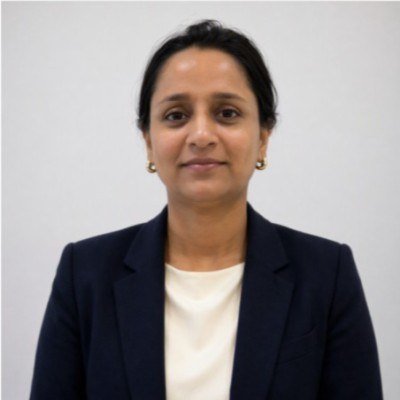
Neha Gupta is a CFA charterholder based in Winnipeg who has worked in financial markets since December 2005. She has published more than 2,600 investment articles and is Head of Operations and Finance at Whiteland Real Estate. She reviews WealthScale’s investing pages for accuracy.
- CFA charter, CFA Institute (awarded 2023)
- Post Graduate Diploma in Business Administration (Finance), 2008
- In financial markets since December 2005
- More than 2,600 published investment articles
General information only. Not financial, investment, tax or legal advice. WealthScale is independent and is published by WealthScale Media Inc., 55 Queen St E, Suite 1205, Toronto, ON M5C 1R6. CFA® and Chartered Financial Analyst® are registered trademarks owned by CFA Institute.