

RESP Grant Calculator
This RESP calculator shows how much grant money your child can collect and what the plan could be worth by age 17. The basic Canada Education Savings Grant adds 20% of the first $2,500 you contribute each year, up to $7,200 per child. In 2026, families under $117,045 of adjusted family net income earn an extra 10% or 20% on the first $500, lower-income families can get up to $2,000 from the Canada Learning Bond, and B.C. and Quebec add their own grants. Enter your child’s age, province, income and contributions to see every grant year by year.
 Written by Sharad Gondaliya, CPA CPAChartered Professional Accountant, CPA Ontario No. 61040184
 Financial reviewer: Neha Gupta, CFA CFA charterholderReview of this page scheduled
At a glance
What the calculator answers. How much CESG, additional CESG, Canada Learning Bond, BCTESG and QESI your child can receive, how much you need to contribute to collect it, and what the RESP could be worth at the end of the year the child turns 17.
What you need to know first. The child’s birth year, your province, your adjusted family net income, the number of children in the family, what you have already contributed, what you plan to contribute and the return you want to assume.
The 2026 grant figures it uses. Basic CESG of 20% on the first $2,500 a year ($500), up to $1,000 a year with carry-forward and $7,200 for life. Additional CESG of 20% on the first $500 under $58,523 of income and 10% from $58,523 up to $117,045.
Grants that need no contribution. The Canada Learning Bond pays $500 in the first eligible year and $100 a year after that up to age 15, to $2,000. B.C.’s BCTESG pays $1,200 once, requested between the 6th birthday and the day before the 9th.
The fastest answer. For a family above $117,045 outside B.C. and Quebec, $2,500 a year for 14 years and $1,000 in the 15th year collects the full $7,200 with $36,000 of contributions.
Use the RESP grant calculator below to see each grant by year, your total grants and a projected plan value at 17.
1. How to Use the RESP Calculator
Child’s birth year. The calculator uses it to work out how many years of grant room have built up and how many years are left before the end of the year the child turns 17, the last year the CESG is paid. It also checks whether the child was born in 2004 or later (for the Canada Learning Bond) or in 2006 or later (for the BCTESG).
Province. Choose B.C. to add the one-time $1,200 BCTESG, or Quebec to add the QESI of 10% of net contributions, up to $250 a year. Every other province and territory gets federal grants only, because no other province runs an RESP grant.
Adjusted family net income. This sets the additional CESG: under $58,523 adds 20% on the first $500 in 2026, and $58,523 up to $117,045 adds 10%. With the number of children, it also decides Canada Learning Bond eligibility. Please use the figure from your most recent assessed tax returns, not your gross pay.
Past contributions. The total you have already put in for this child, and the CESG it has already received. Any CESG already received counts toward the $7,200 lifetime limit, and grant room you did not use in earlier years carries forward. Past contributions also decide whether the child passes the age 16 and 17 test.
Planned contributions. A yearly amount from this year on. Less than $2,500 in a year leaves part of that year’s basic grant unclaimed (it carries forward, but only $1,000 a year can ever be collected), and more than $5,000 in a year earns nothing extra. Watch for the year the $7,200 is reached: contributions after that earn no more CESG.
Return assumption. The yearly return used to project growth. This is an assumption, not a forecast: lower rates suit savings and GICs, higher rates suit stock-heavy portfolios, and real results will vary.
2. The Rules Behind the RESP Calculator
CESG. The basic grant is 20% of the first $2,500 contributed in a calendar year. In a year with unused room from earlier years, the grant can reach $1,000 on $5,000. The lifetime maximum is $7,200, including the additional CESG. Contributions count for the year they are made, up to December 31.
Additional CESG. The extra rate applies to the first $500 contributed each year. The 2026 thresholds are $58,523 and $117,045. Thresholds for later years have not been published, so any projection that applies the 2026 bands to future years is an estimate. A family near a threshold should test both bands.
Canada Learning Bond. $500 for the first year of eligibility, $100 for each later year up to the year the child turns 15, to $2,000. The government also pays $25 with the first bond toward opening costs. For July 2026 to June 2027, the income limit is $58,523 or less for one to three children, under $66,036 for four and under $73,577 for five.
Provincial grants. The BCTESG is $1,200 once for B.C. children born in 2006 or later, no contribution needed. The QESI is 10% of net contributions, up to $250 a year ($500 with unused rights), plus up to $50 a year for lower-income families, to $3,600 in total. Because we could not confirm the income limits for the extra $50, the examples on this page use the basic QESI only.
| Rule | Figure |
|---|---|
| Basic CESG rate | 20% of the first $2,500 a year |
| Basic CESG, yearly maximum | $500 |
| CESG in a year with unused room | Up to $1,000 (on $5,000) |
| Lifetime CESG, including additional CESG | $7,200 |
| Last year for CESG | Year the child turns 17 |
| Additional CESG, income under $58,523 | Extra 20% on the first $500 ($100) |
| Additional CESG, $58,523 up to $117,045 | Extra 10% on the first $500 ($50) |
| Canada Learning Bond | $500, then $100 a year to age 15; $2,000 lifetime |
| BCTESG | $1,200 once (B.C., born 2006 or later) |
| QESI basic | 10% of net contributions, up to $250 a year; $3,600 lifetime |
| Lifetime contribution limit | $50,000 per child |
3. Worked Examples: Three Families
These examples are hypothetical. Each uses an assumed 5% yearly return for illustration, not a forecast, and, like the calculator, adds each year’s contributions and grants at the end of that year.
Family 1: Ontario, income $150,000, newborn in 2026. Income is above $117,045, so only the basic CESG applies, and Ontario has no provincial grant. The parents contribute $2,500 a year for 14 years ($35,000) and $1,000 in the 15th year, for $36,000. The CESG is ($500 x 14) + $200 = $7,200. At 5%, the plan is worth $72,855.93 at the end of the year the child turns 17, of which $29,655.93 is growth ($72,855.93 – $36,000 – $7,200).
Family 2: British Columbia, income $90,000, child born in 2020. Income falls in the $58,523 up to $117,045 band, so each $2,500 earns $550. The parents contributed $2,500 a year from the birth year. They reach $7,200 after 13 years of $550 ($7,150) and $166.67 in the 14th year, which earns 30% ($50). Total contributions: ($2,500 x 13) + $166.67 = $32,666.67. In 2026, the year the child turns 6, they request the $1,200 BCTESG, bringing total grants to $8,400. At 5%, the plan is worth $71,266.37 at 17.
Family 3: Alberta, income $130,000, child turns 12 in 2026, no RESP yet. The child has unused room, but the CESG is capped at $1,000 a year and ends at 17. Starting in 2026 with $5,000 a year for six years (ages 12 to 17) collects $1,000 x 6 = $6,000 on $30,000 of contributions. Because $5,000 goes in before the end of the year the child turns 15, the grant continues at 16 and 17. The $1,200 lost compared with the full $7,200 cannot be recovered. At 5%, the plan is worth $40,811.48 at 17.
| Family | Contributions | CESG | Provincial grant | Total grants | Value at 17 (5% assumed) |
|---|---|---|---|---|---|
| 1. Ontario, $150,000, newborn | $36,000 | $7,200 | None | $7,200 | $72,855.93 |
| 2. B.C., $90,000, born 2020 | $32,666.67 | $7,200 | $1,200 BCTESG | $8,400 | $71,266.37 |
| 3. Alberta, $130,000, starts at 12 | $30,000 | $6,000 | None | $6,000 | $40,811.48 |
Run your own family’s numbers in the RESP calculator, then check how each grant works in detail.
4. Reference Table: RESP Grants by Income and Province
Why a static table. The calculator runs in your browser, so the key 2026 figures are also set out here in plain tables. Use them to check a result or to compare situations at a glance.
By income. The basic CESG is the same for everyone. Income changes only the extra amount on the first $500 each year and whether the child can get the Canada Learning Bond. Lower-income families reach the $7,200 lifetime CESG sooner because they collect more each year: $600 instead of $500.
By province. Outside B.C. and Quebec, there is no provincial RESP grant. B.C. adds $1,200 once. Quebec adds up to $250 a year on contributions, which on the standard $2,500-a-year schedule reaches the $3,600 lifetime QESI at the same time the CESG reaches $7,200.
| Adjusted family net income | CESG on $500 | CESG on $2,500 | Years at $2,500 to reach $7,200 | Canada Learning Bond |
|---|---|---|---|---|
| Under $58,523 | $200 | $600 | 12 | Up to $2,000 if eligible |
| $58,523 up to $117,045 | $150 | $550 | 13, then $166.67 in year 14 | Only larger families under the CLB limit |
| Over $117,045 | $100 | $500 | 14, then $1,000 in year 15 | No |
| Where the child lives | Provincial grant | Contribution needed | Yearly amount | Lifetime amount |
|---|---|---|---|---|
| British Columbia | BCTESG | No | $1,200 once, requested between the 6th birthday and the day before the 9th | $1,200 |
| Quebec | QESI | Yes | 10% of net contributions, up to $250 ($500 with unused rights), plus up to $50 | $3,600 |
| All other provinces and territories | None | Not applicable | $0 | $0 |
5. CESG Calculator Catch-Up Table: Contributions Needed by Age
What the table shows. For a child with no RESP contributions so far, the table shows the contribution plan that collects the most basic CESG, starting in the year the child turns the age in the first column. It assumes the child has been eligible since birth, the family is above $117,045 of income (basic CESG only), and the grant is capped at $1,000 a year and $7,200 for life.
How catch-up works. Like any CESG calculator, this one starts from grant room. Each year adds $500 of grant room, and unused room carries forward. Contributing $5,000 in a year collects $1,000, which is $500 of the current year’s room plus $500 of old room. So each $5,000 year clears $500 of the backlog, and the plan drops back to $2,500 a year once the backlog is gone.
The cut-off ages. A family starting by the year the child turns 10 can still collect all $7,200. Starting at 11 caps the total at $7,000, and each later starting year loses a further $1,000 of grant. A child with no contributions by the end of the year they turn 15 cannot receive CESG at 16 or 17, so the table shows $0 for those starting ages.
The total is always $36,000 for the full grant. Whatever the starting age up to 10, collecting $7,200 at 20% takes $36,000 of contributions ($7,200 / 20%). Starting later changes how fast the money must go in, not how much.
| Age in first contribution year | Unused grant room from earlier years | Contribution plan | Total contributed | CESG collected |
|---|---|---|---|---|
| 0 | $0 | $2,500 at ages 0 to 13, then $1,000 at age 14 | $36,000 | $7,200 |
| 1 | $500 | $5,000 at age 1, $2,500 at ages 2 to 13, then $1,000 at age 14 | $36,000 | $7,200 |
| 2 | $1,000 | $5,000 at ages 2 and 3, $2,500 at ages 4 to 13, then $1,000 at age 14 | $36,000 | $7,200 |
| 3 | $1,500 | $5,000 at ages 3 to 5, $2,500 at ages 6 to 13, then $1,000 at age 14 | $36,000 | $7,200 |
| 4 | $2,000 | $5,000 at ages 4 to 7, $2,500 at ages 8 to 13, then $1,000 at age 14 | $36,000 | $7,200 |
| 5 | $2,500 | $5,000 at ages 5 to 9, $2,500 at ages 10 to 13, then $1,000 at age 14 | $36,000 | $7,200 |
| 6 | $3,000 | $5,000 at ages 6 to 11, $2,500 at ages 12 and 13, then $1,000 at age 14 | $36,000 | $7,200 |
| 7 | $3,500 | $5,000 at ages 7 to 13, then $1,000 at age 14 | $36,000 | $7,200 |
| 8 | $4,000 | $5,000 at ages 8 to 14, then $1,000 at age 15 | $36,000 | $7,200 |
| 9 | $4,500 | $5,000 at ages 9 to 15, then $1,000 at age 16 | $36,000 | $7,200 |
| 10 | $5,000 | $5,000 at ages 10 to 16, then $1,000 at age 17 | $36,000 | $7,200 |
| 11 | $5,500 | $5,000 at ages 11 to 17 | $35,000 | $7,000 |
| 12 | $6,000 | $5,000 at ages 12 to 17 | $30,000 | $6,000 |
| 13 | $6,500 | $5,000 at ages 13 to 17 | $25,000 | $5,000 |
| 14 | $7,000 | $5,000 at ages 14 to 17 | $20,000 | $4,000 |
| 15 | $7,200 | $5,000 at ages 15 to 17 | $15,000 | $3,000 |
| 16 | $7,200 | No CESG possible at ages 16 and 17 without earlier contributions | $0 | $0 |
| 17 | $7,200 | No CESG possible at ages 16 and 17 without earlier contributions | $0 | $0 |
Starting late? Open a plan before December 31 so this year’s grant room is not wasted.
6. The Age 16 and 17 Rule in Your Results
What the rule says. The CESG is paid in the years the child turns 16 and 17 only if, by the end of the year the child turned 15, at least $2,000 had been contributed and not withdrawn, or at least $100 had been contributed and not withdrawn in any four years. If neither test is met, the result for those two years is $0 even if you contribute.
Why your result may stop at 15. A result that shows grant up to 15 and nothing after usually means the plan has less than $2,000 in it and fewer than four years with $100 or more. A single top-up before December 31 of the year the child turns 15 fixes it.
Withdrawals count against you. Only contributions still in the plan count toward either test. If you entered a withdrawal before 16, check that what remains still passes.
This example is hypothetical. A family contributed $800 when the child was 9, $600 at 11 and $400 at 13: $800 + $600 + $400 = $1,800 over three years. That fails both tests. Adding $200 or more in the year the child turns 14 or 15 brings the total to at least $2,000 and passes test one; it also adds a fourth contribution year of $100 or more, which passes test two.
7. RESP Savings Calculator: Projections to Age 17
How the projection works. The projection grows the balance at the return you choose, then adds each year’s contributions and grants at the end of the year. It is an RESP savings calculator, not a promise: returns change from year to year, and fees reduce growth. The figures below use the same method.
The standard schedule at two returns. On $2,500 a year for 14 years and $1,000 in the 15th, with the full $7,200 CESG, the plan is worth $59,003.70 at 17 at an assumed 3% and $72,855.93 at an assumed 5%. The difference, $13,852.23, comes only from the return assumption, which is why the investment mix matters as much as the grant.
Starting late costs growth, not just grant. Family 3 above, starting at 12 with $5,000 a year, reaches $38,810.46 at 3% and $40,811.48 at 5%. It contributes $30,000 against the standard schedule’s $36,000, but ends far lower because the money has fewer years to grow.
| End of the year the child turns | Contributions to date | CESG to date | Value at 3% assumed | Value at 5% assumed |
|---|---|---|---|---|
| 5 | $15,000 | $3,000 | $19,405.23 | $20,405.74 |
| 10 | $27,500 | $5,500 | $38,423.39 | $42,620.36 |
| 14 | $36,000 | $7,200 | $53,996.74 | $62,935.69 |
| 17 | $36,000 | $7,200 | $59,003.70 | $72,855.93 |
To test other return assumptions or monthly amounts, the compound interest calculator below shows growth year by year.
8. What to Do With Your Result
If you have no RESP yet. Get the child’s SIN, choose a provider and open the plan, asking for every grant your family qualifies for. Our best RESP providers ranking and our list of the best self-directed RESP accounts compare costs and features. Our advertiser disclosure explains how WealthScale is paid.
If you are behind. Use the catch-up table to set a $5,000-a-year plan until unused room is gone. Make sure at least $2,000 is in the plan before the end of the year the child turns 15.
If you are on track. Set up an automatic monthly contribution of $208.33, which adds up to $2,500 a year, and stop once the plan reaches the $7,200 grant. Extra savings can then go to a parent’s TFSA or RRSP; our TFSA vs RRSP comparison can help choose.
Choose investments for the time left. A young child’s plan has many years to recover from a market fall; a 15-year-old’s does not. Many families move toward cash and GICs in the last few years. See current GIC rates and our robo-advisor and broker reviews, such as Wealthsimple Managed Investing and Qtrade Direct Investing.
Learn the withdrawal rules early. Grants and growth come out to the student as taxable educational assistance payments, capped at $8,000 in the first 13 weeks of full-time study. Our RESP guide explains withdrawals, and our RESP grants guide covers repayment rules. For other tools, see all our calculators or our investment accounts guide.
8 Ways to Raise Your RESP Calculator Result
1. Start this year
Every year of delay before age 10 means more $5,000 years later; starting after 10 loses grant for good: $200 at 11 and a further $1,000 for each later year. A first contribution before December 31 locks in this year’s $500.
2. Hit $2,500 exactly
$2,500 is the contribution that earns the full basic CESG. Less leaves grant behind; more than $5,000 in a year earns nothing extra.
3. Never skip the first $500
Under $117,045 of income in 2026, the first $500 earns 30% or 40%. If money is tight, keep at least that much going in each year.
4. Request the Canada Learning Bond
If your family is under the CLB limit, up to $2,000 arrives without any contribution. Make sure the plan’s application requests it.
5. Collect the B.C. or Quebec grant
B.C. families add $1,200 once between the 6th and 9th birthdays. Quebec families add 10% a year through the QESI, up to $3,600.
6. Keep fees low
A lower fee leaves more growth in the plan. Compare account and fund costs before choosing a provider, especially for a plan that will run 17 years or more.
7. Match risk to the deadline
Growth assets suit the early years; cash and GICs suit the last few. A plan that drops in value at 17 has no time to recover before the first tuition bill.
8. Pass the age 15 test
$2,000 in the plan by the end of the year the child turns 15, left in place, keeps two more years of grant within reach.
RESP Calculator FAQ
How does the RESP calculator work out the CESG?
The estimate follows the 2026 CESG rules: 20% on the first $2,500 contributed each year, the additional CESG on the first $500 if family income is under $117,045, and up to $1,000 in a year when unused room exists. The grant stops at the $7,200 lifetime limit and at the end of the year the child turns 17, and the age 16 and 17 test applies.
How much should I put in an RESP each year?
$2,500 a year collects the full basic CESG of $500. That is about $208.33 a month. On that schedule, 14 years at $2,500 and $1,000 in the 15th year collect the whole $7,200 with $36,000 of contributions. Lower-income families reach $7,200 sooner because they also get the additional CESG.
What happens if I contribute more than $2,500 in a year?
If the child has unused grant room from earlier years, the extra earns grant up to $1,000 for the year, which takes $5,000. Without unused room, anything above $2,500 earns no grant that year. Money above the grant amounts still grows tax-sheltered inside the RESP, within the $50,000 lifetime limit.
How accurate is the projected RESP value?
The grant figures follow the 2026 rules. The projected value depends on the return you assume, which is not a forecast. Real returns go up and down, fees reduce growth, and the projection adds each year’s money at the end of the year, while real grants arrive some time after each contribution. Treat the projection as a planning range, and run it at a lower and a higher return to see the spread.
Does the RESP calculator include the Canada Learning Bond?
Yes. The Canada Learning Bond is $500 for the first year of eligibility and $100 for each later year up to age 15, to $2,000, with no contribution. For July 2026 to June 2027, a family with one to three children qualifies with adjusted family income of $58,523 or less. The child must be born in 2004 or later.
Does it include the B.C. and Quebec grants?
Yes. For B.C., it adds the one-time $1,200 BCTESG for children born in 2006 or later, requested between the 6th birthday and the day before the 9th. For Quebec, it adds the QESI of 10% of net contributions, up to $250 a year and $3,600 for life. No other province pays an RESP grant.
Which income figure should I use?
Use adjusted family net income, which is based on the net income on your family’s tax returns, not gross pay. For 2026, under $58,523 earns an extra 20% on the first $500 contributed, and $58,523 up to $117,045 earns an extra 10%. Please check your latest notice of assessment for the net income figures.
I started late. How much RESP grant can I still get?
Starting by the year the child turns 10, you can still collect the full $7,200 by contributing $5,000 a year until the unused room is used. From 11, the most you can collect falls: $7,000 at 11, $6,000 at 12, down to $3,000 at 15. With nothing contributed by the end of the year the child turns 15, no CESG is paid at 16 or 17.
Why does my result show no grant at 16 and 17?
The CESG is paid at 16 and 17 only if at least $2,000 was contributed by the end of the year the child turned 15, or at least $100 in any four years before then, with none of it withdrawn. If your plan misses both tests, adding enough before that year-end fixes the result.
What happens to the grants if my child does not study?
The grants go back to the government, your contributions come back to you tax-free, and the growth can be paid to you as an accumulated income payment with an extra 20% tax (12% in Quebec), or moved to your RRSP up to $50,000. Our editorial standards explain how we check these rules.
Run the RESP calculator for your family, then open or top up your plan before December 31 to lock in this year’s grant.
Figures on this page were checked against Employment and Social Development Canada, Canada Revenue Agency, Government of British Columbia and Revenu Quebec publications on October 22, 2026. We update this page when a figure changes.
Meet the Experts Behind WealthScale

Sharad is a CPA Ontario member (No. 61040184) and a Certified Public Accountant licensed in Washington and Montana, with more than 15 years in accounting and tax, a Diploma in Banking and Finance and a Certificate in Small Business Finance. He checks WealthScale content against primary sources. WealthScale is independent of his firm, Gondaliya CPA Professional Corporation, and provides general information only, not personal financial, investment, tax or legal advice.
- Chartered Professional Accountant, CPA Ontario
- Certified Public Accountant, Washington (No. 57629) and Montana (No. PAC-CPAP-LIC-033176)
- Writing on tax and registered accounts since 2021
- Reader’s Choice Award 2025 Winner, Best Accountant (Toronto)
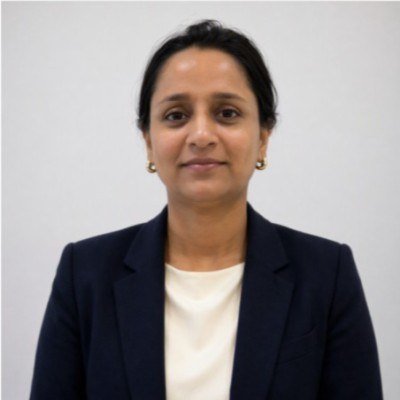
Neha Gupta is a CFA charterholder based in Winnipeg who has worked in financial markets since December 2005. She has published more than 2,600 investment articles and is Head of Operations and Finance at Whiteland Real Estate. She reviews WealthScale’s investing pages for accuracy.
- CFA charter, CFA Institute (awarded 2023)
- Post Graduate Diploma in Business Administration (Finance), 2008
- In financial markets since December 2005
- More than 2,600 published investment articles
General information only. Not financial, investment, tax or legal advice. WealthScale is independent and is published by WealthScale Media Inc., 55 Queen St E, Suite 1205, Toronto, ON M5C 1R6. CFA® and Chartered Financial Analyst® are registered trademarks owned by CFA Institute.