

Best RESP Providers in Canada for 2026
The best RESP providers Canada families can choose in 2026, on our published score, are Questrade and Desjardins Online Brokerage at 4.3 / 5, with Wealthsimple third at 4.2 / 5. We ranked the 9 online brokers that offer RESPs and the 3 ranked robo-advisors that manage them. Four of the nine brokers charge no RESP account fee and $0 commissions on Canadian stocks and ETFs, though the fund costs inside any ETF you buy still apply. Grant rates are the same at every provider: the Canada Education Savings Grant adds 20% on the first $2,500 a year, up to $7,200 per child.
 Written by Sharad Gondaliya, CPA CPAChartered Professional Accountant, CPA Ontario No. 61040184
 Financial reviewer: Neha Gupta, CFA CFA charterholderReview of this page scheduled
At a glance
Top broker for an RESP. Questrade scores 4.3 / 5. It offers both individual and family RESPs, charges no annual account fee and $0 commission on Canadian and US-listed stocks and ETFs, and lets registered accounts hold US dollars at no extra cost. It rebates another firm’s transfer-out fee up to $150 per account.
Runner-up. Desjardins Online Brokerage (Disnat) also scores 4.3 / 5 and sits second on the unrounded score (4.275 against Questrade’s 4.325). It has $0 online commissions and a safety score of 5.0, the highest we give. Its RESP carries a $50 annual administration fee while the plan holds less than $15,000.
Third place. Wealthsimple scores 4.2 / 5 (4.225 unrounded). It offers a family plan and an individual plan for yourself, has no account fees at any balance, and sells fractional shares from $1, which suits small monthly contributions.
Best managed RESP. Wealthsimple Managed Investing leads the robo-advisors at 4.2 / 5, with a 0.5% fee on its Core tier. Questwealth Portfolios scores 4.1 / 5 and has the lowest all-in cost of the ranked robo-advisors, 0.37% a year on $50,000, and it states both RESP and family RESP accounts.
Grants do not change by provider. The Canada Education Savings Grant (CESG) pays 20% of the first $2,500 contributed each year, or $500, up to $7,200 per child. The Canada Learning Bond, the B.C. grant and Quebec’s incentive follow their own rules, and your provider has to offer each one for you to receive it.
How we ranked. Brokers are ordered by our overall broker score (costs 35%, account types 15%, US investing 15%, cash and margin 10%, platform 15%, safety 10%), where cost counts commissions and account fees for two trading profiles; robo-advisors by our robo score. Every figure was checked on October 22, 2026.
Best RESP Providers Canada 2026: Ranking at a Glance
This table lists every provider in score order: first the online brokers, which you run yourself, then the robo-advisors, which run the portfolio for you. Scores are out of 5 and shown to one decimal. Where two providers share a rounded score, the order follows the unrounded score. “RESP plan types” shows what each provider states about family and individual plans; where it says “not specified”, the provider lists RESPs without naming the types on the pages we checked.
| Rank | Provider | Type | Score | Best for | RESP plan types stated | RESP account fee |
|---|---|---|---|---|---|---|
| 1 | Questrade | Online broker | 4.3 / 5 | Family plans with USD and no account fee | Individual and family | None |
| 2 | Desjardins Online Brokerage (Disnat) | Online broker | 4.3 / 5 | Plans of $15,000 or more at a co-operative-owned dealer | Not specified | $50 a year under $15,000 |
| 3 | Wealthsimple | Online broker | 4.2 / 5 | Small monthly contributions in fractional shares | Family; individual for yourself | $0 |
| 4 | National Bank Direct Brokerage | Online broker | 4.2 / 5 | Parents aged 30 or under, or with $20,000 or more | Not distinguished | $100 a year per account root unless waived |
| 5 | Qtrade Direct Investing | Online broker | 4.0 / 5 | Stated individual and family plans with $0 trades | Individual or family | No quarterly administration fee |
| 6 | BMO InvestorLine | Online broker | 3.8 / 5 | BMO clients who want $0 stock and ETF trades | Not specified | $0 on registered accounts under $25,000 |
| 7 | CIBC Investor’s Edge | Online broker | 2.8 / 5 | Buyers of its 180+ $0 ETFs | Not specified | $100 a year at $10,000 or less |
| 8 | RBC Direct Investing | Online broker | 2.7 / 5 | RBC clients who buy from its $0 ETF list | Not specified | $0 |
| 9 | Scotia iTRADE | Online broker | 2.6 / 5 | Scotiabank package holders with $0 trades | Not specified; held in CAD | $25 a year under $15,000 |
| 1 | Wealthsimple Managed Investing | Robo-advisor | 4.2 / 5 | Hands-off families who want advisors on call | Not specified | 0.5% management fee on Core |
| 2 | Questwealth Portfolios | Robo-advisor | 4.1 / 5 | The lowest all-in managed cost | RESP and family RESP | 0.25% management fee under $100,000 |
| 3 | CI Direct Investing | Robo-advisor | 3.7 / 5 | Families who want planning help | Not specified | 0.60% on the first $150,000 |
Who is missing and why. Interactive Brokers, moomoo, Webull and TD Direct Investing are not on this list. Interactive Brokers does not describe RESPs on the pages we checked, moomoo states that RESPs are not available, Webull lists only cash, margin, TFSA and RRSP accounts, and the TD Direct Investing account list we checked does not include RESPs. RBC InvestEase is left out of the robo ranking because it offers TFSA, FHSA, RRSP and non-registered accounts only.
Use the RESP grant calculator below to see how much CESG, additional CESG, Canada Learning Bond and provincial grant money your contributions could attract each year, with a projection to the year your child turns 17. The grant amounts are the same whichever provider you pick.
Master Comparison Table: RESP Brokers Side by Side
This is the full view of the nine brokers, with every cost that can touch an RESP. You can search and sort it. Each figure comes from the broker’s own published pricing or account pages on October 22, 2026. “Not published” means the broker did not state the item on the pages we checked, so we do not fill it in.
| Rank | Broker | Score | RESP plan types | RESP account fee | Canadian stocks and ETFs | US stocks and ETFs | USD in an RESP | Transfer out | Transfer-in rebate | DRIP | Fractional shares | CIPF member firm |
|---|---|---|---|---|---|---|---|---|---|---|---|---|
| 1 | Questrade | 4.3 | Individual and family | None | $0 | $0 (ECN fees on direct-routed orders only) | Registered accounts hold USD at no extra cost | $150 | Up to $150 per account | Yes, no transaction fee | Yes | Questrade, Inc. |
| 2 | Desjardins Online Brokerage (Disnat) | 4.3 | Not specified | $50 a year under $15,000 | $0 online | $0 online | Not stated for RESPs | $150 total; $25 per security partial | Not published | Not published | Not published | Desjardins Securities Inc. |
| 3 | Wealthsimple | 4.2 | Family; individual for yourself | $0 | $0 | $0 (pass-through fees may apply) | USD account: $10 a month on Core, included on Premium and Generation | $0 | Other firm’s fee reimbursed, up to $150 per account, on $25,000 or more | Yes, account-level | Yes, from $1 | Wealthsimple Investments Inc. |
| 4 | National Bank Direct Brokerage | 4.2 | Not distinguished | $100 a year per account root; waived at $20,000 or more, or age 30 or under | $0 | $0 | Not stated for RESPs | $150 per account | Depends on amount; threshold not published | Yes, full shares | Not published | National Bank Financial Inc. |
| 5 | Qtrade Direct Investing | 4.0 | Individual or family | No quarterly administration fee | $0 | $0 (SEC fee on US sales) | Not stated for RESPs | $150 | Up to $150 per client on $15,000 or more (Fall Offer 2026) | Yes | Not published | Aviso Financial Inc. |
| 6 | BMO InvestorLine | 3.8 | Not specified | $0 on registered accounts under $25,000 | $0 | $0 | Not published | Not published | Not published | Not published | Not published | BMO InvestorLine Inc. |
| 7 | CIBC Investor’s Edge | 2.8 | Not specified | $100 a year at $10,000 or less | $6.95 ($0 on 180+ ETFs) | $6.95 | Not published | Not published | Not published | Not published | Yes | CIBC Investor Services Inc. |
| 8 | RBC Direct Investing | 2.7 | Not specified | $0 | $9.95 ($0 on 50+ select ETFs) | $9.95 | Accounts hold CAD and USD; pricing not stated | $150 | Up to $200 on $15,000 or more | Yes | Not published | RBC Direct Investing Inc. |
| 9 | Scotia iTRADE | 2.6 | Not specified | $25 a year under $15,000 | $9.99 ($0 on 200+ ETFs) | $9.99, charged in USD | RESP held in CAD; U.S.-Friendly RESP $30 a quarter | $150 | Newcomers only (StartRight), up to $150 | Not published | Not published | Scotia Capital Inc. |
How to read the fee column. An RESP account fee is charged on top of trading costs, and most of these fees apply only below a balance. The thresholds differ: $15,000 at Desjardins and Scotia iTRADE, $20,000 at National Bank (counted on May 31) and $10,000 at CIBC. Section 3 turns these rules into yearly dollar costs for four families.
The 9 Online Brokers That Offer RESPs, Ranked
Each card explains why the broker sits where it does, what an RESP costs there, which plan types it states and the kind of family it fits best. The scores come from our broker rating methodology, and no broker can pay for a position.
1. Questrade: best for family plans with USD and no account fee
4.3/ 5Why it ranks here. Questrade’s unrounded score is 4.325, the highest of the nine. It scores full marks on cost (5.0), account types (5.0) and US investing (5.0), because Canadian and US-listed trades are $0 and registered accounts can hold US dollars at no extra cost. It loses ground on safety (3.5), because its CIRO membership follows from its CIPF listing rather than a statement we could quote, and on cash and margin (0.5), because cash earns effectively 0% and its margin rate is above 6.5%.
Costs. $0 to buy or sell Canadian and US-listed stocks and ETFs online; ECN fees apply only to direct-routed orders. There is no annual account fee and no inactivity fee at any balance. Moving an account out costs $150, and Questrade rebates the fee your old firm charges, up to $150 per account.
Accounts. Questrade lists both an RESP and a family RESP, plus RRSP, spousal RRSP, TFSA, FHSA, LIRA, RRIF, LIF and more. Its managed service, Questwealth Portfolios, also offers RESP and family RESP accounts and is ranked separately below, so a family can move between doing it yourself and a managed portfolio at the same firm.
Pros
- Individual and family RESPs both stated
- No account or inactivity fee at any balance
- USD held in registered accounts at no extra cost
Cons
- $150 to transfer an account out
- Safety score 3.5, the lowest of the nine
- Uninvested cash earns effectively 0%
2. Desjardins Online Brokerage (Disnat): best for plans of $15,000 or more at a co-operative-owned dealer
4.3/ 5Why it ranks here. Disnat shares the 4.3 rounded score with Questrade and ranks second on the unrounded score (4.275). It scores 5.0 on cost thanks to $0 online trades and earns the maximum 5.0 on safety: Desjardins Securities Inc. states its CIRO and CIPF membership and belongs to a financial co-operative group. Its US score is also 5.0, for US-dollar plans in several registered accounts with no fee stated and $0 US trades. Platform features score 3.0, because fractional shares and DRIP were not stated.
Costs. $0 online commissions on Canadian and US stocks and ETFs through Disnat Classic and Disnat Direct; trades placed through a representative have a $45 minimum. The RESP pays a $50 annual administration fee while it holds less than $15,000. The $30 quarterly inactivity fee is waived when you hold a registered account. A full transfer out costs $150; a partial one costs $25 per security.
Accounts. RESPs are listed alongside RRSP, spousal RRSP, TFSA, FHSA, LIRA, RRIF, LIF and in-trust accounts for a minor. The pages we checked do not say whether family, individual or both RESP types are offered.
Who it suits. Families who already have $15,000 or more to move in, so the $50 fee never applies, and who value a dealer owned by a co-operative group. Quebec families may find it a natural fit; please confirm that it requests the Quebec incentive for you.
Pros
- $0 online stock and ETF commissions
- Top safety score of 5.0
- No RESP fee once the plan reaches $15,000
Cons
- $50 a year on RESPs under $15,000
- Family or individual plan type not stated
- Fractional shares and DRIP not stated
3. Wealthsimple: best for small monthly contributions in fractional shares
4.2/ 5Why it ranks here. Wealthsimple matches Questrade on cost (5.0) and account types (5.0) and beats it on safety (4.0, with CIRO and CIPF membership both stated) and on cash and margin (2.0). It scores lower on US investing (3.5), because a US-dollar account costs $10 a month on the Core tier. The unrounded score is 4.225, which places it third.
Costs. $0 to open, close or keep an account, and $0 commission on Canadian and US-listed stocks and ETFs (pass-through exchange fees may apply to some US orders). A US-dollar account can be added to an RESP for $10 plus tax a month on Core after a 30-day trial; it is included on Premium ($100,000 or more in assets) and Generation ($500,000 or more). Transfers out cost $0, and Wealthsimple reimburses your old firm’s fee, up to $150 per account, on transfers of $25,000 or more.
Accounts. Wealthsimple offers a family plan and an individual plan for yourself. An individual plan for someone else is listed as coming soon, and self-directed RESP transfers in are still in beta. Recurring investments in an RESP are funded only from cash already in the account. Its managed RESP is ranked separately below.
Pros
- Fractional shares from $1
- No account fee and $0 transfer-out fee
- Family plan in the same app as other accounts
Cons
- Individual plan only for yourself for now
- RESP transfers in still in beta
- US-dollar account costs $10 a month on Core
4. National Bank Direct Brokerage: best for parents aged 30 or under, or with $20,000 or more
4.2/ 5Why it ranks here. National Bank Direct Brokerage (NBDB) has $0 online stock and ETF trades (cost 5.0) and full marks on US investing (5.0): US dollars can be held in a TFSA, RRSP, RRIF and LIRA with no USD fee listed, and US trades are $0. Safety scores 4.5 because the dealer is bank-owned and National Bank Financial Inc. is on CIPF’s member list. Its unrounded score is 4.175, just behind Wealthsimple’s 4.225.
Costs. $0 on all online stock and ETF trades. The main RESP cost is a $100 yearly fee per account root, split across the accounts in that root. It is waived if, on May 31, you hold $20,000 or more in eligible assets, you are 30 or younger, your only account is an InvestCube account, or you joined through the professionals or newcomers offer. Transfers out cost $150 per account. DRIP enrolment is available on request for full shares.
Accounts. RESPs are offered, but the pages we checked do not distinguish individual from family plans. NBDB also lists TFSA, FHSA, RRSP and RRIF, spousal plans, LIRA, LRSP, LIF and in-trust accounts (in-trust is not offered in Quebec).
Who it suits. Younger parents who qualify for the age waiver, and families who will keep at least $20,000 at National Bank on May 31 each year. Below that, the $100 fee ties CIBC’s as the highest flat RESP charge on this list.
Pros
- $0 online stock and ETF trades
- Fee waived at age 30 or under
- Bank-owned dealer with CIPF coverage
Cons
- $100 a year below $20,000 if no waiver applies
- Plan types not distinguished
- Cash earns 0%
5. Qtrade Direct Investing: best for stated individual and family plans with $0 trades
4.0/ 5Why it ranks here. Qtrade scores 5.0 on cost and the full 5.0 on account types. It is held back on US investing (3.5), because it charges US$15 a quarter per account for US-dollar registered accounts unless you qualify for Investor Plus. Safety scores 4.0: Aviso Financial Inc., which runs Qtrade, shows the CIRO logo and is on CIPF’s list.
Costs. $0 online equity and ETF commissions, with an SEC-based fee on US sales. Qtrade’s current fee schedule shows no quarterly administration fee. Other charges to know: $100 to close an account within the first year, $6 a quarter for paper statements (waived for Investor Plus) and $150 to transfer out. Under its Fall Offer 2026, it reimburses up to $150 per client on transfers of $15,000 or more.
Accounts. Qtrade states both individual and family RESPs, and also offers TFSA, FHSA, RRSP, RRIF, LIRA, LIF and joint cash accounts. There is no minimum deposit to start trading.
Pros
- Individual and family RESPs both stated
- $0 online stock and ETF trades
- No quarterly administration fee on the current schedule
Cons
- $100 to close within the first year
- Paper statements cost $6 a quarter
- US-dollar option not stated for RESPs
6. BMO InvestorLine: best for BMO clients who want $0 stock and ETF trades
3.8/ 5Why it ranks here. BMO now advertises unlimited $0 commission trades on stocks and ETFs, which gives it a cost score of 5.0, and it earns 5.0 on safety as a bank-owned dealer that states its CIRO membership. It scores lower on US investing (2.75), on platform features (3.0) and on cash and margin (0.5), because US-dollar registered accounts, fractional shares, DRIP, cash interest and margin rates were not published on the pages we could open.
Costs. $0 on Canadian and US-listed stocks and ETFs; the date the $0 pricing took effect is not stated. BMO lists a $0 annual fee for registered accounts with a portfolio balance under $25,000, so a small RESP carries no account fee. The transfer-out fee sits in a fee schedule we could not open, so we show it as not published.
Accounts. RESPs are offered with TFSA, FHSA, RRSP, RRIF, LIRA, LRSP, RLSP, LRIF, LIF and many non-personal accounts. Plan types were not specified. BMO SmartFolio, the bank’s managed service, also offers RESPs but is not ranked because its fee breakpoints and fund costs are not published.
Pros
- $0 stock and ETF trades
- $0 registered account fee under $25,000
- Bank-owned dealer, safety score 5.0
Cons
- Transfer-out fee not published
- Plan types not stated
- Cash and margin rates not published
7. CIBC Investor’s Edge: best for buyers of its 180+ $0 ETFs
2.8/ 5Why it ranks here. CIBC charges $6.95 per online trade, which pulls its cost score down to 2.92 and, with US-dollar registered accounts not stated, its US score to 0.75. Accounts (4.5) and safety (4.5) are strong: it is bank-owned and CIBC Investor Services Inc. is on CIPF’s list.
Costs. $6.95 per online stock or ETF trade under 150 trades a quarter, $0 on more than 180 ETFs, and $0 for investors aged 18 to 24 with CIBC Smart Start chequing until the end of the year they turn 24. An annual fee of $100 applies when your total market balance is $10,000 or less; it is split across your active accounts (excluding any FHSA) and charged each September. New clients are exempt in their first year.
Accounts. RESPs sit alongside TFSA, FHSA, RRSP, RRIF and locked-in accounts. Plan types were not specified.
Pros
- 180+ ETFs with $0 commission
- First-year exemption from the account fee
- Fractional shares offered
Cons
- $6.95 per trade outside the $0 ETF list
- $100 a year at $10,000 or less
- Transfer-out fee not published
8. RBC Direct Investing: best for RBC clients who buy from its $0 ETF list
2.7/ 5Why it ranks here. RBC scores the full 5.0 on account types and on safety, as a bank-owned dealer that states both its CIRO and CIPF membership. Its $9.95 commission gives it a cost score of 2.02, and its US score is 0.75.
Costs. $9.95 per online or mobile trade ($6.95 with 150 or more trades a quarter) and unlimited $0 trades on more than 50 select ETFs in all accounts. RBC charges no quarterly or annual maintenance fee and has no minimum balance. The 50 $0 trades a year under GoSmart apply to GoSmart TFSA, FHSA and RRSP accounts, not RESPs. Transfers out cost $150; RBC reimburses up to $200 of your old firm’s fees on transfers of $15,000 or more.
Accounts. RESPs are listed with TFSA, FHSA, RRSP, spousal RRSP and RRIF. Plan types were not specified. RBC InvestEase, its robo-advisor, does not offer RESPs.
Pros
- No maintenance fee at any balance
- 50+ ETFs with $0 commission
- Up to $200 of transfer fees reimbursed on $15,000 or more
Cons
- $9.95 per trade outside the $0 list
- GoSmart $0 trades exclude RESPs
- Plan types not stated
9. Scotia iTRADE: best for Scotiabank package holders with $0 trades
2.6/ 5Why it ranks here. Scotia iTRADE’s $9.99 commission gives it a cost score of 2.0, and its platform score is 2.0 because its three platforms are not named and fractional shares and DRIP are not stated. Safety is 5.0: Scotia Capital Inc. states its CIRO regulation, is on CIPF’s list and is bank-owned.
Costs. $9.99 per trade ($4.99 with 150 or more trades the prior quarter), more than 200 ETFs with $0 commission, and up to 100 $0 trades a year with a Scotiabank Ultimate Package (50 with Preferred), effective September 1, 2026. The RESP fee is $25 a year while the plan holds less than $15,000. The $25 quarterly low-activity fee is waived for registered accounts. Transfers out cost $150.
Accounts. The RESP is held in Canadian dollars. A U.S.-Friendly RESP is available for $30 a quarter. Plan types were not specified.
Pros
- Up to 100 $0 trades a year with an Ultimate Package
- 200+ ETFs with $0 commission
- Bank-owned dealer, safety score 5.0
Cons
- $9.99 per trade without a package
- $25 a year under $15,000
- U.S.-Friendly RESP costs $30 a quarter
Managed RESPs: The 3 Robo-Advisors Ranked
A robo-advisor picks a portfolio for you, rebalances it and reinvests contributions. We rank robo-advisors on their own score: fees 45%, account types 15%, portfolio choice 15%, minimum 10% and access to advice 15%. Four robo-advisors meet our publishing rule (both the management fee and the fund costs are published), and three of them offer RESPs.
The robo-advisor fee calculator below shows the yearly management fee at each ranked robo-advisor for the balance you enter, so you can compare them at your own RESP size.
1. Wealthsimple Managed Investing: best for hands-off families who want advisors on call
4.2/ 5Why it ranks here. Wealthsimple scores 5.0 on portfolio choice and on minimum (no minimum is stated), and 4.5 on advice, because advisors are available. Its fee score (3.5) is lower than Questwealth’s, because the Core fee is 0.5% plus fund costs of up to 0.15%, or 0.65% a year in total on $50,000.
Costs. 0.5% a year on Core, 0.4% on Premium ($100,000 or more) and from 0.4% falling to 0.2% on Generation. Classic portfolios hold ETFs with fund costs between 0.12% and 0.15%. On a $20,000 RESP at Core, that is $100 in management fees plus up to $30 in fund costs.
Accounts. RESP is on the managed account list, with TFSA, RRSP, spousal RRSP, FHSA, RRIF, LIRA and non-registered accounts. Plan types for the managed RESP were not stated separately.
Pros
- No minimum stated
- Advisors available
- Automatic rebalancing and reinvestment
Cons
- 0.5% fee on Core, double Questwealth’s 0.25%
- Fund costs on top of the management fee
- Managed RESP plan types not stated
2. Questwealth Portfolios: best for the lowest all-in managed cost
4.1/ 5Why it ranks here. Questwealth has the best fee score (4.9): 0.25% plus fund costs of up to 0.12% comes to 0.37% a year on $50,000. It scores 3.0 on portfolio choice (standard and socially responsible portfolios) and 2.0 on advice, because client-facing advice is not described.
Costs. 0.25% on balances from $250 to $99,999 and 0.20% from $100,000. Standard portfolios hold ETFs with fund costs between 0.09% and 0.12%; socially responsible portfolios cost between 0.20% and 0.24%. There are no opening fees, trading commissions or EFT fees. On a $20,000 RESP: $50 plus up to $24.
Accounts. Questwealth lists both RESP and family RESP accounts, which makes it the only ranked robo-advisor that states a family plan.
Pros
- Lowest all-in cost of the three
- Family RESP stated
- Same firm as Questrade’s self-directed RESP
Cons
- Client advice not described
- Two portfolio families only
- Lowest fee tier starts at a $250 balance
3. CI Direct Investing: best for families who want planning help
3.7/ 5Why it ranks here. CI Direct scores 5.0 on advice, because planners and unlimited advice are included, and 5.0 on minimum ($100). Its fee score (2.6) is the lowest of the three: 0.60% plus ETF fund costs of up to 0.23% comes to 0.83% a year on $50,000.
Costs. 0.60% on the first $150,000, 0.40% on the next $350,000 and 0.35% above $500,000, blended across all of a client’s accounts. ETF portfolio fund costs were published between 0.17% and 0.23% (as of April 30, 2024). CI Direct covers your old firm’s transfer fee, up to $150, on transfers of $25,000 or more. On a $20,000 RESP: $120 plus up to $46.
Accounts. RESPs are offered with TFSA, RRSP, RRIF, LIRA, LIF and non-registered accounts. FHSA is not mentioned, and RESP plan types were not specified.
Pros
- Planners and unlimited advice included
- $100 minimum
- Fee falls as the household balance grows
Cons
- Highest all-in cost of the three
- RESP plan types not stated
- No FHSA for parents saving for a home as well
Robo-advisors we could not rank. Justwealth offers RESPs with target date portfolios, no minimum for RESPs and a minimum fee of $2.50 a month on RESPs, but its fee tiers are published only as an image. BMO SmartFolio offers RESPs, but its 0.4% to 0.7% advisory fee breakpoints and its fund costs are not published. We list both for completeness and leave them unranked. Our full best robo-advisors in Canada ranking covers every account type.
1. How We Ranked the Best RESP Providers in Canada
One score for every broker. The broker list uses our overall broker score, not a separate RESP score. Each broker gets six sub-scores from 0 to 5, multiplied by fixed weights: costs 35%, account types 15%, US investing 15%, cash and margin rates 10%, platform features 15% and safety 10%. A broker appears on this page only if it offers an RESP. The full rubric is in how we rate online brokers and robo-advisors, and how WealthScale earns money is in our advertiser disclosure. Our editorial standards explain how each figure is sourced and dated.
| Broker | Costs (35%) | Account types (15%) | US investing (15%) | Cash and margin (10%) | Platform (15%) | Safety (10%) | Overall |
|---|---|---|---|---|---|---|---|
| Questrade | 5.0 | 5.0 | 5.0 | 0.5 | 4.5 | 3.5 | 4.325 |
| Desjardins Online Brokerage | 5.0 | 4.5 | 5.0 | 1.5 | 3.0 | 5.0 | 4.275 |
| Wealthsimple | 5.0 | 5.0 | 3.5 | 2.0 | 4.0 | 4.0 | 4.225 |
| National Bank Direct Brokerage | 5.0 | 4.5 | 5.0 | 1.0 | 3.0 | 4.5 | 4.175 |
| Qtrade Direct Investing | 5.0 | 5.0 | 3.5 | 1.5 | 3.0 | 4.0 | 4.025 |
| BMO InvestorLine | 5.0 | 4.5 | 2.75 | 0.5 | 3.0 | 5.0 | 3.837 |
| CIBC Investor’s Edge | 2.92 | 4.5 | 0.75 | 1.0 | 3.0 | 4.5 | 2.809 |
| RBC Direct Investing | 2.02 | 5.0 | 0.75 | 0.5 | 4.0 | 5.0 | 2.72 |
| Scotia iTRADE | 2.0 | 4.0 | 3.0 | 1.0 | 2.0 | 5.0 | 2.65 |
A worked total. Questrade: costs 5.0 x 0.35 = 1.75; account types 5.0 x 0.15 = 0.75; US investing 5.0 x 0.15 = 0.75; cash and margin 0.5 x 0.10 = 0.05; platform 4.5 x 0.15 = 0.675; safety 3.5 x 0.10 = 0.35. The total is 4.325, shown as 4.3. Desjardins’s total of 4.275 also rounds to 4.3, so the unrounded score decides the order.
What the cost score measures. Costs are the average yearly cost of two standard profiles at published prices: an active investor and a buy-and-hold investor making $2,000 trades in a $20,000 TFSA, counting commissions and account fees. That is why the six brokers here with $0 stock and ETF trades all score 5.0 on cost, while the $6.95 to $9.99 brokers fall to between 2.0 and 2.92. The US score uses US-dollar registered accounts and US commissions. RESP account fees are not part of the broker score, so Section 3 shows them separately in dollars.
2. Which RESP Provider Type Suits Which Family
Self-directed online brokers. You choose every investment, decide when to buy and rebalance yourself. Costs are trading commissions, any account fee and the fees inside the funds you pick. At the four brokers with $0 trades and no RESP account fee, a family that buys ETFs every month can pay $0 to the broker, though the funds themselves still carry their own costs. This route suits parents who are comfortable choosing and adjusting a portfolio, and who want full control over contribution timing.
Robo-advisors. You answer questions, and the robo-advisor builds, rebalances and reinvests a portfolio for you. You pay a yearly percentage of the balance plus fund costs: from 0.37% to 0.83% all-in on $50,000 among the three we rank. That cost grows with the plan, so a $40,000 RESP costs $148 to $332 a year. It suits parents who want the RESP to run itself and value automatic rebalancing over the lowest cost.
Bank and co-operative brokerages. The bank-owned dealers (BMO, CIBC, RBC, Scotia iTRADE and National Bank) and Desjardins, part of a co-operative group, all offer RESPs, and having the account next to your chequing account can make automatic contributions easy. The trade-off is cost: CIBC, RBC and Scotia iTRADE still charge $6.95 to $9.99 per trade outside their $0 ETF lists, and four of the six have a small-balance fee.
Group plan dealers. A group plan pools families’ savings, sets the contribution schedule for you and chooses the investments. Section 6 explains how they work in general terms. They suit a narrow group: families who want no decisions at all and are sure they can keep up a fixed schedule for many years.
| Family situation | Provider type that may suit | What to check first |
|---|---|---|
| New parents adding small monthly amounts | Broker with fractional shares, or a robo-advisor | No small-balance fee; fractional shares from $1 |
| Two or more children | Any provider that states a family plan | Family plan stated (Questrade, Wealthsimple, Qtrade, Questwealth) |
| Grandparent saving for grandchildren | Family plan, since grandchildren are related by blood | Each child under 21 when named |
| Godparent or family friend | Individual plan | Individual plan for someone else is offered |
| Parents who want no investment decisions | Robo-advisor | All-in cost at your balance |
| Low-income family | Any provider that requests the Canada Learning Bond | CLB offered; no contribution needed |
| B.C. or Quebec family | Any provider that requests the provincial grant | BCTESG or QESI offered |
3. Yearly RESP Costs for Four Families
What we assumed. Each family buys Canadian-listed ETFs online at the broker’s standard commission and does not limit itself to a $0 ETF list. Account fees are applied as published for a parent over 30 with no other assets at the firm. CIBC’s $100 fee is shown from the second year, because new clients are exempt in year one. Robo-advisor costs are the management fee plus the highest published fund cost, so they are the most you would pay. These examples are hypothetical.
| Provider | Starter: $5,000, 12 trades | Growing family plan: $25,000, 12 trades | Grandparent: $12,000, 4 trades | Catch-up: $40,000, 4 trades |
|---|---|---|---|---|
| Questrade | $0.00 | $0.00 | $0.00 | $0.00 |
| Desjardins Online Brokerage | $50.00 | $0.00 | $50.00 | $0.00 |
| Wealthsimple | $0.00 | $0.00 | $0.00 | $0.00 |
| National Bank Direct Brokerage | $100.00 | $0.00 | $100.00 | $0.00 |
| Qtrade Direct Investing | $0.00 | $0.00 | $0.00 | $0.00 |
| BMO InvestorLine | $0.00 | $0.00 | $0.00 | $0.00 |
| CIBC Investor’s Edge | $183.40 | $83.40 | $27.80 | $27.80 |
| RBC Direct Investing | $119.40 | $119.40 | $39.80 | $39.80 |
| Scotia iTRADE | $144.88 | $119.88 | $64.96 | $39.96 |
| Questwealth Portfolios (robo) | $18.50 | $92.50 | $44.40 | $148.00 |
| Wealthsimple Managed Investing (robo, Core) | $32.50 | $162.50 | $78.00 | $260.00 |
| CI Direct Investing (robo) | $41.50 | $207.50 | $99.60 | $332.00 |
How the numbers add up. CIBC for the starter family: 12 x $6.95 = $83.40 in commissions plus the $100 fee at $10,000 or less, for $183.40. Scotia iTRADE for the same family: 12 x $9.99 = $119.88 plus the $25 RESP fee under $15,000, for $144.88. At $25,000 that fee falls away, leaving $119.88. National Bank’s $100 applies at $5,000 and $12,000 because both are under its $20,000 waiver; Desjardins’s $50 applies at both because they are under $15,000. Questwealth on $25,000: 0.25% = $62.50 plus up to 0.12% = $30.00, for $92.50.
What changes the picture. If a CIBC, RBC or Scotia iTRADE family buys only from the broker’s $0 ETF list, commissions drop to $0 and only the account fee is left. A National Bank parent aged 30 or under pays no $100 fee.
What these figures leave out. Fund costs inside any ETFs you buy at a broker, US-dollar account fees and transfer fees are not included. Section 7 covers US investing, and Section 10 covers transfers.
See what grants your contributions would collect, then pick the provider whose costs fit your balance.
4. Family RESP Providers and Individual Plans
The family plan rule. A family plan can name more than one beneficiary, and it is the only kind of RESP that can. Every beneficiary must be related by blood or adoption to each living subscriber and must be under 21 when named. Each one needs a social insurance number and Canadian residency when designated. That makes a family plan the natural home for siblings, and for grandparents saving for several grandchildren.
The individual plan. Any RESP that is not a family plan has a single beneficiary. It is the route when the subscriber is not related to the child by blood or adoption, such as a godparent or a family friend. If a provider offers only a family plan, those savers cannot use it.
What each provider states. The table shows what we found on each provider’s own pages. “Not specified” does not mean the plan type is unavailable; it means we could not confirm it, so please ask before you apply.
| Provider | Family plan | Individual plan | Notes |
|---|---|---|---|
| Questrade | Yes | Yes | Lists RESP and family RESP |
| Desjardins Online Brokerage | Not specified | Not specified | RESP listed |
| Wealthsimple | Yes | For yourself only | Individual plan for someone else listed as coming soon; RESP transfers in beta |
| National Bank Direct Brokerage | Not specified | Not specified | Individual and family not distinguished |
| Qtrade Direct Investing | Yes | Yes | Lists individual or family |
| BMO InvestorLine | Not specified | Not specified | RESP listed |
| CIBC Investor’s Edge | Not specified | Not specified | RESP listed |
| RBC Direct Investing | Not specified | Not specified | RESP listed |
| Scotia iTRADE | Not specified | Not specified | Held in Canadian dollars |
| Questwealth Portfolios | Yes | Yes | Lists RESP and family RESP |
| Wealthsimple Managed Investing | Not specified | Not specified | RESP on the managed account list |
| CI Direct Investing | Not specified | Not specified | RESP listed |
An individual plan for yourself. Wealthsimple’s individual plan is for the subscriber’s own education. It can hold savings for an adult going back to school, but it will not attract the CESG, which stops at the end of the year the beneficiary turns 17.
Limits apply per child, not per plan. The $50,000 lifetime contribution limit and the $7,200 CESG maximum belong to each beneficiary across all RESPs. Two plans for the same child, say one from the parents and one from a grandparent, share one $50,000 limit. Excess contributions cost 1% a month, split among the subscribers by their share. Our RESP guide covers these rules in full.
5. How RESP Providers Handle Grants
The rates are fixed by government, not by the provider. No provider can pay more or less grant than the rules allow. What a provider controls is which programs it requests for you. Grant money is paid into the RESP through the provider (the promoter), so a provider that does not offer a program cannot collect it on your behalf.
| Program | What it pays | Contribution needed | Lifetime maximum | Last chance |
|---|---|---|---|---|
| Canada Education Savings Grant (CESG) | 20% of the first $2,500 a year ($500); up to $1,000 in a year with unused room | Yes | $7,200 including the additional CESG | End of the year the child turns 17 |
| Additional CESG | Extra $100 a year under $58,523 of family income; extra $50 a year from $58,523 up to $117,045 (2026) | Yes | Inside the $7,200 | End of the year the child turns 17 |
| Canada Learning Bond (CLB) | $500 in the first year, then $100 a year up to age 15 | No | $2,000 | Request before age 21 |
| B.C. Training and Education Savings Grant (BCTESG) | $1,200 once | No | $1,200 | Day before the 9th birthday |
| Quebec Education Savings Incentive (QESI) | 10% of net contributions, up to $250 a year ($500 with unused rights), plus up to $50 based on income | Yes | $3,600 | Under 18, Quebec resident on December 31 |
What the providers publish. None of the providers’ pages we checked listed which grant programs they request. Wealthsimple’s RESP page, for example, does not name the CESG, CLB, BCTESG or QESI. So this page makes no claim about which provider handles which grant. Before you open, please ask the provider in writing whether it requests the CESG and additional CESG, the CLB, and the BCTESG or QESI if you live in B.C. or Quebec.
Timing rules that depend on you. The BCTESG can be requested from the 6th birthday until the day before the 9th, and a missed window cannot be reopened. The CESG at 16 and 17 is paid only if at least $2,000 went in by the end of the year the child turned 15, or at least $100 a year in any four years before then, without withdrawal. The CLB comes with $25 more in the first year to help with opening costs. Our RESP grants guide covers each program in detail.
A change from April 2028. The Government of Canada will open an RESP automatically to deposit the CLB for eligible children born in 2024 or later who are not named in an RESP by age 4, with opt-out requests from 2027. That plan collects the bond only; contributions you make yourself are what earn the CESG.
6. Group Plans Explained in General Terms
How they work. A group plan, sometimes called a scholarship plan, pools the savings of children born in the same year. You sign up for a contribution schedule, and the dealer invests the pooled money under the rules in its prospectus. When the children reach school age, payments to students depend on the plan’s rules and on how many members stayed in until the end.
Fees. Group plans usually charge enrolment or sales fees, and these are often collected in the early years of the plan. The fee table in the prospectus shows what you pay and when. If you stop paying, change plans or close early, part of what you paid in fees may not come back to you.
Investment choice. You do not choose investments. The dealer invests the pool, and group plans commonly hold conservative fixed income. That removes decisions but also removes control over risk and cost.
Grants still apply. The CESG and other grants follow the same rules in a group plan as anywhere else, as long as the plan requests them. The $50,000 lifetime limit per child is also the same.
Where they do not fit. A group plan is a poor fit for a family whose income may change, who may move a child to a different program or who wants low, visible costs. Please read the whole prospectus, especially the sections on missed payments, leaving early and what happens if the child chooses a program the plan does not accept, before you sign.
How to compare. Put the total fees over the life of the plan next to the yearly cost of a self-directed or managed RESP at your expected balance. Section 3 gives the self-directed and robo figures for four balances.
7. US Investing and USD Accounts in an RESP
US withholding tax is not refunded inside an RESP. The Canada-US tax treaty’s exemption for retirement accounts does not cover RESPs. US dividends paid into an RESP have 15% withheld when the broker has a Form W-8BEN on file, or 30% without one, and that tax cannot be claimed back as a foreign tax credit inside the plan. The same is true in a TFSA, as our guide to US stocks in a TFSA explains.
Holding US dollars. Only some providers state a way to keep US dollars in an RESP. Questrade says registered accounts can hold US dollars at no extra cost. Wealthsimple lets you add a US-dollar account to an RESP for $10 plus tax a month on Core, included on Premium and Generation. Scotia iTRADE holds its RESP in Canadian dollars and offers a U.S.-Friendly RESP for $30 a quarter, which is $120 a year. RBC says its investment accounts can hold both currencies but does not state the price for registered accounts. The other five brokers did not state a US-dollar option for RESPs.
US commissions. Questrade, Wealthsimple, Desjardins, National Bank, Qtrade and BMO charge $0 on US-listed stock and ETF trades. CIBC charges $6.95, RBC $9.95 and Scotia iTRADE $9.99 a trade. The table shows each broker’s US-dollar option, its US commission and what 12 US purchases a year cost in commissions.
| Broker | US dollars in an RESP | US stock trade | Commissions on 12 US trades a year |
|---|---|---|---|
| Questrade | Registered accounts hold USD at no extra cost | $0 | $0.00 |
| Desjardins Online Brokerage | Not stated for RESPs | $0 online | $0.00 |
| Wealthsimple | USD account $10 a month on Core | $0 | $0.00 |
| National Bank Direct Brokerage | Not stated for RESPs | $0 | $0.00 |
| Qtrade Direct Investing | Not stated for RESPs | $0 (SEC fee on US sales) | $0.00 |
| BMO InvestorLine | Not published | $0 | $0.00 |
| CIBC Investor’s Edge | Not published | $6.95 | $83.40 |
| RBC Direct Investing | CAD and USD balances; price not stated | $9.95 | $119.40 |
| Scotia iTRADE | U.S.-Friendly RESP $30 a quarter | $9.99 | $119.88 |
Keeping it simple. An RESP that holds only Canadian-listed investments needs no US-dollar account at all. If you do want US-listed holdings, add any USD account fee to your commissions and fund costs in our investment fee calculator, and see which brokers reinvest dividends for you on our best brokers for dividend investing page.
Prefer a portfolio that runs itself? Compare every robo-advisor’s fees and account types before you choose a managed RESP.
8. Safety: CIPF, CDIC and CIRO for RESPs
CIPF coverage has its own RESP category. If a dealer that is a member of the Canadian Investor Protection Fund (CIPF) fails, CIPF covers missing cash and securities. All RESPs where you are the subscriber are covered together up to $1,000,000, separate from your general accounts (cash, margin, TFSA and FHSA, up to $1,000,000 combined) and your retirement accounts (RRSP, RRIF and LIF, up to $1,000,000 combined). CIPF does not cover a fall in market value or crypto assets.
CDIC covers deposits, not investments. If your RESP holds savings deposits or GICs at a CDIC member, those deposits are insured as their own category up to $100,000 per member institution. CDIC does not cover stocks, bonds, ETFs, mutual funds or crypto.
CIRO oversees the dealers. The Canadian Investment Regulatory Organization (CIRO) regulates every investment dealer in Canada, and CIPF member firms are CIRO members. For three of the nine brokers, CIRO membership follows from the CIPF listing rather than a statement on their own pages.
| Broker | Firm on CIPF’s member list | CIRO membership | Owned by a bank or co-operative |
|---|---|---|---|
| Questrade | Questrade, Inc. | Follows from CIPF listing | No |
| Desjardins Online Brokerage | Desjardins Securities Inc. | Stated | Yes (co-operative) |
| Wealthsimple | Wealthsimple Investments Inc. | Stated | No |
| National Bank Direct Brokerage | National Bank Financial Inc. | Follows from CIPF listing | Yes |
| Qtrade Direct Investing | Aviso Financial Inc. | Stated | No |
| BMO InvestorLine | BMO InvestorLine Inc. | Stated | Yes |
| CIBC Investor’s Edge | CIBC Investor Services Inc. | Follows from CIPF listing | Yes |
| RBC Direct Investing | RBC Direct Investing Inc. | Stated | Yes |
| Scotia iTRADE | Scotia Capital Inc. | Stated | Yes |
Robo-advisors. Wealthsimple’s managed portfolios sit with Wealthsimple Investments Inc., and CI Investment Services Inc., the dealer behind CI Direct Investing, is on CIPF’s list. Questwealth Portfolios is run by Questrade Wealth Management Inc. Whichever you choose, please confirm the name of the dealer that holds your RESP on your account agreement. Our page on whether Wealthsimple is safe walks through these protections in more detail.
9. How to Choose the Best RESP Account for Your Family
Decide the structure before the brand. The best RESP account for one family can be the wrong one for another, because plan type, balance and how much work you want to do matter more than any single fee. Work through these steps in order.
- Decide who will run the portfolio. If you will choose and rebalance investments, start with the brokers. If you want it done for you, start with the robo-advisors and compare all-in cost at your balance.
- Pick the plan type. Siblings, or grandchildren with one grandparent, point to a family plan. A godparent or friend needs an individual plan. Rule out any provider that does not state the type you need.
- Estimate your balance and trades. Under $15,000, the Desjardins and Scotia iTRADE fees apply; under $20,000, National Bank’s applies unless you qualify for a waiver; at $10,000 or less, CIBC’s applies after year one.
- List the grants you need. Every family wants the CESG. Lower-income families need the CLB, B.C. families the BCTESG and Quebec families the QESI. Ask each shortlisted provider in writing.
- Decide on US dollars. If you want US-listed holdings, favour a provider with a stated US-dollar option, a low or no USD account fee and $0 US commissions.
- Check the exit. Note the transfer-out fee ($0 at Wealthsimple, $150 at most others) and any rebate for moving in.
- Open the plan and name each beneficiary. Have every child’s social insurance number ready, set up automatic contributions and confirm the grant requests are switched on.
If two providers tie. Choose the one where you already hold other accounts, so statements, contributions and transfers sit in one place. A ranking of the best online brokers in Canada can help if you want to consolidate. If you are also choosing accounts for yourself, our lists of the best TFSA accounts and the best FHSA accounts use the same broker score, and every ranking sits on our compare online brokers hub.
10. How to Switch RESP Providers
Transfer, never withdraw. Open the new RESP first, then ask the new provider to pull the money across with its transfer form. A transfer keeps contributions, grants and growth inside the RESP system. Taking the money out yourself is a withdrawal, which has its own rules and can affect the grants.
What it costs to leave and arrive. Most brokers charge $150 to transfer an account out, and several pay some or all of that back when you move in.
| Provider | Fee to transfer out | Rebate when you move in |
|---|---|---|
| Questrade | $150 | Up to $150 per account, applied automatically to eligible transfers |
| Desjardins Online Brokerage | $150 total; $25 per security partial | Not published |
| Wealthsimple | $0 | Old firm’s fee reimbursed, up to $150 per account, on $25,000 or more; RESP transfers in beta |
| National Bank Direct Brokerage | $150 per account | Depends on amount; threshold not published |
| Qtrade Direct Investing | $150 | Up to $150 per client on $15,000 or more (Fall Offer 2026) |
| BMO InvestorLine | Not published | Not published |
| CIBC Investor’s Edge | Not published | Not published |
| RBC Direct Investing | $150 | Up to $200 on $15,000 or more |
| Scotia iTRADE | $150 | Newcomers only (StartRight), up to $150 |
| CI Direct Investing | Not published | Up to $150 on $25,000 or more |
Timing around grant deadlines. A transfer can take time. If your child is close to a grant deadline, such as the day before the 9th birthday for the BCTESG, move early or request the grant before you switch. CESG room runs by calendar year, so make a December contribution before the transfer starts or after it finishes, not while the plan is between providers.
Leaving a group plan. Ask the dealer for the amount that would transfer and the fees that would not come back before you sign anything with the new provider. Our step-by-step guide on how to transfer an investment account covers the forms and timelines.
11. Common Mistakes When Picking an RESP Provider
Opening separate plans for siblings when one would do. A family plan holds every child in one account. Separate individual plans mean separate statements, separate contributions and, at providers with small-balance fees, separate thresholds to clear.
Treating a small-balance fee as minor. Over 10 years, a $100 yearly fee costs $1,000 before growth. Section 3 shows the balance at which each broker’s fee stops.
What You Need and What You Get
What you need to open an RESP
- Your social insurance number as subscriber
- Each child’s social insurance number
- Proof the child is a Canadian resident when named
- For a family plan, a blood or adoption relationship to each child
- The primary caregiver’s details for the income-tested grants
- Government-issued photo ID
- A bank account for contributions
- Your old RESP statement, if you are transferring
What you get from the right provider
- The plan type your family needs, family or individual
- 20% CESG on the first $2,500 a year per child
- Requests for the CLB, BCTESG or QESI where you qualify
- No small-balance fee, or one you know you will clear
- $0 or low commissions on the purchases you make
- A managed option if you would rather not choose investments
- CIPF coverage up to $1,000,000 for your RESPs
- A low or rebated transfer fee if you ever move
10 Strategies to Get More From Your RESP Provider
1. Settle the plan type first
Write down every child you want to cover and your relationship to each. That one list tells you whether you need a family plan, an individual plan or both, and it rules out providers before you compare a single fee.
2. Put $2,500 per child in each year
The CESG pays 20% on the first $2,500 a year per child, so $2,500 earns the full $500. For two children in a family plan, that is $5,000 in and $1,000 of grant.
3. Catch up at $5,000 a year
Unused grant room carries forward, and a child can receive up to $1,000 of CESG in one year. A family that skipped a year can contribute $5,000 for one child to collect the missed $500.
4. Clear the fee threshold or avoid it
If your provider charges under $15,000 or $20,000, a transfer or larger first deposit may clear it from day one. Otherwise, choose one of the four brokers with no RESP fee and $0 stock and ETF trades.
5. Use the $0 ETF list at a bank broker
CIBC lists 180+ $0 ETFs, Scotia iTRADE 200+ and RBC 50+. Buying only from those lists turns a $119.40 commission bill into $0, leaving only any account fee.
6. Ask about every grant in writing
Before you open, ask the provider to confirm it requests the CESG, additional CESG and CLB, plus the BCTESG or QESI if you live in B.C. or Quebec. Keep the answer with your records.
7. Weigh US holdings against withholding tax
US dividends paid into an RESP lose 15% to US withholding, and the tax cannot be recovered inside the plan. A US-dollar account can also add a fee, such as $10 a month on Wealthsimple’s Core tier or $30 a quarter for Scotia iTRADE’s U.S.-Friendly RESP.
8. Let a rebate pay for the move
Questrade rebates up to $150 per account, RBC up to $200 on $15,000 or more, and Wealthsimple up to $150 per account on $25,000 or more. Match your transfer size to the rule before you start.
9. Price a managed RESP at your real balance
A robo-advisor’s percentage fee grows with the plan. On $40,000, the three ranked robo-advisors cost from $148.00 to $332.00 a year. Run the robo-advisor fee calculator at the balance you expect in five years, not today’s.
10. Check the plan once a year
Each January, confirm last year’s grants arrived, check the balance against any fee threshold and adjust the investment mix as the first tuition bill gets closer.
Illustrative Example: A Two-Child Family Compares Providers
This example is hypothetical. Maya and Leo live in Ontario and have two children, aged 1 and 4. Their family income is above $117,045, so only the basic CESG applies. They hold a $20,000 family RESP at RBC Direct Investing, contribute $5,000 a year ($2,500 per child) and make 12 ETF purchases a year outside RBC’s $0 ETF list.
- Grants. Each child earns 20% of $2,500 ($2,500 x 20% = $500), so the family plan collects $1,000 a year ($500 x 2). That is the same at every provider that requests the CESG.
- Cost today. RBC charges no account fee, so the cost is commissions only (12 x $9.95 = $119.40 a year).
- Moving to Questrade. Questrade charges $0 commission and no account fee, so the yearly cost falls to $0.00. RBC’s $150 transfer-out fee is covered by Questrade’s rebate of up to $150 per account ($150 – $150 = $0 net).
- Moving to Wealthsimple. The yearly cost is also $0.00. But $20,000 is under Wealthsimple’s $25,000 reimbursement rule, so the $150 fee would not be refunded, and its RESP transfers in are still in beta.
- A managed option. On $20,000, Questwealth costs up to $74.00 a year ($20,000 x 0.25% = $50.00, plus $20,000 x 0.12% = $24.00). Wealthsimple Managed Investing on Core costs up to $130.00 ($100.00 + $30.00).
- Ten years of commissions. Staying at RBC with the same buying pattern costs $1,194.00 over 10 years ($119.40 x 10), before any growth on the money saved.
- What they would weigh. Both Questrade and Qtrade state family plans; Questrade’s rebate fully covers the $150 exit fee on this transfer. If they would rather not choose investments, Questwealth is the lowest-cost managed route at their balance.
Best RESP Providers Canada: FAQ
What are the best RESP providers in Canada in 2026?
On our published score, Questrade and Desjardins Online Brokerage are the best RESP providers among online brokers at 4.3 / 5, followed by Wealthsimple at 4.2 / 5. Among robo-advisors, Wealthsimple Managed Investing leads at 4.2 / 5 and Questwealth Portfolios follows at 4.1 / 5. All figures were checked on October 22, 2026.
Which RESP provider has the lowest fees?
Four brokers charge no RESP account fee and $0 commission on Canadian stocks and ETFs: Questrade, Wealthsimple, Qtrade and BMO InvestorLine. A family buying ETFs there pays the broker nothing, though the fund costs inside the ETFs still apply. Among robo-advisors, Questwealth is cheapest at 0.37% a year all-in on $50,000.
Which providers offer a family RESP?
Questrade, Wealthsimple, Qtrade and Questwealth Portfolios all state that they offer a family plan. The other providers we ranked list RESPs without naming the plan types on the pages we checked, so please confirm with them before you apply. A family plan can name several children related to you by blood or adoption.
Do RESP grants differ between providers?
No. The CESG pays 20% of the first $2,500 a year per child at every provider, up to $7,200 per child. What differs is which programs a provider requests for you. None of the providers we checked publishes that list, so ask about the CLB, BCTESG and QESI before you open a plan.
Is a robo-advisor RESP better than a self-directed one?
It depends on how much work you want to do. A robo-advisor chooses and rebalances the portfolio for a yearly fee, from $148 to $332 on $40,000 among the three we rank. A self-directed RESP at a $0-commission broker with no account fee can cost $0 in broker fees, leaving only the costs inside the funds you pick, but you make every investment decision yourself.
Can a grandparent open an RESP for grandchildren?
Yes. Grandchildren are related to a grandparent by blood, so a grandparent can open a family plan and name several grandchildren, each under 21 when named. The $50,000 lifetime limit is per child across all plans, so please coordinate with the parents to avoid over-contributing, which costs 1% a month on the excess.
What fees do brokers charge on small RESPs?
National Bank charges $100 a year per account root under $20,000 unless a waiver applies, CIBC $100 a year at $10,000 or less after the first year, Desjardins $50 a year under $15,000 and Scotia iTRADE $25 a year under $15,000. BMO lists $0 for registered accounts under $25,000, and RBC charges no maintenance fee.
Can I hold US dollars in an RESP?
At some providers. Questrade says registered accounts hold US dollars at no extra cost, and Wealthsimple adds a US-dollar account for $10 a month on its Core tier. Scotia iTRADE’s RESP is in Canadian dollars, with a U.S.-Friendly RESP for $30 a quarter. US dividends in an RESP still lose 15% to US withholding.
Are group RESPs worth considering?
They can suit families who want a fixed schedule and no investment choices and are sure they can keep paying for many years. Enrolment fees are often collected early, and leaving or missing payments can cost part of what you paid. Please read the prospectus and compare its total fees with a self-directed or managed RESP.
How do I move my RESP to another provider?
Open the new RESP first, then ask the new provider to transfer the plan with its transfer form. Do not withdraw the money yourself. Most firms charge $150 to transfer out, and Questrade, RBC, Qtrade and Wealthsimple refund some or all of it when you move in, each under its own conditions.
Is my RESP protected if the broker fails?
At a CIPF member dealer, all RESPs where you are the subscriber are covered together up to $1,000,000 for missing cash and securities, separate from your other accounts. CIPF does not cover market losses. Deposits and GICs inside an RESP at a CDIC member are insured up to $100,000 per institution.
Does every RESP provider request the Canada Learning Bond?
Not necessarily, and providers do not publish it. Please ask in writing before you open a plan. The CLB pays $500 in the first year and $100 a year after, up to $2,000, with no contribution needed. From April 2028 the government will open an RESP automatically for eligible children born in 2024 or later.
The best RESP providers in Canada are the ones that fit your family’s plan type, balance and grants. Estimate your grants, then read the full review before you open.
Figures on this page were checked against each provider’s published pricing, Canada Revenue Agency publications and Employment and Social Development Canada publications on October 22, 2026. We update this page when a figure changes.
Meet the Experts Behind WealthScale

Sharad is a CPA Ontario member (No. 61040184) and a Certified Public Accountant licensed in Washington and Montana, with more than 15 years in accounting and tax, a Diploma in Banking and Finance and a Certificate in Small Business Finance. He checks WealthScale content against primary sources. WealthScale is independent of his firm, Gondaliya CPA Professional Corporation, and provides general information only, not personal financial, investment, tax or legal advice.
- Chartered Professional Accountant, CPA Ontario
- Certified Public Accountant, Washington (No. 57629) and Montana (No. PAC-CPAP-LIC-033176)
- Writing on tax and registered accounts since 2021
- Reader’s Choice Award 2025 Winner, Best Accountant (Toronto)
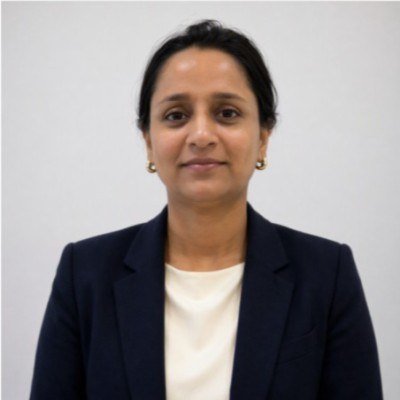
Neha Gupta is a CFA charterholder based in Winnipeg who has worked in financial markets since December 2005. She has published more than 2,600 investment articles and is Head of Operations and Finance at Whiteland Real Estate. She reviews WealthScale’s investing pages for accuracy.
- CFA charter, CFA Institute (awarded 2023)
- Post Graduate Diploma in Business Administration (Finance), 2008
- In financial markets since December 2005
- More than 2,600 published investment articles
General information only. Not financial, investment, tax or legal advice. WealthScale is independent and is published by WealthScale Media Inc., 55 Queen St E, Suite 1205, Toronto, ON M5C 1R6. CFA® and Chartered Financial Analyst® are registered trademarks owned by CFA Institute.