

Best GIC Rates in Canada for 2026
The best GIC rates Canada savers can lock in on October 22, 2026 are 3.85% for one year at Hubert Financial and Outlook Financial, 4.25% for two years at Saven Financial, and 4.50% for five years at Oaken Financial and Saven. Oaken’s GICs carry CDIC cover, Saven’s are insured by DICO, and Hubert’s and Outlook’s by the Deposit Guarantee Corporation of Manitoba. RBC’s posted 5-year rate is 3.55%, almost a full point lower, and TD, BMO, CIBC and National Bank showed no posted rates on their pages. Every rate below is for a non-redeemable GIC unless marked, sorted by rate and dated.
 Written by Sharad Gondaliya, CPA CPAChartered Professional Accountant, CPA Ontario No. 61040184
 Financial reviewer: Neha Gupta, CFA CFA charterholderReview of this page scheduled
At a glance
Best 1-year GIC rate. 3.85% at Hubert Financial and Outlook Financial, both guaranteed by the Deposit Guarantee Corporation of Manitoba. The best 1-year rate with CDIC cover is 3.75% at Oaken Financial.
Best 5-year GIC rate. 4.50% at Oaken Financial (CDIC, through Home Bank or Home Trust Company) and Saven Financial (DICO). Oaken’s rates have been in effect since October 16, 2026; Saven’s page shows no date.
Big-bank posted rates. RBC posts 3.00% for one year and 3.55% for five years. Scotiabank shows a 2-year special at 3.50%. TD, BMO, CIBC and National Bank showed no posted GIC rates on their pages when we checked.
Cashable GICs. Oaken’s 1-year cashable GIC pays 2.25% and RBC’s pays 2.15%, against 3.85% for the best 1-year non-redeemable GIC. On $10,000, the right to cash out early costs $160 of interest a year.
Deposit insurance. CDIC covers GICs at member banks and trust companies up to $100,000 per category per member, including interest. At 4.50% for five years, $80,245.10 grows to $99,999.99 ($80,245.10 x 1.045^5), so a larger deposit is partly uninsured by maturity.
EQ Bank. EQ Bank’s own pages showed three different sets of GIC rates on October 22, 2026, so we have left EQ out of the rate tables while its rates are confirmed.
GIC Rates Today: Best Rate by Term (October 22, 2026)
This table shows the highest non-redeemable, non-registered GIC rate we confirmed for each term, and the highest rate from a CDIC member for the same term. A credit union’s GIC is protected by a provincial insurer rather than CDIC, so we show both.
| Term | Best rate | Provider | Insurer | Best CDIC-insured rate | CDIC provider |
|---|---|---|---|---|---|
| 1 year | 3.85% | Hubert Financial; Outlook Financial | Deposit Guarantee Corporation of Manitoba | 3.75% | Oaken Financial |
| 2 years | 4.25% | Saven Financial | DICO | 4.20% | Oaken Financial |
| 3 years | 4.30% | Oaken Financial; Saven Financial | CDIC (Oaken); DICO (Saven) | 4.30% | Oaken Financial |
| 4 years | 4.35% | Oaken Financial; Saven Financial | CDIC (Oaken); DICO (Saven) | 4.35% | Oaken Financial |
| 5 years | 4.50% | Oaken Financial; Saven Financial | CDIC (Oaken); DICO (Saven) | 4.50% | Oaken Financial |
Full GIC Rate Table: Every Provider We Checked
Rates are for non-redeemable, non-registered GICs with interest paid or compounded annually, sorted by the 5-year rate, highest first (ties go to the higher 1-year rate). The date is the provider’s own “as of” date where its page shows one; otherwise it is the day we checked, October 22, 2026. Where a provider’s page showed no rate, the cell says “Not published”, so you can see we checked it.
| # | Provider | 1 yr | 2 yr | 3 yr | 4 yr | 5 yr | Minimum | Insurance | Rate date |
|---|---|---|---|---|---|---|---|---|---|
| 1 | Saven Financial | 3.80% | 4.25% | 4.30% | 4.35% | 4.50% | $1,000; Saven membership required | DICO, up to $250,000 as stated on Saven’s page | October 22, 2026 (no date on page) |
| 2 | Oaken Financial | 3.75% | 4.20% | 4.30% | 4.35% | 4.50% | $1,000 ($10,000 for a RIF) | CDIC, through Home Bank or Home Trust Company | In effect since October 16, 2026 |
| 3 | Hubert Financial | 3.85% | 3.95% | 4.05% | 4.15% | 4.25% | Not stated | Deposit Guarantee Corporation of Manitoba | October 22, 2026 (no date on page) |
| 4 | Outlook Financial | 3.85% | 3.90% | 4.05% | 4.10% | 4.25% | $1,000 | Deposit Guarantee Corporation of Manitoba, 100% of deposits | Updated October 2, 2026 |
| 5 | Desjardins Online Term S@vings | 3.40% | 3.40% | 3.40% | 3.45% | 4.10% | Not stated | Not stated on the rate page | October 22, 2026 (date left blank on page) |
| 6 | Manulife Bank | 3.35% | 3.70% | 3.80% | 3.90% | 4.05% | $2,500 ($10,000 for monthly interest) | CDIC (Manulife Bank of Canada) | October 22, 2026 (no date on page) |
| 7 | Desjardins Term Savings (branch, posted) | 3.30% | 3.30% | 3.30% | 3.35% | 4.00% | Not stated | Not stated on the rate page | October 22, 2026 (date left blank on page) |
| 8 | RBC Royal Bank (posted) | 3.00% | 3.20% | Not published | Not published | 3.55% | Not stated | CDIC (Royal Bank of Canada) | October 22, 2026 (no date on page) |
| 9 | Peoples Trust | 3.70% | 3.00% | 3.25% | 3.25% | 3.45% | Not stated | CDIC (Peoples Trust Company and Peoples Bank of Canada) | October 22, 2026 (no date on page) |
| 10 | Alterna Bank eTerm (online only) | 2.65% | 2.85% | 3.10% | 3.25% | 3.30% | $500; maximum $500,000 | CDIC (CS Alterna Bank) | October 22, 2026 (no date on page) |
| 11 | Achieva Financial | Not published | 4.05% (featured) | Not published | Not published | Not published | $1,000 | Deposit Guarantee Corporation of Manitoba, without limit | Undated; rate table blank |
| 12 | Scotiabank | Not published | 3.50% (special) | Not published | Not published | Not published | $500 (annual or semi-annual interest); $5,000 for monthly | CDIC (Bank of Nova Scotia) | October 22, 2026 |
| 13 | Tangerine | Not published | Not published | Not published | Not published | Not published | Not stated | CDIC (Tangerine Bank) | Checked October 22, 2026 |
| 14 | Simplii Financial | Not published | Not published | Not published | Not published | Not published | Not stated | CDIC through CIBC | Checked October 22, 2026 |
| 15 | TD Canada Trust (posted) | Not published | Not published | Not published | Not published | Not published | Not stated | CDIC (Toronto-Dominion Bank) | Checked October 22, 2026 |
| 16 | BMO (posted) | Not published | Not published | Not published | Not published | Not published | Not stated | CDIC (Bank of Montreal) | Checked October 22, 2026 |
| 17 | CIBC (posted) | Not published | Not published | Not published | Not published | Not published | $500 | CDIC (CIBC) | Checked October 22, 2026 |
| 18 | National Bank (posted) | Not published | Not published | Not published | Not published | Not published | $500 | CDIC (National Bank of Canada) | Checked October 22, 2026 |
EQ Bank is not in this table. On October 22, 2026, EQ Bank’s own pages showed three different sets of GIC rates with different dates, so we could not confirm which rates apply. We will add EQ once its rates are confirmed. EQ Bank (Equitable Bank) is a CDIC member, and our EQ Bank review covers its other accounts. Motive Financial no longer sells GICs: its GICs moved to National Bank, which now sets the terms for new purchases.
Enter an amount, term and rate below to see what a GIC pays at maturity and the tax on its interest.
1. Best GIC Rates in Canada by Term and Category
1 year GIC rates
Top of the market. Hubert Financial and Outlook Financial pay 3.85% for one year, Saven pays 3.80%, and Oaken pays 3.75%, the best 1-year rate with CDIC cover. Peoples Trust pays 3.70%, also CDIC-insured. Further down, Desjardins Online Term S@vings pays 3.40%, Manulife Bank 3.35%, RBC’s posted rate is 3.00% and Alterna Bank’s eTerm pays 2.65%.
Against a savings account. The best 1-year GIC pays a full point more than the best no-fee savings rate of 2.85%. On $10,000 for a year, that is $385 instead of $285, or $100 more, in return for locking the money away until maturity. Our best high-interest savings accounts page has the savings side of that comparison, and GIC vs HISA sets out when each one fits.
2 to 4 year GIC rates
Two years. Saven pays 4.25%, Oaken 4.20% and Achieva features a 2-year GIC at 4.05%. Hubert pays 3.95%, Outlook 3.90%, Manulife 3.70% and Scotiabank shows a 2-year special at 3.50%. Three and four years. Oaken and Saven both pay 4.30% for three years and 4.35% for four, ahead of Hubert (4.05% and 4.15%) and Outlook (4.05% and 4.10%).
5 year GIC rates
Top of the market. Oaken and Saven pay 4.50% for five years. Hubert and Outlook pay 4.25%, Desjardins Online Term S@vings 4.10%, Manulife Bank 4.05%, and the Desjardins branch rate is 4.00%. RBC’s posted 5-year rate is 3.55%. Over five years, those gaps add up, as the table shows.
| Provider | 5-year rate | Value at maturity | Interest earned |
|---|---|---|---|
| Oaken Financial; Saven Financial | 4.50% | $12,461.82 | $2,461.82 |
| Hubert Financial; Outlook Financial | 4.25% | $12,313.47 | $2,313.47 |
| Desjardins Online Term S@vings | 4.10% | $12,225.13 | $2,225.13 |
| Manulife Bank | 4.05% | $12,195.80 | $2,195.80 |
| Desjardins Term Savings (branch) | 4.00% | $12,166.53 | $2,166.53 |
| RBC (posted) | 3.55% | $11,905.58 | $1,905.58 |
| Peoples Trust | 3.45% | $11,848.20 | $1,848.20 |
| Alterna Bank eTerm | 3.30% | $11,762.55 | $1,762.55 |
The shape of the rate curve. At most providers, a longer term pays more. Oaken rises from 3.75% for one year to 4.50% for five, a 0.75-point premium for locking in four more years. Peoples Trust is the exception: 3.70% for one year, but 3.00% for two years and 3.45% for five. When a 1-year rate is close to the 5-year rate, the extra years buy you little, and shorter terms keep more flexibility.
Best by category. Best 1-year: Hubert and Outlook at 3.85%. Best 1-year with CDIC: Oaken at 3.75%. Best 5-year: Oaken and Saven at 4.50%. Best term under a year: Saven’s 4-month GIC at 3.20%. Best cashable: Oaken’s 1-year cashable at 2.25%. Best odd term: Oaken’s 18-month GIC at 3.80%.
2. Big-Bank Posted GIC Rates vs Online Banks and Credit Unions
What the big banks published. Of the big six, only RBC showed posted rates for most terms, and it left out its 3- and 4-year rates. Scotiabank showed only its 2-year special. TD’s regular posted rates were blank, and BMO, CIBC and National Bank showed placeholders instead of rates. We list them as “not published” rather than leaving them out.
| Institution | 1 year | 2 years | 5 years | What else the page showed |
|---|---|---|---|---|
| RBC Royal Bank (posted) | 3.00% | 3.20% | 3.55% | 1-year cashable GIC 2.15%; 3- and 4-year rates not shown |
| Scotiabank | Not published | 3.50% (special) | Not published | 24-month Personal Redeemable GIC special 2.75% |
| TD Canada Trust | Not published | Not published | Not published | 5-Year Stepper GIC effective annual yield 0.8800%; International Student GIC 2-year 2.50%; 100-day and 18-month specials listed without rates |
| BMO | Not published | Not published | Not published | Rates not rendered |
| CIBC | Not published | Not published | Not published | Flexible GIC and Cashable Escalating Rate GICs listed without rates; $500 minimum for non-redeemable GICs |
| National Bank | Not published | Not published | Not published | Redeemable, Redeemable without penalty, Redeemable Plus and USD GICs listed without rates; $500 minimum |
| Desjardins (branch, posted) | 3.30% | 3.30% | 4.00% | Online Term S@vings pays 0.10 points more on each term |
| Best rate we found | 3.85% | 4.25% | 4.50% | Hubert and Outlook (1 year); Saven (2 years); Oaken and Saven (5 years) |
What the gap costs. On $10,000 for one year, 3.85% instead of RBC’s 3.00% is $85 more interest ($10,000 x 0.85%). Over five years with annual compounding, 4.50% instead of RBC’s 3.55% is $556.24 more ($12,461.82 minus $11,905.58).
Same insurance, different price. A GIC at RBC and a GIC at Oaken’s Home Trust or Home Bank are covered by CDIC in exactly the same way, up to $100,000 per category per member. The rate gap is not buying better insurance. It buys convenience: the GIC sits next to your chequing account, you can usually buy it at a branch, and registered plans you already hold at that bank can buy it without a transfer.
Specials can beat posted rates. Big banks also publish time-limited specials, such as Scotiabank’s 2-year special at 3.50% and its 24-month redeemable special at 2.75%. If you prefer to stay with your bank, please ask for its current specials alongside its posted rates before you buy, and compare both against the table above.
Online banks and credit-union divisions. Oaken (Home Trust and Home Bank), Saven (FirstOntario Credit Union), Hubert (Sunova Credit Union) and Outlook (Assiniboine Credit Union) top every term. They ask for a minimum of $1,000 where a minimum is stated, and the credit-union divisions use provincial insurers instead of CDIC (section 6). Our bank accounts in Canada hub compares the everyday accounts at these institutions.
3. Cashable vs Non-Redeemable GICs
Non-redeemable GICs. A non-redeemable GIC locks your money until maturity, and every top rate on this page is for one. Manulife’s 1- to 5-year GICs cannot be redeemed early except on death. Outlook’s and Achieva’s GICs cannot be redeemed before maturity, all of Saven’s GICs are non-redeemable, all of Peoples Trust’s are non-redeemable, Alterna’s eTerm GICs are cashable only at maturity, and Simplii sells only non-redeemable GICs with a 1-year minimum term.
Cashable and redeemable GICs. A cashable or redeemable GIC lets you take money out before maturity, on terms that vary by provider, in return for a lower rate. Oaken’s 1-year cashable GIC pays 2.25%, RBC’s 1-year cashable pays 2.15%, Desjardins’ 1-year redeemable pays 2.00%, and Scotiabank’s 24-month Personal Redeemable GIC special pays 2.75%. CIBC, National Bank and Manulife list cashable or redeemable GICs without rates on the pages we checked.
The price of flexibility. On $10,000 for a year, a 3.85% non-redeemable GIC pays $385 and a 2.25% cashable GIC pays $225: the right to cash out early costs $160 ($10,000 x 1.60%). At RBC, the gap between its 3.00% non-redeemable and 2.15% cashable GIC is $85 on the same $10,000.
A savings account may do the job better. On October 22, 2026, every cashable GIC rate we confirmed was below the 2.85% everyday rate at the best no-fee savings account, which also lets you withdraw any day. The one possible exception is Hubert’s 1-Year Quarterly Term, which pays a 3.75% average with early redemption options, but Hubert’s page did not give the redemption terms. Read those terms before you rely on getting money out early.
| Provider | Term | Rate | Redeemable early? |
|---|---|---|---|
| Saven Financial | 4 months | 3.20% | No |
| Saven Financial | 6 months | 2.75% | No |
| Oaken Financial | 270 days up to 364 days | 2.70% | Not stated |
| Peoples Trust | 270 days | 2.50% | No |
| Desjardins | 270 days up to 364 days | 2.30% | Not stated |
| Peoples Trust | 180 days | 2.30% | No |
| Oaken Financial | 180 days up to 269 days | 2.25% | Not stated |
| Desjardins | 180 days up to 269 days | 2.20% | Not stated |
| Peoples Trust | 120 days | 2.05% | No |
| Peoples Trust | 90 days | 1.90% | No |
| Desjardins | 90 days up to 179 days | 1.90% | Not stated |
| Desjardins | 30 days up to 89 days | 1.70% | Not stated |
| Peoples Trust | 60 days | 1.50% | No |
| Peoples Trust | 30 days | 1.20% | No |
| Oaken Financial | 30 days up to 179 days | 1.00% | Not stated |
Short terms rarely beat savings. Only Saven’s 4-month GIC at 3.20% beats a 2.85% savings account among the short terms in this table. On $10,000, it pays $106.67 over four months ($10,000 x 3.20% x 4 / 12). Most terms under a year pay less than the best savings accounts while locking your money, so they suit people who want a fixed rate for a known date more than the highest return.
4. Specials, Odd Terms and Promotional GICs
Odd terms. Some of the best value sits outside the standard 1- to 5-year terms. Oaken’s 18-month GIC pays 3.80% a year (not available in a RIF), close to its 2-year rate of 4.20% but six months shorter. Peoples Trust’s 15-month GIC pays 2.90%. Desjardins offers a 29-month promotional GIC at 3.50%. TD lists 100-day and 18-month specials, but their rates were blank on the page we checked.
Big-bank specials. Scotiabank’s 2-year special pays 3.50% and its 24-month Personal Redeemable GIC special pays 2.75%. We could not confirm an end date for either special, and a special can end at any time, so please confirm the rate on the day you buy.
Featured rates. Achieva Financial features a 2-year GIC at 4.05%, but its full rate table and effective date were blank, so we could not confirm its other terms. Hubert’s homepage shows “up to 4.05%” for its 1-Year Quarterly Term, while its rate page gives a 3.75% average. The average is the number to compare, because it is what the GIC pays over the full year.
Stepped and escalating GICs. A stepped or escalating GIC pays a rate that rises each year, so its highest rate applies only in the final year. TD’s 5-Year Stepper GIC shows an effective annual yield of 0.8800%, against 4.50% fixed for five years at Oaken and Saven. Always compare these products by their effective annual yield or average rate, never by the highest step.
US dollar GICs. National Bank lists USD GICs, but no rates appeared on its page. RBC shows a limited-time 1-year U.S. Dollar Term Deposit special at 4.00%; its page did not state fees or a minimum. Our USD savings accounts page compares that special with US dollar savings rates.
| Provider | Product | Rate | Note |
|---|---|---|---|
| Achieva Financial | 2-year GIC (featured) | 4.05% | Other terms and date not shown |
| Oaken Financial | 18-month GIC | 3.80% | Not for a RIF |
| Hubert Financial | 1-Year Quarterly Term | 3.75% average | Early redemption options; terms not given |
| Scotiabank | 2-year non-redeemable special | 3.50% | End date not stated |
| Desjardins | 29-month promotional GIC | 3.50% | End date not stated |
| Peoples Trust | 15-month GIC | 2.90% | Non-redeemable |
| Scotiabank | 24-month Personal Redeemable GIC special | 2.75% | Redeemable |
| TD Canada Trust | International Student GIC, 2-year | 2.50% | For international students |
| TD Canada Trust | 5-Year Stepper GIC | 0.8800% effective annual yield | Rate rises each year |
5. How GIC Interest Is Calculated and Paid
Compound GICs. In a compound GIC, interest is added to the balance each year and paid with your principal at maturity. The value at maturity is the deposit x (1 + rate) to the power of the number of years. At 4.50% for five years, $10,000 earns $450.00 in year one, $470.25 in year two, $491.41 in year three, $513.52 in year four and $536.63 in year five, for $12,461.82 at maturity.
Interest-paying GICs. If you want income, you can take interest yearly, twice a year or monthly, usually at a slightly lower rate. Oaken pays 3.75% on a 1-year GIC with annual interest, 3.70% semi-annual and 3.65% monthly, and 4.50%, 4.45% and 4.40% on a 5-year GIC. Manulife pays 3.35%, 3.30% and 3.25% on a 1-year GIC, and needs $10,000 for monthly interest. Scotiabank needs $5,000 for monthly interest.
| Interest option | Rate | Paid each time | Interest over 5 years |
|---|---|---|---|
| Compounded annually, paid at maturity | 4.50% | All at maturity | $2,461.82 |
| Paid semi-annually | 4.45% | $222.50 every six months | $2,225.00 |
| Paid monthly | 4.40% | About $36.67 a month | $2,200.00 |
Reading the table. The compound option earns $261.82 more over five years than monthly payments ($2,461.82 minus $2,200.00), because interest earns interest and the rate is higher. Monthly payments make sense when you spend the income, for example in retirement. If you would only redeposit the payments into a savings account, the compound option usually wins.
Terms under a year. Short-term GICs pay simple interest for the days or months you hold them. A 4-month GIC at 3.20% on $10,000 pays $106.67 ($10,000 x 3.20% x 4 / 12).
The rate is fixed. A GIC rate is set the day you buy and does not change for the term, whatever the Bank of Canada does. That is the main difference from a savings account. To test different amounts and terms, use the GIC calculator above or our compound interest calculator.
6. CDIC and Provincial Deposit Insurance for GICs
What CDIC covers. CDIC covers GICs and term deposits at member banks and trust companies up to $100,000 per insured category at each member institution. The limit includes principal and interest. The categories are deposits in one name, joint deposits, deposits held in trust, RRSPs, RRIFs, TFSAs, RESPs, RDSPs and FHSAs, each insured separately.
Interest counts, so size the deposit. Because the limit includes interest, the largest deposit that stays fully covered falls as the term gets longer. At Oaken’s rates, it is $96,385.54 for one year at 3.75% and $80,245.10 for five years at 4.50%.
| Term | Rate | Largest deposit | Value at maturity |
|---|---|---|---|
| 1 year | 3.75% | $96,385.54 | $100,000.00 |
| 2 years | 4.20% | $92,101.04 | $99,999.99 |
| 3 years | 4.30% | $88,134.72 | $99,999.99 |
| 4 years | 4.35% | $84,339.33 | $99,999.99 |
| 5 years | 4.50% | $80,245.10 | $99,999.99 |
Coverage is per institution. Two GICs at the same member in the same category share one $100,000 limit. Simplii is a trade name of CIBC, so their deposits share one limit. Oaken GICs sit at Home Bank or Home Trust Company, two separate members, so check which one holds yours. EQ Bank (Equitable Bank) and Manulife Bank of Canada are CDIC members.
Credit-union GICs. Saven’s page states that its deposits are insured up to $250,000 by DICO. Hubert’s deposits are guaranteed by the Deposit Guarantee Corporation of Manitoba; Outlook states that 100% of deposits are guaranteed by it, and Achieva states that all deposits are guaranteed without limit. Desjardins’ rate page did not state its deposit insurance, so please confirm it before you buy.
Not covered. CDIC does not cover mutual funds, stocks, bonds, ETFs or crypto, even when your bank sells them. Use the tool below to check how much CDIC would cover across your deposit categories at one member.
Test your own amount and term before you lock anything in.
7. Registered GICs: TFSA, RRSP, RRIF and FHSA
GICs fit inside every registered plan. Money, GICs and deposits are qualified TFSA investments, and the rules for RRSPs are generally the same. Most of the top providers pay the same rate inside a registered plan as outside it, so the rate tables above apply to your TFSA or RRSP too.
| Provider | TFSA | RRSP | RRIF | FHSA | Rates vs non-registered |
|---|---|---|---|---|---|
| Saven Financial | Yes | Yes | Yes | Yes | Same |
| Oaken Financial | Yes | Yes | Yes ($10,000 minimum; no 18-month term) | Not stated | Same |
| Hubert Financial | Yes | Yes | Yes | Yes (Quarterly Term not offered) | Same |
| Outlook Financial | Yes | Yes | Yes | Yes | Same |
| Manulife Bank | Yes | Yes | Yes | Not stated | Same, annual interest only |
| Peoples Trust | Yes | Yes | Not stated | Not stated | Same |
| National Bank | Yes | Yes | Not stated | Not stated | Not shown separately |
| Simplii Financial | Registered GICs offered | Registered GICs offered | Not stated | Not stated | Same table; rates not published |
TFSA. The 2026 TFSA dollar limit is $7,000, and GIC interest earned inside a TFSA is never taxed. When a TFSA GIC matures, you can buy a new GIC inside the same TFSA with no effect on your room. To move it to another institution, use a direct transfer, which also has no effect on your room. If you are deciding which plan to fill first, see TFSA vs RRSP, and for the rules, our TFSA guide and the TFSA contribution limit page.
RRSP. The 2026 RRSP dollar limit is $33,810. Your own deduction limit is the lesser of 18% of your 2025 earned income and that dollar limit, minus pension adjustments, plus unused room. Contributions for a year are due by the 60th day of the following year, so 2026 contributions must be made by March 1, 2027. You can contribute to your own RRSP until December 31 of the year you turn 71. Our RRSP contribution limit page has the detail.
RRIF. Each year after the year you set up a RRIF, you must withdraw at least the January 1 value x the prescribed factor: 5.28% at 71, 5.40% at 72 and 6.82% at 80. A $100,000 RRIF at age 72 needs a minimum of $5,400 ($100,000 x 5.40%). A 5-year non-redeemable GIC cannot pay that minimum early, so line up maturities with your withdrawals. See the RRIF minimum withdrawal table and the RRIF calculator.
FHSA. The FHSA gives $8,000 of room a year and $40,000 over your lifetime, and the contribution deadline is December 31, with no 60-day period. The account must close by December 31 of the year of the earliest of its 15th anniversary, your turning 71, or the year after your first qualifying withdrawal. Choose a GIC term that matures before you expect to buy. Saven, Hubert and Outlook offer FHSA GICs at their regular rates; see our FHSA guide.
Where to hold them. If you also want to hold investments in the same plan, our rankings of the best TFSA accounts, best RRSP accounts, best RRIF accounts and best FHSA accounts compare the platforms. Each registered plan is also a separate CDIC category with its own $100,000 limit at each member.
8. How to Build a GIC Ladder
What a ladder is. A GIC ladder splits your money across terms, usually one to five years, so that one GIC matures every year. When the shortest one matures, you reinvest it in a new 5-year GIC. After four years, every rung is a 5-year GIC earning a 5-year rate, and one still matures each year.
Why it helps. A ladder gives you access to a fifth of the money every year without breaking a GIC early. It also spreads your reinvestment across five different dates, so no single rate decision sets the return on all of your money.
| Rung | Term | Best rate | Provider | Deposit | First-year interest |
|---|---|---|---|---|---|
| 1 | 1 year | 3.85% | Hubert or Outlook | $5,000 | $192.50 |
| 2 | 2 years | 4.25% | Saven | $5,000 | $212.50 |
| 3 | 3 years | 4.30% | Oaken or Saven | $5,000 | $215.00 |
| 4 | 4 years | 4.35% | Oaken or Saven | $5,000 | $217.50 |
| 5 | 5 years | 4.50% | Oaken or Saven | $5,000 | $225.00 |
| Total | Average 4.25% | $25,000 | $1,062.50 |
The arithmetic. First-year interest is $1,062.50 ($192.50 + $212.50 + $215.00 + $217.50 + $225.00), an average rate of 4.25%. Putting all $25,000 in a 1-year GIC at 3.85% would earn $962.50, which is $100 less, and the whole amount would need a new rate a year from now. When rung 1 matures at $5,192.50 ($5,000 x 1.0385), a new 5-year GIC at 4.50%, if that rate were still on offer, would earn $233.66 in its first year.
One provider or several. A ladder at one provider is simpler to manage. Using Oaken’s rates for every rung (3.75%, 4.20%, 4.30%, 4.35% and 4.50%), the first-year interest on $25,000 is $1,055.00, an average of 4.22%, only $7.50 less than mixing providers. At a single CDIC member, keep each category’s total, with interest, within $100,000.
Ladders inside registered plans. A ladder works the same way in a TFSA, RRSP, RRIF or FHSA. In a RRIF, set rungs to mature before each year’s minimum withdrawal. In an FHSA, shorten the ladder so the last rung matures before your expected purchase.
Use the ladder tool below to split an amount across terms and see the interest on each rung.
9. Tax on GIC Interest
Interest is fully taxable outside registered plans. GIC interest is taxed as income at your marginal rate, with no lower rate like the ones for dividends or capital gains. At $80,000 of taxable income in Ontario in 2026, the combined marginal rate is 29.65%. Our tax on savings interest table shows the rate at that income in all 10 provinces.
You pay tax before you get the interest. For a compound GIC longer than a year, you report the interest that builds up each year, on each anniversary of the purchase, even though you receive it only at maturity. Your institution usually reports that accrued interest on a T5 slip each year. You need cash from somewhere else to pay that tax.
| Year | Interest that accrues | Tax at 29.65% | GIC value at year end |
|---|---|---|---|
| 1 | $430.00 | $127.50 | $10,430.00 |
| 2 | $448.49 | $132.98 | $10,878.49 |
| 3 | $467.78 | $138.70 | $11,346.27 |
| Total | $1,346.27 | $399.18 | Paid out at maturity |
The TFSA removes the problem. The same GIC inside a TFSA owes nothing in any year, and you keep all $1,346.27. If you have TFSA room, the highest-rate GIC you buy is a natural fit for it, because GIC interest is taxed at your full marginal rate outside it.
RRSPs and RRIFs defer the tax. Interest inside an RRSP or RRIF is not taxed each year; the whole withdrawal is taxed as income when it comes out. Inside an FHSA, interest is not taxed while it stays in the account.
Whose interest it is. Interest is generally taxed in the hands of the person whose money bought the GIC. A joint GIC does not change that, and money one spouse gives the other to invest can have its interest attributed back to the giver. Our savings and tax calculators include a 2026 income tax calculator for your own marginal rate.
10. GIC Rates and the Bank of Canada
Where the policy rate stands. The Bank of Canada’s target for the overnight rate is 2.25%. The last change was a 0.25-point cut announced on October 29, 2025 and effective October 30, 2025, and the Bank has held at every decision since, most recently on September 2, 2026. Prime at the big banks is 4.45%.
The last two decisions of 2026. Wednesday, October 28, 2026, with the Monetary Policy Report, and Wednesday, December 9, 2026. Both announcements are at 9:45 a.m. Eastern time.
GIC rates do not track the policy rate one for one. Each provider sets its own GIC rates. On October 22, 2026, the best 1-year rate (3.85%) was 1.60 points above the 2.25% policy rate, and the best 5-year rate (4.50%) was 2.25 points above it.
Your rate is locked once you buy. A rate change after you buy does not affect a GIC you already hold, up or down. That is the trade: if rates fall, your GIC keeps paying the higher rate; if they rise, you wait for maturity to reinvest. A ladder means only part of your money reinvests at any one time.
No forecasts. WealthScale does not predict rate decisions, and no one can time them reliably. If you are deciding between buying now and waiting, compare what waiting costs: $10,000 in a 2.85% savings account earns $23.75 a month while you wait ($10,000 x 2.85% / 12), against $37.50 a month at a 4.50% GIC rate ($10,000 x 4.50% / 12).
11. How to Choose and Buy a GIC
Start from the date you need the money. Pick the longest term that ends before you need it. Money for a home purchase in two years belongs in a 2-year or shorter GIC, not a 5-year one at a better rate.
Compare like with like. Compare rates for the same term and the same interest option (compound, annual, semi-annual or monthly). A 4.40% monthly-pay rate and a 4.50% compound rate from the same provider are both correct; they are different products.
Check the insurer, the limit and the minimum. CDIC for banks and trust companies, DICO for Saven and the Deposit Guarantee Corporation of Manitoba for Hubert, Outlook and Achieva. Minimums run from $500 at Alterna Bank, Scotiabank, CIBC and National Bank to $1,000 at Oaken, Saven, Outlook and Achieva and $2,500 at Manulife Bank.
Read the redemption rules. If there is any chance you need the money early, find out exactly what a cashable or redeemable GIC lets you do and what it pays if you redeem. If there is no chance, a non-redeemable GIC pays more.
Open, fund and set maturity instructions. At an online bank or credit-union division you open an account (and, at Saven, a membership), fund it from your chequing account, then buy the GIC. Ask what happens at maturity if you give no instructions, and set your choice when you buy: renew for a new term, move to savings or pay out to chequing.
How we sort this page. GIC lists on WealthScale are sorted by published rate, not by a score. Our rating methodology covers scored rankings, our editorial standards explain how we check figures, and how WealthScale makes money explains our business model.
12. Common GIC Mistakes
Accepting the posted rate without comparing. RBC’s posted 5-year rate of 3.55% earns $556.24 less on $10,000 over five years than the best 4.50%. Fix: compare the table on this page with your bank’s posted rate and its specials before you renew.
Locking emergency money in a non-redeemable GIC. If you need it early, you may not be able to get it out at all. Fix: keep your emergency fund in a savings account and put only money with a known date into GICs.
Going over the insurance limit by maturity. A $100,000 5-year GIC at 4.50% grows to $124,618.19, and CDIC covers $100,000 of it. Fix: size each deposit with the table in section 6, or split it across members or categories.
Comparing a stepped GIC by its top rate. Fix: compare its effective annual yield, which for TD’s 5-Year Stepper GIC was 0.8800%.
Being surprised by tax on interest you have not received. Fix: hold compound GICs in a TFSA where you can, and set aside cash each year for the tax on accrued interest in a taxable account.
Letting a GIC renew without checking the new rate. Fix: put the maturity date in your calendar and compare rates two weeks before it.
Breaking TFSA rules when you move a matured GIC. Withdrawing TFSA money and redepositing it at another institution in the same year can create an over-contribution taxed at 1% a month. Fix: use a direct transfer; our guide to transferring a TFSA or RRSP explains the steps.
What You Need to Buy a GIC and What You Get
What you need
- The amount you can set aside for the full term
- The date you will need the money, to pick the term
- An account at the issuer (and Saven membership, if you use Saven)
- Your Social Insurance Number, for interest reporting
- Government photo ID to verify your identity
- A linked chequing account to fund the GIC and receive interest
- Unused room, if you buy the GIC inside a TFSA, RRSP or FHSA
- Your maturity instructions: renew, move to savings or pay out
What you get
- A rate fixed for the whole term, up to 4.50% for five years on October 22, 2026
- Your principal back at maturity, plus interest
- CDIC cover of $100,000 per category at banks and trust companies, including interest
- Provincial insurance at credit unions, as published by each one
- A choice of compound interest or regular payments
- A T5 slip each year for interest outside registered plans
- The option to hold the same GIC in a TFSA, RRSP, RRIF or FHSA
- No market risk to your principal, unlike stocks, bonds or funds
How It Works: Six Steps to Buying a GIC
- Set the date and the amount. Write down when you need the money and how much you can lock away until then.
- Choose the account type. Use your TFSA first if you have room; otherwise an RRSP, FHSA or non-registered account, depending on your goal.
- Compare rates for that term. Use the best-rate table and the full table above, and check the insurer, minimum and redemption rules in each row.
- Size the deposit for insurance. Keep each category at each member within $100,000 at maturity, interest included.
- Open the account and buy the GIC. Fund it from your chequing account, choose compound or regular interest, and set maturity instructions.
- Diarize the maturity date. Compare rates again two weeks before maturity and decide whether to renew, ladder or move the money.
10 GIC Strategies to Earn More With Less Risk
1. Match the term to the goal
Buy the term that ends just before you need the money. A higher 5-year rate does not help if you have to break the GIC in year two, and many GICs on this page cannot be broken at all.
2. Put your best GIC in your TFSA
At 29.65%, tax takes $399.18 of the $1,346.27 earned on $10,000 over three years at 4.30%. In a TFSA you keep it all, so your highest-rate GICs are the ones to shelter first.
3. Roll a ladder every year
Each year, reinvest the maturing rung in a new 5-year GIC. You earn 5-year rates on most of the money while still freeing a fifth of it every year.
4. Split across insurers above the limit
For $150,000 over three years at 4.30%, keep no more than $88,134.72 at one CDIC member in one category and put the rest with a second member or a credit union with higher published coverage.
5. Use your CDIC categories
A single-name GIC, a joint GIC, a TFSA GIC and an RRSP GIC at the same member are four separate $100,000 categories. You can keep a large total at one institution and stay fully covered.
6. Choose compound interest unless you need income
On Oaken’s 5-year GIC, compound interest earns $2,461.82 on $10,000, against $2,200.00 from monthly payments. Take payments only if you will spend them.
7. Look at odd terms
Oaken’s 18-month GIC at 3.80% gives most of the 2-year rate with six months less lock-in. Odd terms can fit a known date better than a round number of years.
8. Ask your bank to match
If you prefer to stay with a big bank, bring the best rate for your term to the conversation and ask for its current specials. Specials such as Scotiabank’s 2-year GIC at 3.50% are published separately from posted rates.
9. Line up RRIF maturities with minimums
Set one GIC to mature before each year’s minimum withdrawal. At age 72, a $100,000 RRIF needs $5,400 out, so a rung of at least that size should mature each year.
10. Keep a fixed and a flexible bucket
Hold your emergency fund in a savings account at a variable rate and money with a known date in GICs at fixed rates. Money you will not need for many years may belong in investments instead; see how to invest in Canada.
Illustrative Example: $150,000 Needed in Three Years
This example is hypothetical. Lena lives in Ontario, has $80,000 of taxable income each year, and has $150,000 she will need for a home renovation in three years. She wants every dollar insured and a fixed rate.
- Size the CDIC deposit. At 4.30% for three years, compounded annually, the largest deposit that stays within $100,000 at one CDIC member is $88,134.72 ($100,000 / 1.043^3, rounded down to the cent). She puts $88,000 in Oaken’s 3-year GIC at 4.30%.
- Place the rest. She puts the other $62,000 in Saven’s 3-year GIC, also at 4.30%, which Saven’s page states is insured by DICO up to $250,000.
- Growth. The Oaken GIC grows to $99,847.13 ($88,000 x 1.043^3) and the Saven GIC to $70,346.85 ($62,000 x 1.043^3, with interest rounded to the cent each year), for $170,193.98 in total and $20,193.98 of interest.
- Tax each year. Interest accrues of $6,450.00 in year one, $6,727.35 in year two and $7,016.63 in year three. At 29.65%, the tax is $1,912.43, $1,994.66 and $2,080.43, a total of $5,987.52. Her rate stays at 29.65% because $80,000 plus each year’s interest stays in the same federal and Ontario brackets.
- After tax. She keeps $14,206.46 of interest ($20,193.98 minus $5,987.52).
- Against a savings account. At 2.85% compounded annually, and only if that variable rate never changed, the $150,000 would earn $13,193.99 over three years, $6,999.99 less than the GICs before tax. The GICs fix her rate; the savings account would let her withdraw early.
GIC Rates FAQ
What are the best GIC rates in Canada today?
On October 22, 2026, the best non-redeemable GIC rates we confirmed were 3.85% for one year (Hubert Financial and Outlook Financial), 4.25% for two years (Saven Financial), 4.30% for three years, 4.35% for four years and 4.50% for five years (Oaken Financial and Saven). Oaken’s GICs are CDIC-insured; the others use provincial insurers.
What is the best 1-year GIC rate?
The best 1-year non-redeemable GIC rate on October 22, 2026 was 3.85%, at Hubert Financial and Outlook Financial, both guaranteed by the Deposit Guarantee Corporation of Manitoba. The best 1-year rate with CDIC cover was 3.75% at Oaken Financial. RBC’s posted 1-year rate was 3.00%. On $10,000, 3.85% pays $385 for the year.
What is the best 5-year GIC rate?
The best 5-year GIC rate on October 22, 2026 was 4.50%, at Oaken Financial (CDIC, rates in effect since October 16, 2026) and Saven Financial (DICO). With interest compounded annually, $10,000 grows to $12,461.82. RBC’s posted 5-year rate was 3.55%, which grows $10,000 to $11,905.58, or $556.24 less.
What are the big banks paying on GICs?
RBC posted 3.00% for one year, 3.20% for two and 3.55% for five, plus 2.15% on a 1-year cashable GIC. Scotiabank showed a 2-year special at 3.50%. TD, BMO, CIBC and National Bank showed no posted rates on their pages on October 22, 2026, so we list them as not published. TD’s 5-Year Stepper GIC showed an effective annual yield of 0.8800%.
What is a cashable GIC and what does it pay?
A cashable GIC lets you take your money out before maturity, on the provider’s terms, in return for a lower rate. On October 22, 2026, Oaken’s 1-year cashable GIC paid 2.25%, RBC’s 2.15% and Desjardins’ 1-year redeemable 2.00%. Each paid less than the 2.85% everyday rate at the best no-fee savings account, which lets you withdraw any day.
Are GICs covered by CDIC?
Yes, at CDIC member banks and trust companies. CDIC covers GICs and term deposits up to $100,000 per insured category at each member, and the limit includes interest. At 4.50% for five years, $80,245.10 is the most you can deposit and stay within $100,000 at maturity. Credit union GICs are covered by provincial insurers instead, such as DICO for Saven.
Can I hold a GIC in a TFSA, RRSP, RRIF or FHSA?
Yes. GICs are qualified investments for registered plans, and Saven, Oaken, Hubert, Outlook and Manulife Bank pay the same rates in registered plans as outside them. The 2026 TFSA limit is $7,000, the RRSP dollar limit is $33,810 and the FHSA gives $8,000 of room a year. Each registered plan is a separate CDIC category.
How is GIC interest taxed?
Outside registered plans, GIC interest is fully taxable at your marginal rate. For a compound GIC longer than a year, you report the interest that builds up each year on the anniversary of purchase, even though it is paid only at maturity. At 29.65%, a 3-year GIC of $10,000 at 4.30% owes $127.50, $132.98 and $138.70 in tax over its three years.
What is a GIC ladder?
A GIC ladder splits your money across terms, usually one to five years, so one GIC matures each year. Each maturing GIC is reinvested in a new 5-year term. A $25,000 ladder at the best rates on October 22, 2026 earns $1,062.50 in its first year, an average of 4.25%, against $962.50 if all of it went into a 1-year GIC at 3.85%.
Should I buy a GIC before the next Bank of Canada decision?
WealthScale does not forecast rate decisions. The policy rate is 2.25%, and the last two decisions of 2026 are on October 28 and December 9. A GIC’s rate is fixed once you buy, so a later change does not affect it. If timing worries you, a ladder reinvests only part of your money at any one time.
Is a GIC better than a high-interest savings account?
A GIC pays more for locking your money away: 3.85% for one year against 2.85% at the best no-fee savings account on October 22, 2026, or $100 more on $10,000. A savings account lets you withdraw any day, but its rate can change at any time. Many savers keep an emergency fund in savings and money with a known date in GICs.
Why are EQ Bank’s GIC rates not in your tables?
On October 22, 2026, EQ Bank’s own pages showed three different sets of GIC rates, with different effective dates and one page undated. We could not confirm which set applies, so we left EQ out of the rate tables while its rates are confirmed. EQ Bank, the trade name of Equitable Bank, is a CDIC member.
Compare the best GIC rates Canada offers today with your bank’s renewal rate, then build a ladder that fits your dates.
Figures on this page were checked against each provider’s published pricing and Canada Deposit Insurance Corporation publications on October 22, 2026. We update this page when a figure changes.
Meet the Experts Behind WealthScale

Sharad is a CPA Ontario member (No. 61040184) and a Certified Public Accountant licensed in Washington and Montana, with more than 15 years in accounting and tax, a Diploma in Banking and Finance and a Certificate in Small Business Finance. He checks WealthScale content against primary sources. WealthScale is independent of his firm, Gondaliya CPA Professional Corporation, and provides general information only, not personal financial, investment, tax or legal advice.
- Chartered Professional Accountant, CPA Ontario
- Certified Public Accountant, Washington (No. 57629) and Montana (No. PAC-CPAP-LIC-033176)
- Writing on tax and registered accounts since 2021
- Reader’s Choice Award 2025 Winner, Best Accountant (Toronto)
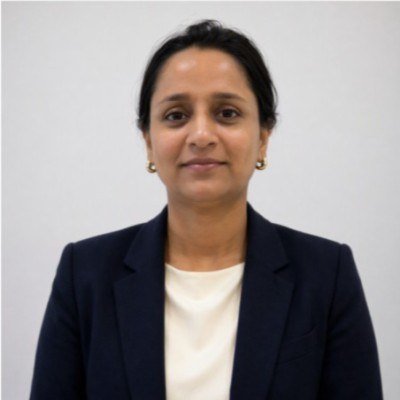
Neha Gupta is a CFA charterholder based in Winnipeg who has worked in financial markets since December 2005. She has published more than 2,600 investment articles and is Head of Operations and Finance at Whiteland Real Estate. She reviews WealthScale’s investing pages for accuracy.
- CFA charter, CFA Institute (awarded 2023)
- Post Graduate Diploma in Business Administration (Finance), 2008
- In financial markets since December 2005
- More than 2,600 published investment articles
General information only. Not financial, investment, tax or legal advice. WealthScale is independent and is published by WealthScale Media Inc., 55 Queen St E, Suite 1205, Toronto, ON M5C 1R6. CFA® and Chartered Financial Analyst® are registered trademarks owned by CFA Institute.