

2026 TFSA Contribution Limit and Room by Year
The TFSA limit 2026 amount is $7,000, the same as in 2024 and 2025. Add up every annual limit since TFSAs began in 2009 and the total is $109,000, which is the room available in 2026 to someone who was 18 or older and resident in Canada every year since 2009 and has never contributed. If you turned 18 later or arrived in Canada later, your total starts in that year instead. The 2027 limit has not been published yet. Below you will find every limit by year, the room for each birth year from 1991 to 2008, the newcomer rules and how to avoid going over.
 Written by Sharad Gondaliya, CPA CPAChartered Professional Accountant, CPA Ontario No. 61040184
 Financial reviewer: Neha Gupta, CFA CFA charterholderReview of this page scheduled
At a glance
TFSA limit for 2026. $7,000 of new room for every resident of Canada who is 18 or older at some point in 2026.
Cumulative limit to 2026. $109,000, the sum of all 18 annual limits from 2009 to 2026. It applies to someone born in 1991 or earlier who was resident in Canada every year since 2009 and never contributed.
TFSA limit for 2027. Not published yet. As of October 22, 2026, CRA lists TFSA dollar limits only up to 2026.
How the limit is set. It is indexed to inflation and rounded to the nearest $500, so it moves in $500 steps. The one exception was $10,000 for 2015 only.
Newcomers. Room starts in the year you become a resident (or turn 18, if later), and the arrival year counts in full.
Going over. Any amount above your room is taxed at 1% a month on the highest excess in each month, with no grace amount.
Enter your birth year, the year you became a resident and your past deposits and withdrawals, and this calculator adds up every limit you qualify for.
1. TFSA Limit 2026: The Number and Who Gets It
The figure. The TFSA dollar limit for 2026 is $7,000. It is the amount of new contribution room added for the 2026 calendar year. It was also $7,000 in 2024 and 2025, so 2026 is the third year in a row at this level.
Who receives it. Every resident of Canada who is 18 or older at any point in 2026 gets the full $7,000. You do not need to open an account to earn it. Room builds whether or not you have a TFSA, and it waits for you until you use it.
No proration. The limit is never cut down for part of a year. If you turned 18 in December 2026, you get $7,000. If you became a resident of Canada in November 2026, you get $7,000. If you left Canada in March 2026, you still get $7,000 for 2026.
Who does not receive it. Someone who was a non-resident for all of 2026 gets no room for 2026. Someone born in 2009 or later turns 18 in 2027 or later, so they get nothing for 2026 either.
Limit vs room. The dollar limit is the same for everyone. Your contribution room is personal: it is the limit plus unused room from earlier years plus last year’s withdrawals, minus this year’s contributions. Two people can face the same $7,000 limit and have very different room. Section 8 shows the full calculation.
| Your situation in 2026 | New room for 2026 |
|---|---|
| Resident all year and 18 or older | $7,000 |
| Turned 18 during 2026 (born in 2008) | $7,000 |
| Became a resident during 2026, aged 18 or older | $7,000 |
| Left Canada during 2026 | $7,000 |
| Non-resident for all of 2026 | $0 |
| Born in 2009 or later | $0 |
2. TFSA Limit by Year: Every Annual Limit From 2009 to 2026
The full history. TFSAs started on January 1, 2009, with a $5,000 limit. The table lists every annual TFSA contribution limit since then, the change from the year before, and the running total. These are the official Canada Revenue Agency (CRA) limits. The running total is our own sum of them.
| Year | Annual limit | Change from prior year | Cumulative total |
|---|---|---|---|
| 2009 | $5,000 | First year | $5,000 |
| 2010 | $5,000 | No change | $10,000 |
| 2011 | $5,000 | No change | $15,000 |
| 2012 | $5,000 | No change | $20,000 |
| 2013 | $5,500 | +$500 | $25,500 |
| 2014 | $5,500 | No change | $31,000 |
| 2015 | $10,000 | +$4,500 | $41,000 |
| 2016 | $5,500 | Minus $4,500 | $46,500 |
| 2017 | $5,500 | No change | $52,000 |
| 2018 | $5,500 | No change | $57,500 |
| 2019 | $6,000 | +$500 | $63,500 |
| 2020 | $6,000 | No change | $69,500 |
| 2021 | $6,000 | No change | $75,500 |
| 2022 | $6,000 | No change | $81,500 |
| 2023 | $6,500 | +$500 | $88,000 |
| 2024 | $7,000 | +$500 | $95,000 |
| 2025 | $7,000 | No change | $102,000 |
| 2026 | $7,000 | No change | $109,000 |
Five limit levels. Leaving out 2015, the limit has had only five levels: $5,000 (2009 to 2012), $5,500 (2013, 2014 and 2016 to 2018), $6,000 (2019 to 2022), $6,500 (2023) and $7,000 (2024 to 2026). Every regular change has been exactly $500.
The one-time 2015 limit. The 2015 limit of $10,000 applied to that year only. It is part of everyone’s cumulative total if they were 18 or older and resident in 2015, which is why totals jump by $10,000 for that single year.
A known CRA misprint. One worked example in CRA’s guidance on calculating room shows $7,000 for 2023. Both CRA limit tables show $6,500, and that is the correct figure used here. If your own spreadsheet uses $7,000 for 2023, your total will be $500 too high.
3. Cumulative TFSA Limit 2026: Where the $109,000 Comes From
The calculation. CRA does not print a cumulative figure. The $109,000 is the sum of CRA’s 18 annual limits from 2009 to 2026. Grouped by limit level, it breaks down like this: $20,000 for 2009 to 2012 (4 x $5,000), $37,500 for 2013 to 2018 (5 x $5,500 + $10,000), $24,000 for 2019 to 2022 (4 x $6,000), and $27,500 for 2023 to 2026 ($6,500 + 3 x $7,000). Together: $20,000 + $37,500 + $24,000 + $27,500 = $109,000.
| Period | Annual limits | Subtotal |
|---|---|---|
| 2009 to 2012 | 4 years at $5,000 | $20,000 |
| 2013 to 2018 | 5 years at $5,500 plus $10,000 for 2015 | $37,500 |
| 2019 to 2022 | 4 years at $6,000 | $24,000 |
| 2023 to 2026 | $6,500 for 2023 plus 3 years at $7,000 | $27,500 |
| Total | 18 years | $109,000 |
Who has the full $109,000. Three conditions must all be true. You were born in 1991 or earlier, so you were 18 or older in 2009. You were a resident of Canada in every year from 2009 to 2026, at least for part of each year. And you have never contributed to a TFSA. Money you contributed and then withdrew in an earlier year does not reduce the total, because past withdrawals come back as room.
Who has less. Anyone who turned 18 after 2009, arrived in Canada after 2009, or spent full calendar years living abroad. Each missing year removes that year’s limit from the total. Section 6 lists the total for every birth year, and section 9 shows the effect of years abroad.
Who can have more. Room above $109,000 is possible when you withdrew more than you contributed, for example after strong investment growth. If you contributed $50,000, it grew to $90,000 and you withdrew all of it in 2025, $90,000 came back on January 1, 2026, and your 2026 room is $149,000 ($109,000 – $50,000 + $90,000). Room is not capped at the cumulative limit.
Household view. Each adult has their own room. Two partners who both meet the three conditions above have $218,000 of combined room in 2026 ($109,000 x 2).
4. How Indexing and Rounding to $500 Work
The rule. The TFSA dollar limit is indexed to inflation and then rounded to the nearest $500. That is the whole formula CRA describes. The published limit is therefore always a multiple of $500.
Why the limit moves in steps. Rounding to the nearest $500 means small inflation adjustments do not change the published figure. The limit stays flat until the indexed amount moves far enough to round to the next $500 level. That is why the table in section 2 shows long flat runs, such as four years at $6,000 from 2019 to 2022, followed by a single $500 step.
What the history shows. In the 18 years from 2009 to 2026, the limit stayed the same as the year before 11 times, rose by $500 four times (2013, 2019, 2023 and 2024), and changed by $4,500 twice (up to $10,000 for 2015 only, then back to $5,500 in 2016).
| Year | Old limit | New limit | Type of change |
|---|---|---|---|
| 2013 | $5,000 | $5,500 | $500 indexing step |
| 2015 | $5,500 | $10,000 | One-year limit for 2015 |
| 2016 | $10,000 | $5,500 | Limit back to $5,500 |
| 2019 | $5,500 | $6,000 | $500 indexing step |
| 2023 | $6,000 | $6,500 | $500 indexing step |
| 2024 | $6,500 | $7,000 | $500 indexing step |
What it means for planning. Because of the rounding, you cannot predict next year’s limit with certainty from inflation figures alone, and only CRA’s published number counts for your room. Please plan your January deposits on the published limit, not on a forecast.
Room already earned is fixed. Indexing only affects future limits. The room you earned in past years never changes, and it is not adjusted for inflation after the fact.
5. TFSA Limit 2027: Not Published Yet
The status. The 2027 TFSA limit has not been published yet. As of October 22, 2026, CRA’s table of registered plan limits lists TFSA dollar limits only up to 2026. Any 2027 TFSA figure you see before CRA publishes it is an estimate, not an official limit, and we do not quote estimates on this page.
What you already know about January 1, 2027. Your room on that date will be three amounts added together: your unused room at the end of 2026, everything you withdraw during 2026, and the 2027 limit. The first two are known to you today. Only the third is missing.
A contrast with the RRSP. The RRSP dollar limit for 2027 is already published at $35,390, because it equals the 2026 money purchase limit. The TFSA limit follows a different timetable, so do not assume the 2027 TFSA figure is out just because the RRSP figure is.
What to do in the meantime. A deposit made on or before December 31, 2026 uses 2026 room. A deposit made on or after January 1, 2027 uses 2027 room. If you want to contribute in January 2027, you can safely deposit up to your unused 2026 room plus your 2026 withdrawals before the new limit is known. Wait for the official figure before you add the 2027 amount on top.
When we will update. We will add the 2027 limit to the tables on this page and to our TFSA contribution room calculator as soon as CRA publishes it.
Check your own room against these limits before you deposit.
6. TFSA Room by Birth Year
How to read this table. Find your birth year. The last column is your total TFSA room for 2026 if you have been a resident of Canada since the year you turned 18 and have never contributed. If you have contributed, subtract your contributions and add back any withdrawals made before 2026.
| Birth year | Year you turned 18 | Total room in 2026 |
|---|---|---|
| 1991 or earlier | 2009 or earlier | $109,000 |
| 1992 | 2010 | $104,000 |
| 1993 | 2011 | $99,000 |
| 1994 | 2012 | $94,000 |
| 1995 | 2013 | $89,000 |
| 1996 | 2014 | $83,500 |
| 1997 | 2015 | $78,000 |
| 1998 | 2016 | $68,000 |
| 1999 | 2017 | $62,500 |
| 2000 | 2018 | $57,000 |
| 2001 | 2019 | $51,500 |
| 2002 | 2020 | $45,500 |
| 2003 | 2021 | $39,500 |
| 2004 | 2022 | $33,500 |
| 2005 | 2023 | $27,500 |
| 2006 | 2024 | $21,000 |
| 2007 | 2025 | $14,000 |
| 2008 | 2026 | $7,000 |
The 1997 and 1998 gap. Notice the $10,000 drop between those two rows. Someone born in 1997 turned 18 in 2015 and received that year’s one-time $10,000 limit. Someone born in 1998 turned 18 in 2016, after it ended. Every other step between rows is that year’s regular limit.
Where you open at 19. In British Columbia, New Brunswick, Newfoundland and Labrador, the Northwest Territories, Nova Scotia, Nunavut and Yukon, the age of majority is 19, so you must be 19 to open a TFSA. Room still starts in the year you turn 18. A person born in 2008 in British Columbia has $7,000 of room for 2026 but can open the account only once they turn 19 in 2027. The 2026 room carries forward, so nothing is lost. In Alberta, Manitoba, Ontario, Prince Edward Island, Quebec and Saskatchewan, you can open one at 18.
Your birthday does not matter. The full limit for the year you turn 18 counts, whether your birthday is in January or December. Room is earned by calendar year, not from the date you turn 18.
Born in 2009 or later. Your room starts in the year you turn 18, so a person born in 2009 begins earning room in 2027. That year’s limit has not been published yet.
7. Newcomers to Canada: Room From the Year You Arrive
The rule. A newcomer aged 18 or older starts earning TFSA room on the day they become a resident of Canada. Only years of residency count. You do not receive room for years before you arrived, even if you were an adult then.
The arrival year counts in full. There is no proration for part of a year. Arriving in December gives you the same room for that year as arriving in January. CRA’s own example is a person who became a resident in 2024: they had the 2024 limit of $7,000, not the cumulative limits since 2009.
Three newcomer cases. A person who arrived in 2019 at age 30 has $51,500 of room in 2026 (4 x $6,000 for 2019 to 2022 + $6,500 for 2023 + 3 x $7,000 for 2024 to 2026). A person who arrived in 2022 at age 16 starts in 2024, the year they turn 18, and has $21,000 (3 x $7,000). A person who arrives in 2026 at age 40 has $7,000.
Before you become a resident. You need a valid social insurance number and residency for tax purposes to open a TFSA. A contribution made while you are still a non-resident is taxed at 1% for each month it stays in the account, so please wait until your residency has started.
A full arrival-year table. Our TFSA room calculator page lists the total for every arrival year from 2009 to 2026, and the calculator itself handles a mix of arrival year, birth year and years spent abroad.
8. TFSA Contribution Limit vs Your Room: How Room Is Calculated
The formula. Your room for a year is the current year’s TFSA dollar limit, plus unused room from earlier years, plus all withdrawals made in the previous year, minus contributions made this year. The annual TFSA contribution limit is only the first part of that sum.
Unused room carries forward. Room you do not use stays available indefinitely. There is no deadline to use it and no penalty for leaving it unused.
Withdrawals come back a year later. A withdrawal does not change the current year’s room. It is added on January 1 of the next year, at the same moment as the new limit. Our TFSA withdrawal rules guide works through the timing.
| Event | Effect on your room | When |
|---|---|---|
| New annual limit | Adds the year’s limit | January 1, or the year you turn 18 or arrive |
| Contribution, including a redeposit | Uses room | Right away |
| Withdrawal | Adds the amount withdrawn | January 1 of the next year |
| Investment growth or loss | No effect | Never |
| Direct transfer between your own TFSAs | No effect | Never |
| Transfer to a former partner under a court order or written separation agreement | No effect on either person | Never |
| Survivor’s exempt contribution with Form RC240 | No effect | Never |
| Full calendar year as a non-resident | No new limit for that year | That year |
Growth does not use room. If you contribute $7,000 and it grows to $9,000, you have used $7,000 of room, not $9,000. If it falls to $5,000, you have still used $7,000. Only deposits and withdrawals move the figure.
Checking your figure. CRA keeps a room figure for you based on what your TFSA issuers report to it. If it differs from your own count, possible reasons include a transaction that has not been reported yet, or a move between institutions recorded as a withdrawal and a new deposit. Keep your own list of deposits and withdrawals so you can spot the difference.
9. Years Outside Canada and Your TFSA Limit
No room for full years abroad. You earn no TFSA room for a calendar year in which you are a non-resident for the whole year. Your past room stays in place, but nothing new is added until you return.
Departure and return years count in full. A resident for part of a year receives the full annual limit for that year. So the year you leave and the year you come back each add the full limit.
An example with years abroad. This example is hypothetical. A person born in 1985 left Canada in 2015 and returned in 2020. They were non-resident for all of 2016, 2017, 2018 and 2019. Those four years add up to $22,500 ($5,500 + $5,500 + $5,500 + $6,000). Their 2026 room, if they never contributed, is $86,500 ($109,000 – $22,500). The 2015 and 2020 limits still count, because they were residents for part of those years.
Contributing while abroad. Do not add money while you are a non-resident. A contribution made then is taxed at 1% per month until you withdraw it or become a resident again. If the same deposit also exceeds your room, a second 1% monthly tax applies on top.
Withdrawing while abroad. Withdrawals made while you are a non-resident are not taxed in Canada, but the amount is added back to your room only once you are a resident again. The full rules for leaving and returning are in our complete TFSA guide.
10. Going Over Your TFSA Contribution Limit
The penalty. Any amount above your room is an excess. It is taxed at 1% per month on the highest excess amount in each month, for every month it stays in the account. There is no grace amount, so even a small excess is taxed.
Mistake one: treating the limit as your room. Depositing $7,000 because “the limit is $7,000” is safe only if you had no other activity. If you already used part of your room this year, or a past deposit was larger than you remember, a $7,000 deposit can push you over.
Mistake two: depositing next year’s limit early. Money deposited in December uses that year’s room, even if you think of it as next year’s contribution. This example is hypothetical. A person with no room left deposits $7,000 on December 10, 2026. The $7,000 excess costs $70 for December ($7,000 x 1%), and it stays taxable each month until it is withdrawn or new room on January 1, 2027 covers it.
Mistake three: counting a withdrawal as instant room. Putting back money you withdrew earlier in the same year uses new room. With no room left, the redeposit is an excess until January 1.
Mistake four: two institutions, one limit. All your TFSAs share one room figure. A deposit at a bank and another at a broker are added together.
Fixing it. Withdraw the excess as soon as you find it, then file the TFSA Return and pay the tax by June 30 of the following year. Our TFSA calculator page includes a penalty calculator that shows the cost month by month.
11. TFSA Limit vs RRSP and FHSA Limits
Three different formulas. The TFSA limit is a flat dollar amount for everyone. The RRSP limit depends on your income. The FHSA limit is a fixed annual amount with a lifetime cap. Knowing all three helps you decide where each dollar goes.
The RRSP. In an RRSP, your deduction limit is 18% of your previous year’s earned income, up to the dollar limit ($33,810 for 2026), minus any pension adjustment, plus unused room carried forward. An RRSP has a $2,000 over-contribution cushion. See our RRSP contribution limit page for the full calculation.
The FHSA. First-time buyers get $8,000 of FHSA room a year once they open the account, with a $40,000 lifetime limit. Unused FHSA room carries forward only up to $8,000, so the most you can add in one year is $16,000. The FHSA deadline is December 31 with no extra 60 days. Read our FHSA guide and FHSA eligibility rules.
| Feature | TFSA | RRSP | FHSA |
|---|---|---|---|
| 2026 amount | $7,000 for everyone eligible | 18% of 2025 earned income, capped at $33,810 | $8,000 |
| How it is set | Indexed to inflation, rounded to the nearest $500 | Linked to earned income and the yearly dollar limit | $8,000 a year once the account is open |
| Lifetime cap | No cap; grows by each year’s limit | No cap; grows with earned income | $40,000 |
| Carry-forward of unused room | Indefinitely | Carries forward | Up to $8,000 |
| Starts | Year you turn 18 or become a resident | From earned income in the previous year | Year you open your first FHSA |
| Over-contribution cushion | None | $2,000 | None |
| Tax on excess | 1% a month | 1% a month above the cushion | 1% a month |
Education savings. For a child’s education, the RESP works on a different basis again: a $50,000 lifetime contribution limit per child and no annual limit, with a 20% federal grant on the first $2,500 a year. Our guide to investment accounts in Canada sets out every account side by side.
Deciding the order. Our TFSA vs RRSP and FHSA vs TFSA comparisons show which account tends to come first at different incomes, and the RRSP tax refund calculator and FHSA calculator work out your own numbers.
12. Where to Use Your TFSA Room
Room is only a number. Knowing you have $50,000 of room does nothing until the money is invested. Where the account is held decides what it can earn and what it costs. The compound interest calculator shows what steady deposits could grow to over time.
Savings and GIC TFSAs. A bank or credit union TFSA pays interest with deposit insurance on eligible deposits. It suits money you need within a few years. Compare current high-interest savings account rates and GIC rates.
Brokerage TFSAs. A self-directed TFSA lets you hold stocks, ETFs and bonds. Commissions and account fees vary a lot, and the gap compounds over decades; our online broker comparison sets out the costs. Our best TFSA accounts list ranks providers by a published score, and the best TFSA for US stocks list focuses on which TFSAs can hold US dollars, US commissions and withholding tax. Reviews such as the Wealthsimple TFSA review and the Questrade review cover individual platforms.
US holdings. US dividends in a TFSA lose 15% to US withholding that cannot be recovered. Read our guide to US stocks in a TFSA before you use room for them.
Moving existing room. If your TFSA sits somewhere expensive, a direct transfer moves it without touching your room. See how to transfer a TFSA. For how we check every figure on this site, see our editorial standards.
What You Need and What You Get
What you need to work out your room
- Your birth year
- The year you became a resident of Canada, if you were not born here
- Any full calendar years you lived outside Canada
- Every TFSA contribution since you opened your first account, at every institution
- Every withdrawal and the year it was made
- Any direct transfers between TFSAs, so you can leave them out
- Any exempt contribution made as a surviving spouse with Form RC240
- CRA’s figure for your room, to compare with your own
What you get from knowing it
- A deposit amount you know is safe
- No 1% monthly tax on an accidental excess
- A plan for your January 1 deposit
- A clear view of room lost to years abroad
- Room you can plan alongside your RRSP and FHSA limits
- A way to spot reporting errors early
- Confidence about putting back past withdrawals
- A household total when both partners’ room is added
How to Work Out Your TFSA Room in 6 Steps
- Find your start year. It is the latest of 2009, the year you turned 18 and the year you became a resident.
- Add every limit from that year to 2026. Use the table in section 2, and leave out any full year you lived abroad.
- Subtract every contribution made before 2026. Include deposits at every institution, but not direct transfers.
- Add back every withdrawal made before 2026. The result is your room on January 1, 2026.
- Subtract what you have contributed so far in 2026. That is your room right now.
- Look ahead to January 1, 2027. Your unused room plus 2026 withdrawals carry over, and the 2027 limit is added once CRA publishes it.
10 Ways to Use Your TFSA Room Well
1. Top up to your room, not to the limit
The $7,000 limit is the same for everyone, but your room is personal. Base every deposit on your own figure. That one habit prevents many over-contributions.
2. Clear a backlog on a schedule
If you have tens of thousands of unused room, a fixed monthly deposit sized to finish within a set period turns a large number into a routine. Room never expires, so steady progress is fine.
3. Remember the 2015 year
If you were an adult resident in 2015, that year added $10,000. A home-made spreadsheet that uses a regular $5,500 for 2015 understates your room by $4,500, and one that skips the year is $10,000 short.
4. Use the full arrival-year limit
Newcomers receive the whole limit for the year they arrive, even late in the year. Once you are a resident with a SIN, that room is yours, and unused amounts carry forward.
5. Fill this year’s room before you leave Canada
The year you leave counts in full, but contributions made after you become a non-resident are taxed at 1% a month. If you plan to move abroad, make any deposit while you are still a resident.
6. Turning 18 in a 19 province
Room starts at 18 even where you must wait until 19 to open an account. Saving the money in the meantime means you can deposit two years of limits on the day the account opens.
7. Plan large withdrawals for December
Withdrawn amounts return on January 1. A December withdrawal gets its room back within weeks, while a January withdrawal waits nearly a full year.
8. Count both partners’ room
Each adult has a separate limit. A couple who both qualify since 2009 has $218,000 of combined room in 2026, which can shelter far more of a household’s savings than one account.
9. Wait for the official 2027 figure
Before CRA publishes the 2027 limit, deposit only what you know: unused 2026 room plus 2026 withdrawals. Add the new limit once it is official.
10. Weigh RRSP and FHSA room first when they pay more
An RRSP or FHSA deduction can be worth more than TFSA shelter at a high tax rate. Compare the accounts before you assume the TFSA should be filled first.
Illustrative Example: Working Out Room With a Real History
This example is hypothetical.
Daniel was born in 1985 and has lived in Canada all his life. He has made several deposits and one withdrawal since 2009.
- Room earned. He was 18 or older in 2009, so he has every limit from 2009 to 2026: $109,000.
- Early deposits. He contributed $5,000 a year from 2009 to 2014: $30,000 ($5,000 x 6).
- A withdrawal. In 2019 he withdrew $12,000 for a wedding. That amount came back as room on January 1, 2020.
- A later deposit. In 2023 he contributed $20,000. His total contributions before 2026 are $50,000 ($30,000 + $20,000).
- Room on January 1, 2026. $71,000 ($109,000 – $50,000 + $12,000).
- This year. He contributes $7,000 in January 2026. Room left now: $64,000 ($71,000 – $7,000).
- January 1, 2027. He starts 2027 with $64,000 of unused room plus the 2027 limit once CRA publishes it. He made no withdrawals in 2026, so nothing else is added.
TFSA Limit 2026 FAQ
What is the TFSA limit for 2026?
The TFSA dollar limit for 2026 is $7,000. It is the same as in 2024 and 2025. Every resident of Canada who is 18 or older at any point in 2026 receives the full $7,000 of new room, with no proration for part of a year. Your total room also includes unused room from earlier years and last year’s withdrawals.
What is the TFSA limit for 2027?
The 2027 TFSA limit has not been published yet. As of October 22, 2026, CRA lists TFSA dollar limits only up to 2026. Any 2027 figure you see before CRA publishes it is an estimate. Until then, you can safely plan on your unused 2026 room plus your 2026 withdrawals, which carry into 2027.
What is the total TFSA contribution limit since 2009?
The cumulative TFSA limit from 2009 to 2026 is $109,000. It is the sum of CRA’s 18 annual limits. It applies to someone born in 1991 or earlier who was a resident of Canada every year since 2009 and has never contributed. Anyone who turned 18 or arrived in Canada later has a smaller total.
How much TFSA room do I have if I was born in 2000?
If you were born in 2000, you turned 18 in 2018, so your room starts that year. If you have been a resident of Canada since then and never contributed, you have $57,000 of room in 2026. That is the sum of the limits from 2018 to 2026. Subtract any contributions and add back withdrawals made before 2026.
Was the TFSA limit really $10,000 in 2015?
Yes. The TFSA limit was $10,000 for 2015 only, and it went back to $5,500 in 2016. Anyone who was 18 or older and resident in Canada in 2015 earned the full $10,000 of room, whether or not they used it that year. It is included in the $109,000 cumulative total.
How is the TFSA limit set each year?
The TFSA dollar limit is indexed to inflation and rounded to the nearest $500. Because of the rounding, the limit often stays the same for several years. Since 2009, every change has been exactly $500, apart from the one-time $10,000 limit for 2015 and the return to $5,500 in 2016.
Does unused TFSA room carry forward?
Yes. Unused TFSA room carries forward indefinitely, with no deadline and no penalty for leaving it unused. Someone who opens a first TFSA years after becoming eligible can use every annual limit since the year they turned 18 or became a resident.
Do I get the full TFSA limit in the year I turn 18?
Yes. Room starts in the year you turn 18, and the full limit for that year counts, even if your birthday is late in December. Where the age of majority is 19, you must wait until 19 to open a TFSA, but the room from the year you turned 18 carries over.
Do newcomers get TFSA room for years before they arrived?
No. A newcomer’s room starts on the day they become a resident of Canada, and only years of residency count. The arrival year counts in full, with no proration. A person who became a resident in 2024 had $7,000 of room for 2024, not the limits for earlier years.
Does my TFSA room go up when my investments grow?
No. Growth and losses inside a TFSA do not change your room. Only contributions use room, and only withdrawals add it back, on January 1 of the next year. If your $7,000 grows to $9,000 and you withdraw all of it, $9,000 of room comes back the next January.
What happens if I contribute more than my TFSA limit?
The amount above your room is taxed at 1% per month on the highest excess in each month, until you withdraw it or new room on January 1 covers it. There is no grace amount. Withdraw the excess right away, then file the TFSA Return and pay by June 30 of the following year.
Is the TFSA limit per person or per account?
Per person. You can hold several TFSAs at different institutions, but they all share your one room figure. Deposits at every institution are added together. Each spouse or partner has their own separate room, so a couple can shelter twice as much as one person.
Can I deposit next year’s TFSA limit in December?
No. A deposit made in December uses that year’s room. If you have no room left, it becomes an excess taxed at 1% for December and each later month until it is withdrawn or new room on January 1 covers it. Wait until January to use the new year’s limit.
Now that you know the limits, find a TFSA that keeps more of your growth.
Figures on this page were checked against Canada Revenue Agency publications on October 22, 2026. We update this page when a figure changes.
Meet the Experts Behind WealthScale

Sharad is a CPA Ontario member (No. 61040184) and a Certified Public Accountant licensed in Washington and Montana, with more than 15 years in accounting and tax, a Diploma in Banking and Finance and a Certificate in Small Business Finance. He checks WealthScale content against primary sources. WealthScale is independent of his firm, Gondaliya CPA Professional Corporation, and provides general information only, not personal financial, investment, tax or legal advice.
- Chartered Professional Accountant, CPA Ontario
- Certified Public Accountant, Washington (No. 57629) and Montana (No. PAC-CPAP-LIC-033176)
- Writing on tax and registered accounts since 2021
- Reader’s Choice Award 2025 Winner, Best Accountant (Toronto)
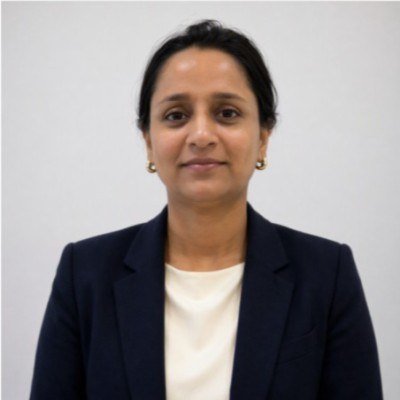
Neha Gupta is a CFA charterholder based in Winnipeg who has worked in financial markets since December 2005. She has published more than 2,600 investment articles and is Head of Operations and Finance at Whiteland Real Estate. She reviews WealthScale’s investing pages for accuracy.
- CFA charter, CFA Institute (awarded 2023)
- Post Graduate Diploma in Business Administration (Finance), 2008
- In financial markets since December 2005
- More than 2,600 published investment articles
General information only. Not financial, investment, tax or legal advice. WealthScale is independent and is published by WealthScale Media Inc., 55 Queen St E, Suite 1205, Toronto, ON M5C 1R6. CFA® and Chartered Financial Analyst® are registered trademarks owned by CFA Institute.