

Investing for Beginners in Canada
This investing for beginners Canada guide reduces getting started to seven steps: build an emergency fund, clear high-interest debt, choose an account, choose how to invest, decide what to hold, keep costs low and understand the tax. The account usually comes first, because it decides how your growth is taxed: the 2026 TFSA limit is $7,000, and growth inside a TFSA is never taxed. You do not need a large sum to begin. Below, each step links to a deeper guide, and a glossary explains 30 terms you will meet when you open your first account.
 Written by Sharad Gondaliya, CPA CPAChartered Professional Accountant, CPA Ontario No. 61040184
 Financial reviewer: Neha Gupta, CFA CFA charterholderReview of this page scheduled
At a glance
The order. Emergency fund, high-interest debt, account, platform, investments, costs, tax. Getting the first two right protects you from having to sell investments at a bad time.
The accounts. For 2026, a TFSA takes $7,000 of new room, an RRSP takes 18% of your 2025 earned income up to $33,810, and a first-time buyer can put $8,000 into an FHSA. Each one shelters growth from tax.
The platforms. You can pick investments yourself at an online broker, let a robo-advisor build and run a portfolio for a yearly fee, or work with an advisor. Seven of the 13 online brokers we track charge $0 commission on online stock and ETF trades, though options, some account fees and the funds’ own costs still apply.
The investments. Cash and GICs are the safest and grow the least. Bonds pay interest and move less than stocks. Stocks own part of a company and can grow most but fall hardest. Funds bundle many of these together.
The cost of waiting. In our example, $200 a month at an assumed 6% from age 25 to 65 grows to $398,298.15; starting at 35 gives $200,903.01. The 10-year head start is worth $197,395.14.
1. Build an Emergency Fund and Clear High-Interest Debt
Why this comes first. Investments rise and fall. If your car breaks down in a month when markets are down, an emergency fund means you pay the bill from savings instead of selling investments at a loss. A cushion of several months of essential expenses is a common target. Build it before you take any investment risk.
Where to keep it. Emergency money belongs somewhere safe and easy to reach: a high-interest savings account, or a TFSA holding cash or short GICs. As of October 22, 2026, the Bank of Canada policy rate is 2.25%, and everyday rates without a monthly plan fee in our high-interest savings account table reach 2.85%. Eligible deposits at a CDIC member are insured up to $100,000 per category at each institution, and deposits inside a TFSA are a separate category from those in your own name.
High-interest debt. Paying off a credit card or other expensive debt is a guaranteed return equal to its interest rate, which few investments can match. By the rule of 72, a balance growing at 20% a year doubles in about 3.6 years (72 / 20). Clear it before you invest for growth, except for any employer matching you would otherwise lose.
Employer matching. If your employer matches contributions to a group RRSP or pension plan, joining is usually the first investment to make, because the match adds money the moment you contribute. Check the plan’s rules for how much is matched and when it vests.
Short-term goals. Money you need within a few years, such as a down payment, has the same problem as an emergency fund: a market drop just before you need it could leave you short. Our savings hub and the GIC vs high-interest savings comparison cover where to keep it.
2. Choose the Right Account
Account first, investment second. An account such as a TFSA or RRSP is a tax wrapper, not an investment. You open the account at a bank, broker or robo-advisor, then choose what goes inside it. The choice of wrapper decides how much tax you pay on the growth, often for decades.
TFSA. Any resident 18 or older with a social insurance number can open one. The 2026 limit is $7,000, unused room carries forward, and someone eligible every year since 2009 who never contributed has $109,000 of room. Contributions are not deductible, but growth and withdrawals are tax-free, which makes it the most flexible account for a beginner.
RRSP. Contributions are deductible, growth is tax-deferred and withdrawals are taxed. Room is 18% of last year’s earned income, up to $33,810 for 2026. It suits people whose tax rate is higher now than it will be in retirement.
FHSA and RESP. A first-time home buyer can put $8,000 a year, up to $40,000, into an FHSA, deduct it, and withdraw it tax-free for a qualifying home. Parents can open an RESP, where the basic Canada Education Savings Grant adds 20% of the first $2,500 a year, up to $7,200 per child.
Non-registered. Once registered room is full, an ordinary account has no limits, but its income is taxed each year. Our guide to every type of investment account compares them side by side.
Answer five quick questions and this tool shows which accounts are built for your goal. It is general information, not a recommendation.
3. Choose How to Invest: Do It Yourself, Robo-Advisor or Advisor
Do it yourself at an online broker. A self-directed account lets you buy exchange-traded funds, stocks, bonds and GICs yourself. Seven of the 13 online brokers we track charge $0 commission on online stock and ETF trades; the others charge per trade or per share, or include a set number of $0-commission trades a year. Even at $0 commission, options trades, some account fees and the funds’ own expense ratios still cost money. It is usually the lowest-cost route if you are comfortable choosing and rebalancing your own mix.
Robo-advisor. A robo-advisor asks about your goals and risk tolerance, puts you in a ready-made portfolio of funds and rebalances it for you. The management fees at the robo-advisors we track range from 0.20% to 0.70% a year, depending on the provider and your balance, plus the funds’ own expense ratios. Minimums are low or nil at several. It suits beginners who want a hands-off start.
Advisor. A bank branch or investment firm advisor can build a plan and pick investments for you. Advisors are paid through fees built into the funds they sell, commissions, or a percentage of your assets. Ask exactly what you pay each year, in dollars, before you sign.
What to compare. Check that the provider offers every account you need (FHSA, RESP and spousal RRSP support vary), the total yearly cost, the minimum to open, whether you can buy fractional shares, and how easy it is to set up automatic contributions. Our online broker comparison, robo-advisor comparison and brokers for beginners list each provider’s published costs and features, and our rating methodology explains how we weigh them.
Safety. Use a firm regulated by CIRO, the Canadian Investment Regulatory Organization, and covered by CIPF. CIPF protects up to $1,000,000 of missing property in general accounts (cash, margin, TFSA and FHSA combined) if a member firm fails, with separate limits for retirement accounts and RESPs. It does not protect against market losses.
Ready to choose a platform? Compare published costs, account types and minimums before you open anything.
4. Decide What to Hold: Asset Classes and Investing Basics
Cash and GICs. Savings accounts and guaranteed investment certificates pay a stated rate and do not fall in value. Eligible deposits and GICs at a CDIC member are insured. The trade-off is low growth: after inflation, cash can lose buying power over long periods. They suit emergency funds and money needed within a few years.
Bonds. A bond is a loan to a government or company that pays interest and returns your money at maturity. Bond prices move in the opposite direction to interest rates, so they can fall when rates rise, but they usually swing less than stocks. Many portfolios hold bonds to steady the ride.
Stocks. A stock, or share, is a small piece of ownership in a company. You can earn dividends and a gain if the price rises, but prices can drop sharply and stay down for years. Stocks have the most growth potential and the most risk, so they suit money you will not need for a long time.
Funds. Mutual funds and exchange-traded funds (ETFs) pool many investors’ money to hold dozens or thousands of stocks or bonds at once. An index fund simply tracks a market index instead of trying to beat it, which usually keeps its costs low. Every fund charges a management expense ratio, taken from the fund’s returns each year.
Your mix. How you split money between stocks, bonds and cash is your asset allocation. A longer time horizon and a calm reaction to drops usually mean you can hold more stocks; a short horizon or a low tolerance for losses means more bonds and cash. Spreading money across many companies, industries and countries is diversification, and it lowers the damage any single failure can do. WealthScale does not recommend specific stocks, funds or portfolios; this is general education.
Riskier corners. Individual stocks, options, margin borrowing and crypto assets can lose money quickly. CIPF coverage does not extend to crypto assets. Learn the basics with diversified funds before you try any of them.
5. Keep Costs Low
Why small fees matter. A fee is charged on your whole balance every year, whether the market goes up or down. On $10,000 invested for 25 years at an assumed 6% return before fees, a 2% yearly fee leaves $27,137.65, while a 0.25% fee leaves $41,957.28. Our compound interest calculator includes a fee comparison tool to try your own numbers.
This example is hypothetical. Priya has $20,000 to invest and compares two set-ups with invented fee levels.
- A managed portfolio charging a 0.50% management fee plus 0.20% in fund costs comes to 0.70% a year, or $140 ($20,000 x 0.70%).
- A self-directed portfolio of funds with 0.20% in fund costs and $0 commissions comes to $40 a year ($20,000 x 0.20%), plus any account fees.
- The difference is $100 a year ($140 – $40). Whether the managed option is worth it depends on how much she values having the portfolio chosen and rebalanced for her.
The fees to look for. Management expense ratios inside funds, robo-advisor or advisor fees, trading commissions, options fees, and account fees such as yearly administration charges, US dollar account fees or transfer-out fees. A $0 commission does not mean a $0 cost: fund fees and any account fees still apply.
Add it up in dollars. Our investment fee calculator shows what a trading pattern costs at each broker in a year, what a robo-advisor charges on your balance and how much a higher fund fee takes over time. Seeing the yearly total in dollars makes two very different set-ups easy to compare.
6. Understand the Taxes
Inside registered accounts. Growth in a TFSA is never taxed. Growth in an RRSP is taxed only when you withdraw it, and the deduction going in gives you tax relief up front. Growth in an FHSA is tax-free when used for a qualifying first home. For most beginners, filling these accounts first is the simplest tax plan there is.
Interest. In a non-registered account, interest is taxed every year at your marginal rate. For an Ontario resident with $75,000 of taxable income in 2026, that is 29.65% (20.5% federal plus 9.15% Ontario).
Dividends. Dividends from Canadian companies get a dividend tax credit that lowers the tax. Eligible dividends are grossed up by 38% and earn a federal credit of 15.0198% of the grossed-up amount, with a provincial credit on top.
Capital gains and losses. Only part of a capital gain is taxed, and only when you sell. Keep a record of what you paid for each investment, including commissions, because that adjusted cost base sets the gain. A loss can offset gains, and an unused net capital loss can be carried back three years or forward with no time limit. If you buy the same investment back within 30 days, the superficial loss rule can deny the loss.
US dividends. The US withholds 15% of dividends paid to Canadian residents who file a W-8BEN, or 30% without one. An RRSP holding US-listed shares directly is exempt; in a TFSA the 15% is a permanent cost; in a non-registered account you can claim a foreign tax credit. Our guide to buying US stocks from Canada covers the details.
Filing your return. Your broker sends tax slips for a non-registered account, such as a T5 for interest and dividends and a T5008 for sales, and you report them on your return each spring. Most people can file online with NETFILE-certified software. If you are self-employed, your 2026 return is due June 15, 2027, but any balance owing is due April 30, 2027.
7. Automate, Rebalance and Stay Invested
Time does the heavy lifting. Compound growth earns returns on past returns, so the earlier you start, the less you need to save. Use the calculator below with your own numbers; it adds monthly contributions at the end of each month and shows the value year by year.
This example is hypothetical. Ava and Ben each save $200 a month at an assumed 6% a year, compounded monthly, and stop at 65.
- Ava saves from 25 to 35 only: $200 x 120 months = $24,000. She then stops, and her balance keeps growing to $197,395.14 by 65.
- Ben saves from 35 to 65: $200 x 360 months = $72,000. His balance at 65 is $200,903.01.
- Ben deposits three times as much as Ava ($72,000 / $24,000 = 3) and ends only $3,507.87 ahead ($200,903.01 – $197,395.14).
- Saving from 25 to 65 ($96,000 of deposits) gives $398,298.15, about double either one.
Automate it. Set up an automatic contribution for the day after payday, and set funds to reinvest their distributions. Automation removes the temptation to time the market and makes saving the default.
Rebalance once a year. As markets move, your mix drifts. If you planned 60% stocks and 40% bonds and stocks rose, you might hold 70% stocks. Rebalancing means selling a little of what grew or directing new money to what lagged, to return to your plan. Robo-advisors do this for you.
Stay invested through drops. Markets fall from time to time, sometimes sharply. Selling after a drop locks in the loss. The emergency fund from step 1 is what lets you leave long-term money alone. Please review your plan once a year, or when your life changes, not every time the market moves.
- Set aside an emergency fund in a savings account or a TFSA holding cash.
- Pay off high-interest debt, and join any employer matching plan.
- Open the account that fits your goal: TFSA, RRSP, FHSA or RESP.
- Pick a platform: an online broker, a robo-advisor or an advisor.
- Choose a diversified mix that matches your time horizon and comfort with losses.
- Automate monthly contributions and reinvest distributions.
- Rebalance once a year and raise contributions when your income rises.
8. Investing for Beginners in Canada: Mistakes to Avoid
Investing money you need soon. Money for a down payment next year or for emergencies does not belong in stocks. A drop just before you need it forces you to sell low. Match the investment to the date you need the money.
Withdrawing and redepositing in a TFSA. A TFSA withdrawal is added back to your room only on January 1 of the next year. Put it back sooner and you may over-contribute, which costs 1% a month on the highest excess. To move a TFSA, ask the new provider for a direct transfer instead.
Leaving cash idle. Contributing to a TFSA or RRSP is only the first half; you then have to buy something inside it. Cash sitting uninvested in a brokerage account often earns little or nothing.
Concentrating on a few hot names. Putting everything into one or two stocks, or into whatever is popular this month, ties your future to a few companies. Diversified funds spread that risk across many.
Ignoring the total cost. A fund’s expense ratio, a robo-advisor’s fee, trading commissions and account fees all come out of your return. Add them up as a yearly dollar amount before you choose.
Trading too often in a TFSA. CRA can treat a TFSA holder who trades with the frequency and skill of a professional as carrying on a business and tax the income. There is no set number of trades, but frequent short-term trading is the pattern to avoid.
Missing government grant money. Parents who skip the RESP miss the basic grant of 20% on the first $2,500 a year per child. First-time buyers who delay opening an FHSA delay their room, because it builds only from the year the account opens.
9. Glossary: 30 Investing Terms Every Canadian Beginner Should Know
These are the terms you will meet when you open an account, read a statement or file your taxes. Search the table to find a term quickly.
| Term | What it means |
|---|---|
| Adjusted cost base (ACB) | What you paid for an investment, including commissions, adjusted over time. It is subtracted from the sale price to work out a capital gain or loss. |
| Asset allocation | How your money is split between stocks, bonds and cash. It drives most of a portfolio’s risk and return. |
| Bond | A loan to a government or company that pays interest and returns your money at maturity. Its price moves opposite to interest rates. |
| Capital gain | The profit when you sell an investment for more than its adjusted cost base. Only part of it is taxed, and only in a non-registered account. |
| Capital loss | The loss when you sell for less than the adjusted cost base. It offsets capital gains and can be carried back three years or forward indefinitely. |
| CDIC | Canada Deposit Insurance Corporation. It insures eligible deposits and GICs at member institutions up to $100,000 per category, but not stocks, bonds, funds or crypto. |
| CIPF | Canadian Investor Protection Fund. It covers missing cash and securities, up to $1,000,000 per account group, if a member investment dealer fails. It does not cover market losses. |
| CIRO | Canadian Investment Regulatory Organization. It oversees all investment dealers and mutual fund dealers in Canada. |
| Compound growth | Earning returns on your past returns as well as on your original money. It is why time matters so much. |
| Contribution room | The amount you are allowed to put into a registered account such as a TFSA, RRSP or FHSA. Unused room generally carries forward. |
| Diversification | Spreading money across many investments, industries and countries so one failure does limited damage. |
| Dividend | A share of a company’s profit paid to shareholders, usually in cash every quarter. |
| Dividend tax credit | A credit that lowers the tax on dividends from Canadian companies held outside registered accounts. |
| Exchange-traded fund (ETF) | A fund that trades on a stock exchange like a share and holds a basket of stocks, bonds or both. |
| Foreign tax credit | A credit on your Canadian return for foreign tax withheld on income in a non-registered account, such as US dividend withholding. |
| GIC | Guaranteed investment certificate. You lend a bank a fixed sum for a set term at a set rate; eligible GICs are covered by CDIC. |
| Index fund | A fund that tracks a market index instead of picking investments, which usually keeps costs low. |
| Inflation | The rise in prices over time. It reduces what each dollar buys, so savings need to grow just to keep pace. |
| Limit order | An order to buy or sell only at a price you set or better. It may not fill if the price never reaches your limit. |
| Management expense ratio (MER) | A fund’s yearly costs as a percentage of its assets, taken from the fund’s returns before you see them. |
| Marginal tax rate | The tax rate on your next dollar of income. It sets how much an RRSP or FHSA deduction saves. |
| Market order | An order to buy or sell right away at the best available price, which can differ from the last quoted price. |
| Mutual fund | A pooled fund bought from the fund company or a dealer, priced once a day, rather than traded on an exchange. |
| Rebalancing | Buying or selling to bring your asset allocation back to its target after markets move. |
| Registered account | An account registered with CRA, such as a TFSA, RRSP, FHSA, RESP or RRIF, that shelters growth from tax. A non-registered account has no shelter. |
| Robo-advisor | An online service that builds and rebalances a portfolio of funds for you for a yearly fee. |
| Stock | A share of ownership in a company. Its price rises and falls with the company’s prospects and the market. |
| Superficial loss rule | A rule that denies a capital loss if you or an affiliated person buy the same property within 30 days before or after the sale and still hold it 30 days later. |
| W-8BEN | A US form you give your broker to confirm you are a Canadian resident, which lowers US withholding on dividends to 15% instead of 30%. |
| Withholding tax | Tax taken at source before a payment reaches you, such as US tax on dividends or tax withheld on an RRSP withdrawal. |
10. How to Start Investing in Canada: Where to Go Next
The full walk-through. Our step-by-step guide to investing in Canada covers ten steps from budget to first trade, with costs for each type of platform compared. It is the natural next read after this page.
US investing. If you plan to hold US shares, read how to buy them from Canada: which accounts can hold US dollars, what a US trade costs at each broker and how US withholding tax works in each account type. Each guide is general and names no stocks or funds to buy.
How your money is protected. Before you open an account, learn how CIPF protects cash and securities at an investment dealer and how CDIC insures deposits at a bank, and what neither one covers. Our guide to CIPF vs CDIC sets out the limits for each.
Moving an account. When you switch providers, a direct transfer protects your TFSA and RRSP room. Our transfer guide explains the process, the timelines and which fees to expect.
Tax time. Once you invest outside a TFSA, you will have slips to report each spring. Our guide to filing your taxes online walks through NETFILE, the slips to gather and the deadlines, and compares tax software by our published score, where Wealthsimple Tax leads at 4.8 / 5.
How we work. Every guide on WealthScale is written by a CPA, and our editorial standards explain how figures are checked and dated. Our advertiser disclosure explains how the site is paid for.
Investing for Beginners in Canada: FAQ
How do I start investing in Canada as a beginner?
Build an emergency fund and pay off high-interest debt first. Then open the account that fits your goal, usually a TFSA, RRSP or FHSA, at an online broker, robo-advisor or bank. Choose a diversified mix that suits your time horizon, keep total costs low, and set up automatic monthly contributions. Our step-by-step guide to investing in Canada walks through each stage.
How much money do I need to start investing?
Very little. Several robo-advisors have low or no minimums, and many online brokers let you buy fractional shares. There is no minimum to open a TFSA beyond what the provider sets. Regular small amounts matter more than a large start: $200 a month for 40 years at an assumed 6% grows to $398,298.15. This example is hypothetical.
Should a beginner open a TFSA or an RRSP?
Many beginners start with a TFSA because withdrawals are tax-free at any time and the 2026 limit is $7,000. An RRSP gives a deduction, which is worth more at a higher tax rate, but withdrawals are taxed. A first-time home buyer should also look at the FHSA, which is deductible going in and tax-free out for a qualifying home.
Is a robo-advisor good for beginners?
It can suit a beginner who wants a diversified portfolio chosen and rebalanced for them. The management fees at the robo-advisors we track range from 0.20% to 0.70% a year, plus the funds’ own costs. Investing yourself at an online broker costs less, but you choose and rebalance the investments. Compare the total yearly cost in dollars.
What should a beginner invest in?
WealthScale does not recommend specific investments. In general terms, money needed soon suits savings accounts and GICs, while long-term money is often held in a diversified mix of stock and bond funds sized to your time horizon and comfort with losses. Diversified funds spread risk across many companies, which single stocks cannot do.
Are my investments protected if my broker fails?
At a CIPF member firm, missing cash and securities are covered up to $1,000,000 in general accounts, with separate $1,000,000 limits for retirement accounts and RESPs. CIPF does not cover market losses or crypto assets. Eligible deposits and GICs at a CDIC member bank are insured up to $100,000 per category.
How are investments taxed in Canada?
Growth in a TFSA is never taxed, and growth in an RRSP is taxed when withdrawn. In a non-registered account, interest is taxed every year at your marginal rate, Canadian dividends get a dividend tax credit, and only part of a capital gain is taxed, when you sell. US dividends have 15% withheld with a W-8BEN on file.
What is the difference between an ETF and a mutual fund?
Both pool money to hold many investments. An ETF trades on a stock exchange throughout the day like a share, and you buy it through a brokerage account. A mutual fund is bought from the fund company or a dealer and priced once a day. Both charge a management expense ratio, which you should compare before buying.
How often should I check or change my investments?
For long-term money, once a year is usually enough: check your contributions, rebalance to your target mix and review your account room. Checking daily tempts people to sell after a drop, which locks in losses. Please review your plan sooner if your goals, income or family situation change.
Can I lose money investing in a TFSA?
Yes. A TFSA is a tax shelter, not a guarantee. If you hold stocks or funds inside it and their prices fall, your balance falls. Losses inside a TFSA cannot be claimed against other gains, and the room used by a lost amount does not come back. Savings and eligible GICs held in a TFSA at a CDIC member are insured.
Take the next step: find the account that fits your goal, then compare platforms built for first-time investors.
Figures on this page were checked against Canada Revenue Agency publications and each provider’s published pricing on October 22, 2026. We update this page when a figure changes.
Meet the Experts Behind WealthScale

Sharad is a CPA Ontario member (No. 61040184) and a Certified Public Accountant licensed in Washington and Montana, with more than 15 years in accounting and tax, a Diploma in Banking and Finance and a Certificate in Small Business Finance. He checks WealthScale content against primary sources. WealthScale is independent of his firm, Gondaliya CPA Professional Corporation, and provides general information only, not personal financial, investment, tax or legal advice.
- Chartered Professional Accountant, CPA Ontario
- Certified Public Accountant, Washington (No. 57629) and Montana (No. PAC-CPAP-LIC-033176)
- Writing on tax and registered accounts since 2021
- Reader’s Choice Award 2025 Winner, Best Accountant (Toronto)
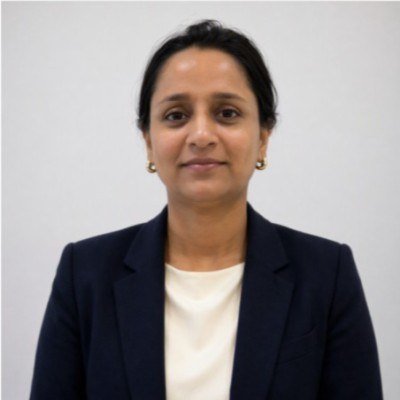
Neha Gupta is a CFA charterholder based in Winnipeg who has worked in financial markets since December 2005. She has published more than 2,600 investment articles and is Head of Operations and Finance at Whiteland Real Estate. She reviews WealthScale’s investing pages for accuracy.
- CFA charter, CFA Institute (awarded 2023)
- Post Graduate Diploma in Business Administration (Finance), 2008
- In financial markets since December 2005
- More than 2,600 published investment articles
General information only. Not financial, investment, tax or legal advice. WealthScale is independent and is published by WealthScale Media Inc., 55 Queen St E, Suite 1205, Toronto, ON M5C 1R6. CFA® and Chartered Financial Analyst® are registered trademarks owned by CFA Institute.