

RBC Direct Investing Review 2026
This RBC Direct Investing review finds a bank-owned broker with a full account lineup, no maintenance fee at any balance and standard commissions of $9.95 a trade. Its GoSmart service, inside the RBC Mobile app, gives 50 $0 stock and ETF trades a year in GoSmart TFSA, FHSA and RRSP accounts, and more than 50 selected ETFs trade at $0 in every account. RBC Direct Investing scores 2.7 / 5 overall, 11th of the 13 brokers we rate as of October 23, 2026. Margin and cash rates are not published, and RBC does not state what a US dollar registered account costs. We also cover RBC InvestEase, RBC’s robo-advisor, at 0.50% a year plus fund costs.
 Written by Sharad Gondaliya, CPA CPAChartered Professional Accountant, CPA Ontario No. 61040184
 Financial reviewer: Neha Gupta, CFA CFA charterholderReview of this page scheduled
At a glance
Verdict. RBC Direct Investing suits RBC clients who want every account type at one bank-owned broker with no maintenance fee. Its $9.95 commission makes it expensive for regular trading outside GoSmart and its $0 ETF list.
Score. RBC Direct Investing scores 2.7 / 5 overall (2.720 before rounding), rank 11 of the 13 online brokers we rate as of October 23, 2026. It scores 3.4 / 5 for beginners (rank 11), 1.8 / 5 for options (rank 12) and 2.2 / 5 for US stocks (rank 12). RBC InvestEase, rated separately as a robo-advisor, scores 3.4 / 5, rank 4 of 4.
Costs. Online stock and ETF trades cost $9.95, in Canadian or US dollars, or $6.95 for Active Traders with 150 or more trades a quarter. More than 50 selected ETFs trade at $0 in all accounts. Options cost $9.95 plus $1.25 per contract. There is no quarterly or annual maintenance fee, and a transfer out costs $150.
GoSmart. RBC’s mobile-first GoSmart service gives 50 $0 stock and ETF trades a year across GoSmart TFSA, FHSA and RRSP accounts. Options are not available in GoSmart.
US dollars. US stock and ETF trades cost $9.95, in Canadian or US dollars. Accounts can hold Canadian and US dollars; RBC does not state its pricing for US dollar registered accounts.
Safety. RBC Direct Investing Inc. states that it is a member of CIRO and the Canadian Investor Protection Fund, and it is bank-owned, which gives it full marks for safety. CIPF covers up to $1,000,000 per group of accounts if a member firm fails.
RBC Direct Investing score breakdown
| Factor | Weight | RBC sub-score | Weighted points | What we measured |
|---|---|---|---|---|
| Cost | 35% | 2.02 | 0.7070 | Commissions plus account fees: $358.20 a year on our active profile and $119.40 on buy-and-hold, at $9.95 a trade |
| Accounts | 15% | 5.0 | 0.7500 | All 10 account types we count, from TFSA to corporate |
| US investing | 15% | 0.75 | 0.1125 | USD registered pricing not stated (0.75 points); $9.95 US commission (0 points) |
| Cash and margin | 10% | 0.5 | 0.0500 | Margin rate not published (0.5); cash interest not published (0) |
| Platform | 15% | 4.0 | 0.6000 | DRIP, options, an advanced platform and a mobile app; fractional shares not mentioned |
| Safety | 10% | 5.0 | 0.5000 | CIRO and CIPF membership stated by the dealer, plus 1 for bank ownership |
| Total | 100% | 2.720, shown as 2.7 / 5 | Rank 11 of 13 online brokers |
Every broker is scored on the same six factors and weights, from published prices only. Cost uses commissions and account fees for two trading profiles, and the US score uses USD in registered accounts and US commissions. The full rubric is on our broker rating methodology page. No provider can pay for a score or a ranking; see how WealthScale makes money, and our editorial standards for how each figure is sourced and dated.
Use the broker cost calculator below to total commissions and account fees at RBC and every other broker we rate, for the way you trade.
1. RBC Direct Investing Review: Our Verdict and Score
The short version. RBC Direct Investing gets full marks for accounts and safety, charges no maintenance fee and reimburses up to $200 of transfer fees on transfers of $15,000 or more. It also charges $9.95 a trade and does not publish margin or cash rates. That scores 2.7 / 5, 11th of 13 on our best online brokers list, ahead of Scotia iTRADE (2.6) and TD Direct Investing (2.4), and behind CIBC Investor’s Edge (2.8).
Why cost drags the score. Cost carries 35% of the score. On our active profile (two Canadian and one US trade a month) RBC costs $358.20 in commissions plus account fees: 36 trades at $9.95, with no maintenance fee. On buy-and-hold (one Canadian trade a month) it costs $119.40. The average, $238.80, gives a cost sub-score of 2.02 of 5.
Where RBC earns points. RBC publishes all 10 account types we count, from the TFSA and FHSA to the RESP, RRIF, LIRA, LIF and corporate accounts, for a 5.0 on accounts. It states its CIRO and CIPF membership directly and is bank-owned, for a 5.0 on safety. Its platform sub-score is 4 of 5: DRIP, options, the Trading Dashboard and the RBC Mobile app count, while fractional shares are not mentioned.
Where it loses points. The US investing sub-score is 0.75 of 5: US trades cost $9.95, and RBC does not state what a US dollar registered account costs. Cash and margin score 0.5, because neither rate is published on the pages we checked.
The bottom line. The score rates RBC Direct Investing’s standard pricing. If your trades fit inside GoSmart’s 50 $0 trades a year or RBC’s $0 ETF list, your real costs are far lower than the score suggests. If you trade often, buy US stocks regularly or use margin, the $0 brokers ranked above RBC will usually cost less. The rest of this RBC Direct Investing review prices each line, and section 8 covers RBC InvestEase.
2. RBC Direct Investing Fees and Commissions
Standard pricing. RBC Direct Investing charges $9.95 per online or mobile stock or ETF trade, in Canadian or US dollars, when you place fewer than 150 trades a quarter. Active Traders, at 150 or more trades a quarter, pay $6.95. More than 50 selected ETFs trade at $0 in all accounts, without a cap. This schedule has been in effect since August 1, 2025.
| Fee | Standard | Active Trader (150+ trades a quarter) |
|---|---|---|
| Canadian stocks and ETFs, online or mobile | $9.95 | $6.95 |
| US stocks and ETFs, online | $9.95 (CAD or USD) | $6.95 |
| Selected ETFs (more than 50) | $0 in all accounts | $0 in all accounts |
| GoSmart stock and ETF trades | 50 $0 trades a year in GoSmart TFSA, FHSA and RRSP | Not applicable |
| Options | $9.95 + $1.25 a contract | $6.95 + $1.25 a contract |
| Quarterly or annual maintenance fee | None, no minimum balance | None |
| Transfer out | $150, all account types (donations of shares excluded) | $150 |
| Transfer in | No fee; up to $200 of the other institution’s fee reimbursed on $15,000 or more | Same |
| Margin interest | Not published | Not published |
| Interest on cash | Not published | Not published |
No maintenance fee. RBC states that it charges no quarterly or annual maintenance fee and has no minimum balance. That sets it apart from TD Direct Investing, which charges $25 a quarter on households under $15,000 without a waiver, and from National Bank Direct Brokerage’s $100 yearly fee per account root. A small account at RBC costs nothing to hold.
What $9.95 costs on small purchases. A flat commission weighs most on small orders: $9.95 is about 2.0% of a $500 purchase and about 1.0% of a $1,000 purchase. Buying once a month costs $119.40 a year (12 x $9.95) and three times a month $358.20 (36 x $9.95). That is why GoSmart and the $0 ETF list matter so much at RBC.
The $0 ETF list. More than 50 selected ETFs trade at $0 in all accounts, including non-registered and margin accounts, with no yearly cap. The list itself was not part of the figures we checked, and WealthScale does not recommend specific funds. If a fund you already plan to buy is on the list, the commission problem disappears for that fund.
Active Trader pricing. At 150 trades a quarter, or 600 a year, the $6.95 price saves $3.00 a trade, $1,800 a year at 600 trades. Very few long-term investors trade that much. Compare RBC’s standard price with CIBC Investor’s Edge at $6.95 and TD at $9.99, or with the seven brokers on our commission-free trading platforms list that charge $0 on every online stock and ETF trade.
3. GoSmart: 50 $0 Trades a Year in the RBC Mobile App
What GoSmart is. GoSmart is RBC Direct Investing’s mobile-first service, used through the RBC Mobile app. It gives 50 $0 stock and ETF trades a year, shared across GoSmart TFSA, FHSA and RRSP accounts. At the standard $9.95 price, those 50 trades would cost $497.50.
How far 50 trades go. 50 trades a year is just over 4 a month. A monthly investor buying one or two ETFs stays inside it, and 12 monthly purchases use only 12 of the 50. An investor buying four funds every month would use 48, close to the limit. Plan your purchases so you know where you are in the count before the year ends.
What GoSmart leaves out. GoSmart covers the TFSA, FHSA and RRSP only, so a non-registered, spousal RRSP, RESP or RRIF account sits outside it at standard prices. Options are not available in GoSmart. The price of a GoSmart trade after the first 50 of the year, and whether US trades count toward the 50, were not part of the figures we checked, so please confirm both with RBC before relying on GoSmart for US stocks.
GoSmart vs TD Easy Trade. TD Easy Trade gives 100 $0 trades a year in cash, TFSA, RRSP and FHSA accounts, twice GoSmart’s 50, and has US dollar sides in its TFSA, RRSP and cash accounts with no account fee. GoSmart sits inside a broker that offers a full account lineup and no maintenance fee, so your other accounts can live at RBC too. Our TD Direct Investing review covers Easy Trade in detail, and our best investing apps page ranks the app-first options.
Who GoSmart suits. A new investor making regular TFSA or FHSA contributions, or an RBC client saving for a first home in an FHSA, can invest for $0 in commissions within the 50-trade limit.
4. US Investing and USD Accounts at RBC
US commissions. RBC Direct Investing charges $9.95 per online US stock or ETF trade, in Canadian or US dollars, or $6.95 for Active Traders, as of October 22, 2026. Whether US trades count toward GoSmart’s 50 $0 trades was not part of the figures we checked. Twelve US trades a year cost (12 x $9.95 = $119.40) at standard prices. Our guide to buying US stocks in Canada covers accounts, forms and withholding step by step.
USD in registered accounts. RBC says its investment accounts can hold Canadian and US dollar balances, but it does not state what US dollar registered accounts cost. Our score gives that the “not stated” mark of 0.75 of 3. Please ask RBC whether your TFSA or RRSP can hold US dollars at no extra charge before you plan around it.
How the US score works. Our US investing factor gives 3 points for US dollars in registered accounts with no fee (1.5 if a fee applies, 0.75 if not stated) and 2 points for a $0 US commission (1.5 at $2 or less, 0 above). RBC gets 0.75 for registered USD pricing that is not stated and 0 for its $9.95 US commission: (0.75 + 0 = 0.75) of 5. On our best brokers for US stocks list, which gives this factor a 40% weight, RBC scores 2.2 / 5 and ranks 12 of 13.
| Broker | US stock and ETF commission | USD in registered accounts | US investing sub-score (out of 5) |
|---|---|---|---|
| RBC Direct Investing | $9.95 (CAD or USD) | Accounts hold CAD and USD; registered pricing not stated | 0.75 |
| TD Direct Investing | $9.99 | Not stated for Direct Investing; TD Easy Trade TFSA and RRSP at no fee | 0.75 |
| BMO InvestorLine | $0 | Not stated | 2.75 |
| Questrade | $0 | No extra cost | 5.0 |
US withholding tax. US dividends paid to a TFSA, FHSA, RESP or non-registered account are withheld at 15% when your Form W-8BEN is on file, or 30% without it. Dividends paid to an RRSP, RRIF, LIRA or LIF are exempt under Article XXI(2) of the Canada-US tax treaty once the account is documented. In a TFSA the 15% cannot be recovered; our guide to US stocks in a TFSA explains why.
Dividend investors. RBC ranks 6th of 7 on our list of the best brokers for dividend investing, which ranks brokers that offer DRIP by overall score. RBC says hundreds of stocks are eligible for its DRIP, which reinvests each dividend without a $9.95 order.
5. RBC Direct Investing Account Types
A full lineup. RBC Direct Investing publishes every account type in our scoring rubric, which is why it scores 5.0 on accounts. Only three other brokers we rate do the same: Questrade, Wealthsimple and Qtrade. RBC lists no minimum to open an account.
| Account | Offered at RBC | In GoSmart | 2026 rule |
|---|---|---|---|
| TFSA | Yes | Yes | $7,000 limit for 2026 |
| FHSA | Yes | Yes | $8,000 a year, $40,000 lifetime |
| RRSP | Yes | Yes | $33,810 dollar limit for 2026 |
| Spousal RRSP | Yes | No | Withdrawals can be taxed to the contributor if contributions were made that year or in the two years before |
| RRIF | Yes | No | Minimum withdrawal each year |
| RESP | Yes | No | $50,000 lifetime per beneficiary |
| LIRA and LIF | Named as eligible in RBC’s offer terms | No | Locked-in pension money |
| Cash (non-registered) | Individual or joint | No | No contribution limit |
| Margin | Yes | No | Rates not published |
| Business, trust and other | Yes | No | Confirm documents with RBC |
Registered accounts. The 2026 TFSA limit is $7,000, and the total TFSA room for someone eligible since 2009 is $109,000 in 2026. The 2026 RRSP dollar limit is $33,810, and your own limit is the lesser of that and 18% of your 2025 earned income, adjusted for pension adjustments and unused room. An FHSA allows $8,000 a year and $40,000 over your lifetime. Our guides to the TFSA, RRSP and FHSA cover each set of rules.
Spousal RRSPs. A spousal RRSP lets the higher earner contribute and claim the deduction while the lower earner owns the account. If the spouse withdraws money and a contribution was made in that year or either of the two years before, the withdrawal is taxed to the contributor. RBC offers the spousal RRSP in its standard platform, not in GoSmart.
RESPs. RBC offers RESPs, so families can hold education savings next to their own accounts. The Canada Education Savings Grant adds 20% of contributions, up to $500 a year per child and $7,200 over a lifetime. RBC ranks 8th of 9 on our best RESP providers list, which ranks by overall score.
Retirement and locked-in accounts. RBC offers RRIFs and names LIRA and LIF accounts as eligible in its offer terms. It ranks 9th of 10 on our best RRIF accounts list and 8th of 9 on our best LIRA accounts list. RRIF payments above the yearly minimum are subject to withholding tax.
Where RBC ranks on account lists. RBC is 11th of 13 on our best TFSA accounts and best RRSP accounts lists and 9th of 11 on our best FHSA accounts list. Those lists rank by overall score, so RBC’s commissions pull it down even where its account offering is complete.
See how RBC’s full account lineup and $9.95 commission compare with every broker we rate, ranked by our published score.
6. RBC Platforms, Tools and Research
Four ways to invest. RBC Direct Investing names four platforms: its Online Investing platform for everyday trading on the web; the Trading Dashboard, its advanced trading screen; the RBC Mobile app; and GoSmart, the mobile-first service inside the RBC Mobile app.
How RBC scores on platform. Our platform test gives one point each for fractional shares, DRIP, options, an advanced trading platform and a mobile app. RBC earns four: DRIP, options, the Trading Dashboard and the mobile app. Fractional shares are not mentioned on the RBC pages we checked, so they are not credited. Only TD Direct Investing and Interactive Brokers Canada score 5.0.
DRIP at RBC. RBC says hundreds of stocks are eligible for its dividend reinvestment plan. A DRIP reinvests each cash dividend in more of the same security without you placing an order. The figures we checked do not say whether RBC charges for reinvestment or whether it buys partial shares or whole shares only.
Research and education. We do not score research tools, because there is no published measure that compares them across brokers, and the RBC pages we checked do not list the research providers or screeners included. If research matters to you, ask RBC which reports and tools are included at no extra cost before you transfer.
Beginner fit. RBC’s beginner platform sub-score is 3.5 of 5: full marks for a mobile app, DRIP and no account minimum, and nothing for fractional shares. Its overall beginner score is 3.4 / 5, 11th of 13 on our best brokers for beginners list. Our how to invest in Canada guide covers first steps on any platform.
7. Options, Margin and Cash Interest at RBC
Options pricing. RBC charges $9.95 plus $1.25 per contract on options trades, or $6.95 plus $1.25 for Active Traders. A 1-contract trade costs $11.20, a 2-contract trade $12.45 and a 10-contract trade $22.45. Options are not available in GoSmart. RBC scores 1.8 / 5 for options, 12th of 13 on our best options trading platforms list.
| Broker | Published options pricing | Per trade | Per year |
|---|---|---|---|
| RBC Direct Investing | $9.95 + $1.25 a contract | $12.45 | $597.60 |
| RBC Direct Investing, Active Trader | $6.95 + $1.25 a contract | $9.45 | $453.60 |
| TD Direct Investing | $9.99 + $1.25 a contract | $12.49 | $599.52 |
| BMO InvestorLine | $0.90 a contract | $1.80 | $86.40 |
| Qtrade Direct Investing | $0.75 a contract | $1.50 | $72.00 |
| Questrade | $0 on US equity options | $0.00 | $0.00 |
Reading the table. The $9.95 base fee is most of the cost on small options trades. Active Trader pricing needs 150 or more trades a quarter, far more than this pattern, so an options trader with this pattern pays the standard row. Exercise and assignment fees were not part of the figures we checked. Our Qtrade review covers one of the lowest-cost options brokers in the table.
Margin. RBC offers margin accounts, but its margin rates were not on the pages we checked. That puts RBC with TD Direct Investing and BMO InvestorLine on the “not published” list on our lowest margin rates page. Published CAD rates under $100,000 run from 3.675% at Interactive Brokers Canada to 8.70% at Questrade. Please get RBC’s rate in writing before you borrow, because margin magnifies losses as well as gains.
Interest on cash. RBC did not publish a rate on uninvested cash on the pages we checked, and our score gives 0 when no rate is published. Interactive Brokers Canada pays 1.675% on Canadian dollar cash above CAD 13,000 for accounts above USD 100,000 in net assets, while Qtrade pays 0.00% up to $2,000,000. If you keep cash at RBC between purchases, ask what it earns, and compare it with our best high-interest savings accounts.
Who RBC suits for active trading. RBC’s Trading Dashboard gives active traders an advanced screen at a bank-owned dealer. The price is commissions: even at the Active Trader price, 600 trades a year cost $4,170 (600 x $6.95), where a $0 broker charges nothing in commissions.
8. RBC InvestEase: Fees, Portfolios and Score
What RBC InvestEase is. RBC InvestEase is RBC’s robo-advisor. It builds and manages an ETF portfolio for you, with six risk levels from Short-Term Bond to Aggressive Growth, each available in a Core version and a Responsible Investing version. It offers TFSA, FHSA, RRSP and non-registered accounts, and Portfolio Advisors are available by phone or email.
| Item | RBC InvestEase |
|---|---|
| Management fee | 0.50% a year plus sales tax, flat at every balance, billed monthly |
| Fund costs, Core portfolios | From 0.12%, up to 0.20% (weighted average) |
| Fund costs, Responsible Investing portfolios | From 0.17%, up to 0.25% (weighted average) |
| Minimum | Money is invested once the balance reaches $100; balances under $1,500 may use a Starter Portfolio |
| Accounts | TFSA, FHSA, RRSP, non-registered |
| Portfolios | Six ETF portfolios, each in Core and Responsible Investing versions |
| Advice | Portfolio Advisors by phone or email |
| Tax-loss harvesting | Not mentioned |
| Transfer out to a non-RBC account | $150 plus tax |
| Transfer in | Up to $200 of transfer fees reimbursed on $15,000 or more |
What it costs. With Core fund costs of up to 0.20%, the total is up to 0.70% a year before sales tax on the management fee. On $10,000 that is $50 in management fees plus up to $20 in fund costs, or $70. On $50,000 it is $250 plus $100, or $350. On $100,000 it is $500 plus $200, or $700, because the 0.50% fee has no lower tier for larger balances.
| Factor | Weight | InvestEase sub-score | Weighted points | What we measured |
|---|---|---|---|---|
| Fees | 45% | 3.25 | 1.4625 | 0.50% fee plus 0.20% top Core fund cost = 0.70% on $50,000 |
| Accounts | 15% | 2.0 | 0.3000 | 4 of the 10 account types we count |
| Portfolios | 15% | 3.0 | 0.4500 | Two portfolio families: Core and Responsible Investing |
| Minimum | 10% | 5.0 | 0.5000 | Invested from $100 |
| Advice | 15% | 4.5 | 0.6750 | Portfolio Advisors by phone or email |
| Total | 100% | 3.388, shown as 3.4 / 5 | Rank 4 of 4 ranked robo-advisors |
How the fee score works. Our robo fee score is 5 minus (total cost minus 0.35%) x 5. For InvestEase that is 5 minus (0.70% minus 0.35%) x 5, or 3.25. Questwealth Portfolios, at 0.37% on $50,000, scores 4.9 on fees; Wealthsimple Managed Investing, at 0.65%, scores 3.5.
| Rank | Robo-advisor | Score | Management fee | Total cost on $50,000 |
|---|---|---|---|---|
| 1 | Wealthsimple Managed Investing | 4.2 / 5 | 0.5% Core; 0.4% Premium | 0.65%, or $325 |
| 2 | Questwealth Portfolios | 4.1 / 5 | 0.25%; 0.20% from $100,000 | 0.37%, or $185 |
| 3 | CI Direct Investing | 3.7 / 5 | 0.60% on the first $150,000 | 0.83%, or $415 |
| 4 | RBC InvestEase | 3.4 / 5 | 0.50% flat | 0.70%, or $350 |
Use the robo-advisor fee calculator below to compare the yearly cost of RBC InvestEase and the other ranked robo-advisors for the amount you plan to invest.
InvestEase or self-directed RBC. InvestEase manages the portfolio for you for 0.50% a year. A self-directed GoSmart TFSA charges $0 for up to 50 trades a year, but leaves every decision to you. On $20,000, InvestEase costs $100 in management fees plus up to $40 in fund costs; a GoSmart TFSA with 12 purchases a year costs $0 in commissions plus the funds’ own costs. Our best robo-advisors page compares every ranked service, and our Questrade review covers Questwealth Portfolios.
9. Is RBC Direct Investing Safe? CIRO and CIPF
Who holds your account. Your account is held by RBC Direct Investing Inc., which states that it is a member of the Canadian Investment Regulatory Organization (CIRO) and the Canadian Investor Protection Fund (CIPF). RBC Direct Investing Inc. is also on CIPF’s member list. CIRO oversees all investment dealers in Canada.
What CIPF covers. If a member firm becomes insolvent and client property is missing, CIPF covers the shortfall up to set limits per group of accounts. It does not cover a fall in the value of your investments, unsuitable advice or the failure of a company you own shares in. Crypto assets are excluded.
| Account group | Accounts in the group | CIPF limit |
|---|---|---|
| General accounts | Cash, margin, TFSA and FHSA, combined | $1,000,000 |
| Registered retirement accounts | RRSP, RRIF and LIF, combined | $1,000,000 |
| RESPs | All RESPs where you are the subscriber, combined | $1,000,000 |
Our safety score. RBC Direct Investing scores the maximum 5.0 for safety. Our rubric gives 4 when a broker states both CIRO and CIPF membership and adds 1 for ownership by a bank or financial cooperative group. TD Direct Investing scores 4.5, because its CIRO membership is inferred from CIPF membership rather than stated on the pages we checked.
CIPF and CDIC are different. Eligible bank deposits at a member of the Canada Deposit Insurance Corporation are covered up to $100,000 per insured category. Cash and securities at an investment dealer such as RBC Direct Investing fall under CIPF instead. Banking and investing with the same group does not make one protection replace the other. Our guide to CIPF vs CDIC explains both in full.
Your part. Use a strong, unique password, turn on any two-step verification offered, and read each trade confirmation. No protection fund covers money you send to a fraudster yourself, so treat unexpected calls or messages about your account with caution.
10. Opening an Account and Transfers
Opening. RBC lists no minimum to open an account and states that there is no minimum balance. A TFSA requires Canadian residency, a valid social insurance number and age 18 or older (19 where that is the age of majority). Customer support hours and channels were not part of the figures we checked, so we do not score support.
Transferring in. RBC charges nothing to transfer an account in and reimburses up to $200 of the fee your old institution charges, on transfers of $15,000 or more. Royal Circle and Royal Distinction members get up to $500. If your old broker charges $150 on one account, the reimbursement covers it in full. If you move two accounts at $150 each and the $200 limit applies to your whole transfer, $100 is left for you; confirm with RBC how the limit applies before you move.
Transferring out. RBC charges $150 to transfer any account type out, except a donation of shares. RBC InvestEase charges $150 plus tax to transfer to a non-RBC account. Keep registered transfers direct: a direct TFSA transfer does not use contribution room, while a withdrawal and redeposit counts as a new contribution. Our guide to transferring an investment account covers the forms.
11. RBC Costs for Four Investor Profiles
How we priced each profile. We applied each broker’s published standard online prices to four common patterns, counting commissions plus account fees. Exchange and regulatory pass-through fees, exercise and assignment fees, and promotions are left out. GoSmart gets its own column because its pricing is different. Where a price is not published, the cell says so.
| Profile | RBC Direct Investing | RBC GoSmart | TD Direct Investing | BMO InvestorLine | Questrade |
|---|---|---|---|---|---|
| 1. Monthly ETF buyer: 12 Canadian trades a year | $119.40; $0.00 if the ETF is on RBC’s $0 list | $0.00 | $119.88 | $0.00 | $0.00 |
| 2. Active investor: 24 Canadian and 12 US trades a year | $358.20 | $0.00 for the 24 Canadian trades; US trades not stated | $359.64 | $0.00 | $0.00 |
| 3. Active US trader: 120 US trades a year | $1,194.00 | Not stated | $1,198.80 | $0.00 | $0.00 |
| 4. Options trader: 48 options trades a year of 2 contracts | $597.60 | Options not available | $599.52 | $86.40 | $0.00 |
| Recurring account fee | None | None | $25 a quarter under $15,000 unless waived | No account minimum fees | None |
Profile 1: the monthly ETF buyer. At standard prices RBC charges $119.40 a year (12 x $9.95). The same 12 trades cost $0 in GoSmart, using 12 of its 50 $0 trades, and $0 in any RBC account if the ETF is on RBC’s list of more than 50 $0 ETFs. BMO and Questrade charge $0 on every online stock and ETF trade.
Profile 2: the active investor. This is the active profile our cost score uses. RBC charges $358.20 (36 x $9.95) at standard prices, and TD Direct Investing $359.64 (36 x $9.99). In GoSmart the 24 Canadian trades fit inside the 50 $0 trades, but whether US trades count was not part of the figures we checked. BMO and Questrade charge $0.00.
Profile 3: the active US trader. RBC charges $1,194.00 in commissions (120 x $9.95), and TD $1,198.80 (120 x $9.99). BMO and Questrade charge $0 on US stock and ETF trades, so the whole difference is commissions. This is the pattern where RBC’s $9.95 commission costs most.
Profile 4: the options trader. RBC’s $9.95 base fee makes small options trades expensive: $12.45 for 2 contracts, $597.60 a year. BMO’s $0.90 a contract costs $86.40, and Questrade charges $0 on US equity options. Options are not available in GoSmart.
Our scoring profiles. The cost sub-score uses the active profile (profile 2) and a buy-and-hold profile (profile 1) in a $20,000 TFSA, at standard prices without GoSmart or the $0 ETF list, counting commissions plus account fees. RBC costs $358.20 and $119.40, an average of $238.80, so its cost score is 5 minus $238.80 / $80, or 2.02. Our investment fee calculator adds fund costs to the same totals for your own pattern.
12. RBC Direct Investing Pros and Cons
How to read this list. Each point comes from RBC’s published pricing and account pages as checked on October 22, 2026, and from our published scores. The pros matter most to RBC clients who want every account in one place; the cons fall hardest on frequent traders and US investors.
Pros
- No quarterly or annual maintenance fee, and no minimum balance
- All 10 account types we count, including RESP, RRIF, LIRA and LIF
- GoSmart: 50 $0 stock and ETF trades a year in TFSA, FHSA and RRSP accounts
- More than 50 selected ETFs at $0 in all accounts
- Up to $200 of transfer fees reimbursed on $15,000 or more ($500 for Royal Circle and Royal Distinction)
- CIRO and CIPF membership stated directly, and bank-owned: full marks for safety
- Trading Dashboard for active traders
- RBC InvestEase robo-advisor with Portfolio Advisors by phone or email
Cons
- $9.95 standard commission on stocks and ETFs
- Options at $9.95 plus $1.25 a contract, and none in GoSmart
- US dollar registered account pricing not stated
- Margin and cash rates not published
- Fractional shares not mentioned
- $150 to transfer an account out
- RBC InvestEase’s 0.50% fee has no lower tier for larger balances
The balance. RBC’s pros are about convenience and protection: a complete account lineup, no maintenance fee and a strong safety score. Its cons are about price, and they apply to the most common trading patterns. Our best brokers for US stocks page ranks the alternatives for US investing, where RBC scores 2.2 / 5.
13. RBC Direct Investing Compared With Rivals
The rivals we chose. TD Direct Investing is RBC’s closest bank-owned rival, with similar commissions. BMO InvestorLine is the bank-owned broker that charges $0 on online stock and ETF trades. Questrade is an independent $0 broker with a full account lineup. Each figure is from the provider’s published pricing as of October 22, 2026, and scores are as of October 23, 2026.
| Feature | RBC Direct Investing | TD Direct Investing | BMO InvestorLine | Questrade |
|---|---|---|---|---|
| Overall score | 2.7 / 5 (rank 11) | 2.4 / 5 (rank 13) | 3.8 / 5 (rank 7) | 4.3 / 5 (rank 1) |
| Stocks and ETFs | $9.95; $6.95 for Active Traders | $9.99; $7.00 for Active Traders | $0 | $0 |
| Limited $0 trading | GoSmart: 50 trades a year; 50+ select ETFs | TD Easy Trade: 100 trades a year; select ETFs | All online stock and ETF trades | All online stock and ETF trades |
| Options | $9.95 + $1.25 a contract | $9.99 + $1.25 a contract | $0.90 a contract | $0 on US equity options; $0.99 a contract on Canadian options |
| USD in registered accounts | Accounts hold CAD and USD; pricing not stated | Easy Trade: no fee; Direct Investing: not stated | Not stated | No fee listed |
| Account fee | None | $25 a quarter under $15,000 unless waived | No account minimum fees | None |
| Transfer out | $150 | $150 | Not published | $150 |
| Transfer-in fee coverage | Up to $200 on $15,000 or more | None stated | Not stated | Up to $150 per account |
| CAD margin under $100,000 | Not published | Not published | Not published | 8.70% |
| Fractional shares | Not mentioned | Yes, $1.99 a partial-share trade | Not mentioned | Yes |
| Advanced platform | Trading Dashboard | Advanced Dashboard, TD Active Trader | BMO Active Trader | Questrade Pro |
| Robo-advisor | RBC InvestEase, 3.4 / 5 | TD Automated Investing could not be confirmed | BMO SmartFolio, not ranked (fund costs not published) | Questwealth Portfolios, 4.1 / 5 |
| Safety sub-score | 5.0 | 4.5 | 5.0 | 3.5 |
RBC vs TD Direct Investing. The two price almost the same, $9.95 against $9.99, with identical $1.25 options contracts. RBC publishes a full account lineup, charges no maintenance fee and reimburses up to $200 of transfer fees. TD has partial shares, and TD Easy Trade’s 100 $0 trades double GoSmart’s 50. Read our TD Direct Investing review for the detail.
RBC vs BMO InvestorLine. BMO charges $0 on online stock and ETF trades and $0.90 per options contract, which gives it a cost score of 5.0 against RBC’s 2.02 and an overall score of 3.8 / 5. Both are bank-owned with full safety marks. BMO does not have a WealthScale review yet; it is covered on our best online brokers page.
RBC vs Questrade. Questrade charges $0 on stock and ETF trades, lists no fee for US dollars in registered accounts and charges $0 on US equity options. It scores 4.3 / 5, first of the 13 brokers we rate. RBC has the stronger safety score, 5.0 against 3.5. RBC’s margin rate is not published, so it cannot be compared with Questrade’s 8.70%. On the managed side, RBC InvestEase scores 3.4 / 5 and Questwealth Portfolios 4.1 / 5. See our Questrade review and our Questrade vs Interactive Brokers comparison.
Other options. For the lowest published margin rate, see our Interactive Brokers Canada review. For an app-first $0 broker, see our Wealthsimple Trade review. Every review is listed on our broker and bank reviews hub.
14. Who RBC Direct Investing Suits and Who Should Look Elsewhere
RBC clients who want one place for everything. If you bank with RBC and want a TFSA, RRSP, RESP, RRIF and non-registered account under one roof, with no maintenance fee at any balance, RBC Direct Investing covers every account we count.
Regular investors in registered accounts. GoSmart’s 50 $0 trades a year in a TFSA, FHSA or RRSP, and RBC’s $0 ETF list, let a monthly investor pay nothing in commissions. This RBC Direct Investing review finds those two routes are the key to keeping RBC’s costs down.
Investors who want a managed portfolio from RBC. RBC InvestEase scores 3.4 / 5 among robo-advisors, with a 0.50% fee, fund costs up to 0.20% on Core portfolios and Portfolio Advisors by phone or email. Lower-cost robo-advisors exist, but InvestEase keeps a managed portfolio inside the RBC family.
Who should look elsewhere. Frequent traders, options traders, regular US stock buyers and margin borrowers will usually pay less at the $0 brokers ranked above RBC, such as Questrade, Wealthsimple or Qtrade. Investors who want fractional shares will not find them confirmed at RBC.
Our conclusion. This RBC Direct Investing review scores RBC Direct Investing 2.7 / 5. It earns full marks on accounts and safety and charges no maintenance fee, but its $9.95 commission and unpublished margin and cash rates hold it back. If you trade within GoSmart and the $0 ETF list, it can cost little; otherwise compare it with the brokers on our best online brokers list before you open or move an account.
What You Need and What You Get With RBC
What you need to open an RBC account
- Government-issued photo ID
- Your social insurance number
- Canadian residency and age 18 or older (19 where that is the age of majority) for a TFSA
- A Canadian bank account to fund the account
- The RBC Mobile app, if you choose GoSmart
- Your latest statement from your current broker, showing its transfer fee
- Your RRSP deduction limit from your latest notice of assessment
What you get from RBC
- No quarterly or annual maintenance fee and no minimum balance
- TFSA, FHSA, RRSP, spousal RRSP, RRIF, RESP, cash, margin and business accounts
- GoSmart with 50 $0 stock and ETF trades a year
- More than 50 selected ETFs at $0 in all accounts
- Online Investing, the Trading Dashboard and the RBC Mobile app
- DRIP on hundreds of eligible stocks
- Up to $200 of transfer fees reimbursed on $15,000 or more
- CIPF coverage up to $1,000,000 per account group
How to Open an RBC Direct Investing Account
- Pick the service. Choose GoSmart for regular TFSA, FHSA or RRSP buying, standard RBC Direct Investing for other accounts, options and margin, or RBC InvestEase for a managed portfolio.
- Open the account. Have your ID and social insurance number ready.
- Request direct transfers. Ask RBC to pull your registered accounts from your old institution, and send the statement showing the old fee so RBC can reimburse up to $200 on $15,000 or more.
- Use the $0 routes. Check RBC’s $0 ETF list before each purchase, and track how many of GoSmart’s 50 $0 trades you have used.
- Enrol in DRIP. Set eligible holdings to reinvest dividends through RBC’s DRIP instead of placing $9.95 orders to reinvest by hand, and ask whether any reinvestment fee applies.
10 Strategies to Keep RBC Direct Investing Costs Low
1. Do regular buying in GoSmart
GoSmart’s 50 $0 trades a year in a TFSA, FHSA or RRSP would cost $497.50 at the standard $9.95. Route your monthly registered purchases through GoSmart and keep standard trades for accounts GoSmart does not cover.
2. Use the $0 ETF list everywhere else
More than 50 selected ETFs trade at $0 in all RBC accounts, with no yearly cap. In a non-registered or spousal account, a fund on that list removes the $9.95 commission on every purchase.
3. Transfer $15,000 or more at once
RBC reimburses up to $200 of your old institution’s transfer fee on transfers of $15,000 or more. Moving one large account rather than several small ones keeps you above the threshold.
4. Use DRIP instead of manual reinvestment
RBC says hundreds of stocks are eligible for its DRIP. Reinvesting a dividend by hand costs a $9.95 order outside GoSmart and the $0 ETF list, so enrol eligible holdings and ask RBC whether any reinvestment fee applies.
5. Hold US dividend payers in an RRSP
US dividends paid into an RRSP are exempt from US withholding under the treaty once the account is documented. In a TFSA, 15% is withheld and cannot be recovered.
6. Ask about US dollar registered accounts
RBC’s accounts can hold US dollars, but the registered pricing is not stated. Ask RBC for the cost in writing before you plan to hold US dollars in a TFSA or RRSP, and compare it with Questrade, which lists no fee for that.
7. Avoid small options trades
The $9.95 base fee is most of the cost on a 1- or 2-contract trade. If you trade options often, compare BMO’s $0.90 a contract or Questrade’s $0 on US equity options before you trade at RBC.
8. Compare InvestEase with a GoSmart portfolio
InvestEase costs 0.50% a year plus fund costs, or $100 plus up to $40 on $20,000. A self-built ETF portfolio in GoSmart costs $0 in commissions for up to 50 trades, if you are willing to manage it yourself.
9. Keep idle cash in a savings account
RBC does not publish what it pays on uninvested cash. Money you will not invest for months can earn a published rate in a high-interest savings account until you are ready to buy.
10. Ask for a direct TFSA transfer
When you move a TFSA to RBC, ask for a direct transfer between institutions. A direct transfer does not use contribution room. Withdrawing the money and depositing it yourself counts as a new contribution, and any amount over your room is taxed at 1% a month.
Illustrative Example: An RBC Client’s First Year at RBC Direct Investing
This example is hypothetical. Fatima is 34 and banks with RBC. She holds $20,000 in a GoSmart TFSA and buys one ETF a month there. In a non-registered RBC Direct Investing account she buys US stocks twice a month. She also moves a $20,000 RRSP from a broker that charges $150 to transfer out. Prices are those published on October 22, 2026.
- GoSmart TFSA: 12 trades inside the 50 $0 trades: (12 x $0 = $0).
- Non-registered commissions: (24 x $9.95 = $238.80).
- Non-registered total, with no maintenance fee: ($238.80 + $0 = $238.80) a year.
- RRSP transfer: her $20,000 is above $15,000, so RBC reimburses up to $200, which covers the $150 fee: ($150 – $150 = $0) left to pay.
- The same non-registered pattern at Questrade: (24 x $0 = $0.00) a year.
- If she moved the TFSA to RBC InvestEase instead: ($20,000 x 0.50% = $100) in management fees plus up to ($20,000 x 0.20% = $40) in fund costs, or up to $140 a year plus sales tax on the $100.
Fatima’s TFSA costs nothing in commissions at RBC, but her non-registered US buying costs $238.80 more a year than at Questrade ($238.80 – $0.00). Run your own pattern through the broker cost calculator near the top of this page.
RBC Direct Investing Review FAQ
Is RBC Direct Investing good?
It depends on how you invest. RBC Direct Investing scores 2.7 / 5 overall, 11th of 13, mainly because of its $9.95 standard commission. It earns full marks for accounts and safety and charges no maintenance fee. If your trades fit inside GoSmart’s 50 $0 trades a year or RBC’s $0 ETF list, it can cost little in commissions.
What are RBC Direct Investing’s fees?
RBC Direct Investing fees are $9.95 per online stock or ETF trade ($6.95 for Active Traders with 150 or more trades a quarter), $0 on more than 50 selected ETFs, and $9.95 plus $1.25 per contract for options. There is no maintenance fee, and a transfer out costs $150.
How many $0 trades does RBC GoSmart include?
GoSmart gives 50 $0 stock and ETF trades a year, shared across GoSmart TFSA, FHSA and RRSP accounts, through the RBC Mobile app. Options are not available in GoSmart. The price after the first 50 trades and whether US trades count were not part of the figures we checked, so confirm both with RBC.
Does RBC Direct Investing charge a maintenance fee?
No. RBC states that it charges no quarterly or annual maintenance fee and has no minimum balance. Other costs still apply: $9.95 per standard trade, $9.95 plus $1.25 per contract on options and $150 to transfer an account out. GoSmart’s 50 $0 trades and the $0 ETF list can remove the trade commission.
Is RBC Direct Investing good for US stocks?
RBC Direct Investing scores 2.2 / 5 on our best brokers for US stocks list, rank 12 of 13 as of October 23, 2026. US trades cost $9.95, in Canadian or US dollars, and RBC does not state what a US dollar registered account costs. Whether US trades count toward GoSmart’s 50 $0 trades was not part of the figures we checked.
Can I hold US dollars in an RBC TFSA or RRSP?
RBC says its investment accounts can hold Canadian and US dollar balances, but it does not state what a US dollar registered account costs. Ask RBC before you open one. US dividends paid into an RRSP are exempt from US withholding once the account is documented, while a TFSA has 15% withheld.
What does RBC InvestEase cost?
RBC InvestEase charges a flat 0.50% a year plus sales tax, billed monthly, with no lower tier for larger balances. Fund costs run up to 0.20% for Core portfolios and up to 0.25% for Responsible Investing portfolios. On $50,000 with Core portfolios, the total is up to $350 a year before sales tax.
How does RBC InvestEase compare with other robo-advisors?
RBC InvestEase scores 3.4 / 5, 4th of the 4 robo-advisors we rank. On $50,000 it costs 0.70%, against 0.37% at Questwealth Portfolios, 0.65% at Wealthsimple Managed Investing and 0.83% at CI Direct Investing. It scores well for its $100 minimum and phone or email advice, and lower for offering 4 of the 10 account types we count.
What does RBC charge for options trades?
RBC charges $9.95 plus $1.25 per contract, or $6.95 plus $1.25 for Active Traders. A 2-contract trade costs $12.45, and four such trades a month cost $597.60 a year, which ranks RBC 12th of 13 for options at 1.8 / 5. Options are not available in GoSmart.
Is RBC Direct Investing safe?
RBC Direct Investing Inc. states it is a member of CIRO and the Canadian Investor Protection Fund, and it is bank-owned, so it scores the maximum 5.0 on safety. If a member firm fails, CIPF covers missing property up to $1,000,000 for general accounts, $1,000,000 for retirement accounts and $1,000,000 for RESPs. It does not cover market losses.
Does RBC Direct Investing reimburse transfer fees?
Yes. RBC charges nothing to transfer in and reimburses up to $200 of your old institution’s transfer fee on transfers of $15,000 or more, or up to $500 for Royal Circle and Royal Distinction members. Transferring an account out of RBC costs $150.
How is RBC Direct Investing’s score calculated?
We score every broker on cost (35%), accounts (15%), US investing (15%), cash and margin (10%), platform (15%) and safety (10%), using published prices only. RBC scores 2.02, 5.0, 0.75, 0.5, 4.0 and 5.0 on those factors, for a weighted 2.720, shown as 2.7 / 5. Cost uses commissions and account fees for two trading profiles, and the US score uses USD in registered accounts and US commissions.
Ready to compare RBC with every other broker, or see how RBC InvestEase stacks up against other robo-advisors?
Figures on this page were checked against each provider’s published pricing on October 22, 2026. We update this page when a figure changes.
Meet the Experts Behind WealthScale

Sharad is a CPA Ontario member (No. 61040184) and a Certified Public Accountant licensed in Washington and Montana, with more than 15 years in accounting and tax, a Diploma in Banking and Finance and a Certificate in Small Business Finance. He checks WealthScale content against primary sources. WealthScale is independent of his firm, Gondaliya CPA Professional Corporation, and provides general information only, not personal financial, investment, tax or legal advice.
- Chartered Professional Accountant, CPA Ontario
- Certified Public Accountant, Washington (No. 57629) and Montana (No. PAC-CPAP-LIC-033176)
- Writing on tax and registered accounts since 2021
- Reader’s Choice Award 2025 Winner, Best Accountant (Toronto)
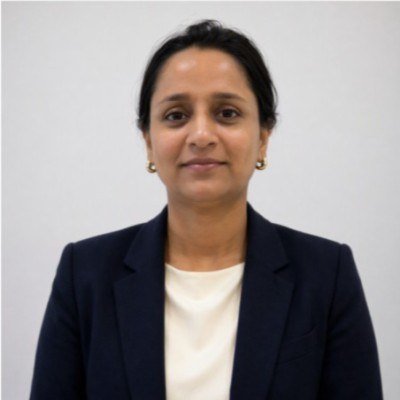
Neha Gupta is a CFA charterholder based in Winnipeg who has worked in financial markets since December 2005. She has published more than 2,600 investment articles and is Head of Operations and Finance at Whiteland Real Estate. She reviews WealthScale’s investing pages for accuracy.
- CFA charter, CFA Institute (awarded 2023)
- Post Graduate Diploma in Business Administration (Finance), 2008
- In financial markets since December 2005
- More than 2,600 published investment articles
General information only. Not financial, investment, tax or legal advice. WealthScale is independent and is published by WealthScale Media Inc., 55 Queen St E, Suite 1205, Toronto, ON M5C 1R6. CFA® and Chartered Financial Analyst® are registered trademarks owned by CFA Institute.