

Best TFSA Accounts in Canada for 2026
The best TFSA account Canada investors can open in 2026, on our published score, is Questrade at 4.3 / 5. It charges $0 commissions on Canadian and US stocks and ETFs, has no TFSA account fee, and lets a TFSA hold US dollars at no extra cost. Desjardins Online Brokerage also scores 4.3 / 5 and ranks second on the unrounded score, ahead of Interactive Brokers, Wealthsimple and National Bank Direct Brokerage at 4.2 / 5. For a hands-off TFSA, Wealthsimple Managed Investing leads the robo-advisors at 4.2 / 5. For cash, the highest verified TFSA savings rate is 2.85% at Saven Financial. The 2026 TFSA limit is $7,000.
 Written by Sharad Gondaliya, CPA CPAChartered Professional Accountant, CPA Ontario No. 61040184
 Financial reviewer: Neha Gupta, CFA CFA charterholderReview of this page scheduled
At a glance
Top pick. Questrade scores 4.3 / 5 among the 13 brokers that offer a TFSA. It charges $0 commission on Canadian and US stocks and ETFs, has no annual or inactivity fee, lets a TFSA hold US dollars at no extra cost, and offers fractional shares and a free DRIP.
Close behind. Desjardins Online Brokerage (Disnat) also scores 4.3 / 5 and ranks second on the unrounded score (4.275 against Questrade’s 4.325), with $0 online trades and no TFSA admin fee. Interactive Brokers Canada, Wealthsimple and National Bank Direct Brokerage follow at 4.2 / 5. Wealthsimple charges $10 a month plus tax for a USD account on its Core tier.
Best managed TFSA. Wealthsimple Managed Investing leads the four ranked robo-advisors at 4.2 / 5. Its Core fee is 0.5% plus fund costs of up to 0.15%, or $325 a year on $50,000. Questwealth Portfolios (4.1 / 5) is the cheapest at 0.37% all-in, or $185 a year on $50,000.
Best TFSA savings and GIC rates. Saven Financial pays 2.85% on TFSA savings, insured by DICO (Ontario credit union coverage). The highest CDIC-insured TFSA savings rate we verified is 1.50% at EQ Bank. Oaken Financial and Saven both pay 4.50% on a 5-year TFSA GIC.
USD TFSA. Questrade, Desjardins Online Brokerage, National Bank Direct Brokerage, moomoo and TD Easy Trade let a TFSA hold US dollars with no USD fee stated. Wealthsimple ($10 a month on Core) and Qtrade (US$15 a quarter) charge for it.
How we ranked and when. Brokers are ordered by our overall score: cost 35%, account types 15%, US investing 15%, cash and margin 10%, platform 15% and safety 10%. Cost counts commissions and account fees for two trading profiles. Every fee and rate was checked on October 22, 2026. No provider pays for a position.
Best TFSA Account Canada 2026: Ranking at a Glance
This table lists the 13 self-directed brokers that offer a TFSA, in score order. Scores are out of 5 and rounded to one decimal. Where two brokers share a rounded score, the order follows the unrounded score, then the name. Managed (robo) and savings options follow in their own sections because they are ranked or sorted on different measures.
| Rank | Broker | Score | Best for | Canadian stock trade | USD in a TFSA |
|---|---|---|---|---|---|
| 1 | Questrade | 4.3 / 5 | US dollars inside a TFSA at no extra cost | $0 | Yes, no extra cost |
| 2 | Desjardins Online Brokerage (Disnat) | 4.3 / 5 | No TFSA admin fee at a cooperative-owned broker | $0 online | Yes, no fee stated |
| 3 | Interactive Brokers Canada | 4.2 / 5 | Advanced platforms and low per-share pricing | CAD 0.01 a share, minimum CAD 1 | Not stated |
| 4 | Wealthsimple | 4.2 / 5 | One app with fractional shares from $1 | $0 | Yes, $10 a month on Core |
| 5 | National Bank Direct Brokerage | 4.2 / 5 | $0 trades backed by a big bank | $0 | Yes, no fee listed |
| 6 | Qtrade Direct Investing | 4.0 / 5 | $0 trades with a full menu of account types | $0 | US$15 a quarter (free with Investor Plus) |
| 7 | BMO InvestorLine | 3.8 / 5 | $0 trades and $0.90 options at a big bank | $0 | Not stated |
| 8 | moomoo Canada | 3.7 / 5 | A TFSA that holds CAD and USD in an active-trading app | CA$0.0149 a share, minimum CA$1.49 | Yes, no fee stated |
| 9 | Webull Canada | 3.2 / 5 | $0 commissions in a simple app | $0 | Not stated |
| 10 | CIBC Investor’s Edge | 2.8 / 5 | Investors under 25 with CIBC Smart Start | $6.95 ($0 under 25 with Smart Start) | Not stated |
| 11 | RBC Direct Investing | 2.7 / 5 | RBC clients using GoSmart’s 50 free trades a year | $9.95 | CAD and USD balances; cost not stated |
| 12 | Scotia iTRADE | 2.6 / 5 | Scotiabank package holders with free trades | $9.99 | Not stated |
| 13 | TD Direct Investing | 2.4 / 5 | TD clients using TD Easy Trade’s 100 free trades a year | $9.99 | TD Easy Trade: yes, no fee |
Want to see what these prices mean for the way you invest? The calculator below works out the yearly cost at every broker for the Canadian and US trades you make, adding up commissions, options fees and account fees.
Master Comparison Table: 13 TFSA Brokers
Use the search box and column sorting to filter the table. Yearly costs come from our two scoring profiles for a $20,000 TFSA: buy-and-hold (one Canadian trade a month) and active (two Canadian and one US trade a month). Each cost is commissions plus any account fee that applies at that balance. “Not published” means the figure was not on the provider’s own pages when we checked.
| Rank | Broker | Score | Canadian stocks and ETFs | US stocks and ETFs | USD in a TFSA | TFSA account fees | Transfer out | Transfer-in rebate | Fractional shares | DRIP | Yearly cost: buy-and-hold | Yearly cost: active | CIPF member |
|---|---|---|---|---|---|---|---|---|---|---|---|---|---|
| 1 | Questrade | 4.3 | $0 | $0 | Yes, no extra cost | None | $150 | Up to $150 per account | Yes | Yes, free | $0.00 | $0.00 | Yes |
| 2 | Desjardins Online Brokerage (Disnat) | 4.3 | $0 online | $0 online | Yes, no fee stated | No TFSA admin fee | $150 total; $25 per security partial | Not published | Not published | Not published | $0.00 | $0.00 | Yes |
| 3 | Interactive Brokers Canada | 4.2 | CAD 0.01 a share, minimum CAD 1 | USD 0.005 a share, minimum USD 1 | Not stated | No inactivity fee listed | Not published | Not published | Yes | Yes | $12.00 | $36.00 | Yes |
| 4 | Wealthsimple | 4.2 | $0 | $0 | $10 a month on Core; included on Premium and Generation | None | $0 | Up to $150 per account on $25,000 or more | Yes, from $1 | Yes | $0.00 | $0.00 | Yes |
| 5 | National Bank Direct Brokerage | 4.2 | $0 | $0 | Yes, no fee listed | $100 a year per account root unless waived | $150 | Depends on amount; threshold not published | Not published | Yes, full shares | $0.00 | $0.00 | Yes |
| 6 | Qtrade Direct Investing | 4.0 | $0 | $0 | US$15 a quarter; free with Investor Plus | No quarterly admin fee | $150 | Up to $150 per client on $15,000 or more | Not published | Yes | $0.00 | $0.00 | Yes |
| 7 | BMO InvestorLine | 3.8 | $0 | $0 | Not stated | $0 registered annual fee under $25,000 | Not published | Not published | Not published | Not published | $0.00 | $0.00 | Yes |
| 8 | moomoo Canada | 3.7 | CA$0.0149 a share, minimum CA$1.49 | US$0.0099 a share, minimum US$1.99 | Yes, no fee stated | None | $75 full; $50 partial, per currency | Promotion: typically $100 on $10,000 or more | No | No | $17.88 | $59.64 | Yes |
| 9 | Webull Canada | 3.2 | $0 | $0 | Not stated | $0.70 a month per account | $150 full; $50 partial | $150 transfer bonus; terms not shown | Not published | Not published | $8.40 | $8.40 | Yes |
| 10 | CIBC Investor’s Edge | 2.8 | $6.95 ($0 under 25 with Smart Start) | $6.95 | Not stated | $100 a year if total balance is $10,000 or less | Not published | Not published | Yes | Not published | $83.40 | $250.20 | Yes |
| 11 | RBC Direct Investing | 2.7 | $9.95 (GoSmart: 50 free a year) | $9.95 | CAD and USD balances; cost not stated | None | $150 | Up to $200 on $15,000 or more | Not published | Yes | $119.40 | $358.20 | Yes |
| 12 | Scotia iTRADE | 2.6 | $9.99 | $9.99, charged in USD | Not stated | Low-activity fee waived for registered accounts | $150 | Newcomers only: up to $150 | Not published | Not published | $119.88 | $359.64 | Yes |
| 13 | TD Direct Investing | 2.4 | $9.99 (TD Easy Trade: 100 free a year) | $9.99 | TD Easy Trade: yes, no fee | $25 a quarter if household assets are under $15,000, with waivers | $150 | Not published | Yes, $1.99 partial-share trades | Yes, full shares | $119.88 | $359.64 | Yes |
Yearly costs use each broker’s standard published commission on a $2,000 order of 40 shares, plus any account fee that applies to a $20,000 TFSA. Optional USD account fees are covered in section 4.
The 13 Self-Directed TFSA Brokers Ranked
Each card shows the score, the bar out of 5, why the broker sits where it does, what a TFSA costs there, and the TFSA details that matter: US-dollar support, account fees and transfers. Sub-scores are out of 5 and come from our published rubric. Only brokers with a full WealthScale review get a review button.
1. Questrade: best for US dollars inside a TFSA at no extra cost
4.3/ 5Why it ranks here. Questrade has the highest unrounded score on this list (4.325, shown as 4.3). It earns full marks on cost (5.0), account types (5.0) and US investing (5.0): Canadian and US trades are $0, and its registered accounts hold US dollars at no extra cost. Its weakest factor is cash and margin (0.5): its published cash interest formula works out to 0%, and its margin rate is about 8.70%. Safety scores 3.5 because its CIRO membership follows from its CIPF membership rather than a statement on its own pages.
Costs. Online trades of Canadian and US stocks and ETFs cost $0. ECN fees apply only to orders you route directly, and a small SEC fee applies on US sales. There are no annual account fees and no inactivity fee. US equity options are $0 per contract and Canadian options $0.99 per contract. Moving a TFSA out costs $150.
TFSA details. A Questrade TFSA is dual-currency, so it can hold both Canadian and US dollars. Fractional shares and a free DRIP are available. Questrade rebates the other institution’s transfer fee up to $150 per account. Its robo service, Questwealth Portfolios, ranks second among managed TFSA options below.
Pros
- USD in a TFSA at no extra cost
- $0 commissions on Canadian and US stocks and ETFs
- Transfer-fee rebate of up to $150 per account
Cons
- Negative cash in a TFSA costs CAD prime + 8.10%
- Cash earns effectively 0%
- $150 to transfer out
2. Desjardins Online Brokerage (Disnat): best for no TFSA admin fee at a cooperative-owned broker
4.3/ 5Why it ranks here. Disnat shares the 4.3 rounded score with Questrade and ranks second on the unrounded score (4.275 against 4.325). It earns full marks on cost (5.0) for $0 online trades, on US investing (5.0) for US-dollar TFSAs with no fee stated and $0 US trades, and on safety (5.0), because it belongs to a financial cooperative group. Its platform sub-score is 3.0 because its fractional-share and DRIP terms were not published.
Costs. Online trades of Canadian and US stocks and ETFs are $0 on Disnat Classic and Disnat Direct. Trades placed through a representative have a $45 minimum. Options cost $1.25 a contract with an $8.75 minimum.
TFSA details. Disnat charges no annual administration fee on a TFSA or an FHSA. Its $30-a-quarter inactivity fee is waived if you hold a registered account, so a TFSA alone avoids it. US-dollar plans are available for the TFSA. A full transfer out costs $150; a partial transfer costs $25 per security. Its fractional-share and DRIP terms were not published on the pages we checked.
Pros
- No admin fee on a TFSA
- US-dollar TFSA with no fee stated
- $0 online stock and ETF trades
Cons
- $45 minimum on trades placed through a representative
- $25 per security on partial transfers out
- Fractional shares and DRIP not published
3. Interactive Brokers Canada: best for advanced platforms and low per-share pricing
4.2/ 5Why it ranks here. Interactive Brokers has full marks for cash and margin (5.0) and platform features (5.0). Its cost sub-score is 4.7: in our TFSA cost profiles it costs $12 a year for a buy-and-hold investor and $36 for an active one, because each trade has a minimum commission of CAD 1 or US$1. Its US sub-score (2.25) is held back because its pages do not say whether a TFSA can hold US dollars and because US trades carry a US$1 minimum. Its unrounded score of 4.232 puts it just ahead of Wealthsimple (4.225).
Costs. Fixed pricing is CAD 0.01 a share on Canadian stocks and ETFs (minimum CAD 1, maximum 0.5% of the trade) and USD 0.005 a share on US trades (minimum USD 1, maximum 1%). No inactivity fee is listed. You get two free withdrawals a month; after that each costs CAD 2.00 by EFT or CAD 12.00 by wire.
TFSA details. Interactive Brokers offers a TFSA, RRSP, spousal RRSP, FHSA and RRIF (launched February 3, 2026). It offers fractional shares on TSX, Cboe Canada and US stocks, and dividend reinvestment. Its fee for an outgoing ATON transfer to another Canadian broker and any transfer-in rebate are not published. Platforms are Trader Workstation, IBKR Desktop, IBKR Mobile and the web Client Portal.
Pros
- Full marks for cash and margin and for platform features
- Four platforms, including IBKR Mobile
- Fractional shares and DRIP
Cons
- CAD 1 minimum on every Canadian trade
- USD holding in a TFSA not stated
- Transfer-out fee for Canadian transfers not published
4. Wealthsimple: best for one app with fractional shares from $1
4.2/ 5Why it ranks here. Wealthsimple scores 5.0 on cost and 5.0 on account types. It ranks fourth, just behind Interactive Brokers on the unrounded score (4.225 against 4.232), because a USD account costs $10 a month plus tax on its Core tier (US sub-score 3.5, against Questrade’s 5.0), its platform sub-score is 4.0 and its cash and margin sub-score is 2.0.
Costs. Commissions are $0 on listed Canadian and US stocks and ETFs; pass-through exchange and regulatory fees may apply to some US orders. Opening, closing and transferring out are all $0.
TFSA details. A Wealthsimple TFSA comes in self-directed, managed, Automated Investing and savings versions, and it can buy from more than 14,000 stocks and ETFs. Crypto cannot be held in a TFSA. Options are allowed in a TFSA for long calls, long puts, cash-secured puts and covered calls. A USD account can be added to a TFSA, free on Premium ($100,000 or more) and Generation ($500,000 or more). Wealthsimple reimburses the other firm’s transfer-out fee, up to $150 per account, on transfers of $25,000 or more and runs a 1% match on qualifying transfers of $25,000 or more made within 30 days of registering.
Pros
- Fractional shares from $1 and recurring buys
- $0 to open, keep, close or transfer out
- Self-directed, managed and savings TFSAs in one app
Cons
- Crypto cannot be held in a TFSA
- USD account costs $10 a month on Core
- Trading-cash interest rate not published
5. National Bank Direct Brokerage: best for $0 trades backed by a big bank
4.2/ 5Why it ranks here. National Bank Direct Brokerage (NBDB) pairs $0 commissions (cost 5.0) with full marks on US investing (5.0), for US-dollar registered accounts with no USD fee listed and $0 US trades, and a bank-owned safety score of 4.5. It ranks fifth on the unrounded score (4.175) because its cash and margin sub-score is 1.0 (0% on cash and a 6.25% CAD margin rate), its platform sub-score is 3.0, and its CIRO membership is not stated on its own pages.
Costs. NBDB charges $0 on all online stock and ETF trades. Options cost $1.25 a contract with a $6.25 minimum. Transfers out cost $150 per account.
TFSA details. A TFSA can hold US dollars, with no USD account fee listed. The admin fee is $100 a year per account root, waived if on May 31 you have $20,000 or more in eligible assets, are 30 or younger, hold only an InvestCube account, or are enrolled in its professionals or newcomers offer. NBDB reimburses incoming transfer fees “depending on the amount invested” but does not publish the threshold. DRIP is available on request for more than 2,000 eligible securities, in full shares.
Pros
- $0 stock and ETF trades online
- US-dollar TFSA with no USD fee listed
- Admin fee waived at 30 or younger
Cons
- $100 yearly fee on small accounts over 30
- 21.00% on registered debit balances
- 0% interest on cash
6. Qtrade Direct Investing: best for $0 trades with a full menu of account types
4.0/ 5Why it ranks here. Qtrade scores 5.0 on cost and 5.0 on account types. Its US sub-score is 3.5 because a US-dollar TFSA costs US$15 a quarter unless you reach Investor Plus, and its platform (3.0) and cash and margin (1.5) sub-scores trail the leaders.
Costs. Online equity and ETF trades are $0, with an SEC-based fee on US sales. Options are $0.75 a contract. Qtrade says it has eliminated its quarterly administration fee for all clients, though an older Qtrade offers page still mentions $25 a quarter. Paper statements cost $6 a quarter, and closing an account in its first year costs $100.
TFSA details. A US-dollar TFSA costs US$15 a quarter per account, or nothing with Investor Plus status. Transfers out cost $150. Under its Fall Offer 2026 (code OFFER2026, open an account by January 5, 2027), Qtrade reimburses up to $150 per client on transfers of $15,000 or more and pays cash rewards on net new deposits. Self-serve DRIP enrolment and a Portfolio Creator tool are available.
Pros
- $0 online stock and ETF trades
- Options at $0.75 a contract
- Transfer-fee reimbursement under the current offer
Cons
- Paper statements cost $6 a quarter
- US$15 a quarter for a USD TFSA without Investor Plus
- $100 to close an account in year one
7. BMO InvestorLine: best for $0 trades and $0.90 options at a big bank
3.8/ 5Why it ranks here. BMO InvestorLine has a cost score of 5.0 and a safety score of 5.0. It ranks seventh because several details that feed the score are not published: whether a TFSA can hold US dollars (US sub-score 2.75), its cash and margin rates (0.5), and its fractional-share and DRIP terms (platform 3.0).
Costs. BMO offers unlimited $0 commission trades on stocks and ETFs listed on Canadian and US exchanges, and $0.90 a contract on options with no base fee listed.
TFSA details. BMO lists a $0 annual fee on registered accounts with a balance under $25,000 and no account minimum fees on non-registered accounts. Its platforms are BMO InvestorLine self-directed, the BMO Invest app and BMO Active Trader. Because its transfer-out fee and US-dollar TFSA support are not published, ask BMO about both before you move a TFSA there.
Pros
- $0 commissions on Canadian and US stocks and ETFs
- $0.90 per options contract
- $0 registered account fee under $25,000
Cons
- Cash and margin rates not published
- USD TFSA support not stated
- Transfer-out fee not published
8. moomoo Canada: best for a TFSA that holds CAD and USD in an active-trading app
3.7/ 5Why it ranks here. moomoo’s US sub-score is 4.5, because its TFSA holds both CAD and USD with no fee stated and its US commission minimum is US$1.99. Its account sub-score is 2.0 because it offers only cash, margin, TFSA, RRSP and spousal RRSP accounts, and it lacks fractional shares and DRIP, which holds its platform score to 3.0. Its cost sub-score is 4.52: per-trade minimums cost $17.88 a year for buy-and-hold and $59.64 for an active investor.
Costs. Canadian trades cost CA$0.0049 a share plus a CA$0.01 platform fee, with a CA$1.49 minimum. US trades cost US$0.0049 a share plus a US$0.005 platform fee, with a US$1.99 minimum. There are no maintenance or inactivity fees. A full transfer out costs $75 and a partial $50, charged per currency, plus sales tax.
TFSA details. moomoo says a TFSA can hold both CAD and USD, with no fee stated. US options cost US$0.65 a contract (minimum US$1). A promotion article says it typically reimburses $100 of transfer fees on transfers of $10,000 or more, but this is not in formal terms.
Pros
- TFSA holds CAD and USD, no fee stated
- No maintenance or inactivity fee
- Low per-share pricing on large share counts
Cons
- CA$1.49 minimum on every Canadian trade
- No fractional shares or DRIP
- No FHSA, RESP or RRIF
9. Webull Canada: best for $0 commissions in a simple app
3.2/ 5Why it ranks here. Webull’s cost sub-score is 4.89: trades are $0, but its $0.70 monthly account fee costs $8.40 a year at every balance. Its account sub-score is 1.5 because it lists only cash, margin, TFSA and RRSP accounts, and its US sub-score (2.75) reflects $0 US trades but no statement on US dollars in a TFSA. Its cash and margin sub-score is 0.5.
Costs. Canadian and US stock and ETF trades are $0 commission; regulatory and exchange fees, and a custody fee on some US depositary receipts, pass through. Webull charges an administrative fee of $0.70 a month per account ($8.40 a year). Transfers out cost $150 in full or $50 in part, charged by CI Investment Services, which administers its registered plans.
TFSA details. A TFSA is eligible for Webull’s current cash offer: $50 back on a first deposit or transfer of $500 or more, plus $200 once net qualifying funding reaches $20,000 and is held for 90 days. It also advertises a $150 transfer bonus, but the terms were not shown. US options cost US$0.99 a contract.
Pros
- $0 commissions on Canadian and US trades
- Desktop and mobile platforms
- TFSA eligible for its funding offer
Cons
- $0.70 a month per account
- US dollars in a TFSA not stated
- No FHSA, RESP or RRIF
10. CIBC Investor’s Edge: best for investors under 25 with CIBC Smart Start
2.8/ 5Why it ranks here. CIBC’s cost sub-score is 2.92 because its standard commission is $6.95 a trade: $83.40 a year for buy-and-hold and $250.20 for an active investor in our profiles. It scores 4.5 on accounts and 4.5 on safety, but 0.75 on US investing, since US-dollar TFSAs are not stated and US trades cost $6.95.
Costs. An online trade costs $6.95 (fewer than 150 trades a quarter) or $4.95 for active traders. Students with Smart for Students pay $5.95, and investors aged 18 to 24 with CIBC Smart Start chequing pay $0 until the end of the year they turn 24. More than 180 ETFs trade at $0. Cash earns 0.00%.
TFSA details. CIBC charges $100 a year when your total market balance is $10,000 or less, split across your accounts (FHSAs are excluded) and charged each September. New clients are exempt in their first year, and young and student investors with qualifying chequing are exempt. Fractional shares are advertised. Transfer-out fees and transfer-in rebates were not listed.
Pros
- $0 trades for 18 to 24-year-olds with Smart Start
- More than 180 commission-free ETFs
- Fractional shares
Cons
- $6.95 standard commission
- $100 a year at $10,000 or less
- USD TFSA support not stated
11. RBC Direct Investing: best for RBC clients using GoSmart’s 50 free trades a year
2.7/ 5Why it ranks here. RBC scores 5.0 on account types and 5.0 on safety, but its cost sub-score is 2.02 because its main platform charges $9.95 a trade. Its US sub-score is 0.75: the cost of a US-dollar registered account is not stated and US trades cost $9.95. Its cash interest and margin rates are not published.
Costs. A trade costs $9.95, or $6.95 at 150 or more trades a quarter. More than 50 select ETFs trade at $0 in all accounts. The GoSmart app gives 50 free stock and ETF trades a year across GoSmart TFSA, FHSA and RRSP accounts. RBC charges no quarterly or annual maintenance fee and has no minimum balance.
TFSA details. RBC accounts can hold CAD and USD balances, but the cost of a US-dollar registered account is not stated. A transfer out costs $150, and RBC reimburses up to $200 of transfer fees on transfers in of $15,000 or more. RBC InvestEase, its robo service, is ranked below.
Pros
- No maintenance fee at any balance
- Up to $200 of transfer fees reimbursed
- 50 free trades a year through GoSmart
Cons
- $9.95 a trade on the full platform
- Cash and margin rates not published
- USD registered pricing not stated
12. Scotia iTRADE: best for Scotiabank package holders with free trades
2.6/ 5Why it ranks here. Scotia iTRADE scores 5.0 on safety and 3.0 on US investing, for US-dollar RRSPs and RRIFs with no USD fee listed, but 2.0 on cost because it charges $9.99 a trade, and 2.0 on platform features: fractional shares and DRIP were not published, and its three platforms are not named on its homepage.
Costs. Trades cost $9.99, or $4.99 after 150 or more commission trades in the prior quarter. More than 200 ETFs trade commission-free. From September 1, 2026, a Scotiabank Ultimate Package includes up to 100 $0 trades a year and a Preferred Package 50. US trades are charged in US dollars.
TFSA details. The $25-a-quarter low-activity fee is waived for registered accounts, so a TFSA does not pay it. Scotia offers US-dollar RRSPs and RRIFs, but a US-dollar TFSA is not stated. Transfers out cost $150. Newcomers who join through StartRight get 10 free trades and a transfer-fee credit of up to $150.
Pros
- Up to 100 free trades a year with an Ultimate Package
- More than 200 commission-free ETFs
- No low-activity fee on a TFSA
Cons
- $9.99 a trade without a package
- Fractional shares and DRIP not published
- USD TFSA not stated
13. TD Direct Investing: best for TD clients using TD Easy Trade’s 100 free trades a year
2.4/ 5Why it ranks here. TD has a full platform score (5.0), but its cost sub-score is 2.0, level with Scotia iTRADE and just below RBC (2.02), and only five account types are listed for TD Direct Investing (accounts sub-score 2.0). Its US sub-score is 0.75, and its cash and margin rates are not published.
Costs. TD Direct Investing charges $9.99 a trade, or $7.00 at 150 or more trades a quarter. Select ETFs are $0 on digital trades, and partial-share trades cost $1.99. TD Easy Trade gives each client 100 free stock and ETF trades a calendar year, then $9.99.
TFSA details. TD Direct Investing charges $25 a quarter if household assets are under $15,000, waived with $100 or more a month in pre-authorized contributions, three or more commission trades in the prior quarter, your first six months, an RDSP, or an FHSA-only relationship. A TD Easy Trade TFSA has a US-dollar side with no fee. Transfers out cost $150 on both.
Pros
- 100 free trades a year on TD Easy Trade
- USD side in a TD Easy Trade TFSA at no fee
- Partial-share trades at $1.99
Cons
- $9.99 a trade on TD Direct Investing
- $25 a quarter on small households without a waiver
- Cash and margin rates not published
Managed TFSA Options: Robo-Advisors Ranked
A robo-advisor builds a portfolio of ETFs for you, rebalances it and reinvests dividends for a yearly fee. We rank only robo-advisors that publish both their management fee and their fund costs in text we can verify. Four qualify, and all four offer a TFSA. Robo scores weigh fees 45%, account types 15%, portfolio choice 15%, minimum investment 10% and access to advice 15%.
| Rank | Robo-advisor | Score | Management fee | Fund costs (MER) | All-in cost on $50,000 | Minimum |
|---|---|---|---|---|---|---|
| 1 | Wealthsimple Managed Investing | 4.2 / 5 | 0.5% Core; 0.4% Premium; 0.4% falling to 0.2% on Generation | Up to 0.15% (Classic portfolios) | 0.65% ($325) | None stated |
| 2 | Questwealth Portfolios | 4.1 / 5 | 0.25%; 0.20% from $100,000 | Up to 0.12% (standard portfolios) | 0.37% ($185) | Lowest fee tier starts at $250 |
| 3 | CI Direct Investing | 3.7 / 5 | 0.60% on the first $150,000; 0.40% on the next $350,000; 0.35% above $500,000 | Up to 0.23% (ETF portfolios) | 0.83% ($415) | $100 |
| 4 | RBC InvestEase | 3.4 / 5 | 0.50% flat | Up to 0.20% (Core portfolios) | 0.70% ($350) | Invested once the balance reaches $100 |
| Robo-advisor | $7,000 | $20,000 | $50,000 | $109,000 |
|---|---|---|---|---|
| Questwealth Portfolios | $25.90 | $74.00 | $185.00 | $348.80 |
| Wealthsimple Managed Investing | $45.50 | $130.00 | $325.00 | $599.50 |
| RBC InvestEase | $49.00 | $140.00 | $350.00 | $763.00 |
| CI Direct Investing | $58.10 | $166.00 | $415.00 | $904.70 |
Wealthsimple Managed Investing (4.2 / 5). It ranks first on portfolio choice (Classic, Summit, Income, a Private Market Fund and Automated Investing), a $1 starting point and access to advisors. Tax-loss harvesting is for Premium and Generation clients only, and it does not help inside a TFSA anyway, since TFSA gains are not taxed. The $109,000 figure above uses the 0.4% Premium fee, which applies once your total Wealthsimple assets reach $100,000. Read our Wealthsimple Managed Investing review.
Questwealth Portfolios (4.1 / 5). It is the cheapest ranked robo at every balance: 0.25% plus fund costs of up to 0.12% on standard portfolios (0.20% to 0.24% on its socially responsible portfolios). It loses points on advice, because client-facing advice is not described.
CI Direct Investing (3.7 / 5) and RBC InvestEase (3.4 / 5). CI Direct Investing scores full marks on advice, with access to planners, and covers the other institution’s transfer fee (up to $150) on transfers of $25,000 or more. Its fee is blended across all your CI accounts. RBC InvestEase offers six portfolios in Core and Responsible versions with Portfolio Advisors by phone or email, but only four account types (TFSA, FHSA, RRSP and non-registered).
Not ranked. BMO SmartFolio publishes an advisory fee of 0.4% to 0.7% without breakpoints or fund costs. Justwealth publishes its fee tiers only as an image; its minimum fee is $4.99 a month and its minimum account is $5,000 except for RESPs and FHSAs. We could not confirm that TD Automated Investing, Nest Wealth or Qtrade Guided Portfolios accept new clients. See the full best robo-advisors in Canada ranking for every account type.
The robo fee calculator below shows the yearly fee at each ranked robo-advisor for any balance you enter.
TFSA Savings Accounts and GIC Options
A TFSA can hold cash and GICs as well as investments. Interest earned inside a TFSA is not taxed, so a TFSA savings account or GIC suits money you may need within a few years. These lists are sorted by rate, not by score, and include only registered rates we verified on October 22, 2026. Rates can change at any time.
| Rank by rate | Provider and account | TFSA rate | Deposit insurance | Rate date shown |
|---|---|---|---|---|
| 1 | Saven Financial High Interest Savings | 2.85% | DICO (Ontario credit unions), up to $250,000 per Saven’s page; not offered in Quebec | No date on page |
| 2 | Hubert Financial High Interest Savings | 2.50% | Deposit Guarantee Corporation of Manitoba | No date on page |
| 3 | Outlook Financial High Interest Savings | 1.95% | Deposit Guarantee Corporation of Manitoba, 100% of deposits | Updated October 2, 2026 |
| 4 | EQ Bank TFSA Cash Savings | 1.50% | CDIC (Equitable Bank) | Effective May 15, 2026 |
| 5 | Peoples Trust Tax-Free Savings | 1.20% | CDIC | No date on page |
| 6 | Alterna Bank TFSA eSavings | 1.05% | CDIC (CS Alterna Bank) | No date on page |
| 7 | Manulife Bank Tax-Free Advantage Account | 1.05% | CDIC (Manulife Bank of Canada) | No date on page |
| 8 | TD High Interest TFSA Savings | 0.300% | CDIC (Toronto-Dominion Bank) | Shown as today’s rate |
| Provider | 1-year | 2-year | 3-year | 4-year | 5-year | Minimum | Deposit insurance | Rate date shown |
|---|---|---|---|---|---|---|---|---|
| Saven Financial | 3.80% | 4.25% | 4.30% | 4.35% | 4.50% | $1,000; membership required | DICO | No date on page |
| Oaken Financial | 3.75% | 4.20% | 4.30% | 4.35% | 4.50% | $1,000 | CDIC (Home Bank or Home Trust) | In effect since October 16, 2026 |
| Hubert Financial | 3.85% | 3.95% | 4.05% | 4.15% | 4.25% | Not published | Deposit Guarantee Corporation of Manitoba | No date on page |
| Outlook Financial | 3.85% | 3.90% | 4.05% | 4.10% | 4.25% | $1,000 | Deposit Guarantee Corporation of Manitoba | Updated October 2, 2026 |
| Manulife Bank (annual interest) | 3.35% | 3.70% | 3.80% | 3.90% | 4.05% | $2,500 | CDIC | No date on page |
| Peoples Trust | 3.70% | 3.00% | 3.25% | 3.25% | 3.45% | Not published | CDIC | No date on page |
How the lists are built. Saven, Hubert, Outlook, Peoples Trust and Alterna say their TFSA savings rate is the same as their everyday rate. EQ Bank, Manulife and TD publish a separate TFSA savings rate, and at Manulife and TD it is lower than the everyday account (1.05% against 1.50%, and 0.300% against 0.450% on $10,000 or more). Every GIC provider listed says its TFSA rates match its regular GIC rates. Ties are ordered by the next rate (the 1-year rate for GICs, then the 2-year), then by name.
What we left out. EQ Bank publishes three different sets of GIC rates on three of its pages, so we do not list its TFSA GICs until it confirms one. Tangerine’s registered savings promotion appeared only in page metadata, with its terms shown as placeholders. Wealthsimple offers a savings version of its TFSA, but its pages give conflicting rates, so we do not show one. Oaken’s TFSA savings rate was not shown.
Locked money and room. A non-redeemable GIC cannot be cashed before maturity, so you cannot withdraw that money from your TFSA until it matures. When you do withdraw, the amount comes back as TFSA room only on January 1 of the next year. Compare everyday rates on our best high-interest savings accounts page, all terms on our best GIC rates page, and the trade-offs in GIC vs high-interest savings.
1. How We Ranked the Best TFSA Accounts
One score for every broker. Each broker that offers a TFSA gets the same overall score it carries on our best online brokers ranking and on every list in our compare online brokers section. The score is a weighted average of six factors, each marked out of 5 from the broker’s published pricing and account pages. We do not adjust it per page, so a broker cannot rank higher on one list because it pays us more.
| Factor | Weight | How it is measured |
|---|---|---|
| Cost | 35% | Average yearly commissions and account fees of a buy-and-hold and an active profile for a $20,000 TFSA; score = 5 minus the average cost divided by $80 |
| Account types | 15% | Half a point for each of 10 account types, including TFSA, RRSP, spousal RRSP, FHSA, RESP and RRIF |
| US investing | 15% | USD in registered accounts and the US commission |
| Cash and margin | 10% | CAD margin rate under $100,000 and interest on uninvested cash |
| Platform | 15% | One point each for fractional shares, DRIP, options, an advanced platform and a mobile app |
| Safety | 10% | CIRO and CIPF membership, plus a point for bank or cooperative ownership |
Why the cost test uses a TFSA. The two cost profiles assume a $20,000 TFSA, so account-size fees that disappear at $20,000 do not count against a broker, and one that charges at every balance (Webull, $8.40 a year) does. Trades are $2,000 orders of 40 shares, and each profile counts commissions and account fees only.
Ties and updates. Scores show one decimal. Ties are broken by the unrounded score, then by name, which is why Questrade (4.325) sits above Desjardins (4.275), and Interactive Brokers (4.232) above Wealthsimple (4.225) and National Bank Direct Brokerage (4.175). We re-check prices when a provider changes them and update the page. The full rubric is on our broker rating methodology page, our rules on accuracy are in our editorial standards, and how the site is paid for is on how WealthScale makes money.
2. TFSA Costs for Four Investor Profiles
Account-size fees and commissions hit different investors in different ways. This table works out the yearly cost of a TFSA at each broker for four hypothetical investors, using each broker’s published prices on October 22, 2026.
| Broker | Starter: $7,000, 12 Canadian trades | Buy-and-hold: $20,000, 12 Canadian trades | Active: $20,000, 24 Canadian and 12 US trades | US-focused: $20,000, 12 US trades |
|---|---|---|---|---|
| Questrade | $0.00 | $0.00 | $0.00 | $0.00 |
| Desjardins Online Brokerage (Disnat) | $0.00 | $0.00 | $0.00 | $0.00 |
| Interactive Brokers Canada | $12.00 | $12.00 | $36.00 | $12.00 |
| Wealthsimple | $0.00 | $0.00 | $0.00 | $0.00 |
| National Bank Direct Brokerage | $100.00 | $0.00 | $0.00 | $0.00 |
| Qtrade Direct Investing | $0.00 | $0.00 | $0.00 | $0.00 |
| BMO InvestorLine | $0.00 | $0.00 | $0.00 | $0.00 |
| moomoo Canada | $17.88 | $17.88 | $59.64 | $23.88 |
| Webull Canada | $8.40 | $8.40 | $8.40 | $8.40 |
| CIBC Investor’s Edge | $183.40 | $83.40 | $250.20 | $83.40 |
| RBC Direct Investing | $119.40 | $119.40 | $358.20 | $119.40 |
| Scotia iTRADE | $119.88 | $119.88 | $359.64 | $119.88 |
| TD Direct Investing | $119.88 | $119.88 | $359.64 | $119.88 |
The active profile is two Canadian and one US trade a month. Each cost is commissions plus any account fee that applies at that balance.
Assumptions. Every trade is a $2,000 order of 40 shares. The investor is over 30, has been a client for more than a year, holds no other account or banking package at the firm and makes no pre-authorized contributions. Optional USD account fees (Wealthsimple’s $10 a month plus tax on Core and Qtrade’s US$15 a quarter) are not included; section 4 covers them.
The starter TFSA. At $7,000, small-account fees matter more than commissions. CIBC costs $183.40: its $100 fee for balances of $10,000 or less plus 12 trades at $6.95 ($83.40). National Bank charges its $100 account fee unless you are 30 or younger. TD’s $25-a-quarter fee does not apply here, because one trade a month means three commission trades each quarter.
The US-focused TFSA. Commissions decide this profile. Six brokers cost $0.00 for 12 US trades a year: Questrade, Desjardins, Wealthsimple, National Bank, Qtrade and BMO. Webull also charges $0 commission but adds its $8.40 account fee. Interactive Brokers costs $12.00 (12 x US$1) and moomoo $23.88 (12 x US$1.99), while CIBC costs $83.40 (12 x $6.95), RBC $119.40 (12 x $9.95), and Scotia iTRADE and TD $119.88 each (12 x $9.99). Section 4 shows which TFSAs can hold US dollars and what that costs.
What the table leaves out. It does not count fund fees (MERs) on ETFs you buy, transfer fees, or the value of interest on cash. Interactive Brokers pays interest on CAD cash above CAD 13,000 (1.675%, with the full rate only above USD 100,000 of net assets), while Questrade, National Bank Direct Brokerage, CIBC and Qtrade pay 0%. Contributions left as cash there earn nothing, even though they have used your room.
3. Self-Directed vs Managed vs Savings TFSA
A TFSA is a tax shelter, not an investment. The same $7,000 of 2026 room can hold shares you pick, a portfolio a robo-advisor runs, or a savings account or GIC. Choosing the type comes before choosing the provider.
| Feature | Self-directed TFSA | Managed (robo) TFSA | Savings or GIC TFSA |
|---|---|---|---|
| Who chooses the investments | You | The robo-advisor, based on your risk profile | You choose a rate and a term |
| Yearly cost on $20,000 in our data | From $0.00 (buy-and-hold profile) | From $74.00 (Questwealth) | $0 monthly fee at EQ Bank, Alterna and Manulife; others do not list fees |
| Where the return comes from | Price changes and dividends | Price changes and dividends | Interest |
| Market risk | Yes | Yes | No |
| Protection if the firm fails | CIPF, up to $1,000,000 for general accounts | Depends on the dealer holding the account | CDIC, $100,000 per category, or a provincial plan |
| Getting your money out | Sell, wait for settlement, withdraw | Request a withdrawal; the robo sells for you | Savings any time; a non-redeemable GIC at maturity |
| Rebalancing | You do it | Automatic | Not needed |
| Suits | Long-term investors who will pick and rebalance their own ETFs | Long-term investors who want it done for them | Money needed within a few years |
Which is the best TFSA investment platform for you?
Self-directed costs least if you stay disciplined. At seven of the 13 brokers any stock or ETF trade costs $0 in commissions, and CIBC, RBC, Scotia iTRADE and TD each offer a list of $0 ETFs. You still pay the fund’s own management expense ratio, which is built into the price of the ETF and is the same wherever you buy it. You also carry the work: choosing an asset mix, rebalancing and not selling in a panic.
A robo-advisor costs a fee for the discipline. On $50,000 the gap between Questwealth ($185) and CI Direct Investing ($415) is $230 a year. In exchange, the robo picks the mix, rebalances and reinvests. That can be worth it if you know you would otherwise leave cash idle or trade on headlines.
You can mix all three. You may hold more than one TFSA, at more than one provider, as long as your total contributions stay inside one combined room limit. Wealthsimple offers self-directed, managed and savings TFSAs in one app; Questrade pairs its self-directed TFSA with Questwealth Portfolios; RBC pairs Direct Investing with RBC InvestEase. Read our best investing apps ranking if the app matters most to you, or our Wealthsimple vs Questrade comparison for two $0-commission brokers side by side.
4. USD TFSA: Holding US Dollars and US Stocks
Which TFSAs hold US dollars. Some brokers let a TFSA hold a US-dollar balance next to its Canadian dollars. Questrade, Desjardins Online Brokerage, National Bank Direct Brokerage, moomoo and TD Easy Trade state it with no USD fee, while Wealthsimple and Qtrade charge an account fee for it. The table shows what each broker states, along with its commission on a US stock trade.
| Broker | USD in a TFSA | Cost of the USD side | US stock trade |
|---|---|---|---|
| Questrade | Yes | No extra cost | $0 |
| Desjardins Online Brokerage (Disnat) | Yes | No fee stated | $0 online |
| National Bank Direct Brokerage | Yes | No fee listed | $0 |
| moomoo Canada | Yes | No fee stated | US$0.0099 a share, minimum US$1.99 |
| TD Easy Trade | Yes | No fee | 100 free stock and ETF trades a year, then $9.99 |
| Wealthsimple | Yes | $10 a month plus tax on Core; included on Premium and Generation | $0 |
| Qtrade Direct Investing | Yes | US$15 a quarter; free with Investor Plus | $0 |
| RBC Direct Investing | CAD and USD balances | Not stated | $9.95 |
| Interactive Brokers, BMO, Webull, CIBC, Scotia iTRADE | Not stated | Not stated | See the master table |
The yearly cost of the USD side. Wealthsimple’s Core USD account costs $120 a year plus tax ($10 x 12). Qtrade’s costs US$60 a year (US$15 x 4) unless you reach Investor Plus. To add a USD account fee to your commissions and fund costs for a full yearly total, use our investment fee calculator.
US dividends lose 15% in a TFSA. The Canada-US tax treaty caps US tax on dividends at 15% when your broker has a Form W-8BEN on file (30% without it). The treaty’s retirement-account exemption does not cover a TFSA, so the 15% is withheld and cannot be claimed back as a foreign tax credit. This example is hypothetical: $1,000 of US dividends paid into a TFSA loses $150 ($1,000 x 15%). In an RRSP the same dividends from directly held US-listed shares lose $0, so US dividend payers lose less in an RRSP account.
US commissions and the US-stock ranking. Questrade, Desjardins, Wealthsimple, National Bank, Qtrade, BMO and Webull charge $0 on US stock and ETF trades. Interactive Brokers charges USD 0.005 a share with a US$1 minimum and moomoo US$0.0099 a share with a US$1.99 minimum, while CIBC charges $6.95, RBC $9.95, and Scotia iTRADE and TD $9.99 a trade. Our US stocks in a TFSA page covers withholding in detail. On our best TFSA accounts for US stocks list, which weights US investing at 40%, Desjardins Online Brokerage and Questrade lead at 4.6 / 5.
Holding dividend payers in your TFSA? Compare the brokers that reinvest dividends automatically before you pick where to open it.
5. TFSA Account Fees: Admin, Inactivity and Transfer Fees
Commissions are only part of the cost. Several brokers charge a yearly or quarterly fee on small accounts, and almost all charge to move a TFSA out. These fees are easy to miss because many are waived above a balance, under an age, or when you hold a registered account. The table shows how each one applies to a TFSA.
| Broker | Fee that can apply to a TFSA | How it is waived | Transfer out |
|---|---|---|---|
| Questrade | None | Not applicable | $150 |
| Desjardins Online Brokerage (Disnat) | $30 a quarter inactivity fee | Holding a registered account, 6 trades in 12 months, $15,000 portfolio, or age 18 to 30 | $150 total; $25 per security partial |
| Interactive Brokers Canada | None listed; withdrawals after two a month cost CAD 2 by EFT | Not applicable | Not published for Canadian transfers |
| Wealthsimple | None (USD account $10 a month on Core is optional) | USD account included from $100,000 | $0 |
| National Bank Direct Brokerage | $100 a year per account root | $20,000 in eligible assets on May 31, age 30 or under, InvestCube only, or a newcomers or professionals offer | $150 |
| Qtrade Direct Investing | No quarterly admin fee; paper statements $6 a quarter | Choose e-statements | $150 |
| BMO InvestorLine | $0 registered annual fee under $25,000 | Not applicable | Not published |
| moomoo Canada | None | Not applicable | $75 full; $50 partial, per currency |
| Webull Canada | $0.70 a month per account | No waiver stated | $150 full; $50 partial |
| CIBC Investor’s Edge | $100 a year at a total balance of $10,000 or less | Over $10,000, first year as a client, or young and student investors with qualifying chequing | Not published |
| RBC Direct Investing | None | Not applicable | $150 |
| Scotia iTRADE | $25 a quarter low-activity fee | Registered accounts are exempt | $150 |
| TD Direct Investing | $25 a quarter if household assets are under $15,000 | $100 a month of pre-authorized contributions, 3 commission trades in the prior quarter, first 6 months, or $15,000 in household assets | $150 |
Transfer-out fees are the big one. Ten of the 13 brokers publish a transfer-out fee, and eight of them charge $150. Wealthsimple charges $0 and moomoo $75. Many receiving brokers will cover the fee: Questrade up to $150 per account, RBC up to $200 on $15,000 or more, Wealthsimple up to $150 per account on $25,000 or more, and Qtrade up to $150 per client on $15,000 or more under its Fall Offer 2026.
Other fees worth knowing. Qtrade charges $100 to close an account in its first year. Wealthsimple charges $20 for a paper statement and $45 for a trade placed by phone, which is waived for its Active Traders. Disnat’s representative-placed trades carry a $45 minimum.
Government charges. The government charges nothing to open or hold a TFSA. The only government charges are penalty taxes: 1% a month on an over-contribution and 50% of the value of a non-qualified or prohibited investment, both covered in sections 6 and 7.
6. TFSA Rules Recap for 2026: Limit, Room and Withdrawals
The 2026 limit. The TFSA dollar limit for 2026 is $7,000, the same as in 2024 and 2025. The limit is indexed to inflation and rounded to the nearest $500. Canada Revenue Agency has not yet published the 2027 limit, so treat any figure you see for 2027 as an estimate.
Total room since 2009. If you were 18 or older and resident in Canada every year since 2009 and never contributed, your total room in 2026 is $109,000, the sum of every annual limit below. Room starts in the year you turn 18. In provinces where the age of majority is 19 (British Columbia, New Brunswick, Newfoundland and Labrador, Nova Scotia, the Northwest Territories, Nunavut and Yukon), you open the account at 19, but the room from the year you turned 18 carries over.
| Year | Limit | Year | Limit | Year | Limit |
|---|---|---|---|---|---|
| 2009 | $5,000 | 2015 | $10,000 | 2021 | $6,000 |
| 2010 | $5,000 | 2016 | $5,500 | 2022 | $6,000 |
| 2011 | $5,000 | 2017 | $5,500 | 2023 | $6,500 |
| 2012 | $5,000 | 2018 | $5,500 | 2024 | $7,000 |
| 2013 | $5,500 | 2019 | $6,000 | 2025 | $7,000 |
| 2014 | $5,500 | 2020 | $6,000 | 2026 | $7,000 |
How room is worked out. Your room for a year is the current year’s limit, plus unused room from earlier years, plus anything you withdrew in the previous year, minus what you contribute this year. Withdrawals come back as room on January 1 of the following year, not right away. Newcomers start building room on the day they become resident, with the full limit for that year and no room for earlier years.
Over-contributions. Any excess is taxed at 1% a month on the highest excess in each month it stays in the account. Unlike the RRSP, there is no $2,000 cushion. Remove the excess as soon as you notice it, then file the TFSA Return and pay by June 30 of the following year. Our TFSA contribution limit page shows the year-by-year detail, and our TFSA withdrawal rules page covers timing.
Enter your birth year, the year you became a resident and your past contributions and withdrawals, and the calculator below shows your TFSA room now and on January 1.
For a longer walk-through of room by scenario, see the TFSA contribution room calculator page, and for the whole account, our TFSA guide.
7. What You Can Hold in a TFSA
Qualified investments. A TFSA can hold cash, GICs and other deposits; most securities listed on a designated stock exchange, including shares, warrants, options, ETF units and REIT units; mutual funds and segregated funds; Canada and provincial savings bonds; debt of listed corporations; investment-grade debt; and insured mortgages. The list is generally the same as for an RRSP.
| Holding | Allowed? | What happens |
|---|---|---|
| Listed stocks, ETFs and REITs | Yes | Gains and dividends are tax-free in Canada; US dividends still lose 15% to US withholding |
| Listed options | Yes | Brokers set which strategies they allow; Wealthsimple allows long calls, long puts, cash-secured puts and covered calls |
| GICs, savings deposits and term deposits | Yes | Interest is tax-free; insured as a separate TFSA category at a CDIC member |
| Mutual funds and segregated funds | Yes | Fund fees still apply inside the account |
| A non-qualified investment | No | Tax of 50% of its fair market value; income on it is taxable, and a 100% advantage tax can apply |
| A prohibited investment, such as a 10% stake in a company | No | Tax of 50% of its fair market value, and income or gains on it attract the 100% advantage tax |
| Crypto at Wealthsimple | No | Wealthsimple holds crypto only in a non-registered crypto account |
Getting the 50% tax back. The 50% tax on a non-qualified or prohibited investment may be refunded if you dispose of it, or it stops being non-qualified, before the end of the calendar year after the year it was taxed. There is no refund if you knew, or should have known, that it was not allowed. The 100% advantage tax is never refunded.
Trading too often. Canada Revenue Agency says that a TFSA holder who invests with the frequency and experience of a professional trader may have the income taxed as business income. It gives no fixed number of trades. A $0-commission broker makes frequent trading cheap, but it does not change this rule.
Debit balances and margin. A TFSA is not a margin account, and a negative cash balance in a registered account is expensive: Questrade charges CAD prime + 8.10%, Webull prime + 7.5% and National Bank Direct Brokerage 21.00% on registered debit balances. Wealthsimple lets a TFSA be linked to a margin account to add buying power. Read the terms before you link, because a margin call in the other account can force sales.
8. Safety: CIPF, CDIC and Provincial Deposit Insurance
Investments at a broker: CIPF. All 13 brokers on this list are members of the Canadian Investor Protection Fund (CIPF), directly or through the dealer that holds client accounts. CIPF covers cash and securities that go missing if a member firm fails, up to $1,000,000 for all general accounts combined, a group that includes cash, margin, TFSA and FHSA accounts. RRSPs, RRIFs and LIFs have a separate $1,000,000 limit. CIPF does not cover a fall in market prices, unsuitable advice, the failure of a company you invested in, or crypto assets.
Who regulates the brokers. The Canadian Investment Regulatory Organization (CIRO) oversees all investment dealers in Canada, and every CIPF member firm is a CIRO member. Interactive Brokers, Wealthsimple, moomoo, Webull, Qtrade, RBC, BMO, Scotia and Desjardins state their CIRO membership on their own pages; for the others it follows from their CIPF membership.
| Protection | Applies to | Limit | Covers |
|---|---|---|---|
| CIPF | Investments and cash at a CIPF member dealer | $1,000,000 for general accounts, including TFSAs | Missing property if the firm fails; not market losses |
| CDIC | Deposits at a CDIC member bank or trust company | $100,000 for TFSA deposits, a separate category | Deposits in CAD or foreign currency, GICs and term deposits; not stocks, ETFs or funds |
| DICO | Saven Financial (an Ontario credit union division) | Up to $250,000, per Saven’s page | Deposits at Ontario credit unions |
| Deposit Guarantee Corporation of Manitoba | Hubert Financial and Outlook Financial | 100% of deposits, per Outlook’s page | Deposits at Manitoba credit unions |
A worked limit. This example is hypothetical. You hold $150,000 of TFSA GICs at one CDIC member bank. Only $100,000 is insured in the TFSA category, so $50,000 is uninsured ($150,000 – $100,000). Splitting the money across two CDIC members brings each holding under the limit. Your non-registered deposits and RRSP deposits at the same bank are insured separately, each up to $100,000.
Robo-advisors and savings at a dealer. A managed TFSA is held by an investment dealer, so CIPF rules, not CDIC rules, apply to it. The same is true of some savings products sold by dealers. Wealthsimple’s non-registered savings account, for example, is CIPF-covered, not CDIC-insured. Check which protection applies to the exact product before you move a large amount.
Planning to hold cash or GICs in your TFSA? Compare every insured rate before you lock in a term.
9. Where to Open a TFSA: How to Choose
The best TFSA account for you depends on how you invest, not just on the top score. These six steps use the tools on this page.
- Pick the type. Decide whether this TFSA will hold investments you choose, a managed portfolio, or savings and GICs. Money you need within a few years usually belongs in savings or GICs.
- Count your trades. Estimate how many Canadian and US trades you will make a year, then enter them in the cost calculator near the top of this page.
- Decide whether you need US dollars. If you will hold US shares, check whether the TFSA can hold US dollars and whether a monthly or quarterly USD account fee applies (section 4).
- Check fees at your balance. Under $10,000, $15,000 or $20,000, some brokers charge $100 a year. Use the fee table in section 5.
- Check the transfer terms. If you are moving an existing TFSA, see what your old broker charges to transfer out and whether the new one will cover it.
- Check protection and the app. Confirm CIPF membership for investments or CDIC (or provincial) insurance for deposits, then try the app or website before you fund it.
Beginners. If this is your first investing account, our best brokers for beginners list weights fractional shares, a mobile app and no minimum more heavily, and our how to invest in Canada guide explains the first steps. Our commission-free brokers list explains what “free” still costs.
10. How to Transfer a TFSA to a New Provider
Always use a direct transfer. Open the new TFSA first, then ask the new provider to transfer the account from the old one. A direct transfer between your own TFSAs has no effect on your contribution room. Please do not withdraw the money and deposit it yourself: the deposit counts as a new contribution, and the withdrawal is added back only on January 1 of the next year.
What a do-it-yourself switch can cost. This example is hypothetical. You have $7,000 of room left in 2026. In March you withdraw your whole $20,000 TFSA and in April you deposit it at a new broker. The deposit uses $20,000 of room, so you are $13,000 over ($20,000 – $7,000). The tax is $130 a month ($13,000 x 1%), or $1,170 from April to December ($130 x 9), plus the work of filing a TFSA Return.
In kind or in cash. You can usually move holdings as they are (in kind) or have them sold and move the cash. Moving in kind avoids selling and buying again, which matters at brokers that charge commissions. Fractional shares are an exception at Wealthsimple: they cannot be transferred to another institution, so they must be sold first.
Fees, partial transfers and rebates. Partial transfers cost $25 per security at Disnat and $50 at moomoo and Webull, so moving everything at once is often cheaper. Section 5 lists which receiving brokers cover the exit fee; among robo-advisors, CI Direct Investing covers up to $150 on transfers of $25,000 or more and RBC InvestEase up to $200 on $15,000 or more. Keep the old statement that shows the fee, because some rebates need proof.
GICs and timing. A non-redeemable GIC cannot be cashed before it matures, so plan a cash transfer for its maturity date. Our guide to transferring a TFSA, RRSP or investment account covers forms, timing and what to check after the move.
What You Need and What You Get
What you need to open a TFSA
- Residency in Canada for tax purposes
- Age 18 or older (19 in provinces and territories where that is the age of majority)
- A valid Social Insurance Number
- Your available TFSA room, ideally checked against your Canada Revenue Agency records
- A Canadian bank account to fund the TFSA
- Your choice of successor holder (a spouse or common-law partner) or beneficiary
- A recent statement from your old provider if you plan to transfer
- A Form W-8BEN on file if you will hold US-listed shares
What you get from a TFSA
- Investment income and gains that are not taxed in Canada
- Withdrawals that are not taxed and not added to your income
- Withdrawn amounts added back as room on January 1 of the next year
- Unused room that carries forward with no time limit
- The freedom to hold several TFSAs under one combined room limit
- A separate CDIC category of $100,000 for TFSA deposits at each member
- CIPF coverage of up to $1,000,000 for general accounts at a member broker
- A successor holder option that passes the account to your spouse or partner without using their room
8 TFSA Account Strategies That Cut Costs
1. Ask the new broker to pay the exit fee
Most brokers charge $150 to transfer out. Questrade rebates up to $150 per account, RBC up to $200 on $15,000 or more, and Wealthsimple up to $150 per account on $25,000 or more. Ask before you sign, and keep the statement that shows the fee.
2. Match the broker to your US trades
If you buy US-listed shares, look for $0 US commissions and a TFSA that can hold US dollars without an account fee. At $9.99 a trade, 12 US purchases a year cost $119.88 (12 x $9.99); at a $0-commission broker they cost $0.
3. Keep US dividend payers in an RRSP
US dividends lose 15% in a TFSA, and the tax cannot be recovered. Directly held US-listed shares in an RRSP are exempt under the Canada-US tax treaty.
4. Beat the small-account fee
CIBC charges $100 a year at $10,000 or less, TD $25 a quarter under $15,000 of household assets without a waiver, and National Bank $100 under $20,000 if you are over 30. On a $7,000 TFSA, $100 is 1.43% of the balance ($100 / $7,000), more than any ranked robo-advisor charges. Choose a broker with no such fee until your balance passes the threshold.
5. Withdraw in December, not January
Room from a withdrawal returns on January 1 of the next year. Taking money out in December 2026 rather than January 2027 gets the room back a year sooner, on January 1, 2027.
6. Spread big deposits across CDIC members
CDIC insures TFSA deposits up to $100,000 per member institution. If your TFSA cash and GICs exceed that, split them across two or more members, or use separate institutions for each account type.
7. Track every TFSA you hold
All your TFSAs share one room limit. Add up contributions across every provider before you deposit, especially after a transfer or a withdrawal in the same year.
8. Name a successor holder
Naming your spouse or common-law partner as successor holder lets the TFSA pass to them without using their room. Canada Revenue Agency notes that Quebec does not recognize TFSA successor holder designations, so Quebec residents should ask how to pass the account on.
Illustrative Example: Moving a $30,000 TFSA
This example is hypothetical. Priya is 38, lives in Ontario, and has been 18 or older and resident in Canada every year since 2009. Before 2026 she contributed $40,000 to her TFSA in total, and in 2025 she withdrew $10,000. Her TFSA at a bank-owned broker is now worth $30,000. She buys one Canadian ETF a month.
- Her room on January 1, 2026. Total limits since 2009 are $109,000. Her 2025 withdrawal came back on January 1, 2026. Room = $109,000 – $40,000 + $10,000 = $79,000.
- The transfer. She opens a TFSA at a $0-commission broker that rebates transfer fees up to $150 per account, and asks it to start a direct transfer. Her old broker charges $150; the rebate covers it. Net cost = $150 – $150 = $0. Her room stays at $79,000.
- Trading costs before and after. At $9.99 a trade, 12 purchases cost $119.88 a year (12 x $9.99). At $0 a trade they cost $0. Saving = $119.88 a year.
- Account fees before and after. Her old broker’s small-account fee, $25 a quarter, applies only when household assets are under $15,000, so her $30,000 balance clears it, and the new broker charges no account fee. Change = $0.00.
- Net yearly saving. $119.88 – $0.00 = $119.88 a year at today’s prices.
- Her 2026 contribution. She adds the 2026 limit of $7,000. Room left = $79,000 – $7,000 = $72,000.
- Ten years on. If prices stay the same, the switch saves $1,198.80 over 10 years ($119.88 x 10), before any growth on the money saved.
The lesson: a lower commission can be offset by an account fee or an unrebated transfer fee, so compare all three. If Priya were saving for a first home instead, an FHSA could add a tax deduction; see FHSA vs TFSA for a down payment and our best FHSA accounts ranking.
Best TFSA Account Canada FAQ
What is the best TFSA account in Canada for 2026?
On our published score, Questrade is the best TFSA account in Canada for 2026 at 4.3 / 5, followed by Desjardins Online Brokerage, also at 4.3 / 5, and by Interactive Brokers, Wealthsimple and National Bank Direct Brokerage at 4.2 / 5. Questrade charges $0 commissions, has no TFSA account fee and lets a TFSA hold US dollars at no extra cost. Wealthsimple offers fractional shares from $1. The right choice depends on how often you trade and whether you need US dollars.
Where should I open a TFSA if I want it managed for me?
A robo-advisor TFSA builds and rebalances an ETF portfolio for a yearly fee. Wealthsimple Managed Investing scores highest at 4.2 / 5, charging 0.5% on its Core tier plus fund costs of up to 0.15%. Questwealth Portfolios scores 4.1 / 5 and is the cheapest ranked option at 0.37% all-in, or $185 a year on $50,000. CI Direct Investing and RBC InvestEase also offer TFSAs.
Which TFSA accounts let me hold US dollars?
Questrade, Desjardins Online Brokerage, National Bank Direct Brokerage, moomoo and TD Easy Trade let a TFSA hold US dollars with no USD fee stated, as of October 22, 2026. Wealthsimple charges $10 a month plus tax on its Core tier, and Qtrade charges US$15 a quarter unless you have Investor Plus. Interactive Brokers, BMO, Webull, CIBC and Scotia iTRADE do not state whether their TFSAs hold US dollars.
What is the best TFSA savings rate?
The highest TFSA savings rate we verified on October 22, 2026 is 2.85% at Saven Financial, insured by DICO rather than CDIC. Hubert Financial pays 2.50% and Outlook Financial 1.95%, both covered by the Deposit Guarantee Corporation of Manitoba. The highest CDIC-insured TFSA savings rate on our list is 1.50% at EQ Bank. Savings rates can change at any time.
What is the TFSA limit for 2026?
The TFSA dollar limit for 2026 is $7,000. If you have been 18 or older and resident in Canada every year since 2009 and have never contributed, your total room is $109,000. Unused room carries forward, and withdrawals are added back as room on January 1 of the next year. The 2027 limit has not been published yet.
Can I have a TFSA at more than one provider?
Yes. You can hold any number of TFSAs at different banks, brokers and robo-advisors. All of them share one combined contribution room, so add up what you put into every account before you deposit. Moving money between your own TFSAs by direct transfer does not use any room.
How much does it cost to transfer a TFSA to another broker?
Most brokers charge $150 to transfer a full TFSA out, as of October 22, 2026. Wealthsimple charges $0 and moomoo $75. Many receiving brokers cover the fee: Questrade up to $150 per account, RBC up to $200 on transfers of $15,000 or more, and Wealthsimple up to $150 per account on transfers of $25,000 or more. Always use a direct transfer so your room is not affected.
Do I pay tax on US dividends in a TFSA?
Yes. The US withholds 15% of dividends paid into a TFSA when your broker has a Form W-8BEN on file, or 30% without it. The treaty exemption for retirement accounts does not apply to a TFSA, and the tax cannot be claimed back. For example, $1,000 of US dividends loses $150 in a TFSA. Directly held US-listed shares in an RRSP are exempt.
Is my TFSA protected if my broker fails?
Investments and cash at a CIPF member broker are covered up to $1,000,000 for all general accounts combined, including TFSAs, if the firm fails. CIPF does not cover market losses. Deposits and GICs at a CDIC member are insured up to $100,000 in a separate TFSA category. Credit union deposits are covered by provincial plans instead of CDIC.
Can I hold a GIC in my TFSA?
Yes. GICs are qualified TFSA investments and the interest is tax-free. As of October 22, 2026, the highest 5-year TFSA GIC rates we verified are 4.50% at Oaken Financial (CDIC) and Saven Financial (DICO). A non-redeemable GIC cannot be cashed before it matures, so you cannot withdraw that money from the TFSA until then.
What happens if I put too much in my TFSA?
The excess is taxed at 1% a month on the highest excess amount in each month it stays in the account. There is no $2,000 cushion as there is for an RRSP. Withdraw the excess as soon as you notice it, then file a TFSA Return and pay any tax by June 30 of the following year.
How does WealthScale rank TFSA accounts?
Brokers are ranked by our published overall score: cost 35%, account types 15%, US investing 15%, cash and margin 10%, platform 15% and safety 10%. Robo-advisors have their own score, and savings accounts and GICs are sorted by rate. No provider pays for a position. Our methodology and editorial standards explain every rule.
Picked a provider? Check how much TFSA room you have before you contribute, then see how a TFSA compares with an RRSP for your income.
Figures on this page were checked against each provider’s published pricing and Canada Revenue Agency publications on October 22, 2026. We update this page when a figure changes.
Meet the Experts Behind WealthScale

Sharad is a CPA Ontario member (No. 61040184) and a Certified Public Accountant licensed in Washington and Montana, with more than 15 years in accounting and tax, a Diploma in Banking and Finance and a Certificate in Small Business Finance. He checks WealthScale content against primary sources. WealthScale is independent of his firm, Gondaliya CPA Professional Corporation, and provides general information only, not personal financial, investment, tax or legal advice.
- Chartered Professional Accountant, CPA Ontario
- Certified Public Accountant, Washington (No. 57629) and Montana (No. PAC-CPAP-LIC-033176)
- Writing on tax and registered accounts since 2021
- Reader’s Choice Award 2025 Winner, Best Accountant (Toronto)
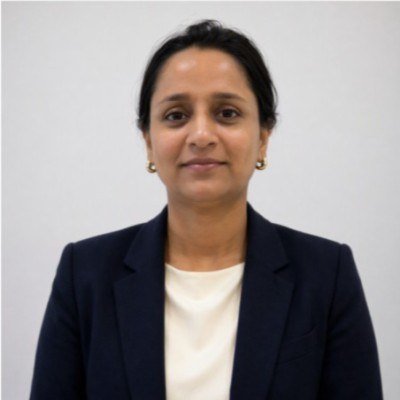
Neha Gupta is a CFA charterholder based in Winnipeg who has worked in financial markets since December 2005. She has published more than 2,600 investment articles and is Head of Operations and Finance at Whiteland Real Estate. She reviews WealthScale’s investing pages for accuracy.
- CFA charter, CFA Institute (awarded 2023)
- Post Graduate Diploma in Business Administration (Finance), 2008
- In financial markets since December 2005
- More than 2,600 published investment articles
General information only. Not financial, investment, tax or legal advice. WealthScale is independent and is published by WealthScale Media Inc., 55 Queen St E, Suite 1205, Toronto, ON M5C 1R6. CFA® and Chartered Financial Analyst® are registered trademarks owned by CFA Institute.