

Best High-Interest Savings Accounts in Canada for 2026
The best high interest savings account Canada savers can open with no monthly fee pays 2.85% as of October 22, 2026: the Saven Financial HISA, insured by DICO up to $250,000 as Saven states. Oaken Financial pays 2.80% with CDIC cover, and EQ Bank pays 2.75% when your pay is direct deposited. KOHO pays 3.5%, but only on a plan that costs $14.75 or $22 a month. RBC and National Bank pay 0.55% on their everyday high-interest accounts, and the big promotions, such as an advertised 4.65% at Scotiabank (end date not stated), last a few months. Every rate below is dated and sorted highest first.
 Written by Sharad Gondaliya, CPA CPAChartered Professional Accountant, CPA Ontario No. 61040184
 Financial reviewer: Neha Gupta, CFA CFA charterholderReview of this page scheduled
At a glance
Top no-fee everyday rate. Saven Financial pays 2.85% on its high-interest savings account and the same 2.85% inside a TFSA, FHSA, RRSP or RRIF, with no minimum deposit. You must join Saven, a division of FirstOntario Credit Union, and the account is not offered in Quebec.
Top rate with CDIC cover. Oaken Financial pays 2.80% (rates as of October 16, 2026) through Home Bank or Home Trust Company, both CDIC members. EQ Bank pays 2.75% on its Personal Account only when your pay is direct deposited; otherwise it pays 1.00%.
Top rate with a paid plan. KOHO pays 3.5% on the whole balance on its Everything plan, which costs $22 a month or $14.75 a month billed yearly. On $10,000, the yearly fee takes $177 of the $350 in interest.
Top promotions. Scotiabank advertises 4.65% for the first 3 months of a new MomentumPLUS account, with no end date stated. National Bank pays 3% on new deposits to its Cash Advantage Solution from October 19, 2026 to February 28, 2027.
Deposit insurance. CDIC covers up to $100,000 per insured category at each member bank or trust company, including interest. Credit union savings are covered by provincial insurers instead, and Wealthsimple Savings is protected by CIPF, not CDIC.
Rate outlook. The Bank of Canada policy rate is 2.25%, unchanged since October 30, 2025. The last two decisions of 2026 are on October 28 and December 9. Savings rates are variable and can change after either date.
Best Savings Rates in Canada: Full Rate Table (October 22, 2026)
This table lists every everyday (non-promotional) savings rate we could confirm, highest first. Where the rate depends on a paid plan, the plan fee is in the same row. Where it depends on direct deposit, the row is marked “DD”. Where it depends on your balance, we sort by the rate on a $10,000 balance and list the other tiers. The rate date is the provider’s own “as of” date where its page shows one; otherwise it is the day we checked, October 22, 2026. Accounts whose rate did not appear on the provider’s page are listed at the bottom as “Not published”, so you can see we checked them.
| # | Provider and account | Everyday rate | Conditions, tiers and fees | Deposit insurance | Rate date |
|---|---|---|---|---|---|
| 1 | KOHO Earn Interest, Everything plan | 3.5% | Plan fee $22 a month, or $14.75 a month billed yearly ($177 a year). Extra plan 2.5% ($18 a month, or $12 billed yearly). Essential 2% ($7 a month; $0 with DD or $1,000 deposited each month). Non-Member 0.5%. No minimum balance. | Not a CDIC member; up to $100,000 eligible for CDIC once you opt in, held in trust at members KOHO does not name | Checked October 22, 2026 (help page updated August 11, 2026) |
| 2 | Saven Financial High Interest Savings | 2.85% | No minimum deposit; Saven membership required; not offered in Quebec. Same 2.85% in TFSA, FHSA, RRSP and RRIF. Fees not listed. | DICO, up to $250,000 as stated on Saven’s page; not CDIC | October 22, 2026 (no date on page) |
| 3 | Oaken Financial Savings Account | 2.80% | Minimum balance and fees not stated on Oaken’s page. | CDIC, through Home Bank or Home Trust Company | As of October 16, 2026 |
| 4 | EQ Bank Personal Account | 2.75% (DD) | 2.75% when your pay is direct deposited; 1.00% without. No monthly fees, no minimum. 30 Day Notice Savings 2.75%; 10 Day Notice Savings 2.35%. | CDIC (Equitable Bank) | Effective May 15, 2026 |
| 5 | Neo Savings, Grow membership | 2.75% | Grow $14.99 a month. Build 2.5% ($9.99 a month). Start 2.25%. Essentials 2.0% (no membership fee). | Neo is not a CDIC member; its savings page did not name an insurer | As of October 21, 2026 |
| 6 | Hubert Financial High Interest Savings | 2.50% | Same 2.50% in TFSA, FHSA, RRSP and RRIF. Minimum and fees not stated. | Deposit Guarantee Corporation of Manitoba (Sunova Credit Union) | October 22, 2026 (no date on page) |
| 7 | Wealthsimple Savings | 2.5% | Flat rate, no tiers, not promotional. $0 fees, no minimum, no withdrawal limits or notice. Individual non-registered accounts only; no account or transit number, so no direct deposit into savings. | CIPF up to $1,000,000; not CDIC | Data as of August 19, 2026 |
| 8 | Outlook Financial High Interest Savings | 1.95% | No minimum balance. Same 1.95% in TFSA, RRSP, FHSA and RRIF. | Deposit Guarantee Corporation of Manitoba, 100% of deposits (Assiniboine Credit Union) | Rates last updated October 2, 2026 |
| 9 | Achieva Financial Daily Interest Savings | 1.8% | No monthly fee; first transaction each month has no charge. The page shows no effective date, so this rate may be out of date. | Deposit Guarantee Corporation of Manitoba, without limit (Cambrian Credit Union) | Undated on the provider’s page |
| 10 | Manulife Bank Advantage Account | 1.50% | $0 monthly fee; per-transaction fees apply below a $1,000 balance. Tax-Free and Registered Advantage Accounts 1.05%. | CDIC (Manulife Bank of Canada) | As of September 9, 2026 |
| 11 | Scotia High Interest Savings Account | 1.50% on $10,000 | Set by your Total Relationship Balance: 0.00% under $10,000; 1.50% from $10,000; 1.75% from $100,000; 2.00% from $250,000; 2.20% from $500,000. | CDIC (Bank of Nova Scotia) | Effective June 9, 2026 |
| 12 | Peoples Trust e-Savings Account | 1.20% | Tax-free savings also 1.20%. Minimum and fees not stated. | CDIC (Peoples Trust Company and Peoples Bank of Canada are members) | October 22, 2026 (no date on page) |
| 13 | Alterna Bank High Interest eSavings | 1.05% | No minimum; maximum $250,000 per customer. No monthly fees and no fees for bill payments, transfers, debits or Interac e-Transfers; no cheque clearing. TFSA and RRSP eSavings 1.05%. | CDIC (CS Alterna Bank) | October 22, 2026 (no date on page) |
| 14 | National Bank Cash Advantage Solution | 0.65% on $10,000 | 0.55% from $1; 0.65% from $10,000; 0.85% from $50,000; 1.75% from $100,000; 2.25% from $500,000. Minimum deposit $1. | CDIC | As of October 21, 2026 |
| 15 | National Bank High Interest Savings Account | 0.55% | All balances. One ABM withdrawal a month with no fee, other debits $5; Interac e-Transfer $1.25; paper statements $3.50. | CDIC | As of October 21, 2026 |
| 16 | RBC High Interest eSavings | 0.550% | No minimum, no monthly fee. $5 per debit over the limit; Interac e-Transfer $1.00; Interac ATM $2.00; one RBC ATM withdrawal a month with no fee. | CDIC, up to $100,000 | October 22, 2026 |
| 17 | TD ePremium Savings Account | 0.450% on $10,000 | 0.000% under $10,000; 0.450% from $10,000. TD High Interest TFSA Savings 0.300%; TD Every Day Savings 0.010%. Fees not stated. | CDIC (Toronto-Dominion Bank) | “As of today” on October 22, 2026 |
| 18 | Scotia MomentumPLUS Savings Account | 0.40% base | Premium for no withdrawals: +0.05% after 90 days, +0.10% after 180, +0.15% after 270, +0.30% after 360. +0.05% with Preferred Package, +0.10% with Ultimate Package. No minimum, no monthly fee. | CDIC | October 22, 2026 (no date on page) |
| 19 | Simplii Financial High Interest Savings | 0.30% on $10,000 | 0.30% on balances up to $50,000; 0.50% from $50,000.01; 0.60% from $100,000.01; 0.70% from $500,000.01; 1.00% over $1,000,000. No monthly or transaction fees, no minimum. | CDIC through CIBC (Simplii is a CIBC trade name) | October 22, 2026 |
| 20 | Tangerine Savings Account | Not published | Regular savings rates showed as placeholders on the page when we checked. | CDIC (Tangerine Bank) | Checked October 22, 2026 |
| 21 | CIBC eAdvantage Savings Account | Not published | $0 monthly fee; $5 per transaction. Smart Interest is paid on balances up to $200,000 when you save $200 or more in a month. | CDIC (CIBC) | Checked October 22, 2026 |
| 22 | BMO Savings Builder | Not published | Bonus rate needs $200 added each month, on balances up to $250,000. $0 monthly fee; one debit a month with no fee, then $5 each. | CDIC (Bank of Montreal) | Checked October 22, 2026 |
Promotional HISA rates (sorted by promo rate)
Promotions are kept out of the main table because they last weeks or months, apply only to new clients or new money, and fall back to the everyday rate. Each row shows how long the rate lasts, the cap, who qualifies and when the offer ends.
| Provider and account | Promo rate | How long | Balance cap | Who qualifies | Rate afterwards | Offer ends |
|---|---|---|---|---|---|---|
| Scotia MomentumPLUS Savings | 4.65% advertised headline rate (4.70% with Preferred Package, 4.75% with Ultimate); welcome bonus rate 4.05% | First 3 months, with a 90-day premium period | Not stated | Eligible deposits in your first MomentumPLUS account | 0.40% base plus any premium earned | End date not stated |
| National Bank Cash Advantage Solution | 3% on new deposits, whatever the tier | October 19, 2026 to February 28, 2027 | $999,999.99 | New deposits | Tier rate (0.55% from $1; 0.65% from $10,000) | February 28, 2027 |
| Scotia High Interest Savings Account | 2.80% welcome rate | First 3 months (90 days) | Not stated | New accounts (offer dates not shown) | Relationship tier rate (0.00% under $10,000) | End date not stated |
Promotions we left out. Tangerine advertises a new-client savings promotion, but its page showed conflicting rates, so we have not listed a figure. BMO’s Savings Amplifier headline rate could not be confirmed in the body of its page. CIBC’s 3-month eAdvantage special did not show a rate. Wealthsimple advertises a welcome offer for new clients (end date not stated) whose full terms we could not confirm. We will add each one once its rate and terms are confirmed.
Enter your balance in the calculator below to see the interest each account in the table would pay you over a year, before tax.
1. Best High Interest Savings Account Rates in Canada by Category
Highest everyday rate with no fee. Saven Financial pays 2.85% on its high-interest savings account. There is no minimum deposit, but you must become a Saven member, and the account is not offered in Quebec. Saven’s page shows no “as of” date, so the rate date in our table is the day we checked. Its deposits are insured by DICO, not CDIC; Saven states coverage up to $250,000.
Highest everyday rate with CDIC cover. Oaken Financial pays 2.80% (rates as of October 16, 2026) through Home Bank or Home Trust Company. Oaken’s page did not state a minimum balance or account fees, so please confirm both before you fund the account. EQ Bank’s 2.75% is the next highest CDIC-insured everyday rate, from a bank that states no monthly fees, but only when your pay lands there by direct deposit.
Highest rate with no conditions on access. Wealthsimple Savings pays a flat 2.5% to every client, with no tiers, no minimum, no fees and no limit or notice on withdrawals. It is a non-registered individual account only. Hubert Financial also pays 2.50% and offers the same rate inside a TFSA, FHSA, RRSP and RRIF, which Wealthsimple Savings does not.
Best for savings you will not touch for a month. EQ Bank’s 30 Day Notice Savings Account matches the 2.75% direct-deposit rate without needing your pay, in return for notice before each withdrawal (section 3 explains how notice accounts work). For promotions, National Bank’s 3% on new deposits, which runs to February 28, 2027, is the longest promotion in our table (section 4).
| Category | Account | Rate | The catch |
|---|---|---|---|
| Highest everyday rate, any condition | KOHO, Everything plan | 3.5% | $22 a month, or $14.75 a month billed yearly |
| Highest everyday rate, no fee | Saven Financial HISA | 2.85% | DICO cover; membership; not offered in Quebec |
| Highest with CDIC cover | Oaken Financial Savings | 2.80% | Minimum and fees not stated |
| Highest with direct deposit | EQ Bank Personal Account | 2.75% | 1.00% without pay direct deposit |
| No conditions, no notice | Wealthsimple Savings | 2.5% | CIPF, not CDIC; non-registered only |
| Notice account | EQ Bank 30 Day Notice Savings | 2.75% | 30 days’ notice before each withdrawal |
| Registered savings (TFSA, FHSA, RRSP) | Saven Financial | 2.85% | DICO cover; membership |
For where savings fit next to GICs, chequing and investing, see our guide to the best places to save money in Canada. If you are comparing two of these providers directly, our EQ Bank review and Wealthsimple vs EQ Bank comparison go deeper.
2. Paid Plans and Direct-Deposit Rates: Is the Fee Worth It?
How paid plans work. KOHO and Neo pay their top rates only on paid memberships. KOHO pays 3.5% on Everything ($22 a month, or $14.75 a month billed yearly, which is $177 a year), 2.5% on Extra ($18 a month, or $12 a month billed yearly, which is $144 a year) and 2% on Essential ($7 a month, or $0 with direct deposit or $1,000 deposited each month). Neo pays 2.75% on Grow ($14.99 a month), 2.5% on Build ($9.99 a month), 2.25% on Start and 2.0% on Essentials, which has no fee. Neo raised its Build and Grow prices on October 1, 2026, and the same day ended the no-fee membership it had given savers with $5,000 or more.
The fee comes out of your interest. On a $10,000 balance, KOHO Everything pays $350.00 a year ($10,000 x 3.5%). Take away the $177.00 yearly fee and $173.00 is left, a net 1.73%. On monthly billing ($22 x 12 = $264.00), $86.00 is left, a net 0.86%. A no-fee account at 2.85% pays $285.00 on the same balance.
| Plan | Rate | Yearly fee | Interest on $10,000 | Left after fee | Net rate |
|---|---|---|---|---|---|
| KOHO Everything, billed yearly | 3.5% | $177.00 | $350.00 | $173.00 | 1.73% |
| KOHO Everything, billed monthly | 3.5% | $264.00 | $350.00 | $86.00 | 0.86% |
| KOHO Extra, billed yearly | 2.5% | $144.00 | $250.00 | $106.00 | 1.06% |
| KOHO Extra, billed monthly | 2.5% | $216.00 | $250.00 | $34.00 | 0.34% |
| KOHO Essential, fee waived with DD or $1,000 monthly deposits | 2% | $0.00 | $200.00 | $200.00 | 2.00% |
| Neo Grow | 2.75% | $179.88 | $275.00 | $95.12 | 0.95% |
| Neo Build | 2.5% | $119.88 | $250.00 | $130.12 | 1.30% |
| Neo Essentials | 2.0% | $0.00 | $200.00 | $200.00 | 2.00% |
| Saven Financial HISA, no plan | 2.85% | $0.00 | $285.00 | $285.00 | 2.85% |
Break-even balances. KOHO Everything beats a no-fee 2.85% account only when its extra 0.65 points (3.5% minus 2.85%) earn more than the fee. Billed yearly, that takes a balance above $27,230.77 ($177 / 0.0065). Billed monthly, it takes more than $40,615.38 ($264 / 0.0065). Against KOHO’s own Essential plan at 2%, Everything pays for itself above $11,800.00 billed yearly ($177 / 0.015). Neo Grow at 2.75% and KOHO Extra at 2.5% pay less than 2.85% before any fee, so on interest alone they never catch the best no-fee account.
When a paid plan can still make sense. These plans bundle other features. KOHO’s Extra and Everything plans include one international ATM withdrawal a month with no fee. If you would pay for those features anyway, the interest is a bonus rather than the reason to subscribe. Judge a plan on everything you use, not on the headline rate.
Direct-deposit conditions. EQ Bank’s 2.75% needs your pay deposited directly into the Personal Account. Without it, the rate is 1.00%, a gap of $175.00 a year on $10,000 ($275.00 minus $100.00). Wealthsimple adds 0.50% to Chequing interest for Core and Premium clients with eligible direct deposits of at least $2,000 within 30 days, up to a 2.25% maximum; our Wealthsimple Chequing review covers that account.
3. How Interest Is Calculated and Paid
Daily interest, monthly payment. Savings accounts in Canada usually work out interest on each day’s closing balance and pay it once a month. The daily formula is balance x annual rate / 365. At 2.85%, $10,000 earns $0.78 a day ($10,000 x 0.0285 / 365 = $0.7808), or $23.42 over a 30-day month ($0.7808 x 30). Wealthsimple states that its Chequing interest is calculated daily and paid monthly; for other accounts, the account agreement sets the method, so please read it before you compare two close rates.
Compounding adds a little. When interest is paid monthly, next month’s interest is earned on a slightly larger balance. A 2.85% rate paid and compounded monthly works out to an effective yearly yield of 2.8875% ((1 + 0.0285 / 12)^12 minus 1). On $10,000 that is $288.75 instead of $285.00, a difference of $3.75. Compounding matters far less than the rate itself, so compare the posted rates first. Our compound interest calculator shows the effect over many years.
Single rates versus tiers. Saven, Oaken, Hubert, Outlook and Alterna publish a single rate with no balance tiers, Wealthsimple states “no tiers”, and KOHO pays its plan rate on the entire balance once you opt in. Other accounts use tiers. Simplii pays 0.30% on balances up to $50,000 and 1.00% only above $1,000,000. Scotiabank’s High Interest Savings Account sets the rate by your Total Relationship Balance: 0.00% under $10,000, 1.50% from $10,000 and 2.20% only from $500,000. TD’s ePremium Savings pays 0.000% under $10,000 and 0.450% from $10,000.
Notice accounts. A notice account pays more in return for advance warning before a withdrawal. EQ Bank pays 2.75% on its 30 Day Notice Savings Account and 2.35% on its 10 Day Notice Savings Account, against 1.00% on its Personal Account without direct deposit. The trade-off is time: money for a surprise car repair should not sit behind a 30-day notice.
Rates are variable. Everyday savings rates are not fixed. The provider can change them at any time, and changes often follow Bank of Canada decisions (section 11). EQ Bank’s current rates, for example, have been in effect since May 15, 2026. If you want a rate that cannot fall for a set term, compare the best GIC rates in Canada, where a 1-year GIC paid up to 3.85% on October 22, 2026.
Registered accounts pay differently. The same provider often pays a different rate inside a TFSA or RRSP. EQ Bank pays 1.50% on TFSA, RRSP and FHSA cash savings, below its 2.75% Personal Account rate with direct deposit, while Saven, Hubert and Outlook pay the same rate in registered and non-registered accounts. Section 8 lists every registered rate we confirmed.
4. Promotional Rates Explained
How promotions are built. Most promotions add a bonus to the regular rate for a set time. For example, a 4.05% bonus on a 0.55% regular rate pays 4.60% while the bonus lasts. Others quote one “total” rate for a set number of days. When the promotion ends, the bonus stops and only the regular rate continues.
Who qualifies. Read the eligibility line first. Scotiabank’s MomentumPLUS welcome rate applies to eligible deposits in your first MomentumPLUS account. National Bank’s 3% on its Cash Advantage Solution applies to new deposits from October 19, 2026 to February 28, 2027.
Caps. National Bank pays its promotional rate on up to $999,999.99, and Scotiabank does not state a cap on either of its promotions. Money above a cap earns only the regular rate.
The first-year yield. A short promotion looks large but pays for only part of the year. On $10,000 held for 12 months, a 4.60% promotion for 90 days followed by 0.55% earns $154.86, an effective 1.55% for the year. A 4.60% promotion for 153 days followed by 0.30% earns $210.24, or 2.10%. Saven’s everyday 2.85% earns $285.00 with no deadline and no switching. The table uses simple daily interest (balance x rate x days / 365) to keep the arithmetic visible; real accounts compound monthly, which adds a few cents.
| Approach | Promo period interest | Rest of the year | First 12 months | Effective yearly rate |
|---|---|---|---|---|
| 4.60% for 90 days, then 0.55% for 275 days | $113.42 | $41.44 | $154.86 | 1.55% |
| Scotia HISA: 2.80% for 90 days, then 1.50% for 275 days | $69.04 | $113.01 | $182.05 | 1.82% |
| 4.60% for 153 days, then 0.30% for 212 days | $192.82 | $17.42 | $210.24 | 2.10% |
| Saven: 2.85% all year, no promotion | None | $285.00 | $285.00 | 2.85% |
| 3.00% for the first year of a 730-day promotion | $300.00 | None | $300.00 | 3.00% |
| 4.60% for 90 days, then move to a 2.85% account for 275 days | $113.42 | $214.73 | $328.15 | 3.28% |
| 4.60% for 153 days, then move to a 2.85% account for 212 days | $192.82 | $165.53 | $358.35 | 3.58% |
A promotion pays only if you move the money afterwards. The last two rows show the real value of a short promotion: it beats a strong everyday rate only when the money moves to that everyday rate as soon as the bonus stops. Taking a 90-day promotion and then moving to a 2.85% account turns $154.86 into $328.15 on $10,000. Please set a calendar reminder for the promo end date on the day you open the account.
Read the “new money” wording. National Bank’s promotion counts only new deposits, and Scotiabank’s MomentumPLUS welcome rate applies only to eligible deposits in your first MomentumPLUS account. Wording like this limits which money and which clients qualify, and moving savings between your own accounts may not meet it. If you are not sure you qualify, please ask the provider before you move a large balance.
Before you chase a promotion, compare it with a fixed rate you can lock in for a year or more.
5. Deposit Insurance: CDIC, Provincial Plans and CIPF
CDIC basics. The Canada Deposit Insurance Corporation insures eligible deposits at member banks and trust companies up to $100,000 per insured category at each member institution, and that limit includes both principal and interest. The categories are deposits in one name, joint deposits, deposits held in trust, RRSPs, RRIFs, TFSAs, RESPs, RDSPs and FHSAs, and each is insured separately. CDIC covers savings and chequing deposits in Canadian or foreign currency, GICs and term deposits. It does not cover mutual funds, stocks, bonds, ETFs or crypto.
How the categories add up. A couple banking at one CDIC member could hold $100,000 in each person’s own name, $100,000 in a joint account and $100,000 in each person’s TFSA, for $500,000 of coverage at that one institution ($100,000 x 2 + $100,000 + $100,000 x 2). RRSP, RRIF and FHSA deposits each add another category for each spouse.
Coverage is per institution, not per brand. Simplii Financial is a trade name of CIBC, so Simplii and CIBC deposits in the same category share one $100,000 limit. EQ Bank is the trade name of Equitable Bank. Oaken deposits are held at Home Bank or Home Trust Company, which are two separate members. Tangerine Bank is a CDIC member in its own right.
Credit unions use provincial insurers. Provincially regulated credit unions are covered by provincial deposit insurance plans instead of CDIC. Saven Financial’s page states that its deposits are insured up to $250,000 by DICO. Hubert Financial (Sunova Credit Union) deposits are guaranteed by the Deposit Guarantee Corporation of Manitoba. Outlook Financial (Assiniboine Credit Union) states that 100% of deposits are guaranteed by the same corporation, and Achieva Financial (Cambrian Credit Union) states that all deposits are guaranteed without limit.
Fintech accounts. KOHO is not a CDIC member. When you opt in to interest, KOHO holds funds in trust at CDIC member institutions it does not name, and up to $100,000 is eligible for CDIC protection. Neo is not a CDIC member either. Its chequing funds are eligible for CDIC insurance up to $100,000 through a member it does not name, and its savings page did not state an insurer when we checked.
Wealthsimple Savings is CIPF, not CDIC. Wealthsimple Savings is protected by the Canadian Investor Protection Fund up to $1,000,000. CIPF covers client property that goes missing if a member investment dealer fails; it does not cover market losses. Wealthsimple Chequing is different: its cash is held in trust at CDIC members for up to $1,000,000 of combined coverage. Our guide is Wealthsimple safe explains both.
Use the tool below to enter deposits by category and see how much CDIC would cover at one member institution.
| Account | Protection | Limit as published |
|---|---|---|
| Saven Financial | DICO (Ontario credit union) | $250,000, per Saven’s page |
| Oaken Financial | CDIC (Home Bank or Home Trust Company) | $100,000 per category |
| EQ Bank | CDIC (Equitable Bank) | $100,000 per category |
| Hubert Financial | Deposit Guarantee Corporation of Manitoba | Amount not stated on Hubert’s page |
| Outlook Financial | Deposit Guarantee Corporation of Manitoba | 100% of deposits |
| Achieva Financial | Deposit Guarantee Corporation of Manitoba | Without limit |
| Wealthsimple Savings | CIPF (not CDIC) | $1,000,000 |
| KOHO | Trust deposits at unnamed CDIC members | Up to $100,000 eligible once you opt in |
| Neo Savings | Not stated on the savings page | Not stated |
| RBC, TD, Scotiabank, CIBC, BMO, National Bank, Manulife Bank, Peoples Trust, Alterna Bank, Simplii, Tangerine | CDIC | $100,000 per category |
6. Online Banks vs Big Banks: The Savings Rate Gap
The gap. RBC pays 0.550% on its High Interest eSavings account and National Bank pays 0.55% on its HISA. TD’s ePremium pays nothing under $10,000 and 0.450% above it. Scotiabank’s High Interest Savings Account pays 0.00% under a $10,000 relationship balance and 1.50% above it. CIBC’s and BMO’s everyday savings rates did not appear on their pages. Online banks and credit-union divisions pay several times more: Saven 2.85%, Oaken 2.80% and EQ Bank 2.75% with direct deposit.
What the gap costs. On $25,000 held for a year, 2.85% instead of RBC’s 0.55% is $575.00 more interest ($25,000 x 2.30%). Against TD’s 0.45% it is $600.00 ($25,000 x 2.40%), and against Simplii’s 0.30% it is $637.50 ($25,000 x 2.55%). Those amounts come before tax, but the tax is the same percentage wherever the interest is earned.
| Account | Type | Rate on $10,000 | Interest in a year |
|---|---|---|---|
| Saven Financial HISA | Credit union division | 2.85% | $285.00 |
| Oaken Financial Savings | Online, Home Bank or Home Trust | 2.80% | $280.00 |
| EQ Bank Personal Account (DD) | Online bank | 2.75% | $275.00 |
| Wealthsimple Savings | Investment dealer (CIPF) | 2.5% | $250.00 |
| Manulife Bank Advantage Account | Bank | 1.50% | $150.00 |
| Scotia High Interest Savings | Big bank | 1.50% | $150.00 |
| National Bank Cash Advantage Solution | Big bank | 0.65% | $65.00 |
| RBC High Interest eSavings | Big bank | 0.550% | $55.00 |
| TD ePremium Savings | Big bank | 0.450% | $45.00 |
| Simplii Financial HISA | Online brand of CIBC | 0.30% | $30.00 |
| Tangerine, CIBC eAdvantage, BMO Savings Builder | Online bank and big banks | Not published | Not available |
What big banks offer instead. Branches, a chequing account at the same bank and instant transfers between your own accounts. Several also charge for taking money out of savings. National Bank charges $5 per debit beyond one ABM withdrawal a month and $1.25 per Interac e-Transfer from its HISA. RBC charges $5 per debit over the limit and $1.00 per Interac e-Transfer. CIBC’s eAdvantage charges $5 per transaction, and BMO’s Savings Builder allows one debit a month before charging $5 each. Alterna Bank, by contrast, charges no fees for debits, transfers or Interac e-Transfers from its eSavings account.
The same CDIC rules apply. CDIC covers an eligible deposit at RBC exactly the way it covers one at EQ Bank, Home Trust or Manulife Bank: $100,000 per category per member. The rate gap is not paying for better insurance. Credit-union divisions such as Saven and Hubert use provincial insurers instead, with the published limits shown in section 5.
Running both. Many Canadians keep chequing at a big bank and savings at an online bank or credit-union division. Transfers between institutions are not instant for every account, so keep enough at your main bank to cover bills that come out in the next few days. Our pages on the best chequing accounts and no-fee chequing accounts compare the other half of that setup, and the bank accounts in Canada hub covers both.
7. Tax on Savings Interest in 2026
Interest is fully taxable. Interest from a savings account outside a registered plan is income in the year you receive it, taxed at your marginal rate in the same way as salary. There is no lower rate for interest, unlike Canadian dividends or capital gains. Your bank or credit union issues a T5 slip for interest it reports, and you include all interest on your return even if no slip arrives.
What you keep in Ontario at $80,000. At $80,000 of taxable income in Ontario in 2026, the combined marginal rate on extra interest is 29.65% (20.5% federal plus 9.15% Ontario). $285.00 of interest on $10,000 at 2.85% costs $84.50 in tax ($285.00 x 29.65%), leaving $200.50, an after-tax yield of 2.005% ($200.50 / $10,000). Inside a TFSA, the same $285.00 is not taxed at all.
| Province | Combined marginal rate | Tax on $1,000 of interest | Interest you keep |
|---|---|---|---|
| British Columbia | 28.2% | $282.00 | $718.00 |
| Ontario | 29.65% | $296.50 | $703.50 |
| Alberta | 30.5% | $305.00 | $695.00 |
| Saskatchewan | 33% | $330.00 | $670.00 |
| Manitoba | 33.25% | $332.50 | $667.50 |
| New Brunswick | 34.5% | $345.00 | $655.00 |
| Newfoundland and Labrador | 35% | $350.00 | $650.00 |
| Quebec (after the 16.5% federal abatement) | 36.12% | $361.18 | $638.82 |
| Prince Edward Island | 37.1% | $371.00 | $629.00 |
| Nova Scotia | 37.17% | $371.70 | $628.30 |
How we worked it out: the federal rate at $80,000 is 20.5%, plus the provincial rate for that income. Ontario’s surtax does not apply at this income, and the Ontario Health Premium is already at its $750 cap, so neither changes the result. Quebec’s figure is 20.5% x (1 minus 0.165) = 17.1175% federal plus 19% Quebec. The table leaves out income-tested credits and benefits, which can raise the real cost.
Interest can reduce benefits. Interest raises your net income, and net income drives income-tested benefits and credits. TFSA income is not included in your income, so savings held in a TFSA do not have this effect. That matters most for families receiving income-tested benefits and for retirees near benefit thresholds.
Whose income is it? Interest is generally taxed in the hands of the person whose money earned it. If one spouse gives the other money to deposit, attribution rules can send the interest back to the giver for tax. A joint account does not change this: tax follows the money each person put in. Our savings and tax calculators include a 2026 income tax calculator for your own marginal rate.
8. TFSA, FHSA and RRSP Savings Accounts
A savings account can sit inside a registered plan. Money, GICs and deposits are qualified TFSA investments, and the same is generally true of RRSPs. Interest inside a TFSA is not taxed. Inside an RRSP, RRIF or FHSA, it is not taxed while it stays in the account. A high-interest TFSA can suit savings you might need within a few years, where you want the tax shelter without investment risk. Our TFSA guide covers the full rules.
| Provider | Registered savings rate | Plans offered at that rate | Insurance |
|---|---|---|---|
| Saven Financial | 2.85% | TFSA, FHSA, RRSP, RRIF | DICO |
| Hubert Financial | 2.50% | TFSA, FHSA, RRSP, RRIF | Deposit Guarantee Corporation of Manitoba |
| Outlook Financial | 1.95% | TFSA, RRSP, FHSA, RRIF | Deposit Guarantee Corporation of Manitoba |
| EQ Bank | 1.50% | TFSA, RRSP, FHSA cash savings | CDIC |
| Peoples Trust | 1.20% | Tax-free savings | CDIC |
| Alterna Bank | 1.05% | TFSA eSavings, RRSP eSavings | CDIC |
| Manulife Bank | 1.05% | Tax-Free and Registered Advantage Accounts | CDIC |
| TD | 0.300% | High Interest TFSA Savings | CDIC |
| Oaken Financial | Not published | TFSA and RSP savings | CDIC |
| Wealthsimple | Not confirmed (its pages disagree) | TFSA, RRSP and FHSA savings | Not confirmed |
| Tangerine | Not published | TFSA, RSP and RIF savings | CDIC |
2026 limits. The TFSA dollar limit for 2026 is $7,000, and someone who was 18 or older and resident in Canada every year since 2009 and never contributed has $109,000 of room. Withdrawals are added back to your room on January 1 of the following year. The FHSA gives $8,000 of room a year and $40,000 over your lifetime, with up to $8,000 of unused room carried forward; the contribution deadline is December 31, with no 60-day period. The RRSP dollar limit for 2026 is $33,810, and your own limit is the lesser of that and 18% of your 2025 earned income, adjusted for pension adjustments and unused room. See the TFSA contribution limit page and the FHSA rules for detail.
Moving registered savings to a better rate. Use a direct transfer between institutions. A direct TFSA-to-TFSA transfer has no effect on your room. If you withdraw and redeposit the money yourself, the redeposit counts as a new contribution, and because the withdrawal comes back as room only next January 1, you can end up over-contributed and owe 1% a month on the highest excess. Our TFSA withdrawal rules and how to transfer a TFSA or RRSP pages walk through the forms.
Separate insurance for each plan. At a CDIC member, TFSA, RRSP, RRIF and FHSA deposits are each a separate category with its own $100,000 limit. A saver with $90,000 in a TFSA and $90,000 in a regular savings account at the same bank is fully covered in both categories.
Where to hold a registered savings account. If you also want to invest inside the same TFSA or FHSA later, a brokerage account can hold cash and investments together. Our rankings of the best TFSA accounts and best FHSA accounts cover those options, and the Wealthsimple TFSA review explains Wealthsimple’s savings version of the TFSA.
See how much tax-free room you have before you move savings into a TFSA.
9. How to Choose the Best High Interest Savings Account in Canada
Start with the everyday rate, not the promotion. The everyday rate is what you earn after the first few months, so it decides most of your interest over time. Sort by it first, then treat a promotion as a short extra on top.
Read the condition behind the rate. Ask what you must do to earn it: pay a plan fee (KOHO, Neo), direct deposit your pay (EQ Bank’s 2.75%), hold a large relationship balance (Scotiabank’s 2.20% needs $500,000) or give notice before withdrawing (EQ’s notice accounts). If you will not meet the condition, use the fallback rate in your comparison.
Count the fees on the way out. A $5 debit fee on one withdrawal a month costs $60 a year, which is the full year’s interest on $10,000 at 0.60%. Check how many withdrawals and Interac e-Transfers are included before you choose an account for money you will move often.
Check the insurer and the limit. CDIC for banks and trust companies, a provincial insurer for credit unions, CIPF for Wealthsimple Savings, and trust arrangements for KOHO. If you hold more than $100,000 in one category, the insurer and its limit can matter more than a small rate difference.
Check where you live. Saven’s account is not offered in Quebec. Some credit-union divisions limit who can join, so confirm eligibility for your province before you plan around a rate.
Match the account to the job. An emergency fund needs fast access with no notice and no withdrawal fees. Money for a goal a year or more away can sit in a notice account or a GIC. Savings you will not touch for years may belong in an investment account; our guide on how to invest in Canada covers that step. Use the calculator below to work out how much to put aside each month for a savings target.
How we sort this page. Savings and GIC lists on WealthScale are sorted by published rate, not by a score. Our rating methodology explains how scored rankings work elsewhere on the site, our editorial standards explain how we check figures, and how WealthScale makes money explains our business model.
10. How to Open an Account and Move Money
What you will be asked for. Expect to give your legal name, date of birth, Canadian address and Social Insurance Number, because the institution reports your interest to the CRA. You will also verify your identity, usually with government photo ID, and link an existing chequing account for transfers in and out.
Credit-union divisions ask you to join. Saven requires a Saven membership, and other credit-union divisions work in a similar way: you become a member of the credit union as part of opening the account. Read the membership terms before you apply.
Funding the account. Most online accounts are funded by a transfer pulled from your linked chequing account or by an Interac e-Transfer you send. Check the fee on each side. Sending an e-Transfer out of RBC’s High Interest eSavings costs $1.00, out of National Bank’s HISA $1.25, and out of Manulife’s Advantage Account $1.00 when the balance is under $1,000.
Time deposits around promotions. A promotion counts only the deposits that meet its terms. National Bank’s 3% counts only new deposits made from October 19, 2026 to February 28, 2027. Move the money inside the window and keep a record of the date and amount you moved.
Moving a TFSA, RRSP or FHSA. Open the new registered account first, then ask the new institution to request a direct transfer from the old one. Do not withdraw and redeposit TFSA money yourself if you have no spare room for the year (section 8).
Closing the old account. Once the money has arrived and any pre-authorized payments have moved, close the old account so you do not pay a monthly fee on an empty balance. Keep your last statement, since you will need the interest figures at tax time.
11. Savings Rates and the Bank of Canada: What to Expect
Where the policy rate stands. The Bank of Canada’s target for the overnight rate is 2.25%. Its last change was on October 29, 2025, a cut of 0.25 points that took effect October 30, 2025. It has held the rate at every decision since: December 10, 2025, and January 28, March 18, April 29, June 10, July 15 and September 2, 2026. Prime at RBC, TD, BMO, Scotiabank, CIBC, National Bank, Desjardins and Manulife Bank is 4.45%.
Remaining decisions in 2026. The Bank announces its last two decisions of the year on Wednesday, October 28, 2026 (with its Monetary Policy Report) and Wednesday, December 9, 2026, both at 9:45 a.m. Eastern time.
How savings rates relate to the policy rate. Each provider sets its own savings rate. The best everyday rates on this page (Saven 2.85%, Oaken 2.80%) sit above the 2.25% policy rate, while big-bank everyday rates (RBC 0.550%, TD 0.450% on $10,000) sit well below it. When the policy rate moves, providers can follow, lag or not move at all.
What a change means in dollars. Every 0.25-point change in a savings rate moves the yearly interest on $20,000 by $50 ($20,000 x 0.25%). A change of that size at your savings bank matters less than the gap between a 0.55% account and a 2.85% account, which is $460 a year on the same $20,000 ($20,000 x 2.30%).
No forecasts here. WealthScale does not forecast rate decisions. If you want to remove the guesswork for money you will not need for a year or more, a GIC fixes the rate for its term; see our comparison of GICs vs high-interest savings accounts. Many savers split the difference: an emergency fund in a savings account and the rest in GICs.
12. Common Mistakes With High-Interest Savings Accounts
Counting on a rate you do not qualify for. EQ Bank’s 2.75% falls to 1.00% if your pay is not direct deposited. Simplii’s 1.00% applies only above $1,000,000. Fix: compare accounts at the rate you will actually earn, based on your balance and your pay arrangements.
Paying a plan fee that costs more than the extra interest. Below about $27,231, KOHO’s Everything plan billed yearly leaves you with less interest than a no-fee 2.85% account (section 2). Fix: work out the break-even balance before you subscribe for the rate.
Assuming every account is CDIC-insured. Wealthsimple Savings is CIPF-protected, credit-union savings use provincial insurers, and KOHO and Neo are not CDIC members. Fix: check the protection column in our table, and keep each balance within the limit that applies.
Forgetting that interest counts toward the CDIC limit. A $100,000 deposit plus a year of interest is over $100,000 in one category. Fix: keep a margin below the limit, or use another category or another member institution.
Relying on an undated rate. Achieva’s 1.8% has no effective date on its page, and Saven’s, Hubert’s and Peoples Trust’s pages show no “as of” date. Fix: confirm the current rate at sign-up and look at your first monthly statement.
Leaving interest off your tax return. All interest earned outside registered plans is taxable, whether or not a T5 slip arrives. Fix: download your yearly interest summary from each institution in February and add the totals to your return.
Missing a promotion’s eligibility window. Opening the account inside the window is not always enough; Scotiabank’s MomentumPLUS welcome rate, for example, applies only to eligible deposits in your first MomentumPLUS account. Fix: read the full eligibility wording before you open anything, and ask the provider to confirm in writing if the terms are unclear.
What You Need to Open a Savings Account and What You Get
What you need
- Your legal name, date of birth and Canadian address
- Your Social Insurance Number, for interest reporting
- Government photo ID to verify your identity
- A chequing account in your name to link for transfers
- A credit-union membership where the provider requires one (Saven)
- Your pay set up for direct deposit, if the rate depends on it (EQ Bank’s 2.75%)
- Unused contribution room, if you open the account as a TFSA or FHSA
- The promotion’s terms and end date, if you are opening for a promo rate
What you get
- A variable everyday rate, from 0.30% to 2.85% with no paid plan on a $10,000 balance in our table
- Interest usually worked out daily and paid monthly
- Access to your money without the fixed term of a GIC
- CDIC cover of $100,000 per category at banks and trust companies
- Provincial insurance at credit unions, such as DICO’s $250,000 at Saven
- A T5 slip or yearly summary for interest earned outside registered plans
- The option to hold the same savings inside a TFSA, FHSA or RRSP at many providers
- A way to keep an emergency fund separate from your spending account
How It Works: Six Steps to a Better Savings Rate
- Check what you earn now. Find your current savings rate on your latest statement. If it is 0.55% or less, the gap to 2.85% is at least $230 a year on every $10,000.
- Decide how much needs instant access. Keep an emergency fund in an account with no notice period and no withdrawal fees. Money for later can earn more in a notice account or GIC.
- Shortlist from the rate table. Pick two or three accounts by everyday rate, then check the condition, fees and insurer in the same row.
- Open the account and link your chequing. Allow for identity checks and, at credit-union divisions, a membership step.
- Move the money. Use a transfer or Interac e-Transfer for regular savings and a direct transfer for a TFSA, RRSP or FHSA.
- Review twice a year. Check your rate after the Bank of Canada’s October 28 and December 9, 2026 decisions, and again whenever a promotion ends.
10 Strategies to Earn More on Your Savings
1. Give each dollar a job
Split savings by when you need them: an emergency fund in a no-notice savings account, money for the next year in a notice account or short GIC, and money for later in a GIC ladder or investments. Each job has a different best account, and one account rarely wins all three.
2. Fill the TFSA before a taxable account
At $80,000 of income in Ontario, 29.65% of taxable interest goes to tax. The same savings inside a TFSA keep every dollar of interest. If you have unused room, a TFSA savings account at 2.85% can beat a taxable account at a higher rate.
3. Use a notice account for money you will not touch
EQ Bank’s 30 Day Notice Savings pays 2.75% without the direct-deposit condition, against 1.00% on its Personal Account without direct deposit. On $20,000 kept for a year, that is $550 instead of $200.
4. Keep a small buffer at your main bank
Leave enough in chequing for bills due in the next few days and keep the rest in high-interest savings. A transfer that takes a day or two will not cause an overdraft or a missed payment, and the bulk of your money still earns the higher rate.
5. Spread large balances across insurers
Above $100,000 in one CDIC category, split the money across member institutions. $250,000 spread over three CDIC members is $83,333.33 at each, within every limit even after a year of interest at 2.85%.
6. Automate a transfer on payday
Set a recurring transfer from chequing to savings for the day after your pay arrives. Money that moves before you see it in your spending account is easier to keep, and the savings goal calculator above shows the monthly amount a target needs.
7. Ladder money you will not need for a year
A 1-year GIC paid up to 3.85% on October 22, 2026, a full point above the best no-fee savings rate. Moving savings you will not need for a year into a ladder of GICs fixes part of your return. Our GIC rates page shows how.
8. Let each spouse save their own income
Interest is taxed in the hands of the person whose money earned it. When the lower-income spouse saves part of their own pay in their own account, the interest on that money is taxed at their lower rate, without running into attribution rules.
9. Batch your withdrawals
Accounts that charge $5 per debit (National Bank, RBC over the limit, CIBC eAdvantage, BMO Savings Builder after one) reward fewer, larger withdrawals. Move money to chequing once a month instead of four times and keep the fees off your interest.
10. Put a date on every rate
Write down the rate and the date you opened each account, and the end date of any promotion. Look again after each Bank of Canada decision. A rate that was best in October may not be best in December.
Illustrative Example: Moving $40,000 From a Big-Bank Account
This example is hypothetical. Priya lives in Ontario, has $80,000 of taxable income in 2026, unused TFSA room of at least $7,000, and $40,000 in a big-bank savings account at 0.55%. Her combined marginal rate on interest is 29.65%.
- Today. Her $40,000 earns $220.00 a year ($40,000 x 0.55%). Tax takes $65.23 ($220.00 x 29.65%), so she keeps $154.77 ($220.00 minus $65.23).
- TFSA first. She moves $7,000 into a TFSA savings account at 2.85%. It earns $199.50 a year ($7,000 x 2.85%), with no tax.
- The rest to a no-fee 2.85% account. The other $33,000 goes to a non-registered savings account at 2.85% with no monthly fee. It earns $940.50 ($33,000 x 2.85%). Tax takes $278.86 ($940.50 x 29.65%), so she keeps $661.64 ($940.50 minus $278.86).
- The total. After tax she keeps $861.14 a year ($199.50 + $661.64), which is $706.37 more than before ($861.14 minus $154.77).
- The insurance check. Each balance, even with a year of interest added, stays well inside the published limit of the insurer behind it. If one account were at a CDIC member, the TFSA and the regular account would also be separate $100,000 categories.
- What could change it. The 2.85% rate is variable. If it dropped by 0.25 points, Priya’s yearly interest on the $40,000 would fall by $100 before tax ($40,000 x 0.25%), and she would still be far ahead of 0.55%.
High-Interest Savings Account FAQ
What is the best high-interest savings account in Canada right now?
On October 22, 2026, the highest no-fee everyday rate we confirmed is 2.85% at Saven Financial, insured by DICO. Oaken Financial pays 2.80% with CDIC cover, and EQ Bank pays 2.75% when your pay is direct deposited. KOHO pays 3.5%, but only on a plan costing $14.75 or $22 a month, which cancels much of the extra interest on balances under about $27,000.
Which savings accounts pay the highest promotional rates?
Scotiabank advertises 4.65% for the first 3 months of a new MomentumPLUS account, with no end date stated. National Bank pays 3% on new deposits to its Cash Advantage Solution from October 19, 2026 to February 28, 2027, and Scotiabank’s High Interest Savings Account pays a 2.80% welcome rate for 90 days. Each then falls back to a lower everyday rate.
Is my savings account covered by CDIC?
Savings at a CDIC member bank or trust company are covered up to $100,000 per insured category at each member, including interest. Separate categories include single-name, joint, TFSA, RRSP, RRIF, FHSA, RESP, RDSP and trust deposits. Credit union savings, such as Saven, Hubert and Outlook, are covered by provincial insurers instead, and Wealthsimple Savings is protected by CIPF.
Is Wealthsimple Savings insured by CDIC?
No. Wealthsimple Savings is protected by CIPF up to $1,000,000, not by CDIC. CIPF covers client property that goes missing if a member investment dealer fails, not market losses. Wealthsimple Chequing is different: its cash is held in trust at CDIC member institutions for up to $1,000,000 of combined coverage. Wealthsimple Savings paid 2.5% with data as of August 19, 2026.
Are KOHO and Neo savings balances insured?
Neither KOHO nor Neo is a CDIC member. KOHO holds funds in trust at CDIC member institutions it does not name once you opt in to interest, and up to $100,000 is eligible for CDIC protection. Neo states its chequing funds are eligible for CDIC insurance up to $100,000, but its savings page did not name an insurer when we checked on October 22, 2026.
How is interest from a savings account taxed?
Interest earned outside a registered plan is fully taxable as income in the year you receive it, at your marginal rate. At $80,000 of taxable income in Ontario in 2026, that rate is 29.65%, so $285 of interest costs $84.50 in tax. Interest earned inside a TFSA is not taxed, and interest inside an RRSP or FHSA is not taxed while it stays in the plan.
Can I hold a high-interest savings account inside a TFSA?
Yes. Money and deposits are qualified TFSA investments, and many providers offer a TFSA savings account. On October 22, 2026, Saven paid 2.85%, Hubert 2.50%, Outlook 1.95% and EQ Bank 1.50% on TFSA savings. The 2026 TFSA dollar limit is $7,000. Move TFSA money between institutions by direct transfer so you do not over-contribute.
How often do savings account rates change?
Everyday savings rates are variable, so a provider can change them at any time. Changes often follow Bank of Canada decisions. The policy rate has been 2.25% since October 30, 2025, and the last two decisions of 2026 are on October 28 and December 9. Promotional rates are fixed for their stated period, then revert to the everyday rate.
Is a high-interest savings account better than a GIC?
They do different jobs. A savings account lets you withdraw at any time, at a variable rate of up to 2.85% with no fee on October 22, 2026. A non-redeemable GIC locks your money for its term in return for a fixed rate, up to 3.85% for one year and 4.50% for five years on the same date. Many savers keep an emergency fund in savings and longer-term money in GICs.
How much interest will $10,000 earn in a savings account?
Before tax and with simple interest over a year, $10,000 earns $285 at 2.85%, $280 at 2.80%, $275 at 2.75% and $250 at 2.5%. At a big bank’s 0.55%, it earns $55, and at 0.30% it earns $30. If interest is paid and compounded monthly, 2.85% works out to $288.75 for the year.
Do the big banks pay competitive savings rates?
Not on their everyday accounts. On October 22, 2026, RBC paid 0.550%, National Bank 0.55%, and TD 0.450% on $10,000 (0.000% below $10,000). Scotiabank paid 1.50% on a $10,000 relationship balance. The big banks compete mainly with short promotions, such as National Bank’s 3% on new deposits to February 28, 2027, then fall back to those everyday rates.
What is a notice savings account?
A notice savings account pays a higher rate in return for advance notice before each withdrawal. EQ Bank pays 2.75% on its 30 Day Notice Savings Account and 2.35% on its 10 Day Notice Savings Account, both effective May 15, 2026. It suits money you will not need quickly. It does not suit an emergency fund, where you may need cash the same day.
See what the best high interest savings account Canada offers today would pay on your own balance, then compare it with a fixed GIC rate.
Figures on this page were checked against each provider’s published pricing and Canada Deposit Insurance Corporation publications on October 22, 2026. We update this page when a figure changes.
Meet the Experts Behind WealthScale

Sharad is a CPA Ontario member (No. 61040184) and a Certified Public Accountant licensed in Washington and Montana, with more than 15 years in accounting and tax, a Diploma in Banking and Finance and a Certificate in Small Business Finance. He checks WealthScale content against primary sources. WealthScale is independent of his firm, Gondaliya CPA Professional Corporation, and provides general information only, not personal financial, investment, tax or legal advice.
- Chartered Professional Accountant, CPA Ontario
- Certified Public Accountant, Washington (No. 57629) and Montana (No. PAC-CPAP-LIC-033176)
- Writing on tax and registered accounts since 2021
- Reader’s Choice Award 2025 Winner, Best Accountant (Toronto)
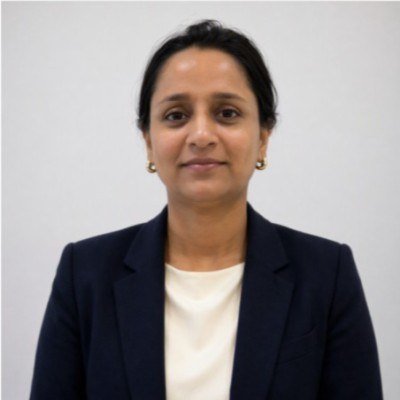
Neha Gupta is a CFA charterholder based in Winnipeg who has worked in financial markets since December 2005. She has published more than 2,600 investment articles and is Head of Operations and Finance at Whiteland Real Estate. She reviews WealthScale’s investing pages for accuracy.
- CFA charter, CFA Institute (awarded 2023)
- Post Graduate Diploma in Business Administration (Finance), 2008
- In financial markets since December 2005
- More than 2,600 published investment articles
General information only. Not financial, investment, tax or legal advice. WealthScale is independent and is published by WealthScale Media Inc., 55 Queen St E, Suite 1205, Toronto, ON M5C 1R6. CFA® and Chartered Financial Analyst® are registered trademarks owned by CFA Institute.