

Wealthsimple FHSA Review
WealthScale is independent and not affiliated with Wealthsimple.
The Wealthsimple FHSA lets first-time home buyers invest their $8,000 a year of FHSA room ($40,000 lifetime) three ways: self-directed with $0 commission on listed Canadian and US stocks and ETFs, in a managed portfolio at 0.5% a year on Core and 0.4% on Premium plus fund costs, or through Automated Investing at 0.25%. There is no stated minimum, no account fee, and Wealthsimple covers the old institution’s transfer-out fee, up to $150 per account, on transfers of $25,000 or more. Crypto is not allowed. Wealthsimple ranks fourth of 11 FHSA brokers in our scoring at 4.2 / 5, and its managed portfolios rank first of four robo-advisors at 4.2 / 5.
 Written by Sharad Gondaliya, CPA CPAChartered Professional Accountant, CPA Ontario No. 61040184
 Financial reviewer: Neha Gupta, CFA CFA charterholderReview of this page scheduled
At a glance
Verdict. The Wealthsimple FHSA is one of the strongest places to hold a First Home Savings Account in Canada. It offers every way to invest, from picking your own ETFs at $0 commission to a fully managed portfolio, with no account fee and no stated minimum. Its main costs are the management fee if you choose a managed portfolio and, on Core, $10 a month plus tax if you add a USD account.
Scores. Wealthsimple scores 4.2 / 5 overall, rank 4 of the 11 online brokers that offer an FHSA, as of October 23, 2026. Wealthsimple Managed Investing scores 4.2 / 5, rank 1 of the four robo-advisors we rank.
FHSA versions. Self-directed (Trade), managed portfolios, Automated Investing and a savings version. No crypto. An FHSA cannot be used as collateral for Wealthsimple’s portfolio line of credit.
Fees. $0 commission on listed Canadian and US stocks and ETFs; USD account $10 a month plus tax on Core; managed fee 0.5% on Core and 0.4% on Premium and Generation, plus fund costs of 0.12% to 0.15% on Classic portfolios; Automated Investing 0.25%; $0 to open, close or transfer out.
Transfers and offers. Wealthsimple covers transfer-out fees, up to $150 per account, on transfers of $25,000 or more. There is no FHSA-only promotion, but FHSA transfers count toward the 1% transfer match, which pays 1% of $25,000 or more transferred, up to $20,000.
FHSA rules for 2026. $8,000 of room a year from the year you open your first FHSA, $40,000 lifetime, up to $8,000 of unused room carried forward, and a contribution deadline of December 31 with no 60-day period.
1. Wealthsimple FHSA Review: Our Verdict and Score
The short version. A First Home Savings Account gives you a tax deduction going in and, on a qualifying home purchase, a tax-free withdrawal coming out. The account you choose decides what you can hold and what it costs. Wealthsimple offers every option a first-time buyer is likely to want under one login: a self-directed FHSA with $0 commissions, a managed FHSA that invests and rebalances for you, an Automated Investing FHSA and a savings version.
Why it ranks fourth. Among the 11 online brokers that offer an FHSA, Wealthsimple scores 4.2 / 5, behind Questrade and Desjardins Online Brokerage (Disnat) at 4.3 / 5 and level with Interactive Brokers Canada (4.2 / 5), which ranks ahead on its unrounded score. Wealthsimple earns full marks for cost and account types. It loses points on cash interest in trading accounts, which it does not publish, and on US investing, because Core clients pay $10 a month plus tax for a USD account in a registered account.
| Factor | Weight | Wealthsimple sub-score | Weighted points |
|---|---|---|---|
| Cost | 35% | 5.0 | 1.750 |
| Account types | 15% | 5.0 | 0.750 |
| US investing | 15% | 3.5 | 0.525 |
| Cash and margin | 10% | 2.0 | 0.200 |
| Platform features | 15% | 4.0 | 0.600 |
| Safety | 10% | 4.0 | 0.400 |
| Total | 100% | 4.225, shown as 4.2 / 5 |
The managed side. Wealthsimple Managed Investing ranks first of the four robo-advisors we score, at 4.2 / 5. Its total cost on $50,000 in our robo scoring is 0.65% a year (the 0.5% Core fee plus 0.15%, the highest Classic portfolio fund cost), more than Questwealth Portfolios at 0.37%, but it scores higher on portfolio choice, minimum and access to advice.
Our view. For a first-time buyer who wants to invest an FHSA in low-cost Canadian-listed ETFs, Wealthsimple’s self-directed FHSA costs close to nothing to run. For a buyer who wants a hands-off portfolio, the managed FHSA is simple but carries a yearly fee that matters over a 15-year account life. Rankings follow our published broker rating methodology.
2. The Four Wealthsimple FHSA Versions
One account type, four ways to run it. Wealthsimple offers the Wealthsimple first home savings account in four versions. Each is a real FHSA with the same CRA rules, but they differ in who chooses the investments, what you pay and how the account is protected.
| Version | Who invests | Main cost | Protection |
|---|---|---|---|
| Self-directed (Trade) | You choose stocks and ETFs | $0 commission; USD account $10 a month plus tax on Core | CIPF, general group |
| Managed | Wealthsimple builds and rebalances a portfolio | 0.5% a year on Core, 0.4% on Premium and Generation, plus fund costs | CIPF, general group |
| Automated Investing | Automated by Wealthsimple | 0.25% a year, capped at $250 per account | CIPF, general group |
| Savings | Cash earning interest | Rate being confirmed | CDIC up to $100,000; not CIPF |
Self-directed. The self-directed FHSA gives you access to 14,000+ stocks and ETFs, with $0 commission on listed Canadian and US securities. You can buy fractional shares from $1, set recurring investments and turn on dividend reinvestment. You can also trade options: in a registered account like an FHSA, Wealthsimple allows buying calls and puts, selling cash-secured puts and selling covered calls.
Managed. The managed FHSA puts your money in a Wealthsimple portfolio. A Classic portfolio holds 8 to 10 ETFs, rebalances automatically when you deposit, withdraw or change your goal, and reinvests dividends into the parts of the portfolio that are underweight. About 0.3% to 0.5% of the account is held as a cash buffer, and deposits are invested within 5 business days.
Automated Investing. Automated Investing costs 0.25% a year, capped once the balance reaches $100,000 at $250 per account per year. Wealthsimple lists the FHSA among its eligible accounts. Because the FHSA’s lifetime contribution limit is $40,000, most FHSAs will pay the percentage fee rather than reach the cap.
Savings. Wealthsimple’s FHSA page offers a savings version. Its pages disagree on the rate, so we do not print one. It is covered by CDIC up to $100,000 per beneficiary in the FHSA category and is not protected by CIPF, unlike the investing versions.
What is not allowed. Crypto cannot be held in a Wealthsimple FHSA. An FHSA cannot be used as collateral for Wealthsimple’s portfolio line of credit. Wealthsimple has not stated whether its Private Market Fund can be held in an FHSA.
3. Self-Directed vs Managed FHSA: FHSA Wealthsimple Managed or Trade?
The core choice. The main choice for a Wealthsimple FHSA is between doing it yourself in Trade and letting Wealthsimple manage it. The account rules are identical. The differences are cost, effort and control.
| Feature | Self-directed FHSA | Managed FHSA |
|---|---|---|
| Who picks investments | You | Wealthsimple |
| Wealthsimple fee | $0 commission on listed Canadian and US stocks and ETFs | 0.5% a year on Core; 0.4% on Premium and Generation |
| Fund costs | Whatever the ETFs you buy charge | Classic portfolios up to 0.15% a year |
| Rebalancing | You do it | Automatic |
| Cost on $16,000 a year | $0 to Wealthsimple, plus your ETF costs | $80.00 fee on Core, plus up to $24.00 of fund costs |
| Cost on $40,000 a year | $0 to Wealthsimple, plus your ETF costs | $200.00 fee on Core, plus up to $60.00 of fund costs |
| Options trading | Calls, puts, cash-secured puts, covered calls | Not applicable |
| Minimum | None stated | None stated |
How the costs are worked out. On $16,000, two years of full contributions, the Core management fee is $80.00 ($16,000 x 0.5%) and Classic fund costs at 0.15% add $24.00 ($16,000 x 0.15%). On $40,000, the full lifetime limit, the fee is $200.00 ($40,000 x 0.5%) and fund costs add $60.00 ($40,000 x 0.15%). On Premium, the fee falls to 0.4%: $64.00 on $16,000 and $160.00 on $40,000.
When managed makes sense. A managed FHSA suits a buyer who wants a diversified portfolio without choosing funds, does not want to rebalance and values the discipline of automatic deposits. The fee buys simplicity, and on an account that tops out at $40,000 of contributions it is a modest dollar amount.
When self-directed makes sense. A self-directed FHSA suits a buyer who is comfortable buying a small number of Canadian-listed ETFs and checking them once or twice a year. It also suits a buyer whose purchase is close and who wants to hold cash or short-term holdings without paying a management fee. Read our Wealthsimple managed investing review and Wealthsimple Trade review for each product in depth.
Tax-loss harvesting does not apply. Wealthsimple offers tax-loss harvesting on managed accounts for Premium and Generation clients, but it has no use inside an FHSA, where gains are not taxed as they occur. The feature matters only in non-registered accounts.
4. Wealthsimple FHSA Fees
No account fee. Wealthsimple charges $0 to open, keep or close an FHSA and $0 to transfer one out to another institution. There is no inactivity fee. That puts it level with the lowest-cost FHSA providers on holding costs.
| Fee | Amount |
|---|---|
| Account opening, maintenance and closing | $0 |
| Commission on listed Canadian and US stocks and ETFs | $0 |
| USD account (optional) | $10 a month plus tax on Core; included on Premium and Generation |
| Managed portfolio fee | 0.5% on Core; 0.4% on Premium and Generation |
| Classic portfolio fund costs (MER) | From 0.12%, up to 0.15% |
| Automated Investing | 0.25%, capped at $250 per account a year |
| Equity and ETF options, per contract | US$0 |
| Transfer out to another institution | $0 |
| Paper statement | $20 |
| Phone trade | $45 |
The fees that can add up. On Core, the optional USD account costs $10 a month plus tax, or $120 a year before tax, whether or not you trade in it. The $20 paper statement fee and the $45 phone trade fee apply only if you use those services, so electronic statements and trades placed in the app avoid them. Section 6 covers the USD option.
Pass-through fees. The $0 US commission does not cover regulatory and exchange pass-through fees, such as ECN, TAF or ORF charges, that may apply to some US orders. They appear on the trade confirmation.
Fund costs are separate. Every ETF charges its own management expense ratio, which comes out of the fund’s returns rather than as a bill. In a managed FHSA, Wealthsimple states the Classic portfolio range. In a self-directed FHSA, the cost depends on the ETFs you buy. For the full list of Wealthsimple charges across every product, see our Wealthsimple fees guide.
See every broker and robo-advisor that offers an FHSA, ranked by the same published score.
5. Core vs Premium vs Generation for an FHSA
Tiers change three FHSA costs. Wealthsimple’s tiers are set by the assets you hold with it: Core from $1, Premium from $100,000 and Generation from $500,000. For an FHSA, the tier changes the managed fee, the cost of a USD account and access to some extras. It does not change commissions.
| Item | Core | Premium | Generation |
|---|---|---|---|
| Assets needed | $1 | $100,000 | $500,000 |
| Managed fee | 0.5% | 0.4% | 0.4% |
| USD account | $10 a month plus tax | Included | Included |
| Tax-loss harvesting (non-registered only) | No | Yes | Yes |
| Wealthsimple Tax | Basic, pay what you want | Plus included | Pro included |
| Support | Standard | Priority phone | Priority phone and email |
Does the FHSA count toward your tier? Wealthsimple uses the higher of your net deposits or total portfolio value. Its pricing page says almost all accounts count, and lists TFSA, RESP, RRSP, Group RRSP, LIRA, non-registered, crypto, savings and chequing. The FHSA is not named on that list. Please confirm with Wealthsimple whether your FHSA balance counts before you rely on it to reach Premium.
Households. Two or more Wealthsimple clients at the same residential address can form a household and combine assets toward Premium or Generation. A couple saving for a first home together, each with an FHSA and a TFSA, may reach $100,000 together sooner than either would alone.
Tax software matters at FHSA time. You claim your FHSA deduction on your tax return, so the tax software you use matters in every year you contribute. Wealthsimple Tax Basic is pay what you want, including $0; Plus is $40 plus tax and included on Premium; Pro is $80 plus tax and included on Generation. Our Wealthsimple Tax review and Core vs Premium vs Generation guide cover both.
6. US Investing and USD Accounts in a Wealthsimple FHSA
USD is allowed. Wealthsimple lets you add a USD account to an FHSA. That is unusual: National Bank Direct Brokerage, Qtrade and TD Easy Trade keep the FHSA in Canadian dollars only. With a USD side, the FHSA can hold US dollars alongside the US-listed stocks and ETFs you buy.
What it costs. The USD account costs $10 a month plus tax on Core, or $120 a year before tax, and is included on Premium and Generation. US-listed stocks and ETFs trade at $0 commission at every tier. On Core, the $120 is a fixed account fee, so it weighs more on a small FHSA: on a $16,000 balance it equals 0.75% a year ($120 ÷ $16,000 = 0.75%) before tax.
US withholding tax. US dividends paid into an FHSA are withheld at 15% with a W-8BEN on file, or 30% without one. The FHSA is not a retirement arrangement under the Canada-US tax treaty, so the exemption that protects RRSPs does not apply, and the tax cannot be recovered as a foreign tax credit. On US$400 of US dividends, US$60.00 is withheld at 15%.
Canadian-listed alternatives. Canadian-listed ETFs that hold US or global stocks trade in Canadian dollars, so holding them needs no USD account in the FHSA and no $10 monthly fee on Core. That is a general option, not a recommendation of any fund. Our Wealthsimple USD accounts review explains the USD account in detail, and our guide to buying US stocks in Canada covers the steps.
Time horizon. An FHSA has a limited life: it ends on December 31 of the earliest of three years: the year of the 15th anniversary of your first FHSA, the year you turn 71, or the year after your first qualifying withdrawal. A short horizon leaves little time to recover from a market fall, so weigh that before holding a large share of a down payment in stocks, US or Canadian.
7. Transferring an FHSA to Wealthsimple
Transfer-out fees covered up to $150 per account on $25,000 or more. Wealthsimple reimburses the transfer-out fee your old institution charges, up to $150 per account, on transfers of $25,000 or more. The account must stay funded for 90 days. The threshold was $15,000 before April 10, 2025. Wealthsimple’s pages describe the claim process in two different ways, one saying it is automatic and another asking for proof, so confirm the steps with Wealthsimple before you transfer.
The FHSA limit makes $25,000 harder to reach. With $8,000 of room a year, contributions alone reach at most $24,000 by the end of the third calendar year ($8,000 x 3 = $24,000), so a young FHSA can sit below $25,000 unless growth lifts it. Wealthsimple’s pages state the threshold without saying whether transfers into several accounts at once can be added together to reach it. If your FHSA is below $25,000, confirm this before you count on the reimbursement. TD, RBC, Scotia iTRADE and National Bank Direct Brokerage each charge $150 to transfer out, so that is often the amount at stake.
Always use a direct transfer. Moving an FHSA between institutions must be done as a direct transfer, started by the receiving institution. Withdrawing the money yourself and depositing it at Wealthsimple is not a transfer: the withdrawal would be taxable unless it is a qualifying home withdrawal, and the new deposit would use FHSA room. Our guide to transferring an investment account walks through the process.
FHSA to RRSP. Wealthsimple confirms you can transfer an FHSA to an RRSP without using RRSP room. Under CRA rules, a direct transfer from an FHSA to an RRSP or RRIF is tax-deferred and does not reduce your unused RRSP deduction room, as long as you have no excess FHSA amount. This is the main exit if you never buy a home.
RRSP to FHSA. CRA allows RRSP-to-FHSA transfers within your FHSA limits, though they are not deductible. Wealthsimple’s FHSA page does not address RRSP-to-FHSA or FHSA-to-FHSA transfers, so confirm with Wealthsimple before you start one. Our FHSA vs RRSP Home Buyers’ Plan guide explains when each route makes sense.
8. Promotions: The 1% Transfer Match and Other Offers
No FHSA-only promotion. As of October 22, 2026, Wealthsimple runs no promotion specific to the FHSA. Its general offers apply instead, and the most valuable one for anyone moving an existing FHSA is the 1% transfer match.
The 1% Match. Wealthsimple pays a cash bonus of 1% on the first $2,000,000 of net qualifying transfers, for a maximum of $20,000. You must transfer at least $25,000, and the transfers must start within 30 days of registering for the offer. Eligible accounts are Trade, Managed and Crypto accounts of these types: TFSA, RRSP, FHSA, non-registered and corporate. The bonus is paid in 24 equal monthly payments into a Wealthsimple chequing account, and the terms include a 20% withdrawal buffer that runs for 730 days. The offer took effect May 4, 2026, has no end date, and its terms were last updated July 27, 2026.
| Net qualifying transfer | Total bonus | Monthly payment for 24 months |
|---|---|---|
| $30,000 | $300.00 | $12.50 |
| $36,000 | $360.00 | $15.00 |
| $48,000 | $480.00 | $20.00 |
| $60,000 | $600.00 | $25.00 |
| $120,000 | $1,200.00 | $50.00 |
Reading the terms. The payments arrive over two years and depend on keeping the money at Wealthsimple, so treat the bonus as something you earn by staying, not cash up front. Read how the 20% withdrawal buffer works before you transfer, especially if you expect to make a qualifying FHSA withdrawal for a home within two years.
Other offers. Brand-new clients can get a 5% welcome offer on the savings account and the credit card for their first weeks, which has nothing to do with the FHSA. Our full Wealthsimple review lists every current offer.
9. FHSA Rules Recap for 2026
The rules are the same everywhere. The FHSA’s limits, deadlines and tax treatment come from the CRA, not from Wealthsimple. Every provider must follow them. This recap gives the figures that apply in 2026; our full FHSA guide covers each rule in depth.
| Rule | What applies |
|---|---|
| Annual participation room | $8,000 |
| Lifetime limit | $40,000 of contributions and RRSP-to-FHSA transfers |
| Carry-forward | Unused room up to $8,000, so the most in one year is $16,000 |
| When room starts | The year you open your first FHSA; nothing builds up before then |
| Who can open one | Canadian resident, 18 or older (19 where that is the age of majority), 71 or younger at December 31 of the opening year, and a first-time home buyer |
| First-time buyer at opening | No home owned and lived in by you or your current spouse or partner in the current year before opening or the previous four calendar years |
| Contribution deadline | December 31, with no 60-day period |
| Tax deduction | Claim in the year you contribute or carry it forward, even after the FHSA closes; RRSP-to-FHSA transfers are not deductible |
| How long it lasts | Until December 31 of the year of the earliest of the 15th anniversary of your first FHSA, turning 71, or the year after your first qualifying withdrawal |
| Qualifying withdrawal | Written agreement to buy or build with completion before October 1 of the year after the withdrawal; occupy within one year; Canadian resident; Form RC725 |
| Over-contribution | 1% a month on the highest excess in the month |
| No home bought | Transfer to an RRSP or RRIF without using RRSP room, or withdraw as taxable income |
| With the Home Buyers’ Plan | Both can be used for the same qualifying home |
Room only starts when you open. Unlike the TFSA, FHSA room does not build up from age 18. It begins in the year you open your first FHSA, with no carry-forward in that first year. A buyer who expects to want an FHSA soon gains by opening one now, even with a small deposit, so that $8,000 of room starts to accrue. Use the FHSA room calculator below to see your room by year opened and contributions made.
Carry-forward has a cap. If you open in 2026 and contribute $5,000, you carry forward $3,000, so your 2027 room is $11,000 ($8,000 + $3,000). Unused room above $8,000 is not carried, so the most you can ever add in one year is $16,000. Check eligibility with our FHSA eligibility guide and plan contributions with the FHSA calculator.
Mind the December 31 deadline. FHSA contributions must be made by December 31 to count for that year. Money deposited in January or February cannot be deducted for the previous year, unlike the RRSP. If you plan a year-end contribution, fund the account early enough that the deposit settles in time.
Over-contributions cost 1% a month. The tax is 1% a month on the highest excess amount in each month until it is removed. A $2,000 excess left for three months costs $60.00 ($2,000 x 1% x 3). It can be fixed with a designated withdrawal or transfer, a taxable withdrawal or new room on January 1.
10. Is a Wealthsimple FHSA Safe? CIPF and CDIC Cover
Investing versions: CIPF. A self-directed, managed or Automated Investing FHSA is held by Wealthsimple Investments Inc., a CIRO dealer member and CIPF member. CIPF places the FHSA in its general group, together with cash, margin and TFSA accounts, with a combined limit of $1,000,000. If the firm failed and client property were missing, CIPF would cover the missing cash and securities up to that limit.
Shared limit. Because the FHSA shares CIPF’s general limit with your TFSA, non-registered and margin accounts, a client with $900,000 in other general accounts and $40,000 in an FHSA has $940,000 in the group ($900,000 + $40,000 = $940,000), still inside the $1,000,000 limit.
Savings version: CDIC, not CIPF. The FHSA savings version is a Registered Savings Account. Wealthsimple states these are covered by CDIC up to $100,000 per beneficiary per category and are not protected by CIPF. The FHSA is its own CDIC category, separate from a TFSA or RRSP savings account. With a $40,000 lifetime contribution limit, an FHSA savings balance stays under $100,000 unless interest lifts it to two and a half times the amount contributed ($40,000 x 2.5 = $100,000), and interest counts toward the CDIC limit.
What no plan covers. Neither CIPF nor CDIC covers a fall in market value. If your down payment is invested in a stock-heavy portfolio and markets fall the year you plan to buy, no protection plan makes up the loss. Matching your investments to your purchase date is a choice only you can make.
Read more. Our guide to whether Wealthsimple is safe maps CIPF and CDIC cover across every Wealthsimple product.
11. Opening an FHSA and Using the Wealthsimple App
No stated minimum. Wealthsimple states no minimum to open an FHSA, and the Core tier starts at $1 in assets. You open the account in the Wealthsimple mobile app or the web app, and you choose the version when you open it: self-directed, managed, Automated Investing or savings.
Eligibility is on you. Wealthsimple will ask you to confirm you meet the CRA conditions, but the rules are yours to meet. You must be a Canadian resident, at least 18 (19 where that is the age of majority), no older than 71 at December 31 of the year you open the account, and a first-time home buyer under the CRA’s four-year test. The conditions apply on the day the account is opened.
Funding and timing. Instant deposits are available up to $50,000 on Core and $250,000 on Premium and Generation. Recurring investments can be set daily, weekly, every two weeks or monthly, in stocks and ETFs. Fractional shares let a self-directed FHSA buy from $1, in real time during market hours, and dividend reinvestment can be switched on for the whole account.
Trading features. The self-directed FHSA can buy 14,000+ stocks and ETFs. US-listed stocks and ETFs trade 24 hours a day, five days a week, from Sunday 8 pm ET to Friday 8 pm ET, with extended-hours orders as limit orders. Options are limited in registered accounts to buying calls and puts, selling cash-secured puts and selling covered calls.
Withdrawing for your home. When you buy, you make a qualifying withdrawal using CRA Form RC725, which confirms you meet the conditions at the time of withdrawal. You can also combine it with the RRSP Home Buyers’ Plan, which allows up to $60,000 for withdrawals after April 16, 2024. See our Home Buyers’ Plan guide and our FHSA vs TFSA comparison for using both.
12. Wealthsimple FHSA Pros and Cons
Pros
- $0 commission on listed Canadian and US stocks and ETFs
- $0 to open, keep, close or transfer out
- Four versions: self-directed, managed, Automated Investing and savings
- Managed Investing scores 4.2 / 5, rank 1 of four robo-advisors
- USD account allowed in an FHSA, which several brokers do not offer
- Transfer-out fees covered, up to $150 per account, on $25,000 or more
- FHSA transfers count toward the 1% transfer match
- No stated minimum, fractional shares from $1 and recurring investments
Cons
- Pass-through fees may apply to some US orders
- USD account costs $10 a month on Core
- Managed fee of 0.5% on Core is above Questwealth’s 0.25%
- No crypto, and no use as line-of-credit collateral
- Savings version rate not confirmed; CDIC cover only to $100,000
- The $25,000 transfer threshold is hard to reach with one FHSA
- Unclear whether FHSA balances count toward tier status
- No FHSA-specific promotion
Weighing them. For most first-time buyers the pros dominate: there is no cost to hold the account and no commission to invest in Canadian-listed ETFs. The cons matter most to buyers who want US-listed holdings on Core or who would pay a 0.5% fee for many years.
13. Wealthsimple FHSA vs Other FHSA Providers
Every broker that offers an FHSA, by score. The table lists the 11 online brokers in our ranking that offer an FHSA, in order of overall score. Figures a broker does not publish are shown as not published.
| Rank | Broker | Score | Stock and ETF commission | USD in an FHSA | Account fee | Transfer-out fee |
|---|---|---|---|---|---|---|
| 1 | Questrade | 4.3 / 5 | $0 | Registered accounts hold USD | None | $150 |
| 2 | Desjardins Online Brokerage (Disnat) | 4.3 / 5 | $0 online | Not listed for FHSA | No admin fee on FHSA | $150 total |
| 3 | Interactive Brokers Canada | 4.2 / 5 | CAD 0.01 a share, CAD 1 minimum | Not published | No inactivity fee listed | Not published |
| 4 | Wealthsimple | 4.2 / 5 | $0 | Yes, $10 a month on Core | $0 | $0 |
| 5 | National Bank Direct Brokerage | 4.2 / 5 | $0 | No | $100 a year per account root unless waived | $150 |
| 6 | Qtrade Direct Investing | 4.0 / 5 | $0 | No | No quarterly admin fee on current schedule | $150 |
| 7 | BMO InvestorLine | 3.8 / 5 | $0 | Not published | $0 registered fee under $25,000 | Not published |
| 8 | CIBC Investor’s Edge | 2.8 / 5 | $6.95 | Not published | No annual fee on FHSA | Not published |
| 9 | RBC Direct Investing | 2.7 / 5 | $9.95; $0 on 50 trades a year with GoSmart | Accounts hold CAD and USD | $0 | $150 |
| 10 | Scotia iTRADE | 2.6 / 5 | $9.99 | Not stated | Low-activity fee waived for registered accounts | $150 |
| 11 | TD Direct Investing | 2.4 / 5 | $9.99 | TD Easy Trade FHSA is CAD only | $25 a quarter under $15,000, waived if FHSA only | $150 |
What stands apart. Wealthsimple is the only broker in the table that publishes both a $0 transfer-out fee and a USD option named for the FHSA. Questrade matches its $0 commissions and lets registered accounts hold US dollars without a separate fee, but charges $150 to transfer out. Interactive Brokers charges per share, at CAD 0.01 a share with a CAD 1 minimum. For full head-to-heads, read Wealthsimple vs Questrade and Wealthsimple vs Interactive Brokers, or our Questrade review, Interactive Brokers Canada review, RBC Direct Investing review and TD Direct Investing review.
| Robo-advisor | Score | Management fee | FHSA |
|---|---|---|---|
| Wealthsimple Managed Investing | 4.2 / 5 | 0.5% on Core; 0.4% on Premium | Offered |
| Questwealth Portfolios | 4.1 / 5 | 0.25%; 0.20% from $100,000 | Shown in Questrade’s site menu, not on its account-types list |
| CI Direct Investing | 3.7 / 5 | 0.60% on the first $150,000 | Not mentioned |
| RBC InvestEase | 3.4 / 5 | 0.50% flat | Offered |
| Justwealth | Not ranked | Tiers published only as an image | Offered, with no minimum for FHSA |
Managed options. Among ranked robo-advisors that clearly offer an FHSA, Wealthsimple and RBC InvestEase are the two. Our best robo-advisors ranking explains each score. Rankings never depend on payment; see how WealthScale makes money.
14. Who the Wealthsimple FHSA Suits and Who Should Look Elsewhere
First-time buyers who want low costs and simplicity. If you plan to invest your FHSA in Canadian-listed ETFs, a self-directed Wealthsimple FHSA costs nothing to hold and nothing to trade. The app makes recurring contributions and fractional shares easy, which suits a buyer adding a few hundred dollars a month.
Buyers who want it done for them. If you would rather not choose investments, the managed FHSA builds and rebalances a portfolio for 0.5% a year on Core, plus fund costs. On $16,000, that is $80.00 a year in Wealthsimple fees. It is the top-scoring robo-advisor in our ranking.
Couples saving together. Each partner can open their own FHSA, and each gets their own $8,000 a year and $40,000 lifetime limit. Wealthsimple’s household feature lets you combine assets toward Premium, which lowers the managed fee to 0.4%.
Who should look elsewhere. Buyers who want to hold US dollars in the FHSA on Core will pay $10 a month plus tax for a USD account; Questrade lets registered accounts hold USD without a separate fee. Buyers who want crypto in a registered account will not find it here: Wealthsimple holds crypto only in a non-registered crypto account.
Compare before you open. Our best FHSA accounts ranking lists every provider. If you are deciding which account to fund first, read FHSA vs TFSA for a down payment and FHSA vs RRSP Home Buyers’ Plan.
What You Need and What You Get With a Wealthsimple FHSA
What you need to open one
- Canadian residency and age 18 or older (19 where that is the age of majority)
- Age 71 or younger at December 31 of the year you open it
- First-time home buyer status under the four-year test, for you and your current spouse or partner
- Your social insurance number
- A bank account or Wealthsimple account to fund contributions
- A choice of version: self-directed, managed, Automated Investing or savings
- For a transfer in: your current FHSA statement and account number
What you get
- $8,000 of FHSA room a year, up to $40,000 lifetime
- A tax deduction for contributions, usable now or later
- A tax-free qualifying withdrawal for your first home
- $0 commission on listed Canadian and US stocks and ETFs
- Managed portfolios at 0.5% on Core or 0.4% on Premium
- $0 account, closing and transfer-out fees
- A USD option inside the FHSA
- CIPF cover in the general group for the investing versions
- Transfer-out fees covered, up to $150 per account, on $25,000 or more
How to Open and Fund a Wealthsimple FHSA
- Confirm you qualify. Check residency, age and the first-time buyer test for you and your current spouse or partner before you open, since the conditions apply at opening.
- Choose the version. Pick self-directed, managed, Automated Investing or savings. The version decides your fees and whether CIPF or CDIC covers the account.
- Open the account. Open the FHSA in the Wealthsimple app or web app. Opening starts your $8,000 of room for the year, even before you deposit.
- Fund it or transfer in. Deposit new money, or ask Wealthsimple to transfer an existing FHSA directly from your old institution. Never withdraw and redeposit an FHSA yourself.
- Set recurring contributions. Schedule daily, weekly, every-two-weeks or monthly investments, and keep the yearly total within your room.
- Claim the deduction. Report contributions on your tax return. Deduct them that year or carry the deduction forward to a higher-income year.
- Withdraw for your home. When you buy, complete Form RC725 and make a qualifying withdrawal. If you do not buy, transfer the FHSA to an RRSP before the account’s time limit.
10 Strategies to Get More From a Wealthsimple FHSA
1. Open early, even with a little
FHSA room starts only in the year you open your first FHSA. Opening this year, even with a small deposit, starts $8,000 of room and lets up to $8,000 of unused room carry into next year.
2. Hold the deduction for a higher-income year
You can carry FHSA deductions forward, even after the account closes. If you expect a raise, contribute now for tax-free growth and claim the deduction when your marginal rate is higher.
3. Contribute before December 31
FHSA contributions have no 60-day window. Money that arrives in January counts for the new year, not the old one, so schedule year-end deposits early.
4. Turn on dividend reinvestment
In a self-directed FHSA, Wealthsimple lets you switch on dividend reinvestment for the whole account, and fractional shares mean the full dividend can go back to work. Over an account life of up to 15 years, reinvested dividends grow inside the FHSA with no yearly tax.
5. Match risk to your purchase date
Money you need within a year or two is exposed to market drops that no protection plan covers. Moving toward cash or the savings version as the purchase date nears reduces that exposure.
6. Combine transfers for the 1% Match
The match needs $25,000 of net qualifying transfers, and FHSA, TFSA, RRSP and non-registered transfers all count. Moving several accounts at once can clear the threshold, and $48,000 earns $480.00 over 24 months.
7. Pair the FHSA with the Home Buyers’ Plan
You can use both for the same home. The HBP allows up to $60,000 from an RRSP, on top of your FHSA, which can make a much larger down payment.
8. Each partner opens their own
FHSA room is personal. Two first-time buyers each get $8,000 a year and $40,000 lifetime, for $80,000 of combined contribution room ($40,000 x 2).
9. Reach Premium to cut the managed fee
On Premium, the managed fee drops from 0.5% to 0.4%. Combining household assets can reach $100,000 sooner, though Wealthsimple does not say whether FHSA balances count toward your tier.
10. Plan the exit if you do not buy
If you never buy, a direct transfer to an RRSP keeps the money tax-deferred without using RRSP room. Leaving it past the account’s time limit makes the full value taxable.
Illustrative Example: A Two-Year Wealthsimple FHSA in Alberta
This example is hypothetical. Jordan, 28, lives in Alberta, rents and has never owned a home. His 2026 taxable income is $80,000, so his combined marginal rate is 30.5% (20.5% federal plus 10% Alberta). He opens a managed Wealthsimple FHSA on the Core tier in 2026. Fees are as of October 22, 2026, and we ignore investment returns.
- 2026 room: $8,000. Jordan contributes $5,000, leaving ($8,000 − $5,000 = $3,000) unused.
- 2026 tax saving from deducting $5,000: ($5,000 x 30.5% = $1,525.00). His taxable income falls to ($80,000 − $5,000 = $75,000), which is still in the same federal and Alberta brackets, so the full 30.5% applies.
- 2027 room: the new $8,000 plus the $3,000 carried forward: ($8,000 + $3,000 = $11,000). Jordan contributes $11,000.
- Total contributed after two years: ($5,000 + $11,000 = $16,000). Lifetime room left: ($40,000 − $16,000 = $24,000).
- Yearly Wealthsimple fee on $16,000 at 0.5%: ($16,000 x 0.5% = $80.00).
- Classic portfolio fund costs at up to 0.15%: ($16,000 x 0.15% = $24.00), for a total of up to ($80.00 + $24.00 = $104.00) a year.
- Had Jordan chosen a self-directed FHSA with Canadian-listed ETFs, he would pay $0 in commissions to Wealthsimple, plus the fund costs of whatever ETFs he chose.
- Had he contributed the full $8,000 in 2026 instead, his deduction would save ($8,000 x 30.5% = $2,440.00).
When Jordan buys his first home and meets the qualifying conditions, he can withdraw the whole FHSA, including any growth, without tax. If he does not buy, he can transfer it directly to an RRSP without using RRSP room.
Wealthsimple FHSA FAQ
Does Wealthsimple offer an FHSA?
Yes. Wealthsimple offers the First Home Savings Account in four versions: self-directed (Trade) with $0 commissions, managed portfolios, Automated Investing and a savings version. There is no stated minimum and no account fee. Crypto cannot be held in a Wealthsimple FHSA, and the FHSA cannot be used as collateral for Wealthsimple’s line of credit.
What are the Wealthsimple FHSA fees?
A self-directed FHSA charges $0 commission on listed Canadian and US stocks and ETFs, and an optional USD account costs $10 a month plus tax on Core. A managed FHSA costs 0.5% a year on Core and 0.4% on Premium and Generation, plus fund costs. Automated Investing costs 0.25%. Opening, closing and transferring out cost $0.
Can I have a managed FHSA at Wealthsimple?
Yes. Wealthsimple Managed Investing offers the FHSA. It builds and rebalances a portfolio for 0.5% a year on Core and 0.4% on Premium, plus fund costs of 0.12% to 0.15% on Classic portfolios. Wealthsimple Managed Investing scores 4.2 / 5 in our robo-advisor ranking, rank 1 of four, as of October 22, 2026.
Is there a minimum to open a Wealthsimple FHSA?
No minimum is stated. Wealthsimple’s Core tier starts at $1 in assets, and fractional shares let a self-directed FHSA invest from $1. Opening the account starts your $8,000 of FHSA room for that year, even if you deposit little or nothing at first.
Can I hold crypto in a Wealthsimple FHSA?
No. Wealthsimple offers crypto only in a non-registered crypto account. You cannot hold crypto in a Wealthsimple FHSA, TFSA or RRSP. Crypto coins at Wealthsimple are also not covered by CIPF or CDIC, unlike the investing versions of the FHSA.
Can I hold US dollars in a Wealthsimple FHSA?
Yes. Wealthsimple lets you add a USD account to an FHSA, for $10 a month plus tax on Core, included on Premium and Generation. US dividends in an FHSA are still withheld at 15% with a W-8BEN, and that tax cannot be recovered, because the FHSA does not get the treaty exemption that RRSPs do.
Does Wealthsimple cover FHSA transfer fees?
Yes, on transfers of $25,000 or more. Wealthsimple reimburses the transfer-out fee your old institution charges, up to $150 per account, if the account stays funded for 90 days. Its pages describe the claim process differently, so please confirm the steps before you transfer. Wealthsimple charges $0 to transfer out.
Does the 1% transfer match apply to an FHSA?
Yes. FHSA transfers into Trade or Managed accounts count toward Wealthsimple’s 1% Match. You must transfer at least $25,000 within 30 days of registering, and the bonus is 1% on up to $2,000,000, a maximum of $20,000, paid in 24 monthly payments to Wealthsimple chequing, with a 20% withdrawal buffer for 730 days.
Is a Wealthsimple FHSA protected by CIPF?
The investing versions are. A self-directed, managed or Automated Investing FHSA sits in CIPF’s general group with your TFSA, cash and margin accounts, sharing a $1,000,000 limit. The savings version is a Registered Savings Account covered by CDIC up to $100,000 and not by CIPF.
How much can I contribute to an FHSA in 2026?
$8,000 a year, plus up to $8,000 of unused room carried forward from the previous year, so at most $16,000 in one year. The lifetime limit is $40,000. Room starts only in the year you open your first FHSA, and contributions must be made by December 31, with no 60-day period.
Can I move my Wealthsimple FHSA to an RRSP?
Yes. Wealthsimple allows FHSA to RRSP transfers, and under CRA rules a direct transfer from an FHSA to an RRSP or RRIF is tax-deferred and does not use RRSP room, provided you have no excess FHSA amount. This is the usual exit if you do not buy a home.
Is Wealthsimple or Questrade better for an FHSA?
Questrade scores 4.3 / 5 and Wealthsimple 4.2 / 5 in our ranking of brokers that offer an FHSA. Both charge $0 commissions. Wealthsimple charges $0 to transfer out and allows a USD account in the FHSA, at $10 a month on Core. Questrade lets registered accounts hold US dollars without a separate fee but charges $150 to transfer out.
Can I use an FHSA and the Home Buyers’ Plan together?
Yes. CRA rules let you use both for the same qualifying home if you meet the conditions for each at the time of withdrawal. The Home Buyers’ Plan allows up to $60,000 from your RRSPs for withdrawals after April 16, 2024, on top of your FHSA withdrawal.
Ready to compare every FHSA provider side by side before you open one?
Figures on this page were checked against each provider’s published pricing and Canada Revenue Agency publications on October 22, 2026. We update this page when a figure changes.
Meet the Experts Behind WealthScale

Sharad is a CPA Ontario member (No. 61040184) and a Certified Public Accountant licensed in Washington and Montana, with more than 15 years in accounting and tax, a Diploma in Banking and Finance and a Certificate in Small Business Finance. He checks WealthScale content against primary sources. WealthScale is independent of his firm, Gondaliya CPA Professional Corporation, and provides general information only, not personal financial, investment, tax or legal advice.
- Chartered Professional Accountant, CPA Ontario
- Certified Public Accountant, Washington (No. 57629) and Montana (No. PAC-CPAP-LIC-033176)
- Writing on tax and registered accounts since 2021
- Reader’s Choice Award 2025 Winner, Best Accountant (Toronto)
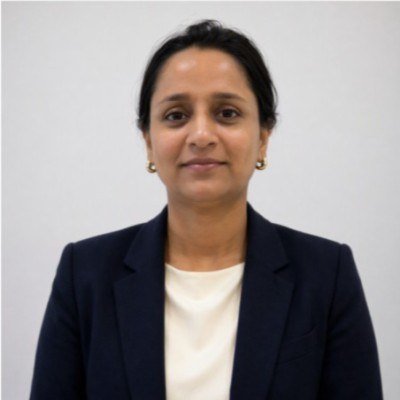
Neha Gupta is a CFA charterholder based in Winnipeg who has worked in financial markets since December 2005. She has published more than 2,600 investment articles and is Head of Operations and Finance at Whiteland Real Estate. She reviews WealthScale’s investing pages for accuracy.
- CFA charter, CFA Institute (awarded 2023)
- Post Graduate Diploma in Business Administration (Finance), 2008
- In financial markets since December 2005
- More than 2,600 published investment articles
General information only. Not financial, investment, tax or legal advice. WealthScale is independent and is published by WealthScale Media Inc., 55 Queen St E, Suite 1205, Toronto, ON M5C 1R6. CFA® and Chartered Financial Analyst® are registered trademarks owned by CFA Institute.