

How to Invest in Canada: A Step-by-Step Guide
How to invest in Canada comes down to ten steps: budget, clear expensive debt, build an emergency fund, set goals, choose the right account, decide how hands-on to be, pick a platform, learn the asset classes, diversify and count every cost, then place your first trade. For 2026, the TFSA limit is $7,000 and the RRSP dollar limit is $33,810. The robo-advisors we rank cost 0.37% to 0.83% a year in total on $50,000, and seven of the 13 online brokers we track charge $0 commission on stocks and ETFs, though fund costs and some account fees still apply. This guide covers each step in plain terms, with no stock or fund picks.
 Written by Sharad Gondaliya, CPA CPAChartered Professional Accountant, CPA Ontario No. 61040184
 Financial reviewer: Neha Gupta, CFA CFA charterholderReview of this page scheduled
At a glance
The ten steps. 1. Budget and clear high-interest debt. 2. Build an emergency fund. 3. Set goals and a time horizon. 4. Choose your accounts. 5. Choose DIY, a robo-advisor or an advisor. 6. Pick a platform. 7. Learn the asset classes. 8. Diversify. 9. Count every cost. 10. Make your first trade and automate.
2026 account limits. TFSA: $7,000 for 2026, and $109,000 in total for someone 18 or older and resident since 2009 who never contributed. RRSP: 18% of last year’s earned income, up to $33,810 for 2026. FHSA: $8,000 a year, $40,000 lifetime. RESP: $50,000 lifetime per child, with a 20% federal grant on the first $2,500 a year.
Three ways to invest. Do it yourself at an online broker, use a robo-advisor that builds and rebalances a portfolio for you, or pay an advisor. On $50,000, the four robo-advisors we rank cost $185 to $415 a year in total (0.37% to 0.83%) as of October 22, 2026.
Costs to watch. Seven of 13 online brokers charge $0 commission on Canadian and US stocks and ETFs. Funds charge their own yearly management expense ratio (MER), and some brokers charge account fees, such as $0.70 a month per account at Webull or $10 a month plus tax for a Wealthsimple USD account on Core.
Tax basics. Growth in a TFSA is tax-free, RRSP contributions are deductible and withdrawals are taxed, and in a non-registered account interest is fully taxable while only part of a capital gain is: one-half in 2026.
Safety. At a member of the Canadian Investor Protection Fund (CIPF), each of three account groups is covered up to $1,000,000 if the firm fails. CDIC insures eligible bank deposits up to $100,000 per category. Neither covers market losses.
Start with the account chooser below: answer a few questions about your goal and it shows which registered accounts may fit, as general information.
1. Step 1: Budget and Clear High-Interest Debt
Find the amount you can invest. Start with your take-home pay each month and subtract what you spend on housing, food, transport, insurance and debt payments. What is left is the amount you can save. Investing works best as a habit, so a steady monthly amount you can keep up matters more than a large one-off sum.
Pay off expensive debt first. Every dollar of high-interest debt you repay earns you that interest rate with no risk. Credit card rates are high: Wealthsimple’s credit card, for example, charges 20.99% on purchases. No investment can promise a return like that, so clearing card balances usually comes before investing beyond any employer match.
Do not invest with borrowed money as a beginner. Brokers lend against your investments through margin accounts, at rates such as 4.95% at Wealthsimple on its Core tier or prime plus 4.25%, about 8.70%, at Questrade. Borrowing to invest magnifies gains and losses alike, and a falling market can force you to sell. Learn how your investments behave before you borrow against them.
Use any employer plan. If your employer adds money when you contribute to a group retirement plan, that match is extra pay. Note that a workplace pension creates a pension adjustment, which reduces next year’s RRSP room, so check your notice of assessment for your actual RRSP limit.
Pay yourself first. Set up an automatic transfer on payday into your savings or investment account. Money that moves before you can spend it is the simplest way to stick to a budget.
2. Step 2: Build an Emergency Fund Before You Invest
Why it comes first. Markets fall from time to time. If a job loss or a large repair arrives during a fall, and you have no cash, you may have to sell investments at a loss. An emergency fund lets your investments stay invested.
How much to hold. Aim for enough to cover several months of essential costs: rent or mortgage, food, utilities, insurance and minimum debt payments. The right number depends on how steady your income is, whether your household has one or two earners and what insurance you have.
Where to keep it. Keep it somewhere safe and easy to reach, such as a high-interest savings account. At a member of the Canada Deposit Insurance Corporation (CDIC), eligible deposits are insured up to $100,000 per category per institution, and deposits in a TFSA, RRSP, RRIF, RESP or FHSA are each a separate category. Our best high-interest savings accounts page compares rates, and GIC vs high-interest savings explains when locking money in makes sense.
Use the TFSA for savings too. A TFSA can hold cash and GICs as well as investments. Interest earned inside it is tax-free, and you can take money out at any time, with the amount added back to your room on January 1 of the next year.
What CDIC does not cover. Stocks, bonds, ETFs, mutual funds and crypto are not covered by CDIC, even when you buy them at a bank. Your emergency fund belongs in deposits and GICs, not in the stock market. Our CIPF vs CDIC guide explains which protection covers what.
3. Step 3: Set Your Goals and Time Horizon
Name each goal. Write down what the money is for and when you need it: a car in two years, a home down payment in five, a child’s education in fifteen, retirement in thirty. Each goal gets its own time horizon, and the horizon drives everything else.
Short horizons need stable money. Money you need within a few years should not depend on the stock market, because markets can fall and take years to recover. Savings accounts and GICs suit short goals; see our best GIC rates.
Long horizons can take more risk. Money you will not touch for many years has time to recover from falls, so it can hold more stocks or stock funds, which carry a bigger risk of short-term losses in exchange for the chance of more growth. How much of that swing you can live with is your risk tolerance; how much you can afford is your risk capacity.
| Goal | When you need the money | Accounts that may fit | Asset types that may suit |
|---|---|---|---|
| Emergency fund | Any time | High-interest savings, TFSA | Cash deposits |
| Large purchase | Within a few years | TFSA, non-registered savings | Cash, GICs |
| First home | Up to 15 years | FHSA, RRSP Home Buyers’ Plan, TFSA | Depends on the date: cash and GICs when close, a wider mix when far |
| Child’s education | When the child starts post-secondary school | RESP | A mix that becomes more cautious as the child nears school |
| Retirement | Decades away | RRSP, TFSA, workplace plan | A diversified mix of stocks and bonds |
Write the plan down. A short written plan, listing each goal, its date, its account and how much you will add each month, keeps you on course when markets are loud. Review it once a year.
4. Step 4: Choose Your Accounts: TFSA, RRSP, FHSA and RESP
Use registered accounts first. Canada’s registered accounts shelter investment growth from tax. Which one comes first depends on your income now, your income later and your goal. The table shows the 2026 rules.
| Account | 2026 limit | Tax on the way in | Tax on growth and withdrawals | Best known for |
|---|---|---|---|---|
| TFSA | $7,000; $109,000 total since 2009 for those eligible every year | Not deductible | Tax-free; withdrawals added back to room next January 1 | Flexible saving for any goal |
| RRSP | 18% of 2025 earned income, up to $33,810, plus unused room | Deductible | Tax-deferred; withdrawals taxed as income | Retirement, and up to $60,000 for a first home |
| FHSA | $8,000 a year; $40,000 lifetime | Deductible | Tax-free on a qualifying home withdrawal | A first home |
| RESP | $50,000 lifetime per beneficiary | Not deductible | Growth and grants sheltered until paid out for school | A child’s education, with a 20% grant |
| Non-registered | No limit | Not deductible | Interest, dividends and capital gains taxed each year | Money above your registered room |
TFSA. Any Canadian resident 18 or older with a social insurance number can open one (19 where that is the age of majority). Room builds every year from 18, and unused room carries forward. Contributing more than your room costs 1% a month on the excess. Read the TFSA guide and check your figure with the TFSA contribution room calculator.
RRSP. Contributions reduce your taxable income this year, and withdrawals are taxed when you take them. It tends to suit people who expect a lower tax rate in retirement than today. The 2027 dollar limit is already published at $35,390. The RRSP guide and RRSP tax refund calculator show what a contribution saves you.
FHSA. If you have not owned and lived in a home in the current year or the previous four calendar years, and neither has a current spouse or partner, an FHSA gives you a deduction going in and a tax-free withdrawal to buy your first home. Room starts only when you open the account, so opening early matters. See the FHSA guide and FHSA vs TFSA.
RESP. The Canada Education Savings Grant adds 20% of the first $2,500 you contribute each year, or $500, up to $7,200 per child over time. Lower-income families can get more. Our RESP guide covers the grants.
Which first? For many people the order depends on whether they are buying a first home, how high their income is and whether they have an employer match. Our TFSA vs RRSP comparison works through the trade-off with tax rates, and the investment accounts hub covers every account type.
Know which account you want? Compare the providers that offer it, ranked by our published score.
5. Step 5: Choose DIY, a Robo-Advisor or an Advisor
Three ways to invest, three price levels. You can pick and buy investments yourself at an online broker, let a robo-advisor build and rebalance a portfolio for you, or pay a person to advise you. The main differences are who makes the decisions and what you pay each year.
| Question | Do it yourself | Robo-advisor | Advisor |
|---|---|---|---|
| Who picks the investments | You | Model portfolios matched to a questionnaire | The advisor, with you |
| Who rebalances | You | Done for you | The advisor |
| Yearly cost on $50,000 | $0 in commissions at 7 of 13 brokers, plus the MER of the funds you choose | From $185 (0.37%) at Questwealth, fund costs included | Not published in the sources we track; ask for the total in dollars |
| Minimum | None stated at most brokers we track | $100 at CI Direct Investing; RBC InvestEase invests once the balance reaches $100 | Set by each firm |
| Personal advice | None | Varies: planners at CI Direct Investing, advisors by phone or email at RBC InvestEase | Yes |
| May suit | People who want control and the lowest cost | People who want a hands-off, diversified portfolio | People with complex needs who want ongoing personal advice |
Robo-advisors ranked by score. We rank a robo-advisor when both its management fee schedule and its fund costs are published. The score weights fees at 45%, account types, portfolio choice and advice at 15% each, and the minimum at 10%. Total cost is the management fee plus the highest published fund cost for the core portfolios, on $50,000.
| Rank | Robo-advisor | Robo score | Management fee | Total yearly cost on $50,000 | Human advice |
|---|---|---|---|---|---|
| 1 | Wealthsimple Managed Investing | 4.2 / 5 | 0.5% on Core; 0.4% on Premium ($100,000+) | 0.65%, or $325 | Advice option; dedicated team at $1,000,000+ |
| 2 | Questwealth Portfolios | 4.1 / 5 | 0.25% under $100,000; 0.20% from $100,000 | 0.37%, or $185 | Not described |
| 3 | CI Direct Investing | 3.7 / 5 | 0.60% on the first $150,000 | 0.83%, or $415 | Access to planners |
| 4 | RBC InvestEase | 3.4 / 5 | 0.50% plus tax, flat | 0.70%, or $350 | Portfolio Advisors by phone or email |
Not ranked, and why. Justwealth publishes its fee tiers only as an image, and BMO SmartFolio’s 0.4% to 0.7% advisory fee has breakpoints and fund costs that are not published. We could not confirm that TD Automated Investing, Nest Wealth or Qtrade Guided Portfolios are open to new clients. The full list is on our best robo-advisors page.
Advisors. A full-service advisor may be paid through a yearly fee on your assets, through costs built into the funds you buy, or through a flat fee. We do not publish a typical figure because none of the advisor fees in our sources is verified. Please ask any advisor for the total yearly cost in dollars, including fund MERs and account fees, before you sign.
See what the gap costs over time. The fee calculator below shows how a higher yearly fee compounds. On $50,000, the gap between 0.37% and 0.83% is ($415 – $185 = $230) a year before any growth.
6. Step 6: Where to Invest Money in Canada: Pick a Platform
Online brokers for beginners, ranked. If you choose to invest yourself, the platform matters. The table ranks the 13 online brokers we track by our beginners score. That score weights cost at 35%, beginner features at 25% (fractional shares, a mobile app, dividend reinvestment and no account minimum), safety at 20%, account types at 15% and US investing at 5%. Cost uses commissions and account fees for two trading profiles, and the US part scores US dollars in registered accounts and US commissions. See our broker rating methodology for the full rubric.
| Rank | Broker | Beginners score | Canadian stock and ETF commission | US stock commission | Fractional shares |
|---|---|---|---|---|---|
| 1 | Wealthsimple | 4.7 / 5 | $0 | $0 (pass-through fees may apply) | Yes, from $1 |
| 2 | Interactive Brokers Canada | 4.4 / 5 | CAD 0.01 a share, minimum CAD 1 | USD 0.005 a share, minimum USD 1 | Yes |
| 3 | Questrade | 4.4 / 5 | $0 | $0 (ECN fees on direct-routed orders only) | Yes |
| 4 | Qtrade Direct Investing | 4.3 / 5 | $0 | $0 | Not stated |
| 5 | Desjardins Online Brokerage (Disnat) | 4.3 / 5 | $0 online | $0 online | Not stated |
| 6 | National Bank Direct Brokerage | 4.3 / 5 | $0 | $0 | Not stated |
| 7 | BMO InvestorLine | 4.2 / 5 | $0 | $0 | Not stated |
| 8 | CIBC Investor’s Edge | 3.6 / 5 | $6.95 ($0 under 25 with Smart Start chequing) | $6.95 | Yes |
| 9 | moomoo Canada | 3.5 / 5 | CA$0.0149 a share, minimum CA$1.49 | US$0.0099 a share, minimum US$1.99 | No |
| 10 | Webull Canada | 3.5 / 5 | $0 | $0 (pass-through fees apply) | Not stated |
| 11 | RBC Direct Investing | 3.4 / 5 | $9.95 | $9.95 | Not stated |
| 12 | TD Direct Investing | 3.1 / 5 | $9.99 (TD Easy Trade: first 100 trades a year at $0) | $9.99 | Partial shares at $1.99 a trade |
| 13 | Scotia iTRADE | 2.8 / 5 | $9.99 | $9.99, charged in USD | Not stated |
Ties in the ranking. Scores are shown to one decimal, and ties are ordered by the unrounded score. Interactive Brokers sits just ahead of Questrade at 4.4 / 5, Qtrade, Desjardins and National Bank share 4.3 / 5 in that order, and moomoo sits just ahead of Webull at 3.5 / 5.
Check the account types. Not every broker offers every account. moomoo offers cash, margin, TFSA and RRSP accounts but no FHSA or RESP, and Webull lists cash, margin, TFSA and RRSP only. If you want an FHSA or RESP, confirm it is offered before you open anything.
Check the account fees. Some brokers charge to hold a small account. TD Direct Investing charges $25 a quarter when household assets are under $15,000, unless a waiver applies, such as $100 or more a month in pre-authorized contributions. CIBC Investor’s Edge charges $100 a year at $10,000 or less, outside the FHSA. Webull charges $0.70 a month per account.
Compare more ways. Our best online brokers for beginners page has a full ranked card for each broker, and Wealthsimple vs Questrade compares two popular choices head to head. Scores never depend on payment; see how WealthScale makes money.
7. Step 7: Learn the Main Asset Classes
What an asset class is. An asset class is a group of investments that behave in a similar way. Knowing the main ones helps you understand what you own, how it earns money and what can go wrong. This is general information about types of investments, not a suggestion to buy any of them.
| Asset class | What you own | How it can earn | Main risk | Protection if the firm fails |
|---|---|---|---|---|
| Cash deposits | A deposit at a bank or credit union | Interest | Inflation can outpace the interest | CDIC up to $100,000 per category at a member |
| GICs | A deposit locked in for a set term | Interest at a set rate | Money tied up until maturity if not cashable | CDIC up to $100,000 per category at a member |
| Bonds | A loan to a government or company | Interest, plus or minus price changes | Prices fall when rates rise; the issuer may not pay | CIPF for missing property at a member dealer; not market losses |
| Stocks | A share of a company | Dividends and price growth | Prices can fall sharply | CIPF for missing property; not market losses |
| ETFs and mutual funds | A basket of stocks, bonds or both | What the holdings earn, less the fund’s MER | The risks of the holdings | CIPF for missing property; not market losses |
| REITs | Units of a trust that owns real estate | Distributions and price growth | Property and interest-rate cycles | CIPF for missing property; not market losses |
| Crypto | Digital tokens | Price changes | Very large price swings | Not covered by CIPF or CDIC |
Cash and GICs. These are the steadiest, and eligible deposits at a CDIC member are insured. Their weakness is that the interest may not keep up with rising prices over long periods, so they suit short goals and emergency funds better than retirement savings.
Bonds. A bond pays interest and returns your money at maturity, if the issuer can pay. Bond prices move in the opposite direction to interest rates, so a bond fund can lose value when rates rise.
Stocks. Owning a stock means owning part of a company. Stocks can pay dividends and grow with the company, but prices can drop a lot in a short time, and a single company can fail. Holding many stocks, for example through a fund, spreads that risk.
Funds. An exchange-traded fund (ETF) trades on a stock exchange like a share, and a mutual fund is bought from the fund company or a dealer. Both pool money into many holdings, and both charge a yearly MER that comes out of the fund’s return.
Crypto. Crypto is not a security covered by CIPF and is not a deposit covered by CDIC. If you choose to hold any, use a platform authorized to deal with Canadians; our best crypto platforms page lists only those platforms.
8. Step 8: Diversify and Set Your Asset Mix
What diversification means. Diversification means spreading your money so one bad result cannot sink the whole portfolio. You can spread across asset classes (stocks, bonds, cash), across countries (Canada, the US and other markets) and across industries. A portfolio of many holdings tends to swing less than any one of them.
Set an asset mix. Your asset mix is the share of your money in each asset class, for example how much is in stocks and how much in bonds and cash. A longer time horizon and a higher tolerance for drops can support more stocks; a shorter horizon or a need for steady value points to more bonds and cash. We do not publish model portfolios, because the right mix depends on your own goals and situation.
One fund or many. You can build a diversified portfolio from several funds, or hold a single fund that already mixes asset classes and countries. A robo-advisor does the same job for you: Wealthsimple’s Classic portfolios, for example, hold 8 to 10 ETFs and rebalance automatically.
Rebalance. Over time, the parts that grow fastest take up more of the portfolio than you planned. Rebalancing means selling a little of what has grown or adding new money to what has lagged, to bring the mix back to target. A common approach is once a year, or when one part drifts well away from its target.
Mind the account for foreign holdings. Under the Canada-US tax treaty, US dividends on US-listed securities held directly in an RRSP, RRIF, LIRA or LIF are exempt from US withholding tax. In a TFSA, RESP or FHSA, 15% is withheld (30% without a Form W-8BEN on file), and the tax cannot be recovered. Our US stocks in a TFSA guide explains the trade-off, and how to buy US stocks in Canada walks through each step, from picking a broker to placing the order.
Ready to compare platforms? See every online broker ranked for beginners, with costs side by side.
9. Step 9: Count Every Cost Before You Invest
Costs are the one return you control. You cannot choose what markets do, but you can choose what you pay. Every fee comes straight out of your return, every year, and the effect compounds. On $50,000, each 0.10% of yearly cost is ($50,000 x 0.10% = $50) a year.
| Cost | What it is | Examples |
|---|---|---|
| Commission | A charge on each trade | $0 at Questrade, Wealthsimple and BMO; $9.95 at RBC; $9.99 at TD Direct Investing and Scotia iTRADE |
| Pass-through fees | Small exchange and regulatory fees on some US orders | SEC fee on US sales of 0.0000206 x the trade value at Questrade; FINRA fee of $0.000195 a share, maximum $9.79, at Webull |
| Fund MER | A yearly cost taken inside a fund | Up to 0.12% on Questwealth’s standard portfolios; up to 0.15% on Wealthsimple’s Classic portfolios |
| Robo management fee | A yearly fee for a managed portfolio | 0.25% at Questwealth under $100,000; 0.60% at CI Direct Investing on the first $150,000 |
| Account fee | An administration, inactivity or low-balance fee | $25 a quarter at TD Direct Investing under $15,000 in household assets; $0.70 a month at Webull |
| US-dollar account | A fee to hold US dollars | $10 plus tax a month on Wealthsimple Core; US$15 a quarter per account at Qtrade, $0 with Investor Plus |
| Transfer out | A fee to move your account elsewhere | $150 at 8 of the 13 brokers we track; $0 at Wealthsimple |
$0 commission is not the same as no cost. Seven of 13 brokers charge $0 commission on Canadian and US stocks and ETFs: Wealthsimple, Questrade, Webull, Qtrade, National Bank, BMO and Desjardins. You still pay the bid-ask spread on each trade, the MER of any fund you buy, and small pass-through fees on some US orders, such as the SEC fee on US sales. Our commission-free trading platforms page ranks them.
Commissions and account fees over a year. For a simple buy-and-hold pattern of one Canadian trade a month in a TFSA with $20,000, our broker cost model, which adds commissions and yearly account fees, gives a yearly cost of $0 at Questrade, Wealthsimple, Qtrade, National Bank, BMO and Desjardins, $8.40 at Webull (its $0.70 monthly account fee), $12.00 at Interactive Brokers, $17.88 at moomoo, $83.40 at CIBC Investor’s Edge, $119.40 at RBC Direct Investing and $119.88 at TD Direct Investing and Scotia iTRADE. Our investment fee calculator runs the same sums for your own pattern.
US-dollar accounts carry their own fees. If you plan to hold US-listed securities, check whether your account can hold US dollars and what that costs. A USD account costs $10 a month plus tax on Wealthsimple Core, or $120 a year before tax ($10 x 12), and is included on Premium and Generation. Qtrade charges US$15 a quarter per registered account, $0 with Investor Plus, and Questrade lists no separate fee.
Leaving costs money too. Most brokers charge to transfer an account out, often $150, though many receiving brokers cover it. If you ever switch, always use a direct transfer; our guide on how to transfer an investment account shows how.
10. Step 10: Make Your First Trade and Automate
Fund the account. Link your bank account and move money in. A deposit to a TFSA, RRSP or FHSA is a contribution, so it counts against your room the moment it lands. Check your room before you deposit, not after.
Know the two main order types. A market order buys at the best price available right now, and the price can be different from the last quote. A limit order sets the most you will pay and fills only at that price or better. For funds that trade on an exchange, a limit order near the current ask gives you control over the price.
Start small if you like. Fractional shares let you invest a dollar amount instead of buying whole shares. Wealthsimple offers them from $1 in thousands of Canadian and US stocks and ETFs, TD Easy Trade takes dollar-amount orders from $1, and Questrade and Interactive Brokers offer them too. moomoo does not.
Automate the habit. Set a recurring contribution from your bank on payday, and where your platform allows it, a recurring purchase. Wealthsimple, for example, lets you set recurring investments daily, weekly, every two weeks or monthly. Investing the same amount on a schedule, known as dollar-cost averaging, means you buy more units when prices are low and fewer when they are high.
Reinvest dividends. A dividend reinvestment plan (DRIP) uses dividends to buy more units automatically. Questrade reinvests at no charge for almost every stock or ETF, Wealthsimple turns it on for a whole account, and TD Direct Investing and National Bank reinvest in whole shares on request. moomoo does not offer a DRIP.
Watch it grow. The compound interest calculator below shows how regular contributions can grow over time at a rate you choose. Our compound interest calculator page explains the maths in more detail.
11. How Investment Income Is Taxed in Canada
The account decides the tax. The same investment is taxed very differently depending on the account it sits in. Inside a TFSA, growth and withdrawals are tax-free. Inside an RRSP or RRIF, nothing is taxed until you withdraw, and then every dollar withdrawn is taxed as income. In a non-registered account, each type of income has its own rule.
| Income | Non-registered account | TFSA | RRSP or RRIF |
|---|---|---|---|
| Interest | Fully taxable each year | Tax-free | Taxed only when withdrawn, as income |
| Canadian eligible dividends | Grossed up by 38%, then reduced by the dividend tax credit | Tax-free | Taxed only when withdrawn, as income |
| Capital gains | Only part is taxable: one-half in 2026 | Tax-free | Taxed only when withdrawn, as income |
| US dividends | 15% US withholding with a W-8BEN; a foreign tax credit can offset it | 15% withheld and not recoverable | Exempt when US-listed securities are held directly |
Dividends. An eligible dividend from a Canadian company is grossed up by 38% (multiplied by 1.38) on your return, and the dividend tax credit then reduces the tax. Other than eligible dividends are grossed up by 15%. The federal credit is 15.0198% of the grossed-up amount for eligible dividends and 9.0301% for other dividends, and each province adds its own credit.
Capital gains and losses. You report a capital gain only when you sell. One-half of a net capital gain is included in income for 2026, as it was for 2001 to 2025. A net capital loss can be carried back three years or forward indefinitely, and can only reduce taxable capital gains. The superficial loss rule denies a loss if you or your spouse buy identical property within 30 calendar days before or after the sale and still hold it 30 days later. Our capital gains tax calculator works out the tax.
Foreign income. In a non-registered account, you report foreign dividends in full and can claim a foreign tax credit, generally the lesser of the foreign tax paid and the Canadian tax on that income, on Form T2209. Inside a TFSA there is no Canadian tax to credit against, so US withholding there is a permanent cost.
Trading inside a TFSA. The Canada Revenue Agency (CRA) can treat TFSA income as business income, and tax it, when the holder trades with the frequency and experience of a professional trader. There is no set number of trades. Long-term investing is not what this rule targets.
12. Keep Going: Review, Rebalance and Stay Protected
Review once a year. Pick a date, such as early January when new TFSA room arrives. Check your contributions against your room, your asset mix against your target, and the fees you paid. Your latest notice of assessment shows your RRSP deduction limit for the year.
Update the plan when life changes. A new job, a pension plan, a child, a home purchase or a separation can change which account comes first and how much risk you can carry. A pension adjustment, for example, reduces next year’s RRSP room.
Know your protection. At a CIPF member, CIPF covers client property that goes missing if the firm fails, up to $1,000,000 for your general accounts combined (cash, margin, TFSA and FHSA), a separate $1,000,000 for your retirement accounts (RRSP, RRIF and LIF) and a separate $1,000,000 for RESPs. It does not cover a fall in market value or crypto assets. The Canadian Investment Regulatory Organization (CIRO) oversees all investment dealers in Canada.
Do not leave cash idle by accident. Cash sitting in a brokerage account often earns little or nothing. Questrade’s interest on uninvested cash works out to effectively 0%, and CIBC Investor’s Edge, National Bank and Scotia iTRADE list 0% on Canadian cash. If cash is waiting to be invested, know what it earns.
Keep records. In a non-registered account, keep every trade confirmation so you can work out your adjusted cost base when you sell. In registered accounts, keep contribution records so you never exceed your room.
Switch if you need to. If your platform no longer suits you, move with a direct transfer, never a withdrawal. Our investing for beginners hub links every guide in this series, and our editorial standards explain how we check the figures on this page.
Investing for Beginners: Common Mistakes to Avoid
Investing money you will need soon. Putting next year’s down payment in stocks means a market drop can force you to sell low. Keep short-term money in savings or GICs.
Over-contributing to a TFSA. Contributing more than your room costs 1% a month on the highest excess in each month, with no grace amount. Withdrawing and re-depositing in the same year is a common cause, because withdrawals only come back as room on January 1.
Buying a few hot tips. A portfolio of a handful of stocks rises and falls with those few companies. Spreading money across many holdings and asset classes lowers the damage any one can do.
Ignoring fees. A total yearly cost of 0.83% instead of 0.37% on $50,000 is $230 a year, and the gap grows as your balance grows.
Paying a flat commission on small purchases. At $9.99 a trade, a $100 purchase gives up 9.99% of its value to the commission ($9.99 / $100). Small, regular purchases cost less at a $0-commission broker.
Selling in a panic. Selling after a fall locks in the loss. An emergency fund and a written plan make it easier to sit still.
Putting US dividend payers in the wrong account. In a TFSA, 15% US withholding on dividends is lost for good, while an RRSP holding US-listed securities directly is exempt.
Trading a TFSA like a day trader. CRA can tax a TFSA’s income as business income when it is traded with the frequency and experience of a professional.
What You Need and What You Get When You Start Investing
What you need to start investing in Canada
- Your social insurance number
- Government-issued photo ID
- A Canadian bank account to fund the investment account
- A monthly budget showing what you can invest
- An emergency fund in savings, separate from your investments
- Your TFSA room and your RRSP deduction limit from your latest notice of assessment
- A written list of goals, each with a date
- For US investing, a Form W-8BEN on file with your broker
What you get from investing this way
- Tax-free growth in a TFSA and tax-deferred growth in an RRSP
- A deduction for RRSP and FHSA contributions
- A 20% federal grant on the first $2,500 a year in an RESP
- A diversified mix matched to your time horizon
- Low yearly costs: $0 commissions at 7 of 13 brokers, or robo-advisors from 0.37% all in on $50,000
- CIPF coverage up to $1,000,000 per account group at member firms
- Automatic contributions and dividend reinvestment
How to Start Investing in Canada: Your First-Month Checklist
- Week 1: Write the budget. List income and costs, pick a monthly amount to invest and set an automatic transfer for payday.
- Week 1: Check your room. Find your TFSA room and RRSP deduction limit, and work out FHSA eligibility if you plan to buy a first home.
- Week 2: Top up the emergency fund. Move enough to cover several months of essential costs into a CDIC-insured savings account before investing the rest.
- Week 2: Choose your approach. Compare a do-it-yourself broker with a robo-advisor on total yearly cost in dollars, not just the headline fee.
- Week 3: Open the account. Open the registered account that fits your first goal, with your ID and social insurance number, and link your bank.
- Week 3: Fund it within your room. Make the first deposit and set up a recurring contribution that stays under your limit for the year.
- Week 4: Invest and switch on reinvestment. Place your first purchase with a limit order, or let the robo-advisor invest the deposit. Turn on dividend reinvestment and save the confirmation.
10 Strategies for New Investors in Canada
1. Automate on payday
A recurring transfer and purchase on payday turns investing into a habit you do not have to remember. It also spreads your buying over time, so you never put everything in at a single price.
2. Use registered room first
TFSA, RRSP and FHSA room shelters growth from yearly tax. For 2026 that is $7,000 of new TFSA room, up to $33,810 of RRSP room and $8,000 of FHSA room, so many beginners can invest for years before they need a taxable account.
3. Open an FHSA early if you qualify
FHSA room starts only when you open the account, then builds by $8,000 a year to a $40,000 lifetime limit. Opening it early, even with a small deposit, starts the clock on room you can carry forward.
4. Claim the RESP grant every year
The Canada Education Savings Grant adds 20% of the first $2,500 a year, or $500, per child, to a lifetime $7,200. Contributing $2,500 each year collects the full basic grant. Lower-income families can receive more.
5. Compare total cost in dollars
Ask what you will pay each year in dollars, including fund MERs. On $50,000, the ranked robo-advisors cost from $185 to $415 a year, and a $0-commission broker charges nothing per trade.
6. Diversify with funds
A fund holds many securities at once, so one company’s bad year does less harm. Spreading across asset classes and countries adds another layer. This is a general principle, not a suggestion of any particular fund.
7. Put US dividend payers in the RRSP
US-listed securities held directly in an RRSP are exempt from US withholding on dividends under the tax treaty. In a TFSA, 15% is withheld and cannot be recovered.
8. File a W-8BEN before buying US stocks
With the form on file, US dividends in a TFSA or taxable account have 15% withheld instead of 30%. On US$1,000 of dividends, that keeps US$150 a year in your account. Brokers that offer US trading collect it, often when you open the account.
9. Rebalance once a year
Pick one date each year to bring your asset mix back to target. Using new contributions to top up whatever has lagged avoids selling and, in a taxable account, avoids realizing gains.
10. Keep the emergency fund full
The best defence against selling low is not needing to sell. Refill the emergency fund after you use it, before adding new money to investments.
Illustrative Example: Jordan’s First Year of Investing
This example is hypothetical. Jordan is 28, lives in Ontario, has a $2,000 credit card balance at 20.99% and can set aside $500 a month. Jordan has never contributed to a TFSA and plans to invest for the long term. The 5% yearly return in step 6 is an assumption chosen only to show the arithmetic; it is not a forecast.
- Interest on the card if the $2,000 balance stayed for a full year: ($2,000 x 20.99% = $419.80). Jordan pays the card off first.
- TFSA contributions of $500 a month over the 12 months of 2026: ($500 x 12 = $6,000), inside the 2026 limit of $7,000, leaving ($7,000 – $6,000 = $1,000) of 2026 room.
- Robo-advisor cost once the account reaches $50,000, at Questwealth’s 0.37% total: ($50,000 x 0.37% = $185.00) a year.
- The same balance at CI Direct Investing’s 0.83% total: ($50,000 x 0.83% = $415.00), a gap of ($415.00 – $185.00 = $230.00) a year.
- Doing it yourself with one purchase a month: $0 in commissions at a $0-commission broker, or ($9.99 x 12 = $119.88) at TD Direct Investing, plus the MER of the funds chosen.
- Over 20 years, $50,000 growing at an assumed 5% a year before costs: at 0.37% the net growth rate is 4.63%, giving ($50,000 x 1.0463 to the power of 20 = $123,621.64); at 0.83% it is 4.17%, giving ($50,000 x 1.0417 to the power of 20 = $113,193.97). The difference is ($123,621.64 – $113,193.97 = $10,427.67).
Two choices made Jordan’s biggest difference: paying off the card before investing, and choosing a lower-cost way to invest. Run your own numbers with the fee calculator in step 5 and the compound interest calculator in step 10.
How to Invest in Canada: FAQ
How do I start investing in Canada with little money?
Open a TFSA at a broker or robo-advisor with a low or no minimum and set up a small monthly contribution. Wealthsimple offers fractional shares from $1, TD Easy Trade takes dollar-amount orders from $1, and CI Direct Investing has a $100 minimum. Build an emergency fund first, then invest a set amount each payday.
Should I open a TFSA or an RRSP first?
It depends on your income now and later. An RRSP gives a deduction today and taxes withdrawals later, so it tends to suit people who expect a lower tax rate in retirement. A TFSA gives no deduction but tax-free withdrawals at any time. First-time home buyers may also want to look at the FHSA, which offers both a deduction and a tax-free home withdrawal.
How much do robo-advisors cost in Canada?
On $50,000, the total yearly cost, meaning management fee plus fund costs, is 0.37% ($185) at Questwealth Portfolios, 0.65% ($325) at Wealthsimple Managed Investing, 0.70% ($350) at RBC InvestEase and 0.83% ($415) at CI Direct Investing, as of October 22, 2026. Ranked by our robo score, Wealthsimple Managed Investing leads at 4.2 / 5.
Is it better to invest on my own or use a robo-advisor?
Investing on your own costs less: seven of 13 brokers charge $0 commission, and you pay only fund MERs and any account fees. A robo-advisor costs more, from 0.37% a year in total on $50,000 among those we rank, but it builds, rebalances and reinvests for you. The right choice depends on your time, interest and discipline.
Where should a beginner invest money in Canada?
Start with a registered account, such as a TFSA, RRSP or FHSA, at a CIPF member. For people investing on their own, the top three brokers in our beginners ranking are Wealthsimple (4.7 / 5), Interactive Brokers Canada (4.4 / 5) and Questrade (4.4 / 5). For a hands-off option, compare robo-advisors on total yearly cost.
Is commission-free investing really free?
No. A $0 commission removes the charge per trade, but you still pay the bid-ask spread on each trade, the MER of any fund you hold, and small pass-through fees on some US orders, such as the SEC fee on US sales. Some brokers also charge account or transfer fees, such as $0.70 a month per account at Webull or $150 to transfer out at 8 of the 13 brokers we track.
What does diversification mean?
Diversification means spreading your money across many investments so one poor result cannot sink the whole portfolio. You can spread across asset classes such as stocks, bonds and cash, across countries and across industries. Funds and robo-advisor portfolios hold many securities at once, which makes diversifying easier for beginners.
How is investment income taxed in Canada?
It depends on the account. In a TFSA, income and withdrawals are tax-free. In an RRSP, nothing is taxed until you withdraw. In a non-registered account, interest is fully taxable, eligible Canadian dividends are grossed up by 38% and receive a dividend tax credit, and one-half of a capital gain is taxable in 2026.
Is my money safe with an online broker?
At a CIPF member, client property missing because the firm failed is covered up to $1,000,000 for general accounts, including TFSA and FHSA, another $1,000,000 for retirement accounts and another $1,000,000 for RESPs. CIPF does not cover market losses or crypto. Cash deposits and GICs at a CDIC member are insured up to $100,000 per category.
Should I pay off debt before investing?
Usually, high-interest debt comes first. Paying off a card that charges 20.99%, as Wealthsimple’s credit card does on purchases, saves that rate with no risk, which no investment can promise. Low-rate debt such as a mortgage is a closer call, and many people invest while paying it down, especially in registered accounts.
Can I buy US stocks from Canada?
Yes. All 13 online brokers we track trade US-listed stocks and ETFs. Seven charge $0 commission on online US trades, while others charge per share or per trade, such as $9.99 at TD Direct Investing. US dividends have 15% withheld in a TFSA, but US-listed securities held directly in an RRSP are exempt under the tax treaty. Our guide on buying US stocks covers the details.
What are the biggest mistakes new investors make?
The most costly are investing money needed soon, over-contributing to a TFSA (1% a month on the excess), concentrating in a few stocks, ignoring fees, paying flat commissions on small purchases and selling in a panic after a fall. A budget, an emergency fund, a written plan and automatic contributions prevent most of them.
Ready to open your first account? Compare the platforms ranked for beginners, or let a robo-advisor do the work.
Figures on this page were checked against Canada Revenue Agency publications and each provider’s published pricing on October 22, 2026. We update this page when a figure changes.
Meet the Experts Behind WealthScale

Sharad is a CPA Ontario member (No. 61040184) and a Certified Public Accountant licensed in Washington and Montana, with more than 15 years in accounting and tax, a Diploma in Banking and Finance and a Certificate in Small Business Finance. He checks WealthScale content against primary sources. WealthScale is independent of his firm, Gondaliya CPA Professional Corporation, and provides general information only, not personal financial, investment, tax or legal advice.
- Chartered Professional Accountant, CPA Ontario
- Certified Public Accountant, Washington (No. 57629) and Montana (No. PAC-CPAP-LIC-033176)
- Writing on tax and registered accounts since 2021
- Reader’s Choice Award 2025 Winner, Best Accountant (Toronto)
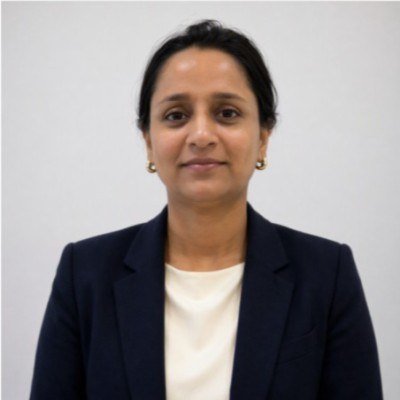
Neha Gupta is a CFA charterholder based in Winnipeg who has worked in financial markets since December 2005. She has published more than 2,600 investment articles and is Head of Operations and Finance at Whiteland Real Estate. She reviews WealthScale’s investing pages for accuracy.
- CFA charter, CFA Institute (awarded 2023)
- Post Graduate Diploma in Business Administration (Finance), 2008
- In financial markets since December 2005
- More than 2,600 published investment articles
General information only. Not financial, investment, tax or legal advice. WealthScale is independent and is published by WealthScale Media Inc., 55 Queen St E, Suite 1205, Toronto, ON M5C 1R6. CFA® and Chartered Financial Analyst® are registered trademarks owned by CFA Institute.