

RESP Guide: Grants, Limits and Withdrawals
An RESP (registered education savings plan) lets you save up to $50,000 per child for school after high school, and the federal government adds a grant of 20% on the first $2,500 you put in each year, up to $7,200 per child over a lifetime. Growth inside the plan is not taxed while it stays there. When the student enrols, your contributions come back tax-free and the grants and growth are taxed in the student’s hands, usually at a very low rate. This guide covers every RESP rule that matters: plan types, limits, grants, withdrawals, the RRSP rollover and closing the plan.
 Written by Sharad Gondaliya, CPA CPAChartered Professional Accountant, CPA Ontario No. 61040184
 Financial reviewer: Neha Gupta, CFA CFA charterholderReview of this page scheduled
At a glance
What an RESP is. A registered education savings plan is a tax-sheltered account that a parent, grandparent or other adult opens for a child’s education after high school. The government adds grants to what you contribute.
How much you can put in. The RESP lifetime limit is $50,000 per beneficiary across all plans and all contributors. There has been no annual limit since 2007, and contributions are not tax-deductible.
The main grant. The Canada Education Savings Grant (CESG) pays 20% of the first $2,500 contributed each year, which is $500 a year. With unused room from earlier years it can reach $1,000 in one year, up to $7,200 per child for life.
Extra help for lower incomes. In 2026, families with adjusted family net income under $58,523 get an extra 20% on the first $500, and families from $58,523 up to $117,045 get an extra 10%. The Canada Learning Bond adds up to $2,000 with no contribution needed.
How money comes out. Contributions come back tax-free. Grants and growth are paid as educational assistance payments (EAPs), taxed to the student, capped at $8,000 for the first 13 weeks of full-time study and $4,000 per 13-week period for part-time study.
If the child does not study. Contributions come back to you tax-free, the grants go back to the government, and the growth can be paid to you as an accumulated income payment taxed at your rate plus 20% (12% in Quebec), or moved to your RRSP, up to $50,000, if you have the room.
Use the calculator below to see the federal and provincial grants your child can receive and what the plan could be worth by age 17.
1. What an RESP (Registered Education Savings Plan) Is and Who Can Open One
The basic idea. A registered education savings plan is a contract between you and a financial institution. You put money in for a child, the federal government (and in two provinces, the provincial government) adds grants, and the money grows without yearly tax. When the child goes on to college, university, an apprenticeship or another qualifying program after high school, the plan pays out to help with costs. The account is built for one goal, so the rules reward you for using it on education and charge you if you do not.
The three people in every plan. The subscriber opens the plan and makes the contributions. The beneficiary is the child who will use the money. The promoter is the bank, credit union, brokerage, robo-advisor or group plan dealer that holds the account and asks the government for grants on your behalf. Spouses or common-law partners can open a plan together as joint subscribers, and grandparents, aunts, uncles and family friends can be subscribers too.
Who can be a beneficiary. To be named in a family plan, each child needs a social insurance number (SIN) and Canadian residency at the time they are added, and must be under 21 when named. Grants follow the same logic: no SIN, no grant. If your child does not have a SIN yet, please apply for one before you open the plan, because grant requests cannot start without it.
Why families use it. The 20% CESG is a guaranteed return on the first $2,500 you put in each year, before any investment growth. No other account in Canada adds government money at that rate on ordinary savings. The tax treatment helps as well: the grants and growth are taxed when the student withdraws them, and most students have little other income, so much of that money can come out with little or no tax.
What an RESP is not. It is not a tax deduction like an RRSP, and it is not a flexible all-purpose account like a TFSA. The money you contribute is after-tax money, and it can always come back to you, but the grants are tied to education. For a wider view of every registered account, see our guide to investment accounts in Canada.
2. Family vs Individual RESP, and Group Plans
Family plans. A family plan can name more than one beneficiary. Every beneficiary must be related by blood or adoption to each living subscriber and must be under 21 when added. That makes the family plan the usual choice for parents with two or more children, or for grandparents saving for several grandchildren. It is the only type of RESP that allows more than one beneficiary, so siblings can share one account, one set of statements and one investment mix.
Individual plans. Any RESP that is not a family plan holds one beneficiary. Because a family plan needs a blood or adoption relationship, an individual plan is the route when the subscriber is not related to the child, for example a family friend or godparent. Other individual-plan rules, such as any age limit for the beneficiary, are not covered here, so confirm them with the promoter before you open one.
Group plans. Group plans, sometimes called scholarship plans, are sold by group plan dealers. Savings are pooled with other children born in the same year, contributions follow a set schedule, and payouts depend on the plan’s rules and on how many members stay to the end. Fees, enrolment charges and the rules on missed payments or leaving early are set in each plan’s prospectus. Please read the prospectus and its fee table before you sign, because leaving a group plan early can cost you part of what you paid in fees.
Which one fits. A family plan is the most flexible for parents with more than one child, because money is not locked to one name. An individual plan suits a single child or a subscriber outside the family. A group plan suits someone who wants a fixed schedule and no investment decisions, and who is confident they can keep paying for many years.
| Feature | Family plan | Individual plan | Group plan |
|---|---|---|---|
| Number of beneficiaries | One or more | One | One per membership |
| Relationship rule | Related by blood or adoption to every living subscriber | No family relationship needed | Set by the plan’s prospectus |
| Age when named | Under 21 | Confirm with the promoter | Set by the plan’s prospectus |
| Who picks investments | You or a managed portfolio | You or a managed portfolio | The plan’s dealer |
| Contribution schedule | Flexible | Flexible | Fixed schedule |
| Lifetime limit per child | $50,000 | $50,000 | $50,000 |
| CESG paid | Yes | Yes | Yes |
3. RESP Contribution Limit and Key Deadlines
The $50,000 lifetime limit. Each beneficiary can receive up to $50,000 in contributions over their life, counting every RESP that names them and every person who contributes. Parents, grandparents and other relatives all share that one $50,000 space. There is no annual limit, so a family could put the whole $50,000 in at once, although that would earn only one year of grant (more on that in the strategies below).
Contributions are not deductible. You pay into an RESP with after-tax dollars and get no deduction on your return. That is why your contributions can later come back to you without tax: you already paid tax on that money. Grants and government bonds are not contributions and do not use any of the $50,000 limit.
Over-contribution tax. If total contributions for a child go over $50,000, each subscriber pays a tax of 1% per month on their share of the excess that is not withdrawn by the end of the month. The tax is payable within 90 days after the end of the year. For example, a $2,000 excess left in the plan for four months costs $80 ($2,000 x 1% x 4). The risk is highest when grandparents open a second plan without telling the parents, so share your contribution totals across the family.
The grant deadlines. The CESG is paid only on contributions made up to the end of the calendar year the child turns 17. At 16 and 17, a child qualifies only if at least $2,000 was contributed by the end of the year they turned 15, or at least $100 was contributed in any four years before then. Each grant year ends on December 31, so contributions made in January count for the new year.
The plan deadlines. No new contributions can go into a plan after the year of its 31st anniversary. The plan must close by the end of the year that includes its 35th anniversary, or the 40th for a specified plan. A plan that pays an accumulated income payment must close by the end of February of the following year.
| Rule | Figure or date |
|---|---|
| Lifetime contribution limit per beneficiary | $50,000 |
| Annual contribution limit | None since 2007 |
| Tax on an excess contribution | 1% per month on each subscriber’s share |
| Last year for CESG | The year the child turns 17 |
| Last year for contributions | The year of the plan’s 31st anniversary |
| Plan must close | End of the year of the 35th anniversary (40th for a specified plan) |
| Close after an AIP | End of February of the next year |
4. RESP Grants at a Glance
The Canada Education Savings Grant. Every eligible child gets the basic CESG of 20% on the first $2,500 contributed each year, whatever the family’s income. That is $500 a year. Unused grant room carries forward, so a child can receive up to $1,000 in one year when you catch up, and up to $7,200 over their life. Our full guide to RESP grants has the carry-forward table by age.
The additional CESG. In 2026, when adjusted family net income is under $58,523, the first $500 contributed each year earns an extra 20% ($100), for up to $600 a year. From $58,523 up to $117,045, the extra rate is 10% ($50), for up to $550 a year. Above $117,045 only the basic 20% applies. The $7,200 lifetime cap includes the additional amount.
The Canada Learning Bond. Children from low-income families born in 2004 or later can get $500 in their first year of eligibility and $100 for each later year up to age 15, to a maximum of $2,000. The government also adds $25 with the first bond to help with the cost of opening the plan. You do not need to contribute a dollar, but the child must be named in an RESP and the request must be made before age 21.
Provincial grants. Only two provinces run RESP grants today. British Columbia pays the BC Training and Education Savings Grant, a one-time $1,200 for children born in 2006 or later, with no contribution needed. Quebec pays the Quebec Education Savings Incentive (QESI) of 10% of net contributions, up to $250 a year, or $500 with unused room, plus up to $50 a year more for lower-income families, to a lifetime $3,600.
| Program | Who qualifies | Amount | Lifetime maximum | Contribution needed |
|---|---|---|---|---|
| Basic CESG | Every eligible child to the end of the year they turn 17 | 20% of the first $2,500 a year ($500) | $7,200 (with the additional CESG) | Yes |
| Additional CESG, income under $58,523 | Lower-income families | Extra 20% of the first $500 ($100) | Inside the $7,200 | Yes |
| Additional CESG, $58,523 up to $117,045 | Middle-income families | Extra 10% of the first $500 ($50) | Inside the $7,200 | Yes |
| Canada Learning Bond | Low-income families, children born 2004 or later | $500 first year, then $100 a year to age 15 | $2,000 | No |
| BCTESG | B.C. residents born 2006 or later | $1,200 one time | $1,200 | No |
| QESI | Quebec residents under 18 | 10% of net contributions, up to $250 a year | $3,600 | Yes |
To see what these add up to for your family, try our RESP calculator.
See exactly which RESP grants your child can get, year by year, before you choose a provider.
5. RESP Tax Rules: In, During and Out
Going in. Contributions come from money you have already paid tax on, and there is no deduction. Grants and bonds go in on top of your contributions and are not taxed when they arrive. Nothing about a contribution appears on your tax return.
While it grows. Interest, dividends and capital gains earned inside the plan are not taxed each year. You do not report them, and the plan does not issue yearly tax slips for growth. This is the same sheltering an RRSP or TFSA gives, and it lets the grant money compound for up to 17 years or more.
Coming out for school. When the beneficiary is enrolled in a qualifying program, two kinds of payments can come out. Your contributions come back tax-free to you or to the student. Educational assistance payments, made up of the grants, bonds and all the growth, are paid to the student and taxed as the student’s income. In 2026 the federal basic personal amount is $16,452, so a student with modest income may pay little or no federal tax on an EAP, and tuition credits can reduce tax further.
Coming out without school. If no beneficiary goes on to post-secondary study, your contributions still come back tax-free. The grants and bonds go back to the government. The growth can be paid to the subscriber as an accumulated income payment (AIP), which is added to the subscriber’s income and charged an extra 20% tax (12% in Quebec), unless it is moved into the subscriber’s RRSP. Section 7 shows the numbers.
Who reports what. The student reports EAPs on their own return using the slip the promoter sends. The subscriber reports AIPs and claims any RRSP deduction for an AIP rollover. Returned contributions are not reported by anyone.
| Part of the plan | Taxed when it goes in | Taxed while it grows | Taxed when it comes out | Who pays the tax |
|---|---|---|---|---|
| Your contributions | Already taxed (no deduction) | No | No | No one |
| Grants and bonds | No | No | Yes, as part of an EAP | The student |
| Investment growth, used for school | Not applicable | No | Yes, as part of an EAP | The student |
| Investment growth, no school | Not applicable | No | Yes, as an AIP plus 20% (12% in Quebec) | The subscriber |
6. RESP Withdrawal Rules: EAPs and Contributions
Two buckets, two sets of rules. An RESP withdrawal always comes from one of two buckets. The contribution bucket holds the money you put in. It can come back to you, or be paid to the student, without tax. The EAP bucket holds the grants, bonds and every dollar of growth. It can only be paid to a student enrolled in a qualifying or specified program, and it is taxable to the student. When you ask for money, tell the promoter which bucket to draw from and how much, because the choice changes who pays tax and when.
Which programs count. A qualifying educational program is full-time study of at least 10 hours a week. A specified educational program is part-time study of at least 12 hours a month. Universities, colleges, trade schools and many apprenticeship programs can qualify. The promoter will ask for proof of enrolment, such as a letter or an official enrolment record from the school, before it releases an EAP.
The EAP caps. For full-time study, the most that can be paid as EAPs in the first 13 consecutive weeks is $8,000. For part-time study, the cap is $4,000 for each 13-week period. The full-time cap applies only to the first 13 consecutive weeks, which is why many families take the first $8,000 early in the first term and the rest of the year’s EAP later.
Plan the order. In most cases it pays to draw down the EAP bucket in the early years of school, when the student’s income is lowest, and to keep contributions for later. If the student leaves school early, unused contributions can still come back to you tax-free, while an unused EAP bucket would turn into grant repayments and a taxable AIP. Taking EAPs first protects the grants.
Withdrawing contributions while the child is not in school. You can take your contributions back at any time, but a withdrawal while the beneficiary is not enrolled can trigger a repayment of grant money to the government and may end eligibility for future grants. Ask the promoter to calculate the grant repayment before you take contributions out early.
| Feature | Contributions (returned to you or the student) | Educational assistance payments (EAPs) |
|---|---|---|
| What is inside | The money subscribers put in | Grants, bonds and all investment growth |
| Taxable | No | Yes, to the student |
| Student must be enrolled | No, but early withdrawal can trigger grant repayment | Yes |
| Full-time cap, first 13 consecutive weeks | None | $8,000 |
| Part-time cap, per 13-week period | None | $4,000 |
| Minimum study time | Not applicable | 10 hours a week full-time; 12 hours a month part-time |
7. If the Child Does Not Study: AIPs and the RRSP Rollover
First, do not rush. Many students start school a year or two late. A plan can stay open until the end of the year of its 35th anniversary, so there is usually time to wait. In a family plan, another child named in the plan may be able to use the money instead. Closing a plan too early is the most expensive mistake on this list, because grants cannot be recovered once they are returned.
What comes back to you. Your contributions always come back to you tax-free. The CESG, the Canada Learning Bond and any provincial grant go back to the government. What is left is the growth, and that is where the accumulated income payment rules apply.
When an AIP can be paid. An AIP can be paid only to one subscriber who is a resident of Canada, and only if one of three tests is met: the plan has passed the year of its 9th anniversary and every beneficiary is 21 or older and not eligible for EAPs, or the plan is in the year of its 35th anniversary, or every beneficiary has died. After the first AIP, the plan must close by the end of February of the next year.
How an AIP is taxed. The AIP is added to the subscriber’s income for the year and taxed at their marginal rate. On top of that, an extra tax of 20% applies (12% for Quebec residents). On growth of any size, that can take half or more of the money.
The RRSP rollover. A subscriber can move up to $50,000 of AIPs, over their lifetime, into their own RRSP or a spousal RRSP, as long as they have enough unused RRSP room. The contribution must be made in the year the AIP is received or in the first 60 days after. When the promoter receives Form T1171, it does not withhold tax on the amount going to the RRSP. The rolled amount avoids the extra 20% and is taxed only when it later comes out of the RRSP. Please check your RRSP room on your latest notice of assessment first, or use our RRSP contribution limit guide.
| Item | Take the AIP in cash | Roll the AIP into an RRSP |
|---|---|---|
| AIP added to income | $10,000 | $10,000 |
| RRSP deduction | $0 | $10,000 |
| Federal tax at 20.5% | $2,050 | $0 |
| Alberta tax at 10% | $1,000 | $0 |
| Extra AIP tax at 20% | $2,000 | $0 |
| Total tax this year | $5,050 | $0 now; taxed when withdrawn from the RRSP |
| Amount you keep or keep invested | $4,950 | $10,000 |
The cash route works out to $10,000 x 20.5% = $2,050 federal, $10,000 x 10% = $1,000 Alberta and $10,000 x 20% = $2,000 extra tax, for $5,050 in total. The subscriber’s income rises from $70,000 to $80,000, which stays inside the 20.5% federal bracket and the 10% Alberta bracket for 2026.
8. Closing an RESP
When you must close it. Every RESP has a hard end date: the end of the year that includes the 35th anniversary of the plan, or the 40th for a specified plan. If an AIP has been paid, the plan must close by the end of February of the following year. Contributions stop earlier, after the year of the 31st anniversary.
When it makes sense to close it. The usual time is after the last beneficiary finishes school and the EAP bucket is empty. If money remains in the EAP bucket after the student is done, ask whether another beneficiary in a family plan could use it, or whether the student could take a further program. A student who stops studying may still be able to take EAPs for a period after the program ends; the promoter can confirm the rule for your plan.
The order of payouts at closing. When a plan is closed without further EAPs, three things happen. Contributions are returned to the subscriber without tax. Grants and bonds that have not been paid out as EAPs are returned to the government. Remaining growth is paid as an AIP if the AIP tests are met, or must be dealt with as the promoter’s plan terms allow.
Paperwork to expect. The promoter will ask which payments you want and may need Form T1171 if you plan to roll an AIP into your RRSP. Students receive a tax slip for EAPs, and the subscriber receives one for any AIP. Keep the final statements, because they show how much of the payout was a return of contributions and therefore not taxable.
Transfers instead of closing. If you are unhappy with fees or service, you do not need to close the plan to move it. A transfer from one RESP promoter to another keeps the grants in place when it is done directly between the institutions. Our guide to transferring an investment account explains how a direct transfer works and which fees to expect.
Fees and investment choice matter for a plan that can run 17 years or more. Compare providers that offer self-directed and managed RESPs.
9. What an RESP Can Hold and How It Is Protected
Investment choices. A self-directed RESP at a brokerage can generally hold the same kinds of investments as other registered plans: cash, savings deposits, GICs, government and corporate bonds, stocks, exchange-traded funds and mutual funds. A managed RESP at a robo-advisor or bank holds a ready-made portfolio. A group plan invests the pooled money as its prospectus sets out, usually in conservative fixed income. WealthScale does not recommend specific investments.
Match risk to the time left. An RESP has a known deadline: the first tuition bill. Money needed in two or three years has less time to recover from a market drop than money needed in fifteen. Many families hold more growth assets when the child is young and move toward cash and GICs as the child approaches 17. Our GIC vs high-interest savings comparison explains the low-risk options for the final years, and the best GIC rates in Canada are updated on their own page.
CDIC deposit insurance. Eligible deposits held in an RESP at a CDIC member institution are insured as their own category, up to $100,000 per member institution, separate from your other deposits. CDIC covers savings deposits, GICs and term deposits in Canadian or foreign currency. It does not cover mutual funds, stocks, bonds, ETFs or crypto.
CIPF coverage at a brokerage. If your RESP is at an investment dealer that is a member of the Canadian Investor Protection Fund, all your RESPs where you are the subscriber are covered together up to $1,000,000, separate from your general accounts and your retirement accounts. CIPF protects property that goes missing if a member firm fails. It does not cover drops in market value. CIPF members are regulated by the Canadian Investment Regulatory Organization (CIRO).
| Protection | What it covers in an RESP | Limit | What it does not cover |
|---|---|---|---|
| CDIC | Eligible deposits and GICs at a member institution | $100,000 per member institution for the RESP category | Mutual funds, stocks, bonds, ETFs, crypto |
| CIPF | Cash and securities held by a failed member firm | $1,000,000 for all RESPs where you are the subscriber | Market losses, crypto assets |
10. Self-Directed vs Group RESPs
Self-directed RESPs. At an online brokerage you choose every investment and make every contribution when you like. You can contribute $2,500 a year, catch up with $5,000 in a year, or pause. Costs come from trading commissions, any account fees and the management fees of the funds you choose. You need to rebalance yourself and shift toward safer holdings as the child nears school. Our list of the best self-directed RESP accounts compares the options.
Managed RESPs. A robo-advisor or bank-managed RESP chooses a portfolio for you based on the child’s age and your answers to a short questionnaire. You pay an annual management fee on top of the funds’ own costs, and in return you get automatic rebalancing. Our best robo-advisors in Canada page shows which ones offer RESPs and what they charge.
Group plans. A group plan sets the schedule for you and pools your savings with other families. Some families like the discipline. The trade-offs are less control over investments, enrolment fees that are often paid in the first years, and rules that can cost you if you miss payments, change plans or the child does not enrol in a program the plan accepts. The prospectus is the document that sets all of this out.
Grants are the same in every type. The CESG, the additional CESG and the Canada Learning Bond follow the same rules in all three types, as long as the promoter offers them. The difference is in control, cost and flexibility, not in grant rates.
| Feature | Self-directed | Managed (robo or bank) | Group plan |
|---|---|---|---|
| Who chooses investments | You | The provider, based on your profile | The plan dealer |
| Contribution timing | Any time, any amount | Any time, often automatic | Fixed schedule |
| Main costs | Commissions and fund fees | Management fee plus fund fees | Enrolment and plan fees in the prospectus |
| Catching up on missed grant years | Easy | Easy | Depends on the plan rules |
| Rebalancing | You do it | Automatic | Done by the plan |
| Cost of leaving early | Transfer fee, if any | Transfer fee, if any | Can include lost enrolment fees |
| Best suited to | Hands-on investors | Hands-off investors who want flexibility | Savers who want a fixed plan and no choices |
11. RESP vs TFSA, RRSP and FHSA for Education
RESP vs TFSA. A TFSA has a 2026 dollar limit of $7,000 a year, and anything can come out at any time for any reason without tax. It pays no grants. For education savings, the RESP wins on the first $2,500 a year because of the 20% CESG, which a TFSA cannot match. Once you have contributed enough to collect the full grant, a parent’s TFSA is a flexible place for extra education savings, because the money is not tied to the child enrolling.
RESP vs RRSP. An RRSP is a retirement account. It gives a deduction now and taxes withdrawals later. The Lifelong Learning Plan lets you take up to $10,000 a year, and $20,000 in total, out of your RRSP to pay for full-time study by you or your spouse or partner, then repay it over 10 years. That suits an adult going back to school, not a child. For a child’s education, the RESP is the account built for the job.
RESP vs FHSA. The FHSA is for a first home only, with $8,000 of annual room and a $40,000 lifetime limit. It has no education use. A young adult who has finished school with RESP help may later open an FHSA for their own home, so the two accounts often follow one another.
A sensible order. For many families, the order is: enough in the RESP to collect the full CESG each year, then the parents’ own retirement and emergency savings, then extra education savings in a TFSA. Our TFSA vs RRSP comparison helps decide between the two adult accounts.
| Feature | RESP | TFSA | RRSP Lifelong Learning Plan | FHSA |
|---|---|---|---|---|
| Government grant | 20% CESG, plus others | None | None | None |
| Contribution limit | $50,000 lifetime per child | $7,000 for 2026 | Withdraw $10,000 a year, $20,000 in total | $8,000 a year, $40,000 lifetime |
| Tax deduction for contributions | No | No | Yes (RRSP deduction) | Yes |
| Tax on education withdrawals | Growth and grants taxed to the student | None | None if repaid over 10 years | Not usable for education |
| Who the money is for | The child | The account holder | You or your spouse or partner | The account holder’s first home |
| If not used for school | Grants returned; growth taxed plus 20% | No effect | Stays in the RRSP | Not applicable |
12. Special Situations
Newcomers to Canada. A child must have a SIN and be a resident of Canada to be named in a family plan and to receive grants. Families who arrive with older children can still open an RESP right away, but the age 16 and 17 rule means a child who arrives at 15 or later may get only a few years of grant. The earlier the plan opens after arrival, the more grant years the child can use.
Moving between provinces. The provincial grants depend on where the child lives. The QESI requires the beneficiary to be a Quebec resident on December 31 of the year. The BCTESG requires the child to be a B.C. resident and must be requested between the child’s 6th birthday and the day before their 9th birthday. The child must live in B.C. when the grant is requested, so a family that leaves B.C. before the window opens may miss it. Federal grants follow the child anywhere in Canada.
Lower-income families. The Canada Learning Bond pays up to $2,000 without any contribution, and from April 2028 the government will open an RESP automatically for eligible children born in 2024 or later who are not already in an RESP by age 4. Families can ask to opt out starting in 2027. Until then, a family has to open the plan and request the bond.
Large families. The Canada Learning Bond income limit rises with the number of children. For July 2026 to June 2027 it is $58,523 or less for one to three children, under $66,036 for four and under $73,577 for five. A family plan lets siblings share one account while each child keeps their own grant limits.
Grandparents. Grandparents can open their own plan or contribute to the parents’ plan. Every dollar they add counts toward the same $50,000 lifetime limit per grandchild. In a family plan, each beneficiary must be related by blood or adoption to every living subscriber, so check the relationship rule before adding a second subscriber.
Starting late. If the child is already 14 or 15 and has no RESP, contributing at least $2,000 by the end of the year they turn 15 keeps the grant open for ages 16 and 17. Our RESP grant calculator shows how much grant room is still available at each age.
13. Where to Open an RESP
Banks and credit unions. Banks and credit unions commonly offer RESPs that hold savings deposits, GICs and the bank’s own mutual funds. They are easy to open at a branch and often link to your chequing account for automatic contributions. Eligible deposits are protected by CDIC or a provincial deposit insurer.
Online brokerages. A discount brokerage lets you hold ETFs, stocks, bonds and GICs in a self-directed RESP. Costs depend on commissions and account fees. Our reviews of Questrade, Qtrade Direct Investing, TD Direct Investing and RBC Direct Investing list each broker’s account types and fees. Wealthsimple lists RESPs among its self-directed accounts and its managed portfolios; see our Wealthsimple review.
Robo-advisors. A robo-advisor builds and rebalances a portfolio for a yearly fee. That suits families who want an RESP to run itself. Our robo-advisor comparison shows which services include RESPs.
Group plan dealers. Group plans are sold by specialised dealers, often through representatives. Read the prospectus before signing, and compare the total fees with a self-directed or managed RESP.
Questions to ask any provider. Does it offer family and individual plans? Does it apply for the Canada Learning Bond, the BCTESG and the QESI, as well as the CESG? What does it charge to open, hold, and transfer out? Can you set up automatic monthly contributions? Our best RESP providers in Canada ranking compares these points, and our advertiser disclosure explains how WealthScale is paid.
14. RESP Rules People Miss: Common Mistakes
Missing the age 15 deadline. If less than $2,000 has gone in by the end of the year the child turns 15, and there were not four years with at least $100, the child gets no CESG at 16 or 17. A single $2,000 contribution before that December 31 fixes it.
Putting in a lump sum and expecting a big grant. The CESG is capped at $1,000 a year even with carry-forward. A $20,000 deposit in one year earns the same $1,000 maximum as a $5,000 deposit. Spread contributions to collect the grant every year.
Over-contributing across the family. Two plans for the same child, one from the parents and one from grandparents, share the $50,000 limit. Each subscriber pays 1% a month on their share of any excess.
Taking contributions out first. Withdrawing contributions in first year and leaving EAPs for later can leave grants unused if the student stops early. Draw the EAP bucket first in most cases.
Forgetting to request the extra grants. The Canada Learning Bond, the BCTESG and the QESI each need the promoter to request them. Ask your provider to confirm each one is active on your plan.
Closing the plan too soon. A student who takes a gap year may enrol later. Closing the plan sends the grants back for good. Wait until you are sure, and look at the RRSP rollover before taking an AIP in cash.
What You Need and What You Get
What you need to open an RESP
- Your own SIN as the subscriber (and your spouse’s or partner’s for a joint plan)
- The child’s SIN
- The child’s date of birth and proof of Canadian residency
- Your choice of plan: family, individual or group
- A promoter: bank, credit union, brokerage, robo-advisor or group plan dealer
- A bank account for contributions, ideally set up for monthly transfers
- Your adjusted family net income, for the additional CESG and the Canada Learning Bond
- For B.C. or Quebec families, a request for the BCTESG or QESI
What you get from an RESP
- A 20% CESG on the first $2,500 a year, up to $7,200 per child
- An extra 10% or 20% on the first $500 a year for lower and middle incomes
- Up to $2,000 in Canada Learning Bonds for eligible children
- Up to $1,200 from the BCTESG or $3,600 from the QESI where you live
- Tax-free growth while the money stays in the plan
- Withdrawals of grants and growth taxed to the student, often at a low rate
- Your own contributions back tax-free at any time
- Up to $50,000 of growth movable to your RRSP if the child does not study
How an RESP Works, Step by Step
- Get the child a SIN. No grant can be requested without one.
- Pick the plan type and provider. Choose family, individual or group, and a self-directed, managed or bank plan.
- Open the plan and request every grant. Ask for the CESG, the additional CESG, the Canada Learning Bond and any provincial grant on the application.
- Contribute every year. $2,500 a year collects the full $500 basic CESG; up to $5,000 in a year catches up on missed years.
- Invest for the time left. Hold more growth assets early and move toward cash and GICs as the child nears 17.
- Withdraw when the student enrols. Take EAPs first, up to $8,000 in the first 13 weeks of full-time study, and contributions later.
- Close the plan when the money is used. If anything is left, look at another beneficiary or the RRSP rollover before an AIP.
10 RESP Strategies That Get You More
To set a monthly amount that reaches a savings target by your child’s first year of school, use the savings goal calculator below.
1. Contribute $2,500 every year
$2,500 a year, or about $208.33 a month, collects the full $500 basic CESG. Fourteen years at $2,500 and $1,000 in the fifteenth year collect the whole $7,200 with $36,000 of contributions, and the grant then starts compounding years earlier than a late catch-up.
2. Start in the birth year
Grant room builds at $500 a year, and the CESG can be paid on contributions up to the end of the year the child turns 17. Starting early spreads contributions over more years and gives the grant money the longest time to grow tax-free.
3. Catch up at $5,000 a year
If you missed years, $5,000 in a year earns $1,000 of CESG, the most allowed in one year. Keep going at $5,000 until the unused grant room is used, then drop back to $2,500.
4. Beat the age 15 deadline
Make sure at least $2,000 is in the plan by December 31 of the year the child turns 15, or that you have made $100 contributions in four earlier years. Without that, the grant stops at 15.
5. Claim the additional CESG
Families under $117,045 of adjusted family net income in 2026 earn an extra 10% or 20% on the first $500 each year. Contribute at least $500 every year, even in a tight year, so that money is not lost.
6. Ask for the Canada Learning Bond
An eligible child can get up to $2,000 with no contribution. A family whose income falls below the limit in a later year can qualify for that year’s bond. Make sure the promoter has requested it.
7. Claim the provincial grant
B.C. families should request the $1,200 BCTESG between the child’s 6th birthday and the day before the 9th. Quebec families should choose a promoter that offers the QESI, which adds 10% of net contributions each year, up to $3,600 in total.
8. Use a family plan for siblings
One family plan for several children keeps costs down and lets the money follow whichever child studies, within each child’s own grant limits.
9. Take EAPs first
Draw down grants and growth in the first years of study, when the student’s income is lowest, and keep contributions for later years or for a child who stops early.
10. Keep the RRSP rollover in mind
If no child studies, moving up to $50,000 of growth into your RRSP avoids the extra 20% AIP tax. Keep some RRSP room free in the years before the plan winds up.
Illustrative Example: One Child, Birth to Graduation
This example is hypothetical. The 5% yearly return is an assumption for illustration, not a forecast, and each year’s contribution and grant are assumed to go in on the last day of that year, as in our RESP calculator. The family’s income is above $117,045, so only the basic CESG applies.
- Contributions. The parents contribute $2,500 a year from the birth year through the year the child turns 13 (14 years), then $1,000 in the year the child turns 14. Total: ($2,500 x 14) + $1,000 = $36,000.
- Grants. The CESG is 20% of each contribution: ($500 x 14) + $200 = $7,200, the lifetime maximum.
- Growth. At an assumed 5% a year, the plan is worth $72,855.93 at the end of the year the child turns 17. Growth is $72,855.93 – $36,000 – $7,200 = $29,655.93.
- The two buckets. Contributions: $36,000. EAP bucket (grants plus growth): $7,200 + $29,655.93 = $36,855.93.
- Withdrawals over four years of full-time study. The student takes the EAP bucket in four parts of $9,213.98, $9,213.98, $9,213.98 and $9,213.99 ($36,855.93 in total). In year one, the first $8,000 comes out in the first 13 weeks and the remaining $1,213.98 after that. The parents take $9,000 of contributions a year ($36,000 / 4). For simplicity, the example ignores growth after age 17.
- Tax. In year one the student also earns $6,000 at a summer job. Income is $9,213.98 + $6,000 = $15,213.98, which is below the 2026 federal basic personal amount of $16,452, so no federal tax is due on the EAP before even counting tuition credits. The $9,000 of contributions is not taxed at all.
RESP FAQ
What is an RESP and how does it work?
An RESP is a registered education savings plan. You contribute after-tax money for a child, the government adds grants such as the 20% CESG, and the money grows without yearly tax. When the child enrols in a qualifying program after high school, your contributions come back tax-free and the grants and growth are paid to the student as taxable educational assistance payments.
How much can I put in an RESP each year?
There is no annual limit. The only cap is $50,000 per child over their lifetime, across every plan and every contributor. To collect the full basic CESG of $500, you need to contribute $2,500 in a year. Contributing more than $5,000 in one year does not earn more than the $1,000 yearly grant maximum.
Is RESP money taxable when my child withdraws it?
Part of it is. Your original contributions come back with no tax. The grants, bonds and investment growth come out as educational assistance payments, which are taxed as the student’s income. Because the 2026 federal basic personal amount is $16,452 and many students earn little, a large share of EAPs can be received with little or no federal tax.
What happens to an RESP if my child does not go to school?
Your contributions come back to you tax-free and the grants go back to the government. The growth can be paid to you as an accumulated income payment, taxed at your marginal rate plus an extra 20% (12% in Quebec). You can avoid the extra tax by moving up to $50,000 of that growth into your RRSP if you have enough room.
What is the difference between a family and an individual RESP?
A family plan can name several beneficiaries, each related by blood or adoption to every living subscriber and under 21 when named. It is the only type that allows more than one beneficiary. Any other plan holds a single beneficiary and does not need a family relationship, which suits a friend or godparent saving for one child.
Can I take my contributions out of an RESP early?
Yes, contributions can come back to you at any time without tax. But if you withdraw them while the child is not enrolled in school, some of the grant money may have to be repaid to the government and future grants can be affected. Ask your provider to calculate any grant repayment before you withdraw.
How much can a student withdraw from an RESP in the first year?
For full-time study, educational assistance payments are capped at $8,000 for the first 13 consecutive weeks. After that, the cap no longer applies. For part-time study of at least 12 hours a month, the cap is $4,000 for each 13-week period. Contributions can be withdrawn on top of these amounts at any time.
When does an RESP have to be closed?
Contributions must stop after the year of the plan’s 31st anniversary, and the plan must close by the end of the year of its 35th anniversary, or the 40th for a specified plan. If an accumulated income payment has been made, the plan must close by the end of February of the following year.
Can grandparents open an RESP?
Yes. Grandparents can open their own RESP or add money to a plan the parents already hold. Every contribution for the same child counts toward one $50,000 lifetime limit, so the family should track totals to avoid the 1% monthly tax on an excess. In a family plan, each beneficiary must be related by blood or adoption to every living subscriber.
Is an RESP better than a TFSA for education savings?
For the first $2,500 a year, yes, because the RESP earns a 20% CESG and a TFSA earns no grant. Above the amount needed for the full grant, a parent’s TFSA can be a more flexible place for extra savings, because the money can be used for anything and no grant is at risk if the child does not study.
What is the RESP to RRSP rollover?
If no beneficiary pursues post-secondary education, a subscriber with unused RRSP room can move up to $50,000 of accumulated income into their own or a spousal RRSP over their lifetime. The contribution must be made in the year of the payment or within the first 60 days after. Form T1171 stops tax being withheld on that amount, and the extra 20% tax does not apply.
Is my RESP protected if my bank or broker fails?
Eligible deposits and GICs in an RESP at a CDIC member are insured as a separate category up to $100,000 per institution. At a CIPF member brokerage, all RESPs where you are the subscriber are covered together up to $1,000,000 for missing property. Neither covers a fall in market value. Our editorial standards explain how we check these figures.
Open your RESP early, contribute $2,500 a year and request every grant, then check your numbers with our RESP grant calculator.
Figures on this page were checked against Canada Revenue Agency, Employment and Social Development Canada, Government of British Columbia and Revenu Quebec publications on October 22, 2026. We update this page when a figure changes.
Meet the Experts Behind WealthScale

Sharad is a CPA Ontario member (No. 61040184) and a Certified Public Accountant licensed in Washington and Montana, with more than 15 years in accounting and tax, a Diploma in Banking and Finance and a Certificate in Small Business Finance. He checks WealthScale content against primary sources. WealthScale is independent of his firm, Gondaliya CPA Professional Corporation, and provides general information only, not personal financial, investment, tax or legal advice.
- Chartered Professional Accountant, CPA Ontario
- Certified Public Accountant, Washington (No. 57629) and Montana (No. PAC-CPAP-LIC-033176)
- Writing on tax and registered accounts since 2021
- Reader’s Choice Award 2025 Winner, Best Accountant (Toronto)
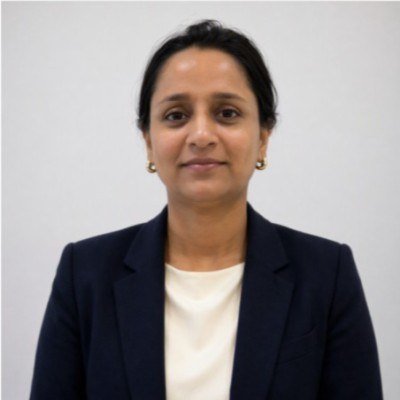
Neha Gupta is a CFA charterholder based in Winnipeg who has worked in financial markets since December 2005. She has published more than 2,600 investment articles and is Head of Operations and Finance at Whiteland Real Estate. She reviews WealthScale’s investing pages for accuracy.
- CFA charter, CFA Institute (awarded 2023)
- Post Graduate Diploma in Business Administration (Finance), 2008
- In financial markets since December 2005
- More than 2,600 published investment articles
General information only. Not financial, investment, tax or legal advice. WealthScale is independent and is published by WealthScale Media Inc., 55 Queen St E, Suite 1205, Toronto, ON M5C 1R6. CFA® and Chartered Financial Analyst® are registered trademarks owned by CFA Institute.