

CIPF vs CDIC: How Your Investments and Deposits Are Protected
CIPF vs CDIC comes down to what you hold and who holds it. The Canada Deposit Insurance Corporation (CDIC) insures eligible deposits, such as savings, chequing, GICs and term deposits, at its member banks and trust companies, up to $100,000 per category at each member, across nine categories. The Canadian Investor Protection Fund (CIPF) protects cash and securities that go missing when a member investment dealer fails, up to $1,000,000 in each of three account groups. Neither plan covers a drop in market value, and neither covers crypto assets. Credit unions use provincial deposit insurance instead. This guide shows which plan covers each product and account, with worked examples.
 Written by Sharad Gondaliya, CPA CPAChartered Professional Accountant, CPA Ontario No. 61040184
 Financial reviewer: Neha Gupta, CFA CFA charterholderReview of this page scheduled
At a glance
The short answer. CDIC covers eligible deposits at member banks and trust companies if a member fails. CIPF covers client property held by a member investment dealer if the dealer becomes insolvent and that property is missing. One protects your deposits; the other protects what a dealer holds for you.
CDIC coverage limit. $100,000 per category at each member institution, with principal and interest counted together. The nine categories are deposits in one name, joint deposits, deposits held in trust, RRSPs, RRIFs, TFSAs, RESPs, RDSPs and FHSAs.
CIPF coverage limit. $1,000,000 for all general accounts combined (cash, margin, TFSA and FHSA), a separate $1,000,000 for registered retirement accounts (RRSP, RRIF and LIF) and a separate $1,000,000 for RESPs, at each member firm.
What neither covers. A fall in market value, unsuitable advice, the failure of a company whose shares or bonds you own, crypto assets, and any amount above the limits.
By product. Savings, chequing, GICs and term deposits at a CDIC member fall under CDIC. Stocks, ETFs, bonds and mutual funds held at a CIPF member fall under CIPF if the dealer fails and they are missing. CDIC never covers stocks, ETFs, bonds, mutual funds or crypto.
Credit unions. Provincially regulated credit unions and caisses are not CDIC members. Their deposits are covered by provincial deposit insurance plans instead.
1. Investor Protection in Canada: What CDIC, CIPF and CIRO Do
CDIC insures deposits. The Canada Deposit Insurance Corporation insures eligible deposits held at its member institutions. Its members include the big banks, such as Royal Bank of Canada, Toronto-Dominion Bank, Bank of Montreal, Bank of Nova Scotia, CIBC and National Bank of Canada, online banks such as Equitable Bank (EQ Bank) and Tangerine Bank, and trust companies such as Home Trust Company and Peoples Trust Company. If a member fails, CDIC protects eligible deposits up to $100,000 in each insured category.
CIPF protects what a dealer holds for you. The Canadian Investor Protection Fund protects the clients of its member firms, which are investment dealers. If a member firm becomes insolvent and client property is missing, CIPF covers the missing cash, securities, futures and segregated funds, up to $1,000,000 in each of three account groups.
CIRO oversees the dealers. The Canadian Investment Regulatory Organization (CIRO) is the pan-Canadian self-regulatory organization that oversees all investment dealers, mutual fund dealers and trading on Canada’s debt and equity marketplaces. Every CIPF member firm is a CIRO member. CIRO is the regulator; CIPF is the protection fund for the clients of its own member firms.
Provinces cover credit unions. Provincially regulated credit unions and caisses are not CDIC members. According to the Financial Consumer Agency of Canada, their deposits are covered by provincial deposit insurance plans instead. Section 12 explains what that means for you.
The key difference. CDIC protects you if the institution that owes you your deposit fails. CIPF protects you if the dealer that holds your investments fails and some of your property cannot be found. Neither one protects you from your investments losing value.
Why most people need both. Many Canadians hold a chequing account and GICs at a bank and a TFSA or RRSP full of ETFs at a broker. The same account label, such as TFSA, can sit under either plan depending on what is inside it and which firm holds it. If you are just starting out, our guide on how to invest in Canada covers the order of steps, and this page shows how each step is protected.
2. CIPF vs CDIC Side by Side
The full comparison. The table compares the two plans feature by feature, using the limits in force as of October 22, 2026.
| Feature | CDIC | CIPF |
|---|---|---|
| Full name | Canada Deposit Insurance Corporation | Canadian Investor Protection Fund |
| Who the members are | Banks and trust companies, such as RBC, EQ Bank and Home Trust Company | Investment dealers, all of them CIRO members |
| What it protects | Eligible deposits: savings, chequing, GICs and term deposits | Client property held by the member: cash, securities, futures and segregated funds |
| When it applies | A member institution fails | A member firm is insolvent and client property is missing |
| Limit | $100,000 per category at each member | $1,000,000 per account group at each member |
| How the limit is grouped | Nine categories | Three account groups |
| Cash balances | Covered as deposits at a member, principal and interest together | Covered as client property held by a member dealer |
| TFSA | Its own category | Shares the general group with cash, margin and FHSA accounts |
| FHSA | Its own category | Shares the general group |
| RRSP and RRIF | Two separate categories | Share the retirement group with LIFs |
| RESP | Its own category | Its own group, where you are the subscriber |
| RDSP | Its own category | Not named in the three groups; ask your dealer |
| Joint accounts | Their own category | Grouped under CIPF’s coverage policy; ask your dealer |
| Stocks, ETFs, bonds and mutual funds | Never covered | Covered if missing when the member fails |
| Crypto assets | Not covered | Not covered |
| Fall in market value | Not covered | Not covered |
| Unsuitable advice | Not covered | Not covered |
| Failure of a company you invested in | Not covered | Not covered |
| Credit union deposits | Not covered; provincial plans apply | Not applicable |
Same brand, different plans. A bank brand can sit on both sides of the table. Royal Bank of Canada is a CDIC member, while RBC Direct Investing Inc. is a member of CIRO and CIPF. Your savings and GICs at the bank fall under CDIC, and your stocks and ETFs at the brokerage fall under CIPF. The same split applies at TD, BMO, Scotiabank, CIBC and National Bank: the bank is the CDIC member, while a related dealer, such as BMO InvestorLine Inc. or Scotia Capital Inc., is on CIPF’s member list, as section 13 shows.
Different scale. A CIPF group limit is ten times a CDIC category limit ($1,000,000 / $100,000 = 10). The higher number is not a stronger promise about value: CDIC protects a dollar amount of deposits, while CIPF protects property, and property can still fall in price.
3. What CDIC Covers and What It Does Not Cover
Covered deposits. CDIC covers eligible deposits at its members: savings accounts, chequing accounts, GICs and other term deposits, in Canadian or foreign currency. That includes eligible US dollar deposits at a member bank, but not every US dollar product states which plan covers it, so confirm the insurer before you compare rates on our USD savings accounts page. Principal and interest together count toward the $100,000 limit in each category.
Not covered. CDIC does not cover mutual funds, stocks, bonds, ETFs or crypto assets. That holds even when you buy them at a bank branch or through a bank’s online banking, because they are investments, not deposits. An ETF that itself holds cash is still an ETF, so it is outside CDIC for you as an investor.
Only at member institutions. CDIC covers deposits at its members, and each member has its own coverage. Deposits at two different members are insured separately, but deposits at two brands of one member share one limit. Simplii Financial is a trade name of CIBC, so Simplii and CIBC deposits count together under CIBC’s membership. EQ Bank is the trade name of Equitable Bank, which our EQ Bank review covers in detail. Oaken Financial deposits are held at Home Bank or Home Trust Company, both CDIC members. Tangerine Bank is a CDIC member in its own right.
Coverage through trust deposits. A firm that is not a CDIC member can still give you CDIC coverage by placing your money in trust deposits at member institutions. Wealthsimple is not a CDIC member, but its chequing cash is held in trust at CDIC members for up to $1,000,000 of combined coverage. KOHO is not a member either; balances of up to $100,000 are eligible for CDIC coverage through trust deposits at member institutions when you opt in to its interest feature. Neo Financial is not a member; it states that Neo Chequing funds are eligible for CDIC insurance up to $100,000 through a member institution it does not name. Our Wealthsimple Chequing review walks through one of these setups.
What to look for. When you compare high-interest savings accounts or chequing accounts, the deposit insurance line matters as much as the rate. A big bank, an online bank such as EQ Bank and a fintech such as KOHO can all advertise CDIC coverage, but only the first two are members themselves. With a fintech, the cover depends on how it places your money with member institutions, so please read the deposit insurance section of the account terms before you move a large balance.
4. CDIC Coverage Limit: $100,000 in Each of Nine Categories
The limit. The CDIC coverage limit is $100,000 per category at each member institution, including principal and interest. Each category is insured separately, so the limit is not $100,000 per person: it is $100,000 for each category you use at each member.
| Category | What it holds | Limit at each member |
|---|---|---|
| Deposits in one name | Savings, chequing, GICs and term deposits in your name alone | $100,000 |
| Joint deposits | Eligible deposits held in more than one name | $100,000 |
| Deposits held in trust | Eligible deposits held in trust for someone else | $100,000 |
| RRSP deposits | Eligible deposits inside an RRSP | $100,000 |
| RRIF deposits | Eligible deposits inside a RRIF | $100,000 |
| TFSA deposits | Eligible deposits inside a TFSA | $100,000 |
| RESP deposits | Eligible deposits inside an RESP | $100,000 |
| RDSP deposits | Eligible deposits inside an RDSP | $100,000 |
| FHSA deposits | Eligible deposits inside an FHSA | $100,000 |
Use the CDIC calculator below to enter your deposits by category at one member institution: it shows how much is covered in each category and how much sits above the limit.
How the categories add up. Someone with savings in their own name, a TFSA GIC and an RRSP GIC at one bank can have up to $300,000 covered there ($100,000 x 3 = $300,000), because those are three categories. Adding a joint account with a spouse adds a fourth category.
Registered plans are kept apart. Under CDIC, RRSP and RRIF deposits are two separate categories, and TFSA and FHSA deposits are two more. This is the opposite of CIPF, where RRSPs and RRIFs share one retirement group and TFSAs and FHSAs share the general group. Section 9 sets the two systems side by side for each account.
Interest counts toward the limit. A GIC that starts under $100,000 can end above it once interest is added, because CDIC counts principal and interest together.
This example is hypothetical. Amir buys a $97,000 one-year non-redeemable GIC in his own name at a CDIC member, at 3.75% paid annually (Oaken’s posted one-year rate as of October 22, 2026). He has no other deposits in his own name at that member.
- Interest at maturity: ($97,000 x 3.75% = $3,637.50).
- Value at maturity: ($97,000 + $3,637.50 = $100,637.50).
- Amount above the CDIC limit at maturity: ($100,637.50 – $100,000 = $637.50).
- Largest principal that stays inside the limit at this rate: ($100,000 / 1.0375 = $96,385.54), because ($96,385.54 + $3,614.46 interest = $100,000.00).
Amir could buy $96,385.54 or less at this member and place the rest at a different member, or hold part of it in a TFSA at the same member, which is a separate category. Compare terms and issuers on our best GIC rates page.
Keeping savings inside the CDIC limit? Compare insured savings accounts and GICs, rate by rate, with the insurer listed for each.
5. CIPF Protection: What Happens When a Dealer Fails
What CIPF covers. CIPF protection applies to client property held by a member firm that becomes insolvent. If cash, securities, futures or segregated funds that the dealer held for you are missing, CIPF covers the missing property up to its limits. It is a backstop for the failure of the firm, not for the performance of what you own.
Property, not value. CIPF is about whether your holdings are there, not what they are worth. If a dealer fails and your 200 units of an ETF are all accounted for, nothing is missing, even if the price fell the week before. If 50 of those units cannot be found, those 50 units are what a CIPF claim is about.
What CIPF excludes. CIPF does not cover drops in market value, losses from unsuitable advice, the insolvency of the company or fund that issued a security you own, or crypto assets. Section 7 looks at each of these gaps and what you can do about them.
Members are investment dealers. CIPF’s members are dealers, and every member is a CIRO member. For 10 of the 13 online brokers WealthScale tracks, from Wealthsimple and Questrade to RBC Direct Investing, the broker’s own legal entity is on CIPF’s member list. For the other three, all bank-owned, a related entity is on the list. Section 13 lists the entity for each one, which is the name that matters. When you compare platforms on our best online brokers or best robo-advisors pages, every broker listed on CIPF’s member list carries the same three limits.
Firms outside CIPF. Not every firm that holds your money is a CIPF member. Several crypto trading platforms are not on CIPF’s list, including Kraken (Payward Canada Inc.), Coinbase Canada Inc. and Crypto.com (Foris DAX CAN ULC), which are registered as restricted dealers, and Netcoins Inc. Money held at these firms has no CIPF protection.
Mutual fund and robo accounts. CIRO oversees mutual fund dealers as well as investment dealers, but CIPF’s limits apply to accounts held at a CIPF member firm. If you hold funds or a managed portfolio, confirm the legal name of the firm that holds your account and check that name against CIPF’s list, as section 13 explains.
6. CIPF Coverage Limit: Three Account Groups of $1,000,000
The limit. The CIPF coverage limit is $1,000,000 for each of three account groups at each member firm. Within a group, all your accounts are added together and share the one limit.
| Account group | Accounts in the group | Limit at each member firm |
|---|---|---|
| General accounts | Cash (non-registered) accounts, margin accounts, TFSAs and FHSAs, combined | $1,000,000 |
| Registered retirement accounts | RRSPs, RRIFs and LIFs, combined | $1,000,000 |
| RESPs | All RESPs where you are the subscriber, combined | $1,000,000 |
Use the CIPF calculator below to enter your accounts at one investment dealer: it adds them into the three groups and shows how much of each group falls inside the $1,000,000 limit.
One firm, up to $3,000,000. A client who uses all three groups at one member firm can have up to ($1,000,000 x 3 = $3,000,000) of CIPF protection there. The groups do not top each other up: unused room in your RESP group does nothing for a general group that is over the limit.
TFSA and FHSA share with taxable accounts. Your TFSA and FHSA sit in the same group as your cash and margin accounts. A large non-registered account can use most of the general limit on its own, leaving little for a TFSA at the same firm.
Each member firm is separate. The limits apply at each member firm. Holding accounts at two CIPF members gives you two sets of limits. Moving an account with a direct transfer, as our guide on how to transfer an investment account explains, keeps its registered status while it moves.
This example is hypothetical. Daniel holds these accounts at one CIPF member: a cash account of $310,000, a margin account of $520,000, a TFSA of $165,000, an FHSA of $42,000, an RRSP of $640,000 and an RESP of $88,000 for his child, as subscriber.
- General group: ($310,000 + $520,000 + $165,000 + $42,000 = $1,037,000), which is ($1,037,000 – $1,000,000 = $37,000) above the limit.
- Retirement group: $640,000, inside the limit.
- RESP group: $88,000, inside the limit.
- All accounts: ($1,037,000 + $640,000 + $88,000 = $1,765,000). The most CIPF could cover at this firm: ($1,000,000 + $640,000 + $88,000 = $1,728,000), so ($1,765,000 – $1,728,000 = $37,000) has no CIPF backstop if it were missing.
- Daniel moves his $165,000 TFSA to a second CIPF member by direct transfer. The general group at the first firm becomes ($1,037,000 – $165,000 = $872,000), and the TFSA sits in the general group at the second firm. Every dollar is now inside a limit.
The $37,000 gap only matters if a firm failed and that much property were missing, which is the risk CIPF exists for. Splitting the accounts removes it at no cost beyond any transfer fee.
7. What Neither CIPF Nor CDIC Covers
Market losses. Neither plan pays when investments fall in value. This is the largest risk most investors carry, and no public protection plan in Canada covers it. The protection lies in how you invest: spreading money across many holdings, matching risk to your time horizon, and keeping money you need soon in insured deposits rather than in the market.
Crypto assets. CIPF excludes crypto assets, and CDIC does not cover crypto. At Wealthsimple, crypto assets are covered by neither plan, though cash sitting in the crypto account is CIPF-covered. Wealthsimple says most coins are kept in offline cold storage with regulated custodians, held in trust, and that each custody partner has more than $75 million of cold storage coverage. That is the firm’s own arrangement, not a public protection plan.
Unsuitable advice. CIPF excludes losses caused by unsuitable advice, and CDIC has no role in advice at all. If you think an advisor or dealer put you in the wrong product, that is a complaint to raise with the firm and its regulator, not a claim against either fund.
Issuer failure. If a company whose shares or bonds you own goes bankrupt, the loss is an investment loss. CIPF excludes the insolvency of the issuer, and bonds are not deposits, so CDIC does not cover them either, even a bond issued by a bank.
Amounts above the limits. Deposits above $100,000 in one category at one CDIC member, and property above $1,000,000 in one CIPF group at one firm, have no public backstop. Sections 4 and 6 show how to spot an overflow, and the strategies further down show how to fix one.
Products with no published cover. Some products, including some US dollar accounts, do not say which plan applies. When a provider does not name the plan, ask, and treat the money as uncovered until it does.
Unauthorized access to your account. CIPF and CDIC respond to the failure of a member, not to someone else logging in to your account. Some firms add their own guarantee: Wealthsimple reimburses clients who use passkeys for all direct losses from unauthorized activity. Ask your own bank or broker what it offers.
8. GICs, Savings Accounts, ETFs, Stocks, Mutual Funds and Crypto: Product by Product
The quick map. The plan that applies depends on the product and on the firm that holds it. The table covers the products most Canadians hold.
| Product | Usually held at | Plan that can apply | Limit | Never covered |
|---|---|---|---|---|
| Savings and chequing deposits | A bank or trust company that is a CDIC member | CDIC | $100,000 per category at each member | Amounts above the limit |
| GICs and term deposits | Issued by a CDIC member | CDIC | $100,000 per category at each member, principal and interest | Amounts above the limit |
| Credit union savings and GICs | A provincially regulated credit union | Provincial deposit insurance | Set by each provincial plan | CDIC does not apply |
| Cash in an investment account | A CIPF member dealer | CIPF | $1,000,000 per account group | CDIC does not apply |
| Stocks | A CIPF member dealer | CIPF, if missing when the dealer fails | $1,000,000 per account group | Market losses and issuer failure |
| ETFs | A CIPF member dealer | CIPF, if missing when the dealer fails | $1,000,000 per account group | Market losses; CDIC never applies |
| Bonds | A CIPF member dealer | CIPF, if missing when the dealer fails | $1,000,000 per account group | Issuer default; CDIC never applies |
| Mutual funds | An account at a dealer | CIPF, if the firm is a CIPF member and the units are missing | $1,000,000 per account group | Market losses; CDIC never applies, even at a bank |
| Crypto assets | A crypto trading platform | Neither | None | All crypto assets |
GICs. A GIC is a deposit with the institution that issues it, so CDIC is the plan that matters when the issuer is a member. It counts in the category of the account it sits in: a GIC inside your TFSA uses the TFSA category, not your one-name category. For the trade-off between locking money in and keeping it liquid, see GIC vs high-interest savings.
Savings accounts. A savings account at a CDIC member is covered in the category of the account. A savings account offered by an investment dealer is a different product and can sit under CIPF instead, as section 10 shows. The name “savings” tells you nothing about the plan, so read which one the provider names.
ETFs and stocks. These are covered only by CIPF, only against missing property, and only at a member firm. The price risk is yours in every account, registered or not.
Mutual funds. Buying a fund at a bank branch does not turn it into a deposit, and CDIC never covers mutual funds, whoever sells them. For CIPF, the test from section 5 applies: the firm that holds your account must be on CIPF’s member list.
Crypto. No public plan covers crypto, at any platform. If you hold it, compare platforms on registration and custody instead, using our best crypto platforms ranking and our Wealthsimple Crypto review.
Choosing where to hold your investments? Each of the 13 brokers we track has its own or a related entity on CIPF’s member list (section 13), so compare them on cost, accounts and features.
9. Is My TFSA Insured? TFSA, RRSP, FHSA, RESP and RRIF Coverage
It depends on what is inside. A TFSA is an account type, not a product. A TFSA holding savings deposits or GICs at a CDIC member is insured by CDIC up to $100,000 in the TFSA category at that member. A TFSA holding ETFs or stocks at a CIPF member is protected by CIPF if the dealer fails, sharing the $1,000,000 general limit with your cash, margin and FHSA accounts at that firm. A loss in value inside a TFSA is covered by neither. Our TFSA guide covers the account’s own rules.
| Account | CDIC: deposits at a member | CIPF: accounts at a member dealer |
|---|---|---|
| TFSA | Own category, $100,000 | General group, $1,000,000 shared with cash, margin and FHSA accounts |
| FHSA | Own category, $100,000 | General group, shared with cash, margin and TFSA accounts |
| RRSP | Own category, $100,000 | Retirement group, $1,000,000 shared with RRIFs and LIFs |
| RRIF | Own category, $100,000 | Retirement group, shared with RRSPs and LIFs |
| LIF | Not named among the nine categories; ask your bank which one applies | Retirement group, shared with RRSPs and RRIFs |
| RESP | Own category, $100,000 | RESP group, $1,000,000, where you are the subscriber |
| RDSP | Own category, $100,000 | Not named in the three groups; ask your dealer |
RRSPs and RRIFs. CDIC treats them as two categories, while CIPF puts them in one group. When you convert an RRSP to a RRIF at a bank, the deposits move from the RRSP category to the RRIF category. At a dealer, the account stays in the same CIPF retirement group. Our RRSP guide and RRIF minimum withdrawal table cover the tax side of that change.
FHSAs. At a bank, an FHSA holding deposits is its own CDIC category, separate from your TFSA. At a dealer, the two share the general group. Our FHSA guide explains the contribution rules.
RESPs. CDIC gives RESP deposits their own category. CIPF gives RESPs their own $1,000,000 group, counting the RESPs where you are the subscriber. Our RESP guide covers grants and withdrawals.
Registered savings at a dealer. Wealthsimple offers Registered Savings Accounts, which are covered by CDIC up to $100,000 per beneficiary per category and not by CIPF. The same account types holding investments at Wealthsimple sit under CIPF instead, as our Wealthsimple TFSA review explains. When you compare providers on our best TFSA accounts page, check which version you are opening.
10. Cash and GICs at a Dealer vs at a Bank
Cash at a bank. Cash in a bank account at a CDIC member is a deposit, insured in the category of the account up to $100,000 at that member.
Cash at a dealer. Cash in a brokerage account is held by the dealer, so it is client property under CIPF, counted in the group of the account it sits in, rather than a CDIC deposit. It also often earns little. Questrade’s published formula for interest on cash works out to effectively 0%, Qtrade pays 0.00% on Canadian cash up to $2,000,000, and CIBC Investor’s Edge pays 0.00% in all account types (effective September 17, 2026).
GICs bought through a dealer. If your dealer sells GICs, each one is still a deposit with the institution that issued it. For CDIC, the issuer is what counts, so please confirm the issuer’s legal name and that it is a CDIC member before you buy. Because CDIC counts each member separately, a GIC from one bank bought through your broker can count toward the same $100,000 as deposits you hold directly at that bank in the same category. The dealer’s CIPF membership is about a different risk: the failure of the dealer itself.
Cash products at a dealer. Fintech dealers often offer several cash products, each under its own plan. Wealthsimple is the clearest case: its Canadian-dollar savings account is covered by CIPF up to $1,000,000 and not by CDIC, its chequing uses CDIC trust deposits at partner banks (section 3), and its Registered Savings Accounts fall under CDIC (section 9). Wealthsimple states that, for contractual reasons, it cannot name its partner banks. Our guide to whether Wealthsimple is safe covers each product, and Wealthsimple vs EQ Bank compares a dealer’s cash products with a CDIC member bank’s.
This example is hypothetical. Sam holds six balances at Wealthsimple: $25,000 in chequing, $45,000 in the Canadian-dollar savings account, a self-directed TFSA holding $60,000 of ETFs, an FHSA opened as a Registered Savings Account with $16,000, $8,000 of crypto, and $500 of cash in the crypto account.
- CIPF: the $60,000 TFSA sits in the general group. Wealthsimple states that the $45,000 savings account is CIPF-covered up to $1,000,000 and that the $500 of crypto-account cash is CIPF-covered, but not which group each counts in. Even if all three counted in the general group, the total would be ($45,000 + $60,000 + $500 = $105,500), which is ($1,000,000 – $105,500 = $894,500) below the limit.
- CDIC: the $25,000 of chequing is inside the trust-deposit coverage, and the $16,000 Registered Savings FHSA is inside its $100,000 category limit.
- Not covered by either plan: the $8,000 of crypto.
- All six balances: ($25,000 + $45,000 + $60,000 + $16,000 + $8,000 + $500 = $154,500). Inside a plan’s limits: ($154,500 – $8,000 = $146,500). Outside both: $8,000, or ($8,000 / $154,500 = 5.18%) of the total.
One firm, three outcomes: CIPF for the savings, TFSA and crypto-account cash, CDIC for the chequing and the registered savings, and nothing for the coins.
11. Joint, Trust and Business Accounts
Joint deposits under CDIC. Eligible deposits held in more than one name are their own category, insured separately from the deposits each person holds alone. A couple with $90,000 in each person’s own name and $90,000 in a joint account at one member has ($90,000 x 3 = $270,000) of deposits, all inside the limits, because each amount sits in a different category.
Deposits held in trust. Deposits held in trust are a separate category too. Wealthsimple, which uses trust deposits for chequing, describes its coverage per beneficiary: $100,000 per beneficiary per member institution, spread across partner banks to reach its $1,000,000 combined ceiling.
Joint chequing at Wealthsimple. Wealthsimple allows up to 8 individual and up to 8 joint chequing accounts, and it counts joint funds under the primary account holder for CDIC. A couple who expect the joint account to add a separate layer of cover on top of the primary holder’s own chequing should know this before they move large sums.
Joint and trust accounts under CIPF. CIPF’s three groups describe one client’s accounts. How joint, trust and other accounts held with or for someone else are grouped is set by CIPF’s coverage policy, and this page does not state a figure for them. Ask your dealer how CIPF groups a joint or trust account before you rely on a combined number.
RESPs with more than one subscriber. CIPF’s RESP group counts the plans where you are the subscriber. A plan with two subscribers, such as one opened by both parents together, is a shared arrangement, so ask your dealer how it is counted.
Business accounts. Coverage for business deposits depends on the account. Wealthsimple’s business chequing and Corporate Save, for example, carry CDIC coverage of up to $100,000 per business. If you run a corporation, read the coverage the account terms state rather than assuming your personal limits apply.
12. Credit Unions and Provincial Deposit Insurance
Not CDIC. Provincially regulated credit unions and caisses are not CDIC members. According to the Financial Consumer Agency of Canada, their deposits are covered by provincial deposit insurance plans instead. The CDIC categories and the $100,000 figure on this page do not apply to them, and the cover a provincial plan gives can be very different, as the table below shows.
Online brands backed by credit unions. Several online savings brands on our savings pages are divisions of credit unions. The table shows what each brand states about its own coverage, as of October 22, 2026.
| Brand | Credit union behind it | Deposit protection the brand states |
|---|---|---|
| Saven Financial | FirstOntario Credit Union | Ontario credit union deposit insurance (DICO), up to $250,000 |
| Hubert Financial | Sunova Credit Union | Deposit Guarantee Corporation of Manitoba |
| Outlook Financial | Assiniboine Credit Union | Deposit Guarantee Corporation of Manitoba, 100% of deposits |
| Achieva Financial | Cambrian Credit Union | Deposit Guarantee Corporation of Manitoba, without limit |
A separate system. Provincial cover and CDIC cover are separate systems. Money at a credit union does not use any of your CDIC coverage at a bank, and money at a bank does not use any of your provincial coverage at a credit union.
Some online brands are banks. Alterna Bank’s High Interest eSavings and eTerm GICs are with CS Alterna Bank, a CDIC member, so the CDIC rules on this page apply there rather than a provincial plan.
Registered accounts at credit unions. Saven, Hubert and Outlook offer registered accounts at the same rates as their regular savings. How a provincial plan treats registered deposits is set by that plan, not by CDIC’s nine categories, so ask the credit union before you assume a TFSA or RRSP there is covered separately.
Before you move money. Read the deposit protection section of the account terms for the provincial plan and the cover it gives. That cover, not the CDIC limit, is what applies at that credit union.
13. Which Banks, Brokers and Crypto Platforms Are Members
CDIC members among the banks we track. Each of these brands is a CDIC member, or offers its deposits through one, as of October 22, 2026. Our bank account comparisons show the products behind them.
| Brand | CDIC member institution |
|---|---|
| RBC Royal Bank | Royal Bank of Canada |
| TD Canada Trust | Toronto-Dominion Bank |
| BMO | Bank of Montreal |
| Scotiabank | Bank of Nova Scotia |
| CIBC and Simplii Financial | Canadian Imperial Bank of Commerce |
| National Bank, including former Motive Financial accounts | National Bank of Canada |
| EQ Bank | Equitable Bank |
| Tangerine | Tangerine Bank |
| PC Financial | President’s Choice Bank |
| Manulife Bank | Manulife Bank of Canada |
| Oaken Financial | Home Bank or Home Trust Company |
| Peoples Trust | Peoples Trust Company and Peoples Bank of Canada |
| Alterna Bank | CS Alterna Bank |
Fintechs that are not CDIC members. Wealthsimple, KOHO and Neo Financial are not CDIC members. They offer CDIC coverage through member institutions on the terms described in section 3: Wealthsimple chequing and KOHO through trust deposits, and Neo through a member institution it does not name.
CIPF members among the brokers we track. The table gives the entity name on CIPF’s member list for each of the 13 online brokers we track. That entity, not the brand, is what you look up.
| Broker | Entity on CIPF’s member list |
|---|---|
| Wealthsimple | Wealthsimple Investments Inc. |
| Questrade | Questrade, Inc. |
| Interactive Brokers Canada | Interactive Brokers Canada Inc. |
| moomoo Canada | Moomoo Financial Canada Inc. |
| Webull Canada | Webull Securities (Canada) Limited |
| Qtrade Direct Investing | Aviso Financial Inc. |
| National Bank Direct Brokerage | National Bank Financial Inc. (see note) |
| CIBC Investor’s Edge | CIBC Investor Services Inc. (see note) |
| TD Direct Investing | TD Waterhouse Canada Inc. (see note) |
| RBC Direct Investing | RBC Direct Investing Inc. |
| BMO InvestorLine | BMO InvestorLine Inc. |
| Scotia iTRADE | Scotia Capital Inc. |
| Desjardins Online Brokerage (Disnat) | Desjardins Securities Inc. |
Note on three bank brokers. For National Bank Direct Brokerage, CIBC Investor’s Edge and TD Direct Investing, the broker pages we checked did not name the legal entity behind the account. The names shown are the related entities on CIPF’s list, so confirm the entity printed on your own statements. Our editorial standards explain how we check these lists.
Crypto platforms. Wealthsimple Investments Inc., Newton Crypto Ltd., Shakepay Inc., Coinsquare Capital Markets Ltd. (which offers Robinhood Canada’s crypto) and NDAX Canada Inc. are on CIPF’s member list. As section 7 explains, that membership does not extend to crypto assets.
CIPF vs CDIC: Common Mistakes to Avoid
Thinking CIPF covers losses. CIPF replaces property that is missing after a member firm fails. It does nothing when the market falls, when a company you own goes bankrupt or when an investment simply does badly.
Assuming a bank brand means CDIC. Stocks and ETFs at a bank-owned broker sit under CIPF, not CDIC, and a mutual fund bought at a branch is an investment, not a deposit. Check the product and the legal entity, not the logo.
Splitting money between two brands of one bank. Spreading deposits only helps across different members. Because Simplii Financial is a trade name of CIBC, $80,000 at Simplii and $80,000 at CIBC in the same category is ($80,000 + $80,000 = $160,000) against one $100,000 limit.
Counting only the principal. CDIC counts principal and interest together, so a GIC bought just under $100,000 can mature above the limit, as the example in section 4 shows.
Assuming every savings account is CDIC insured. A savings account at an investment dealer can sit under CIPF, and a fintech account may rely on trust deposits. Go by the plan the terms name, not by the word savings.
Withdrawing instead of transferring. When you move a TFSA to another firm to stay inside a limit, use a direct transfer. Withdrawing and redepositing counts as a new contribution, and the withdrawal only comes back as room the next calendar year, which can cause an over-contribution.
Ignoring the shared general group. A taxable account, a TFSA and an FHSA at one dealer all share one $1,000,000 CIPF limit. A large non-registered portfolio can fill it before you notice.
Assuming credit unions use CDIC. Provincially regulated credit unions are covered by provincial plans with their own rules. The CDIC categories do not apply there.
What You Need to Check Your Coverage and What You Get
What you need to check your CIPF and CDIC coverage
- Your latest statement for every account
- The legal name of each bank, dealer or credit union that holds your money
- The account type behind each balance: own name, joint, trust, TFSA, RRSP, RRIF, FHSA, RESP or RDSP
- What each account holds: deposits, GICs, securities or crypto
- The maturity value of each GIC, not just the amount you put in
- The deposit protection section of any fintech or credit union account terms
- CDIC’s list of member institutions and CIPF’s list of current members
What protection you get
- CDIC cover of up to $100,000 per category at each member, principal and interest together
- Nine separate CDIC categories, including TFSA, RRSP, RRIF, RESP, RDSP and FHSA
- CIPF cover of up to $1,000,000 in each of three account groups at each member firm
- A fresh set of limits at every additional member
- Cover for missing cash and securities if a member dealer becomes insolvent
- Provincial deposit insurance for credit union deposits
- A clear line around what is not covered: market losses, unsuitable advice, issuer failure and crypto
How to Check Your CIPF and CDIC Coverage in Six Steps
- List every balance. Write down each account, the firm that holds it, the account type and what it holds, using your latest statements.
- Find the legal entity. Statements and account agreements name the legal entity behind the brand, such as Equitable Bank for EQ Bank or Aviso Financial Inc. for Qtrade Direct Investing. That is the name to check.
- Confirm membership. Look the bank’s legal name up in CDIC’s list of member institutions, and the dealer’s legal name up in CIPF’s list of current members. CIRO’s directory of the dealers it regulates is a second check. For a credit union, the account terms name the provincial plan.
- Sort deposits into CDIC categories. Add each category at each member, using GIC maturity values, and flag anything above $100,000. The CDIC calculator in section 4 does the sums.
- Sort investments into CIPF groups. Add the general, retirement and RESP accounts at each dealer, and flag any group above $1,000,000. The CIPF calculator in section 6 does the sums.
- Fix any overflow and recheck. Move the excess to another member, by direct transfer for registered accounts or at maturity for GICs, then repeat the check once a year and after any large deposit.
10 Strategies to Keep Your Money Inside the CIPF and CDIC Limits
1. Map each account to its plan
Before anything else, label every balance CDIC, CIPF, provincial or none. Most surprises come from assuming: a dealer’s savings account under CDIC, crypto under CIPF, or a credit union under CDIC. One page with four labels shows you where the gaps are.
2. Count GIC maturity values
CDIC counts principal and interest together. At 3.75% for one year, $96,385.54 is the most you can place in one category at one member and stay at or under $100,000 at maturity. Work out the maturity value before you buy, not after.
3. Use more than one CDIC category
Deposits in your own name, a TFSA, an RRSP and an FHSA at one member are four separate $100,000 categories. Holding savings inside registered accounts can raise your covered total at one bank without opening a new relationship, within your contribution room.
4. Spread across members, not brands
A second account only adds cover when it is at a different member. Check the legal name behind each brand before you open it, because two brands can share one membership. Oaken deposits sit at Home Bank or Home Trust Company, so confirm which one holds yours.
5. Add a second dealer for large portfolios
CIPF limits apply at each member firm. If one account group is near $1,000,000, moving one account to another CIPF member by direct transfer gives it a fresh set of limits while keeping its registered status.
6. Keep near-term money in insured deposits
Money you need within a few years sits well as a deposit at a CDIC member: the balance does not move with markets, and CDIC covers it up to $100,000 per category. Our high-interest savings and GIC pages list the insurer for each provider.
7. Read the terms on fintech accounts
Fintechs that are not CDIC members place your money with partner member institutions, for example through trust deposits, and some products sit under CIPF instead. Read the deposit protection section of the terms for the plan, the limit and how joint funds are counted.
8. Treat crypto as unprotected
No public plan covers crypto assets, so size any holding on the basis that the platform’s own custody arrangements are the only safeguard. Cash waiting in a crypto account may be CIPF-covered at a member firm, but the coins are not.
9. Watch the general group
Cash, margin, TFSA and FHSA accounts at one dealer share one $1,000,000 CIPF limit. If your taxable account is large, consider which account to hold elsewhere, starting with the one that is simplest to move.
10. Recheck after big changes
An inheritance, a home sale, a GIC maturity or an RRSP-to-RRIF conversion can push a category or group over its limit overnight. Run both calculators again after each large change and at least once a year.
Illustrative Example: One Household at a Bank and a Broker
This example is hypothetical. Priya holds these balances at one CDIC member bank, with interest earned to date included: $55,000 in savings in her own name, a $48,000 non-registered GIC in her own name, a $70,000 GIC in her TFSA, $125,000 of GICs in her RRSP, and $80,000 in a joint savings account with her spouse. At a CIPF member dealer she has a non-registered account of stocks and ETFs worth $240,000 and an RRSP of ETFs worth $210,000.
- One-name category at the bank: ($55,000 + $48,000 = $103,000). Covered: $100,000. Above the limit: ($103,000 – $100,000 = $3,000).
- TFSA category: $70,000, covered in full.
- RRSP category: $125,000. Covered: $100,000. Above the limit: ($125,000 – $100,000 = $25,000).
- Joint category: $80,000, covered in full, separately from her own-name deposits.
- Bank total: ($103,000 + $70,000 + $125,000 + $80,000 = $378,000). Covered: ($100,000 + $70,000 + $100,000 + $80,000 = $350,000). Above the limits: ($378,000 – $350,000 = $28,000).
- The fix: when the RRSP GIC matures, Priya moves $25,000 by direct transfer to an RRSP at a second CDIC member that is not a trade name of the first, and moves $3,000 of savings there too. Covered across the two members: ($350,000 + $25,000 + $3,000 = $378,000), all of it.
- At the dealer: the general group holds $240,000 and the retirement group $210,000, both under $1,000,000, so every holding is inside a CIPF limit. CDIC does not apply to any of it.
- What is still at risk: market value. If the dealer holdings fell 10%, an assumption chosen only to show the arithmetic, the loss would be ($240,000 + $210,000 = $450,000; $450,000 x 10% = $45,000), and neither plan would cover it.
- Household total: ($378,000 + $450,000 = $828,000).
Priya’s $28,000 gap took two transfers to close. Her market risk at the dealer is a separate question that no insurance plan answers. Run your own numbers in the CDIC and CIPF calculators above.
CIPF vs CDIC: FAQ
What is the difference between CIPF and CDIC?
CDIC insures eligible deposits, such as savings, chequing, GICs and term deposits, at member banks and trust companies, up to $100,000 per category at each member. CIPF protects cash and securities that go missing when a member investment dealer becomes insolvent, up to $1,000,000 in each of three account groups at each member firm. Neither covers market losses or crypto assets.
Is my TFSA insured?
It depends on what the TFSA holds and where. Deposits and GICs in a TFSA at a CDIC member are insured up to $100,000 in the TFSA category at that member. Investments in a TFSA at a CIPF member are protected if the dealer fails and they are missing, within the $1,000,000 general group shared with cash, margin and FHSA accounts. Market losses are not covered.
What is the CDIC coverage limit?
It is $100,000 per category at each member institution, with principal and interest counted together. There are nine categories: deposits in one name, joint deposits, deposits held in trust, RRSPs, RRIFs, TFSAs, RESPs, RDSPs and FHSAs. Each is insured separately, and each member institution has its own coverage, so deposits at a second member get a second set of limits.
What is the CIPF coverage limit?
It is $1,000,000 for all general accounts combined (cash, margin, TFSA and FHSA), a separate $1,000,000 for registered retirement accounts (RRSP, RRIF and LIF) and a separate $1,000,000 for RESPs where you are the subscriber. The limits apply at each member firm, so one client can have up to $3,000,000 of CIPF protection at one firm.
Does CIPF cover market losses?
No. CIPF covers only client property that is missing when a member firm becomes insolvent. It does not cover drops in market value, losses from unsuitable advice, or the insolvency of the company that issued a security you own. If your holdings are all accounted for after a dealer fails, nothing is missing, whatever their price has done.
Are ETFs and stocks covered by CDIC?
No. CDIC does not cover stocks, ETFs, bonds or mutual funds, even when you buy them through a bank. Held at a CIPF member dealer, they are protected by CIPF if the dealer fails and they are missing, up to $1,000,000 per account group. A fall in their price is covered by neither plan.
Are GICs covered by CDIC?
Yes, when they are eligible deposits at a CDIC member. GICs and term deposits count toward the $100,000 limit in the category of the account they sit in, with principal and interest together. A $97,000 one-year GIC at 3.75% is worth $100,637.50 at maturity, so $637.50 would be above the limit. GICs from provincial credit unions use provincial plans instead.
Is cash in my brokerage account CDIC insured?
Generally no. Cash held by an investment dealer is client property under CIPF, counted in the group of the account it sits in, not a CDIC deposit. Some dealers offer cash products with their own cover: Wealthsimple’s savings account is covered by CIPF up to $1,000,000, while its chequing uses CDIC trust deposits at member institutions.
Is crypto covered by CIPF or CDIC?
No. Crypto assets are not covered by CIPF or CDIC, even at a platform whose firm is a CIPF member, such as Wealthsimple. Cash held in a Wealthsimple crypto account is CIPF-covered, but the coins are not. Several platforms, including Kraken, Coinbase Canada and Crypto.com, are not on CIPF’s member list at all.
Are credit union deposits covered by CDIC?
No. Provincially regulated credit unions and caisses are covered by provincial deposit insurance plans, not CDIC, and the cover differs from plan to plan. For example, Hubert Financial, Outlook Financial and Achieva Financial state that their deposits are guaranteed by the Deposit Guarantee Corporation of Manitoba. CS Alterna Bank, by contrast, is a CDIC member.
Are joint accounts insured separately?
Under CDIC, yes: joint deposits held in more than one name are a separate category from each person’s own deposits, insured up to $100,000 at each member. One exception to watch is Wealthsimple, which counts joint chequing funds under the primary holder. For CIPF, joint accounts are grouped under its coverage policy, so ask your dealer how yours is treated.
Is Wealthsimple covered by CIPF or CDIC?
Both, for different products. Wealthsimple Investments Inc. is a CIRO dealer member and a CIPF member, so its investment accounts and its savings account are CIPF-protected. Chequing is CDIC-insured up to $1,000,000 through trust deposits at member institutions. Registered Savings Accounts are CDIC-insured up to $100,000 per beneficiary per category, not by CIPF. Crypto assets are covered by neither.
How do I check if my bank or broker is a member?
Find the legal name of the firm on your statement or account agreement, because brands and legal names often differ. Then look that name up in CDIC’s list of member institutions or CIPF’s list of current members. CIRO also publishes a directory of the dealers it regulates. For a credit union, the account terms name the provincial plan that covers it.
Now you know the CIPF vs CDIC rules, compare insured savings and CIPF-protected brokers side by side.
Figures on this page were checked against Canada Deposit Insurance Corporation and Canadian Investor Protection Fund publications and each provider’s published account terms on October 22, 2026. We update this page when a figure changes.
Meet the Experts Behind WealthScale

Sharad is a CPA Ontario member (No. 61040184) and a Certified Public Accountant licensed in Washington and Montana, with more than 15 years in accounting and tax, a Diploma in Banking and Finance and a Certificate in Small Business Finance. He checks WealthScale content against primary sources. WealthScale is independent of his firm, Gondaliya CPA Professional Corporation, and provides general information only, not personal financial, investment, tax or legal advice.
- Chartered Professional Accountant, CPA Ontario
- Certified Public Accountant, Washington (No. 57629) and Montana (No. PAC-CPAP-LIC-033176)
- Writing on tax and registered accounts since 2021
- Reader’s Choice Award 2025 Winner, Best Accountant (Toronto)
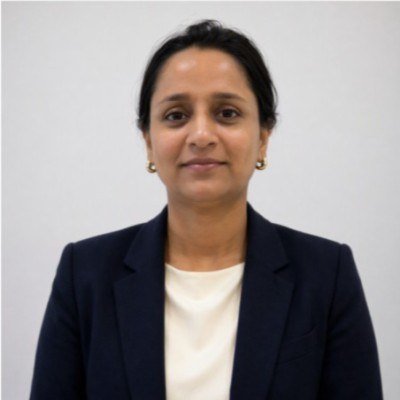
Neha Gupta is a CFA charterholder based in Winnipeg who has worked in financial markets since December 2005. She has published more than 2,600 investment articles and is Head of Operations and Finance at Whiteland Real Estate. She reviews WealthScale’s investing pages for accuracy.
- CFA charter, CFA Institute (awarded 2023)
- Post Graduate Diploma in Business Administration (Finance), 2008
- In financial markets since December 2005
- More than 2,600 published investment articles
General information only. Not financial, investment, tax or legal advice. WealthScale is independent and is published by WealthScale Media Inc., 55 Queen St E, Suite 1205, Toronto, ON M5C 1R6. CFA® and Chartered Financial Analyst® are registered trademarks owned by CFA Institute.