

Is Wealthsimple Safe? CIPF and CDIC Coverage
WealthScale is independent and not affiliated with Wealthsimple.
Is Wealthsimple safe? Yes, for money that sits inside the protection limits. Wealthsimple Investments Inc., the dealer that holds its investing accounts, is a CIRO dealer member and a CIPF member, so each client’s general, retirement and RESP accounts are each protected up to $1,000,000 if the firm fails. Chequing cash is placed in trust deposits at partner banks that are CDIC members, for up to $1,000,000 of combined CDIC cover. The gaps are real: crypto coins have no CIPF or CDIC cover, registered savings accounts get CDIC cover of $100,000 per category, and no protection plan covers a fall in market prices. This guide maps every Wealthsimple product to its protection.
 Written by Sharad Gondaliya, CPA CPAChartered Professional Accountant, CPA Ontario No. 61040184
 Financial reviewer: Neha Gupta, CFA CFA charterholderReview of this page scheduled
At a glance
Verdict. Wealthsimple is a regulated Canadian platform, not an unregulated app. Its investing accounts are held by Wealthsimple Investments Inc. (WSII), a CIRO dealer member and CIPF member. Its payments company, Wealthsimple Payments Inc., is registered with FINTRAC as a money services business and with the Bank of Canada as a payment service provider.
Investment accounts (CIPF). CIPF protects client property missing from a member firm that fails, up to $1,000,000 for general accounts (cash, margin, TFSA and FHSA combined), a separate $1,000,000 for retirement accounts (RRSP, RRIF and LIF combined) and a separate $1,000,000 for RESPs.
Chequing (CDIC). Wealthsimple is not a CDIC member. It places chequing cash in trust deposits at partner banks that are CDIC members, for up to $1,000,000 of combined CDIC cover ($100,000 per beneficiary at each member institution). Wealthsimple does not disclose the partner banks’ names.
Savings. The Canadian-dollar savings account is covered by CIPF up to $1,000,000 and is not CDIC-insured. Registered Savings Accounts (the savings versions of the TFSA, RRSP and FHSA) are covered by CDIC up to $100,000 per beneficiary per category and are not CIPF-protected. No Wealthsimple page states the coverage for USD savings.
Crypto. Crypto coins are not covered by CIPF or CDIC. Cash sitting in a Wealthsimple crypto account is CIPF-covered, and most coins are kept in offline cold storage with regulated custodians.
Ownership and size. As of the December 2023 OSC decision, subsidiaries and affiliates of Power Corporation of Canada controlled a majority of the voting securities of Wealthsimple Financial Corp., the parent of WSII. Wealthsimple reported $155.6 billion of assets under administration at June 30, 2026.
1. Is Wealthsimple Safe? The Short Answer
Yes, inside the limits. Wealthsimple’s investing, trading, managed and crypto accounts are offered by Wealthsimple Investments Inc., an investment dealer that belongs to the Canadian Investment Regulatory Organization (CIRO) and the Canadian Investor Protection Fund (CIPF). Its chequing account carries Canada Deposit Insurance Corporation (CDIC) cover through partner banks. That is the same two-layer structure that protects clients of bank-owned brokers and online banks, with different limits for each product.
Two different risks. The question can mean one of two things. The first is firm risk: what happens to your money if the company fails or loses track of client assets. The second is market risk: what happens if your investments fall in value. CIPF and CDIC deal only with the first. If you buy a stock or an ETF in your Wealthsimple TFSA and it drops 30%, no protection plan pays you back. Keep the two risks separate when you read any safety claim.
Where the protection is strong. Each client gets three separate CIPF limits of $1,000,000: one for general accounts, one for retirement accounts and one for RESPs. Chequing gets up to $1,000,000 of combined CDIC cover, well above the $100,000 CDIC limit for one insured category at one member institution. Unless you hold more than $1,000,000 in one group, or large sums in Registered Savings, business accounts or USD savings, every dollar at Wealthsimple outside crypto falls inside one of these limits.
Where the gaps are. Crypto coins have no CIPF or CDIC cover. Registered Savings Accounts are capped at $100,000 of CDIC cover per category. Wealthsimple has not published the coverage for its USD savings accounts. And any amount above a limit is unprotected, which matters for business owners, people who have just sold a home and anyone holding more than $1,000,000 in general accounts.
How we score it. In our broker rubric, safety carries 10% of the overall score. Wealthsimple scores 4.0 out of 5 on safety: 4 points because the firm states both its CIRO and CIPF membership, and no bonus point because it is not owned by a bank or a financial co-operative group. Its overall broker score is 4.2 / 5, as of October 23, 2026. The full rules are on our broker rating methodology page.
2. Who Holds Your Money: Wealthsimple’s Legal Entities
Why the entity matters. “Wealthsimple” is a brand used by several companies. The protection on your money depends on which company provides the product. CIPF applies to accounts held by a CIPF member firm. CDIC applies to deposits at a CDIC member institution. A credit card is a loan from the issuer to you, so neither plan is relevant to it. Before you judge safety, match each product you use to the company behind it.
| Company | What it is | What it provides |
|---|---|---|
| Wealthsimple Investments Inc. (WSII) | Investment dealer; CIRO dealer member; CIPF member; registered crypto trading platform since January 1, 2024 | Self-directed trading, managed investing, crypto, Registered Savings and business investing accounts |
| Wealthsimple Financial Corp. | Parent company of WSII | Parent of the dealer; its voting control is described in the December 2023 OSC decision |
| Wealthsimple Inc. | Portfolio manager | Portfolio management services |
| Wealthsimple Payments Inc. | Money services business registered with FINTRAC; payment service provider registered with the Bank of Canada under the Retail Payment Activities Act; not a CDIC member | Issues the credit cards, the Visa Platinum Prepaid card and the Business Prepaid Visa |
| Wealthsimple Technologies Inc. | Website owner | Owns the Wealthsimple website |
| Wealthsimple Mortgage Services Inc. | Mortgage broker | Arranges mortgages through 25+ lending partners in Ontario, Alberta, British Columbia, Saskatchewan, New Brunswick, Nova Scotia, Prince Edward Island and Newfoundland and Labrador |
| SimpleTax Software Inc. | Tax software company | Wealthsimple Tax |
| KOHO Financial Inc. | Card issuer | Issues the legacy Wealthsimple Prepaid Mastercard |
The dealer is the one that counts for investors. Your TFSA, RRSP, FHSA, RESP, non-registered, margin and crypto accounts sit with WSII. That is the company CIRO supervises and the one CIPF covers. In January 2024, Wealthsimple Digital Assets Inc., which used to run crypto trading as a restricted dealer, was folded into WSII, so crypto now sits with the same dealer as stocks and ETFs.
The payments company is not a bank. Wealthsimple Payments Inc. issues cards and handles payments. It is registered as a money services business and a payment service provider, not as a bank, and it is not a CDIC member. Chequing gets its CDIC cover because Wealthsimple places the money in trust deposits at partner banks that are members, not because any Wealthsimple company is insured itself.
Products outside both plans. The Wealthsimple Visa Infinite+ and Visa Infinite Privilege cards, mortgages arranged by Wealthsimple Mortgage Services Inc. and Wealthsimple Tax are not savings or investment products, so CIPF and CDIC do not apply to them. Read our Wealthsimple credit card review and Wealthsimple Tax review for how those products work.
3. Is Wealthsimple Legit? CIRO Regulation and Registration
Yes, it is a registered dealer. Wealthsimple Investments Inc. is a dealer member of CIRO, the pan-Canadian self-regulatory organization that oversees every investment dealer and mutual fund dealer in Canada, and trading on Canada’s debt and equity marketplaces. Wealthsimple’s site footer shows “CIRO Member”, and CIRO’s own list of the dealers it regulates includes WSII. Every CIPF member firm is a CIRO member, so the two memberships go together.
Regulator decisions name it directly. Ontario Securities Commission decisions from December 2023 and December 2025 describe WSII as an investment dealer, and CIRO’s board granted the firm exemptions on December 13, 2023. These decisions are public regulatory records, which is the strongest evidence that a firm is what it says it is.
Crypto is registered too. WSII has been a registered crypto trading platform since January 1, 2024. It appears on the Canadian Securities Administrators’ list of crypto trading platforms authorized to do business with Canadians and on the OSC’s list of registered crypto trading platforms. The OSC renewed WSII’s crypto exemptive relief in December 2025 for four years. Only platforms on the CSA’s authorized list are included in our best crypto platforms ranking, and a CIRO investment dealer that is also a CIPF member earns the top regulation score there.
The payments side is registered separately. Wealthsimple Payments Inc. is registered with FINTRAC, Canada’s anti-money-laundering agency, as a money services business. It is also registered with the Bank of Canada as a payment service provider under the Retail Payment Activities Act. Neither registration is deposit insurance, but both mean a federal body supervises how the company handles payments.
What regulation does not promise. Being regulated means the firm must follow rules on how it deals with clients and runs its business. It does not mean your investments will make money, and it does not mean every product the firm sells is right for you. Regulation and protection plans reduce firm risk. Your own choices decide market risk.
4. Wealthsimple CIPF Coverage: Limits and Account Groups
What CIPF is. The Canadian Investor Protection Fund protects clients of member firms if a member becomes insolvent and client property is missing. It covers cash, securities, futures and segregated funds held by the member for you. WSII is on CIPF’s current member list, which we checked on October 22, 2026, so Wealthsimple CIPF coverage applies to the accounts WSII holds.
Three separate $1,000,000 limits. CIPF does not give one limit per account. It groups accounts and gives a limit to each group. Every account in the same group shares that group’s limit at the same member firm.
| CIPF account group | Limit | Wealthsimple accounts in the group |
|---|---|---|
| General accounts | $1,000,000 combined | Non-registered cash accounts, margin accounts, TFSA and FHSA (self-directed or managed) |
| Retirement accounts | $1,000,000 combined | RRSP, RRIF and LIF |
| RESPs | $1,000,000 combined | RESPs where you are the subscriber |
Combined means combined. If you hold a TFSA, an FHSA, a personal non-registered account and a margin account at Wealthsimple, all four share one $1,000,000 general limit. Opening a second TFSA does not add a second limit. Your RRSP and RRIF share a different $1,000,000, and your RESPs share a third. The FHSA sits in the general group with the TFSA, not with the RRSP, even though an FHSA can later be moved into an RRSP.
Managed and self-directed are treated the same. Wealthsimple’s managed portfolios and its self-directed trading accounts are both held by WSII, so a managed TFSA and a self-directed TFSA count toward the same general limit. Our Wealthsimple managed investing review and Wealthsimple Trade review cover the products themselves.
What “missing” means. CIPF pays only when a member firm fails and client property cannot be returned in full. If WSII failed and all client property were accounted for, the property would be returned and CIPF would not need to pay. CIPF is a backstop for missing property, not a promise about the value of what you own.
Want the full picture of Wealthsimple’s accounts, fees and tiers, not just safety?
5. What CIPF Does Not Cover
Falling prices. CIPF never covers a drop in the value of your investments. If the market falls, a company you own goes bankrupt or an ETF loses value, CIPF does not pay. This rule is easy to misread, and it applies at every dealer in Canada, not only at Wealthsimple.
Bad advice and failed issuers. CIPF excludes losses from unsuitable advice and from the insolvency of the company or government that issued a security. If you hold a bond and the issuer defaults, or a share and the company fails, that is an investment loss, not missing property. The same applies to a managed portfolio that falls in value: the manager’s choices are market risk, not a CIPF event.
Crypto assets. CIPF excludes crypto assets. Wealthsimple states plainly that crypto held with it is not covered by CIPF or CDIC. Only the cash balance in a Wealthsimple crypto account is CIPF-covered. Section 9 explains how Wealthsimple holds coins instead.
Registered Savings Accounts. Wealthsimple’s legal disclaimers state that Registered Savings Accounts held at WSII are not protected by CIPF. These are the savings versions of the TFSA, RRSP and FHSA. They are covered by CDIC instead, up to $100,000 per beneficiary per category. That is a much lower limit than the $1,000,000 CIPF limit the investing versions of the same accounts carry.
Amounts above the limits. Anything above $1,000,000 in one CIPF group at one member firm is not covered. A client with $1,300,000 across a TFSA, FHSA and non-registered account has $300,000 outside CIPF’s general limit ($1,300,000 − $1,000,000 = $300,000). That does not mean the money is at risk day to day. It means there is no backstop for that portion if the firm fails and property is missing.
Products that are not held by a member. A credit card balance, a mortgage arranged through a broker and tax software are not property held for you by a dealer, so CIPF has nothing to cover. The same goes for any product you buy from a company that is not a CIPF member, whatever its app looks like.
6. Wealthsimple CDIC Coverage for Chequing
How the cover works. Wealthsimple is not a CDIC member. Instead, it places chequing cash in trust deposits at partner banks that are CDIC members. CDIC insures up to $100,000 per beneficiary at each partner, and Wealthsimple spreads the money so that clients get up to $1,000,000 of CDIC cover in total. The cover is free and automatic: you do not apply for it or pay for it.
The partners are not named. Wealthsimple says that, for contractual reasons, it cannot disclose which partner banks it uses. Its own pages also describe the number of partner institutions in two different ways, so we do not print a number. Both descriptions give the same $1,000,000 ceiling, which is the figure that matters for planning.
Joint and multiple accounts. You can hold up to 8 individual and up to 8 joint chequing accounts. For CDIC purposes, money in a joint chequing account counts under the primary account holder. If you are the primary holder on a joint account and also hold individual accounts, plan on all of it sharing your $1,000,000 ceiling.
Business accounts are lower. Business chequing and Corporate Save carry CDIC cover of up to $100,000 per business, not $1,000,000. A corporation that keeps $400,000 of retained earnings in Wealthsimple business chequing has $300,000 above the CDIC limit ($400,000 − $100,000 = $300,000).
What CDIC covers in general. CDIC insures eligible deposits in Canadian or foreign currency, GICs and term deposits at its member institutions, up to $100,000 per insured category per member, including interest. It does not cover stocks, bonds, ETFs, mutual funds or crypto. Separate CDIC categories exist for deposits in one name, joint deposits, deposits in trust, RRSPs, RRIFs, TFSAs, RESPs, RDSPs and FHSAs. Use the deposit insurance calculator below to see how CDIC categories add up at any bank.
Rates and fees in context. Wealthsimple chequing pays 1.25% on Core, 1.75% on Premium and 2.25% on Generation. Core and Premium clients get a 0.5% boost, to 1.75% and 2.25%, with $2,000 or more of direct deposit in a 30-day period; Generation is not eligible for the boost. The monthly fee is $0. Our Wealthsimple chequing review covers the account in full, and our best chequing accounts ranking compares it with banks.
7. Savings Accounts: CIPF for Cash Savings, CDIC for Registered Savings
The Canadian-dollar savings account. Wealthsimple’s savings account pays 2.5% to all clients (non-promotional, data as of August 19, 2026), has $0 fees, no minimum balance and no withdrawal limits or notice period. It is open to individual non-registered accounts only for now, and it has no account or transit number, so you cannot direct deposit pay into it. Its protection is CIPF up to $1,000,000. It is not CDIC-insured.
Why savings is CIPF and chequing is CDIC. The two cash products look similar in the app, but they are built differently. Chequing money goes into trust deposits at CDIC member banks. Savings money is protected the way cash in an investment account is protected, through CIPF. Both limits are $1,000,000, but they come from different plans and protect against different failures, so do not assume that money moved from chequing to savings keeps CDIC cover. Our CIPF vs CDIC guide explains how the two plans differ at every Canadian firm, not only at Wealthsimple.
Registered Savings Accounts. Wealthsimple’s TFSA, RRSP and FHSA pages offer a savings version of each account. Wealthsimple’s help centre and legal disclaimers say these Registered Savings Accounts are covered by CDIC up to $100,000 per beneficiary per category and are not protected by CIPF. Because TFSAs, RRSPs and FHSAs are separate CDIC categories, a client could hold up to $100,000 of insured registered savings in each one. Wealthsimple’s pages disagree on the interest rate these accounts pay, so we do not print it until it is confirmed.
USD savings. Wealthsimple offers up to 8 USD savings accounts with no monthly fee and no minimum. No Wealthsimple page we checked on October 22, 2026 states whether USD savings is covered by CIPF, by CDIC or by neither. Until Wealthsimple publishes it, treat the coverage as unconfirmed. Our Wealthsimple USD accounts review covers fees and how the account works.
What this means in practice. If you keep a large cash balance at Wealthsimple, the product you choose decides the protection. A $300,000 balance in the CAD savings account is covered by CIPF. Wealthsimple does not say which CIPF group savings falls into, so to be cautious we count it toward the general group with your TFSA and other general accounts. The same $300,000 in chequing sits under the separate $1,000,000 CDIC ceiling. In a TFSA Registered Savings Account, only $100,000 would be insured and $200,000 would be above the CDIC limit ($300,000 − $100,000 = $200,000). Compare cash products and their insurance in our high-interest savings accounts guide.
8. Coverage by Product: The Full Table
One table for every product. This is the map most readers need. It lists every Wealthsimple product we track, the plan that protects it and the limit that applies, as of October 22, 2026. Where Wealthsimple has not published the answer, the table says so instead of guessing.
| Product | Protection plan | Limit | Notes |
|---|---|---|---|
| TFSA and FHSA (self-directed, managed or Automated Investing) | CIPF, general group | $1,000,000 combined with other general accounts | Covers cash and securities if WSII fails and property is missing |
| Non-registered and margin accounts | CIPF, general group | $1,000,000 combined with TFSA and FHSA | Same shared general limit |
| RRSP, RRIF and LIF | CIPF, retirement group | $1,000,000 combined | Separate from the general limit |
| RESP | CIPF, RESP group | $1,000,000 combined | Where you are the subscriber |
| CAD savings account | CIPF; not CDIC | $1,000,000 | Group not stated; count it as general to be cautious |
| Registered Savings (TFSA, RRSP, FHSA savings versions) | CDIC; not CIPF | $100,000 per beneficiary per category | Interest rate not yet confirmed |
| Chequing, individual and joint | CDIC through trust deposits at partner banks | $1,000,000 combined | Joint funds count under the primary holder |
| Business chequing and Corporate Save | CDIC | $100,000 per business | Much lower than personal chequing |
| USD savings | Not published | Not published | Treat as unconfirmed |
| Crypto coins | None | $0 | Mostly in cold storage with regulated custodians |
| Cash in a crypto account | CIPF | CIPF limits apply | The coins themselves are not covered |
| Credit cards | Not applicable | Not applicable | A card is credit, not a deposit |
| Mortgages | Not applicable | Not applicable | Arranged by a broker with lending partners |
Read the table by product, not by account name. The same account type can carry different protection depending on its version. A TFSA that holds ETFs is a CIPF account with a $1,000,000 shared limit. A TFSA opened as a Registered Savings Account is a CDIC account with a $100,000 limit. When you open a TFSA or FHSA at Wealthsimple, please note which version you chose, because the screen names look alike.
Accounts at other firms do not count. CIPF limits apply per member firm, and CDIC limits apply per member institution. A TFSA at Wealthsimple and a TFSA at a bank-owned broker each have their own CIPF limit. That makes spreading money across firms a simple way to raise total protection once you near a limit, which section 12 covers.
For the accounts themselves. If you are choosing between Wealthsimple’s TFSA versions, read our Wealthsimple TFSA review. For the first home account, see our Wealthsimple FHSA review. Both explain fees, transfers and how each version is protected.
9. Is Wealthsimple Crypto Safe? Custody and Protection
Registered, but not insured. Wealthsimple Crypto is offered by WSII, a registered crypto trading platform and CIRO dealer member. That registration means a regulator supervises how the platform runs. It does not mean your coins are insured. Crypto assets are not covered by CIPF or CDIC. If you buy bitcoin on Wealthsimple and it falls in price, or if coins were lost in a custody failure, neither plan pays you back.
How coins are held. Wealthsimple says most crypto is kept in offline cold storage with regulated custodians, held in trust for clients. It does not name the custodians, but says each has more than $75 million of cold storage coverage. Coins in hot wallets, which are online for day-to-day trading, are covered through Coincover; Wealthsimple does not state the amount. Neither arrangement is a government protection plan, and it is the custodians’ coverage, not a policy in your name.
Cash in the crypto account. The Canadian-dollar cash sitting in your crypto account, before you buy or after you sell, is CIPF-covered. Wealthsimple does not state which CIPF group that cash falls into. Crypto can only be held in a non-registered crypto account at Wealthsimple: there is no crypto in a TFSA, RRSP or FHSA.
Purchase limits. Under its December 2025 regulatory decision, Wealthsimple limits how much crypto some clients can buy outside certain provinces: $30,000 of net acquisition cost in 12 months for clients who do not qualify as eligible crypto investors, $100,000 for eligible crypto investors, and no limit for accredited investors.
Costs and choices. Wealthsimple charges a 0.5% fee plus a spread on market orders, with no spread on limit orders, and a $1 charge on orders under $100. It lists 170+ coins and supports transfers in and out, with network fees set by each blockchain. Our Wealthsimple crypto review covers fees, staking and coin choice in full.
Holding crypto? See how Wealthsimple compares with every CSA-authorized platform on fees and regulation.
10. Who Owns Wealthsimple and How Big It Is
Control as of December 2023. The Ontario Securities Commission’s December 2023 decision states that subsidiaries and affiliates of Power Corporation of Canada controlled a majority of the voting securities of Wealthsimple Financial Corp., the parent company of WSII, as of December 18, 2023. That is the most recent regulator statement on control we found.
Current ownership is not confirmed. The December 2025 OSC decision did not restate the ownership, and no Wealthsimple page we checked names Power Corporation. We could not confirm the current ownership breakdown from a regulator or from Wealthsimple, so we describe control only as of the December 2023 decision. We will update this section if a newer official source states it.
Size. Wealthsimple reported $155.6 billion of assets under administration at June 30, 2026. That was up 24.7% from the previous quarter and 84.1% from a year earlier, with about $17 billion of net inflows in the second quarter of 2026. Wealthsimple publishes more than one client count, on different bases, so we leave the client count out.
Does size make it safer? Size and a well-known controlling shareholder are signs of a firm’s standing, but they are not protection. Your protection comes from the structure in this guide: CIPF for property held by WSII and CDIC for chequing deposits at partner banks. A large firm can still fail, and a small CIPF member offers the same CIPF limits as a large one. Judge safety by the plan that covers your product, not by headlines.
What to watch. Wealthsimple has announced a product event for November 5, 2026. New products may come with new entities or new protection terms. We recheck every figure on this page after product changes and date each update, as set out in our editorial standards.
11. Account Security: Passkeys and the Account Guarantee
Firm failure is rare; account takeover is not. CIPF and CDIC protect you if a firm or bank fails. They do not protect you if someone logs into your account and moves money out. Account security is a risk you can manage yourself, so it deserves as much attention as the protection limits.
The account guarantee. Wealthsimple states that clients who use a passkey are reimbursed for all direct losses from unauthorized activity in their account. A passkey replaces a password with a credential stored on your phone or computer and confirmed with your fingerprint, face or device PIN. The guarantee is tied to using one, so a client who still signs in only with a password is outside the guarantee as Wealthsimple describes it.
Independent controls testing. Wealthsimple states that it is SOC 1 and SOC 2 compliant. These are reports in which an outside auditor tests a company’s controls over financial reporting (SOC 1) and over security, availability and confidentiality of systems (SOC 2). They do not guarantee that nothing can go wrong, but they show the firm’s controls are tested by a third party.
Why limits matter. Wealthsimple chequing allows Interac e-Transfers of up to $50,000 a day for eligible clients, and instant deposits of up to $50,000 on Core and $250,000 on Premium and Generation. High limits are convenient, but they also mean a compromised account can move large amounts quickly. That is one more reason to turn on a passkey and every other login protection the app offers.
Simple habits that help. Use a unique password on the email account tied to Wealthsimple, since email is often the reset route for financial apps. Never share a one-time code with someone who calls or texts you, even if they say they are from Wealthsimple. Review each statement and trade confirmation. If something looks wrong, contact Wealthsimple through the app rather than through a link in a message.
12. Large Balances: Staying Inside the Limits
Add up each group separately. To check your own coverage, total your Wealthsimple balances by group, not by account. Add your TFSA, FHSA, non-registered and margin balances for the general group, plus your CAD savings balance to be cautious, since Wealthsimple does not say which group savings belongs to. Add your RRSP, RRIF and LIF for the retirement group. Add your RESPs for the RESP group. Then total your chequing, your Registered Savings Accounts by category and your crypto. Compare each total with its limit.
The general group can fill first. The general group is often the first to pass $1,000,000 for clients with large balances, because it holds the TFSA, the FHSA and every non-registered account, and the cautious approach adds the CAD savings account too, since Wealthsimple does not state its group. A couple selling a business or a cottage who park the proceeds in a non-registered account can cross the line in one deposit.
| Bucket | Plan | Maximum cover |
|---|---|---|
| General accounts | CIPF | $1,000,000 |
| Retirement accounts | CIPF | $1,000,000 |
| RESPs | CIPF | $1,000,000 |
| Personal chequing | CDIC | $1,000,000 |
| TFSA Registered Savings | CDIC | $100,000 |
| RRSP Registered Savings | CDIC | $100,000 |
| FHSA Registered Savings | CDIC | $100,000 |
| Total possible cover | $4,300,000 |
How the total is built. The total is ($1,000,000 x 4) + ($100,000 x 3) = $4,300,000. It counts the CAD savings account inside the general group’s limit, the cautious reading, since Wealthsimple states only that savings is covered by CIPF up to $1,000,000. Business accounts, USD savings and crypto are left out, since business cover is $100,000 per business, USD savings cover is not published and crypto has none.
Above the limits. If a group is over its limit, you have three plain options: move the excess to a different protection bucket you have not filled, move it to another CIPF member or CDIC member institution, or accept the uncovered amount knowingly. Moving registered money between firms should always be done by direct transfer, which our guide to transferring an investment account explains step by step.
13. Wealthsimple Safety Strengths and Gaps
The balance sheet of protection. Wealthsimple’s protection is strong for investment accounts and personal chequing, and thin in a few specific places. This list sets out both sides so you can match them to what you hold.
Strengths
- WSII is a CIRO dealer member and a CIPF member, confirmed in regulator decisions
- Three separate CIPF limits of $1,000,000: general, retirement and RESP
- Up to $1,000,000 of CDIC cover on personal chequing, free and automatic
- Crypto is offered by a registered crypto trading platform on the CSA authorized list
- Most crypto held in offline cold storage with regulated custodians, in trust
- Passkey users are reimbursed for all direct losses from unauthorized activity
- SOC 1 and SOC 2 compliant, per Wealthsimple
Gaps
- Crypto coins have no CIPF or CDIC cover
- Registered Savings Accounts carry only $100,000 of CDIC cover per category and no CIPF cover
- USD savings coverage is not published
- CDIC partner banks are not named
- Business chequing and Corporate Save are capped at $100,000 of CDIC cover per business
- Not owned by a bank or co-operative group, so it misses one point in our safety rubric
- Current ownership is not confirmed beyond the December 2023 OSC decision
Which gaps matter to you. If you hold ETFs and stocks in a TFSA, RRSP or non-registered account, the gaps above barely touch you. If you hold crypto, large registered savings balances, USD savings or business cash, each of those gaps applies directly, and the strategies below show how to handle them.
14. Wealthsimple Safety Compared With Other Platforms
Every broker we rank is a CIPF member. All 13 online brokers in our ranking are on CIPF’s current member list, so each offers the same CIPF limits. The differences in our safety sub-score come from two things: whether the broker states its CIRO membership itself, and whether it is owned by a bank or a financial co-operative group. The table lists brokers in order of our overall score.
| Broker | Overall score | Safety sub-score | CIRO membership | CIPF member | Owned by a bank or co-op |
|---|---|---|---|---|---|
| Questrade | 4.3 / 5 | 3.5 | Follows from CIPF membership | Yes | No |
| Desjardins Online Brokerage (Disnat) | 4.3 / 5 | 5.0 | Stated by the broker | Yes | Yes |
| Interactive Brokers Canada | 4.2 / 5 | 4.0 | Stated by the broker | Yes | No |
| Wealthsimple | 4.2 / 5 | 4.0 | Stated by the broker | Yes | No |
| National Bank Direct Brokerage | 4.2 / 5 | 4.5 | Follows from CIPF membership | Yes | Yes |
| Qtrade Direct Investing | 4.0 / 5 | 4.0 | Stated by the broker | Yes | No |
| BMO InvestorLine | 3.8 / 5 | 5.0 | Stated by the broker | Yes | Yes |
| moomoo Canada | 3.7 / 5 | 4.0 | Stated by the broker | Yes | No |
| Webull Canada | 3.2 / 5 | 4.0 | Stated by the broker | Yes | No |
| CIBC Investor’s Edge | 2.8 / 5 | 4.5 | Follows from CIPF membership | Yes | Yes |
| RBC Direct Investing | 2.7 / 5 | 5.0 | Stated by the broker | Yes | Yes |
| Scotia iTRADE | 2.6 / 5 | 5.0 | Stated by the broker | Yes | Yes |
| TD Direct Investing | 2.4 / 5 | 4.5 | Follows from CIPF membership | Yes | Yes |
Reading the scores. Our rubric gives 4 points when a broker states both its CIRO and CIPF membership, 3.5 when CIPF membership is confirmed and CIRO membership follows from it, and one extra point for bank or co-operative ownership. Safety is 10% of the overall score, so cost, accounts and US investing decide most rankings. See how WealthScale makes money; no provider pays to change a score.
Head-to-head pages. For the full comparison with the brokers closest to Wealthsimple in our ranking, read Wealthsimple vs Questrade and Wealthsimple vs Interactive Brokers, or our Interactive Brokers Canada review and Questrade review.
Chequing compared with an online bank. A bank that is itself a CDIC member, such as Equitable Bank (EQ Bank), insures eligible deposits up to $100,000 per insured category. Wealthsimple’s trust-deposit model reaches $1,000,000 for personal chequing by spreading money across partner banks. Our Wealthsimple vs EQ Bank comparison covers rates and cover side by side.
What to Check Before You Deposit and What Protection You Get
What to check before you deposit
- Which Wealthsimple product you are opening: investing, savings, Registered Savings, chequing or crypto
- Your current total in the CIPF general group: TFSA, FHSA, non-registered and margin, plus CAD savings to be cautious
- Your RRSP, RRIF and LIF total for the retirement group
- Your personal chequing total, including joint accounts where you are the primary holder
- Any Registered Savings balance above $100,000 in one category
- Whether any of the money is crypto, which has no CIPF or CDIC cover
- Whether you hold business cash, which has $100,000 of CDIC cover per business
- Whether your login uses a passkey, which the account guarantee requires
What protection you get
- CIPF cover of up to $1,000,000 for general accounts
- A separate $1,000,000 of CIPF cover for retirement accounts
- A separate $1,000,000 of CIPF cover for RESPs
- Up to $1,000,000 of CDIC cover on personal chequing through partner banks
- CDIC cover of $100,000 per category on Registered Savings Accounts
- CIPF cover on cash in a crypto account
- Reimbursement of direct losses from unauthorized activity when you use a passkey
- A dealer supervised by CIRO and a crypto platform registered with securities regulators
How to Keep Your Wealthsimple Money Inside the Protection Limits
- List every product you hold. Write down each Wealthsimple account, its type and its version (investing, savings, Registered Savings, chequing or crypto). The version decides the protection.
- Sort each balance into a bucket. Put each balance into CIPF general, CIPF retirement, CIPF RESP, CDIC chequing, CDIC Registered Savings by category, or no cover (crypto, and USD savings until confirmed).
- Total each bucket. Add the balances in each bucket and compare the total with its limit: $1,000,000 for each CIPF group and for personal chequing, $100,000 for each Registered Savings category and for business cash.
- Move or split what is over. If a bucket is over its limit, move the excess to an unfilled bucket or another member firm. Use a direct transfer for registered accounts so the move does not use contribution room.
- Secure the login. Set up a passkey so the account guarantee applies, and use a unique password on the email tied to your account.
- Recheck after big deposits and product changes. Repeat the totals after any large deposit, home sale, inheritance or new Wealthsimple product, and after Wealthsimple’s November 5, 2026 event.
10 Ways to Keep Your Money Protected at Wealthsimple
1. Keep each CIPF group under $1,000,000
Your TFSA, FHSA, non-registered and margin balances share one general limit, and we count CAD savings there too to be cautious. If the total nears $1,000,000, hold the next dollar in a retirement account, an RESP or at another CIPF member rather than in another general account at Wealthsimple.
2. Know which cash product you hold
Chequing is CDIC through partner banks, savings is CIPF, and Registered Savings is CDIC at $100,000 per category. The limits differ even though the products look alike in the app, so check the product name before you park a large sum.
3. Cap Registered Savings at $100,000 per category
A TFSA, RRSP or FHSA opened as a Registered Savings Account is covered by CDIC up to $100,000 per beneficiary per category. Above that, an investing version of the same account carries CIPF cover inside the $1,000,000 group limit.
4. Treat crypto as uninsured
Size any crypto holding as money you could lose in full, because neither CIPF nor CDIC covers coins. Keep only the amount you are trading in the crypto account’s cash balance, which is CIPF-covered.
5. Turn on a passkey
Wealthsimple reimburses passkey users for all direct losses from unauthorized activity. Setting one up takes minutes and brings your account inside the guarantee as Wealthsimple describes it.
6. Hold USD cash with care
USD savings coverage is not published. Until it is, keep only the USD cash you need for near-term trades in savings, and hold longer-term USD inside an investment account, where cash and securities are CIPF-covered.
7. Split business cash
Business chequing and Corporate Save carry CDIC cover of $100,000 per business. A corporation holding more can split it across CDIC member institutions or hold the excess in a corporate investing account covered by CIPF.
8. Use more than one firm for large balances
CIPF and CDIC limits apply per member firm or institution. Two firms means two sets of limits, so holding accounts at a second CIPF member doubles the CIPF cover available to you.
9. Keep your own records
Please download and keep your monthly statements and trade confirmations. In any failure or dispute, your own records of what you held and when make it faster to prove a claim.
10. Separate firm risk from market risk
Protection plans cover a failed firm, not a falling market. Manage market risk with your mix of investments, your time horizon and the cash you keep for emergencies, which no protection plan can do for you.
Illustrative Example: Coverage for a $1.84 Million Client
This example is hypothetical. Daniel, 34, holds all of the following at Wealthsimple after selling a rental property. We test how much of his money falls inside a protection plan, assuming WSII failed and client property were missing. Market values are as of one day and include no gains or losses.
- General group (CIPF): TFSA $150,000 + FHSA $40,000 + non-registered $650,000 + margin account $260,000 = ($150,000 + $40,000 + $650,000 + $260,000 = $1,100,000).
- General group cover: the limit is $1,000,000, so ($1,100,000 − $1,000,000 = $100,000) is above the CIPF limit.
- Retirement group (CIPF): RRSP $380,000, which is under the $1,000,000 limit, so all $380,000 is inside the limit.
- RESP group (CIPF): family RESP $90,000 with Daniel as subscriber, all inside the $1,000,000 limit.
- Personal chequing (CDIC through partner banks): $240,000, inside the $1,000,000 ceiling.
- Crypto: $30,000 of coins, with no CIPF or CDIC cover.
- Total held: ($1,100,000 + $380,000 + $90,000 + $240,000 + $30,000 = $1,840,000).
- Total inside a plan’s limit: ($1,000,000 + $380,000 + $90,000 + $240,000 = $1,710,000).
- Total outside any plan: ($1,840,000 − $1,710,000 = $130,000), made up of ($100,000 + $30,000 = $130,000).
Daniel could bring the $100,000 inside a limit by holding it in chequing, where he has ($1,000,000 − $240,000 = $760,000) of unused CDIC room, or at a second CIPF member. The $30,000 of crypto stays outside both plans wherever he holds it.
Is Wealthsimple Safe? FAQ
Is Wealthsimple safe?
Yes, for money inside the protection limits. Wealthsimple Investments Inc. is a CIRO dealer member and a CIPF member, so general, retirement and RESP accounts are each protected up to $1,000,000 if the firm fails and property is missing. Personal chequing has up to $1,000,000 of CDIC cover through partner banks. Crypto coins are not covered, and no plan covers market losses.
Is Wealthsimple legit?
Yes. Wealthsimple Investments Inc. is a dealer member of CIRO and a member of CIPF, and Ontario Securities Commission decisions from December 2023 and December 2025 describe it as an investment dealer. It is also a registered crypto trading platform. Wealthsimple Payments Inc. is registered with FINTRAC and with the Bank of Canada as a payment service provider.
Is Wealthsimple CIPF protected?
Yes. Wealthsimple Investments Inc. is on CIPF’s current member list. CIPF covers cash and securities missing from a member firm that fails, up to $1,000,000 for general accounts (cash, margin, TFSA and FHSA combined), $1,000,000 for retirement accounts (RRSP, RRIF and LIF) and $1,000,000 for RESPs. Registered Savings Accounts and crypto coins are not CIPF-protected.
Is Wealthsimple CDIC insured?
Wealthsimple itself is not a CDIC member. Its chequing cash is placed in trust deposits at partner banks that are CDIC members, giving up to $1,000,000 of combined CDIC cover. Registered Savings Accounts carry CDIC cover of $100,000 per beneficiary per category. The CAD savings account is covered by CIPF, not CDIC.
How much of my Wealthsimple chequing is insured?
Up to $1,000,000 in total. CDIC insures up to $100,000 per beneficiary at each partner bank, and Wealthsimple spreads chequing money across partners to reach the $1,000,000 ceiling. Joint chequing funds count under the primary account holder. Business chequing and Corporate Save are lower, at $100,000 per business.
Which banks hold Wealthsimple chequing deposits?
Wealthsimple does not say. It states that, for contractual reasons, it cannot disclose the names of its partner banks. All of them are CDIC members. Wealthsimple’s pages also describe the number of partners in two different ways, so we do not print a number; both give the same $1,000,000 ceiling.
Is the Wealthsimple savings account CDIC insured?
No. The Canadian-dollar savings account is covered by CIPF up to $1,000,000, not by CDIC. It pays 2.5% to all clients, with $0 fees and no minimum. The savings versions of the TFSA, RRSP and FHSA are different: they are covered by CDIC up to $100,000 per beneficiary per category and not by CIPF.
Is crypto on Wealthsimple protected?
Crypto coins are not covered by CIPF or CDIC. Wealthsimple keeps most coins in offline cold storage with regulated custodians, held in trust, and says each custodian has more than $75 million of cold storage coverage. Hot wallets are covered through Coincover. Cash in your crypto account is CIPF-covered.
What happens to my money if Wealthsimple fails?
If Wealthsimple Investments Inc. became insolvent and client property were missing, CIPF would cover the missing cash and securities up to its limits for each account group. Chequing money sits in trust deposits at CDIC member partner banks, where CDIC cover applies up to $100,000 per beneficiary per member and $1,000,000 combined. Crypto coins have no such backstop.
Who owns Wealthsimple?
As of the December 2023 OSC decision, subsidiaries and affiliates of Power Corporation of Canada controlled a majority of the voting securities of Wealthsimple Financial Corp., the parent of Wealthsimple Investments Inc. We could not confirm the current ownership breakdown from a newer official source as of October 22, 2026.
Does CIPF cover losses when my investments drop?
No. CIPF covers only client property that is missing when a member firm fails. It does not cover falls in market value, losses from unsuitable advice or the failure of the company that issued a security. That rule is the same at every CIPF member, including bank-owned brokers.
Is my FHSA at Wealthsimple protected?
An FHSA that holds investments, whether self-directed, managed or Automated Investing, sits in CIPF’s general group with your TFSA, cash and margin accounts, sharing one $1,000,000 limit. An FHSA opened as a Registered Savings Account is covered by CDIC up to $100,000 instead, and not by CIPF.
Is Wealthsimple USD savings insured?
Wealthsimple has not published it. No Wealthsimple page we checked on October 22, 2026 states whether USD savings accounts are covered by CIPF, by CDIC or by neither. Treat the coverage as unconfirmed, and keep longer-term US dollars in an investment account, where cash and securities are CIPF-covered.
Satisfied on safety? Compare Wealthsimple’s costs and features with its closest rival next.
Figures on this page were checked against Wealthsimple’s published disclosures, CIPF and CDIC publications and securities regulator decisions on October 22, 2026. We update this page when a figure changes.
Meet the Experts Behind WealthScale

Sharad is a CPA Ontario member (No. 61040184) and a Certified Public Accountant licensed in Washington and Montana, with more than 15 years in accounting and tax, a Diploma in Banking and Finance and a Certificate in Small Business Finance. He checks WealthScale content against primary sources. WealthScale is independent of his firm, Gondaliya CPA Professional Corporation, and provides general information only, not personal financial, investment, tax or legal advice.
- Chartered Professional Accountant, CPA Ontario
- Certified Public Accountant, Washington (No. 57629) and Montana (No. PAC-CPAP-LIC-033176)
- Writing on tax and registered accounts since 2021
- Reader’s Choice Award 2025 Winner, Best Accountant (Toronto)
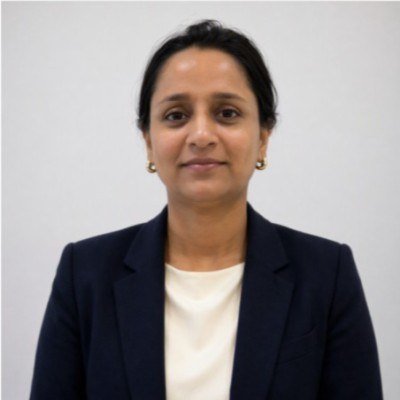
Neha Gupta is a CFA charterholder based in Winnipeg who has worked in financial markets since December 2005. She has published more than 2,600 investment articles and is Head of Operations and Finance at Whiteland Real Estate. She reviews WealthScale’s investing pages for accuracy.
- CFA charter, CFA Institute (awarded 2023)
- Post Graduate Diploma in Business Administration (Finance), 2008
- In financial markets since December 2005
- More than 2,600 published investment articles
General information only. Not financial, investment, tax or legal advice. WealthScale is independent and is published by WealthScale Media Inc., 55 Queen St E, Suite 1205, Toronto, ON M5C 1R6. CFA® and Chartered Financial Analyst® are registered trademarks owned by CFA Institute.