

FHSA Calculator
This FHSA calculator shows how much First Home Savings Account room you have in 2026 and on January 1, 2027, based on the year you opened your first FHSA and what you have put in. FHSA room is $8,000 a year from the year you open, unused room carries forward up to $8,000, and lifetime contributions are capped at $40,000. Below the calculator you will find room by opening year, what an $8,000 deduction saves in each province, how a balance could grow, what a couple can put toward a home with FHSAs and the Home Buyers’ Plan, and when your account must close.
 Written by Sharad Gondaliya, CPA CPAChartered Professional Accountant, CPA Ontario No. 61040184
 Financial reviewer: Neha Gupta, CFA CFA charterholderReview of this page scheduled
At a glance
What the FHSA calculator answers. Your FHSA room left for 2026, your room on January 1, 2027, your lifetime room left out of $40,000, and the date your account must close, with a year-by-year room table.
What you need. The year you opened your first FHSA, your year of birth, and how much you contributed or transferred in from an RRSP in each year since.
The 2026 figures it uses. $8,000 of participation room a year from the year you open, a carry-forward capped at $8,000, a $40,000 lifetime limit, and a December 31 deadline with no 60-day period.
The quick answer for many people. If you opened your first FHSA in 2023, 2024 or 2025 and have not contributed, your 2026 room is $16,000, not $24,000 or more, because carry-forward is capped at $8,000.
The closing date. An FHSA must be closed by December 31 of the year of the earliest of its 15th anniversary, the year you turn 71, or the year after your first qualifying withdrawal.
Enter your opening year, birth year and contributions, and the FHSA room calculator below shows your room now, your room next January 1, your lifetime room left and your closing year.
1. How to Use the FHSA Calculator
Year you opened your first FHSA. This FHSA contribution calculator starts from one date. Pick the calendar year your first FHSA was opened, not the year you became eligible. Room does not build before you open an account, so this one input sets everything else. If you have not opened one yet, choose 2026 to see what opening this year gives you.
Year you were born. The calculator uses this to find the year you turn 71, which can end your FHSA before its 15th anniversary.
Contributions by year. For each year from your opening year to 2026, enter what you put in. Include transfers from an RRSP, because they count toward your $40,000 lifetime limit. For 2026, enter what you have contributed so far this year. Leave out investment growth: only money going in counts.
Reading the results. “FHSA room left in 2026” is what you can still contribute before December 31, 2026. “Room for 2026” is your total room for the year before contributions. “Lifetime room left” is $40,000 minus everything you have put in. “Room on January 1, 2027” assumes no more contributions this year. If what you entered is more than your room, the calculator flags the excess, which is taxed at 1% a month until it is removed.
Where the numbers come from. Your statements from each FHSA issuer show what you contributed. If you hold more than one FHSA, please add the contributions from every account together, because your room is shared across all of them.
What it does not do. The room calculator does not check eligibility or estimate tax. Use the FHSA eligibility checker further down this page for the first and the province table in section 5 for the second. For other accounts, our investing, savings and tax calculators include a TFSA contribution room calculator that works the same way.
2. The Rules Behind the Numbers
The formula. Your room for a year is $8,000 plus your unused room from the year before, with the unused part capped at $8,000, and never more than your lifetime room left. In the year you open your first FHSA, the carry-forward is $0, so your room is $8,000.
| Rule | Figure | What it means |
|---|---|---|
| Annual participation room | $8,000 | Added in the year you open your first FHSA and each year after |
| Carry-forward cap | $8,000 | Unused room above $8,000 does not roll into next year’s limit |
| Most room in one year | $16,000 | $8,000 for the year plus $8,000 carried forward |
| Lifetime limit | $40,000 | Counts all contributions and RRSP transfers in, not growth |
| Room before opening | $0 | No room builds until you open your first FHSA |
| Contribution deadline | December 31 | No 60-day period; January contributions count for the new year |
| Over-contribution tax | 1% a month | On the highest excess FHSA amount in each month |
| Longest life of the account | 15 years | Ends earlier in the year you turn 71 or the year after a first qualifying withdrawal |
The lifetime cap overrides carry-forward. Once your contributions are within $16,000 of $40,000, your room can be smaller than $8,000 plus the carry-forward. Someone who has put in $32,000 has $8,000 of lifetime room left, so their room is $8,000 even with $8,000 carried forward.
Growth is free of the cap. Investment returns do not use room. A $40,000 account that grows to $46,000 has used $40,000 of lifetime room, and the full $46,000 can come out tax-free in a qualifying withdrawal for a home.
Calendar years only. Room is counted by calendar year. Opening on December 15 gives you that year’s $8,000. Contributing on January 5 uses the new year’s room and counts as a contribution for the new year, for both room and the deduction. How we source and date these figures is set out in our editorial standards.
3. FHSA Room by Opening Year
No contributions yet. The table shows FHSA room for someone who opened their first FHSA in each year from 2023 to 2026 and has contributed nothing. It answers the first question most savers have: how much can I put in now?
| First FHSA opened in | Room available in 2026 | Room available in 2027 if nothing is added in 2026 | Year you reach $40,000 contributing the maximum from 2026 | 15th anniversary closing date |
|---|---|---|---|---|
| 2023 | $16,000 | $16,000 | 2029 | December 31, 2038 |
| 2024 | $16,000 | $16,000 | 2029 | December 31, 2039 |
| 2025 | $16,000 | $16,000 | 2029 | December 31, 2040 |
| 2026 | $8,000 | $16,000 | 2030 | December 31, 2041 |
| Not opened until 2027 | $0 | $8,000 | 2031 | December 31, 2042 |
Why 2023, 2024 and 2025 look the same. After one year with no contributions, your carry-forward hits the $8,000 cap. Each extra empty year adds nothing more to next year’s room. So someone who opened in 2023 and never contributed has the same $16,000 in 2026 as someone who opened in 2025.
What opening early did gain. Compared with opening in 2026, an early opener with an empty account reaches $40,000 one year sooner, because the carry-forward adds $8,000 to 2026. Contributing $16,000 in 2026 and $8,000 in each of 2027, 2028 and 2029 reaches $40,000 in 2029 ($16,000 + $8,000 x 3 = $40,000). The lifetime limit is the same $40,000 for everyone, and the early opener’s 15-year clock also ends sooner.
How the 2029 and 2030 dates work. For a 2026 opener, the maximum is $8,000 a year from 2026 to 2030 ($8,000 x 5 = $40,000), so the limit is reached in 2030. For a 2027 opener, it is 2027 to 2031.
Closing dates assume no earlier trigger. The last column shows the 15th anniversary year. Your account closes earlier if you turn 71 first, or by the end of the year after your first qualifying withdrawal. Our FHSA deadline rules explain the three triggers.
4. FHSA Carry-Forward Examples: Three Worked Cases
How to read these. Each case is hypothetical and applies the formula from section 2: room = $8,000 + the smaller of last year’s unused room and $8,000, capped by lifetime room left.
Case 1: Bea, a partial year. Bea opened her first FHSA in 2024 and contributed $8,000 that year and $2,000 in 2025.
- 2025 room: $8,000 ($8,000 + $0 unused from 2024). Unused: $6,000 ($8,000 minus $2,000).
- 2026 room: $14,000 ($8,000 + $6,000). She contributes nothing, so $14,000 is unused.
- 2027 room: $16,000 ($8,000 + $8,000, because only $8,000 of the $14,000 carries forward).
- Lifetime room left: $30,000 ($40,000 minus $10,000).
Case 2: Carlos, a big catch-up year. Carlos opened in 2023 with $3,000, then contributed nothing in 2024 or 2025.
- 2024 room: $13,000 ($8,000 + $5,000 unused from 2023).
- 2025 room: $16,000 ($8,000 + $8,000, because only $8,000 of the $13,000 unused carries forward).
- 2026 room: $16,000. He contributes the full $16,000, bringing his total to $19,000 ($3,000 + $16,000).
- 2027 room: $8,000 ($8,000 + $0 unused). Lifetime room left: $21,000 ($40,000 minus $19,000).
Case 3: Dana, the lifetime cap. Dana opened in 2023 and contributed $8,000 in each of 2023, 2024, 2025 and 2026, for $32,000 ($8,000 x 4). She contributes nothing in 2027.
- 2027 room: $8,000. Lifetime room left: $8,000 ($40,000 minus $32,000).
- 2028 room: $8,000, not $16,000. The formula gives $16,000 ($8,000 + $8,000 carried forward), but her lifetime room left is only $8,000, so the cap wins.
What the cases show. Carry-forward helps you catch up one missed year, never more. Once you are near $40,000, the lifetime cap decides. If you want to check your own numbers, the FHSA room calculator at the top of this page runs the same formula for every year since you opened.
Not sure you can open an FHSA yet? Check the four eligibility tests first.
5. What an FHSA Deduction Saves in Each Province
The deduction. FHSA contributions are deductible from your income, in the year you contribute or in any later year, even after the account is closed. The table estimates the 2026 tax saved by deducting $8,000 at four income levels in each province and territory.
| Province or territory | Income $50,000 | Income $75,000 | Income $100,000 | Income $150,000 |
|---|---|---|---|---|
| Alberta | $1,760 | $2,440 | $2,440 | $2,880 |
| British Columbia | $1,673 | $2,256 | $2,256 | $3,256 |
| Manitoba | $2,043 | $2,660 | $2,660 | $3,472 |
| New Brunswick | $1,872 | $2,760 | $2,760 | $3,360 |
| Newfoundland and Labrador | $2,125 | $2,800 | $2,904 | $3,344 |
| Northwest Territories | $1,592 | $2,328 | $2,328 | $3,056 |
| Nova Scotia | $2,316 | $2,974 | $2,995 | $3,480 |
| Nunavut | $1,440 | $2,200 | $2,200 | $2,800 |
| Ontario | $1,674 | $2,522 | $2,465 | $3,473 |
| Prince Edward Island | $2,198 | $2,968 | $2,968 | $3,593 |
| Quebec | $2,055 | $2,889 | $2,889 | $3,797 |
| Saskatchewan | $1,960 | $2,640 | $2,640 | $3,080 |
| Yukon | $1,632 | $2,360 | $2,360 | $2,952 |
Income is taxable income before the deduction. Estimates use 2026 federal and provincial or territorial brackets and basic personal amounts, the Ontario surtax and Ontario Health Premium, the Ontario and British Columbia tax reductions and, for Quebec, the 16.5% Quebec abatement of federal tax, with the deduction also claimed on the Quebec return. Other credits are ignored.
Why Ontario dips at $100,000. At $75,000, the deduction also lowers the Ontario Health Premium by $150. At $100,000 the premium is the same $750 before and after the deduction, so the saving is smaller even though income is higher.
Carrying the deduction forward. Because you choose the year, a contribution made in a low-income year can be deducted in a higher-income year. This example is hypothetical: an Alberta resident who contributes $8,000 while earning $50,000 would save about $1,760 by deducting it now, or $2,440 by deducting it in a later year at $100,000 of income, using 2026 rates. That is $680 more ($2,440 minus $1,760) for the same contribution.
A deduction is not a refund. The figures show tax saved. Whether it arrives as a refund depends on how much tax was withheld from your pay. For other amounts, the RRSP refund calculator works for any deduction, and our FHSA deduction rules explain what can and cannot be deducted.
6. Projected FHSA Balance
What growth could look like. The table shows the balance of an FHSA that receives $8,000 at the start of each year for five years, at three example returns. These returns are assumptions for illustration, not forecasts. Savings and GIC rates change, and investments can lose value.
| End of year | Total contributed | Balance at 0% | Balance at 3% | Balance at 5% |
|---|---|---|---|---|
| 1 | $8,000 | $8,000.00 | $8,240.00 | $8,400.00 |
| 2 | $16,000 | $16,000.00 | $16,727.20 | $17,220.00 |
| 3 | $24,000 | $24,000.00 | $25,469.02 | $26,481.00 |
| 4 | $32,000 | $32,000.00 | $34,473.09 | $36,205.05 |
| 5 | $40,000 | $40,000.00 | $43,747.28 | $46,415.30 |
The arithmetic at 3%. Year 1: $8,000 x 1.03 = $8,240.00. Year 2: ($8,240.00 + $8,000) x 1.03 = $16,727.20. Year 3: ($16,727.20 + $8,000) x 1.03 = $25,469.02. Year 4: ($25,469.02 + $8,000) x 1.03 = $34,473.09. Year 5: ($34,473.09 + $8,000) x 1.03 = $43,747.28.
Growth uses no room. Only the $40,000 of contributions counts toward the lifetime limit. In the 5% column, the $6,415.30 of growth ($46,415.30 minus $40,000) comes out tax-free with the rest in a qualifying withdrawal.
Match the return to the date. The closer your purchase, the less time a market drop has to recover. Our guides to GIC rates and high-interest savings accounts list current FHSA-eligible rates, and the compound interest calculator projects any other amount or rate.
7. FHSA Plus the Home Buyers’ Plan for Couples
Two accounts, two plans. Each partner who qualifies can open an FHSA with separate $8,000 annual and $40,000 lifetime limits, and each can withdraw up to $60,000 from their own RRSPs under the Home Buyers’ Plan. FHSA and HBP withdrawals can be used for the same home if the conditions of each are met at the time of each withdrawal.
| Source | One buyer | Couple, both qualifying |
|---|---|---|
| FHSA contributions, maximum | $40,000 | $80,000 |
| FHSA balance after 5 years at an assumed 3% | $43,747.28 | $87,494.56 |
| HBP withdrawals, maximum | $60,000 | $120,000 |
| Total before growth | $100,000 | $200,000 |
| Total with the assumed FHSA growth | $103,747.28 | $207,494.56 |
| Minimum HBP repayment per year after a full $60,000 withdrawal | $4,000 | $8,000 ($4,000 each) |
The repayment difference. FHSA withdrawals are never repaid. HBP withdrawals are repaid over 15 years, starting in the second year after the first withdrawal. For first withdrawals from 2022 to 2025, repayment starts in the fifth year, and the CRA says that relief has been extended to first withdrawals from January 1, 2026 to December 31, 2028. A missed repayment is added to income.
The spouse rule for couples. If one partner owns the home you both live in, neither of you passes the FHSA opening test until the look-back clears. A partner who opens an FHSA before moving into the other’s home keeps it open. Our FHSA spouse rule page covers every combination.
The first-home planner below adds FHSA savings and HBP withdrawals for one buyer or a couple over the years until you buy, using your own balances and an example return.
Where to read more. Our Home Buyers’ Plan guide covers repayment schedules, and FHSA vs RRSP and FHSA vs TFSA compare the accounts for a down payment.
8. FHSA Eligibility and the Closing Deadline
The four opening tests. To open your first FHSA you must be a resident of Canada, at least 18 (19 where that is the age of majority), no older than 71 at December 31 of the year you open, and a first-time home buyer. That last test means you did not live in a home owned by you or your current spouse or common-law partner in the current year before opening or the previous four calendar years.
The four-question checker below gives a quick read on whether you can open an FHSA today.
The closing deadline. Your FHSA must be closed by December 31 of the year in which the earliest of three things happens: its 15th anniversary, the year you turn 71, or the year after your first qualifying withdrawal. Anything left after that loses FHSA status, and its fair market value is added to your income.
| Year opened | Year born | First qualifying withdrawal | Must be closed by | Trigger |
|---|---|---|---|---|
| 2026 | 1996 | None | December 31, 2041 | 15th anniversary |
| 2025 | 1962 | None | December 31, 2033 | Turns 71 in 2033 |
| 2024 | 1992 | 2026 | December 31, 2027 | Year after the first qualifying withdrawal |
| 2026 | 1957 | None | December 31, 2028 | Turns 71 in 2028 |
Exits before the deadline. Before your closing date you can make a qualifying withdrawal for a home, transfer the balance directly to an RRSP or RRIF without using RRSP room (provided you have no excess FHSA amount), or take a taxable withdrawal. The full rules are in our FHSA eligibility guide and our FHSA guide. When you are ready to open an account, our ranking of the best FHSA accounts in Canada and our Wealthsimple FHSA review compare providers.
9. Common FHSA Calculator Mistakes
Entering the year you became eligible. Room starts when you open your first FHSA, not when you could have. Entering an earlier year overstates your room and can lead to an over-contribution taxed at 1% a month.
Assuming carry-forward stacks up. Unused room carries forward only up to $8,000. Two empty years give $16,000 of room, not $24,000.
Leaving out RRSP transfers. Money moved from an RRSP into an FHSA counts toward the $40,000 lifetime limit. Enter it with your contributions for that year.
Counting a January deposit for last year. The FHSA has no 60-day period. A deposit made on February 10 counts for the year it was made, for both room and the deduction.
Reading a projection as a promise. The balance table and the first-home planner use example returns. Actual returns can be higher, lower or negative.
Forgetting more than one account. If you have FHSAs at two institutions, add both sets of contributions together. Your room is shared across all of them.
8 Ways to Get More From Your FHSA Room
1. Open now if you qualify
Room does not build until you open. Opening in 2026 gives $8,000 of room this year and lets you carry up to $8,000 into 2027, so you can contribute $16,000 next year if this year is tight.
2. Never leave more than one year unused
Carry-forward stops at $8,000. A second empty year adds nothing to next year’s room and pushes the date you reach $40,000 later, closer to your 15-year or age 71 deadline.
3. Contribute before December 31
There is no 60-day window. Set a reminder for early December so a holiday-season transfer still lands in time for the year’s room and deduction.
4. Deduct in your highest-rate year
FHSA deductions carry forward indefinitely. Use the province table above to compare the saving at today’s income with the saving at the income you expect later, using 2026 rates as a guide.
5. Count RRSP transfers against the cap
An RRSP-to-FHSA transfer uses lifetime room and is not deductible. Weigh it against simply contributing new cash, which does earn a deduction, before you move RRSP money in.
6. Pair the FHSA with the HBP
One buyer can combine $40,000 of FHSA contributions with up to $60,000 from RRSPs under the HBP. A couple can double both. Drawing on the FHSA first leaves less to repay.
7. Match investments to the purchase date
Use the projection table as a range, not a promise. Money needed within a year or two may suit savings or GICs; a longer timeline may suit a portfolio that can rise and fall.
8. Note your closing year today
The room calculator shows the year your FHSA must close. Put it in your calendar with a reminder a year earlier, so you can buy, transfer to an RRSP or RRIF, or withdraw in time.
FHSA Calculator Questions Answered
How does the FHSA calculator work out my room?
It starts with $8,000 in the year you opened your first FHSA, then for each later year adds $8,000 plus your unused room from the year before, capped at $8,000, and never more than your lifetime room left out of $40,000. It subtracts what you entered for each year to show your room left for 2026 and your room on January 1, 2027.
How much FHSA room do I have in 2026 if I opened in 2023 and never contributed?
$16,000. Your room for 2026 is the $8,000 annual amount plus $8,000 carried forward. Carry-forward is capped at $8,000, so the unused room from 2023, 2024 and 2025 does not add up to more. The same $16,000 applies if you opened in 2024 or 2025 and have not contributed.
Can FHSA carry-forward exceed $8,000?
No. Unused FHSA room carries forward only up to $8,000, so the most room you can have in one year is $16,000. Unused room above the cap does not roll into next year’s limit, but it does not reduce your $40,000 lifetime limit either. You can still reach $40,000 by contributing in later years.
Do transfers from my RRSP count toward the $40,000 limit?
Yes. The $40,000 lifetime limit counts both cash contributions and amounts transferred from an RRSP into an FHSA. Unlike a cash contribution, a transfer from an RRSP is not deductible. Enter RRSP transfers with your contributions in the calculator so your lifetime room left is correct.
How much tax does an $8,000 FHSA deduction save?
It depends on your province and income. Using 2026 rates, an $8,000 deduction saves an estimated $1,674 at $50,000 of income in Ontario and $3,473 at $150,000. In Alberta the saving is $1,760 at $50,000 and $2,880 at $150,000. The province table on this page shows four income levels for every province and territory.
Can I carry forward my FHSA deduction?
Yes. You can deduct FHSA contributions in the year you make them or in any later year, even after your FHSA is closed. Carrying the deduction to a year with a higher income can raise its value. An Alberta resident would save $1,760 deducting $8,000 at $50,000 of income, or $2,440 at $100,000, using 2026 rates.
How much can a couple use from FHSAs and the Home Buyers’ Plan?
Up to $200,000 before growth if both partners qualify: $40,000 of FHSA contributions and up to $60,000 of HBP withdrawals each. FHSA withdrawals for a qualifying home are never repaid. HBP withdrawals are repaid over 15 years, at a minimum of $4,000 a year each after a full $60,000 withdrawal.
When does my FHSA have to be closed?
By December 31 of the year in which the earliest of three events happens: the 15th anniversary of opening your first FHSA, the year you turn 71, or the year after your first qualifying withdrawal. An FHSA opened in 2026 by someone born in 1957 must close by December 31, 2028, the year they turn 71.
Does the projected balance include tax?
No tax is taken off the projection, because growth inside an FHSA is not taxed and a qualifying withdrawal for a first home is tax-free. The returns used are examples, not forecasts. If the money is not used for a home, a taxable withdrawal is added to income, while a direct transfer to an RRSP or RRIF is taxed only when withdrawn later.
What happens if I contribute more than my FHSA room?
The excess is taxed at 1% a month on the highest excess amount in each month until it is removed. You can fix it with a designated withdrawal or transfer using Form RC727, a taxable withdrawal, or new room on January 1. A $2,000 excess costs $20 for each month it remains.
Work out your FHSA room now, then compare where to open or add to your account.
Figures on this page were checked against Canada Revenue Agency publications on October 22, 2026. We update this page when a figure changes.
Meet the Experts Behind WealthScale

Sharad is a CPA Ontario member (No. 61040184) and a Certified Public Accountant licensed in Washington and Montana, with more than 15 years in accounting and tax, a Diploma in Banking and Finance and a Certificate in Small Business Finance. He checks WealthScale content against primary sources. WealthScale is independent of his firm, Gondaliya CPA Professional Corporation, and provides general information only, not personal financial, investment, tax or legal advice.
- Chartered Professional Accountant, CPA Ontario
- Certified Public Accountant, Washington (No. 57629) and Montana (No. PAC-CPAP-LIC-033176)
- Writing on tax and registered accounts since 2021
- Reader’s Choice Award 2025 Winner, Best Accountant (Toronto)
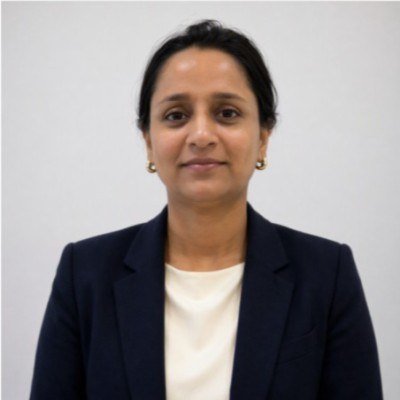
Neha Gupta is a CFA charterholder based in Winnipeg who has worked in financial markets since December 2005. She has published more than 2,600 investment articles and is Head of Operations and Finance at Whiteland Real Estate. She reviews WealthScale’s investing pages for accuracy.
- CFA charter, CFA Institute (awarded 2023)
- Post Graduate Diploma in Business Administration (Finance), 2008
- In financial markets since December 2005
- More than 2,600 published investment articles
General information only. Not financial, investment, tax or legal advice. WealthScale is independent and is published by WealthScale Media Inc., 55 Queen St E, Suite 1205, Toronto, ON M5C 1R6. CFA® and Chartered Financial Analyst® are registered trademarks owned by CFA Institute.