

RRSP Home Buyers’ Plan: Limit, Rules and Repayment
The Home Buyers’ Plan (HBP) lets a first-time buyer withdraw up to $60,000 from their RRSPs to buy or build a qualifying home, with no tax on the withdrawal as long as it is paid back over 15 years. The $60,000 limit applies to withdrawals made after April 16, 2024; before that date the limit was $35,000. Repayment normally starts in the second year after your first withdrawal, but first withdrawals made from 2022 to 2028 get extra time and start repaying in the fifth year. This guide covers the first-time buyer test, the 90-day contribution rule, Schedule 7, using the HBP with an FHSA and what a couple can use together.
 Written by Sharad Gondaliya, CPA CPAChartered Professional Accountant, CPA Ontario No. 61040184
 Financial reviewer: Neha Gupta, CFA CFA charterholderReview of this page scheduled
At a glance
What it is. The Home Buyers’ Plan lets you take money out of your own RRSPs toward a first home without paying tax on the withdrawal. You then pay it back into your RRSPs over 15 years.
HBP limit. $60,000 per person for withdrawals made after April 16, 2024. The earlier limit was $35,000. Two spouses or partners who both qualify can each withdraw $60,000 for the same home.
Who qualifies. A first-time home buyer who is resident in Canada at the time of the withdrawal and has a written agreement to buy or build a qualifying home. You are a first-time buyer if you did not live in a home owned by you or your spouse or common-law partner in the current year (ignoring the 30 days before the withdrawal) or the previous four calendar years.
Deadlines. All withdrawals must happen in the calendar year of your first withdrawal or in January of the next year. The home must be bought or built before October 1 of the year after the first withdrawal, and you must intend to live in it as your principal residence within one year.
Repayment. At least 1/15 of the balance each year for up to 15 years. Repayment normally starts in the second year after the first withdrawal. For first withdrawals made from January 1, 2022 to December 31, 2028, it starts in the fifth year. Any shortfall is added to your income.
With an FHSA. You can use the HBP and a First Home Savings Account for the same home if you meet the conditions of each at the time of each withdrawal. A qualifying FHSA withdrawal never has to be repaid.
Enter the amount you withdrew and the year of your first withdrawal to see your first and last repayment years and your minimum yearly repayment.
1. What the Home Buyers’ Plan Is and Who Can Use It
The basic idea. The Home Buyers’ Plan is not an account. It is a set of rules that lets you take money out of RRSPs you already hold and put it toward a first home. A normal RRSP withdrawal is added to your income, and the issuer withholds tax at source: 10% on $5,000 or less, 20% on amounts over $5,000 up to $15,000, and 30% on larger amounts outside Quebec. An HBP withdrawal is not taxed when you take it. In exchange, you owe the amount back to your RRSPs over 15 years, and in any year you repay less than the minimum, the shortfall is added to your income.
Who can use it. To withdraw under the HBP you must be a first-time home buyer under the four-year test in section 3, have a written agreement to buy or build a qualifying home, intend to occupy that home as your principal residence within one year after buying or building it, and be a resident of Canada when you withdraw. These conditions apply at the moment of withdrawal, so confirm them again if you take the money out in more than one instalment.
Where the money comes from. Only money already inside your RRSPs can come out. The HBP does not create new money or new room. If your RRSPs hold $25,000, that is your practical ceiling, even though the HBP limit is $60,000. Money you contribute shortly before the withdrawal needs extra care because of the 89-day rule in section 6.
RRSP first-time home buyer basics. When people search for “RRSP first-time home buyer”, they usually mean the HBP. It only helps once you have savings inside an RRSP, which is why buyers starting from zero often look at the First Home Savings Account first. Our RRSP guide explains how the account itself works, and the RRSP contribution limit page shows how your room is set: 18% of your previous year’s earned income, up to $33,810 for 2026, less any pension adjustment, plus unused room carried forward.
What the HBP really costs. The withdrawal is tax-free, but it is not cost-free. Money taken out stops growing inside your RRSP until you put it back, and the repayments come out of income you have already paid tax on. Those two costs are the main reason many first-time buyers look at the FHSA before the HBP: a qualifying FHSA withdrawal never has to be paid back. Section 11 sets the HBP beside the FHSA, the TFSA and a regular RRSP withdrawal.
2. HBP Limit: $60,000 per Person Since April 16, 2024
The current HBP limit. You can withdraw up to $60,000 in total under the Home Buyers’ Plan. The $60,000 limit applies to withdrawals made after April 16, 2024, the day the 2024 federal budget was tabled. Before that, the limit was $35,000.
The limit is per person. Each participant has their own $60,000. Two spouses or common-law partners who both qualify can each withdraw $60,000 toward the same home, for $120,000 combined ($60,000 x 2 = $120,000). Section 10 shows how a couple can add two FHSAs on top.
The limit is a total, not a yearly amount. You can split the money across several withdrawals during the withdrawal window described in section 5, but all of them together cannot exceed $60,000. Each withdrawal needs its own Form T1036.
Your RRSP balance is the real cap. The HBP lets you withdraw up to the limit, but only from what your RRSPs actually hold. Anything above $60,000 stays in the RRSP and keeps growing tax-deferred.
| Withdrawal made | HBP limit per person | Couple, both qualifying |
|---|---|---|
| On or before April 16, 2024 | $35,000 | $70,000 |
| After April 16, 2024 | $60,000 | $120,000 |
| RRSP balance | Most you can withdraw under the HBP | Left in the RRSP |
|---|---|---|
| $20,000 | $20,000 | $0 |
| $45,000 | $45,000 | $0 |
| $60,000 | $60,000 | $0 |
| $85,000 | $60,000 | $25,000 |
Why the higher limit matters. With the $60,000 HBP limit, one buyer who also fills an FHSA to its $40,000 lifetime limit can have up to $100,000 of tax-advantaged money for a first home before any FHSA growth ($60,000 + $40,000 = $100,000). Only the $60,000 from the RRSP has to be repaid.
3. The RRSP First-Time Home Buyer Test
The four-year rule. You count as a first-time home buyer for the HBP if, during the current year (ignoring the 30 days before your withdrawal) or any of the previous four calendar years, you did not live in a home that you or your spouse or common-law partner owned. The test is about homes that were owned and lived in. Owning a home years ago does not shut you out for good; only the look-back window matters.
How the window works. Say your withdrawal is on May 3, 2027. The four previous calendar years are 2023, 2024, 2025 and 2026. In 2027, the 30 days before the withdrawal (April 3 to May 2, 2027) are ignored. So the test covers January 1, 2023 to April 2, 2027. If you sold a home you lived in and moved out in 2022, and have rented since, you pass.
The 30-day allowance. Because the 30 days before the withdrawal are ignored, buying the new home and moving in shortly before you withdraw does not by itself fail the test, as long as no other owned home falls inside the window.
Your spouse’s or partner’s home counts. If, during the window, you lived in a home your spouse or common-law partner owned, you are not a first-time buyer, even if your name was never on the title. This catches many couples where one partner already owns the home they share.
Two exceptions. The test is waived for a buyer helping a person with a disability, and for someone who is living separate and apart from a spouse or common-law partner after a breakdown of the relationship. Each exception has further conditions that go beyond this guide, so a tax professional can confirm whether yours fits before you withdraw.
| Situation | First-time buyer? | Why |
|---|---|---|
| Has always rented | Yes | No owned home lived in during the window |
| Owned and lived in a condo, sold it and moved out in 2021 | Yes | The condo falls before January 1, 2023 |
| Owned and lived in a home until March 2024 | No | Lived in an owned home inside the window |
| Lives in a home owned by their spouse | No | A spouse’s home counts |
| Owns a rental condo but has never lived in it | Yes | The test looks at homes you lived in |
| Lives in a parent’s home that neither they nor their spouse owns | Yes | Not owned by them or their spouse |
The FHSA uses a similar test. To open a First Home Savings Account you must not have lived in a home owned by you, or by your current spouse or partner, in the current year before opening or the previous four calendar years. A first-time buyer test, looking at a home you owned and lived in, applies again at each qualifying withdrawal. Our FHSA eligibility guide walks through it.
4. What Counts as a Qualifying Home and the Purchase Deadline
A written agreement first. When you withdraw, you need a written agreement to buy or build a qualifying home. For most buyers that is a signed agreement of purchase and sale for a resale home or a written contract with a builder. Without it, you cannot withdraw under the HBP.
You must plan to live there. You must intend to occupy the home as your principal residence within one year after buying or building it. A property bought only to rent out does not meet this condition.
Buy or build before October 1 of the next year. The home must be acquired or built before October 1 of the year after the year of your first withdrawal. A first withdrawal in 2027 means the home must be acquired or built before October 1, 2028.
Resident at the time of withdrawal. You must be a resident of Canada when you withdraw. If you become a non-resident before the withdrawal, you cannot use the HBP for that purchase.
New builds and long closings. Pre-construction homes often close years after the agreement is signed. Because the deadline runs from the year of your first withdrawal, withdrawing in the year the home will close, rather than the year you sign, keeps you inside it. Check your expected closing date with your builder before you set the withdrawal date.
| Year of first withdrawal | Last day to withdraw | Home acquired or built before |
|---|---|---|
| 2026 | January 31, 2027 | October 1, 2027 |
| 2027 | January 31, 2028 | October 1, 2028 |
| 2028 | January 31, 2029 | October 1, 2029 |
Same deadline style as the FHSA. A qualifying FHSA withdrawal also needs a written agreement with a completion date before October 1 of the year after the withdrawal. If you take both in the same calendar year, the two deadlines line up, which makes planning simpler.
Check how much you could have for a down payment from an FHSA and the HBP together.
5. How to Withdraw: Form T1036 and the Withdrawal Window
Form T1036. For each HBP withdrawal you complete Form T1036 and give it to the issuer of the RRSP, such as your bank, credit union or brokerage. The form tells the issuer that the withdrawal is made under the Home Buyers’ Plan.
The withdrawal window. All HBP withdrawals must be made in the calendar year of your first withdrawal or in January of the following year. A first withdrawal in October 2027 leaves you until January 31, 2028 for any further withdrawals.
Several withdrawals, one limit. You can draw from more than one RRSP, or from the same RRSP more than once, within the window. For example, $30,000 in October 2027 and $20,000 in January 2028 add up to $50,000, which is inside the $60,000 limit and inside the window. A third withdrawal in February 2028 would be too late.
Sell first, then withdraw. Most RRSPs hold investments, not cash. The amount you need has to be in cash inside the RRSP before the issuer can pay it out, and selling investments and settling the trades takes a few business days. If you plan to move an RRSP from one institution to another first, our guide on how to transfer an investment account explains the steps.
Plan backward from the closing date. The table shows one buyer’s timeline for a June 15, 2027 closing. Each step lines up with a rule from this guide.
| Step | Date | Rule it meets |
|---|---|---|
| Last RRSP contribution | February 1, 2027 | Must fall outside the 89 days before the withdrawal |
| Sign agreement of purchase and sale | February 20, 2027 | Written agreement needed before withdrawing |
| Sell investments inside the RRSP | April 26, 2027 | Cash ready in the RRSP |
| Submit Form T1036 and withdraw | May 3, 2027 | 91 days after the last contribution; inside the 2027 window |
| Closing | June 15, 2027 | Before October 1, 2028 |
| Move in | June 2027 | Within one year of buying |
6. The 90-Day Rule for Recent RRSP Contributions
The rule. RRSP contributions made in the 89 days before an HBP withdrawal may not be deductible. The Canada Revenue Agency describes an 89-day period, and it is often called the 90-day rule because money that has been in the plan for at least 90 days before the withdrawal sits outside the window.
What it stops. The rule stops a buyer from routing cash through an RRSP for a few days just to claim a deduction and then pulling the same money out for the home. Money that has been saved in the RRSP for months is not affected.
What it can cost. Losing a deduction means losing the refund it would have produced. The table shows the refund at risk on a $10,000 contribution for someone with $70,000 of taxable income, using 2026 federal and provincial brackets, basic personal amounts, the Ontario surtax and Health Premium and the Quebec abatement, and ignoring other credits.
| Province or territory | Refund at risk | Share of the $10,000 |
|---|---|---|
| Alberta | $3,026.00 | 30.26% |
| British Columbia | $2,820.00 | 28.20% |
| Manitoba | $3,325.00 | 33.25% |
| New Brunswick | $3,450.00 | 34.50% |
| Newfoundland and Labrador | $3,500.00 | 35.00% |
| Nova Scotia | $3,682.75 | 36.83% |
| Northwest Territories | $2,910.00 | 29.10% |
| Nunavut | $2,750.00 | 27.50% |
| Ontario | $2,965.00 | 29.65% |
| Prince Edward Island | $3,527.83 | 35.28% |
| Quebec | $3,611.75 | 36.12% |
| Saskatchewan | $3,300.00 | 33.00% |
| Yukon | $2,950.00 | 29.50% |
How to stay clear. Count forward 90 days from your last contribution before you withdraw. A contribution made on February 1, 2027 is 91 days old on May 3, 2027, so a withdrawal that day falls outside the 89-day window. If your closing date is fixed, make any top-up at least 90 days before you need the cash, or withdraw only money that was already in the plan.
The RRSP deadline trap. RRSP contributions made in the first 60 days of a year can be deducted for the previous year. A buyer who contributes in late February to get a refund for last year, then withdraws in April for a spring closing, lands inside the 89-day window. Please check the dates before making a last-minute RRSP contribution in a year you plan to buy.
7. Home Buyers’ Plan Repayment: When It Starts and How Long It Lasts
Fifteen years. You have up to 15 years to repay. Each year’s minimum is your remaining HBP balance divided by the number of years left, so the first minimum is 1/15 of what you withdrew. A $60,000 withdrawal means a first-year minimum of $4,000 ($60,000 / 15 = $4,000).
The normal start. Repayment normally starts in the second year after the year of your first withdrawal. A first withdrawal in 2021, for example, had 2023 as its first repayment year.
The deferral for first withdrawals in 2022 to 2025. Temporary relief in the 2024 federal budget pushed the start back by three more years for first withdrawals made from January 1, 2022 to December 31, 2025. For those buyers, repayment starts in the fifth year after the first withdrawal, so a 2022 first withdrawal has 2027 as its first repayment year.
Extended to first withdrawals in 2026 to 2028. The deferral has since been extended. The extension was announced and is confirmed in the Canada Revenue Agency’s main Home Buyers’ Plan guidance (updated February 17, 2026): first withdrawals made from January 1, 2026 to December 31, 2028 also start repaying in the fifth year after the withdrawal. A 2026 first withdrawal therefore has 2031 as its first repayment year. The agency’s separate guidance on making repayments had not yet been updated for the extension as of October 22, 2026, so you may still see wording that mentions only 2022 to 2025.
| Year of first withdrawal | Rule that applies | First repayment year | Last of 15 repayment years |
|---|---|---|---|
| 2021 | Normal: second year after | 2023 | 2037 |
| 2022 | Deferral: fifth year after | 2027 | 2041 |
| 2023 | Deferral: fifth year after | 2028 | 2042 |
| 2024 | Deferral: fifth year after | 2029 | 2043 |
| 2025 | Deferral: fifth year after | 2030 | 2044 |
| 2026 | Extended deferral: fifth year after | 2031 | 2045 |
| 2027 | Extended deferral: fifth year after | 2032 | 2046 |
| 2028 | Extended deferral: fifth year after | 2033 | 2047 |
| 2029 | Normal, unless the relief is extended again | 2031 | 2045 |
The 2029 cliff. Under the rules as they stand, a buyer whose first withdrawal is in 2029 starts repaying in 2031, two years earlier than a buyer whose first withdrawal is in 2028. If your purchase closes around the turn of 2028 and 2029, the year of the first withdrawal changes your schedule by two years.
Paying more than the minimum. Because each year’s minimum is the balance divided by the years left, paying extra lowers later minimums. If you repay $10,000 in the first repayment year on a $60,000 balance, $50,000 is left with 14 years to go, so the next minimum is $3,571.43 ($50,000 / 14).
| Amount withdrawn | First-year minimum (1/15) | Arithmetic |
|---|---|---|
| $20,000 | $1,333.33 | $20,000 / 15 |
| $35,000 | $2,333.33 | $35,000 / 15 |
| $45,000 | $3,000.00 | $45,000 / 15 |
| $60,000 | $4,000.00 | $60,000 / 15 |
| $120,000 (couple, $60,000 each) | $8,000.00 combined | $4,000 x 2 |
8. Schedule 7, Minimum Payments and Missed Repayments
How a repayment is made. You repay by contributing to an RRSP and designating the amount as an HBP repayment on Schedule 7 of your income tax and benefit return for that year. The designation is what makes the contribution count against your HBP balance, so do not skip that line when you file.
When a payment counts. A repayment for a year can be made during that year or in the first 60 days of the following year. A buyer whose first repayment year is 2031 can therefore make the 2031 repayment as late as the 60th day of 2032.
If you repay less than the minimum. The shortfall is included in your income for that year as RRSP income on line 12900 and taxed at your marginal rate. The shortfall also reduces your HBP balance, so you do not owe that amount again later.
What a missed payment costs. The table shows the extra tax if someone with $80,000 of taxable income misses a $4,000 minimum entirely, using 2026 federal and provincial brackets, basic personal amounts, the Ontario surtax and Health Premium and the Quebec abatement.
| Province or territory | Extra tax | Province or territory | Extra tax |
|---|---|---|---|
| Alberta | $1,220.00 | Nunavut | $1,100.00 |
| British Columbia | $1,128.00 | Ontario | $1,186.00 |
| Manitoba | $1,330.00 | Prince Edward Island | $1,484.00 |
| New Brunswick | $1,380.00 | Quebec | $1,444.70 |
| Newfoundland and Labrador | $1,400.00 | Saskatchewan | $1,320.00 |
| Nova Scotia | $1,486.80 | Yukon | $1,180.00 |
| Northwest Territories | $1,164.00 |
Choosing to let a payment become income. Because a shortfall is simply taxed as income, some people let a payment lapse in a year when their income is unusually low, such as a year of parental leave or full-time study. It is allowed, but that money then stays out of the RRSP for good and no longer grows tax-deferred for retirement.
Keep your own record. Keep a simple schedule of your HBP balance, each year’s minimum and the repayments you designate. If you paid extra in a year, your next minimum drops, and a written record helps you file Schedule 7 correctly.
See your first repayment year and minimum payment for any withdrawal amount.
9. HBP and FHSA: Using Both for the Same Home
Yes, you can use both. You can make an HBP withdrawal and a qualifying FHSA withdrawal for the same qualifying home, as long as you meet the conditions of each program at the time of each withdrawal. The two are separate, so using one does not reduce the limit of the other.
How the FHSA differs. A First Home Savings Account gives $8,000 of participation room a year from the year you open your first FHSA, up to $40,000 over your lifetime. Unused room carries forward, capped at $8,000, so the most you can add in one year is $16,000. Contributions are deductible in the year made or a later year, and a qualifying withdrawal for a first home is tax-free and never repaid. The contribution deadline is December 31; there is no 60-day period as with the RRSP. Our FHSA guide covers every rule.
Matching the conditions. A qualifying FHSA withdrawal needs a written agreement to buy or build a qualifying home with completion before October 1 of the year after the withdrawal. You must not have acquired the home more than 30 days before the withdrawal, you must occupy or intend to occupy it as your principal residence within one year, and you must be resident in Canada. The FHSA side uses Form RC725; the HBP side uses Form T1036.
| Rule | Home Buyers’ Plan | FHSA qualifying withdrawal |
|---|---|---|
| Written agreement | Needed when you withdraw | Needed when you withdraw |
| Purchase deadline | Acquired or built before October 1 of the year after the first withdrawal | Completion before October 1 of the year after the withdrawal |
| Living in the home | Intend to occupy within one year | Occupy or intend to occupy within one year |
| Residency | Resident at withdrawal | Resident at withdrawal |
| Form | T1036 for each withdrawal | RC725 |
| Amount | Up to $60,000 in total | The FHSA balance (contributions capped at $40,000) |
| Paid back? | Yes, over 15 years | No |
Check both tests. The FHSA checks first-time buyer status when you open the account and again at each qualifying withdrawal, while the HBP checks it at withdrawal. Confirm each test separately before you sign, especially if your living situation changed recently.
After the purchase. Your FHSA has to be closed by December 31 of the year after your first qualifying withdrawal. The HBP keeps going for its 15 years of repayment. If you are still saving, an FHSA dollar earns the same kind of deduction as an RRSP dollar but never has to be paid back, which is why our FHSA vs RRSP comparison looks at which to fund first.
The planner below adds up what one buyer or a couple could have from FHSAs and the HBP by a target year, using an assumed return you choose.
10. Couples: Up to $200,000 From the HBP and Two FHSAs
Each partner has their own limits. The $60,000 HBP limit is per participant, and the $40,000 FHSA lifetime limit is per person. A couple who both qualify can therefore use up to $120,000 from the HBP ($60,000 x 2) and $80,000 of FHSA contributions ($40,000 x 2) for the same qualifying home. That is $200,000 ($120,000 + $80,000), plus whatever the FHSAs earned along the way.
Both must qualify on their own. Each partner has to pass the first-time buyer test. Because the HBP test counts a home owned by either spouse, if one partner owned the home you both lived in during the window, neither of you is a first-time buyer for that withdrawal.
Both must have the money. To reach the full amount, each partner needs at least $60,000 inside their RRSPs and five years of full FHSA contributions ($8,000 x 5 = $40,000). FHSA room only starts in the year each partner opens an account, so the earlier each one opens, the sooner the full $40,000 is reachable.
Worked example. This example is hypothetical. Sam and Alex live in Ontario and open FHSAs in January 2026. Each contributes $8,000 every January from 2026 to 2030. We assume a 3% yearly return, which is an assumption and not a forecast. Each also has $60,000 in RRSPs. They buy their first home in 2031.
| Year | January contribution | Balance at year end | Arithmetic |
|---|---|---|---|
| 2026 | $8,000 | $8,240.00 | $8,000 x 1.03 |
| 2027 | $8,000 | $16,727.20 | ($8,240.00 + $8,000) x 1.03 |
| 2028 | $8,000 | $25,469.02 | ($16,727.20 + $8,000) x 1.03 |
| 2029 | $8,000 | $34,473.09 | ($25,469.02 + $8,000) x 1.03 |
| 2030 | $8,000 | $43,747.28 | ($34,473.09 + $8,000) x 1.03 |
What they can use in 2031. Two FHSAs at $43,747.28 each give $87,494.56 ($43,747.28 x 2), all tax-free and never repaid. Two HBP withdrawals of $60,000 give $120,000. Together that is $207,494.56 ($87,494.56 + $120,000) toward one home.
The deductions along the way. At 2026 Ontario rates, Sam’s $8,000 FHSA deduction on $84,000 of taxable income saves $2,372 a year and Alex’s on $76,000 saves $2,522 a year. Over five years that is $11,860 for Sam ($2,372 x 5) and $12,610 for Alex ($2,522 x 5), or $24,470 in total.
What they owe back. Their first HBP withdrawals are in 2031, after the extended deferral window, so under current rules repayment starts in 2033 (the second year after). Each owes at least $4,000 a year from 2033 to 2047, or $8,000 a year as a couple. The FHSAs must be closed by December 31, 2032.
11. Home Buyers’ Plan vs FHSA, TFSA and a Regular RRSP Withdrawal
Four ways to fund a down payment. First-time buyers in Canada usually draw on some mix of the HBP, an FHSA, a TFSA and, less often, a regular taxable RRSP withdrawal. The table compares the rules that matter most for a home purchase.
| Feature | Home Buyers’ Plan | FHSA | TFSA | Regular RRSP withdrawal |
|---|---|---|---|---|
| Deduction when money goes in | Yes, on the original RRSP contribution | Yes | No | Yes, on the original RRSP contribution |
| Tax when used for the home | None if the conditions are met | None on a qualifying withdrawal | None | Taxed as income; 10%, 20% or 30% withheld outside Quebec |
| Must be paid back | Yes, over 15 years | No | No; room returns January 1 of the next year | No |
| Limit | $60,000 per person | $8,000 a year, $40,000 lifetime | $7,000 for 2026; $109,000 since 2009 for someone eligible every year | Your RRSP balance |
| First-time buyer test | Yes | Yes | No | No |
| Home deadline | Before October 1 of the year after the first withdrawal | Completion before October 1 of the year after the withdrawal | None | None |
| If you never buy | Nothing to do; the money stays in the RRSP | Transfer to an RRSP or RRIF without using RRSP room, or withdraw as taxable income | Use the money for anything | Not applicable |
HBP vs FHSA. Both give you a deduction on the way in and tax-free money for the home. The difference is the repayment: the HBP is a loan from your future retirement savings, while the FHSA is not. For new savings, the FHSA usually comes out ahead; for RRSP money you already hold, the HBP is the way to use it without tax. Our FHSA vs RRSP Home Buyers’ Plan page runs the numbers.
HBP vs TFSA. A TFSA gives no deduction, but its withdrawals are tax-free, are never repaid, and the room comes back on January 1 of the next year. That makes it the most flexible place for money you may or may not spend on a home. The FHSA vs TFSA for a down payment page covers that choice, and our TFSA guide explains the account.
HBP vs a regular RRSP withdrawal. Taking RRSP money out without the HBP means tax withheld at source and the full amount added to your income for the year. Outside Quebec, a $20,000 regular withdrawal has $6,000 withheld at the 30% rate ($20,000 x 30%), and the final tax depends on your marginal rate. Quebec residents have federal tax withheld at 5%, 10% or 15% plus Quebec tax. For a qualifying first home, the HBP avoids that tax entirely as long as you repay.
Retirement trade-off. Every HBP dollar is a dollar not compounding for retirement until it is repaid. The TFSA vs RRSP comparison explains why the RRSP’s long-term value depends on tax rates now and later.
12. Where to Hold the RRSP You Plan to Use
The HBP works at your current issuer. HBP withdrawals come out of the RRSPs you already hold at a bank, credit union, insurer or brokerage, so you do not need a special account. What matters is that the money is in cash inside the RRSP when you withdraw.
Match the investments to the date. Money you will need within a year or two is exposed to market swings if it stays in stocks or equity funds. Many buyers move the part they plan to withdraw into cash or GICs inside the RRSP as closing approaches. A GIC that cannot be cashed before maturity has to mature before your withdrawal date. Our GIC rates page and GIC vs high-interest savings account comparison explain the trade-off.
Deposit insurance and investor protection. CDIC insures eligible deposits, including GICs, up to $100,000 per category per member institution, and RRSP, TFSA and FHSA deposits are separate categories. At an investment dealer, CIPF covers property missing if a member firm fails, not market losses, up to $1,000,000 combined for retirement accounts such as RRSPs, and a separate $1,000,000 for general accounts, which include TFSAs and FHSAs.
Comparing providers. If you are opening or moving accounts before you buy, our rankings of the best RRSP accounts and the best FHSA accounts compare costs and features, and our reviews of Questrade, Wealthsimple and Qtrade go deeper. Rankings follow our published broker rating methodology, and our advertiser disclosure explains how WealthScale is funded. The way we source and check every figure is set out in our editorial standards.
Allow time for transfers. Moving an RRSP between institutions is done by direct transfer, and it can take time. If your closing date is close, withdraw from the RRSP where the money already sits rather than starting a transfer in the weeks before.
13. Common Home Buyers’ Plan Mistakes
Topping up the RRSP just before withdrawing. Contributions made in the 89 days before an HBP withdrawal may not be deductible. A $10,000 top-up at $70,000 of income can cost $2,750 to $3,682.75 in lost refund depending on the province, as the table in section 6 shows. Contribute early or withdraw only older money.
Assuming every year gets the five-year grace period. Under current rules the fifth-year start covers first withdrawals made from 2022 to 2028 only. A first withdrawal in 2029 goes back to the normal second-year start unless the relief is extended again.
Missing the October 1 deadline. The home has to be acquired or built before October 1 of the year after your first withdrawal. Long pre-construction closings are the usual cause of trouble, so match the withdrawal year to the closing year.
Withdrawing outside the window. All withdrawals must fall in the calendar year of the first one or in January of the next year. A February top-up withdrawal is outside the HBP.
Forgetting a spouse’s home. Living in a home your spouse or partner owned during the look-back window fails the first-time buyer test, even if you are not on the title.
Not designating the repayment on Schedule 7. A contribution only counts as a repayment when you designate it on Schedule 7. If you forget, the minimum is treated as unpaid and added to your income on line 12900.
Losing track after a long deferral. A buyer who withdrew in 2027 makes no repayment until 2032. Five years is long enough to forget, so please put the first repayment year in your calendar the day you withdraw.
Treating the HBP as the only option. For new savings, the FHSA gives the same kind of deduction without a repayment. Using the HBP while leaving FHSA room unused is a common and costly gap.
What You Need and What You Get From the Home Buyers’ Plan
What you need to use the HBP
- Money already inside one or more RRSPs
- First-time buyer status under the four-year test
- A written agreement to buy or build a qualifying home
- Canadian residency at the time of each withdrawal
- The intention to live in the home within one year
- A completed Form T1036 for each withdrawal
- Contributions that have been in the plan at least 90 days
- A purchase completed before October 1 of the year after the first withdrawal
- A plan to repay at least 1/15 of the balance a year
What you get from the HBP
- Up to $60,000 out of your RRSPs with no tax on the withdrawal
- Up to 15 years to put it back
- A fifth-year repayment start for first withdrawals made from 2022 to 2028
- The right to use it alongside an FHSA for the same home
- $120,000 for a couple who both qualify
- Lower later minimums when you repay more than required
- The deduction you claimed on the original RRSP contribution
- The option to let a payment become income in a low-income year
How the Home Buyers’ Plan Works, Step by Step
- Check the first-time buyer test. Look at the current year and the previous four calendar years for any owned home that you or your spouse lived in.
- Get the money into the right shape. Make sure the RRSP money you plan to use has been in the plan at least 90 days, and move the amount you need into cash as closing approaches.
- Sign a written agreement. You need a written agreement to buy or build the home before you withdraw.
- Withdraw with Form T1036. Complete one form for each withdrawal, all within the calendar year of the first withdrawal or January of the next year, up to $60,000 in total.
- Close and move in. Acquire or build the home before October 1 of the year after the first withdrawal and live in it within one year.
- Repay on schedule. From your first repayment year, contribute at least the minimum to an RRSP each year (or within the first 60 days of the next) and designate it on Schedule 7.
10 Home Buyers’ Plan Strategies That Save Tax
1. Fill the FHSA first with new savings
An FHSA contribution earns a deduction like an RRSP contribution, and a qualifying withdrawal never has to be repaid. Directing new home savings to the FHSA first, then using the HBP for RRSP money you already hold, gives the same tax help with a smaller repayment bill.
2. Use existing RRSP savings through the HBP
If you already have RRSP savings, the HBP lets you use up to $60,000 of them without tax. That money already earned its deduction when you contributed it, so the HBP simply lets you use it for the home now and put it back over 15 years.
3. Contribute at least 90 days before withdrawing
Contributions made in the 89 days before an HBP withdrawal may not be deductible. Making any top-up contribution 90 or more days ahead of the withdrawal date keeps the full deduction and the refund that comes with it.
4. Match the first withdrawal to the closing year
The purchase deadline and the repayment start both run from the year of your first withdrawal. Withdrawing in the year your home closes keeps the October 1 deadline in reach and puts the repayment start as far out as the rules allow.
5. Know the 2028 cut-off
Under current rules, first withdrawals made by December 31, 2028 start repaying in the fifth year after, while a 2029 first withdrawal starts in the second year after. If your closing falls near that date, the year of the first withdrawal changes your schedule by two years.
6. Use both partners’ limits
Each spouse or partner who qualifies has their own $60,000 HBP limit and their own $40,000 FHSA limit. A couple using both programs fully can put $200,000 toward one home, plus FHSA growth, instead of relying on one person’s savings.
7. Repay more in good years
Each minimum is the balance divided by the years left, so an extra payment in a year with spare cash lowers every later minimum. It also gets money back into the RRSP sooner, where it can grow tax-deferred again.
8. Use a low-income year on purpose
A shortfall is added to income at your marginal rate. In a year of parental leave, study or a career break, letting a payment become income may cost far less tax than in a normal year. The trade-off is that the money never returns to the RRSP.
9. Hold the down payment in cash or GICs
Money you will withdraw within a year or two can lose value in a market drop right before closing. Moving the planned amount to cash or a GIC that matures before the withdrawal date inside the RRSP protects the figure you are counting on.
10. Recycle your refunds
The refund from an FHSA or RRSP deduction is extra cash. Putting it into next year’s FHSA contribution, or into a TFSA if your FHSA room is used, turns each refund into more tax-sheltered down payment money.
Illustrative Example: One Buyer Using the HBP and an FHSA
This example is hypothetical. Tax figures use 2026 British Columbia and federal rates for every year, and a 3% FHSA return is an assumption, not a forecast.
- The buyer. Maya lives in British Columbia and has $72,000 of taxable income. She has rented for the past eight years, so she passes the first-time buyer test.
- FHSA. She opens an FHSA in January 2026 and contributes $8,000, then another $8,000 in January 2027. At 3%, the balance when she buys is $16,240 ($8,000 x 1.03 + $8,000). Each $8,000 deduction saves her $2,256 in tax at 2026 rates, or $4,512 over two years ($2,256 x 2).
- RRSP and the 89-day rule. Her RRSPs hold $45,000, including $5,000 she contributed on February 1, 2027. She signs to buy a condo on February 20, 2027 with a June 15, 2027 closing. She waits until May 3, 2027, 91 days after the contribution, to withdraw, which keeps the $5,000 deduction (worth $1,410 at 2026 rates).
- HBP withdrawal. She withdraws $45,000 with Form T1036 on May 3, 2027 and makes her qualifying FHSA withdrawal of $16,240 with Form RC725. Her down payment money totals $61,240 ($45,000 + $16,240).
- Deadlines. The condo closes June 15, 2027, well before October 1, 2028. Her FHSA must be closed by December 31, 2028.
- Repayment schedule. Her first withdrawal is in 2027, inside the extended deferral, so her first repayment year is 2032 (2027 + 5) and the last is 2046. Her minimum is $3,000 a year ($45,000 / 15).
- A short year. In 2032 she repays only $1,800. The $1,200 shortfall ($3,000 – $1,800) is added to her income on line 12900, costing $338.40 at her 28.2% marginal rate ($1,200 x 28.2%). Her balance falls to $42,000 ($45,000 – $1,800 – $1,200), so her 2033 minimum stays at $3,000 ($42,000 / 14).
Home Buyers’ Plan FAQ
What is the Home Buyers’ Plan limit?
The HBP limit is $60,000 per person for withdrawals made after April 16, 2024. Before that date it was $35,000. The limit is a total for all your HBP withdrawals, not a yearly amount, and each spouse or partner who qualifies has their own $60,000.
When do I have to start repaying the HBP?
Repayment normally starts in the second year after the year of your first withdrawal. For first withdrawals made from January 1, 2022 to December 31, 2028, it starts in the fifth year after instead. A first withdrawal in 2027, for example, has 2032 as its first repayment year.
Does the repayment deferral apply to withdrawals made in 2026?
Yes. The extension was announced and is confirmed in the Canada Revenue Agency’s main Home Buyers’ Plan guidance: first withdrawals made from January 1, 2026 to December 31, 2028 start repaying in the fifth year after. A 2026 first withdrawal starts repaying in 2031.
Can I use the Home Buyers’ Plan and an FHSA for the same home?
Yes. You can make an HBP withdrawal and a qualifying FHSA withdrawal for the same qualifying home if you meet the conditions of each at the time of each withdrawal. The FHSA money is never repaid, while the HBP money is repaid over 15 years.
How much can a couple use from the HBP and FHSAs?
If both partners qualify, a couple can use $120,000 from the HBP ($60,000 each) and $80,000 of FHSA contributions ($40,000 each), or $200,000 in total, plus any growth inside the FHSAs. Each partner needs enough RRSP savings and five years of full FHSA contributions.
What is the 90-day rule for the Home Buyers’ Plan?
RRSP contributions made in the 89 days before an HBP withdrawal may not be deductible. Leaving any new contribution in the plan for at least 90 days before you withdraw keeps it outside that window, so you keep the deduction and its refund.
What happens if I miss an HBP repayment?
The amount you did not repay is added to your income for that year as RRSP income on line 12900 and taxed at your marginal rate. The shortfall also reduces your HBP balance, so you do not owe it again. At $80,000 of income in Ontario, a missed $4,000 payment costs $1,186 in 2026.
Can I use the HBP if I owned a home before?
Yes, if you did not live in a home owned by you or your spouse or partner during the current year (ignoring the 30 days before the withdrawal) or the previous four calendar years. Someone who sold and moved out of their home more than four full calendar years ago can qualify again.
Can I use the HBP if my spouse owns a home?
Not if you lived in your spouse’s or partner’s home during the look-back window. The HBP test counts homes owned by you or your spouse or partner, even if your name is not on the title. There is an exception for someone living apart after a relationship breakdown.
When do I have to buy the home?
You must acquire or build the qualifying home before October 1 of the year after the year of your first HBP withdrawal. A first withdrawal in 2027 means the home must be acquired or built before October 1, 2028. You also need to intend to live in it within one year.
Where do I report HBP repayments?
You contribute to an RRSP and designate the amount as an HBP repayment on Schedule 7 of your income tax and benefit return. A repayment can be made in the year it is due or in the first 60 days of the following year.
Can I make more than one HBP withdrawal?
Yes. You can make several withdrawals, from one or more RRSPs, as long as they all happen in the calendar year of your first withdrawal or in January of the next year and add up to no more than $60,000. Each withdrawal needs its own Form T1036.
Is an HBP withdrawal taxable?
No tax applies when you withdraw under the HBP and meet its conditions. Instead, you repay the money to your RRSPs over up to 15 years. Only a yearly shortfall is taxed, by adding it to your income for that year.
Compare the Home Buyers’ Plan with the FHSA before you decide where your next dollar of home savings goes.
Figures on this page were checked against Canada Revenue Agency publications on October 22, 2026. We update this page when a figure changes.
Meet the Experts Behind WealthScale

Sharad is a CPA Ontario member (No. 61040184) and a Certified Public Accountant licensed in Washington and Montana, with more than 15 years in accounting and tax, a Diploma in Banking and Finance and a Certificate in Small Business Finance. He checks WealthScale content against primary sources. WealthScale is independent of his firm, Gondaliya CPA Professional Corporation, and provides general information only, not personal financial, investment, tax or legal advice.
- Chartered Professional Accountant, CPA Ontario
- Certified Public Accountant, Washington (No. 57629) and Montana (No. PAC-CPAP-LIC-033176)
- Writing on tax and registered accounts since 2021
- Reader’s Choice Award 2025 Winner, Best Accountant (Toronto)
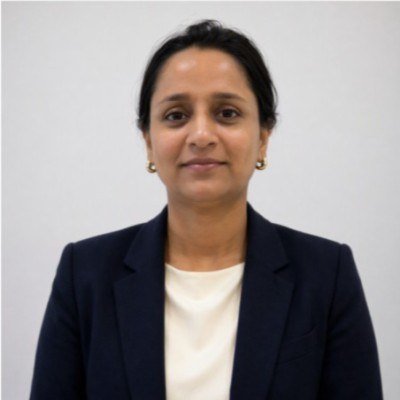
Neha Gupta is a CFA charterholder based in Winnipeg who has worked in financial markets since December 2005. She has published more than 2,600 investment articles and is Head of Operations and Finance at Whiteland Real Estate. She reviews WealthScale’s investing pages for accuracy.
- CFA charter, CFA Institute (awarded 2023)
- Post Graduate Diploma in Business Administration (Finance), 2008
- In financial markets since December 2005
- More than 2,600 published investment articles
General information only. Not financial, investment, tax or legal advice. WealthScale is independent and is published by WealthScale Media Inc., 55 Queen St E, Suite 1205, Toronto, ON M5C 1R6. CFA® and Chartered Financial Analyst® are registered trademarks owned by CFA Institute.