

RESP Grants: CESG, Additional CESG and Canada Learning Bond
An RESP grant is money the government adds to a registered education savings plan, and the main one, the Canada Education Savings Grant (CESG), pays 20% on the first $2,500 you contribute each year, up to $7,200 per child. In 2026, families with adjusted family net income under $117,045 get an extra 10% or 20% on the first $500. Low-income families can also get up to $2,000 from the Canada Learning Bond without contributing anything, and B.C. and Quebec add their own grants. This page explains every RESP grant, the carry-forward rules by age, the age 16 and 17 test and the contribution schedules that collect the most.
 Written by Sharad Gondaliya, CPA CPAChartered Professional Accountant, CPA Ontario No. 61040184
 Financial reviewer: Neha Gupta, CFA CFA charterholderReview of this page scheduled
At a glance
Basic CESG. The Canada Education Savings Grant adds 20% of the first $2,500 contributed to an RESP each year, or $500, for every eligible child, whatever the family’s income. The grant can be paid on contributions up to the end of the year the child turns 17.
Carry-forward. Unused grant room carries forward, so a child can receive up to $1,000 of CESG in one year on a $5,000 contribution when earlier years were missed. The lifetime limit is $7,200 per child, including the additional CESG.
Additional CESG for 2026. With adjusted family net income under $58,523, the first $500 each year earns an extra 20% ($100), for up to $600 a year. From $58,523 up to $117,045, it earns an extra 10% ($50), for up to $550 a year. Above $117,045 there is no extra amount.
Canada Learning Bond. Children born in 2004 or later in low-income families can get $500 in the first year of eligibility and $100 a year after that up to age 15, to $2,000 in total, with no contribution. From April 2028 the government will open an RESP automatically for eligible children born in 2024 or later who are not already in one by age 4.
Provincial grants. British Columbia pays a one-time $1,200 BCTESG to children born in 2006 or later, requested between the 6th birthday and the day before the 9th. Quebec pays the QESI of 10% of net contributions, up to $250 a year ($500 with unused room) plus up to $50 for lower incomes, to $3,600 in total. No other province has an RESP grant.
Ages 16 and 17. A child gets CESG at 16 or 17 only if at least $2,000 was contributed by the end of the year they turned 15, or at least $100 was contributed in any four years before then, and not withdrawn.
Enter your child’s age, your province, your family income and how much you plan to contribute, and the calculator below shows each RESP grant year by year.
1. How RESP Grants Work
Grants follow contributions. Most RESP grant money is a match: you contribute, and the government adds a percentage. The CESG, the additional CESG and Quebec’s QESI all work this way. Two programs pay without any contribution: the Canada Learning Bond and B.C.’s BCTESG. Either way, the money goes into the RESP, not to you, and it can only reach the student as part of an educational assistance payment (EAP).
The promoter makes the request. You do not apply to the government directly. When you open the plan, the RESP provider (the promoter) asks you which grants you want, collects the details it needs and sends the request with each contribution. Not every provider offers every grant, so please confirm that yours handles the CLB, the BCTESG or the QESI if you need them. Our ranking of the best RESP providers in Canada and our reviews of Wealthsimple and Questrade cover account types and fees, and our advertiser disclosure explains how WealthScale is paid.
Every child needs a SIN. A child needs a social insurance number and Canadian residency to be named in a family plan, and grant requests cannot be made without a SIN. For the income-tested grants, the promoter also needs details about the child’s primary caregiver so that adjusted family net income can be checked.
Grants do not use contribution room. The $50,000 lifetime contribution limit counts only what subscribers put in. Grants and bonds sit on top. A child who receives the full $7,200 CESG and $2,000 CLB still has the whole $50,000 of contribution room.
Grants are tied to education. If no beneficiary uses the money for school after high school, the grants go back to the government. Section 11 explains when that happens. For how RESPs compare with the other registered accounts, see our guide to investment accounts in Canada.
| Program | Paid by | Contribution needed | Yearly amount | Lifetime maximum | Last year paid |
|---|---|---|---|---|---|
| Basic CESG | Government of Canada | Yes | 20% of the first $2,500 ($500); $1,000 with carry-forward | $7,200 with the additional CESG | Year the child turns 17 |
| Additional CESG | Government of Canada | Yes | Extra 20% ($100) or 10% ($50) on the first $500 | Inside the $7,200 | Year the child turns 17 |
| Canada Learning Bond | Government of Canada | No | $500 first year, then $100 | $2,000 | Paid for years up to age 15; request before 21 |
| BCTESG | Government of British Columbia | No | $1,200 one time | $1,200 | Request before the 9th birthday |
| QESI | Government of Quebec | Yes | 10% of net contributions, up to $250 ($500 with unused room), plus up to $50 | $3,600 | While the child is under 18 |
2. The Canada Education Savings Grant (CESG)
The rate. The basic Canada Education Savings Grant is 20% of the first $2,500 contributed for a child in a calendar year. Contribute $2,500 and the plan receives $500. Contribute $1,000 and it receives $200. Families at every income level get this basic rate.
The yearly ceiling. In a year with no unused room from earlier years, the CESG stops at $500, no matter how much more you put in. In a year when unused room exists, the grant can reach $1,000, which takes a $5,000 contribution. Nothing above $5,000 in one year earns more grant.
The lifetime ceiling. A child can receive no more than $7,200 of CESG in total, and that figure includes any additional CESG. At $500 a year, the lifetime limit is reached after 14.4 years of $2,500 contributions ($7,200 / $500 = 14.4), which is why the usual schedule is $2,500 for 14 years and $1,000 in the 15th year.
The age limit. The CESG is paid on contributions up to the end of the calendar year the child turns 17. A contribution made on December 31 of that year still counts; one made the next January does not. Years 16 and 17 come with an extra test, covered in section 5.
The calendar year matters. Grant years run from January 1 to December 31. Unlike the RRSP, there is no 60-day window into the next year. A contribution made on January 2 counts for the new year, so families who want this year’s grant should contribute by December 31.
The countdown below shows the days left to make a 2026 contribution that counts for this year’s grant.
| Contribution in the year | CESG with no unused room | CESG with enough unused room |
|---|---|---|
| $500 | $100 | $100 |
| $1,000 | $200 | $200 |
| $2,500 | $500 | $500 |
| $3,000 | $500 | $600 |
| $5,000 | $500 | $1,000 |
| $7,500 | $500 | $1,000 |
| $20,000 | $500 | $1,000 |
3. CESG Carry-Forward Table by Age
How grant room builds. Basic CESG room builds at $500 for each year of eligibility, and unused room carries forward. A family that does not contribute in a year has not lost that year’s grant; it can be collected later, but only at up to $1,000 a year. That yearly cap is what makes late starts expensive.
Reading the table. The second column shows grant room built up to the end of the year the child turns that age, assuming the child has been eligible since birth and nothing has been claimed, capped at the $7,200 lifetime limit. The third column shows the most CESG a family can still collect if its first contribution is made in that year, given the $1,000 yearly cap and the age 16 and 17 test.
The age 10 turning point. Up to the year the child turns 10, a family that has never contributed can still collect the full $7,200 by contributing $5,000 a year. From age 11 the yearly cap means some grant is lost for good: $7,000 is the most at 11, falling by $1,000 for each later starting year.
The age 16 cliff. If nothing has been contributed by the end of the year the child turns 15, the child cannot get CESG at 16 or 17. The table shows $0 for those starting ages. Opening a plan at 15 and putting in at least $2,000 that year keeps $3,000 of grant within reach.
| Child’s age this year | Grant room built since birth (capped at $7,200) | Most CESG still collectible if you start this year |
|---|---|---|
| 0 | $500 | $7,200 |
| 1 | $1,000 | $7,200 |
| 2 | $1,500 | $7,200 |
| 3 | $2,000 | $7,200 |
| 4 | $2,500 | $7,200 |
| 5 | $3,000 | $7,200 |
| 6 | $3,500 | $7,200 |
| 7 | $4,000 | $7,200 |
| 8 | $4,500 | $7,200 |
| 9 | $5,000 | $7,200 |
| 10 | $5,500 | $7,200 |
| 11 | $6,000 | $7,000 |
| 12 | $6,500 | $6,000 |
| 13 | $7,000 | $5,000 |
| 14 | $7,200 | $4,000 |
| 15 | $7,200 | $3,000 |
| 16 | $7,200 | $0 (no earlier contributions) |
| 17 | $7,200 | $0 (no earlier contributions) |
The table uses the basic 20% grant only. The year-by-year contribution plan for each starting age is on our RESP calculator page.
4. Additional CESG: 2026 Income Thresholds
How the extra grant works. The additional CESG is paid on the first $500 contributed for a child each year, on top of the basic 20%. The extra rate depends on adjusted family net income. In 2026, income under $58,523 earns an extra 20% ($100), and income from $58,523 up to $117,045 earns an extra 10% ($50). Above $117,045, only the basic grant applies.
What it adds up to. A family under $58,523 that contributes $2,500 receives $600 for the year ($500 basic plus $100 additional). A family in the middle band receives $550. Even a $500 contribution earns $200 in the lower band ($100 basic plus $100 additional) and $150 in the middle band, which makes the first $500 the most valuable money a lower-income family can put in.
The lifetime cap still applies. The additional CESG counts toward the same $7,200 lifetime maximum. A lower-income family that contributes $2,500 every year collects $600 a year and reaches $7,200 after 12 years, with $30,000 contributed. A middle-income family reaches it after 14 years with $32,666.67 contributed (13 years at $2,500, then $166.67 in the 14th year, which earns 30%, or $50).
The thresholds change each year. For 2025 the bands were $57,375 and $114,750. The 2026 figures, $58,523 and $117,045, are the ones that apply to contributions made in 2026. The lower threshold of $58,523 matches the 2026 limit of the lowest federal tax bracket.
Use it every year. The extra grant rewards a contribution each year rather than a large catch-up. A family whose income qualifies should put in at least $500 every single year, even when $2,500 is out of reach. Please keep your tax returns filed on time, because income-tested grants rely on the family’s assessed income.
| Adjusted family net income (2026) | Extra rate on the first $500 | Extra grant | Total CESG on $500 | Total CESG on $2,500 |
|---|---|---|---|---|
| Under $58,523 | 20% | $100 | $200 | $600 |
| $58,523 up to $117,045 | 10% | $50 | $150 | $550 |
| Over $117,045 | None | $0 | $100 | $500 |
Find out how much grant room your child still has and what to contribute this year to collect it.
5. The Age 16 and 17 Rule
The rule. The CESG keeps paying until the end of the year the child turns 17, but in the years the child turns 16 and 17 it is paid only if one of two tests was met earlier. Test one: at least $2,000 was contributed for the child, and not withdrawn, by the end of the year the child turned 15. Test two: at least $100 a year was contributed, and not withdrawn, in any four years before the end of the year the child turned 15.
Why it exists. The rule stops families from opening a plan at 16 just to collect two years of grant just before school. It does not hurt anyone who has been saving steadily, because a family contributing even $100 a year for four years has already passed.
The withdrawal trap. Both tests count only contributions that are still in the plan. A family that put in $2,000 when the child was 12 and took it back out at 14 has failed test one. If you need to withdraw before the child is 16, check that the remaining contributions still pass at least one test.
Late starters at 14 and 15. A family opening a first RESP when the child is 14 can pass test one by contributing $2,000 or more that year or the next. With $5,000 a year at 14, 15, 16 and 17, that family collects $4,000 of CESG. Opening at 15 with $5,000 a year for three years collects $3,000.
| Contribution history by the end of the year the child turns 15 | Test passed | CESG at 16 and 17 |
|---|---|---|
| $2,500 in one year only, still in the plan | Test one ($2,000 or more) | Yes |
| $100 a year in four separate years, still in the plan | Test two (four years of $100) | Yes |
| $1,500 in total over three years | Neither | No |
| $3,000 contributed over two years, then $1,500 withdrawn | Neither ($1,500 left; two contribution years) | No |
| Nothing contributed | Neither | No |
6. Canada Learning Bond: Amounts and Eligibility
What the Canada Learning Bond pays. The CLB pays $500 into the child’s RESP for the first year of eligibility, then $100 for each later year of eligibility up to and including the year the child turns 15. The lifetime maximum is $2,000 ($500 + 15 x $100). With the first bond, the government also pays $25 to help with the cost of opening the plan. No contribution is required, ever.
Who qualifies. The CLB is for children born in 2004 or later in low-income families. Eligibility is checked one year at a time against adjusted family net income, and the limit depends on the number of children in the family. The request must be made before the child turns 21, so young adults who never had one can still ask for it.
Income limits for July 2026 to June 2027. For a family with one to three children, the limit is adjusted family income of $58,523 or less. For four children, it is under $66,036. For five children, under $73,577. Service Canada provides the figure for six or more children on request.
Missed years. Because the request can be made up to age 21, families who did not ask when the child was young should still ask now. The promoter can tell you which past years’ amounts will be paid once the request goes in.
The CLB and the CESG together. A family that qualifies for the CLB usually also qualifies for the 20% additional CESG, because the income limits overlap at $58,523 for one to three children. Contributing just $500 a year then adds $200 of CESG on top of the bond. Families on a tight budget may also want our CRA benefit payment dates to time contributions after benefit deposits.
| Number of children in the family | Adjusted family income limit |
|---|---|
| One, two or three | $58,523 or less |
| Four | Under $66,036 |
| Five | Under $73,577 |
| Six or more | Higher limit, given by Service Canada on request |
| Year of eligibility | Bond paid | Running total |
|---|---|---|
| First year | $500 (plus $25 for opening costs) | $500 |
| Each later year up to the year the child turns 15 | $100 | Rises by $100 a year |
| Lifetime maximum | Not applicable | $2,000 |
7. Automatic RESPs for the Canada Learning Bond From April 2028
What is changing. Starting in April 2028, the Government of Canada will open an RESP automatically to deposit the Canada Learning Bond for eligible children born in 2024 or later who are not already named in an RESP by age 4. Until then, a family has to find a provider, open a plan and request the bond itself.
Who it affects. The change covers children born in 2024 or later who qualify for the CLB. A child born in 2024 turns 4 in 2028, which lines up with the April 2028 start. Older children are not covered, so families of children born before 2024 still need to open a plan themselves.
Opting out. Families who do not want an automatic plan will be able to ask to opt out, with opt-out requests starting in 2027.
Should you wait? No. Opening an RESP yourself now lets you request the bond years earlier, choose your own provider and investments, and add contributions that earn the CESG. An automatic plan only collects the bond; it does not add the 20% grant that comes with your own contributions.
8. BCTESG: The B.C. Training and Education Savings Grant
What it pays. The BC Training and Education Savings Grant is a one-time $1,200 for a child who is a B.C. resident, born in 2006 or later and named in an RESP. No contribution is needed, so even a family that never contributes can receive it.
The window. The earliest the grant can be requested is the child’s 6th birthday, and the request must be made before the 9th birthday. That gives three years. A family that misses the window cannot get the grant later.
How to request it. The request goes through an RESP promoter that offers the BCTESG. Confirm your provider does before the 6th birthday, and switch providers early if it does not, because a transfer takes time. Our list of the best self-directed RESP accounts and our guide to transferring an investment account can help.
How it combines with federal grants. The BCTESG sits on top of the CESG and the CLB. A B.C. family that collects the full $7,200 CESG and the $1,200 BCTESG receives $8,400 of grants on $36,000 of contributions. A low-income B.C. family can add up to $2,000 of CLB as well.
| Rule | Detail |
|---|---|
| Amount | $1,200, paid once |
| Born | 2006 or later |
| Residency | B.C. resident |
| Contribution needed | None |
| First day to request | The child’s 6th birthday |
| Last day to request | The day before the child’s 9th birthday |
9. QESI: The Quebec Education Savings Incentive
The basic QESI. Quebec adds 10% of net contributions made to an RESP for a Quebec beneficiary, up to $250 a year. That is 10% of $2,500, the same contribution that earns the full basic CESG. With unused rights from earlier years, the basic amount can reach $500 in a year.
The additional QESI. Quebec adds up to $50 a year more, based on family income. The income limits for this extra amount are not shown here because we could not confirm them; ask your RESP provider which band your family falls in.
The lifetime maximum. The QESI is capped at $3,600 per child across all RESPs. A Quebec family that contributes $2,500 a year for 14 years and $1,000 in the 15th year collects ($250 x 14) + ($1,000 x 10%) = $3,600 of QESI, along with the full $7,200 CESG, for $10,800 in total.
Who qualifies. The beneficiary must be under 18, have a SIN, be a resident of Quebec on December 31 of the year and be named in an RESP. Special requirements apply in the years the child turns 16 or 17; your promoter can confirm them.
| Part | Amount |
|---|---|
| Basic rate | 10% of net contributions |
| Basic yearly maximum | $250 |
| Basic maximum with unused rights | $500 |
| Additional amount | Up to $50 a year, based on family income |
| Lifetime maximum | $3,600 |
| Residency test | Quebec resident on December 31 |
Not every provider requests every grant. Compare RESP providers before you open or move a plan.
10. How RESP Grant Money Reaches the Student
Only through an EAP. Grants never come back to the subscriber. They leave the plan only as part of an educational assistance payment, together with the plan’s investment growth, and only to a student enrolled in a qualifying or specified program. That is the trade for receiving them.
The student pays the tax. EAPs are taxable income for the student. Because most students have low income, much of an EAP can be received with little or no tax. In 2026 the federal basic personal amount is $16,452, so a student whose total income stays below that pays no federal tax at all.
The EAP limits. In a full-time qualifying program (at least 10 hours a week), EAPs are capped at $8,000 for the first 13 consecutive weeks. In a part-time specified program (at least 12 hours a month), the cap is $4,000 for each 13-week period. Plan the first term’s withdrawal around those caps.
Keep grant money safe near the end. As the first year of school approaches, many families move RESP savings toward cash and GICs so the grants are not exposed to a late market drop. Our pages on GIC rates and high-interest savings accounts list current options.
Use the grants early. Taking EAPs in the first years of school uses up the grant money while the student is clearly enrolled. If the student leaves after a year, the remaining contributions can come back to you tax-free, while unused grant money would have to be returned. The RESP guide covers the withdrawal rules in full.
11. Repayment of RESP Grants
When the child does not study. If no beneficiary goes on to a qualifying program, every grant and bond still in the plan goes back to the government when the plan closes or when the growth is paid out to the subscriber. Your contributions come back to you, but the grant money does not.
When contributions come out early. If you withdraw contributions while the beneficiary is not enrolled in school, part of the grant money can have to be repaid, and the child can lose eligibility for grants in later years. Ask the promoter for the exact repayment before you make the withdrawal.
When the plan closes with growth left over. Growth that cannot be paid as an EAP can be paid to the subscriber as an accumulated income payment, taxed at the subscriber’s rate plus 20% (12% in Quebec). Up to $50,000 can be moved to the subscriber’s RRSP instead, if the subscriber has room. The grants, though, are always returned.
When money moves between plans. A direct transfer of a child’s RESP from one promoter to another keeps the grants in the plan. Transfers that change the beneficiary, or that move money between plans for different children, have their own grant rules, and some can trigger a repayment. Please ask both promoters how the grants will be handled before you sign the transfer form. A subscriber planning an RRSP rollover should first check their RRSP contribution limit.
The grant is not a loss of your money. Even in the worst case, where every grant is repaid, the family loses only what the government gave. Your contributions are still yours, which is why an RESP carries little downside for a family unsure whether a child will study.
| Situation | Grants | Your contributions | Growth |
|---|---|---|---|
| Student enrols and takes EAPs | Paid to the student in EAPs | Returned tax-free | Paid to the student in EAPs |
| No beneficiary studies; plan closed | Returned to the government | Returned to you tax-free | AIP to you, or up to $50,000 to your RRSP |
| Contributions withdrawn while the child is not in school | Part may have to be repaid | Returned to you tax-free | Stays in the plan |
| Direct transfer to a new promoter, same child | Move with the plan | Move with the plan | Move with the plan |
12. Contribution Schedules That Collect the Most RESP Grant Money
The standard schedule. For a family above $117,045 of income outside B.C. and Quebec, $2,500 a year for 14 years and $1,000 in the 15th year collects the full $7,200 CESG with $36,000 of contributions. Monthly, $2,500 a year is about $208.33.
Lower and middle incomes. The additional CESG makes the lifetime cap arrive sooner. Under $58,523, $2,500 a year collects $600 a year and reaches $7,200 in 12 years with $30,000 contributed. From $58,523 up to $117,045, it takes 13 years at $2,500 and $166.67 in the 14th year, or $32,666.67 in total.
B.C. and Quebec. A B.C. family on the standard schedule adds the one-time $1,200 BCTESG, for $8,400 of grants. A Quebec family on the standard schedule collects $3,600 of basic QESI alongside the $7,200 CESG, for $10,800, before any additional QESI.
Late starters. A family starting in the year the child turns 10 can still collect $7,200 by contributing $5,000 a year for seven years and $1,000 in the eighth. Starting in the year the child turns 11 caps the total at $7,000, and each later starting year loses a further $1,000 of grant for good.
Families who can only afford a little. A lower-income family contributing $500 a year from birth to 17 collects $200 a year of CESG, or $3,600 over 18 years, and an eligible child adds up to $2,000 of CLB plus the $25 opening payment, for $5,625 of government money on $9,000 of contributions. The illustrative example below projects this case.
| Family situation | Contribution schedule | Total contributed | CESG | Other grants | Total grants |
|---|---|---|---|---|---|
| Income over $117,045, outside B.C. and Quebec | $2,500 a year for 14 years, then $1,000 | $36,000 | $7,200 | None | $7,200 |
| Income under $58,523 | $2,500 a year for 12 years | $30,000 | $7,200 | CLB up to $2,000 plus $25, if eligible | Up to $9,225 |
| Income $58,523 up to $117,045 | $2,500 a year for 13 years, then $166.67 | $32,666.67 | $7,200 | None | $7,200 |
| B.C., income over $117,045 | $2,500 a year for 14 years, then $1,000 | $36,000 | $7,200 | BCTESG $1,200 | $8,400 |
| Quebec, income over $117,045 | $2,500 a year for 14 years, then $1,000 | $36,000 | $7,200 | Basic QESI $3,600 | $10,800 |
| Starting in the year the child turns 10 | $5,000 a year for 7 years, then $1,000 | $36,000 | $7,200 | None | $7,200 |
| Lower income, CLB eligible, $500 a year | $500 a year for 18 years | $9,000 | $3,600 | CLB $2,000 plus $25 | $5,625 |
To model your own schedule, including the provincial grants and growth to age 17, use our RESP grant calculator, or browse all our investing and tax calculators.
13. RESP Grant Mistakes to Avoid
Waiting for a SIN. Without the child’s SIN, no grant request can start. Families who delay the SIN application often lose the first year or two of grant timing. Apply soon after birth or arrival in Canada.
Choosing a provider that does not handle every grant. Not every promoter requests the Canada Learning Bond, the BCTESG or the QESI. A plan that misses the BCTESG window because the provider does not offer it cannot get it back.
Making one large deposit. A lump sum earns at most $1,000 of CESG in its year. A family that puts $36,000 in at once collects $1,000, not $7,200. Spreading the same money over the years collects the full amount.
Skipping years in a qualifying income band. The extra 10% or 20% is earned on the first $500 contributed in each year. A family that qualifies but contributes nothing in a year misses the chance to earn the higher rate on that year’s money.
Withdrawing before 16. Taking contributions back before the child is 16 can drop the plan below the $2,000 test and end the grant at 15, on top of any repayment.
Forgetting December 31. Grant years do not have a 60-day grace period. A contribution made in early January counts for the new year.
What You Need and What You Get
What you need to claim RESP grants
- The child’s social insurance number
- Canadian residency for the child
- An RESP with a promoter that offers each grant you need
- Details of the child’s primary caregiver, for the income-tested grants
- Filed tax returns, so adjusted family net income can be checked
- Contributions for the CESG and the QESI ($2,500 a year for the full basic CESG)
- B.C. or Quebec residency for the provincial grants
- A request before age 21 for the CLB and before the 9th birthday for the BCTESG
What you get
- $500 a year of basic CESG on $2,500, up to $1,000 a year with carry-forward
- Up to $7,200 of CESG per child, including the additional CESG
- An extra $100 or $50 a year on the first $500 for incomes under $117,045 in 2026
- Up to $2,000 of Canada Learning Bond, plus $25 toward opening costs
- A one-time $1,200 BCTESG for B.C. children born in 2006 or later
- Up to $3,600 of QESI for Quebec children
- Tax-free growth on every grant dollar until it is paid out
- Grant money paid to the student, who usually pays little tax on it
How to Claim Every RESP Grant
- Apply for the child’s SIN. It is required for every grant.
- File your tax returns. The additional CESG and the CLB depend on assessed family income.
- Pick a promoter that offers every grant you qualify for. Ask about the CLB, the BCTESG and the QESI before you open.
- Open the RESP and complete the grant forms. Request the CESG, the additional CESG and the CLB on the application.
- Contribute by December 31 each year. $2,500 collects the full basic CESG; $500 is the minimum that earns the full additional amount.
- Request the BCTESG between the 6th and 9th birthdays. B.C. families only.
- Check each statement. Confirm the grants arrived and match your contributions.
10 RESP Grant Strategies
1. Set up monthly contributions
A monthly transfer of $208.33 adds up to $2,500 a year, exactly what the full basic CESG needs, and it never misses a December 31 deadline. Many robo-advisors and brokers can automate it.
2. Front-load catch-up years
If you have unused grant room, contribute $5,000 a year until it is used. Collecting $1,000 a year early gives the grant more years to grow than waiting until the teenage years.
3. Protect the first $500
For families under $117,045 in 2026, the first $500 each year earns 30% or 40%. In a tight year, $500 is the amount to keep.
4. Ask for the CLB even with no savings
An eligible child can receive up to $2,000 with no contribution. Opening the plan only to receive the bond costs nothing and starts the clock on growth.
5. Mark the 6th birthday in B.C.
The $1,200 BCTESG opens on the 6th birthday and closes the day before the 9th. Requesting it at 6 gives the grant three extra years to grow.
6. Pass the age 15 test early
Getting $2,000 into the plan by the end of the year the child turns 15, and leaving it there, keeps the grant open at 16 and 17.
7. Coordinate with grandparents
Grandparents’ contributions earn the same grant, but the yearly grant cap is per child, not per plan. Agree on who contributes what so the family does not overpay beyond what earns grant.
8. Stop at $36,000 if grants are the goal
On the standard schedule, $36,000 of contributions collects the full $7,200. Money above that still grows tax-free in the RESP but earns no grant, so a parent’s TFSA may suit extra savings.
9. Use EAPs early
Paying out grant money in the first years of school ensures it is used while the student is enrolled, rather than returned if plans change.
10. Keep the family plan for siblings
In a family plan, savings can follow the child who studies, while each child keeps their own grant limits. That reduces the chance of grants being returned if one child does not enrol.
Illustrative Example: A Lower-Income Family
This example is hypothetical. The family’s adjusted family net income stays under $58,523 with two children, so it qualifies every year for the 20% additional CESG and the Canada Learning Bond. The 5% yearly return is an assumption for illustration, not a forecast, and each year’s contribution and government money are assumed to go in on the last day of that year, as in our RESP calculator.
- Contributions. The parents contribute $500 a year from the birth year to the year the child turns 17, which is 18 years: $500 x 18 = $9,000.
- CESG. Each $500 earns 20% basic plus 20% additional: $500 x 40% = $200 a year. Over 18 years: $200 x 18 = $3,600.
- Canada Learning Bond. $500 in the first year plus $25 toward opening costs, then $100 a year for 15 years to age 15: $500 + $25 + ($100 x 15) = $2,025.
- Total government money. $3,600 + $2,025 = $5,625, which is 62.5% of what the family put in ($5,625 / $9,000).
- Value at 17. At an assumed 5% a year (try other rates in our compound interest calculator), the plan is worth $23,275.02 at the end of the year the child turns 17. Growth is $23,275.02 – $9,000 – $5,625 = $8,650.02.
- Paid out at school. The student can receive $5,625 + $8,650.02 = $14,275.02 as EAPs, taxed as the student’s income, and the parents can take back their $9,000 tax-free.
RESP Grant FAQ
How much is the RESP grant each year?
The basic Canada Education Savings Grant is 20% of the first $2,500 contributed in a year, or $500. If the child has unused grant room from earlier years, the grant can reach $1,000 in one year on a $5,000 contribution. In 2026, families under $117,045 of adjusted family net income get an extra $50 or $100 on the first $500.
What is the lifetime maximum CESG per child?
The lifetime maximum is $7,200 per child, and it includes any additional CESG. On the standard schedule of $2,500 a year, it takes 14 years plus $1,000 in a 15th year, or $36,000 of contributions. The Canada Learning Bond and the provincial grants are separate and do not count toward the $7,200.
What are the 2026 additional CESG income thresholds?
For 2026, adjusted family net income under $58,523 earns an extra 20% on the first $500 contributed, or $100. Income from $58,523 up to $117,045 earns an extra 10%, or $50. Above $117,045, only the basic 20% CESG applies. For 2025 the thresholds were $57,375 and $114,750.
Can I catch up on RESP grants I missed?
Yes. Unused basic CESG room carries forward, and you can collect up to $1,000 a year by contributing $5,000. A family that starts by the year the child turns 10 can still reach the full $7,200. Starting at 11 caps the total at $7,000, each later starting year loses a further $1,000, and nothing can be collected at 16 or 17 without earlier contributions.
Do I have to contribute to get the Canada Learning Bond?
No. The Canada Learning Bond needs no contribution. An eligible child gets $500 for the first year of eligibility, plus $25 toward opening costs, and $100 for each later year of eligibility up to age 15, to a $2,000 maximum. The child only needs to be named in an RESP and the request must be made before age 21.
Who qualifies for the Canada Learning Bond in 2026?
Children born in 2004 or later whose families have low income. For July 2026 to June 2027, the limit is adjusted family income of $58,523 or less for one to three children, under $66,036 for four children and under $73,577 for five. Eligibility is checked year by year, so a child can qualify in some years and not others.
What happens to RESP grants if my child does not go to school?
The grants go back to the government. Your own contributions come back to you tax-free, and the investment growth can be paid to you as an accumulated income payment, taxed at your rate plus 20% (12% in Quebec), or moved into your RRSP up to $50,000 if you have room. The grant money itself is never paid to the subscriber.
Can my child get the CESG at age 16 or 17?
Only if one of two tests was met by the end of the year the child turned 15: at least $2,000 contributed and not withdrawn, or at least $100 contributed in any four years and not withdrawn. If neither test was met, no CESG is paid at 16 or 17, even if you contribute then.
How do I apply for the BCTESG?
Ask your RESP provider to request it, as long as the provider offers the BCTESG. The child must be a B.C. resident born in 2006 or later and named in an RESP. The request can be made from the child’s 6th birthday until the day before the 9th birthday. The $1,200 is paid once and needs no contribution.
How much is the QESI in Quebec?
The Quebec Education Savings Incentive adds 10% of net contributions, up to $250 a year, or up to $500 in a year with unused rights from earlier years. Lower-income families can get up to $50 a year more. The lifetime maximum is $3,600 per child. The child must be under 18 and a Quebec resident on December 31.
Will the government open an RESP for my child automatically?
From April 2028, the government will open an RESP automatically to deposit the Canada Learning Bond for eligible children born in 2024 or later who are not already named in an RESP by age 4. Opt-out requests start in 2027. Older children are not included, so their families still need to open a plan.
Is the CESG taxable?
Not when it is paid into the plan. The CESG becomes taxable only when it comes out as part of an educational assistance payment, and then it is taxed as the student’s income, not the parents’. Our editorial standards explain how WealthScale checks tax rules like this one against government publications.
Collect every RESP grant your child qualifies for: contribute by December 31, request each program and check your plan with our calculator.
Figures on this page were checked against Employment and Social Development Canada, Canada Revenue Agency, Government of British Columbia and Revenu Quebec publications on October 22, 2026. We update this page when a figure changes.
Meet the Experts Behind WealthScale

Sharad is a CPA Ontario member (No. 61040184) and a Certified Public Accountant licensed in Washington and Montana, with more than 15 years in accounting and tax, a Diploma in Banking and Finance and a Certificate in Small Business Finance. He checks WealthScale content against primary sources. WealthScale is independent of his firm, Gondaliya CPA Professional Corporation, and provides general information only, not personal financial, investment, tax or legal advice.
- Chartered Professional Accountant, CPA Ontario
- Certified Public Accountant, Washington (No. 57629) and Montana (No. PAC-CPAP-LIC-033176)
- Writing on tax and registered accounts since 2021
- Reader’s Choice Award 2025 Winner, Best Accountant (Toronto)
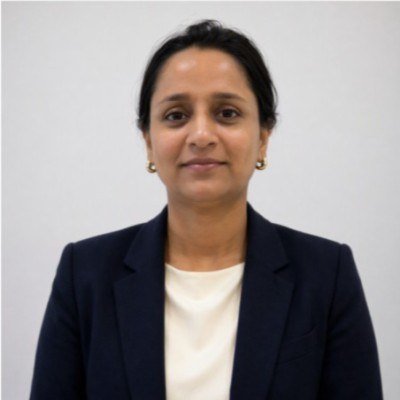
Neha Gupta is a CFA charterholder based in Winnipeg who has worked in financial markets since December 2005. She has published more than 2,600 investment articles and is Head of Operations and Finance at Whiteland Real Estate. She reviews WealthScale’s investing pages for accuracy.
- CFA charter, CFA Institute (awarded 2023)
- Post Graduate Diploma in Business Administration (Finance), 2008
- In financial markets since December 2005
- More than 2,600 published investment articles
General information only. Not financial, investment, tax or legal advice. WealthScale is independent and is published by WealthScale Media Inc., 55 Queen St E, Suite 1205, Toronto, ON M5C 1R6. CFA® and Chartered Financial Analyst® are registered trademarks owned by CFA Institute.