

Bank Accounts in Canada Compared
The best bank account Canada offers depends on how you use it, but on our published chequing score the EQ Bank Personal Account leads at 4.6 / 5: no monthly fee, unlimited transactions, ATM fees reimbursed across Canada, and 2.75% interest when your pay is direct deposited. Most big-bank unlimited packages cost $15.95 to $17.95 a month unless you keep $4,000 or $4,500 in the account, and none of them published a positive chequing rate when we checked on October 22, 2026. This hub compares chequing, no-fee accounts, savings, GICs and deposit insurance, and links to every ranking and review.
 Written by Sharad Gondaliya, CPA CPAChartered Professional Accountant, CPA Ontario No. 61040184
 Financial reviewer: Neha Gupta, CFA CFA charterholderReview of this page scheduled
At a glance
Best chequing account by score. EQ Bank Personal Account, 4.6 / 5, followed by Wealthsimple Chequing at 4.4 / 5 and Manulife Bank and KOHO Essential at 4.0 / 5. All four charge no monthly fee (KOHO Essential only with a qualifying deposit) and publish a chequing interest rate.
No-fee accounts. Eight of the 20 chequing accounts we rank have a $0 monthly fee. Charges can still apply, such as $1.50 for out-of-network ATM withdrawals at Tangerine and PC Money, or $1.00 per transaction at Manulife below a $1,000 balance.
Big banks. RBC, TD, BMO, Scotiabank, CIBC and National Bank charge $3.95 or $4.00 a month for a capped account and $15.95 to $17.95 for unlimited packages. TD posts 0.000% on chequing; Scotiabank pays no interest on its accounts we ranked and RBC pays none on Signature No Limit; the others published no rate.
Savings rates. The highest everyday savings rate we found at a CDIC member is Oaken Financial’s 2.80% (rates as of October 16, 2026). Saven Financial pays 2.85%, insured by Ontario’s credit union deposit insurer rather than CDIC.
Deposit insurance. CDIC insures eligible deposits up to $100,000 per insured category at each member institution. Fintechs such as Wealthsimple, KOHO and Neo are not members. Wealthsimple and KOHO place your money in trust at member institutions instead, and Neo says its funds are eligible through a member it does not name.
Rates backdrop. The Bank of Canada policy rate is 2.25%, unchanged since October 30, 2025, and big-bank prime is 4.45%. The next rate announcements are October 28 and December 9, 2026.
Use the calculator to add up a year of fees and interest at every chequing account we rank, based on your balance, transactions, ATM use and whether your pay is direct deposited.
1. Best Chequing Account Canada Picks by Score
How we score. Every chequing account gets a score out of 5 from five weighted factors: fees 35%, interest 20%, transactions 15%, ATM access 15%, and protection and features 15%. The weights are fixed, published and the same for every account. A rate the bank does not publish scores zero.
| Rank | Account | Score | Monthly fee | Interest |
|---|---|---|---|---|
| 1 | EQ Bank Personal Account | 4.6 / 5 | $0 | 1.00%; 2.75% with pay direct deposit |
| 2 | Wealthsimple Chequing | 4.4 / 5 | $0 | Core 1.25%; 1.75% with direct deposit; up to 2.25% on higher tiers |
| 3 | Manulife Bank Advantage Account | 4.0 / 5 | $0 (transaction fees below $1,000) | 1.50% |
| 4 | KOHO Essential | 4.0 / 5 | $7, or $0 with a qualifying deposit | 2% after opting in |
| 5 | Simplii No Fee Chequing Account | 3.9 / 5 | $0 | Not published |
Why the online accounts lead. The top eight scores all belong to accounts with no monthly fee. EQ Bank wins because it adds a 2.75% rate with pay direct deposit to unlimited transactions and ATM fee reimbursement anywhere in Canada. Wealthsimple is close behind, with unlimited transactions, ATM operator fees reimbursed worldwide and up to 2.25% interest at higher tiers.
Where the big banks land. The best big-bank scores are National Bank The Connected and TD Unlimited Chequing, both 3.0 / 5. Their fees are waived at balances of $4,500 and $4,000, and neither pays interest you can count on. RBC Signature No Limit Banking is last at 2.5 / 5 because it has no balance waiver at all.
Read the full ranking. Our ranking of all 20 accounts includes a master comparison table, a card for each account, costs for four banking profiles, and every welcome offer with its end date.
2. No Fee Bank Account Options
Eight accounts charge $0 a month. EQ Bank, Wealthsimple, Manulife Bank, KOHO Essential, Simplii, Tangerine, PC Money and Neo. A no fee bank account removes the monthly charge, but each has its own conditions or remaining charges.
No strings. EQ Bank, Wealthsimple, Simplii, Tangerine and PC Money charge no monthly fee at any balance. Of these, EQ Bank and Wealthsimple publish interest rates; Simplii, Tangerine and PC Money did not show a chequing rate when we checked.
With conditions. Manulife charges $1.00 per debit purchase, bill payment or e-Transfer sent, and $1.50 per ATM withdrawal in Canada, whenever your balance is below $1,000. KOHO Essential costs $7 a month unless you set up direct deposit or deposit $1,000 a month.
Changing in 2027. From January 1, 2027, Neo charges clients without a membership $1 per e-Transfer sent, $1.50 per cash withdrawal and $4.99 for non-sufficient funds. Neo’s Essentials membership has no fee and removes all three.
Charges to watch. Tangerine and PC Money charge $1.50 at ATMs outside their networks in Canada. PC Money charges $3.50 to cancel a sent e-Transfer and $10 for non-sufficient funds. Simplii’s optional overdraft costs $4.97 in a month you use it, plus 19% interest.
$0 at a big bank, for some people. National Bank The Minimalist is $0 for ages 0 to 24, Scotiabank’s Basic Bank Account is $0 for seniors and several eligible groups, and TD waives its Minimum Chequing Account for certain groups, including newcomers in their first year. Our no-fee chequing ranking lists every remaining charge by account.
3. Online Banks in Canada vs Big Banks vs Fintechs
Three ways to bank. The type of institution predicts most of what you will pay and earn. Online banks in Canada are CDIC members (or trade names of one) without branches. Fintechs are app-based companies that are not CDIC members. Big banks run branches and charge for them.
| Feature | Online banks | Fintechs | Big banks |
|---|---|---|---|
| Examples | EQ Bank, Simplii, Tangerine, Manulife Bank, PC Money | Wealthsimple, KOHO, Neo | RBC, TD, BMO, Scotiabank, CIBC, National Bank |
| Monthly chequing fee | $0 | $0 (KOHO Essential $7 without a qualifying deposit) | $3.95 or $4.00 capped; $15.95, $16.95 or $17.95 unlimited |
| Best published chequing rate | 2.75% (EQ Bank with pay direct deposit) | 2.25% without a paid plan (Wealthsimple Premium with direct deposit, or Generation) | 0.000% (TD); others none or not published |
| CDIC status | Member or trade name of a member | Not a member; trust deposits at members (Wealthsimple, KOHO) or eligibility through an unnamed member (Neo) | Member |
| Branches | No | No | Yes |
| ATMs | Reimbursed (EQ Bank) or partner networks | Reimbursed (Wealthsimple) or fees | Own network; fees elsewhere |
| Top chequing score | 4.6 / 5 | 4.4 / 5 | 3.0 / 5 |
Online banks. EQ Bank (Equitable Bank), Manulife Bank, Tangerine Bank and President’s Choice Bank are CDIC members in their own right, and Simplii is a trade name of CIBC. They suit people who bank by app and want interest without fees.
Fintechs. Wealthsimple and KOHO pay competitive rates, Neo charges no account fee, and Wealthsimple reimburses ATM operator fees worldwide. The trade-off is the protection structure, explained in section 6, and dependence on one app.
Big banks. You pay for branches, cheques, a large ATM network and a full lending relationship, either through a monthly fee or by keeping $4,000 to $4,500 idle. Many households keep one big-bank account on its lowest-fee plan and use an online account for pay and interest.
Keeping more than a month of spending in chequing? Compare what the same money earns in a savings account.
4. High-Interest Savings Accounts
Where savings rates stand. Everyday savings rates at online banks, credit unions and fintechs run well above big-bank rates. The table shows the highest everyday rates we verified on October 22, 2026, with the date each provider gave and how deposits are protected.
| Provider and account | Everyday rate | Cost or condition | Protection | Rate date |
|---|---|---|---|---|
| KOHO Everything plan | 3.5% | $22 a month, or $14.75 a month billed annually | Not a CDIC member; up to $100,000 eligible through trust | Help page updated August 11, 2026 |
| Saven Financial HISA | 2.85% | Saven membership required; not available in Quebec | DICO, up to $250,000 (per Saven) | No date shown |
| Oaken Financial Savings | 2.80% | Minimum not published | CDIC (Home Bank or Home Trust) | October 16, 2026 |
| EQ Bank Personal Account | 2.75% with pay direct deposit (1.00% base) | No minimum, no monthly fee | CDIC (Equitable Bank) | May 15, 2026 |
| Hubert Financial HISA | 2.50% | Minimum not published | Deposit Guarantee Corporation of Manitoba | No date shown |
| Wealthsimple Savings | 2.5% | No fee, no minimum; individual non-registered only | CIPF up to $1,000,000; not CDIC | August 19, 2026 |
| Outlook Financial HISA | 1.95% | No minimum | Deposit Guarantee Corporation of Manitoba, 100% | October 2, 2026 |
Promotional rates with end dates. National Bank’s Cash Advantage Solution pays 3% on new deposits from October 19, 2026 to February 28, 2027. After a promotion ends, the rate falls to the everyday rate. Everyday rates elsewhere are lower: 0.30% on Simplii balances under $50,000, 0.550% at RBC and 1.50% at Manulife.
Big-bank savings. TD ePremium Savings pays 0.000% under $10,000 and 0.450% at $10,000 and up. Scotiabank’s High Interest Savings Account pays 0.00% under a $10,000 relationship balance. Several big-bank savings rates did not display at all.
Which to choose. Our best high-interest savings accounts page ranks every rate and explains how promotional rates work, the savings interest calculator shows what your balance earns at each one, and our Wealthsimple savings account review covers the 2.5% account in detail. Interest outside a registered account is taxable; holding savings inside a TFSA keeps the interest tax-free.
5. GICs and USD Savings Accounts
GICs pay more for locking money in. A guaranteed investment certificate pays a fixed rate for a fixed term. The table shows non-redeemable rates from five providers whose rates and deposit protection we could verify, ordered by 5-year rate; you usually cannot take the money out before the term ends.
| Provider | 1 year | 2 years | 3 years | 5 years | Minimum | Protection |
|---|---|---|---|---|---|---|
| Oaken Financial (since October 16, 2026) | 3.75% | 4.20% | 4.30% | 4.50% | $1,000 | CDIC |
| Saven Financial | 3.80% | 4.25% | 4.30% | 4.50% | $1,000 | DICO (per Saven) |
| Hubert Financial | 3.85% | 3.95% | 4.05% | 4.25% | Not published | Deposit Guarantee Corporation of Manitoba |
| Outlook Financial (October 2, 2026) | 3.85% | 3.90% | 4.05% | 4.25% | $1,000 | Deposit Guarantee Corporation of Manitoba |
| Manulife Bank | 3.35% | 3.70% | 3.80% | 4.05% | $2,500 | CDIC |
CDIC-insured GICs. Among CDIC members, Oaken’s 4.50% for 5 years and 4.30% for 3 years were the highest we verified. EQ Bank publishes three different GIC rate tables on its own pages, so we do not show its GIC rates until the conflict is resolved. Our best GIC rates page covers short terms, cashable GICs and registered GICs, and GIC vs high-interest savings explains when a GIC is worth the lock-in.
USD savings. The EQ Bank US Dollar Account pays 2.50% (effective May 15, 2026) with no everyday banking fees. The other USD rates we found are far lower: TD’s U.S. Daily Interest Chequing pays 0.010%, Manulife’s US dollar Advantage Account 0.20%, and Scotiabank’s U.S. Dollar Daily Interest Account up to 0.05%. Wealthsimple’s USD savings rates conflict between its own pages, so we do not state them. Compare all options on our USD savings accounts page.
6. Deposit Insurance: CDIC, Provincial Plans and Trust Coverage
CDIC. The Canada Deposit Insurance Corporation insures eligible deposits at member institutions up to $100,000, principal and interest combined, per insured category at each member. The categories are separate: deposits in one name, joint deposits, deposits in trust, and deposits inside an RRSP, RRIF, TFSA, RESP, RDSP or FHSA. CDIC covers deposits in Canadian or foreign currency, GICs and term deposits. It does not cover stocks, bonds, ETFs, mutual funds or crypto.
Provincial plans for credit unions. Provincially regulated credit unions are covered by provincial plans instead. Saven Financial states its deposits are insured up to $250,000 by DICO, Ontario’s credit union insurer. Outlook Financial states that 100% of deposits are guaranteed by the Deposit Guarantee Corporation of Manitoba, which also covers Hubert Financial.
Trust coverage at fintechs. Wealthsimple places chequing cash in trust at partner CDIC members, for up to $1,000,000 combined ($100,000 per beneficiary per member institution), and does not name the partners. KOHO makes up to $100,000 eligible only after you opt in to earn interest. Neo says its chequing funds are eligible up to $100,000 through a member it does not name.
CIPF is different. Wealthsimple’s savings account is protected by the Canadian Investor Protection Fund up to $1,000,000, not by CDIC. CIPF covers cash and securities held at a failed investment dealer, not market losses.
Enter your balances by institution and category to see how much CDIC would cover.
Trade names share a limit. Simplii is a trade name of CIBC, so Simplii and CIBC deposits in the same name and category share one $100,000 limit. For a fintech’s structure in detail, read is Wealthsimple safe.
7. Bank Reviews and Head-to-Head Comparisons
Full reviews. We publish full reviews for the two highest-scoring chequing providers. Each covers fees, rates, cards, ATM access, deposit protection, how to open an account, and who the product suits.
Choosing between the top two. EQ Bank pays more on a direct-deposited pay (2.75% against Wealthsimple Core’s 1.75%), is a CDIC member in its own right, and reimburses ATM fees anywhere in Canada. Wealthsimple reimburses ATM operator fees worldwide, offers a chequebook with payroll direct deposit, and pays up to 2.25% at higher tiers.
How we keep reviews independent. Scores follow a published rubric, and no provider can pay for a rank. Read how WealthScale makes money and our editorial standards for the details.
8. How to Switch Banks in Canada
Open first, close last. Open the new account and test it with a small transfer and an e-Transfer before you move anything important. Keep the old account open until every payment has moved.
Move your pay. Give your employer the new account’s institution, transit and account numbers, usually on a direct deposit form from the new bank. At Wealthsimple, for example, the institution number is 703 and the transit number is 00001; our Wealthsimple institution and transit number guide shows where to find the account number. Expect one more pay to land in the old account. Update any government benefit deposits too.
Move automatic payments one by one. List every pre-authorized debit from your last two statements, such as rent, insurance, phone and loan payments. Update each with the payee and confirm the first payment comes from the new account.
Watch the old fee rules. If your old account has a balance waiver, moving money out mid-month can trigger the full monthly fee. Move the balance right after a statement date. A payment that bounces after you empty the account can bring a non-sufficient-funds charge of $10 at TD, Scotiabank or PC Money.
Downgrade rather than close. If you need cheques or a branch now and then, move the old account to its lowest-fee plan ($3.95 or $4.00 a month at the big banks) instead of closing it.
Investment accounts move by transfer. Registered accounts such as a TFSA or RRSP move between institutions by a direct transfer, not a withdrawal. Please read how to transfer an investment account before you move registered money.
9. Bank Accounts for Students, Newcomers, Kids and Teens
Special accounts, lower fees. The big banks that charge $15.95 to $17.95 a month for unlimited banking drop the fee for students, recent newcomers and children. The catch is that each waiver has an age, a study rule or a time limit, after which the regular fee applies. Figures below were checked on each bank’s published pages on October 23, 2026.
Students. RBC, TD, Scotiabank, BMO and CIBC all list a $0 monthly fee on their student accounts, with unlimited debit transactions. TD charges no monthly fee to age 23, then needs full-time post-secondary study. Scotiabank’s student package is $0 for anyone under 25 living in Canada, including international students, and CIBC’s Smart Start needs no student status under 25. BMO’s student account is its Performance Plan, normally $17.95 a month. Several welcome offers end in early November 2026, so check the date before you open.
Newcomers. Fee waivers run for 12 months at RBC (then $12.95 a month) and Scotiabank (on its $16.95 Preferred Package), one year at TD, 24 months at BMO (then $17.95) and up to 24 months at CIBC. National Bank waives fixed monthly fees for up to 3 years during your first 5 years in Canada. RBC, TD and Scotiabank also offer credit cards with limits of up to $15,000 to newcomers with no Canadian credit history.
Kids and teens. RBC’s Leo’s Young Savers Account (ages 0 to 12) and BMO’s Kids Account (under 13) have no monthly fee, and the teen accounts at RBC, TD, Scotiabank, BMO and CIBC are $0 too. Age rules decide how you open one: at TD, children under 14 open at a branch with a parent or guardian, and BMO’s teen fee discount ends on the 19th birthday. Deposits at these member banks are covered by CDIC up to $100,000 per insured category, like any other deposit.
Chequing Accounts Compared: Master Table
All 20 chequing accounts we score, with the five figures most people compare first. Search or sort it to find accounts that fit. Figures were checked on October 22, 2026.
| Account | Score | Monthly fee | Fee waiver | Interest | Interac e-Transfer | CDIC |
|---|---|---|---|---|---|---|
| EQ Bank Personal Account | 4.6 | $0 | No fee | 1.00%; 2.75% with pay direct deposit | No fee, unlimited | Member (Equitable Bank) |
| Wealthsimple Chequing | 4.4 | $0 | No fee | Core 1.25%; Premium 1.75%; Generation 2.25%; plus 0.50% with direct deposit at Core and Premium | No fee | Trust deposits at members, up to $1,000,000 |
| Manulife Bank Advantage Account | 4.0 | $0 | $1,000 balance avoids transaction fees | 1.50% | $1.00 to send below $1,000 | Member |
| KOHO Essential | 4.0 | $7 | Direct deposit or $1,000 a month in deposits | 2% after opting in | No fee | Trust, up to $100,000 after opt-in |
| Simplii No Fee Chequing Account | 3.9 | $0 | No fee | Not published | No fee | Through CIBC |
| Tangerine No-Fee Daily Chequing Account | 3.9 | $0 | No fee | Not published | No fee, unlimited | Member (Tangerine Bank) |
| PC Money Account | 3.8 | $0 | No fee | Not published | No fee; $3.50 to cancel | Member (President’s Choice Bank) |
| Neo Chequing | 3.3 | $0 | No fee | 0.1% | $1 per send from January 1, 2027 without a membership | Eligible up to $100,000 through a member |
| National Bank The Connected | 3.0 | $15.95 | $4,500 balance | Not published | Unlimited, no fee | Member |
| TD Unlimited Chequing Account | 3.0 | $17.95 | $4,000 minimum daily balance | 0.000% | Send fee not published | Member |
| BMO Performance Chequing | 2.9 | $17.95 | $4,000 every day | Not published | Included | Member |
| CIBC Smart Account | 2.9 | $16.95 | $4,000 every day | Not published | Included | Member |
| Scotiabank Preferred Package | 2.9 | $16.95 | $4,000 every day | No interest | Unlimited | Member |
| National Bank The Minimalist | 2.8 | $3.95 (ages 25+) | No balance waiver | Not published | Counts toward 18 a month | Member |
| CIBC Everyday Chequing Account | 2.8 | $4.00 | Not published | Not published | Counts as a transaction | Member |
| Scotiabank Basic Bank Account | 2.8 | $3.95 | No balance waiver | No interest | Not confirmed | Member |
| BMO Practical Chequing | 2.7 | $4.00 | No balance waiver | Not published | Counts toward 12 a month | Member |
| RBC Day to Day Banking | 2.7 | $4 | RBC Value Program | Not published | No fee up to 999 a month | Member |
| TD Minimum Chequing Account | 2.7 | $3.95 | No balance waiver | 0.000% | Send fee not published | Member |
| RBC Signature No Limit Banking | 2.5 | $16.95 | No balance waiver | No interest | No fee up to 999 a month | Member |
How to Choose the Best Bank Account in Canada
Use these steps to narrow 20 chequing accounts and the savings options above to the one or two that fit.
- Decide what the account is for. Spending money belongs in chequing; money you will not touch for months belongs in savings or a GIC.
- Check your lowest daily balance. Below $4,000, a big-bank unlimited package will charge you $15.95 to $17.95 in those months.
- Use your pay. Direct deposit lifts EQ Bank to 2.75%, adds 0.50% at Wealthsimple Core and Premium, and keeps KOHO Essential at $0.
- Count cash and transactions. Heavy ATM users should look for reimbursement; anyone over 12 or 18 transactions a month should avoid capped accounts.
- Confirm the protection. Choose between a CDIC member, a provincial credit union plan, or a fintech’s trust structure.
- Compare the yearly total. Run your numbers in the chequing cost calculator and check any welcome offer’s end date.
Frequently Asked Questions
What is the best bank account in Canada?
For a chequing account, the EQ Bank Personal Account has our highest score at 4.6 / 5. It has no monthly fee, unlimited transactions and e-Transfers, ATM fees reimbursed across Canada, and 2.75% interest with pay direct deposit. The best account for you also depends on whether you need branches, cheques or ATM fee refunds outside Canada.
Which Canadian banks have no-fee chequing accounts?
EQ Bank, Wealthsimple, Manulife Bank, Simplii, Tangerine, PC Money and Neo charge no monthly chequing fee, and KOHO Essential is $0 with direct deposit or $1,000 a month in deposits. The six big banks charge $3.95 or more, except for certain groups such as ages 0 to 24 at National Bank or seniors at Scotiabank.
Are online banks in Canada safe?
EQ Bank, Manulife Bank, Tangerine Bank and President’s Choice Bank are CDIC members, so eligible deposits are insured up to $100,000 per category, and Simplii is covered through CIBC. Fintechs such as Wealthsimple, KOHO and Neo are not members. Wealthsimple and KOHO place funds in trust at member institutions, and Neo says funds are eligible through a member it does not name.
Do big banks pay interest on chequing?
Not on the accounts we rank. TD posts 0.000%, Scotiabank states no interest is paid on its two accounts, and RBC states the same for Signature No Limit. BMO, CIBC, National Bank and RBC (for Day to Day Banking) did not publish a chequing rate when we checked on October 22, 2026. Online banks and fintechs pay up to 2.75% without a paid plan.
How much does a big-bank chequing account cost?
Capped accounts cost $3.95 or $4.00 a month, or $47.40 to $48.00 a year. Unlimited packages cost $15.95 to $17.95 a month, or $191.40 to $215.40 a year, unless you keep $4,000 or $4,500 in the account. RBC Signature No Limit has no balance waiver.
What is the highest savings rate in Canada right now?
Among everyday rates we verified on October 22, 2026, KOHO’s Everything plan pays 3.5% but costs $14.75 to $22 a month. Without a plan fee, Saven pays 2.85% (insured by DICO) and Oaken pays 2.80% (CDIC). Promotional rates go higher for a few months, such as National Bank’s 3% on new deposits to February 28, 2027.
How much does CDIC cover?
CDIC covers eligible deposits up to $100,000, including principal and interest, per insured category at each member institution. Deposits in one name, joint deposits, trust deposits, and deposits in an RRSP, RRIF, TFSA, RESP, RDSP or FHSA are separate categories. Stocks, ETFs, mutual funds and crypto are not covered.
How long does it take to switch banks?
Opening an online account can take minutes, but moving your pay and pre-authorized payments usually takes one or two pay cycles, because each employer and payee must update their records. Keep the old account funded until every payment has come from the new account.
Should I keep money in chequing or savings?
Keep about a month of spending in chequing and the rest in savings or a GIC. Even the best chequing rate (2.75% at EQ Bank with direct deposit) is beaten by Saven’s 2.85% and Oaken’s 2.80% savings rates and by every 1-year GIC in our table, which pay 3.35% to 3.85%.
The best bank account Canada offers you starts with the right chequing account. See the full ranking, or narrow it to accounts with no monthly fee.
Figures on this page were checked against each provider’s published pricing and Canada Deposit Insurance Corporation publications on October 22, 2026. We update this page when a figure changes.
Meet the Experts Behind WealthScale

Sharad is a CPA Ontario member (No. 61040184) and a Certified Public Accountant licensed in Washington and Montana, with more than 15 years in accounting and tax, a Diploma in Banking and Finance and a Certificate in Small Business Finance. He checks WealthScale content against primary sources. WealthScale is independent of his firm, Gondaliya CPA Professional Corporation, and provides general information only, not personal financial, investment, tax or legal advice.
- Chartered Professional Accountant, CPA Ontario
- Certified Public Accountant, Washington (No. 57629) and Montana (No. PAC-CPAP-LIC-033176)
- Writing on tax and registered accounts since 2021
- Reader’s Choice Award 2025 Winner, Best Accountant (Toronto)
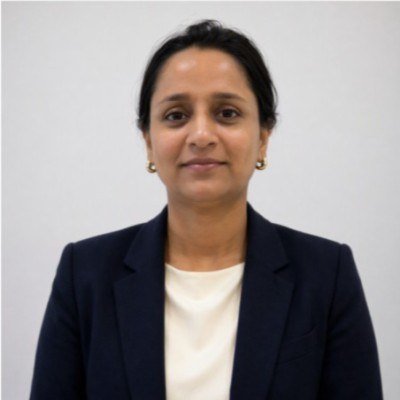
Neha Gupta is a CFA charterholder based in Winnipeg who has worked in financial markets since December 2005. She has published more than 2,600 investment articles and is Head of Operations and Finance at Whiteland Real Estate. She reviews WealthScale’s investing pages for accuracy.
- CFA charter, CFA Institute (awarded 2023)
- Post Graduate Diploma in Business Administration (Finance), 2008
- In financial markets since December 2005
- More than 2,600 published investment articles
General information only. Not financial, investment, tax or legal advice. WealthScale is independent and is published by WealthScale Media Inc., 55 Queen St E, Suite 1205, Toronto, ON M5C 1R6. CFA® and Chartered Financial Analyst® are registered trademarks owned by CFA Institute.