

Best Places to Save Money in Canada: Savings Accounts and GICs
The best place to save money Canada-wide depends on when you need it: a high-interest savings account for money you may need soon, and a GIC for money with a date. On October 22, 2026, the top everyday savings rate without a paid plan was 2.85%, the best 1-year GIC paid 3.85% and the best 5-year GIC paid 4.50%. Savings and GIC tables are sorted by rate, and every rate is dated and checked against each provider’s published pricing. Below you will find the top rates, how CDIC insurance works, where to keep an emergency fund, US dollar options and links to every savings and banking guide we publish.
 Written by Sharad Gondaliya, CPA CPAChartered Professional Accountant, CPA Ontario No. 61040184
 Financial reviewer: Neha Gupta, CFA CFA charterholderReview of this page scheduled
At a glance
Top everyday savings rates. On October 22, 2026, Saven Financial paid 2.85% and Oaken Financial paid 2.80% on savings with no paid plan. EQ Bank paid 2.75% with a pay direct deposit or in its 30 Day Notice Savings account.
Top GIC rates. The best 1-year GIC rate in our register was 3.85% (Hubert Financial and Outlook Financial). The best 5-year rate was 4.50% (Oaken Financial and Saven Financial).
Deposit insurance. CDIC insures eligible deposits, including GICs, up to $100,000 per insured category at each member institution, including interest. Credit unions are covered by provincial insurers instead.
Emergency fund. Money you may need at short notice belongs in a savings account you can reach any day, not a locked GIC. Money with a known date can earn more in a GIC.
US dollars. The top US dollar savings rate in our register was 2.50% at EQ Bank, effective May 15, 2026. Most big-bank US dollar accounts paid a fraction of a percent.
Tax. Interest is fully taxable each year outside a registered account. Inside a TFSA it is tax-free; the 2026 TFSA limit is $7,000.
Use the savings interest calculator to see what your balance earns at every savings account we track, side by side.
Savings and Banking Guides on WealthScale
Every savings and banking page we publish, in one place. Each one lists dated figures and links back here.
1. Best High-Interest Savings Rates in Canada
The top of the table. On October 22, 2026, the highest everyday savings rate without a monthly plan fee was 2.85% at Saven Financial, a division of FirstOntario Credit Union. Oaken Financial was next at 2.80% (rates as of October 16, 2026), with CDIC cover through Home Bank or Home Trust. EQ Bank paid 2.75% in its Personal Account with a pay direct deposit, and the same 2.75% in 30 Day Notice Savings without one.
| Account | Everyday rate | Conditions or fees | Insurance |
|---|---|---|---|
| KOHO Everything plan | 3.5% | $22 a month, or $14.75 a month billed yearly | Not a CDIC member; up to $100,000 eligible through a trust when opted in |
| Saven Financial HISA | 2.85% | No minimum; membership required | DICO (Ontario) |
| Oaken Financial Savings | 2.80% | Minimum not published | CDIC |
| EQ Bank Personal Account | 2.75% with pay direct deposit; 1.00% base | $0 monthly fee | CDIC |
| EQ Bank 30 Day Notice Savings | 2.75% | 30 days’ notice to withdraw | CDIC |
| Neo Savings, Grow membership | 2.75% | $14.99 a month membership | Not published |
| Hubert Financial HISA | 2.50% | Not published | DGCM (Manitoba) |
| Wealthsimple Savings | 2.5% | $0 fees, no minimum | CIPF, not CDIC |
| Outlook Financial HISA | 1.95% | No minimum | DGCM (Manitoba) |
| Manulife Bank Advantage Account | 1.50% | $1,000 balance to avoid transaction fees | CDIC |
| Peoples Trust e-Savings | 1.20% | Not published | CDIC |
| Alterna Bank High Interest eSavings | 1.05% | No minimum; $250,000 maximum | CDIC |
What the top rates earn. On $10,000 for a year at an unchanged rate, 2.85% earns $285.00, 2.80% earns $280.00 and 2.5% earns $250.00, before compounding. A big-bank account at 0.55% earns $55.00. The gap between the top and a typical big-bank rate is worth $230.00 a year on that balance.
Read the conditions. KOHO’s 3.5% needs a paid plan, and Neo’s 2.75% needs a $14.99 monthly membership. Saven requires credit union membership and is not available in Quebec. EQ’s Personal Account pays 1.00% without a pay deposit. Our high-interest savings accounts comparison adds every promotional rate and its end date, and the savings interest calculator shows how daily interest adds up on your own balance.
2. Best GIC Rates in Canada by Term
Best rate at each term. Credit union divisions and smaller lenders led every term on October 22, 2026. The table lists the best rate at each term in our register, with the lender and its insurer.
| Term | Best rate | Lender | Insurance | Interest on $10,000 in year 1 |
|---|---|---|---|---|
| 1 year | 3.85% | Hubert Financial; Outlook Financial | DGCM (Manitoba) | $385.00 |
| 2 years | 4.25% | Saven Financial | DICO (Ontario) | $425.00 |
| 3 years | 4.30% | Oaken Financial; Saven Financial | CDIC; DICO | $430.00 |
| 4 years | 4.35% | Oaken Financial; Saven Financial | CDIC; DICO | $435.00 |
| 5 years | 4.50% | Oaken Financial; Saven Financial | CDIC; DICO | $450.00 |
Best with CDIC cover. If you want CDIC rather than a provincial insurer, Oaken Financial led at 3.75% for 1 year, 4.20% for 2 years and 4.50% for 5 years (in effect since October 16, 2026). Manulife Bank paid 3.35% for 1 year and 4.05% for 5 years, with a $2,500 minimum.
Big banks. Posted big-bank rates were lower where they were published: RBC’s posted rates were 3.00% for 1 year and 3.55% for 5 years. TD, BMO, CIBC and National Bank showed no readable GIC rates when we checked, so we do not list them. EQ Bank’s GIC rates differed across its own pages and are being confirmed.
Minimums and access. Standard minimums in our register ran from $100 at EQ Bank to $2,500 at Manulife Bank. Most top rates are for non-redeemable GICs that you cannot cash before maturity. Oaken’s cashable 1-year GIC paid 2.25%, against 3.75% for its locked 1-year GIC.
Use the GIC calculator to see the maturity value and tax on any rate and term.
Our best GIC rates in Canada page lists every lender and term we track, including short terms and registered GICs, and the full GIC calculator page adds a 1 to 5-year ladder builder and the CDIC check for your deposits.
Not sure whether to lock in? See the GIC vs savings trade-off with real numbers.
3. HISA vs GIC vs TFSA Savings
Two products and a wrapper. A high-interest savings account and a GIC are products: they decide your rate and when you can reach the money. A TFSA is a wrapper: it decides the tax. You can hold a savings account or a GIC inside a TFSA, an RRSP or an FHSA, so the real choice is which product, then which wrapper.
| Option | Top rate in our register | Access | Tax on interest |
|---|---|---|---|
| High-interest savings account | 2.85% everyday | Any day | Taxed yearly at your marginal rate |
| 1-year GIC | 3.85% | At maturity, if non-redeemable | Taxed yearly at your marginal rate |
| 5-year GIC | 4.50% | At maturity, if non-redeemable | Taxed yearly as it accrues |
| TFSA savings account | 2.85% (Saven) | Any day; room returns January 1 of the next year | Tax-free |
| TFSA GIC | 3.85% for 1 year (Hubert, Outlook) | At maturity, if non-redeemable | Tax-free |
What the TFSA is worth. This example is hypothetical. A $7,000 TFSA contribution, the 2026 limit, in a 1-year GIC at 3.85% earns $269.50 ($7,000 x 3.85%), all tax-free. Outside a TFSA, at a 29.65% marginal rate (Ontario, $80,000 of taxable income in 2026), the tax would be $79.91 ($269.50 x 29.65%), leaving $189.59. In a 2.85% TFSA savings account the same $7,000 earns $199.50, also tax-free.
The trade-off in one line. A GIC pays more and fixes the rate; a savings account keeps the money within reach. On $10,000 for a year, a 3.85% GIC earns $385.00 and a 2.80% savings account with interest paid monthly earns $283.62. Our GIC vs HISA comparison shows the full arithmetic, the after-tax gap and how to ladder GICs.
Other wrappers. An RRSP gives a deduction now and taxes withdrawals later, which suits retirement money. An FHSA gives a deduction and a tax-free qualifying withdrawal for a first home, with $8,000 of room a year and $40,000 for life. Our TFSA guide and FHSA vs TFSA comparison explain which to fill first.
4. Where to Keep an Emergency Fund
Access comes first. An emergency fund is for the day you lose income or face a large, sudden bill. Its first job is to be there that day. That rules out non-redeemable GICs, which you cannot cash early, and investments whose value can fall just when you need them. A high-interest savings account at an insured institution does the job.
How much to hold. The right size depends on your job security, your household and your fixed costs. This example is hypothetical: a household with $3,000 of essential monthly costs that chooses a four-month buffer needs $12,000 ($3,000 x 4). At 2.80% that buffer earns $336.00 a year; at a 0.55% big-bank rate it earns $66.00.
A layered setup. Keep about a month of costs in chequing or a savings account you can reach instantly. Hold the rest in a high-interest savings account. If you are confident part of it will not be needed within 30 days, a notice account such as EQ Bank’s 30 Day Notice Savings at 2.75% can hold that part. Keep the layers at CDIC members or provincially insured credit unions, and under the insurance limit.
The TFSA option. A savings account inside a TFSA can hold an emergency fund too. You can withdraw any time, the interest is tax-free, and the amount you take out comes back as room on January 1 of the next year. Re-contributing earlier in the same year can cause an over-contribution, taxed at 1% a month. See our TFSA withdrawal rules.
Use the savings goal calculator to see how much to set aside each month to reach your target. For example, $12,000 over 12 months is $1,000 a month ($12,000 ÷ 12).
5. US Dollar Savings Accounts
Who needs one. A US dollar savings account suits people who already earn, spend or hold US dollars: cross-border workers, snowbirds and people saving for US travel or US-dollar bills. Rates on US dollar balances vary far more than Canadian-dollar rates: the best in our register paid 2.50%, while the lowest big-bank rate was 0.010%.
| Account | Rate | Interest on US$10,000 for a year | Fees |
|---|---|---|---|
| EQ Bank US Dollar Account | 2.50% | US$250.00 | No everyday banking fees; Wise fee on international transfers |
| Manulife Bank US dollar Advantage Account | 0.20% | US$20.00 | Not published |
| National Bank USD Progress Account | 0.100% from $10,000 | US$10.00 | Not published |
| Scotia U.S. Dollar Daily Interest Account | Up to 0.05% | Up to US$5.00 | US$1 a month, or $0 with a US$200 daily balance |
| TD U.S. Daily Interest Chequing Account | 0.010% | US$1.00 | $0 monthly fee |
A term deposit option. RBC offered a limited-time 1-year US dollar term deposit at 4.00%. It is a term deposit, so the money is locked for the year, much like a GIC.
Wealthsimple. Wealthsimple offers up to eight US dollar savings accounts with no monthly fee or minimum, but two of its own pages showed different US dollar rates on October 22, 2026, so we do not print them. Our Wealthsimple USD accounts review covers what is confirmed.
Tax and protection. Interest on US dollar deposits is taxable in Canada and is reported in Canadian dollars. CDIC covers eligible deposits in Canadian or foreign currency at its members, so a US dollar deposit at a member bank is eligible. Our guide to CIPF vs CDIC explains how that cover differs from investor protection at a broker, and our best USD savings accounts page compares every option.
6. CDIC and Provincial Deposit Insurance
The CDIC limit. The Canada Deposit Insurance Corporation insures eligible deposits at member institutions up to $100,000 per insured category, per member. The $100,000 includes both principal and interest. Coverage is automatic; you do not apply for it.
The categories. These are insured separately: deposits in one name, joint deposits, deposits held in trust, RRSPs, RRIFs, TFSAs, RESPs, RDSPs and FHSAs. So one person can have $100,000 in their own name and another $100,000 in a TFSA at the same member, both fully insured.
What is covered. Savings and chequing deposits, GICs and term deposits, in Canadian or foreign currency. Not covered: mutual funds, stocks, bonds, ETFs and crypto assets.
Credit unions. Provincial credit unions are insured by their province instead. Saven Financial states its deposits are insured up to $250,000 by DICO in Ontario. Hubert Financial, Outlook Financial and Achieva Financial are covered by the Deposit Guarantee Corporation of Manitoba, which Outlook says guarantees 100% of deposits.
Fintech accounts. Some popular accounts are not held at a CDIC member directly. Wealthsimple Chequing cash sits in trust at partner banks that are members, for up to $1,000,000 combined; Wealthsimple Savings is covered by CIPF, not CDIC. KOHO and Neo are not CDIC members: KOHO balances are eligible for CDIC cover up to $100,000 through a trust when you opt in to interest, and Neo Chequing balances are eligible up to $100,000 through a member, while Neo has not stated the cover for Neo Savings. Our guide to whether Wealthsimple is safe explains the trust model.
Large balances. If you hold more than $100,000 in one category, please spread it across categories or across institutions, and leave room for interest on long GICs.
Want an everyday account that pays interest too? See every chequing account ranked by our published score.
7. Chequing Accounts That Pay Interest
Your everyday account can earn too. Many big-bank chequing accounts pay nothing: TD Unlimited Chequing paid 0.000%, and RBC Signature No Limit Banking and Scotiabank’s chequing accounts pay no interest. A handful of online and fintech accounts pay interest on every dollar with no monthly fee. We score 20 chequing accounts on fees, interest, transactions, ATM access and protection; the methodology page publishes the rubric.
| Account | Banking score | Interest | Monthly fee |
|---|---|---|---|
| EQ Bank Personal Account | 4.6 / 5 | 1.00%; 2.75% with pay direct deposit | $0 |
| Wealthsimple Chequing | 4.4 / 5 | Core 1.25%; Premium 1.75%; Generation 2.25% | $0 |
| Manulife Bank Advantage Account | 4.0 / 5 | 1.50% | $0; transaction fees below a $1,000 balance |
| KOHO Essential | 4.0 / 5 | 2% | $7, or $0 with direct deposit or $1,000 a month in deposits |
| Neo Chequing | 3.3 / 5 | 0.1% | $0 |
Direct deposit matters. EQ’s top rate needs your pay deposited, and Wealthsimple adds 0.50% for Core and Premium clients with $2,000 or more of direct deposits in 30 days. Without a pay deposit, Wealthsimple’s Core rate of 1.25% beats EQ’s 1.00% base. Our Wealthsimple vs EQ Bank comparison works through four saver profiles, our Wealthsimple Chequing review covers the tiers, and our best high-interest chequing accounts page sorts every chequing account by its published rate.
The cost of a fee account. Big-bank unlimited accounts cost $15.95 to $17.95 a month. Most waive the fee only if you keep a balance of $4,000 or $4,500, and RBC Signature No Limit Banking has no balance waiver at all. That is up to $215.40 a year ($17.95 x 12), or a parked balance that earns nothing at TD and Scotiabank, whose accounts pay no interest. Our no-fee chequing accounts ranking lists the alternatives, and the bank accounts hub compares every type.
8. Promotions, Paid Plans and Notice Accounts: Read the Fine Print
Promotional rates. Banks use short promotions to win new clients, then pay their everyday rate. Simplii’s everyday rate was 0.30% on balances up to $50,000, RBC’s 0.550% and Manulife’s 1.50%. National Bank’s Cash Advantage Solution paid 3% on new deposits from October 19, 2026 to February 28, 2027.
What a promotion is really worth. This example is hypothetical. On $10,000, a 4.60% promotion for 153 days pays $192.82 ($10,000 x 4.60% x 153/365), and the remaining 212 days at an everyday rate of 0.30% pay $17.42. The year’s total, $210.24, is a 2.10% return, below an everyday 2.80% account. A promotion pays off only if you move the money when it ends.
Paid plans. KOHO’s Everything plan paid 3.5% for $14.75 a month billed yearly ($177 a year). Against Saven’s 2.85%, the extra 0.65% covers the fee only above $27,230.77 ($177 ÷ 0.65%). Neo’s Grow membership paid 2.75% for $14.99 a month, or $179.88 a year. Compare the net amount, not the headline rate.
Notice accounts. EQ Bank’s 30 Day Notice Savings paid 2.75% and its 10 Day Notice Savings 2.35% (effective May 15, 2026). You give notice before withdrawing, so they suit money you will not need within the notice period. Our EQ Bank review explains how they work.
Balance tiers. Some accounts pay little on small balances. Scotiabank’s High Interest Savings Account paid 0.00% on a relationship balance under $10,000, and TD ePremium Savings paid 0.000% under $10,000. Check the rate on your balance, not the top tier.
9. Every Savings Option Compared
One table for the whole decision. Each row is a place to keep cash, with its best rate in our register on October 22, 2026, how fast you can reach the money and what it suits.
| Option | Best rate in our register | Access | Insurance | Suits |
|---|---|---|---|---|
| Chequing account that pays interest | 2.75% (EQ Bank with pay direct deposit) | Instant | CDIC | Bills and spending |
| Everyday high-interest savings | 2.85% (Saven); 2.80% (Oaken) | Same or next day | DICO; CDIC | Emergency fund, money with no fixed date |
| Notice savings | 2.75% (EQ 30 Day Notice) | After 30 days’ notice | CDIC | Second layer of an emergency fund |
| Cashable GIC | 2.25% for 1 year (Oaken) | Early access allowed | CDIC | Flexibility, though it often pays less than a good savings account |
| 1-year GIC | 3.85% (Hubert, Outlook) | At maturity | DGCM | Money needed in about a year |
| 5-year GIC | 4.50% (Oaken, Saven) | At maturity | CDIC; DICO | Money with a date five years out, or a ladder |
| US dollar savings | 2.50% (EQ Bank) | Same or next day | CDIC member (EQ) | US dollars you already hold |
| TFSA savings or GIC | 2.85% savings (Saven); 3.85% 1-year GIC (Hubert, Outlook) | Depends on the product inside | Separate TFSA category | Any of the above, tax-free |
How we keep this table honest. We list only rates confirmed on the provider’s own published pricing on the date shown. Where a provider’s pages disagree, as with EQ Bank’s GIC rates, or where a rate would not display, as with Tangerine’s, we leave it out until it is confirmed. Our editorial standards describe that process, and our how we make money page explains why no provider can pay for a place in these tables.
10. How to Choose the Best Place to Save Money in Canada
- Sort your money by date. Split it into money for this month, money you might need at any time, and money with a known future date.
- Pick a no-fee everyday account. Run bills through a chequing account with no monthly fee, ideally one that pays interest. Our chequing ranking scores 20 options.
- Put the emergency fund in high-interest savings. Choose a top everyday rate at a CDIC member or an insured credit union. Ignore short promotions unless you will move the money when they end.
- Match dated money to GIC terms. For money needed in one to five years, choose GICs that mature just before the date, or build a ladder.
- Use the TFSA first for interest. If you have TFSA room, hold interest-earning savings inside it so the interest is tax-free.
- Check the insurance. Stay within $100,000 per insured category at each institution, including interest.
- Diary a review. Recheck your rates after Bank of Canada announcements, including October 28 and December 9, 2026, and before each GIC matures.
Our calculators hub has every savings, tax and investing calculator in one place.
Best Place to Save Money in Canada: FAQ
Where is the best place to save money in Canada right now?
It depends on when you need the money. For money you may need any day, the top everyday savings rates on October 22, 2026, were 2.85% at Saven Financial and 2.80% at Oaken Financial. For money with a known date, GICs paid more: 3.85% for 1 year and 4.50% for 5 years at the top of our register.
What is the highest savings account rate in Canada?
Among accounts without a paid plan, Saven Financial’s 2.85% was the highest everyday rate in our register on October 22, 2026, followed by Oaken Financial at 2.80%. KOHO paid 3.5% on its Everything plan, which costs $14.75 a month billed yearly. Short promotions pay more for a few months, then fall back to the everyday rate.
What are the best GIC rates in Canada?
On October 22, 2026, the best rates in our register were 3.85% for 1 year at Hubert Financial and Outlook Financial, 4.25% for 2 years at Saven Financial, and 4.50% for 5 years at Oaken Financial and Saven Financial. Oaken’s rates are covered by CDIC; Saven is covered by DICO, and Hubert and Outlook by the Manitoba deposit guarantor.
Where should I keep my emergency fund?
In a high-interest savings account you can reach any day, at a CDIC member or an insured credit union. Avoid non-redeemable GICs, which you cannot cash early. Many people keep the first month of costs in chequing and the rest in savings. A TFSA savings account works too, because withdrawals are allowed any time and interest is tax-free.
Is my money safe in an online bank?
At a CDIC member, eligible deposits are insured up to $100,000 per insured category, including interest, the same as at a big bank. EQ Bank (Equitable Bank) and Oaken (Home Bank or Home Trust) are covered this way. Credit unions and their divisions use provincial insurers, and some fintech accounts reach CDIC cover through trust deposits at partner banks.
Is a TFSA a savings account?
No. A TFSA is a registered account that shelters income from tax; you choose what it holds. It can hold a savings account, GICs or investments. The 2026 TFSA limit is $7,000, and withdrawals come back as contribution room on January 1 of the next year. Interest earned inside a TFSA is tax-free.
Is a GIC better than a high-interest savings account?
A GIC usually pays more and fixes your rate, but a non-redeemable GIC locks your money until maturity. On $10,000 for a year, a 3.85% GIC earns $385.00 and a 2.80% savings account with interest paid monthly earns $283.62. Use savings for money you may need and GICs for money with a date.
Where can I save US dollars in Canada?
The highest US dollar savings rate in our register was 2.50% at EQ Bank’s US Dollar Account (effective May 15, 2026), which earns US$250.00 a year on US$10,000. Big-bank US dollar accounts paid much less, such as 0.010% at TD. A US dollar account suits people who already earn, spend or hold US dollars.
Is interest on savings taxable in Canada?
Yes, outside a registered account. Savings and GIC interest is fully taxable at your marginal rate every year, including interest that builds up on a multi-year GIC before it is paid. Inside a TFSA, interest is tax-free. Inside an RRSP or FHSA, it is taxed only when withdrawn, except qualifying FHSA withdrawals for a first home.
How often do savings rates change?
Savings rates are variable and can change at any time, often after Bank of Canada decisions. The policy rate has been 2.25% since October 30, 2025, with the remaining 2026 announcements on October 28 and December 9. GIC rates are fixed once you buy, but new GIC rates change too. We date every rate on this page.
Find the best place to save money in Canada for your balance: compare every savings rate, then every GIC term.
Figures on this page were checked against each provider’s published pricing on October 22, 2026. We update this page when a figure changes.
Meet the Experts Behind WealthScale

Sharad is a CPA Ontario member (No. 61040184) and a Certified Public Accountant licensed in Washington and Montana, with more than 15 years in accounting and tax, a Diploma in Banking and Finance and a Certificate in Small Business Finance. He checks WealthScale content against primary sources. WealthScale is independent of his firm, Gondaliya CPA Professional Corporation, and provides general information only, not personal financial, investment, tax or legal advice.
- Chartered Professional Accountant, CPA Ontario
- Certified Public Accountant, Washington (No. 57629) and Montana (No. PAC-CPAP-LIC-033176)
- Writing on tax and registered accounts since 2021
- Reader’s Choice Award 2025 Winner, Best Accountant (Toronto)
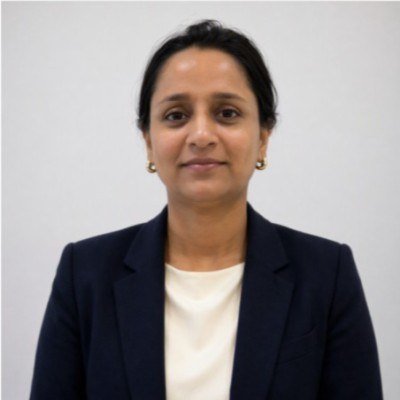
Neha Gupta is a CFA charterholder based in Winnipeg who has worked in financial markets since December 2005. She has published more than 2,600 investment articles and is Head of Operations and Finance at Whiteland Real Estate. She reviews WealthScale’s investing pages for accuracy.
- CFA charter, CFA Institute (awarded 2023)
- Post Graduate Diploma in Business Administration (Finance), 2008
- In financial markets since December 2005
- More than 2,600 published investment articles
General information only. Not financial, investment, tax or legal advice. WealthScale is independent and is published by WealthScale Media Inc., 55 Queen St E, Suite 1205, Toronto, ON M5C 1R6. CFA® and Chartered Financial Analyst® are registered trademarks owned by CFA Institute.