

GIC vs High-Interest Savings Account
GIC vs HISA comes down to one trade: a guaranteed investment certificate (GIC) pays more for locking your money away, while a high-interest savings account (HISA) pays less but lets you withdraw any day. On October 22, 2026, the best 1-year GIC in our register paid 3.85% and the top everyday savings rate without a paid plan was 2.85%. On $10,000 for a year, that gap is worth about $100 before tax. Both can be insured by CDIC or a provincial insurer, both are taxed the same way, and both fit inside a TFSA, RRSP or FHSA. Most savers end up using both.
 Written by Sharad Gondaliya, CPA CPAChartered Professional Accountant, CPA Ontario No. 61040184
 Financial reviewer: Neha Gupta, CFA CFA charterholderReview of this page scheduled
At a glance
The short answer. A GIC suits money you will not need until a known date. A high-interest savings account suits money you may need at short notice, such as an emergency fund. Many savers hold both.
Rates on October 22, 2026. The best 1-year GIC rate in our register was 3.85% (Hubert Financial and Outlook Financial) and the best 5-year rate was 4.50% (Oaken Financial and Saven Financial). The top everyday savings rates without a paid plan were 2.85% at Saven and 2.80% at Oaken.
The gap in dollars. This example is hypothetical: $10,000 for one year earns $385.00 in a 3.85% GIC and $283.62 in a 2.80% savings account with interest calculated daily and paid monthly, a difference of $101.38 before tax.
Access. A non-redeemable GIC locks your money until maturity. A cashable GIC lets you out early but pays less: Oaken’s cashable 1-year GIC pays 2.25% against 3.75% for its non-redeemable 1-year GIC.
Insurance. At a CDIC member, both GICs and savings deposits are insured up to $100,000 per insured category, including interest. Credit unions use provincial insurers instead.
Tax. Interest from both is fully taxable each year outside a registered account. Inside a TFSA it is tax-free, and inside an RRSP or FHSA it is taxed only when withdrawn, except qualifying FHSA home withdrawals.
GIC vs HISA side by side
| Feature | GIC | High-interest savings account |
|---|---|---|
| What it is | A deposit held for a fixed term at a set rate | A deposit account with a variable rate |
| Best rate in our register | 1-year 3.85%; 5-year 4.50% | 2.85% everyday, without a paid plan |
| Rate type | Fixed for the whole term | Variable; the bank can change it at any time |
| Access to money | Locked until maturity if non-redeemable | Any day, unless it is a notice account |
| Early access option | Cashable GICs, at a lower rate (Oaken 1-year: 2.25%) | Built in |
| Price of early access | Oaken: 3.75% non-redeemable vs 2.25% cashable | None at most online banks; some big banks charge per debit |
| Minimum deposit | From $100 (EQ Bank); $1,000 at Oaken, Saven and Outlook | Often none (Saven, Outlook, Wealthsimple, Simplii) |
| Common terms | Short terms from 30 days; 1-year to 5-year terms | No term |
| How interest is paid | At maturity, or yearly, semi-annually or monthly; monthly payout can lower the rate | Varies by bank; check how often interest is credited |
| Promotional rates | Occasional specials (Scotiabank 2-year: 3.50%) | Common for new clients; they last a few months, then the everyday rate applies |
| If market rates fall | Your rate is protected until maturity | Your rate can drop right away |
| If market rates rise | You wait until maturity to reinvest | Your rate can rise right away |
| CDIC insurance | Eligible, up to $100,000 per category per member | Eligible, up to $100,000 per category per member |
| Credit union cover | Provincial insurer (DICO in Ontario; DGCM in Manitoba) | Same provincial insurers |
| Tax outside registered accounts | Taxed yearly at your marginal rate, even before payout | Taxed yearly at your marginal rate |
| TFSA | Yes; Oaken, Saven, Hubert, Outlook and Manulife match their regular GIC rates | Yes; registered savings rates vary (Saven 2.85%, EQ 1.50%) |
| RRSP and RRIF | Yes (Oaken RIF GIC minimum: $10,000) | Yes at Saven, Hubert and Outlook |
| FHSA | Yes (Saven, Hubert, Outlook, EQ Bank) | Yes (Saven, Hubert, Outlook, EQ Bank) |
| Fees | No GIC fees listed by the lenders in our register | Usually $0 monthly; some big banks charge per withdrawal |
| Can be laddered | Yes, across 1-year to 5-year terms | Not needed |
| Best use | Money with a known date: a tax bill, tuition, a down payment | Emergency fund, money with an unknown date |
Use the GIC calculator to see the maturity value and tax on any GIC rate and term you are offered.
1. GIC vs HISA: The Short Answer
Choose a GIC when the date is known. If you know you will not touch the money until a set date, a GIC usually pays more and fixes the rate. On October 22, 2026, the best 1-year GIC rate in our register, 3.85%, was 1.00 percentage point above the top everyday savings rate without a paid plan, 2.85%. At five years the gap widened to 1.65 points (4.50% against 2.85%).
Choose a HISA when the date is unknown. Emergency money, cash for an upcoming purchase with no fixed date, and money you are holding while you decide belong in savings. The rate is lower, but you can reach the money the same day or the next, and you never pay a penalty to get out.
Most people need both. The usual pattern is a savings account for the next few months of needs and GICs for money with a date attached. Splitting this way earns GIC rates on most of your cash while keeping a buffer you can reach.
The gap is smaller than it looks after tax. At a 29.65% marginal rate, the $101.38 pre-tax gap on $10,000 for a year shrinks to $71.32 after tax. Inside a TFSA, the full gap stays with you. Section 8 shows the arithmetic.
Rates move. GIC and savings rates follow the wider rate market. The Bank of Canada’s policy rate has been 2.25% since October 30, 2025, and its remaining 2026 announcements are October 28 and December 9. A GIC protects you from cuts; a savings account lets you benefit from rises. Neither outcome is predictable, which is one more reason to hold both. Our comparison hub covers other account and platform matchups.
2. How a GIC Works
The deal. You lend the bank or credit union a fixed amount for a fixed term. In return it pays a rate that is set on the day you buy and does not change. At maturity you get your principal plus interest back. A GIC from a deposit-taking institution is a deposit, so it can be covered by deposit insurance.
Terms. Common terms run from 1 to 5 years. Many lenders also sell short terms: Oaken sells terms from 30 days, Saven sells 4-month and 6-month GICs, and Peoples Trust sells terms from 30 days to 15 months. Longer terms usually pay more. At Oaken on October 22, 2026, the 1-year rate was 3.75% and the 5-year rate was 4.50%.
How interest is paid. Interest can be paid at maturity, once a year, or more often. More frequent payment often means a lower quoted rate. Oaken’s 1-year GIC paid 3.75% with annual interest, 3.70% with semi-annual interest and 3.65% with monthly interest. On $10,000 that is $375.00 against $365.00 a year for choosing monthly payouts.
Non-redeemable and cashable. A non-redeemable GIC cannot be cashed before maturity except in rare cases. Manulife Bank’s 1-year to 5-year GICs, for example, are not redeemable except on death. A cashable or redeemable GIC lets you take money out early, but pays less: RBC’s cashable 1-year GIC paid 2.15% against 3.00% for its non-redeemable 1-year GIC.
Minimums. Minimum deposits vary: $100 at EQ Bank, $500 at Alterna Bank, $1,000 at Oaken, Saven and Outlook, and $2,500 at Manulife Bank ($10,000 for monthly interest). Our best GIC rates in Canada page lists every term and minimum we track.
At maturity. Before the term ends, decide whether to withdraw, renew or move the money. Please check what your institution does if you give no instruction, because a renewal happens at the rate posted on the renewal date, which may be lower than the best rate available elsewhere.
3. How a High-Interest Savings Account Works
The deal. A high-interest savings account is a deposit account that pays a variable rate. You can add or withdraw money whenever you like. The bank can change the rate at any time, up or down, usually after changes in the wider rate market.
Everyday rate vs promotional rate. The everyday rate is what you earn on an ongoing basis. Many banks also offer a short promotional rate to new clients. RBC’s High Interest eSavings paid 0.550% every day, and Simplii’s savings account paid 0.30% on balances up to $50,000. After a promotion ends, the everyday rate applies.
Tiers and conditions. Some accounts pay by balance or relationship. Scotiabank’s High Interest Savings Account paid 0.00% on a total relationship balance under $10,000 and 1.50% from $10,000, rising at higher balances. TD ePremium Savings paid 0.000% under $10,000 and 0.450% from $10,000. EQ Bank’s Personal Account paid 1.00%, or 2.75% with a pay direct deposit. Read the conditions before you compare headline rates.
Notice accounts. A notice account sits between a HISA and a GIC. You give notice before withdrawing and get a higher rate in return. EQ Bank’s 30 Day Notice Savings paid 2.75% and its 10 Day Notice Savings paid 2.35% (effective May 15, 2026). See our EQ Bank review for how they work.
Fees. Most online savings accounts charge no monthly fee. Big-bank savings accounts often limit free withdrawals: RBC’s High Interest eSavings charges $5 per debit over its limit and $1.00 per e-Transfer, CIBC’s eAdvantage charges $5.00 per transaction, and BMO’s Savings Builder allows one free debit a month, then $5 each.
Paid plans. A few fintech accounts pay more for a monthly fee. KOHO’s Everything plan paid 3.5% for $22 a month, or $14.75 a month billed yearly ($177 a year). At that price it only beats Saven’s 2.85% once your balance is above about $27,231, because the extra 0.65% must cover $177 ($177 ÷ 0.65% = $27,230.77).
4. GIC Rates vs Savings Rates Today
How we list rates. Savings and GIC lists on WealthScale are sorted by rate, not by a score; our methodology page explains how scored lists differ. Rates below were checked on October 22, 2026. Where the lender shows an effective date, we include it. Rates change often, so treat each one as true on the date shown. No lender pays for its place in these tables; see how WealthScale makes money.
| Lender | 1 year | 2 years | 3 years | 4 years | 5 years | Minimum | Insurance |
|---|---|---|---|---|---|---|---|
| Hubert Financial | 3.85% | 3.95% | 4.05% | 4.15% | 4.25% | Not published | DGCM (Manitoba) |
| Outlook Financial (October 2, 2026) | 3.85% | 3.90% | 4.05% | 4.10% | 4.25% | $1,000 | DGCM (Manitoba) |
| Saven Financial | 3.80% | 4.25% | 4.30% | 4.35% | 4.50% | $1,000 | DICO (Ontario) |
| Oaken Financial (since October 16, 2026) | 3.75% | 4.20% | 4.30% | 4.35% | 4.50% | $1,000 | CDIC |
| Peoples Trust | 3.70% | 3.00% | 3.25% | 3.25% | 3.45% | Not published | CDIC |
| Manulife Bank | 3.35% | 3.70% | 3.80% | 3.90% | 4.05% | $2,500 | CDIC |
| RBC (posted) | 3.00% | 3.20% | Not shown | Not shown | 3.55% | Not published | CDIC |
| Alterna Bank eTerm | 2.65% | 2.85% | 3.10% | 3.25% | 3.30% | $500 | CDIC |
EQ Bank GICs. EQ Bank’s GIC rates differed across three of its own pages on October 22, 2026, so we are confirming them and do not list them. Its minimum is $100. Our editorial standards explain how we handle figures that conflict.
| Account | Everyday rate | Conditions or fees | Insurance |
|---|---|---|---|
| KOHO Everything plan | 3.5% | $22 a month, or $14.75 a month billed yearly | Not a CDIC member; up to $100,000 eligible through a trust when opted in |
| Saven Financial HISA | 2.85% | No minimum; membership required | DICO (Ontario) |
| Oaken Financial Savings (October 16, 2026) | 2.80% | Minimum not published | CDIC |
| EQ Bank Personal Account (May 15, 2026) | 2.75% with pay direct deposit; 1.00% base | $0 monthly fee | CDIC |
| EQ Bank 30 Day Notice Savings (May 15, 2026) | 2.75% | 30 days’ notice to withdraw | CDIC |
| Neo Savings, Grow membership (October 21, 2026) | 2.75% | $14.99 a month membership | Not published |
| Hubert Financial HISA | 2.50% | Not published | DGCM (Manitoba) |
| Wealthsimple Savings (August 19, 2026) | 2.5% | $0 fees, no minimum | CIPF, not CDIC |
| Outlook Financial HISA (October 2, 2026) | 1.95% | No minimum | DGCM (Manitoba) |
| Manulife Bank Advantage Account (September 9, 2026) | 1.50% | $1,000 balance to avoid transaction fees | CDIC |
| Peoples Trust e-Savings | 1.20% | Not published | CDIC |
| Alterna Bank High Interest eSavings | 1.05% | No minimum; $250,000 maximum | CDIC |
| RBC High Interest eSavings | 0.550% | $1.00 per e-Transfer | CDIC |
What the term premium is worth. Against the 2.85% top everyday savings rate, the best GIC at each term paid this much more in the first year on $10,000:
| Term | Best GIC rate | Gap over 2.85% | Extra first-year interest on $10,000 |
|---|---|---|---|
| 1 year | 3.85% (Hubert, Outlook) | 1.00 points | $100.00 |
| 2 years | 4.25% (Saven) | 1.40 points | $140.00 |
| 3 years | 4.30% (Oaken, Saven) | 1.45 points | $145.00 |
| 4 years | 4.35% (Oaken, Saven) | 1.50 points | $150.00 |
| 5 years | 4.50% (Oaken, Saven) | 1.65 points | $165.00 |
Use the savings interest calculator to see what your balance earns at each savings account we track, then compare it with the GIC calculator above.
5. Liquidity: Getting Your Money Out of a GIC or HISA
Savings accounts. With a high-interest savings account you can usually move money out the same day by transfer or e-Transfer. Online banks rarely charge for this. Some big-bank savings accounts do: RBC charges $5 per debit over its limit, and CIBC’s eAdvantage charges $5.00 per transaction. Notice accounts, such as EQ Bank’s 10-day and 30-day accounts, trade a short wait for a higher rate.
Non-redeemable GICs. Most GICs with the best rates are non-redeemable. Saven says all its GICs are non-redeemable, Outlook’s cannot be redeemed before maturity, and Manulife Bank’s 1-year to 5-year GICs are not redeemable except on death. If you might need the money before maturity, a non-redeemable GIC is the wrong home for it.
Cashable and redeemable GICs. These let you out early, at a price. The table shows that price at three lenders on October 22, 2026.
| Lender | Flexible GIC | Flexible rate | Locked GIC rate | Cost on $10,000 for a year |
|---|---|---|---|---|
| Oaken Financial | Cashable 1-year | 2.25% | 3.75% (1-year) | $150.00 ($375.00 vs $225.00) |
| RBC | Cashable 1-year | 2.15% | 3.00% (1-year) | $85.00 ($300.00 vs $215.00) |
| Scotiabank | 24-month redeemable | 2.75% | 3.50% (2-year special) | $75.00 ($350.00 vs $275.00) |
A cashable GIC vs a savings account. Oaken’s cashable 1-year GIC at 2.25% pays less than Oaken’s own savings account at 2.80%. So when a cashable GIC pays less than a good savings account, the savings account is the better flexible option: it pays more and has no term at all.
Registered accounts add a layer. A GIC inside a TFSA, RRSP or FHSA is locked in the same way. If you need TFSA money early but it sits in a non-redeemable GIC, you must wait for maturity. Hold the part of your TFSA you might need in savings and lock in the rest.
Plan the dates. Write down when each GIC matures and what the money is for. A GIC that matures two weeks after a tax bill is due is a GIC that forces you to borrow.
Building a savings plan? Compare every everyday rate we track, sorted highest first.
6. Interest Rate Risk and Reinvestment Risk
Savings rates can fall at any time. A savings rate is variable. If the bank cuts it, your return drops from that day. This example is hypothetical: if a 2.80% savings rate were cut to 2.30% halfway through the year, $10,000 would earn $140.00 in the first six months ($10,000 x 2.80% x 1/2) and $115.00 in the second ($10,000 x 2.30% x 1/2), for $255.00 in total, ignoring compounding. A 3.85% GIC bought at the start would still pay $385.00.
GICs carry the opposite risk. If rates rise after you buy, your GIC keeps paying the old rate until maturity. A 5-year GIC bought just before a run of rate increases can trail new GICs for years. Shorter terms limit this risk; a ladder (section 11) spreads it out.
Reinvestment risk. When a GIC matures, you reinvest at whatever rates exist then. A 1-year GIC at 3.85% says nothing about what the next 1-year GIC will pay. Savers who rely on interest for income, such as retirees drawing from a RRIF, feel this most.
Where rates stand. The Bank of Canada cut its policy rate to 2.25% effective October 30, 2025, and held it at every decision since, through September 2, 2026. The big banks’ prime rate has been 4.45% since the same date. The next announcements are on October 28 and December 9, 2026. We do not forecast rates.
What the yield curve says today. In our register, longer GIC terms paid more than shorter ones: Oaken’s rates rose from 3.75% at 1 year to 4.50% at 5 years. That extra pay is the reward for locking in longer. Whether it is worth it depends on when you need the money, not on a guess about rates.
7. Deposit Insurance: CDIC and Provincial Cover
CDIC basics. The Canada Deposit Insurance Corporation insures eligible deposits at its member institutions up to $100,000 per insured category, per member, including principal and interest. Both savings deposits and GICs are eligible, in Canadian or foreign currency. Mutual funds, stocks, bonds, ETFs and crypto assets are not covered.
Categories. Each of these is insured separately: deposits in one name, joint deposits, deposits held in trust, RRSPs, RRIFs, TFSAs, RESPs, RDSPs and FHSAs. A single person could hold $100,000 in their own name and $100,000 in a TFSA at one member and have both fully insured.
Interest counts toward the limit. Because the $100,000 includes interest, a 5-year GIC bought for $100,000 grows past the limit. At 4.50% a year, $10,000 grows to $12,461.81 over five years, so a 5-year GIC near the cap leaves part of the maturity value uninsured. Keep principal well under $100,000 per category for long terms.
Credit unions. Provincial credit unions are covered by provincial insurers, not CDIC. Saven Financial states its deposits are insured up to $250,000 by DICO in Ontario. Hubert Financial and Outlook Financial are covered by the Deposit Guarantee Corporation of Manitoba, which Outlook says guarantees 100% of deposits.
Fintech and investment accounts. Wealthsimple Savings is covered by CIPF up to $1,000,000, not by CDIC. Wealthsimple Chequing is covered by CDIC through trust deposits at partner banks, up to $1,000,000 combined. KOHO is not a CDIC member; up to $100,000 is eligible for CDIC cover through a trust when you opt in to interest. Our guide on whether Wealthsimple is safe explains the trust model.
8. Tax on GIC and Savings Interest
Same tax, every year. Interest from a GIC and from a savings account is taxed the same way: all of it is included in income at your marginal rate in the year it is earned. In Ontario, someone with $80,000 of taxable income in 2026 pays 20.5% federal and 9.15% Ontario tax on the next dollar, or 29.65%.
| Option | Interest | Tax at 29.65% | After tax |
|---|---|---|---|
| 1-year GIC at 3.85% | $385.00 | $114.15 | $270.85 |
| Savings at 2.80%, daily interest paid monthly | $283.62 | $84.09 | $199.53 |
| Difference | $101.38 | $30.06 | $71.32 |
Multi-year GICs are taxed as interest builds. For a non-registered GIC longer than a year that pays only at maturity, you still report the interest that accrues each year. The table shows a $10,000, 5-year GIC at 4.50% compounded annually, with interest rounded to the cent each year.
| Year | Interest accrued | Tax at 29.65% | Balance at year end |
|---|---|---|---|
| 1 | $450.00 | $133.43 | $10,450.00 |
| 2 | $470.25 | $139.43 | $10,920.25 |
| 3 | $491.41 | $145.70 | $11,411.66 |
| 4 | $513.52 | $152.26 | $11,925.18 |
| 5 | $536.63 | $159.11 | $12,461.81 |
| Total | $2,461.81 | $729.93 |
Plan the cash for that tax. In year 1 you owe $133.43 of tax on interest you have not received. Keep some cash aside, or hold multi-year GICs inside a TFSA where no tax applies.
Slips. Banks report interest on a T5 slip. You must report all interest, even if a slip does not arrive. Interest on US dollar deposits is taxable in Canada and is reported in Canadian dollars; our USD savings accounts comparison lists US dollar rates.
No better treatment for either. Neither product gets the dividend tax credit or any capital gains treatment. The only way to cut the tax on either is to hold it in a registered account (section 10).
9. Effect on OAS and Other Benefits
Interest raises net income. Taxable interest from GICs and savings adds to your net income, and several benefits shrink as net income rises. This matters most for retirees and families with children. Interest earned inside a TFSA does not count toward net income, so it does not affect these benefits.
Old Age Security. For the 2026 income year, the OAS recovery tax takes 15% of net income above $95,323. OAS is fully recovered at $155,320 for people aged 65 to 74 and at $161,320 for those 75 and older. For someone already above $95,323, $385.00 of GIC interest adds $57.75 of recovery tax ($385.00 x 15%) on top of regular income tax. The same $385.00 in a TFSA adds nothing. See our CPP and OAS payment dates page for 2026 amounts.
Canada Child Benefit. The CCB starts to shrink at an adjusted family net income of $38,237, with a second reduction step at $82,847 (benefit year July 2026 to June 2027). Taxable interest counts in that income.
Canada Groceries and Essentials Benefit. The benefit that replaced the GST/HST credit from July 2026 starts to reduce at an adjusted family net income of $46,432. Our GST/HST credit page covers payment dates.
Guaranteed Income Supplement. GIS is income-tested, so taxable interest can reduce it. For low-income seniors, holding savings in a TFSA rather than a taxable account can protect GIS.
What to do with this. If you are near any of these thresholds, the after-tax, after-benefit return on a taxable GIC can be far lower than its rate. Please check how extra interest affects your own benefits before you move a large sum into a taxable account.
10. GIC or Savings Account in a TFSA, RRSP or FHSA
Both qualify. Cash deposits and GICs are qualified investments for a TFSA, RRSP and FHSA, so you can hold either inside each account. The registered account decides the tax; the GIC or savings account decides the rate and the access.
TFSA. The 2026 TFSA limit is $7,000, and someone who has been 18 or older and resident since 2009 and never contributed has $109,000 of room. Interest earned inside is never taxed. A full $7,000 contribution earns $269.50 a year in a 1-year GIC at 3.85% and $199.50 in Saven’s registered savings at 2.85%, both tax-free. Withdrawals come back as room on January 1 of the next year. Our TFSA guide covers the rules.
RRSP and RRIF. The 2026 RRSP dollar limit is $33,810, and your own limit is the lesser of 18% of last year’s earned income and that amount. Contributions are deductible and interest grows untaxed until you withdraw; our RRSP guide covers the rules. In a RRIF, you must take a minimum each year, so match GIC maturities to those withdrawals. Oaken’s minimum for a RIF GIC is $10,000. See our RRIF minimum withdrawal table or run the RRIF calculator.
FHSA. The FHSA allows $8,000 a year to a $40,000 lifetime limit, with up to $16,000 in one year if you carry forward unused room. Contributions are deductible and a qualifying withdrawal for a first home is tax-free. Because the purchase date drives everything, an FHSA suits GICs that mature just before you plan to buy, with savings for the money you may need sooner. Our FHSA vs TFSA comparison covers which account to fill first for a down payment.
| Lender | Registered savings rate | Registered GIC rates | Insurance |
|---|---|---|---|
| Saven Financial | 2.85% (TFSA, FHSA, RRSP, RRIF) | Same as regular GICs | DICO |
| Hubert Financial | 2.50% (TFSA, FHSA, RRSP, RRIF) | Same as regular GICs | DGCM |
| Outlook Financial | 1.95% (TFSA, RRSP, FHSA, RRIF) | Same as regular GICs | DGCM |
| EQ Bank | 1.50% (TFSA, RRSP, FHSA) | Same as regular GICs (being confirmed) | CDIC |
| Manulife Bank | 1.05% (Tax-Free and Registered Advantage) | Same as regular GICs, annual interest only | CDIC |
| Alterna Bank | 1.05% (TFSA and RRSP eSavings) | Not published | CDIC |
| Oaken Financial | Not published | Same as regular GICs (RSP, TFSA, RIF) | CDIC |
Separate insurance. TFSAs, RRSPs, RRIFs and FHSAs are each a separate CDIC category, insured up to $100,000 at each member on top of your regular deposits.
11. GIC Ladders: Using a GIC and a HISA Together
What a ladder is. A GIC ladder splits your money into equal parts with different maturity dates, usually one each year for five years. Each year one part matures. You either use it or reinvest it in a new 5-year GIC. After the first round, every part earns a 5-year rate, yet one part still matures every year.
A worked ladder. This example is hypothetical, using Oaken Financial’s rates on October 22, 2026, with annual compounding. $25,000 is split into five $5,000 GICs.
| Rung | Rate | First-year interest | Value at maturity | Total interest |
|---|---|---|---|---|
| 1-year GIC, $5,000 | 3.75% | $187.50 | $5,187.50 | $187.50 |
| 2-year GIC, $5,000 | 4.20% | $210.00 | $5,428.82 | $428.82 |
| 3-year GIC, $5,000 | 4.30% | $215.00 | $5,673.13 | $673.13 |
| 4-year GIC, $5,000 | 4.35% | $217.50 | $5,928.43 | $928.43 |
| 5-year GIC, $5,000 | 4.50% | $225.00 | $6,230.91 | $1,230.91 |
| Total | 4.22% average in year 1 | $1,055.00 |
How it compares. In the first year the ladder earns $1,055.00, an average of 4.22% ($1,055.00 ÷ $25,000). The same $25,000 in a single 1-year GIC at 3.75% earns $937.50, and in a 2.80% savings account it earns $700.00 before compounding. The ladder earns more than either while still freeing $5,000 every year.
Where the HISA fits. A ladder frees money once a year, not on demand. Keep your emergency fund in a savings account beside the ladder. When a rung matures and you do not need the money, move it into a new 5-year GIC. When you do need it, it lands in savings.
Short ladders. For money needed within a year, a ladder of short terms works the same way. Saven paid 3.20% on a 4-month GIC and 2.75% on a 6-month GIC, and Oaken paid 2.70% on 270-day to 364-day terms. Short-term rates do not always rise with term, as Saven’s shows, so compare each term rather than assuming. Our compound interest calculator projects any rung over time.
12. Which to Fill First: A Rule-Based Order
This is general information. The order below follows the logic of access and tax, not anyone’s personal situation. Your own order may differ, and personal advice can help with large or complex decisions.
Step one: a bills buffer. Keep the next month of spending in a chequing or savings account you can reach instantly. A no-fee account that pays interest, such as one of the top accounts in our best chequing accounts ranking, does this job.
Step two: the emergency fund. Build an emergency fund in a high-interest savings account. Its job is to be there on a bad day, so access matters more than an extra point of interest. A notice account can hold the part you are sure you would not need within its notice period.
Step three: money with a date. For money you will need on a known date one to five years out, a GIC with a matching maturity usually pays more than savings. Examples: a tax instalment, tuition, a car, or a home purchase.
Step four: the right wrapper. Where you have TFSA room, hold interest-earning savings inside it first, because interest is fully taxed outside. Saving for a first home? The FHSA adds a deduction on the way in. For retirement money already in an RRSP or RRIF, GICs can match planned withdrawals. Our TFSA vs RRSP comparison covers which shelter suits which goal.
Step five: money for the long run. Money you will not need for many years may belong in investments rather than deposits, with the risks that brings. Our guide to investing in Canada explains the options. GICs and savings accounts protect your principal; investments do not.
Common Mistakes With GICs and Savings Accounts
Locking an emergency fund in a non-redeemable GIC. The extra interest is small next to the cost of borrowing on a credit card when you cannot reach your money.
Judging a promotion by its headline. This example is hypothetical. A 4.60% promotion lasts 5 months (153 days) and then drops to 0.30%. On $10,000, the promotion pays $192.82 ($10,000 x 4.60% x 153/365) and the rest of the year at 0.30% pays $17.42 ($10,000 x 0.30% x 212/365). The total, $210.24, is a 2.10% return for the year, below Oaken’s everyday 2.80%.
Going over the insurance limit. $100,000 per category includes interest. A large GIC can grow past the limit before it matures.
Forgetting the tax on accruing interest. A 5-year non-registered GIC creates taxable income every year, even though you are paid only at the end.
Letting a GIC renew by default. A renewal takes the rate posted at renewal. Mark each maturity date and compare rates a few weeks before.
Buying at posted big-bank rates without comparing. RBC’s posted 1-year rate was 3.00%, against 3.85% at the top of our register. On $10,000 that is $85.00 a year.
Comparing rates with different payout schedules. A monthly-pay GIC usually quotes a lower rate than an annual-pay one: Oaken’s 1-year paid 3.65% monthly against 3.75% annually.
10 Strategies for Choosing Between a GIC and a HISA
1. Match the term to the date
Pick a GIC term that ends just before the money is needed. A GIC that matures after the bill is due forces you to borrow, while one that ends far earlier gives up interest you could have earned.
2. Keep the emergency fund liquid
Hold emergency money in savings, not a non-redeemable GIC. If you want a bit more yield, put only the portion you would not need within a month into a notice account.
3. Ladder longer money
Split money for the next five years into five rungs. You earn close to 5-year rates on most of it, and one rung matures each year to use or reinvest.
4. Use the TFSA for interest first
Interest is fully taxed outside registered accounts. Inside a TFSA you keep every dollar, and it does not count as income for OAS, the CCB or other income-tested benefits.
5. Compare after-tax, not headline
At a 29.65% marginal rate, a 1.00-point rate gap shrinks to about 0.70 points after tax. Run both options through the GIC calculator with your own marginal rate.
6. Read the everyday rate behind a promo
A 4.60% promotion that falls to 0.30% after 5 months returns 2.10% over a year. Plan to move the money when the promotion ends, or choose a strong everyday rate instead.
7. Stay under $100,000 per category
Spread large balances across insured categories and member institutions. Leave room for interest so a long GIC does not grow past the limit.
8. Price flexibility honestly
If a cashable GIC pays less than a good savings account, choose the savings account. Flexibility should not cost you rate.
9. Diary every maturity date
Set a reminder three weeks before each GIC matures. Compare rates then, and move the money if your lender’s renewal rate trails the market.
10. Recheck after each rate decision
Savings rates can move after Bank of Canada announcements, including October 28 and December 9, 2026. Review your savings rate after each one and compare our GIC rate table.
Illustrative Example: $10,000 for One Year in a GIC vs a HISA
This example is hypothetical. Sam has $10,000 he will not need for exactly one year. He compares a savings account paying 2.80% with interest calculated daily and paid monthly, and a 1-year GIC paying 3.85% with annual interest. Both rates stay the same all year, the year has 365 days, and each month’s interest is rounded to the cent and added to the balance.
| Month | Days | Opening balance | Interest paid |
|---|---|---|---|
| January | 31 | $10,000.00 | $23.78 |
| February | 28 | $10,023.78 | $21.53 |
| March | 31 | $10,045.31 | $23.89 |
| April | 30 | $10,069.20 | $23.17 |
| May | 31 | $10,092.37 | $24.00 |
| June | 30 | $10,116.37 | $23.28 |
| July | 31 | $10,139.65 | $24.11 |
| August | 31 | $10,163.76 | $24.17 |
| September | 30 | $10,187.93 | $23.45 |
| October | 31 | $10,211.38 | $24.28 |
| November | 30 | $10,235.66 | $23.56 |
| December | 31 | $10,259.22 | $24.40 |
| Total | 365 | $283.62 |
- January interest on the savings account: ($10,000.00 x 2.80% x 31 ÷ 365 = $23.78).
- Savings account for the year, summing the twelve months: ($283.62), for a year-end balance of ($10,000.00 + $283.62 = $10,283.62). Monthly payment adds ($283.62 – $280.00 = $3.62) over simple interest of ($10,000 x 2.80% = $280.00).
- GIC for the year: ($10,000 x 3.85% = $385.00), for a maturity value of ($10,000 + $385.00 = $10,385.00).
- Gap before tax: ($385.00 – $283.62 = $101.38) in favour of the GIC.
- Outside a TFSA at a 29.65% marginal rate: GIC tax ($385.00 x 29.65% = $114.15), leaving ($385.00 – $114.15 = $270.85); savings tax ($283.62 x 29.65% = $84.09), leaving ($283.62 – $84.09 = $199.53).
- Gap after tax: ($270.85 – $199.53 = $71.32).
- Inside a TFSA there is no tax, so Sam keeps the full $385.00 or $283.62 and the full $101.38 gap.
The GIC wins here only because Sam is certain he will not need the money. If there were a real chance he would need it early, the savings account’s access would be worth more than $71.32 after tax.
GIC vs HISA FAQ
Is a GIC or a high-interest savings account better?
Neither is better for everything. A GIC usually pays more and fixes the rate, but a non-redeemable GIC locks your money until maturity. A high-interest savings account pays less and its rate can change, but you can withdraw any day. Use a GIC for money with a known date and a savings account for money you may need sooner.
Which pays more right now, a GIC or a HISA?
On October 22, 2026, GICs paid more. The best 1-year GIC in our register paid 3.85% and the best 5-year GIC paid 4.50%, while the top everyday savings rate without a paid plan was 2.85%. On $10,000 for a year, 3.85% earns $385.00 and 2.80% savings with monthly-paid interest earns $283.62.
Can I take money out of a GIC early?
Only if it is cashable or redeemable. A non-redeemable GIC cannot be cashed before maturity except in rare cases, such as death at Manulife Bank. Cashable GICs allow early access but pay less: Oaken’s cashable 1-year GIC paid 2.25% against 3.75% for its non-redeemable 1-year GIC on October 22, 2026.
Are GICs and savings accounts covered by CDIC?
Yes, at CDIC members. Both GICs and savings deposits are eligible, in Canadian or foreign currency, up to $100,000 per insured category per member, including interest. Categories such as your own name, joint, TFSA, RRSP, RRIF and FHSA are insured separately. Credit unions are covered by provincial insurers such as DICO in Ontario and DGCM in Manitoba.
Is GIC interest taxed differently from savings interest?
No. Interest from both is fully taxable at your marginal rate outside a registered account. The one difference is timing on GICs longer than a year: you report interest as it accrues each year, even if it is paid only at maturity. At a 29.65% rate, $385.00 of GIC interest leaves $270.85 after tax.
Should an emergency fund go in a GIC?
Generally not in a non-redeemable GIC, because you cannot reach the money before maturity. An emergency fund needs access first and yield second, so a high-interest savings account fits better. If you want a little more interest, keep the first month of costs in savings and the rest in a notice account or a cashable GIC.
Can I hold a GIC or a savings account in a TFSA?
Yes. Both are qualified TFSA investments, and interest inside a TFSA is tax-free. Many online lenders, including Oaken, Saven, Hubert and Outlook, pay the same rates on TFSA GICs as on regular GICs. A $7,000 TFSA contribution in a 3.85% 1-year GIC earns $269.50 tax-free. The 2026 TFSA limit is $7,000.
What is a GIC ladder?
A GIC ladder splits money into equal parts that mature in different years, usually one each year for five years. Each year one part matures to use or reinvest in a new 5-year GIC. Using Oaken’s October 22, 2026 rates, a $25,000 ladder earned $1,055.00 in its first year, an average of 4.22%.
What happens to my GIC if interest rates fall?
Nothing until maturity. A GIC’s rate is fixed for its term, so a rate cut does not reduce what it pays. A savings account’s rate can drop right away. The risk comes at maturity: you reinvest at whatever rates exist then. If rates rise instead, your GIC keeps paying its original rate until it matures.
Are promotional savings rates better than a GIC?
Rarely over a full year. A promotion lasts a few months, then the everyday rate applies. A 4.60% rate for 5 months, followed by 0.30%, returns $210.24 on $10,000 over a year, or 2.10%. That is below a 2.80% everyday savings rate and well below a 3.85% 1-year GIC.
What is the minimum to buy a GIC?
It depends on the lender. In our register, EQ Bank’s minimum was $100, Alterna Bank’s $500, Oaken, Saven and Outlook’s $1,000, and Manulife Bank’s $2,500, or $10,000 for monthly interest. Oaken’s minimum for a RIF GIC was $10,000. High-interest savings accounts at Saven, Outlook, Simplii and Wealthsimple had no minimum.
Does GIC or savings interest affect OAS?
Yes, if it is taxable. Interest adds to net income, and for the 2026 income year the OAS recovery tax takes 15% of net income above $95,323. Above that level, $385.00 of interest adds $57.75 of recovery tax on top of income tax. Interest earned inside a TFSA does not count toward net income.
Ready to pick? Compare current GIC rates by term, or see where your savings earn the most.
Figures on this page were checked against each provider’s published pricing and Canada Revenue Agency publications on October 22, 2026. We update this page when a figure changes.
Meet the Experts Behind WealthScale

Sharad is a CPA Ontario member (No. 61040184) and a Certified Public Accountant licensed in Washington and Montana, with more than 15 years in accounting and tax, a Diploma in Banking and Finance and a Certificate in Small Business Finance. He checks WealthScale content against primary sources. WealthScale is independent of his firm, Gondaliya CPA Professional Corporation, and provides general information only, not personal financial, investment, tax or legal advice.
- Chartered Professional Accountant, CPA Ontario
- Certified Public Accountant, Washington (No. 57629) and Montana (No. PAC-CPAP-LIC-033176)
- Writing on tax and registered accounts since 2021
- Reader’s Choice Award 2025 Winner, Best Accountant (Toronto)
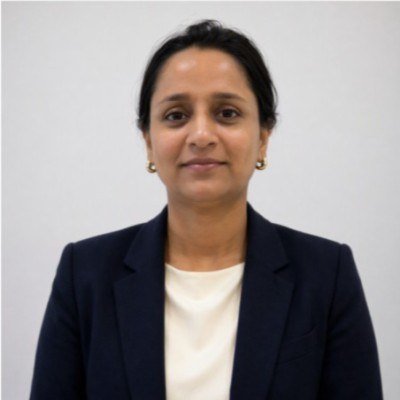
Neha Gupta is a CFA charterholder based in Winnipeg who has worked in financial markets since December 2005. She has published more than 2,600 investment articles and is Head of Operations and Finance at Whiteland Real Estate. She reviews WealthScale’s investing pages for accuracy.
- CFA charter, CFA Institute (awarded 2023)
- Post Graduate Diploma in Business Administration (Finance), 2008
- In financial markets since December 2005
- More than 2,600 published investment articles
General information only. Not financial, investment, tax or legal advice. WealthScale is independent and is published by WealthScale Media Inc., 55 Queen St E, Suite 1205, Toronto, ON M5C 1R6. CFA® and Chartered Financial Analyst® are registered trademarks owned by CFA Institute.